"A Convey of Creativity and Culture – Inspired by the Cloud"

Idea projektu
A Convey of Creativity and Culture – Inspired by the Cloud
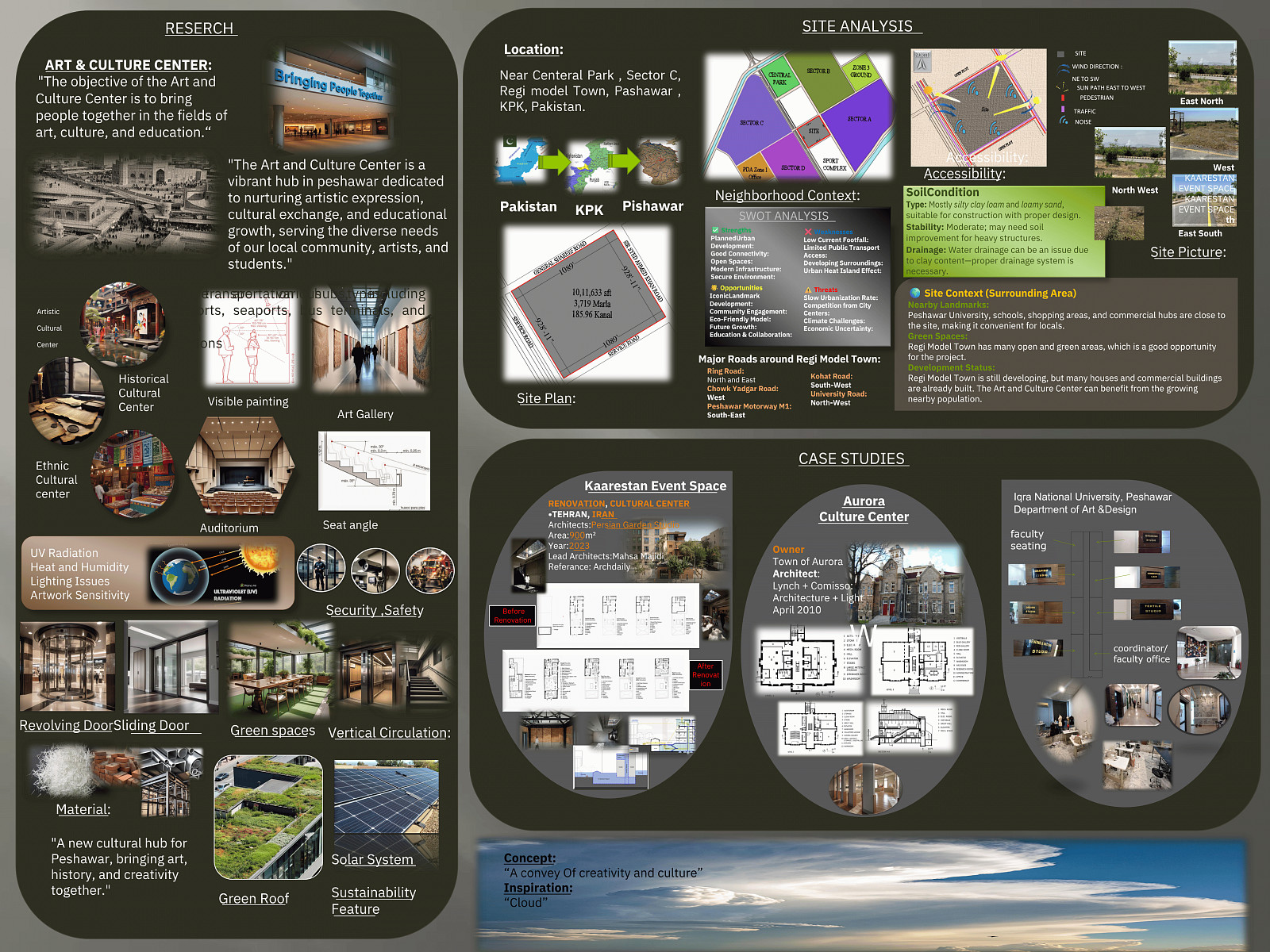
The design of the Art & Culture Center is deeply rooted in the concept of a "Cloud"—an entity that is fluid, expansive, life-giving, and constantly evolving. Peshawar has historically served as a vibrant gateway of trade, knowledge, and diverse heritage. This project re-imagines that traditional gateway as a contemporary architectural landmark built for modern artistic expression, freelance collaboration, and community education.
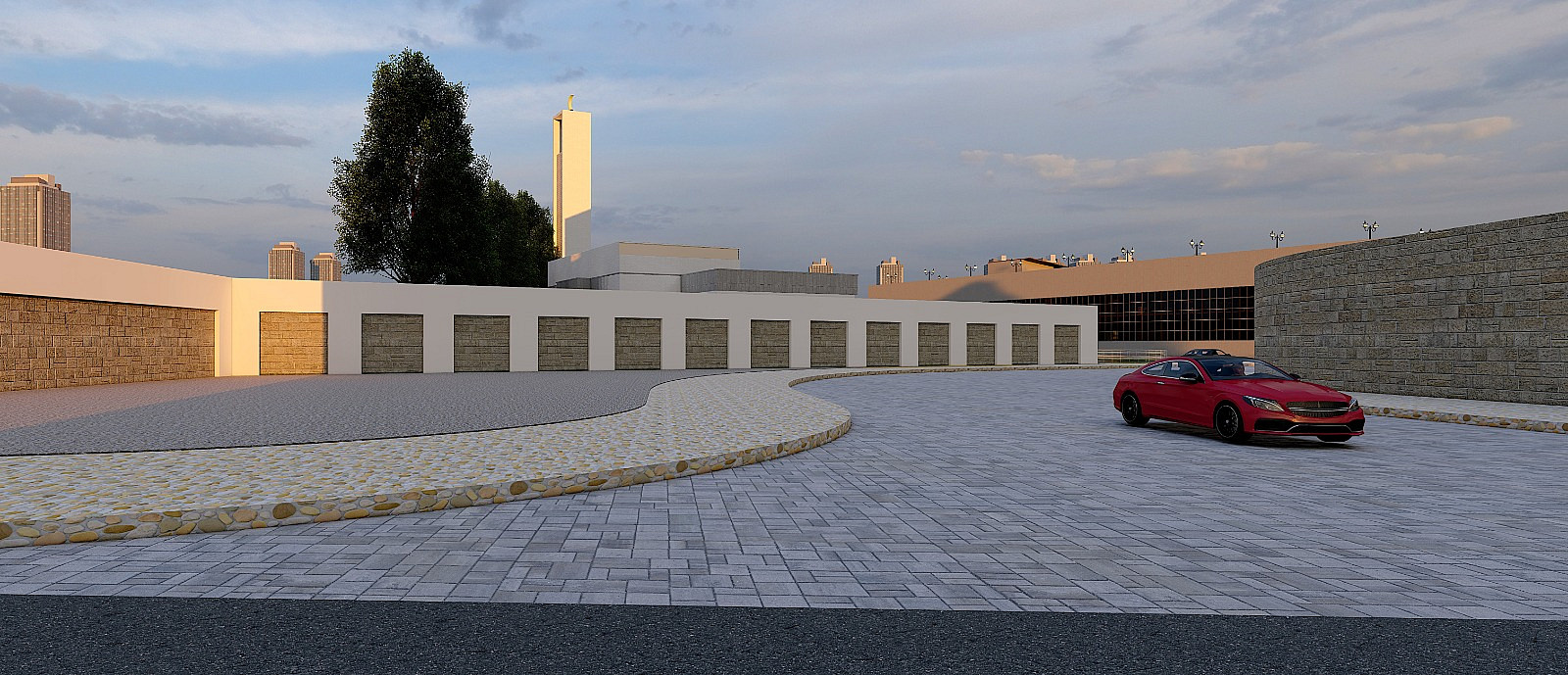
The architecture consciously breaks away from rigid, box-like urban structures, adopting sweeping, organic curves and bold angular geometry that seamlessly blend the built mass with the open landscape. This fluid composition reflects how art, ideas, and economic opportunities should flow through a society—completely unrestricted, highly dynamic, and accessible to all members of the community.
Project Title: The Art & Culture Center, Peshawar
Location: Near Central Park, Sector C, Regi Model Town, Peshawar, KPK, Pakistan
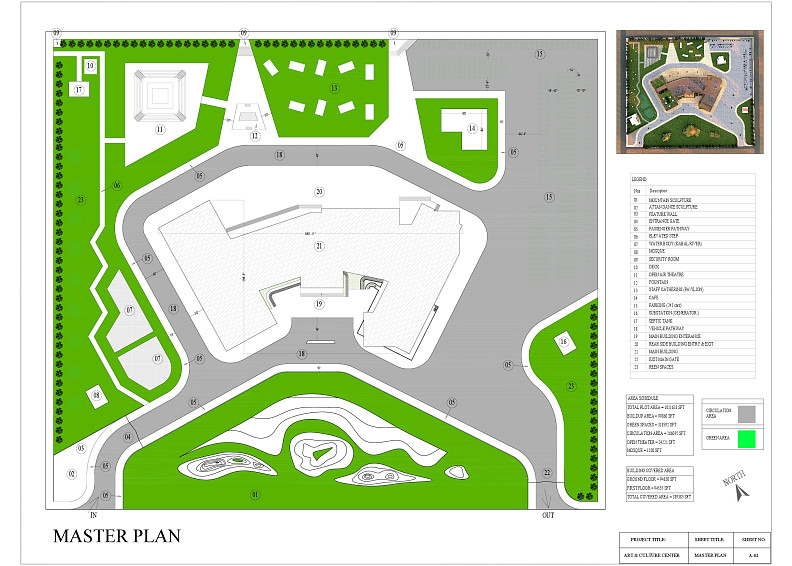
Total Plot Area: 1,011,633sft (185.96 Kanals)
Total Covered Area: 189,385 sft
Popis projektu
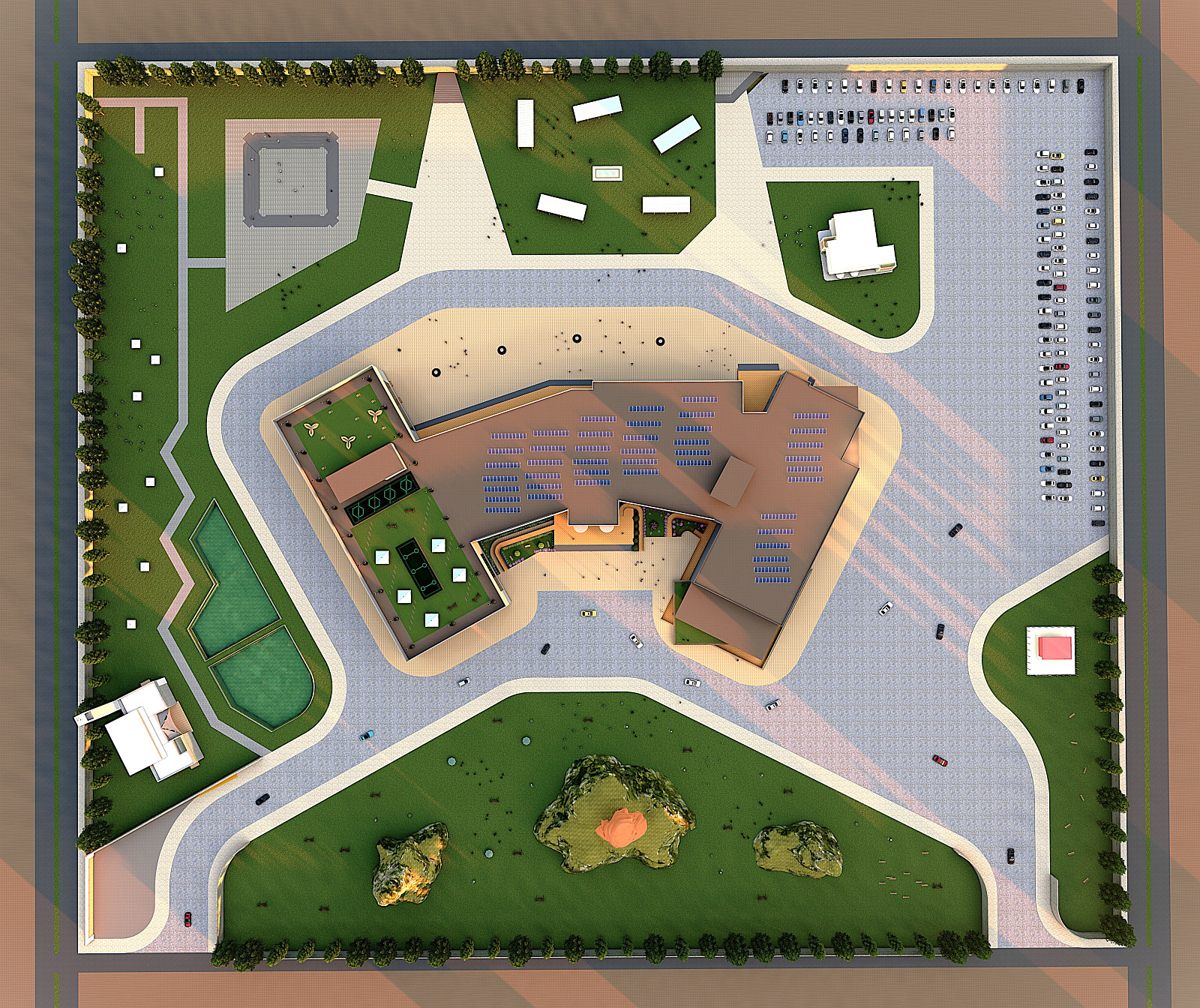
The mega-complex is meticulously zoned across its massive site to provide an intuitive, seamless flow between public engagement, academic learning, digital entrepreneurship, and spiritual contemplation:
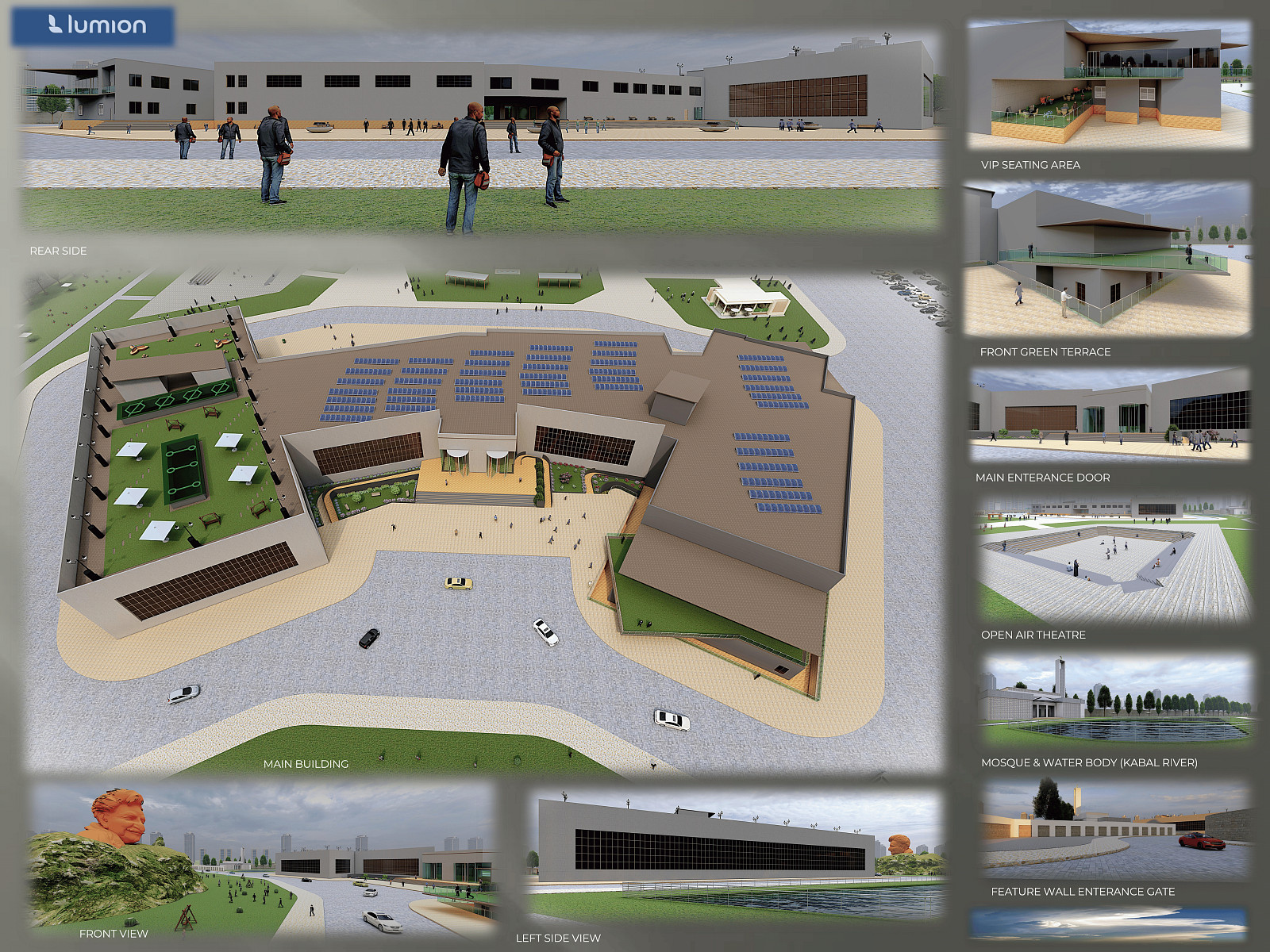
The Main Cultural Hub (Ground Floor): Structured around a grand, sweeping layout, the Ground Floor forms the core of public interaction. It hosts high-ceiling Art Galleries, multiple Exhibition Spaces, and a state-of-the-art Auditorium designed with a professional raked/tiered seating layout for optimal sightlines during cultural performances and large-scale symposiums. Administrative blocks and public cafes are strategically positioned near the main entrance for seamless security control.
The Academic & Digital Freelance Hub (First Floor): The First Floor transitions into an educational and entrepreneurial wing. Alongside Research Labs, Seminar Rooms, and a comprehensive Library, it features a dedicated, modern Coworking Space. This incubator space is specifically designed to provide young local freelancers, digital creators, and students with an affordable, high-tech environment to work, network, and generate sustainable income. The spatial highlight here is the integration of massive double-height voids and atriums that overlook the ground floor galleries, architecturally bridging the gap between traditional art and modern digital creativity.
The Outdoor Cultural Arena: Moving outside, the architecture transitions into a massive Open Air Theatre designed for traditional Attan dances, theatrical plays, and community festivals. The landscape features public plazas, a prominent Mountain Sculpture, and open green terraces that act as informal seating decks.
The Spiritual Oasis: Perfectly balanced alongside a simulated water body representing the regional Kabal River, a dedicated Mosque offers a serene, contemplative environment detached from the high-energy performance zones.
Technické informace
The project integrates a holistic approach to sustainable engineering, environmental design, and spatial safety:
Socio-Economic Sustainability: By integrating the Coworking Space and public incubator zones, the project actively addresses local youth unemployment challenges. It provides financial empowerment to young professionals while acting as a catalyst for social interaction, peer-to-peer learning, and cultural networking.
Circulation and Traffic Management: The site plan features an efficient separation of traffic systems. A massive circulation network provides a dedicated peripheral vehicle pathway and parking space for 243 cars, keeping the inner central pedestrian pathways entirely safe, vehicle-free, and pedestrian-friendly.
Structural Precision: Technical sections validate the structural feasibility of the large-span architecture. Floor-to-floor heights range generously between 15 to 18 feet, accommodating complex HVAC ducts, acoustic paneling in the auditorium, and optimal diffused lighting systems needed for both digital workspaces and sensitive art preservation.
Passive Climate Design: The building's angular and curved facade orientation responds intelligently to Peshawar's climate. The structural masses utilize self-shading strategies along the East-to-West sun path to reduce direct thermal heat gain. Concurrently, the building geometry captures the prevalent North-East to South-West wind directions to maximize natural cross-ventilation through internal courtyards.
Environmental Responsibility: The project tackles the urban heat island effect by dedicating a massive portion of the site to lush green spaces and integrated roof gardens. The vast flat roof surfaces are optimized for grid-connected Solar Photovoltaic Arrays, significantly reducing the building's operational energy consumption and making it a pioneer for eco-friendly public infrastructure in Regi Model Town.
Dokumentace

Copyright © 2026 INSPIRELI | All rights reserved. Use of this website signifies your agreement to the Terms of Use, Privacy Policy, and use of cookies.