Folk Arts Prison


Idea projektu
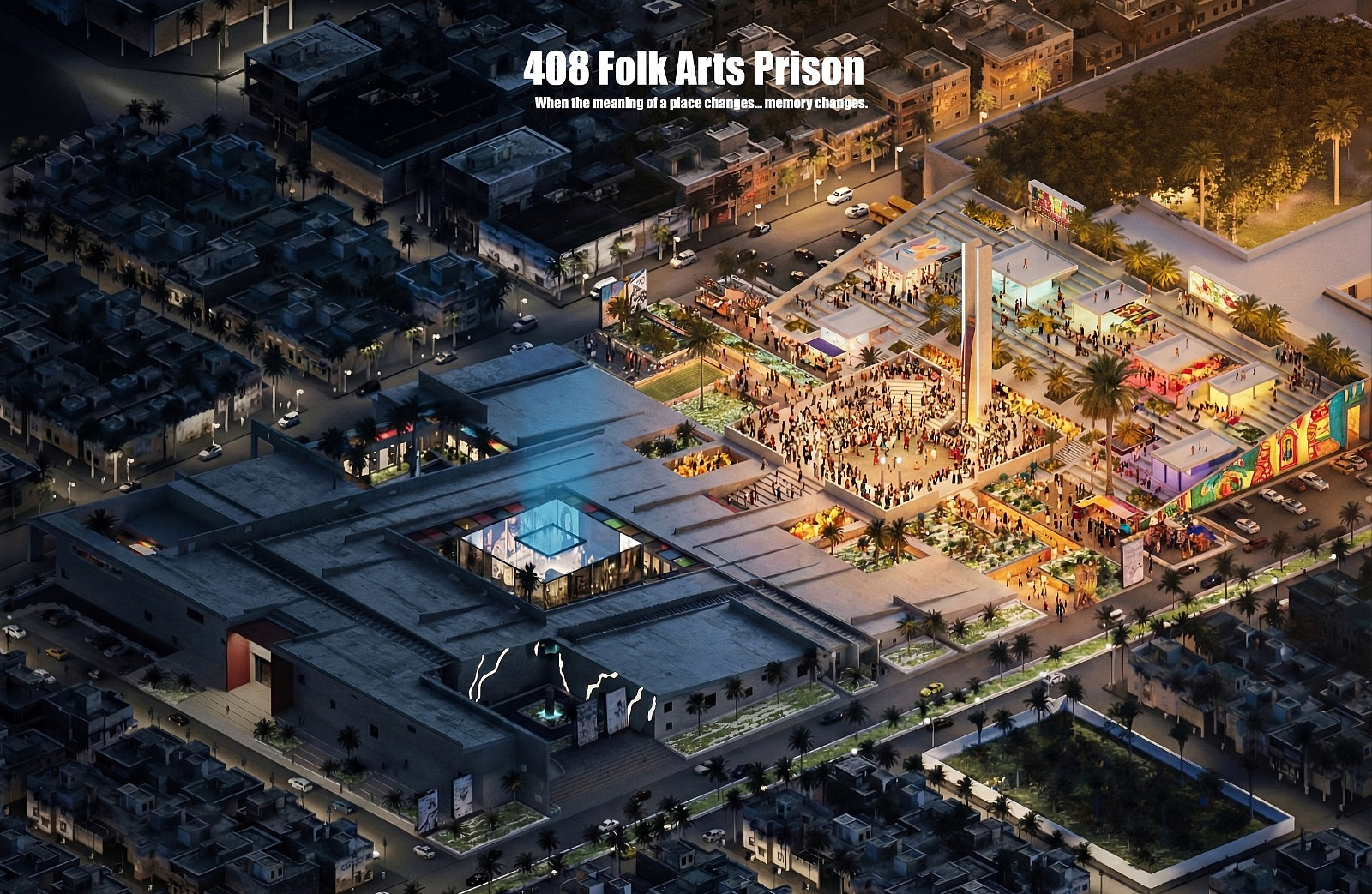
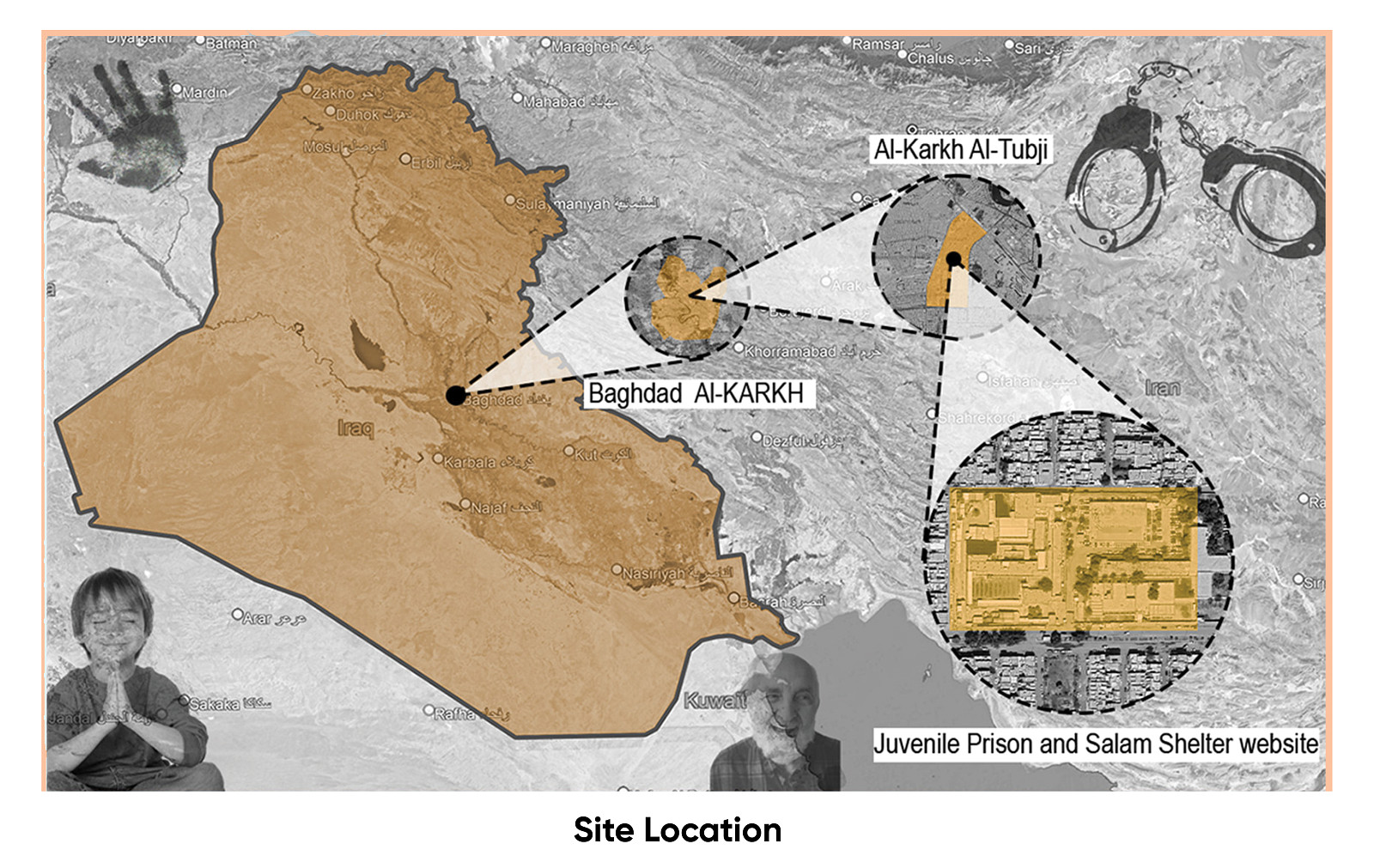
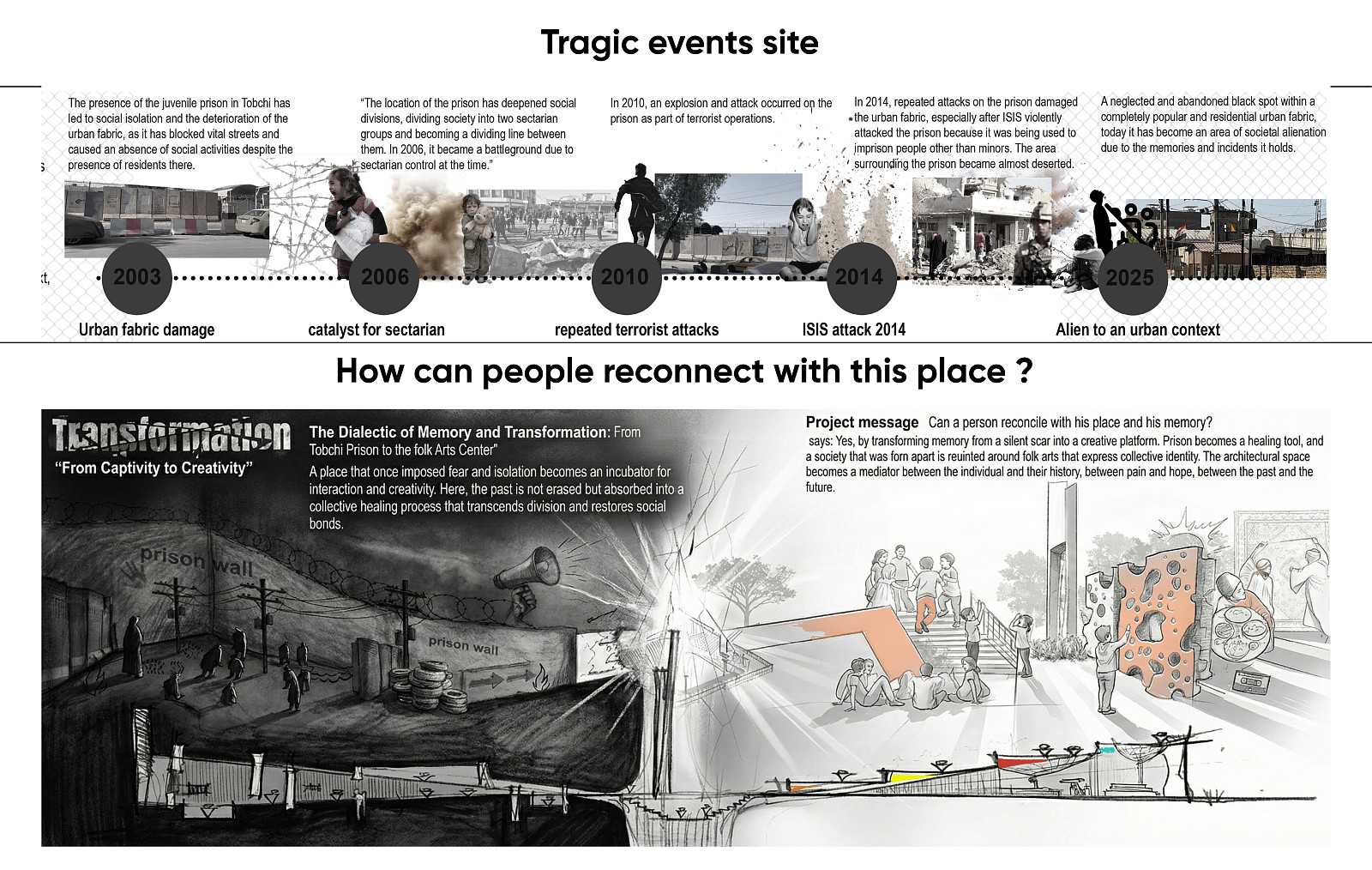
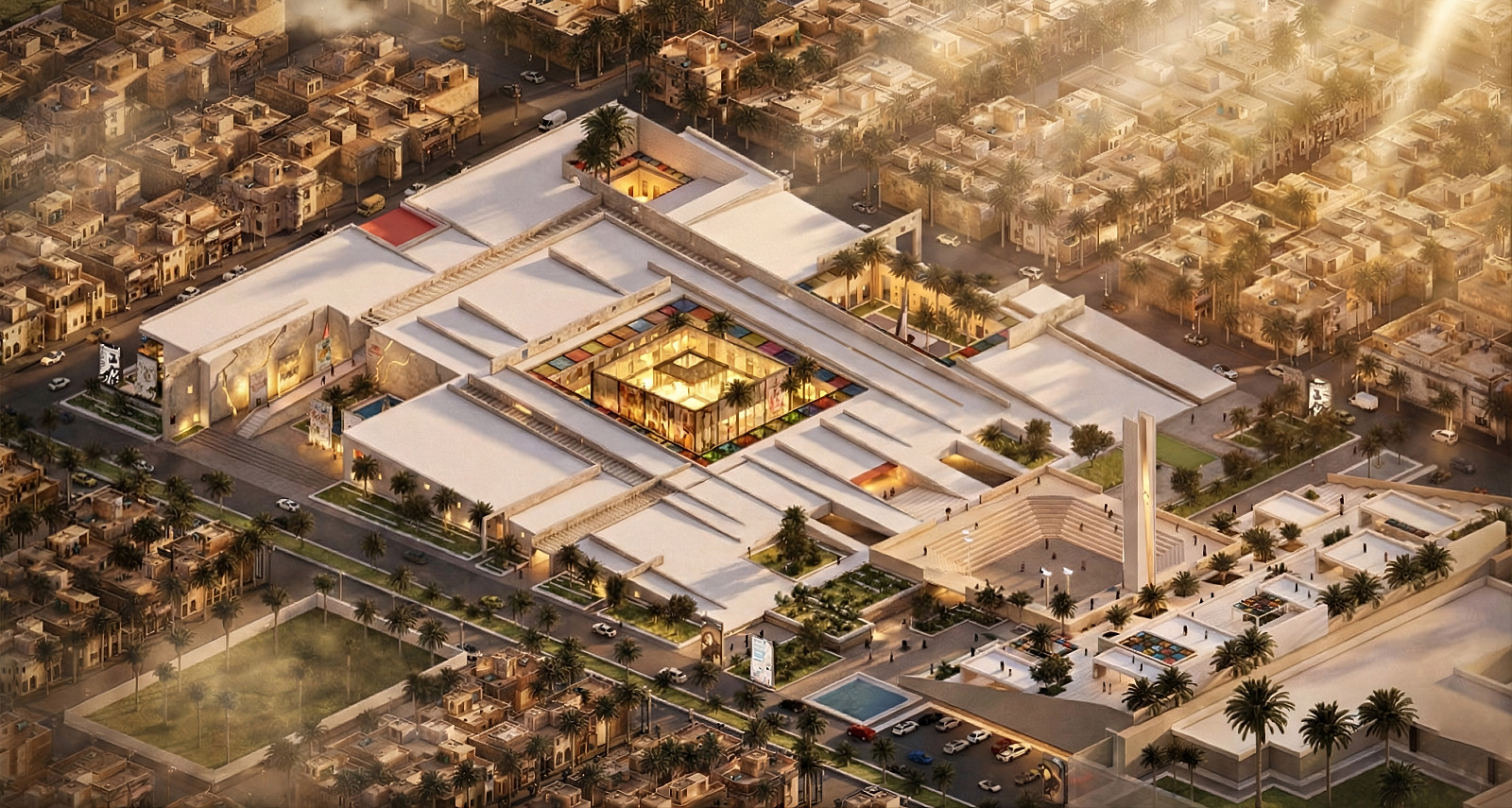
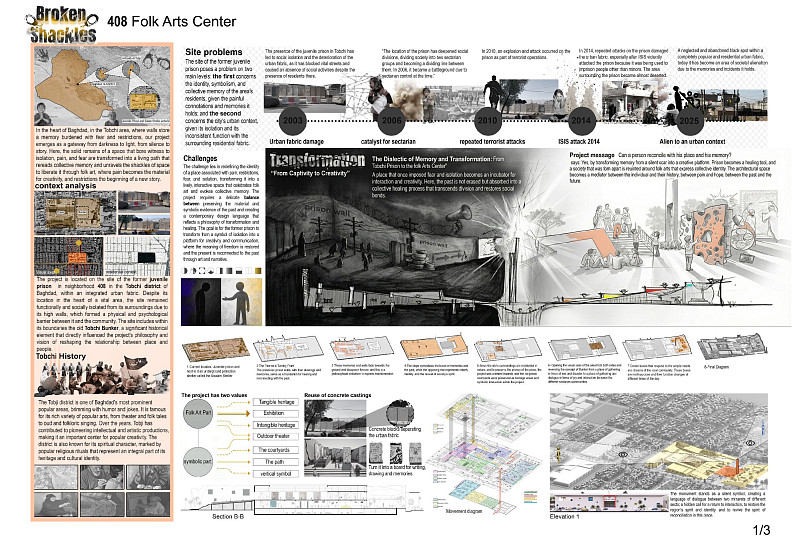
Located in the heart of Baghdad, this project transforms the former prison site into a Folk Art Center, turning a place once marked by isolation and trauma into a living hub of dialogue, memory, and creativity. The design follows a philosophy of transformation and reversal—converting symbols of oppression into platforms of expression and turning barriers into bridges of connection.
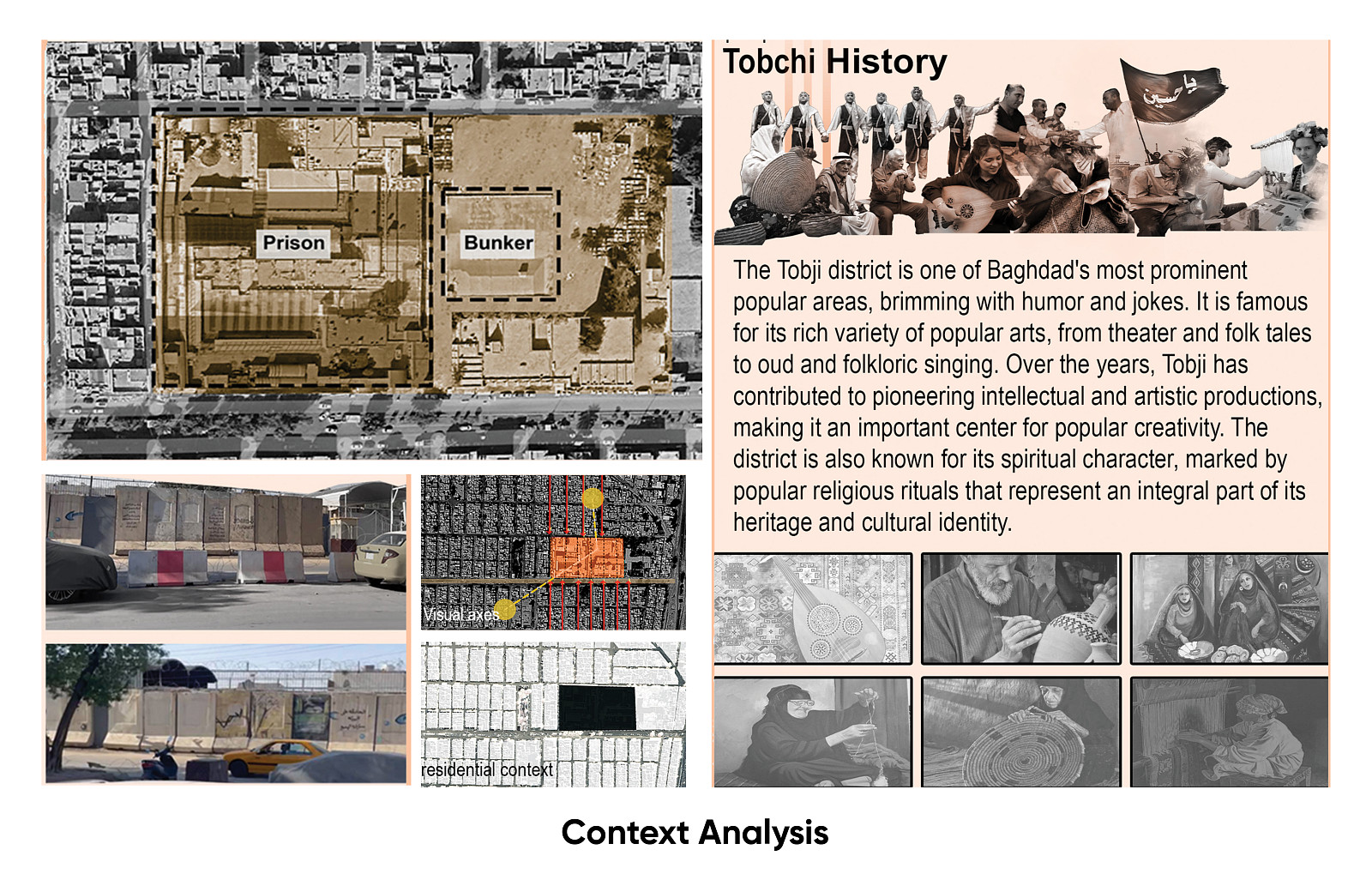
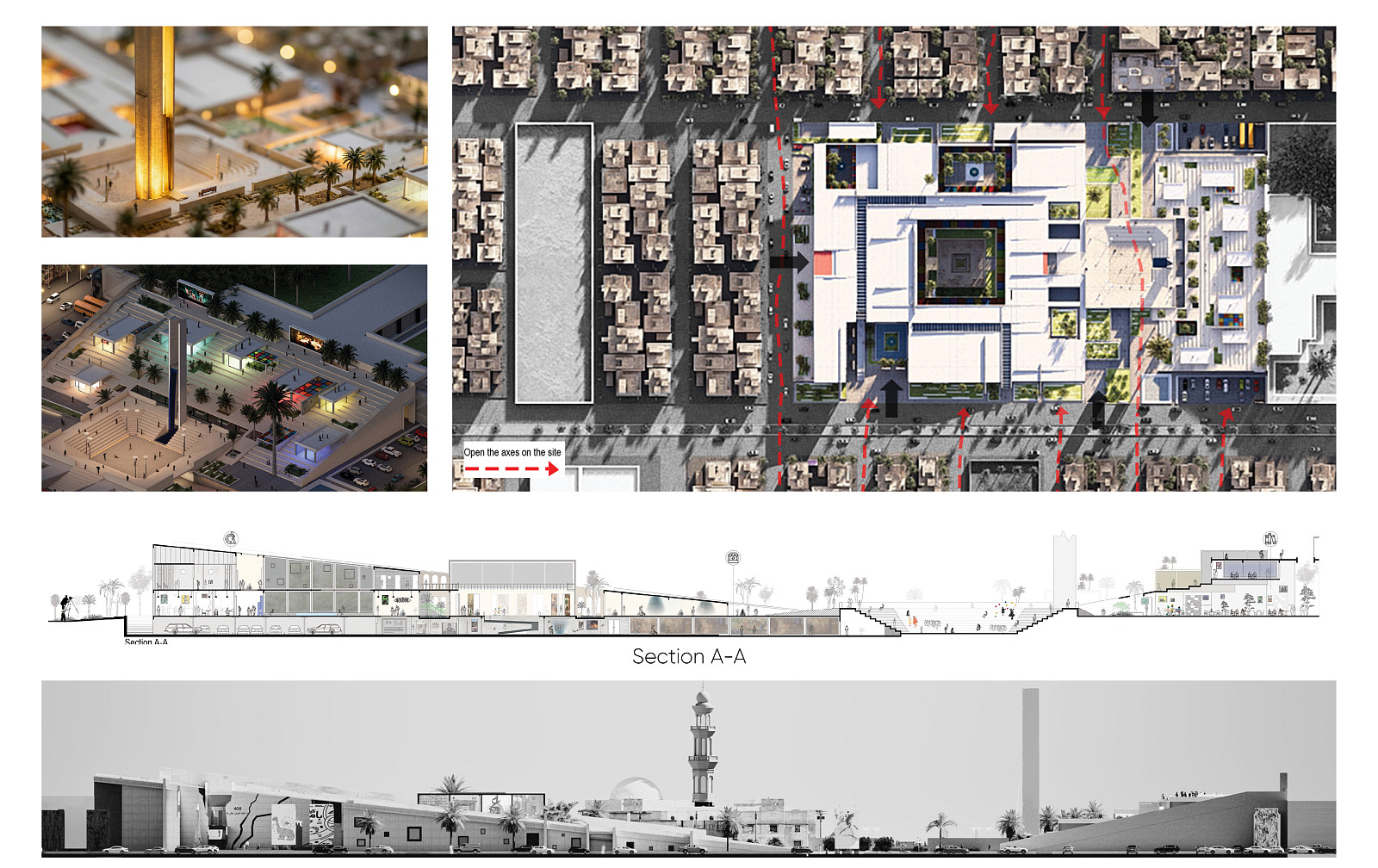
The project carefully integrates with the urban context, reconnecting fragmented circulation paths and reviving a neglected site into an active part of the city’s fabric. Once an isolated block, the center now links surrounding streets and cultural axes, becoming an urban connector that brings people together.
Popis projektu
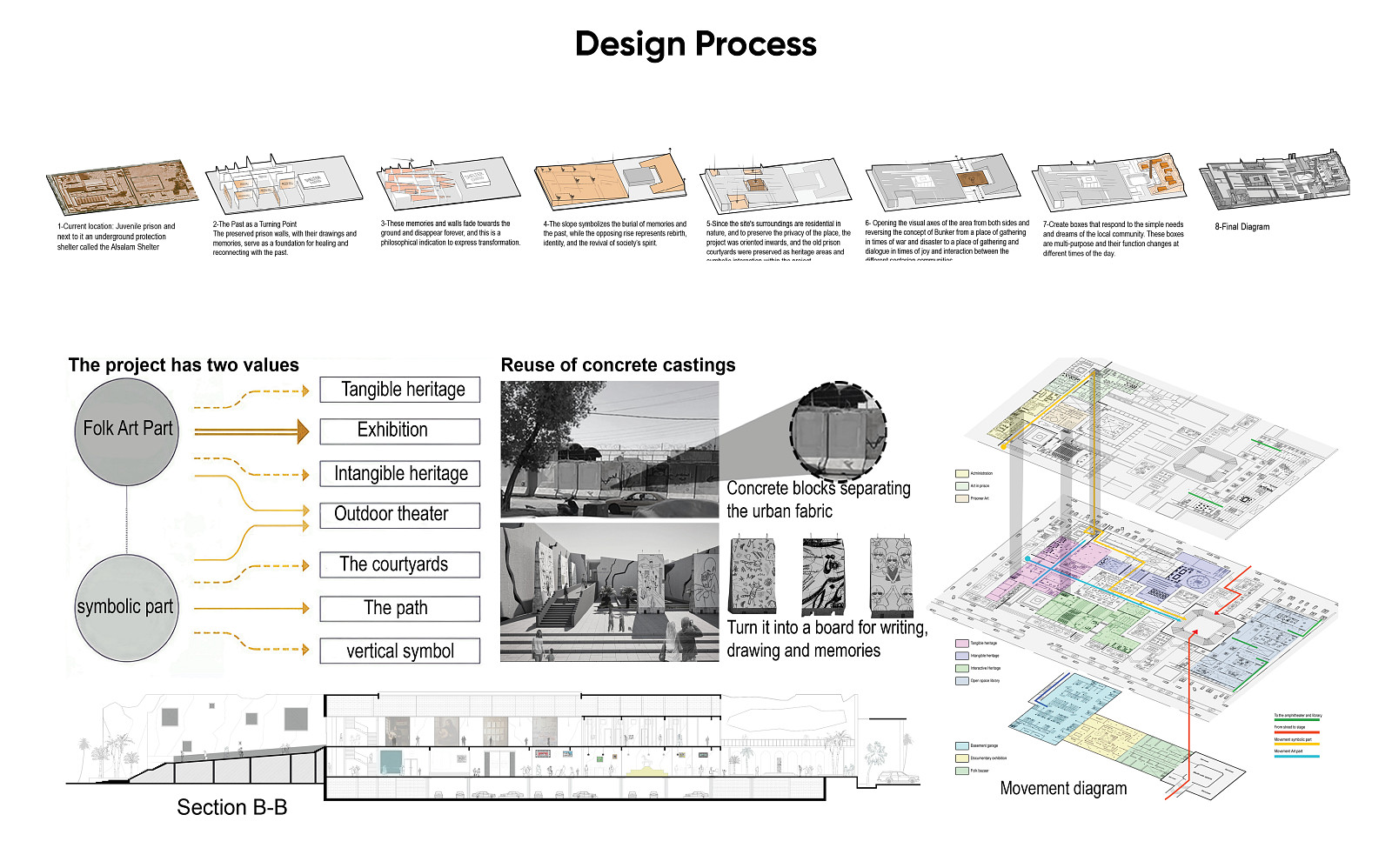
The Prison zone is built on two core values.
1-The artistic value of reviving folk arts as spaces for interaction, creativity, and the reconstruction of collective memory. The activities are divided into three
axes:
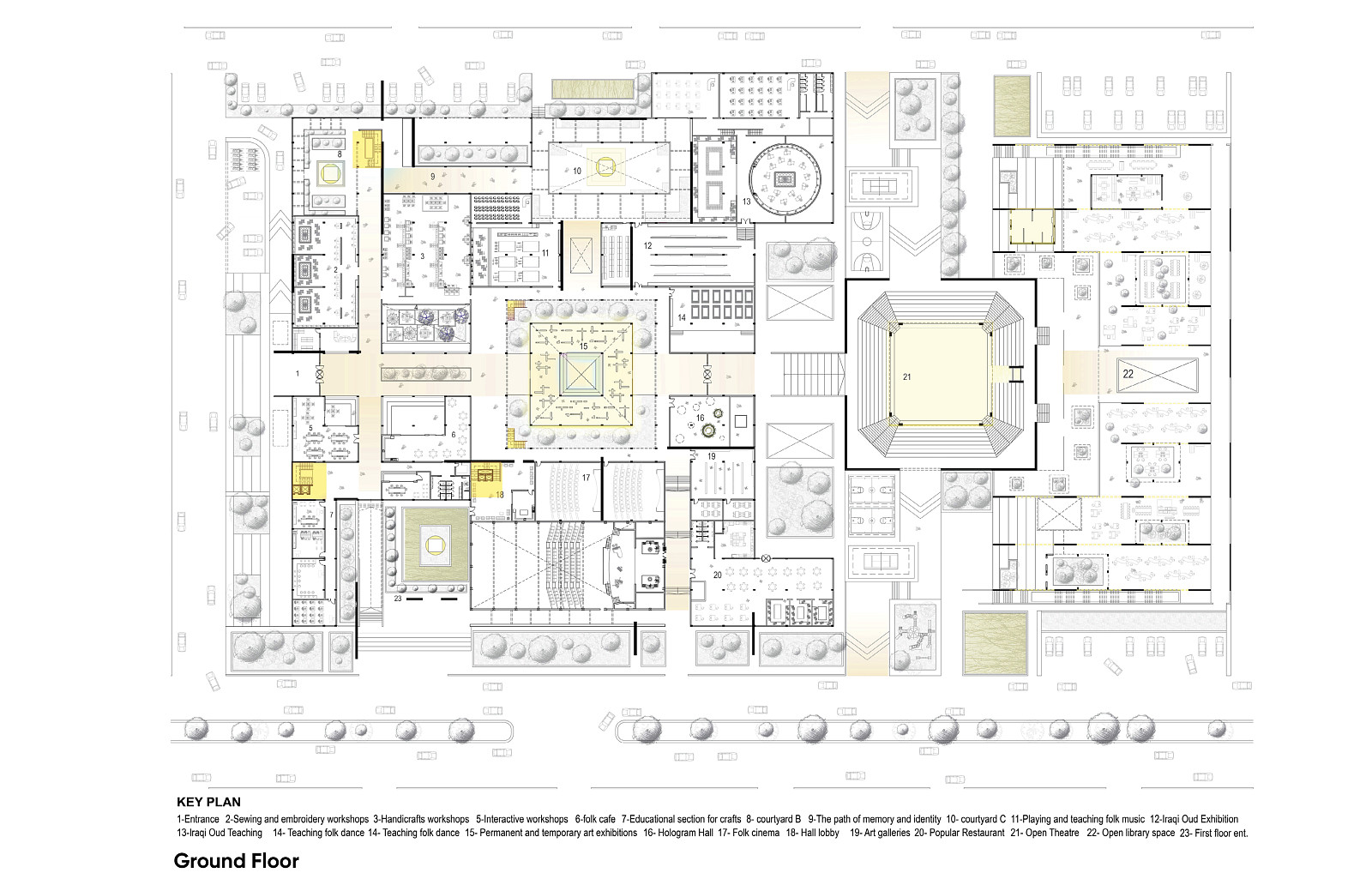
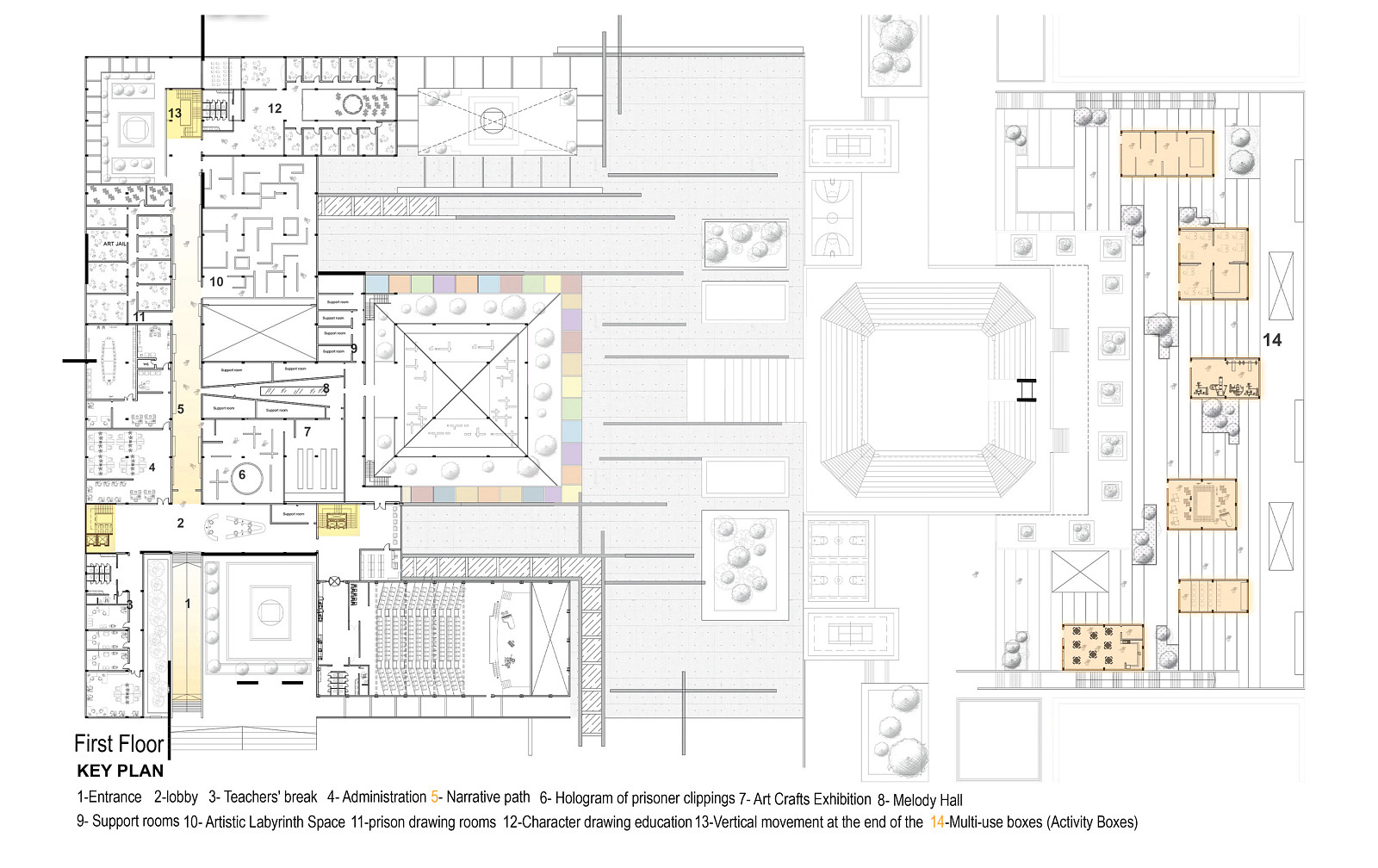
Tangible heritage: workshops in handicrafts, pottery, and embroidery, where visitors learn ancestral techniques..Intangible heritage: Iraqi oud, folk music, dance, and singing.. Heritage interaction: holograms of Baghdad, a documentary cinema, a multi-purpose hall, and a traditional restaurant.
2-Symbolic value
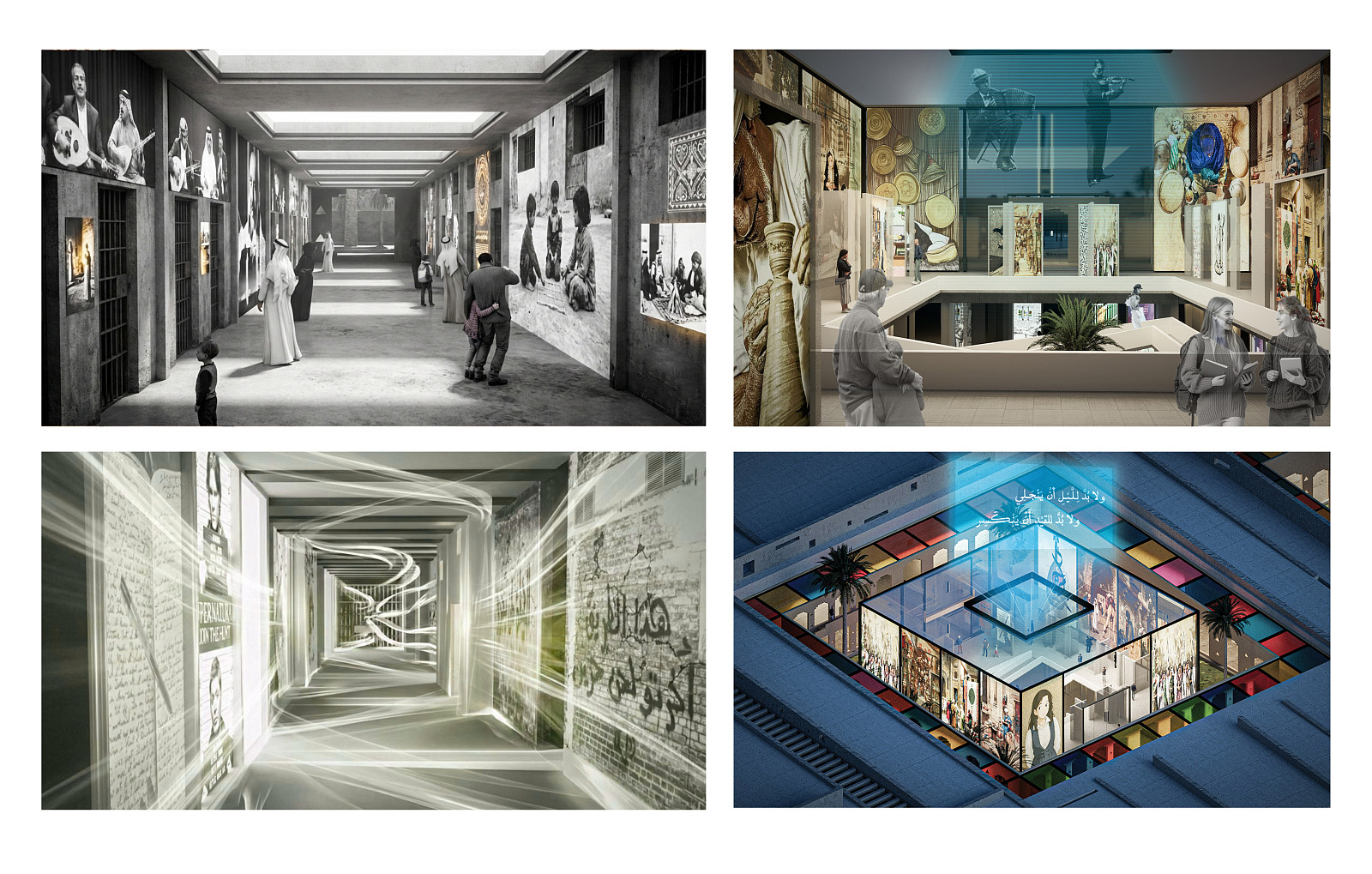
The path embodies the story of place and people, transforming pain into rebirth. It starts at the old prison entrance, where preserved walls and artistic touches reflect transformation. Visitors encounter cell drawings, prisoners' stories, and their poetry of isolation.
Activities include drawing inside cells, caricature as satirical expression, and exhibitions of handcrafted prison pieces. Labyrinth-like art spaces symbolize loss and the search for self. It is a path that transforms prison from a symbol of pain into a tool for understanding art and memory, and a means for inner and spiritual healing.
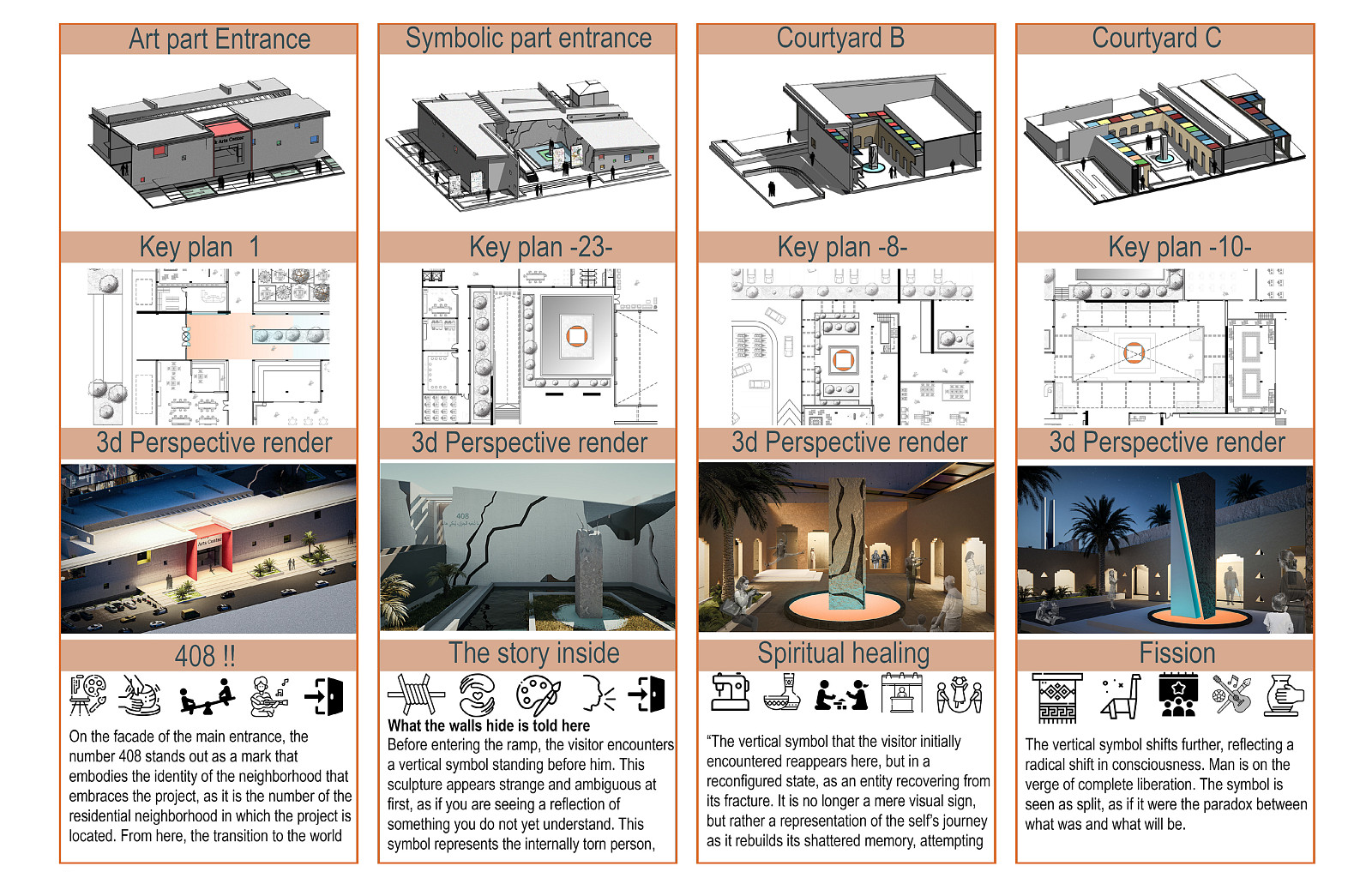
After exiting the narrative path, the visitor returns to the ground floor and finds himself in one of the prison courtyards. There, he encounters a vertical Figure representing a symbol of visual philosophy. The symbol stands fixed as a mirror reflecting the visitor's self, creating a silent connection between the present and the past. Then, the path of folklore is revealed reviving traditional Iraqi arts, music, and rituals. This path revives what had been forgotten, reconnecting people to their cultural roots. Then, the visitor enters the second courtyard. The vertical Figure reappears in a different scene amidst vibrant folk music. This moment of awareness that identity has not disappeared, but rather recovered, and that popular memory can be a source of renewal.
The Glass Box - the project's core
It is divided into two floors. The lower floor reflects the memory of pain, with artistic displays and screens documenting the prisoners' stories, in a dark, silent atmosphere. The upper floor reflects identity and life; an open space for live artistic displays and social interaction. This contrast creates a strong emotional duality between what was and what will be, so that the glass box becomes a symbol of the integrated human being who confronts his past and reclaims his identity.
Technické informace
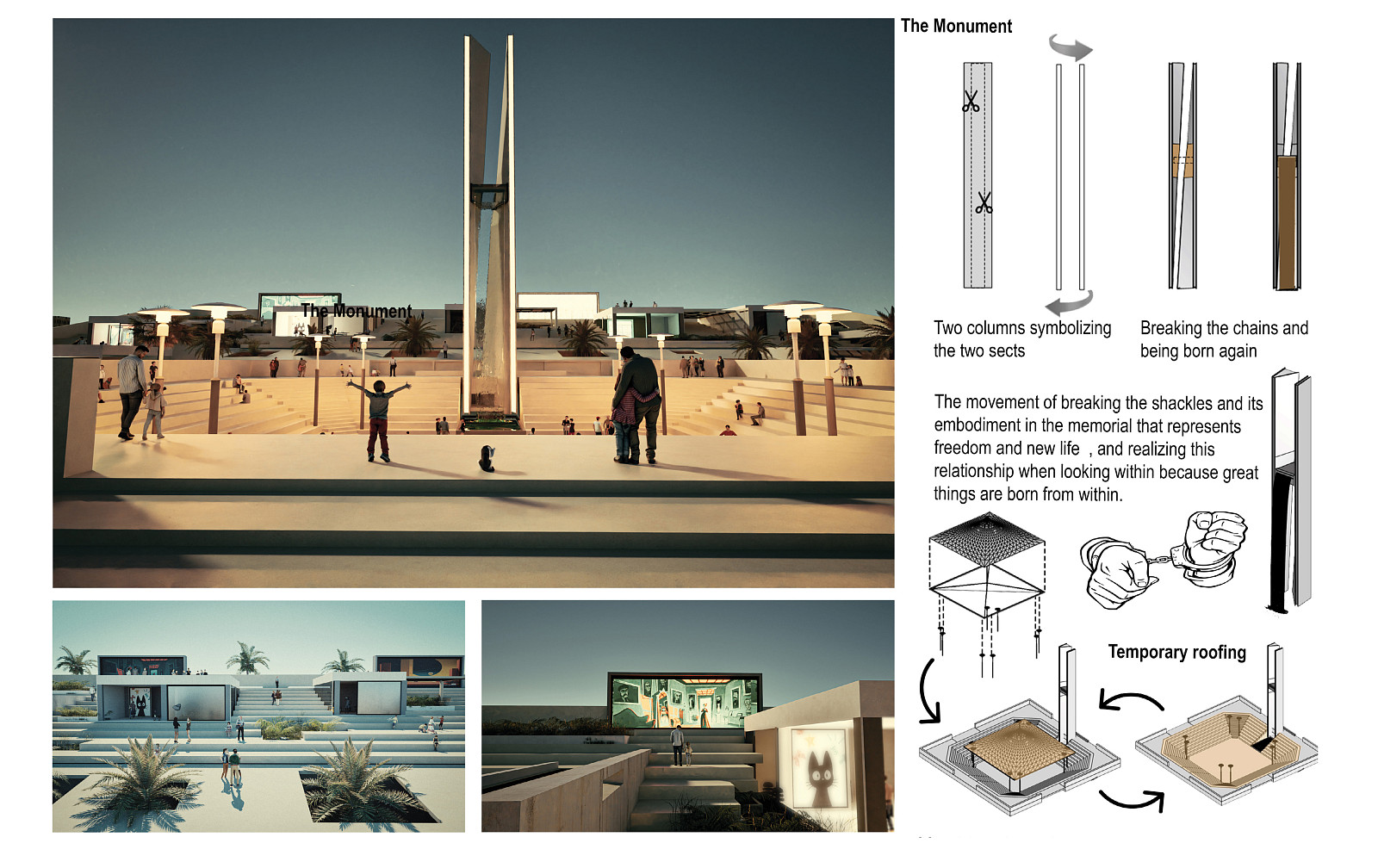
A new space opens up for the visitor: the open theater. This place was previously a refuge for fear and hiding, but we have redefined its concept to become a theater for art, dialogue, and celebration.
Visitors can call out their inner liberation at the top of their lungs, interacting with people, art, and community.
In front of the stage, the final vertical symbol appeared:two opposin columns, each representing a different sect. The columns lean in opposite directions, inspired by the movement of the hands when breaking shackles. From the heart of the symbol, a waterfall flows, visible only from a direct encounter, as if a new birth springing from within. This waterfall represents a new inner birth and a message that true change begins deep within us, and that its impact remains within us and among us forever.
The trail ends at the open amphitheater, where artistic and cultural events blend with flexible interactive spaces Activity boxes). Beneath this amphitheater lies an open public library, a place for learning, dialogue, and the pursuit of knowledge, a symbol of our connection to the past and the building of a more conscious and connected future.
Here the final integration between memory, identity, and the future is achieved.
Dokumentace

Copyright © 2026 INSPIRELI | All rights reserved. Use of this website signifies your agreement to the Terms of Use, Privacy Policy, and use of cookies.