
SOCIAL HOUSING


Idea projektu
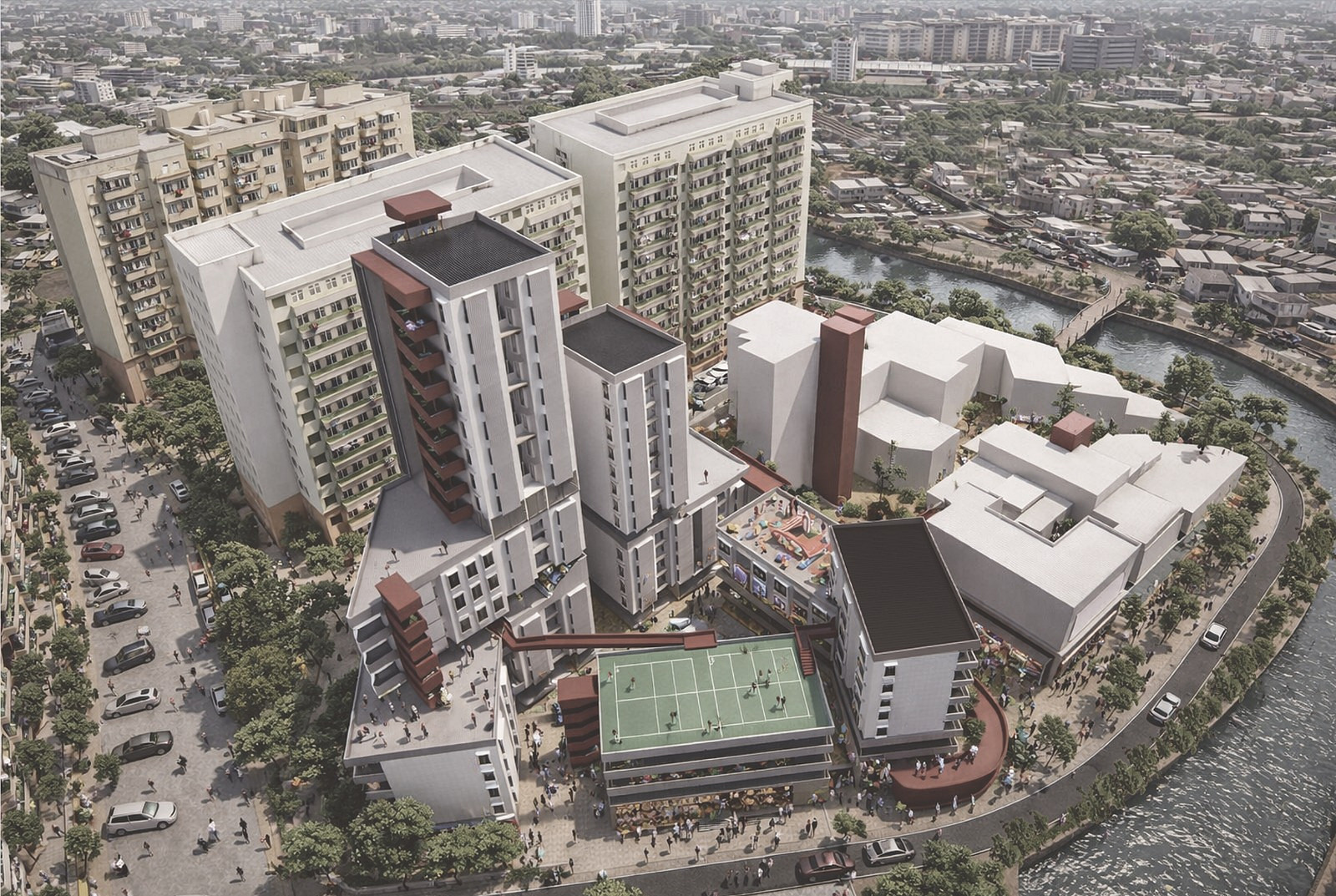
The project is a community-centered vertical housing development located in Dematagoda, Colombo, Sri Lanka. The main idea is to improve the living quality of low-income families while responding to the challenges of high urban density, limited land, poor environmental conditions, and lack of social spaces.
Instead of creating a typical apartment building with isolated living units, the project introduces a vertical community system that encourages interaction, safety, and shared living experiences. The design focuses on creating strong connections between residents through shared courtyards, elevated community decks, threshold spaces, and public gathering areas.
The project also aims to reconnect people with nature and open space within a dense urban environment. Existing issues such as overcrowding, poor ventilation, noise pollution, flood risk, and weak pedestrian connectivity are addressed through climate-responsive planning and layered spatial organization.
The housing proposal transforms the existing informal settlement into a healthier and socially active living environment while preserving the strong community bonds already existing within the site.
Popis projektu
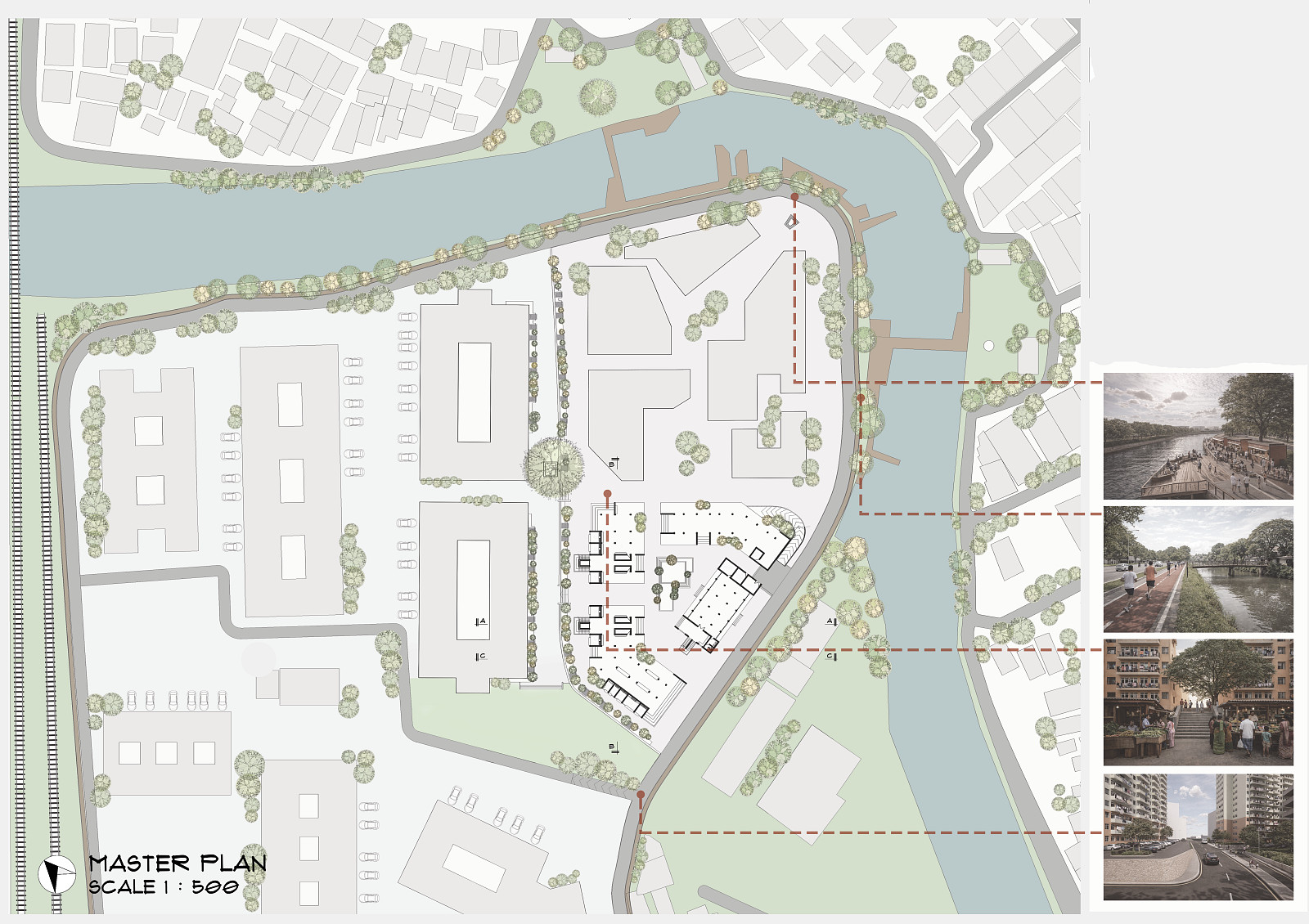
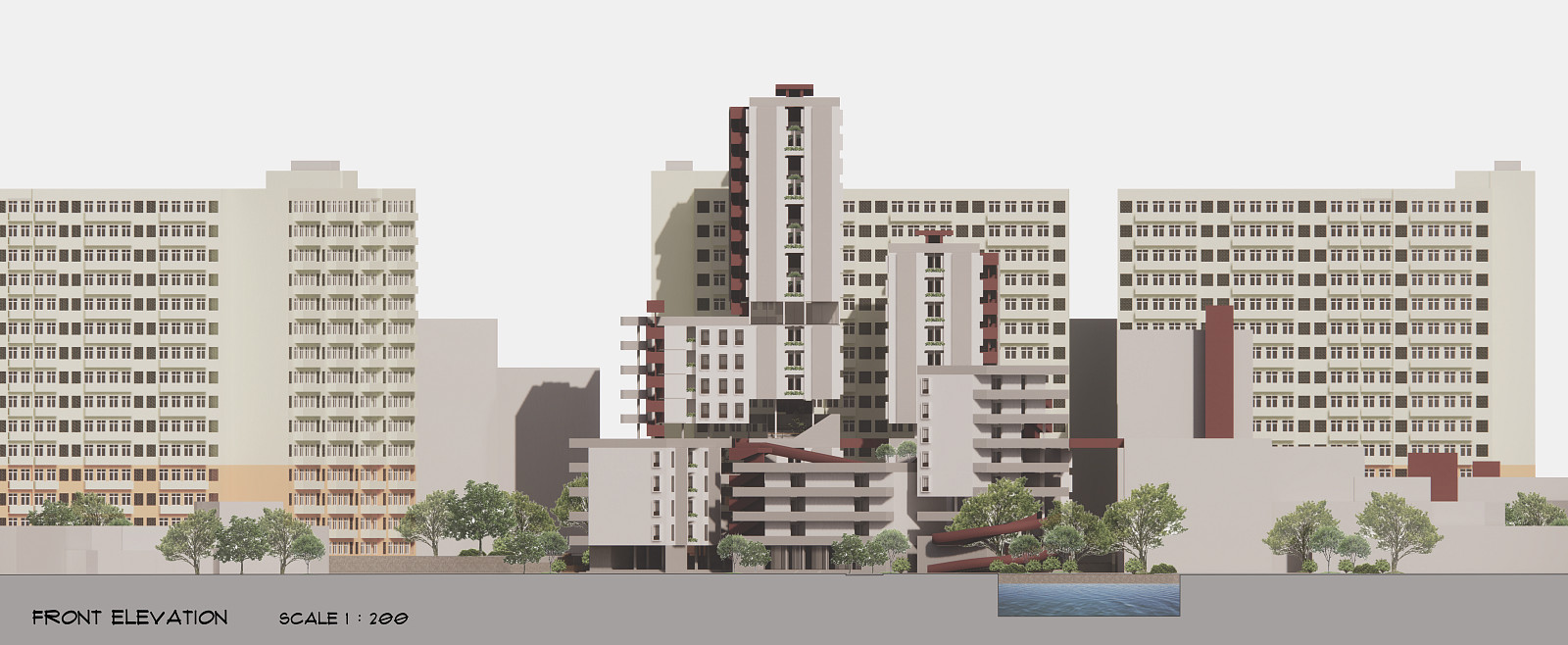
The proposed housing development is designed for approximately 100 families currently living in the settlement area. The site is located near the main railway corridor and adjacent to the Dematagoda canal, surrounded by existing high-rise low-income housing schemes.
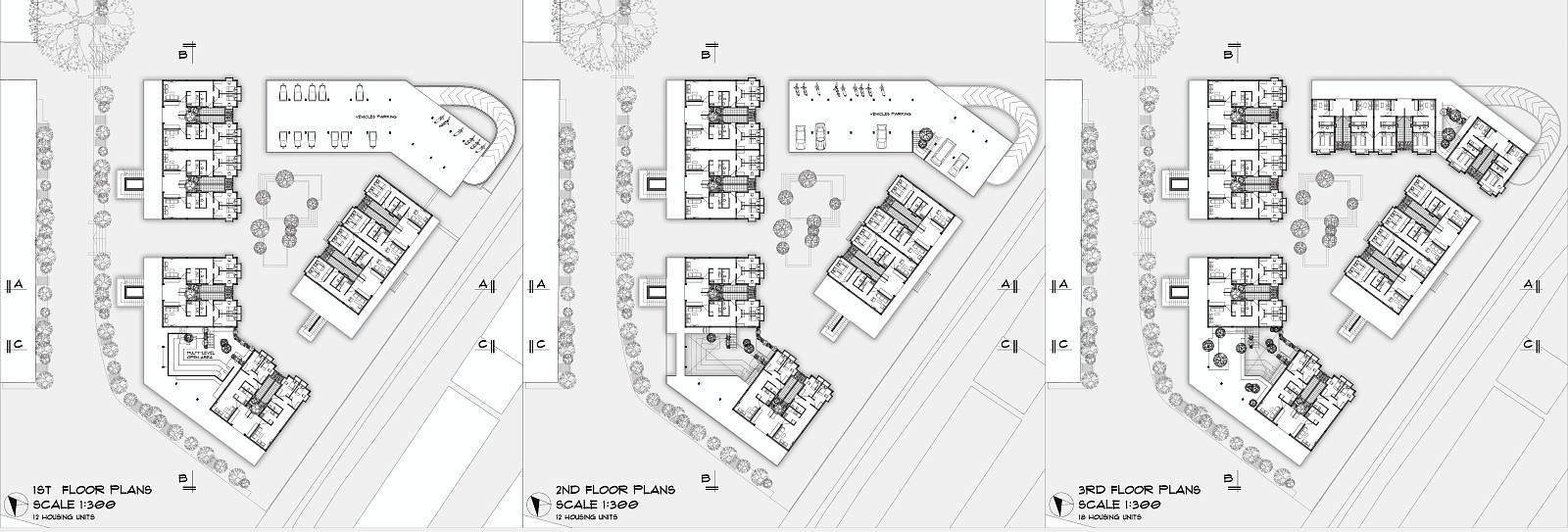
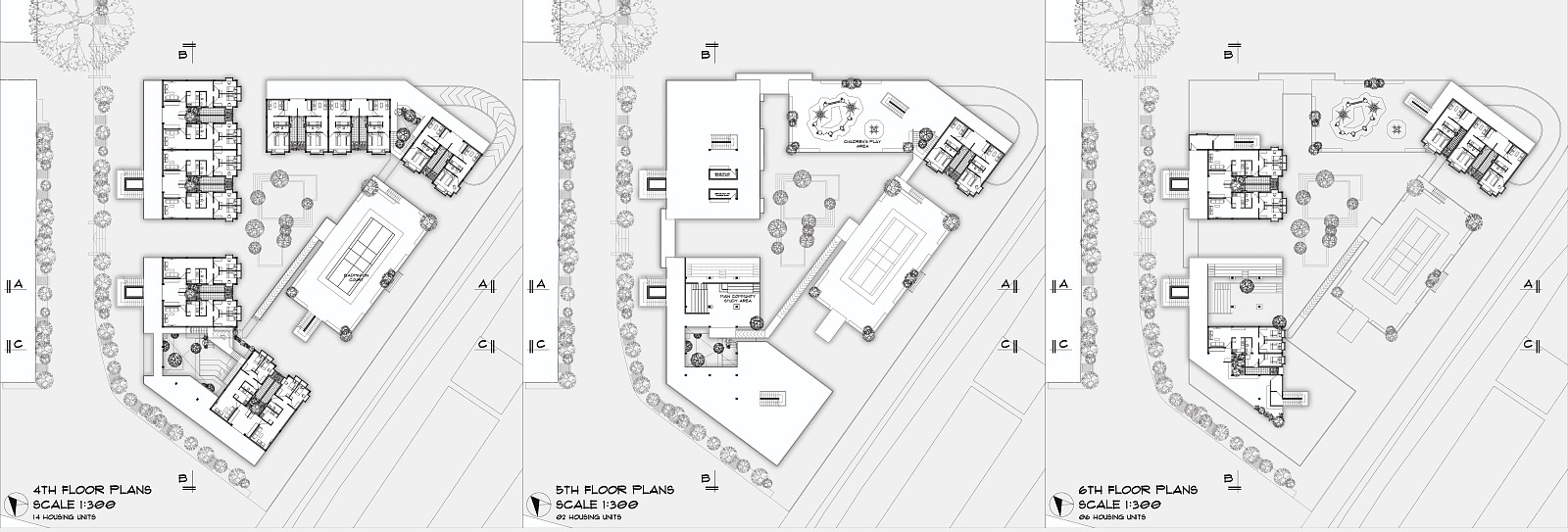
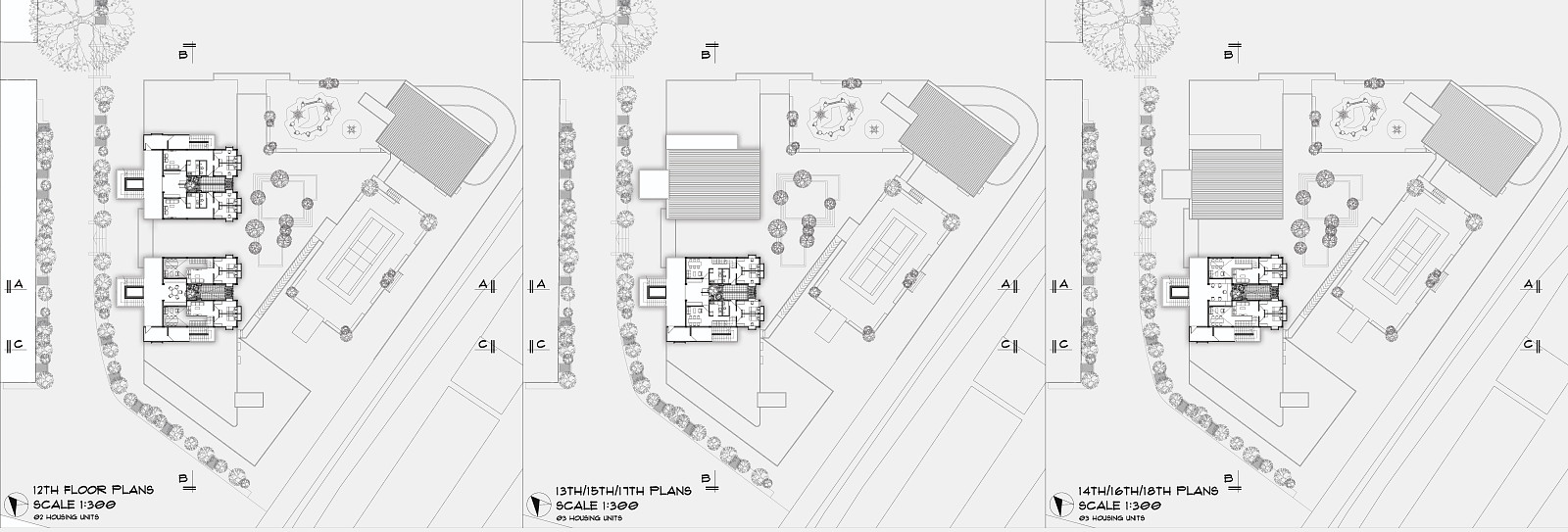
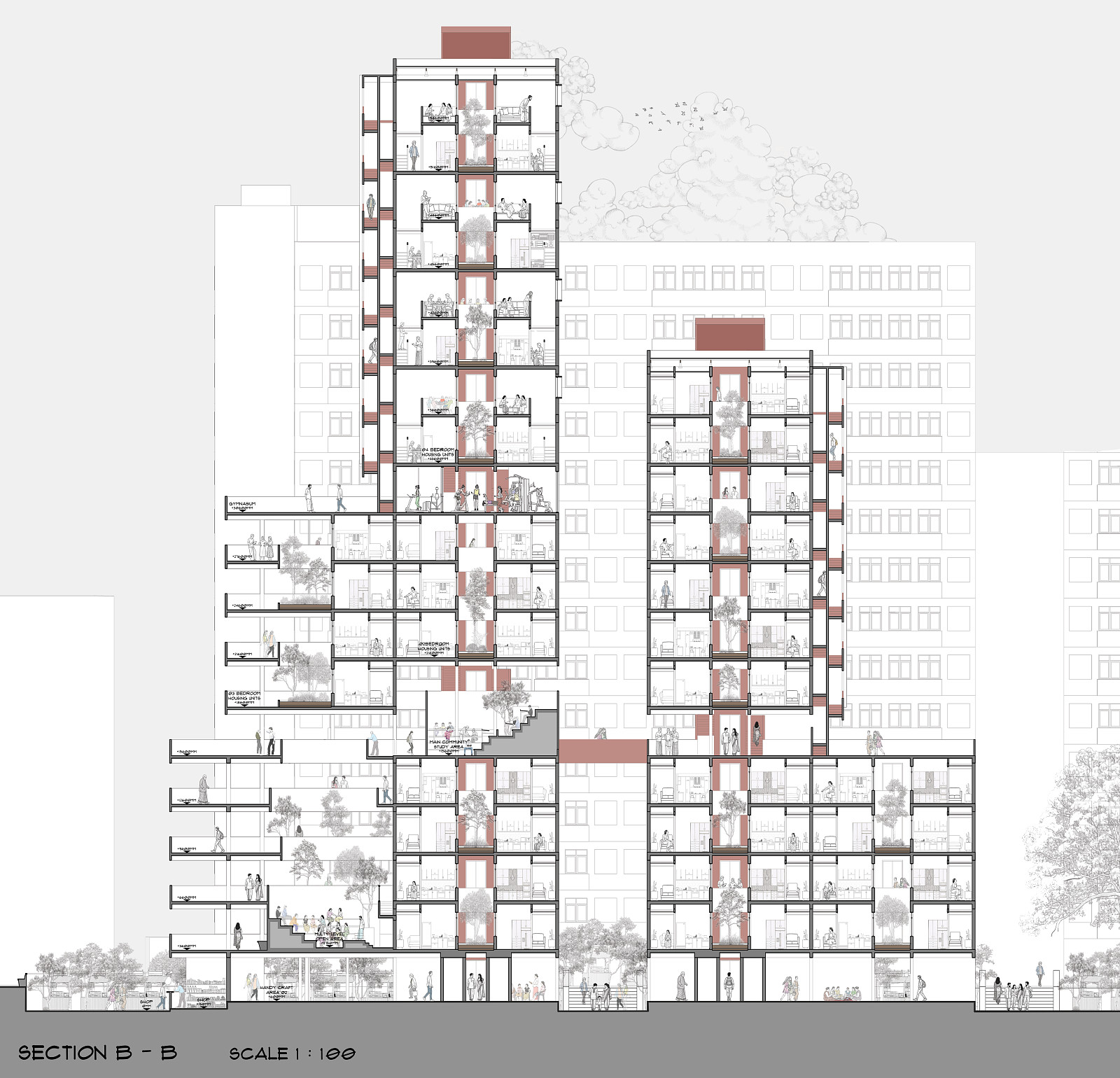
The project is organized into three residential zones to reduce massiveness and improve community interaction. Different housing unit types are introduced to accommodate various family sizes and living patterns. The building combines private, semi-private, and public spaces to create a clear spatial hierarchy.
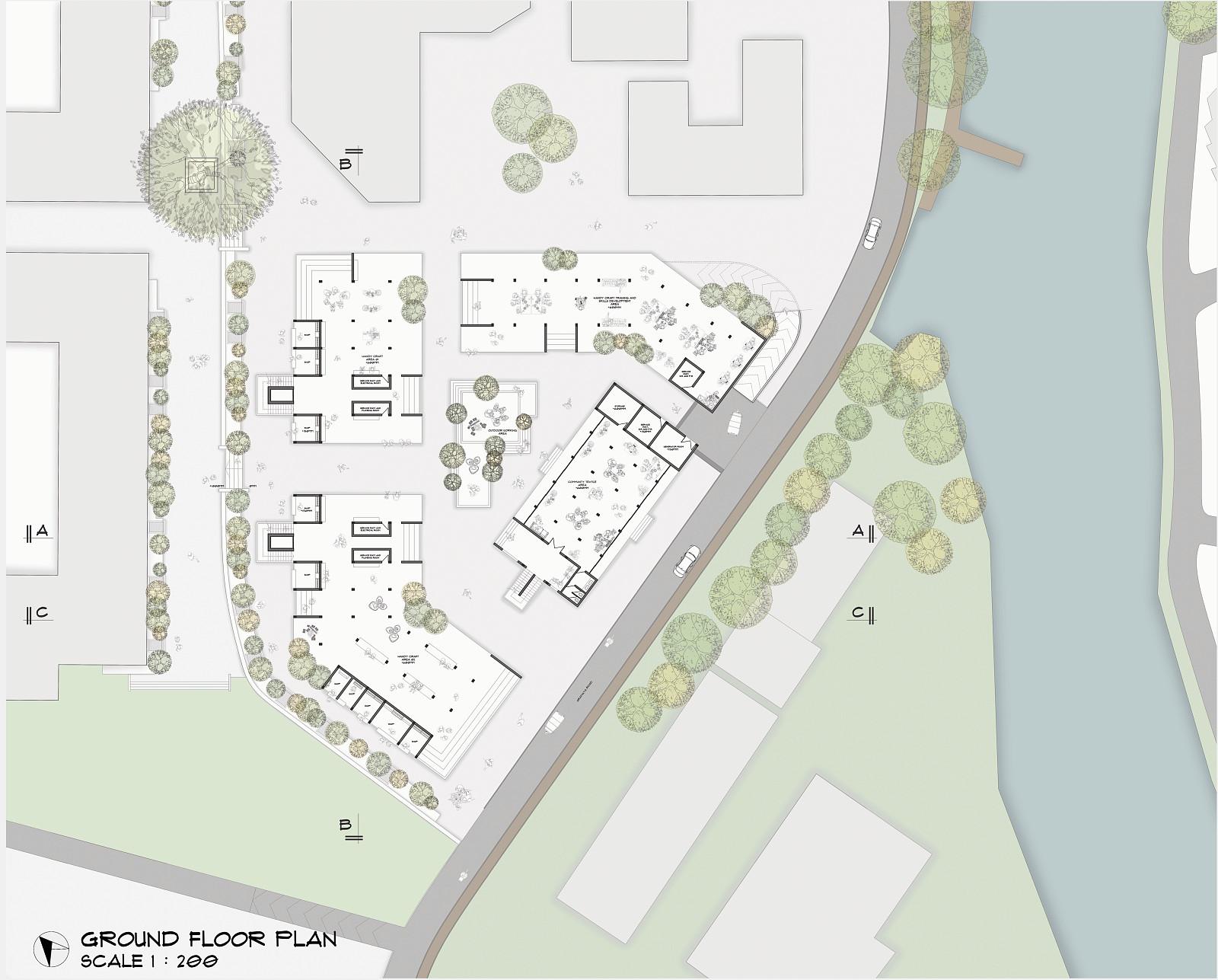
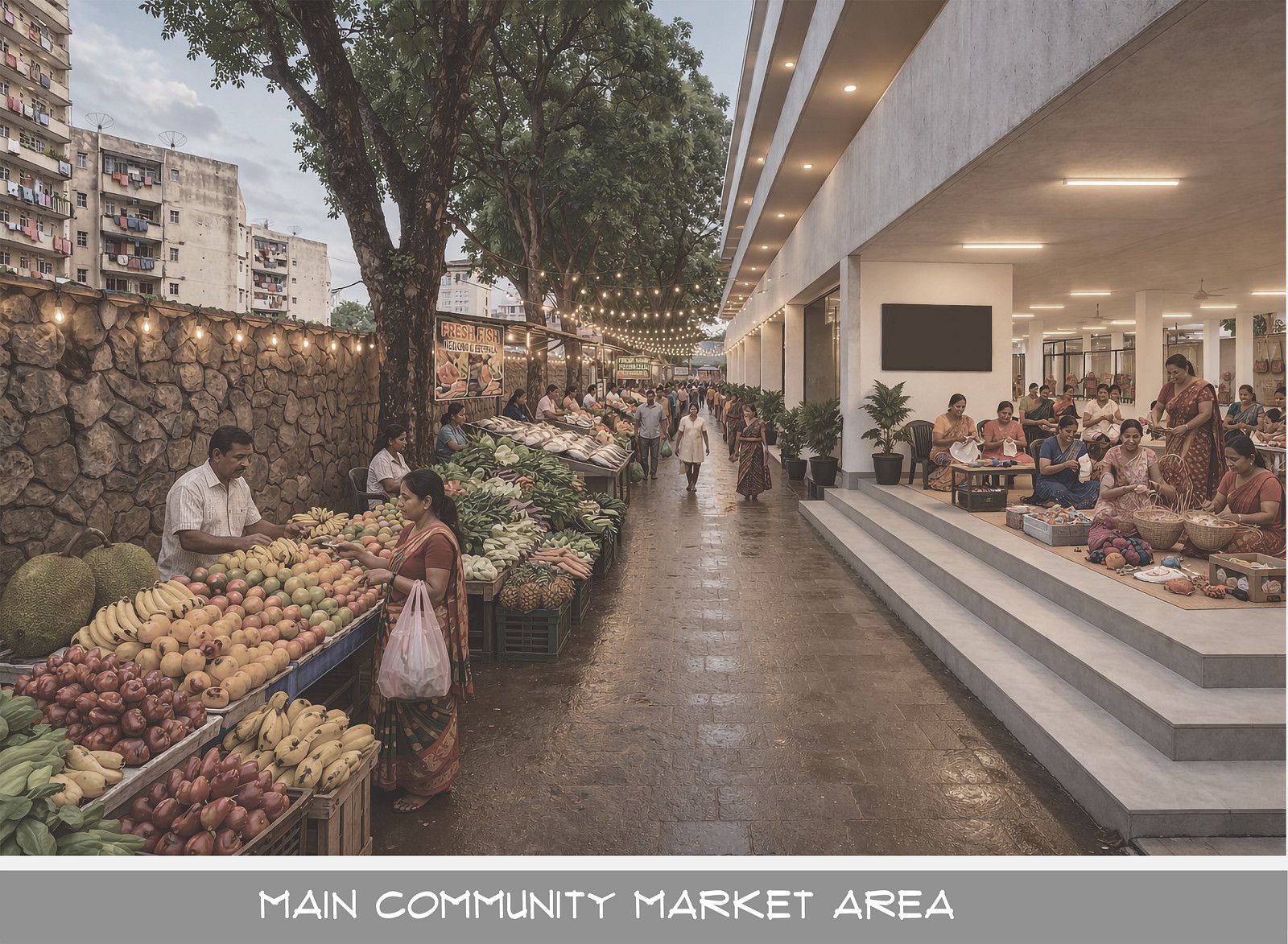
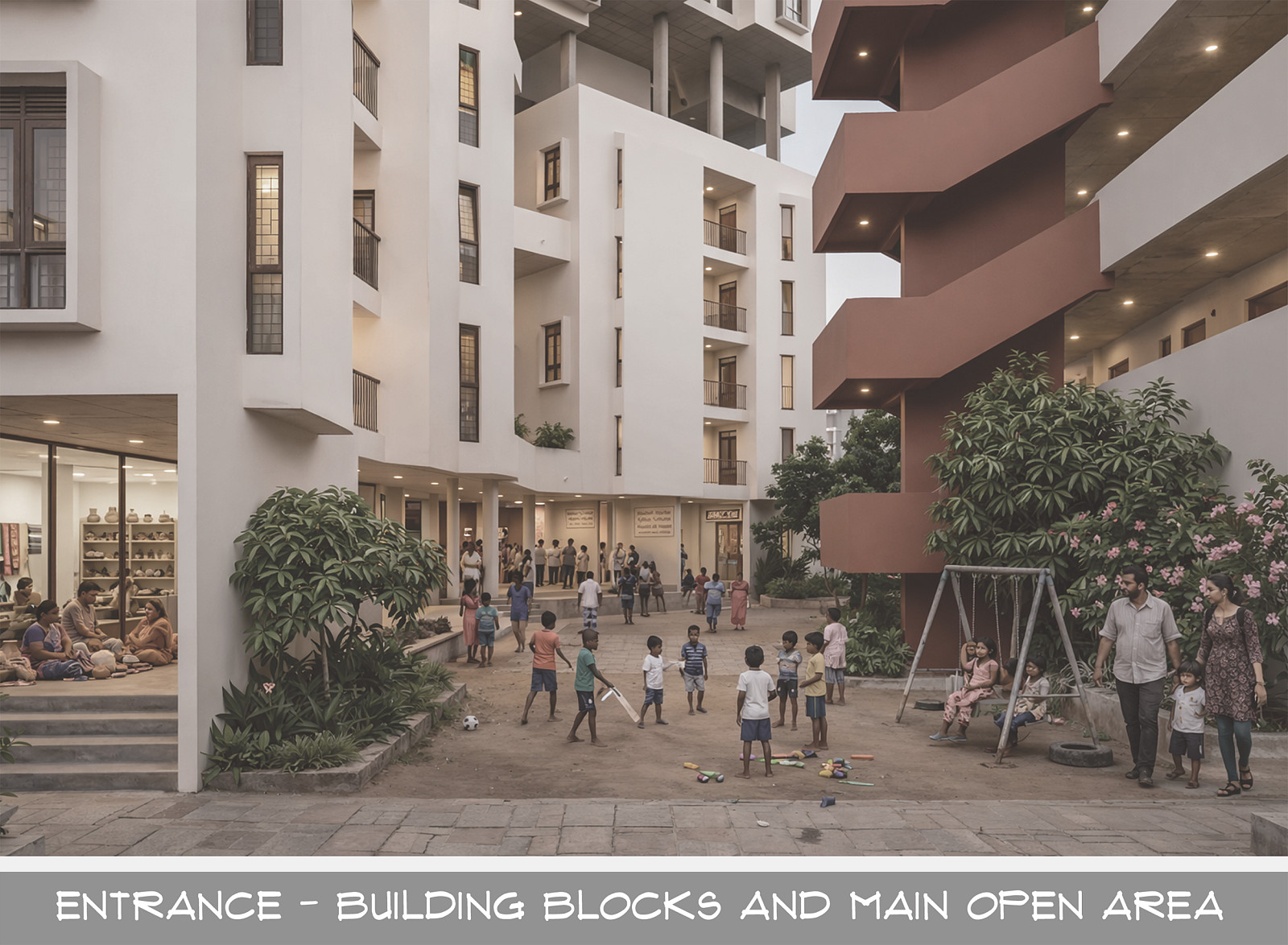
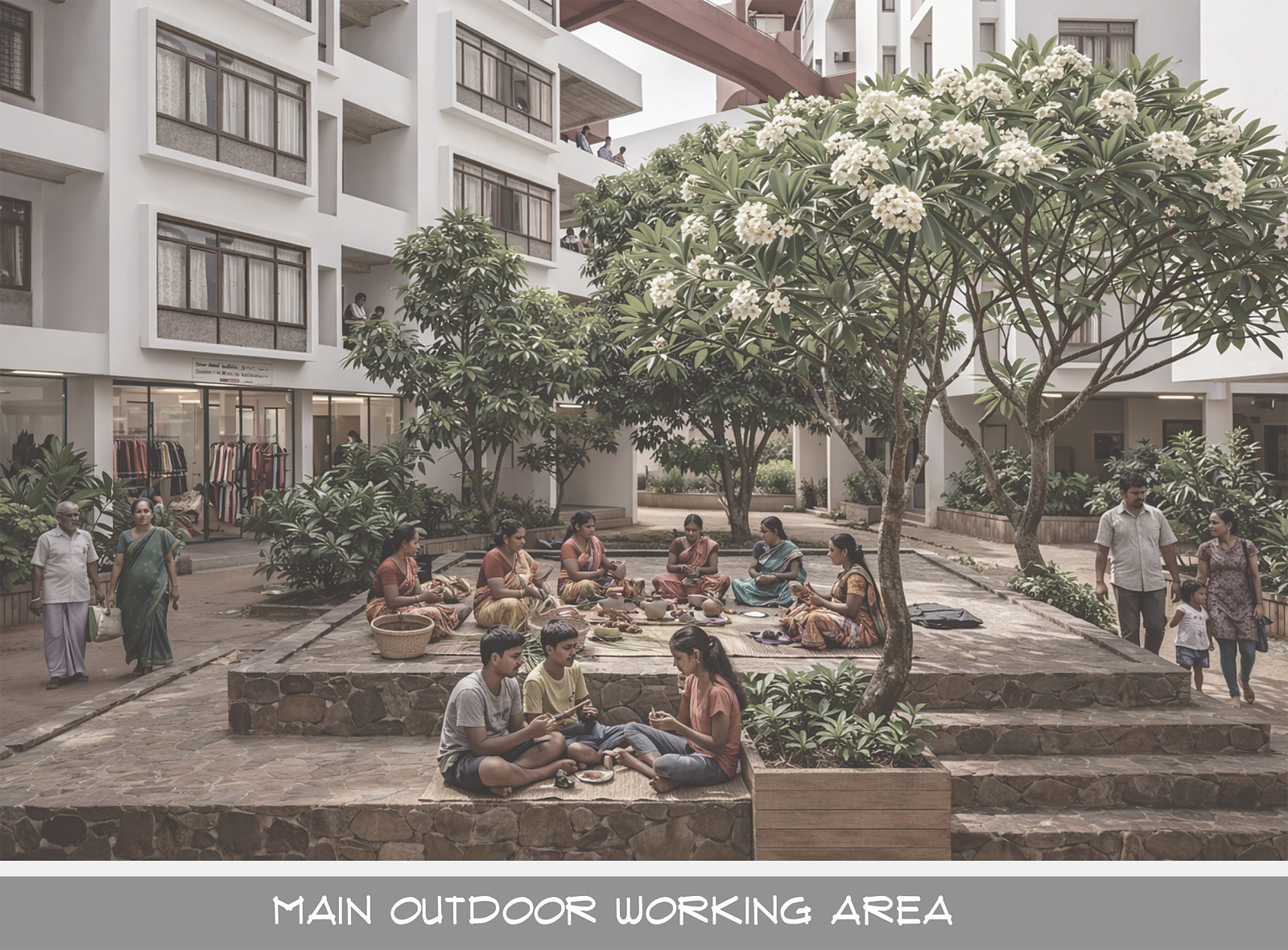
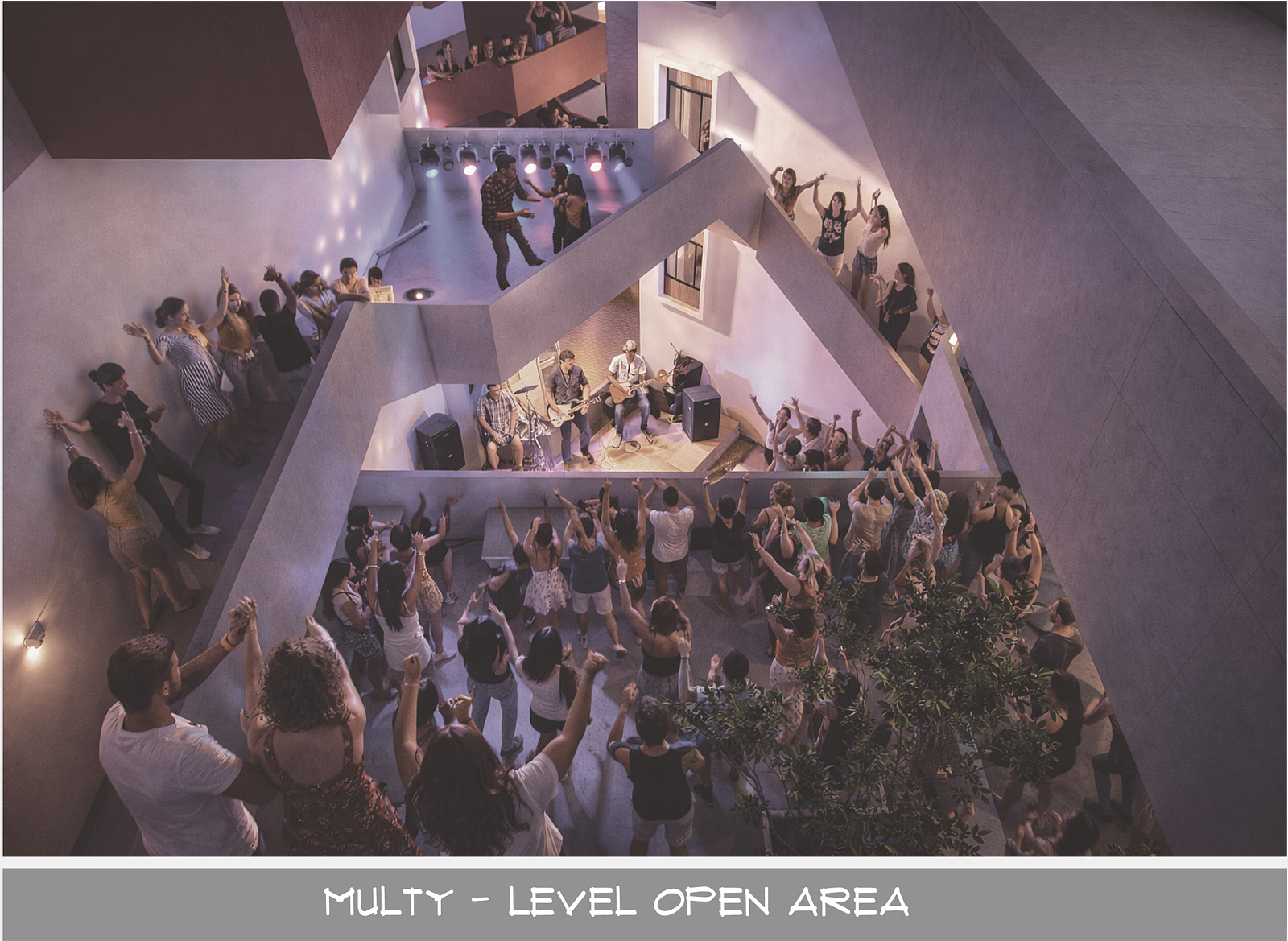
At the ground level, a large central courtyard acts as the social heart of the project. This space is designed for community gatherings, children’s play activities, relaxation, and informal interaction. The courtyard also improves natural ventilation and daylight penetration throughout the development.
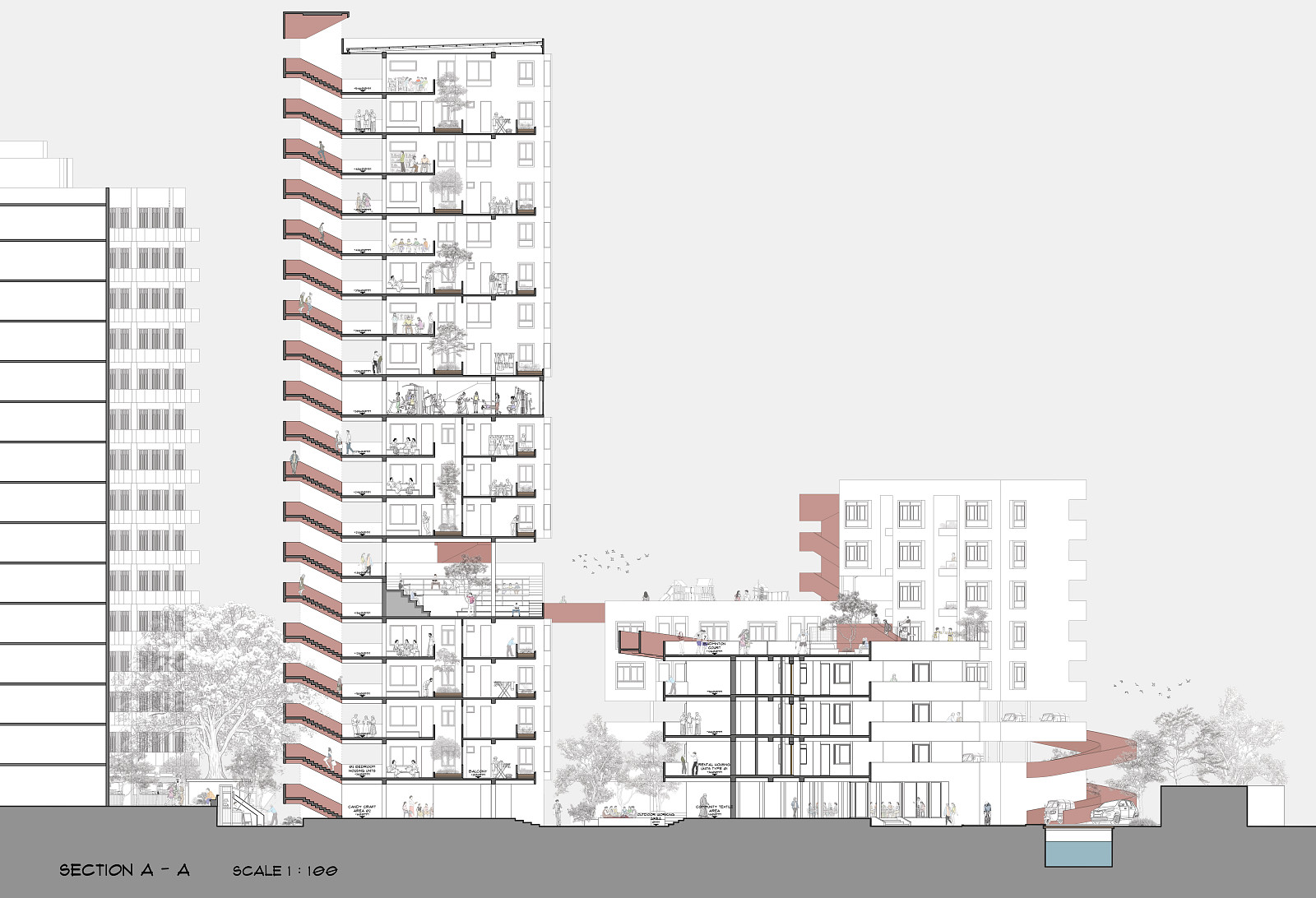
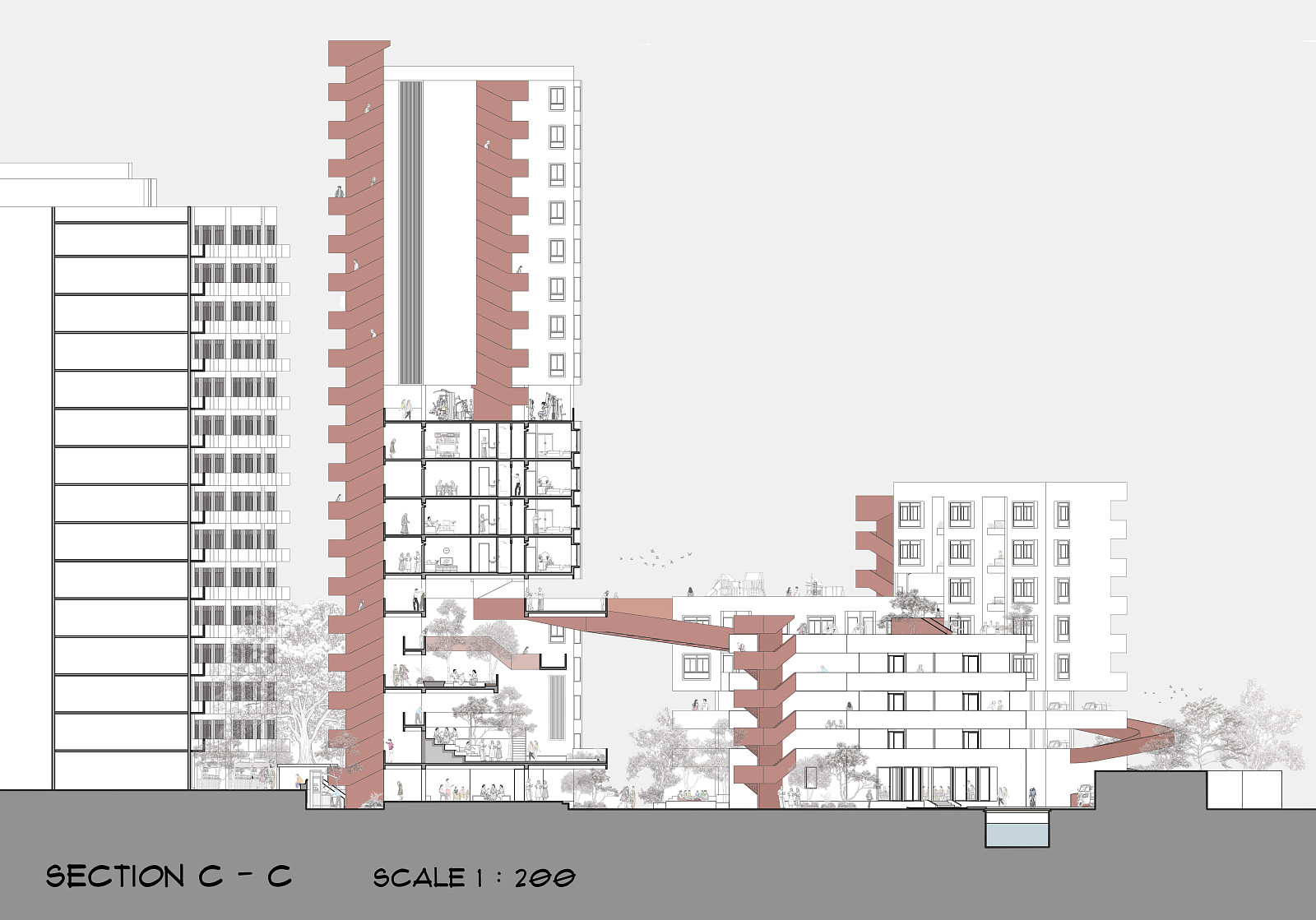
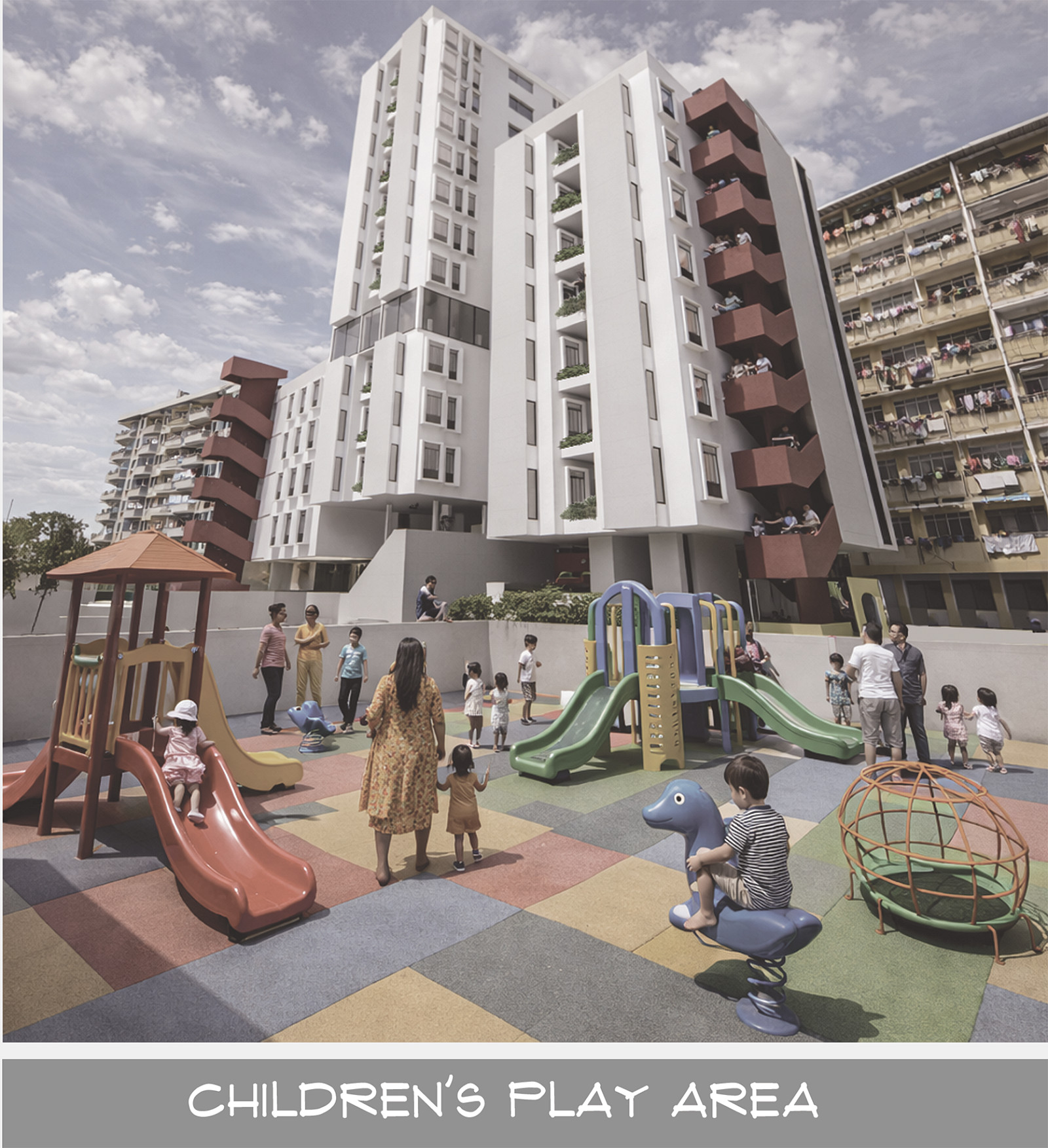
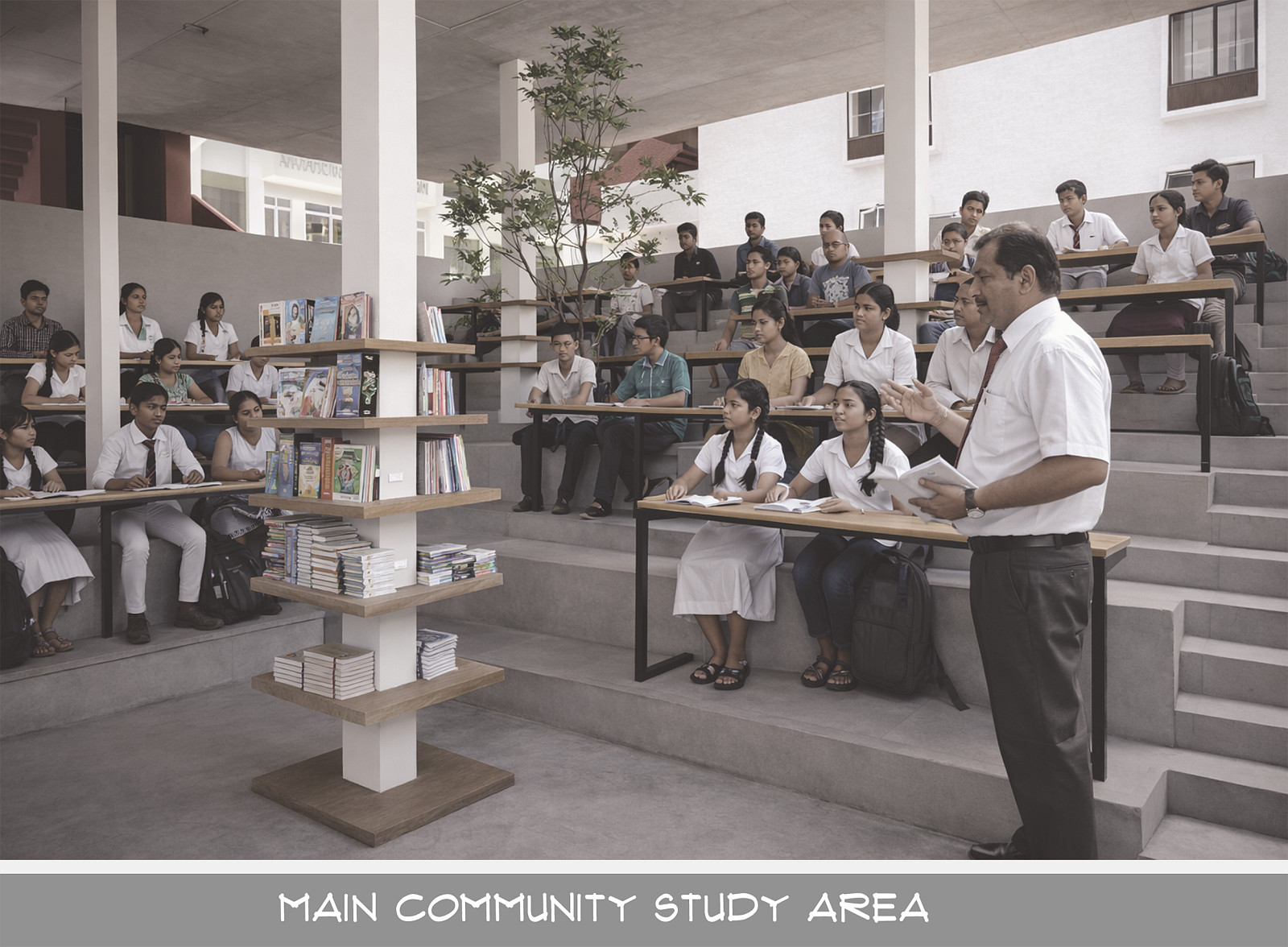
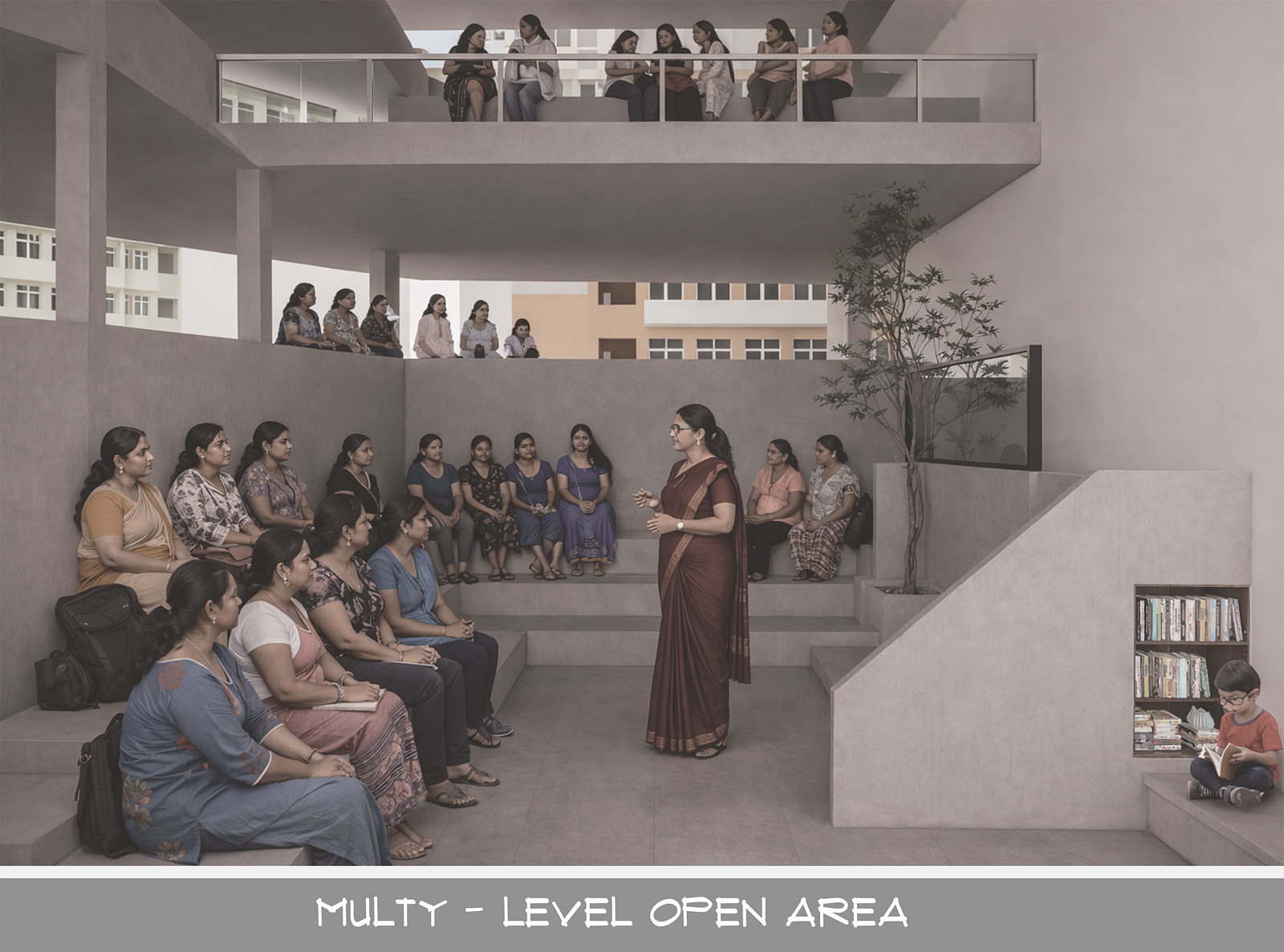
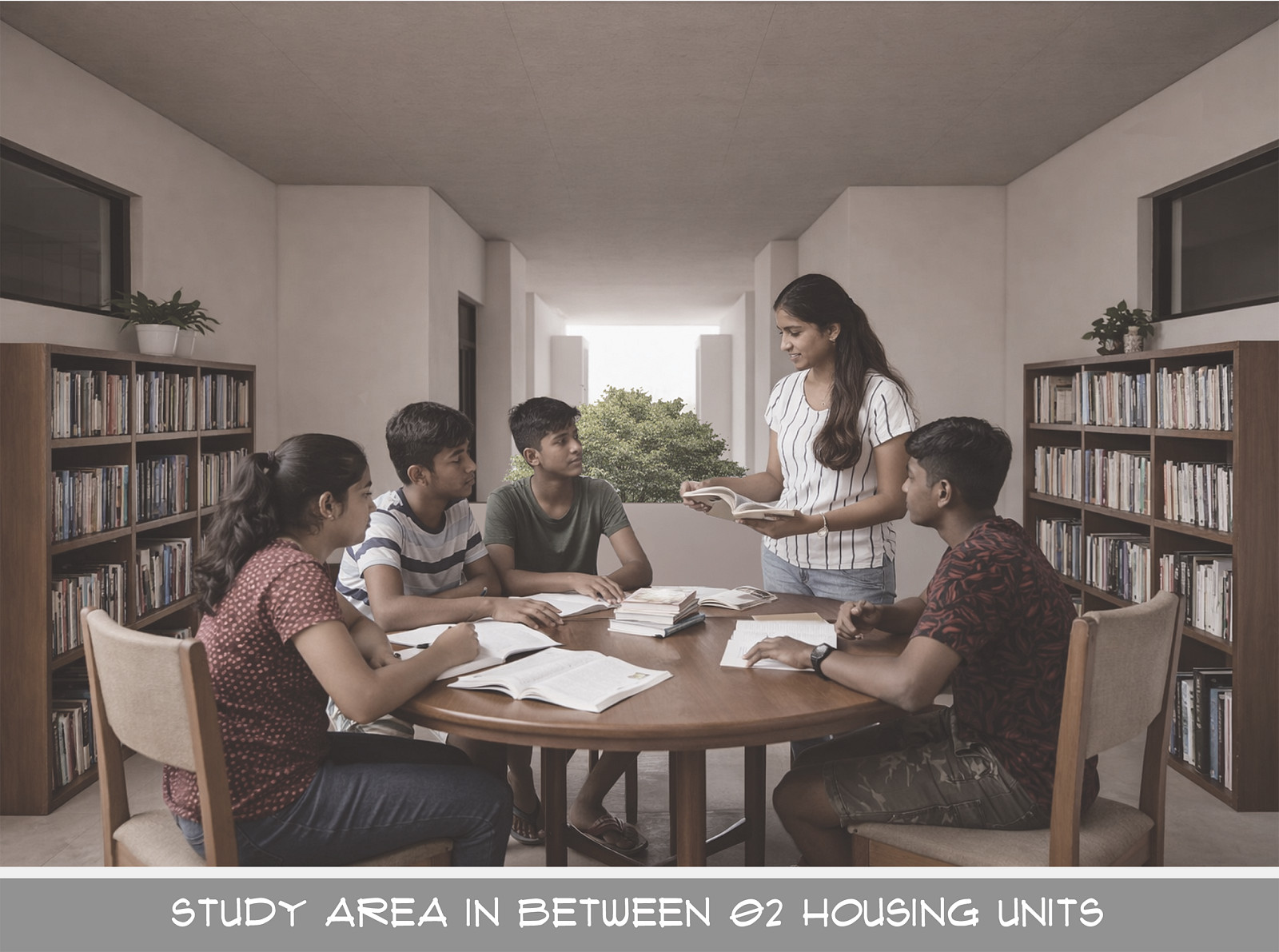
Community decks are introduced at the 4th, 5th, and 10th floors as elevated social platforms. These spaces include play areas, recreational zones, study spaces, and educational facilities for residents. The decks reduce the feeling of vertical isolation commonly found in conventional apartment housing.
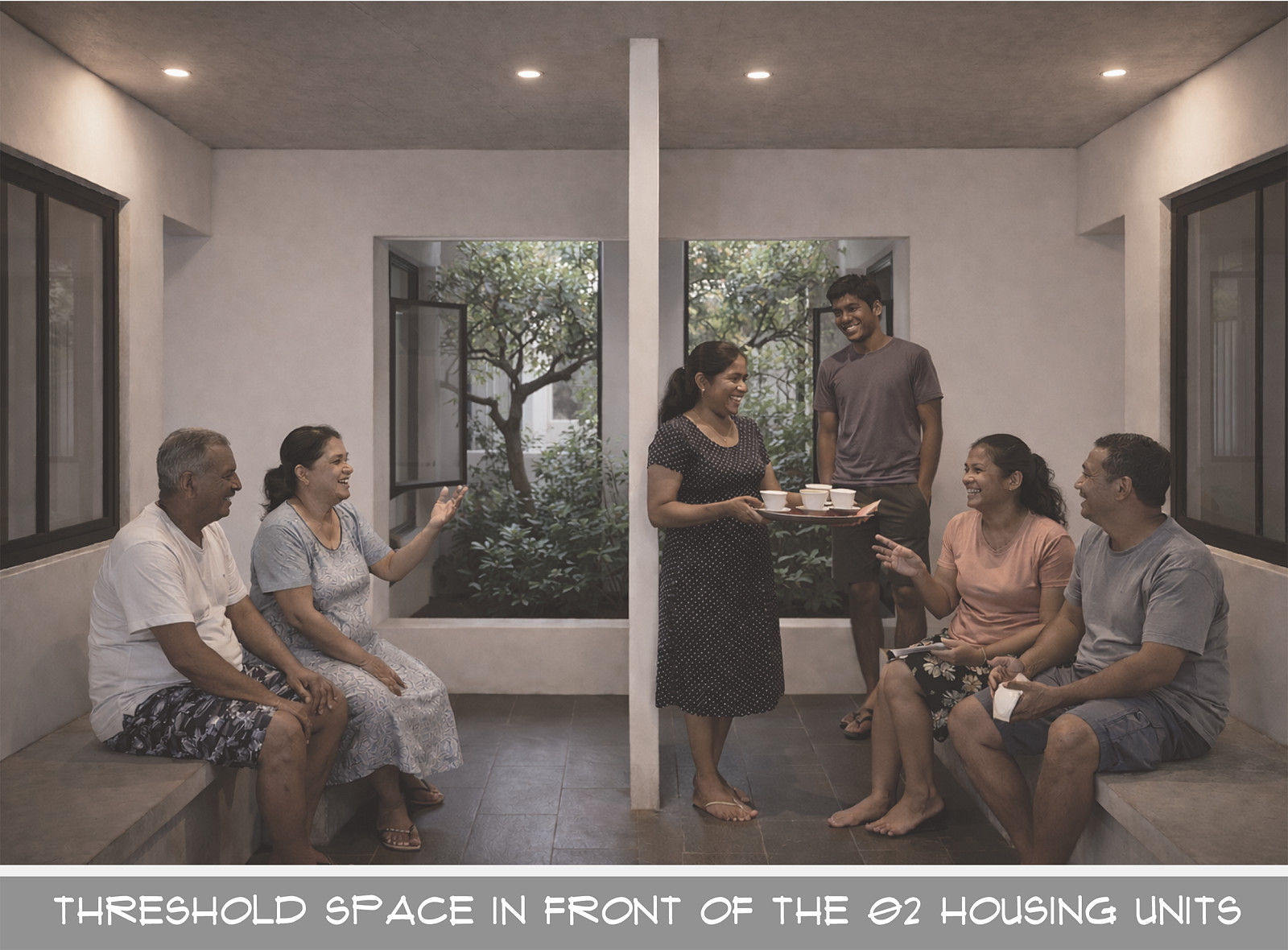
Threshold spaces are placed in front of housing units to create semi-private transition zones between corridors and homes. These spaces encourage neighbor interaction, improve privacy, and allow residents to personalize their living environment.
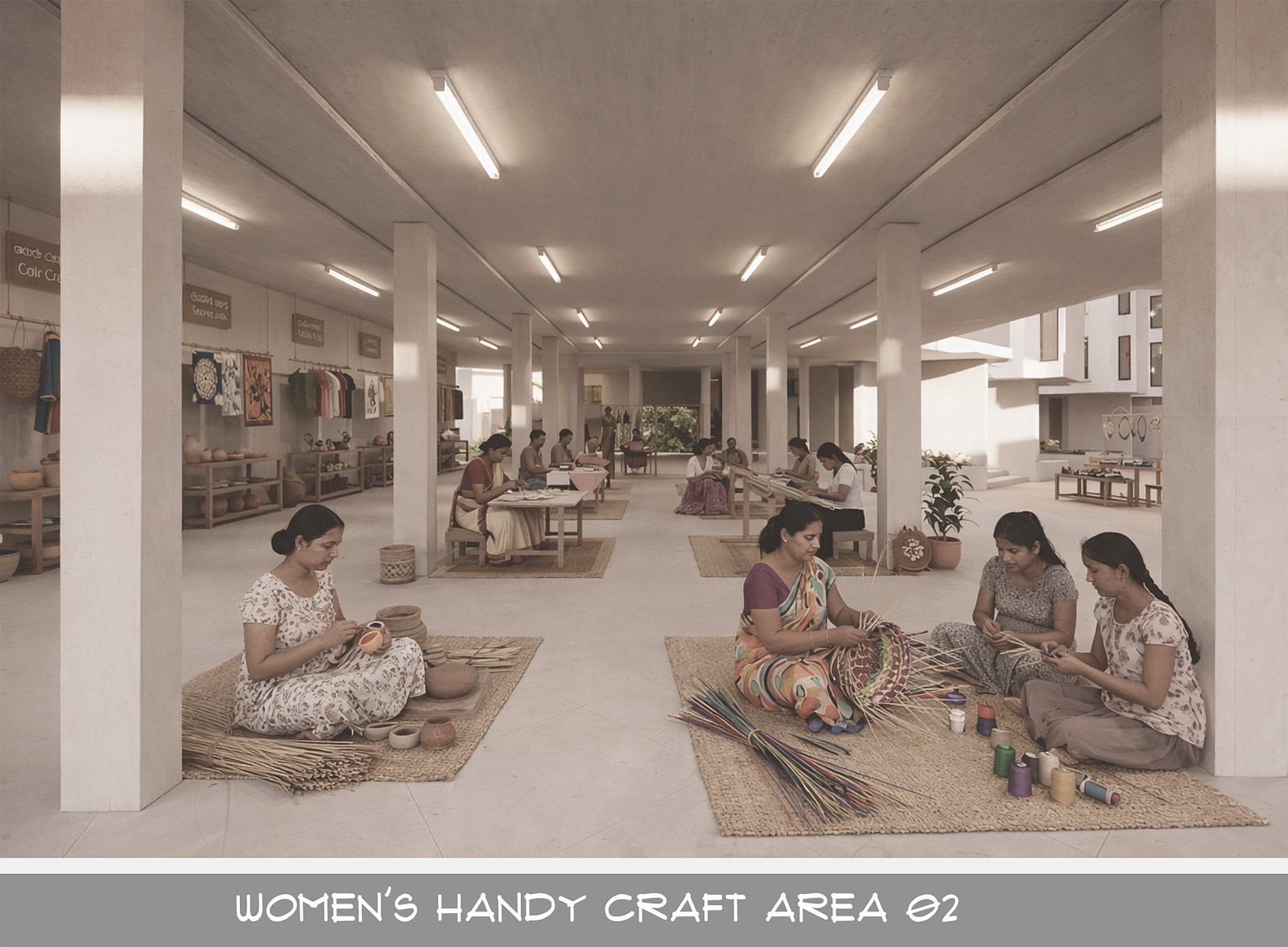
The design also includes commercial spaces, community service areas, study rooms, and multipurpose gathering spaces to support the daily needs of residents and strengthen social cohesion within the housing community.
Technické informace
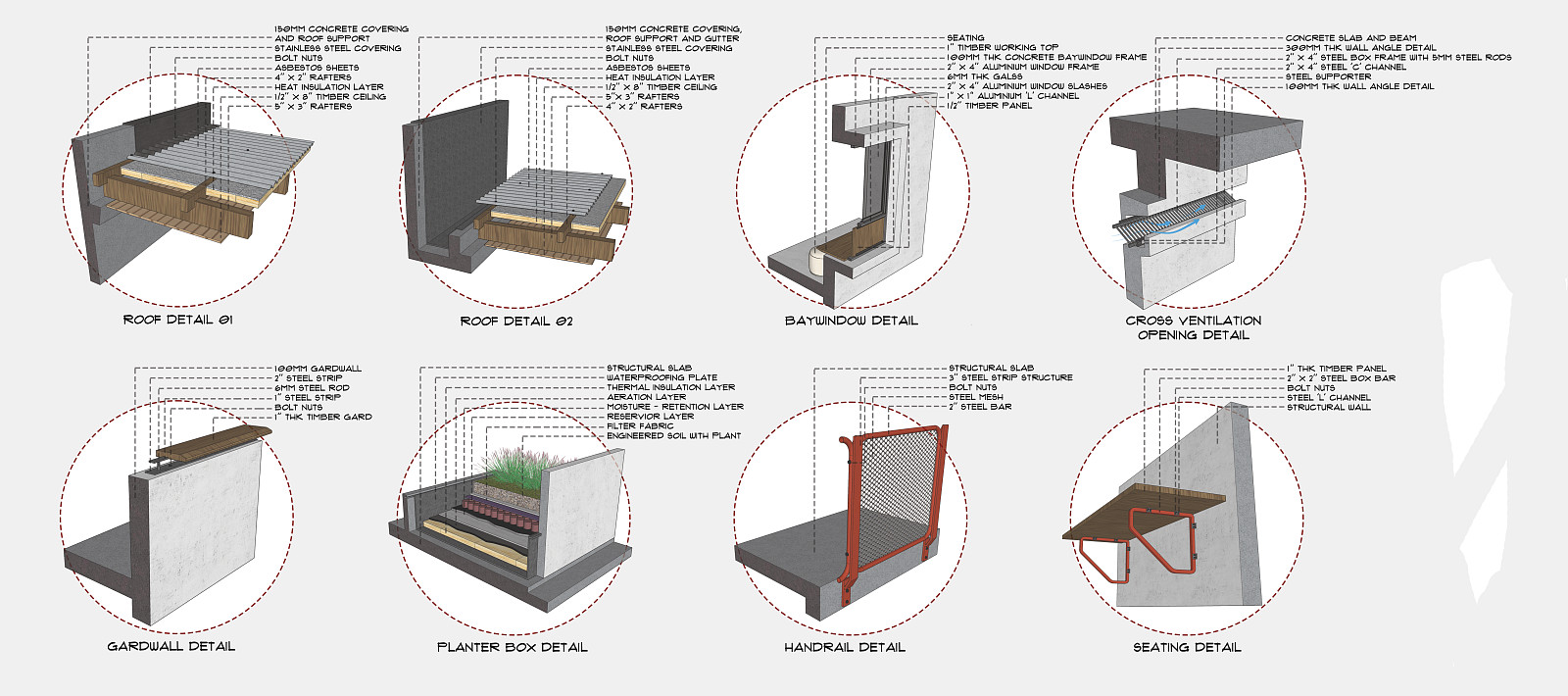
The project uses a reinforced concrete structural system designed to support a high-density vertical housing development while maintaining stability, durability, and flexibility. The construction approach combines concrete, steel, timber, aluminum, and lightweight materials to create a balance between strength, environmental performance, and human comfort.
The building is planned with a modular structural grid that allows efficient organization of housing units, shared community spaces, and circulation areas. Open corridors, cross ventilation openings, bay windows, and semi-open threshold spaces are integrated into the structure to improve natural airflow, daylight penetration, and thermal comfort within the tropical urban climate of Dematagoda.
The technical design also focuses on passive environmental strategies such as shaded openings, insulated roofing systems, landscape-integrated planter boxes, and elevated community decks to reduce heat gain and improve the microclimate of the housing environment. Lightweight secondary structural elements and steel support systems are used to create flexible communal spaces, seating areas, handrails, and façade details without increasing excessive structural load.
Water management and durability are important considerations due to the canal-side location and flood-sensitive urban condition. The construction incorporates proper drainage systems, waterproofing layers, and durable low-maintenance materials suitable for long-term urban residential use.
Overall, the technical approach supports the project’s main goal of transforming conventional social housing into a socially connected, environmentally responsive, and community-oriented vertical living environment.


Copyright © 2026 INSPIRELI | All rights reserved. Use of this website signifies your agreement to the Terms of Use, Privacy Policy, and use of cookies.
