BLACK WATER COURTYARD


Idea projektu
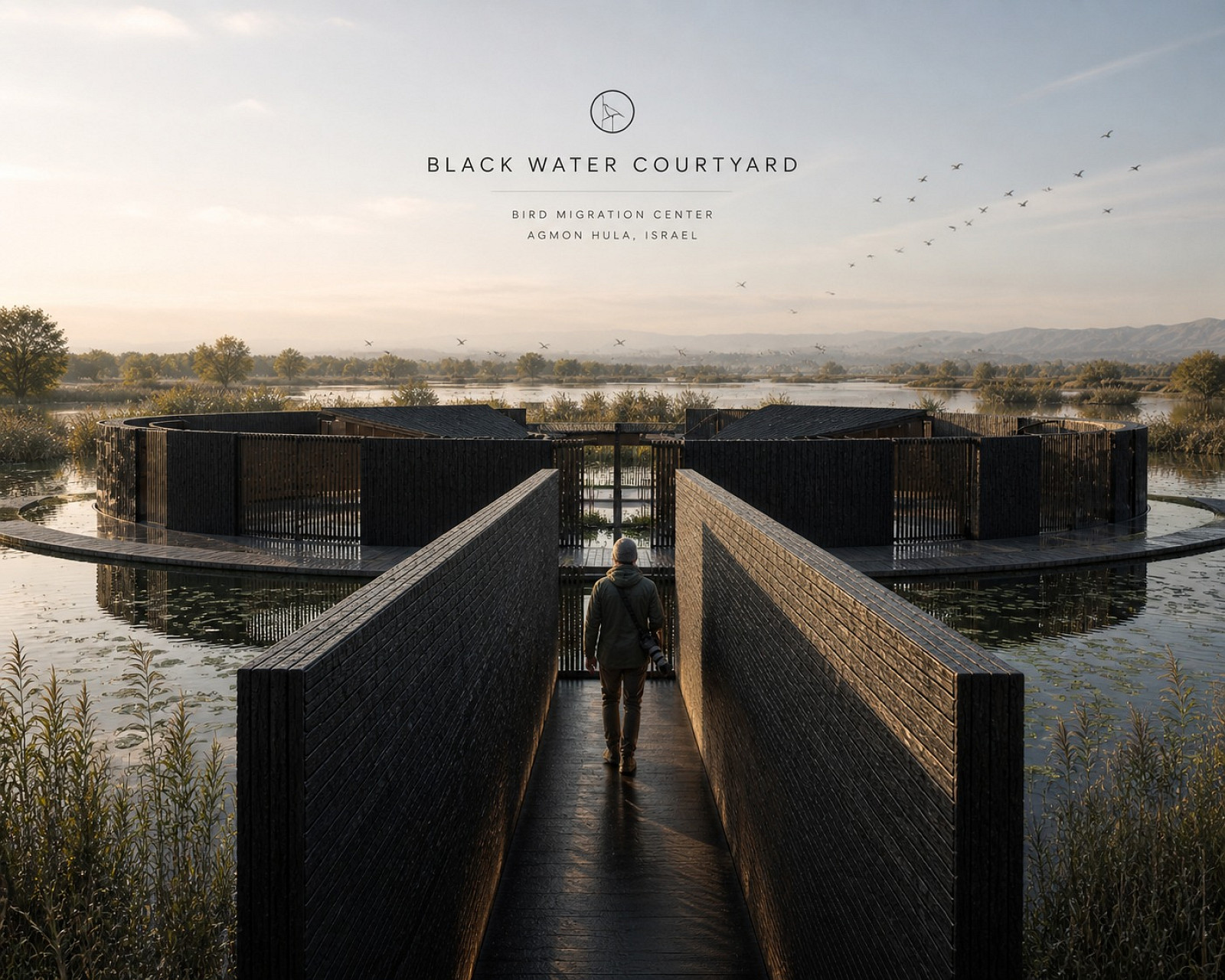
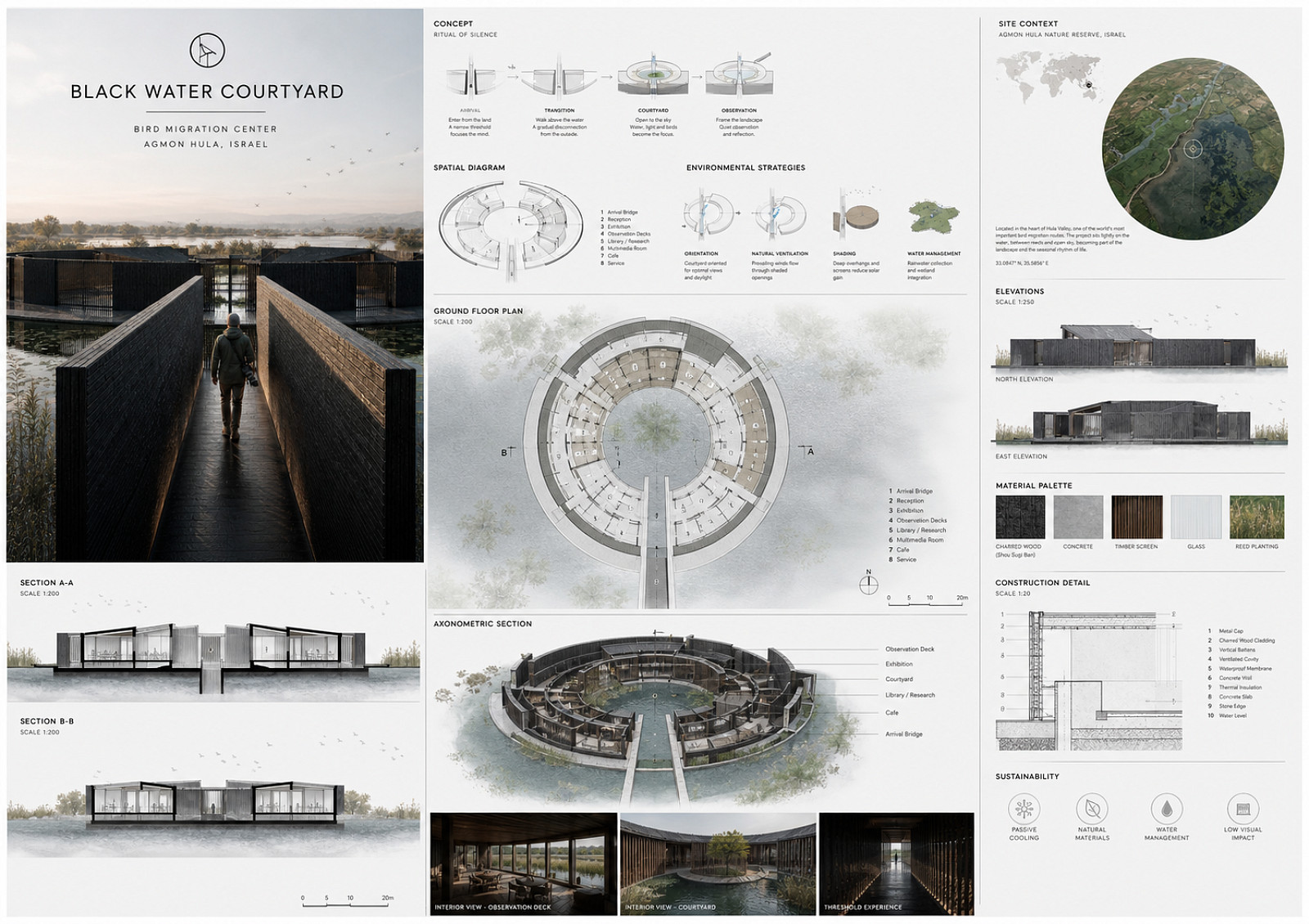
This is a seasonal birdwatching complex in the Hula Lake, born from the encounter between bird migration and the human need to pause, slow down and observe. The project does not treat nature as a backdrop, but as a living system within which architecture must act with delicacy, silence and precision.
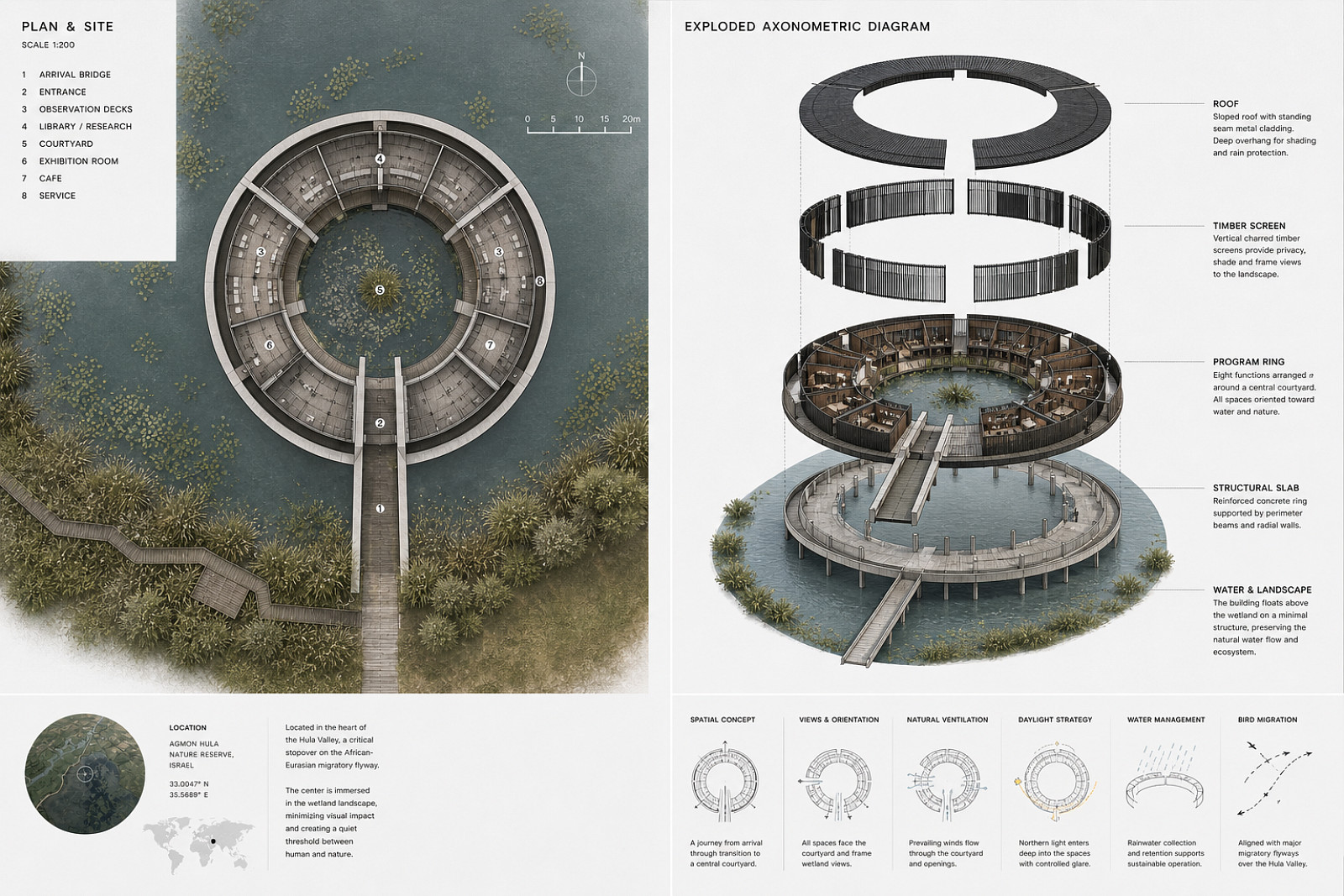
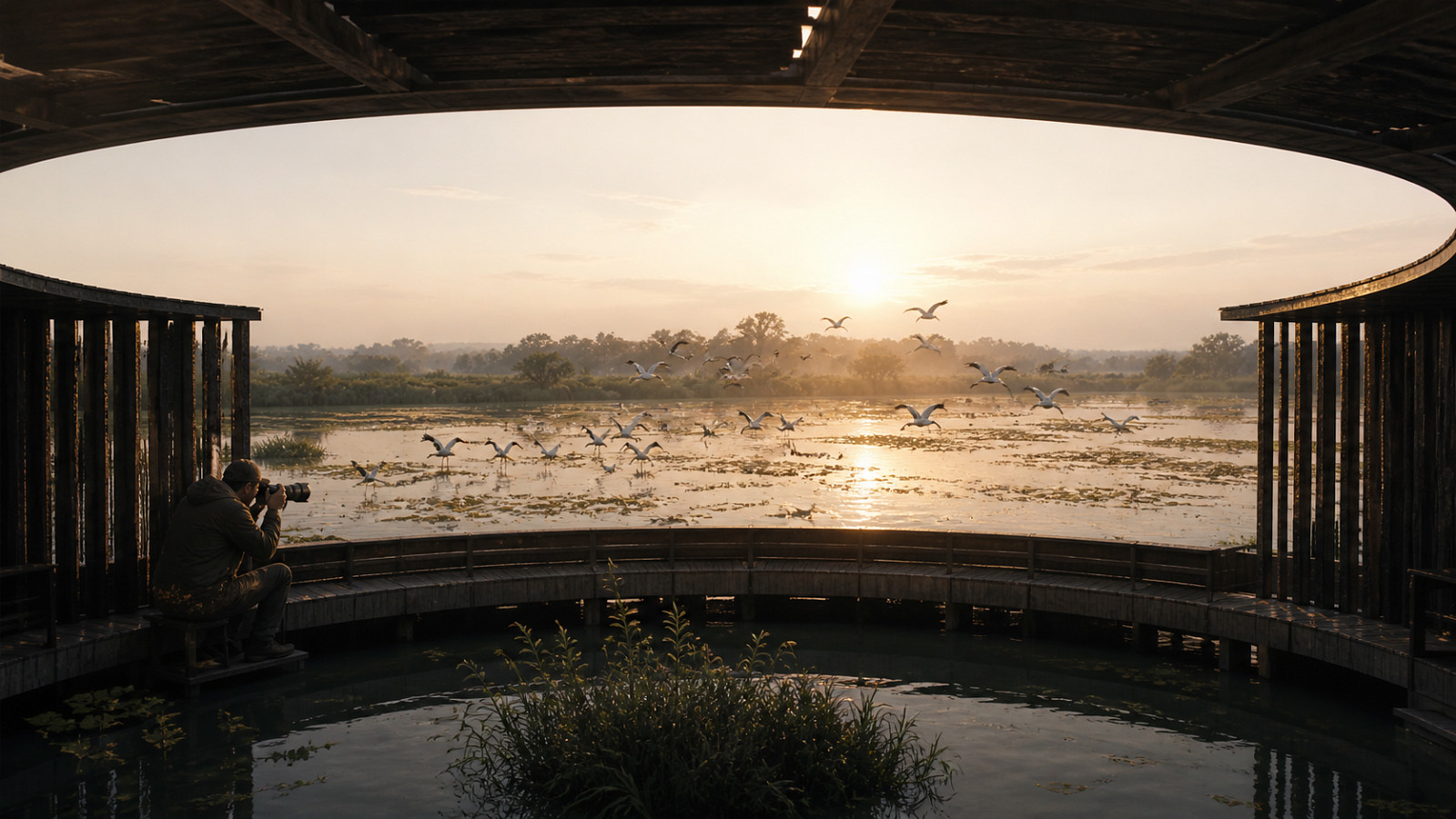
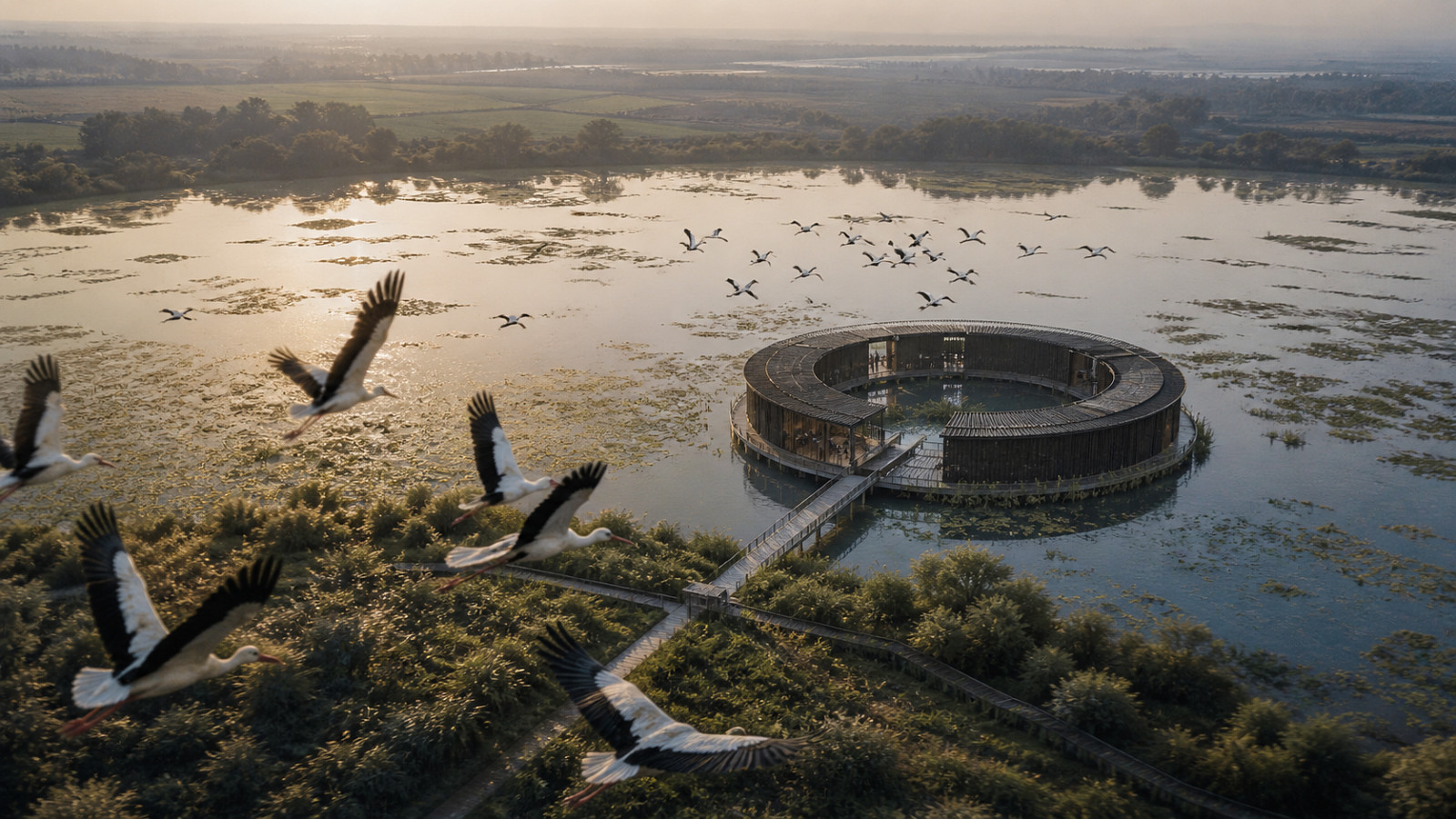
The building is located along the waterline, as a low and quiet ring floating above the wetland. It does not attempt to control the landscape, but to dissolve into it. Its circular form creates a protected inner courtyard, a space of focus and waiting, while allowing slow movement around different observation points toward the lake, the reeds, the sky and the flocks of storks passing above the site during migration season.
The entrance to the project is designed as a sequence of thresholds: a narrow passage over the water, tall walls of charred black timber, a gradual reduction of noise and light, and then an opening into a wide observation space. It is a transition from everyday life into a state of attention. The visitor does not arrive in order to consume the landscape, but in order to learn how to look.
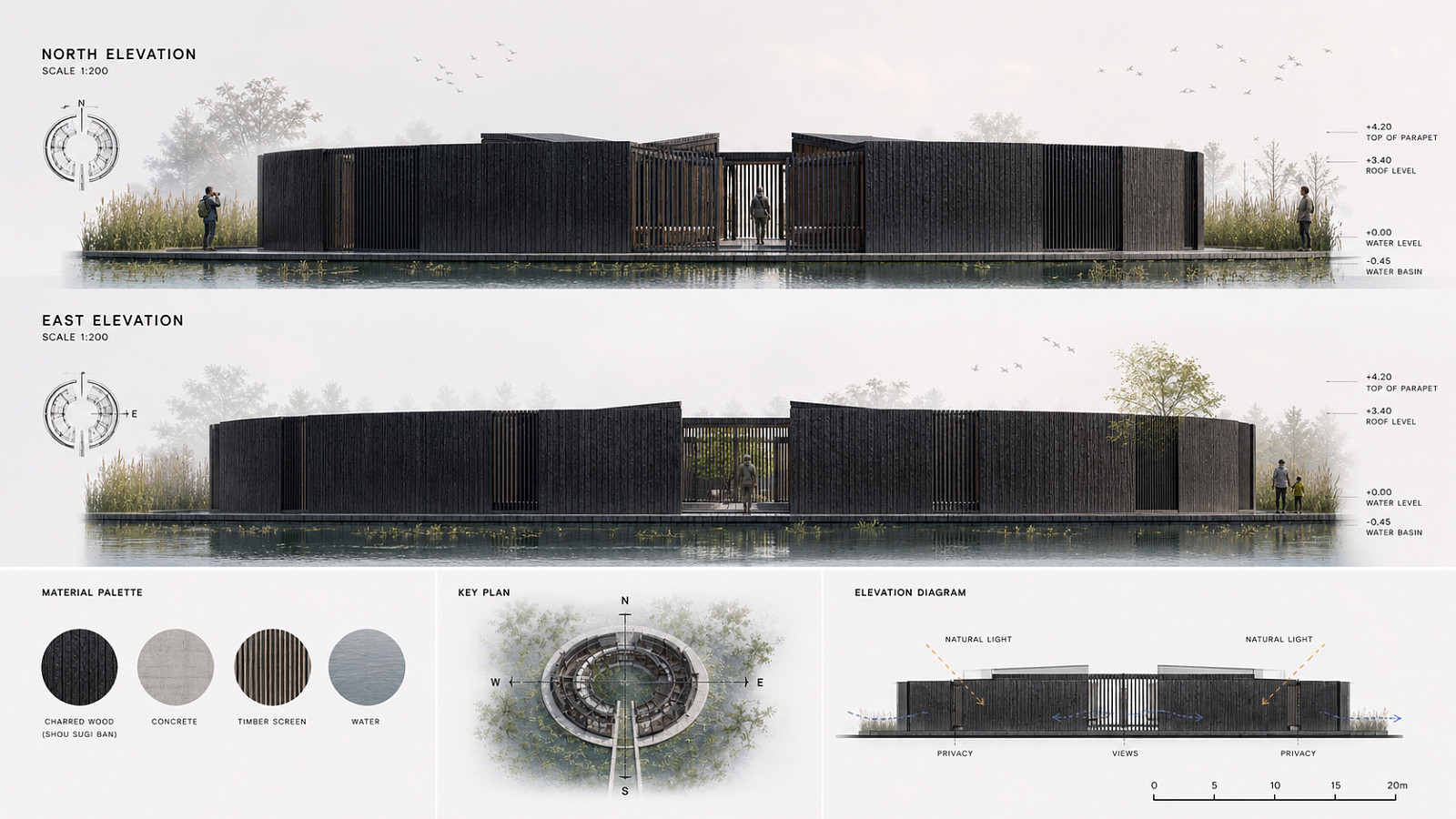
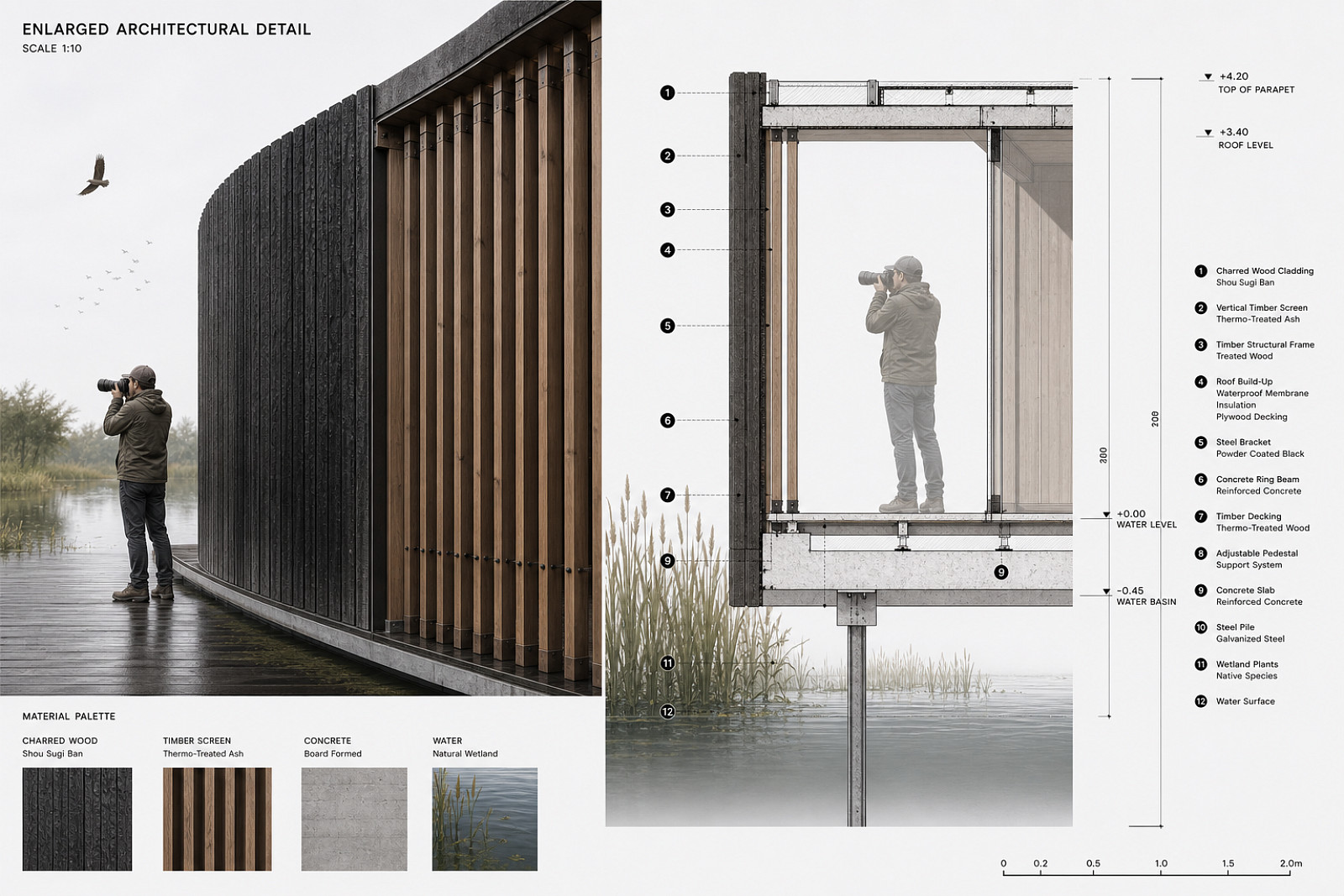
The main material, charred black timber, gives the building a strong yet restrained presence. It absorbs light, conceals the human body and reduces visual disturbance for wildlife. Together with light concrete, timber decking, water and wetland vegetation, it creates an architecture of shadow, reflection and camouflage.
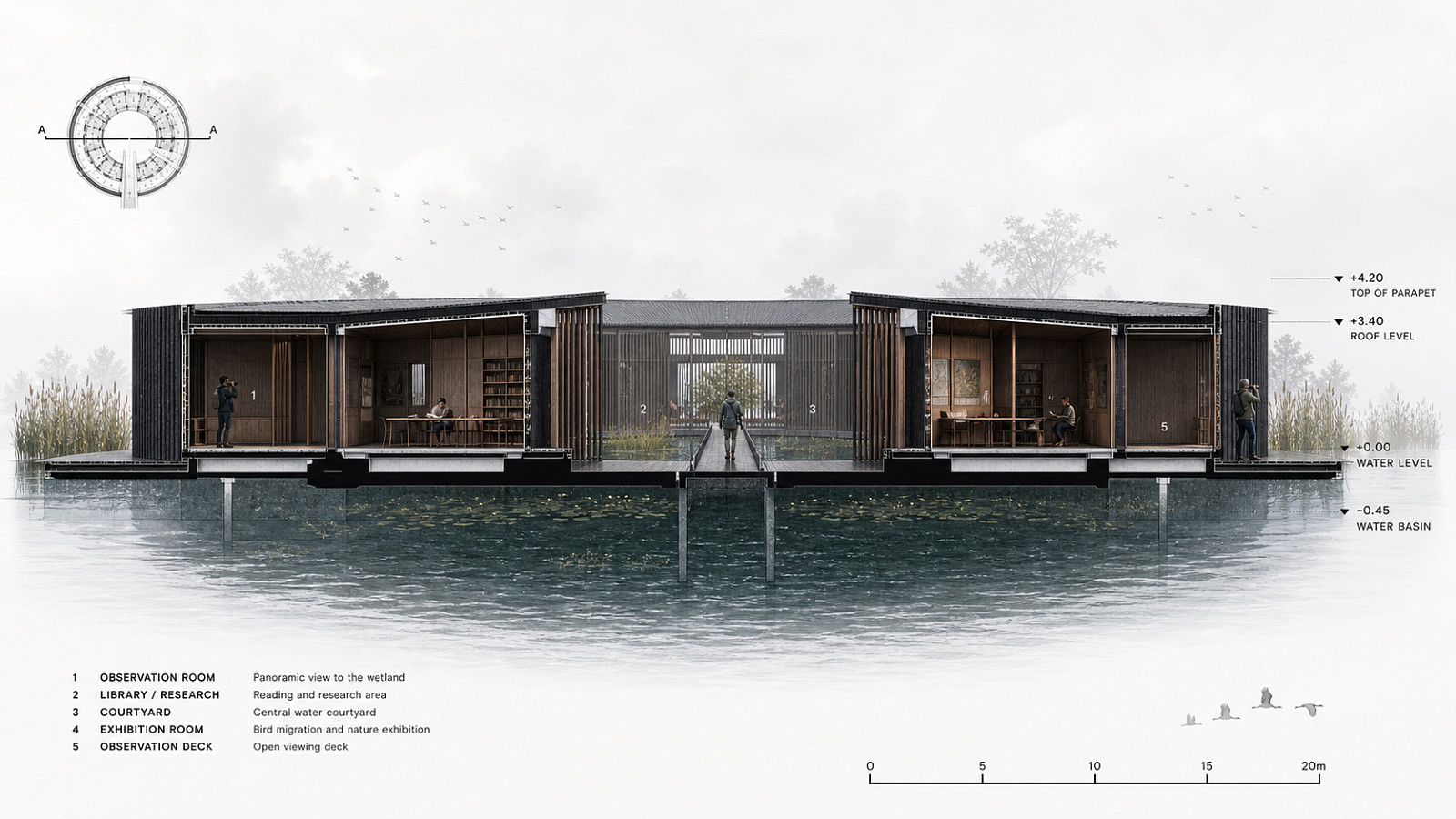
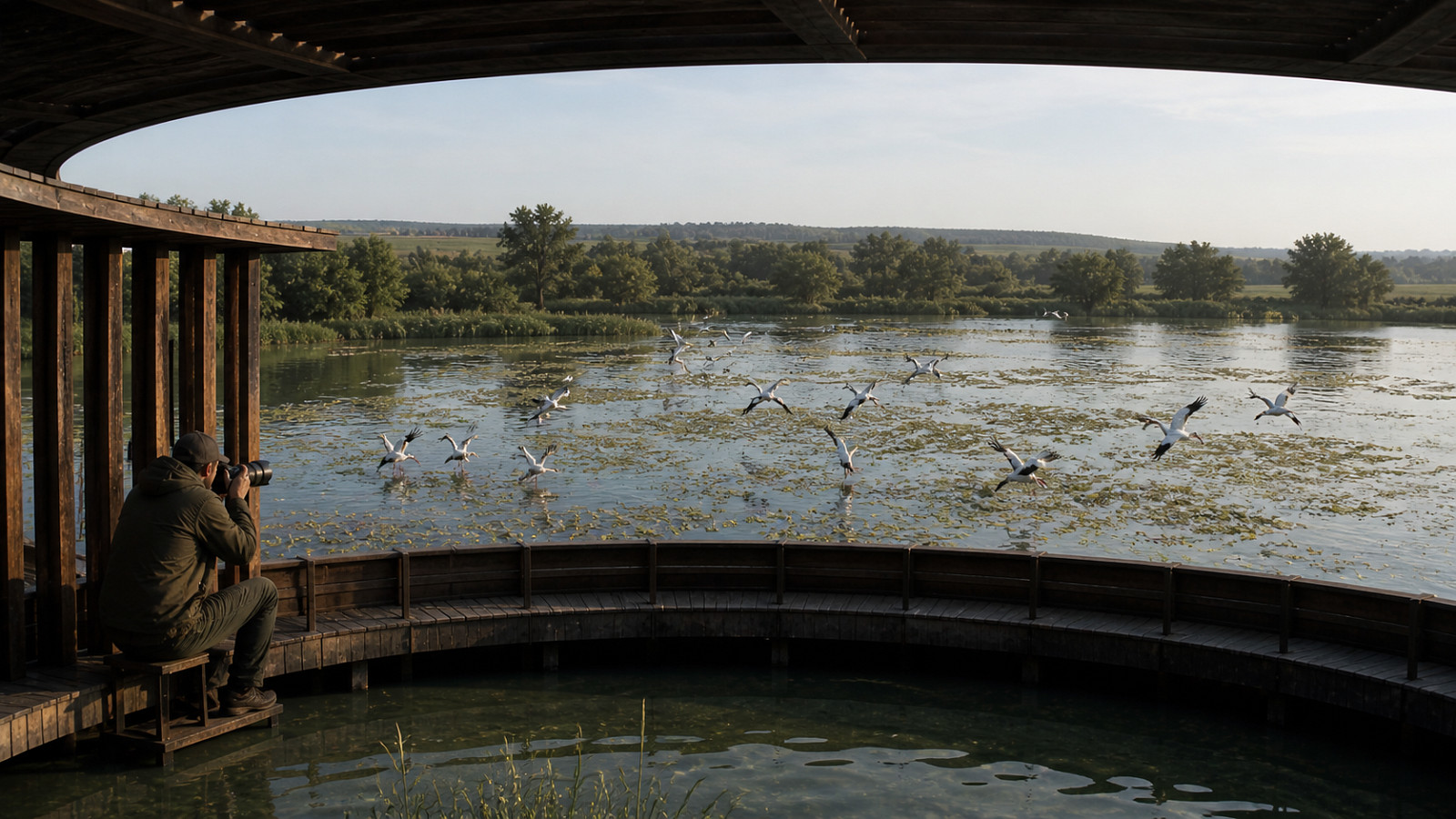
The program combines observation terraces, research spaces, a library, an exhibition area, waiting zones and quiet walking paths. Each space is oriented toward a different moment of watching: an open view toward the lake, a narrow view through a timber screen, a low view toward the water and an elevated view toward the migration route.
The project seeks to propose an architecture that does not shout. An architecture that understands that the most important moment on the site is not the building itself, but the passing bird, the wind in the reeds, the reflection on the water and the person who learns to become quiet enough to see.
Popis projektu
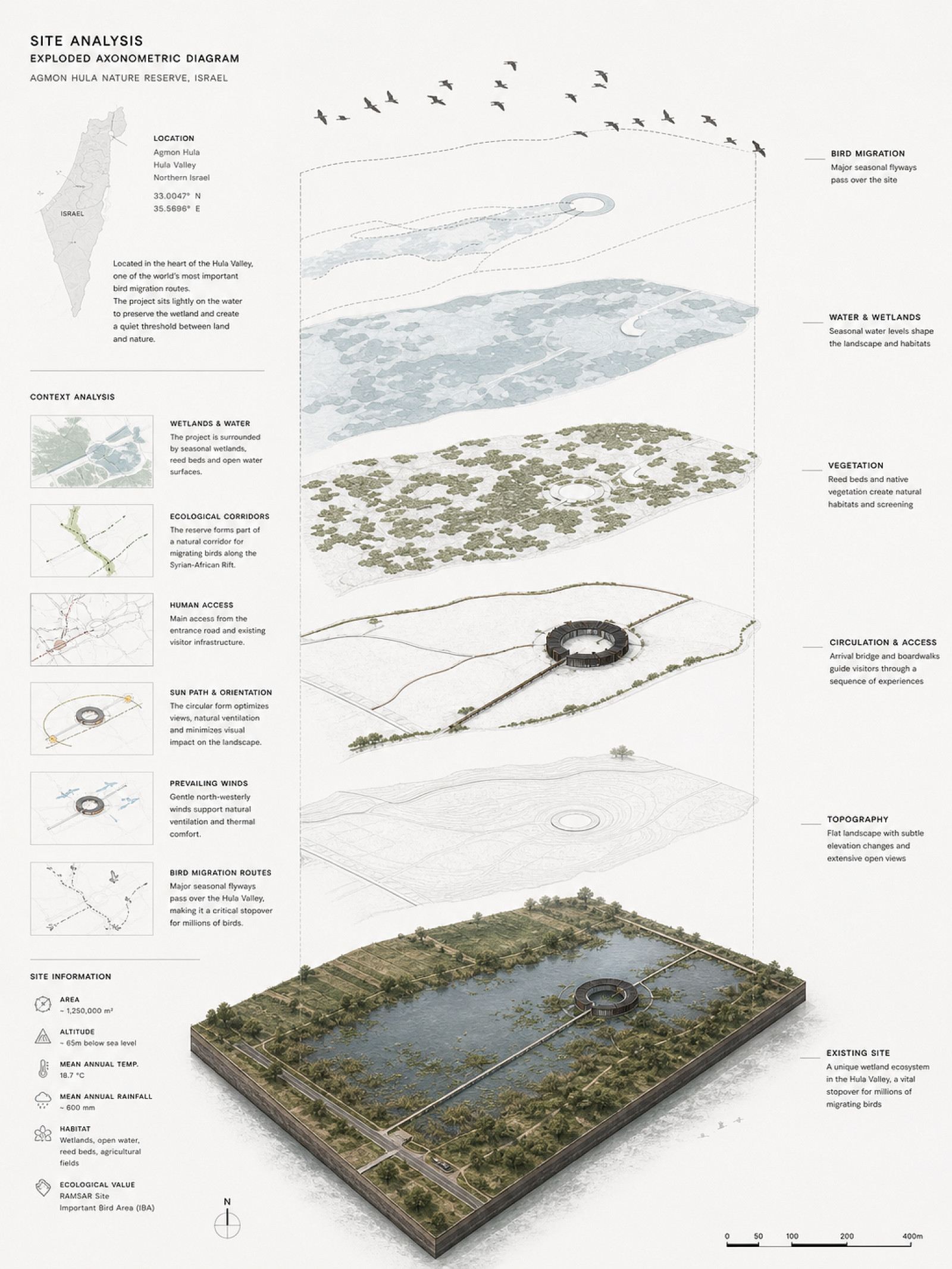
The project is a seasonal birdwatching complex located at Agamon Hula, designed around the meeting point between bird migration, wetland ecology and the human need to slow down, pause and observe. The project does not treat nature as a background scenery, but as a living system in which architecture must operate quietly, carefully and precisely.
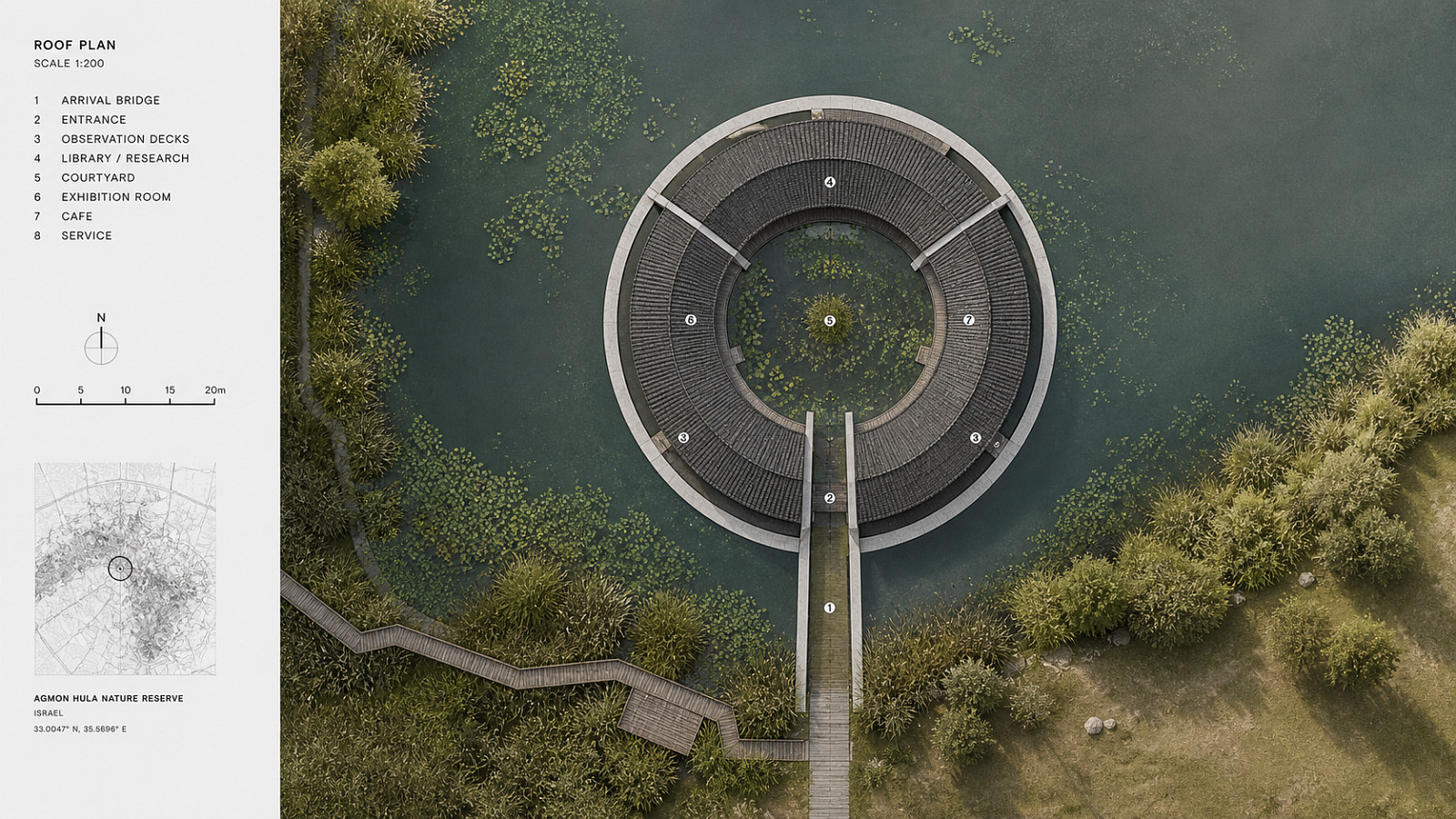
The building is positioned along the waterline as a low circular structure floating above the wetland. Its ring form creates a protected inner courtyard for waiting, gathering and focused observation, while allowing visitors to move slowly around a sequence of viewing points facing the lake, reeds, sky and migration routes.
The visitor experience is organized as a gradual transition from the everyday world into a state of attention. A narrow passage over the water leads into tall walls of charred black timber, where light and noise are gradually reduced before opening into wider observation spaces. The project invites visitors not simply to consume the view, but to learn how to look, listen and become part of the rhythm of the site.
The program includes birdwatching terraces, research spaces, a library, exhibition areas, waiting zones and quiet walking paths. Each space frames a different type of observation: open views toward the lake, narrow views through timber screens, low views toward the water and elevated views toward the seasonal migration of birds.
The project proposes an architecture of silence, camouflage and restraint. Its purpose is not to dominate the landscape, but to support moments of attention between people, birds, water, reeds and sky.
Technické informace
The project is based on a lightweight circular structure located along the wetland edge of Agamon Hula. The building is raised slightly above the water and marsh landscape, allowing the natural wetland system, vegetation and wildlife movement to continue beneath and around it with minimal disturbance.
The main structural and material system combines charred black timber, light concrete elements, timber decking, screens, walkways and observation platforms. The charred timber is used both as a protective exterior material and as a visual strategy: it absorbs light, reduces glare, conceals human movement and minimizes visual disturbance for birds and wildlife.
The spatial organization is arranged as a ring-shaped circulation system around a protected inner courtyard. Observation terraces, research rooms, exhibition spaces, a library and quiet walking routes are integrated into the circular form. Openings, timber screens and viewing slots are carefully positioned to frame different views toward the lake, reeds, water surface, sky and bird migration routes.
The project uses passive environmental strategies suited to the wetland context: shaded circulation, natural ventilation, controlled daylight, reduced reflective surfaces and elevated construction that avoids unnecessary damage to the ground and water ecosystem. The architecture is designed to work with the seasonal changes of the site, including water levels, vegetation growth, bird movement and changing light conditions.
Materials include charred timber cladding, timber decks, light concrete foundations and walls, simple metal details, screened openings and wetland vegetation integrated into the surrounding landscape. The technical logic of the project supports its main architectural intention: to create a quiet, low-impact birdwatching environment that protects the ecological system while allowing people to observe it with care.

Copyright © 2026 INSPIRELI | All rights reserved. Use of this website signifies your agreement to the Terms of Use, Privacy Policy, and use of cookies.