THE LAST PLASTIC


Idea projektu
THE LAST PLASTIC
Architecture Designed to Disappear
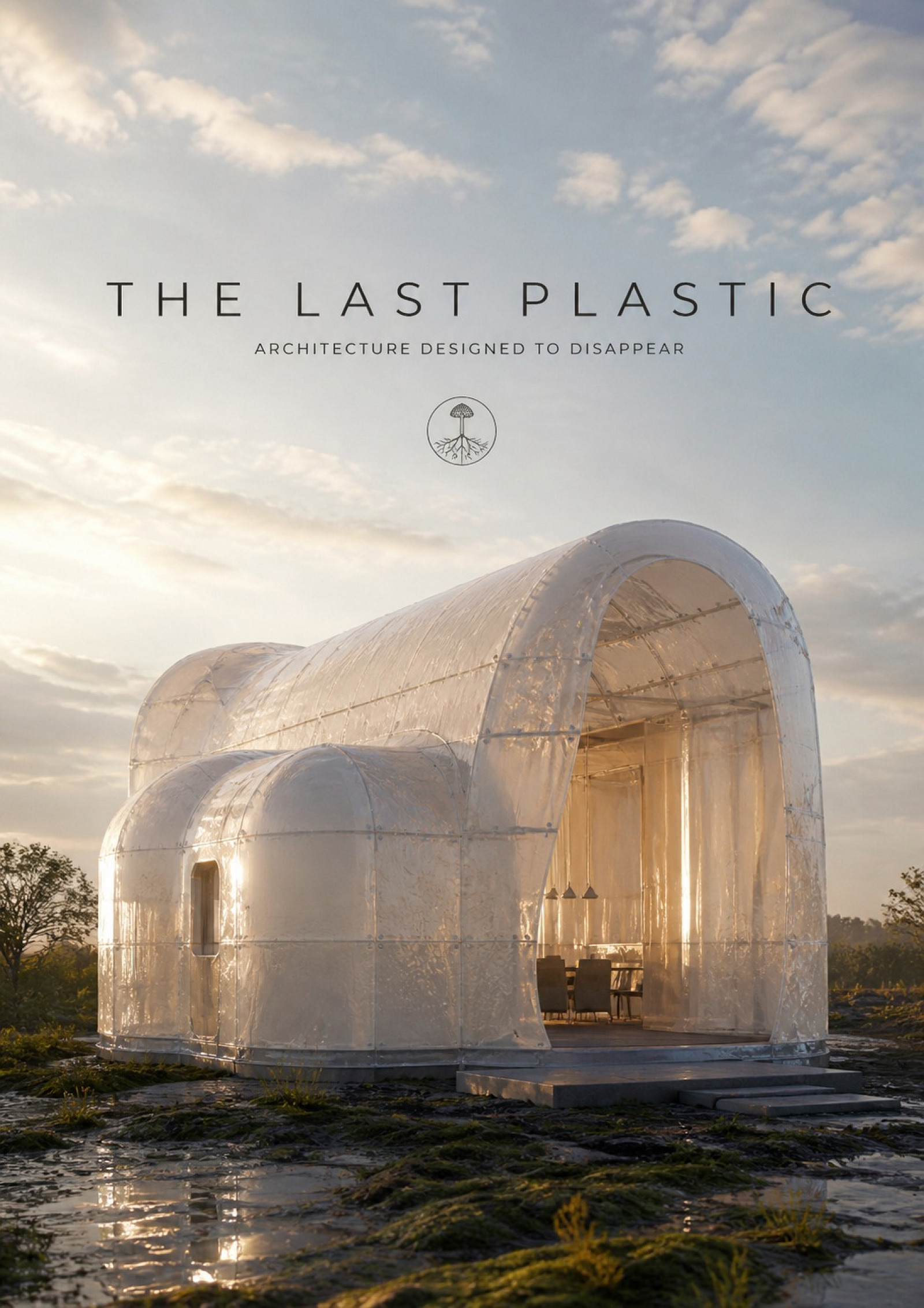
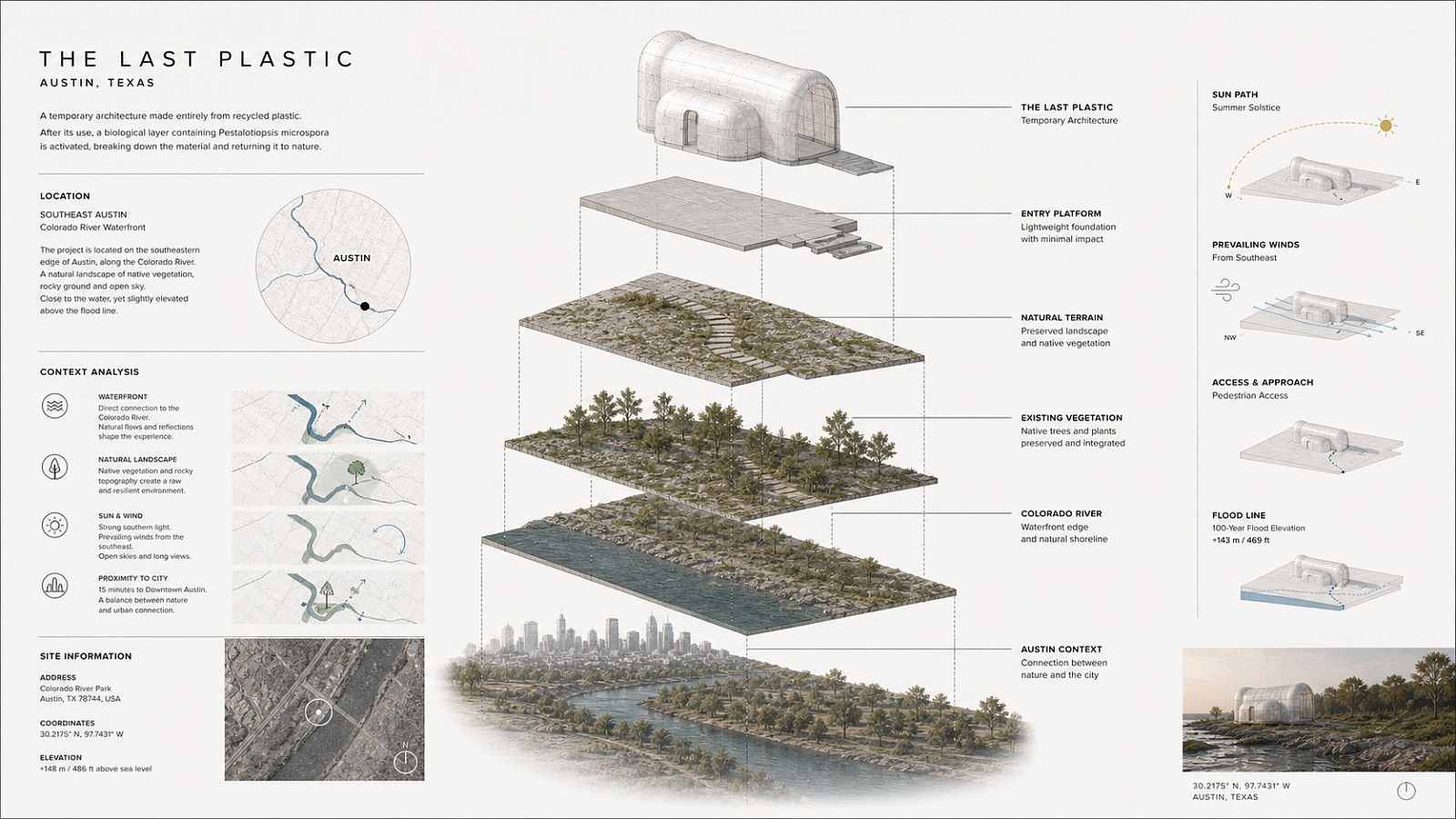
THE LAST PLASTIC proposes a temporary architecture that does not end in demolition, but in a carefully designed biological process. The project emerged from a fundamental question: what happens to a building after it has fulfilled its purpose? Instead of treating the end of a building’s life as an external problem, the project integrates decay, transformation, and disappearance into the architectural concept itself.
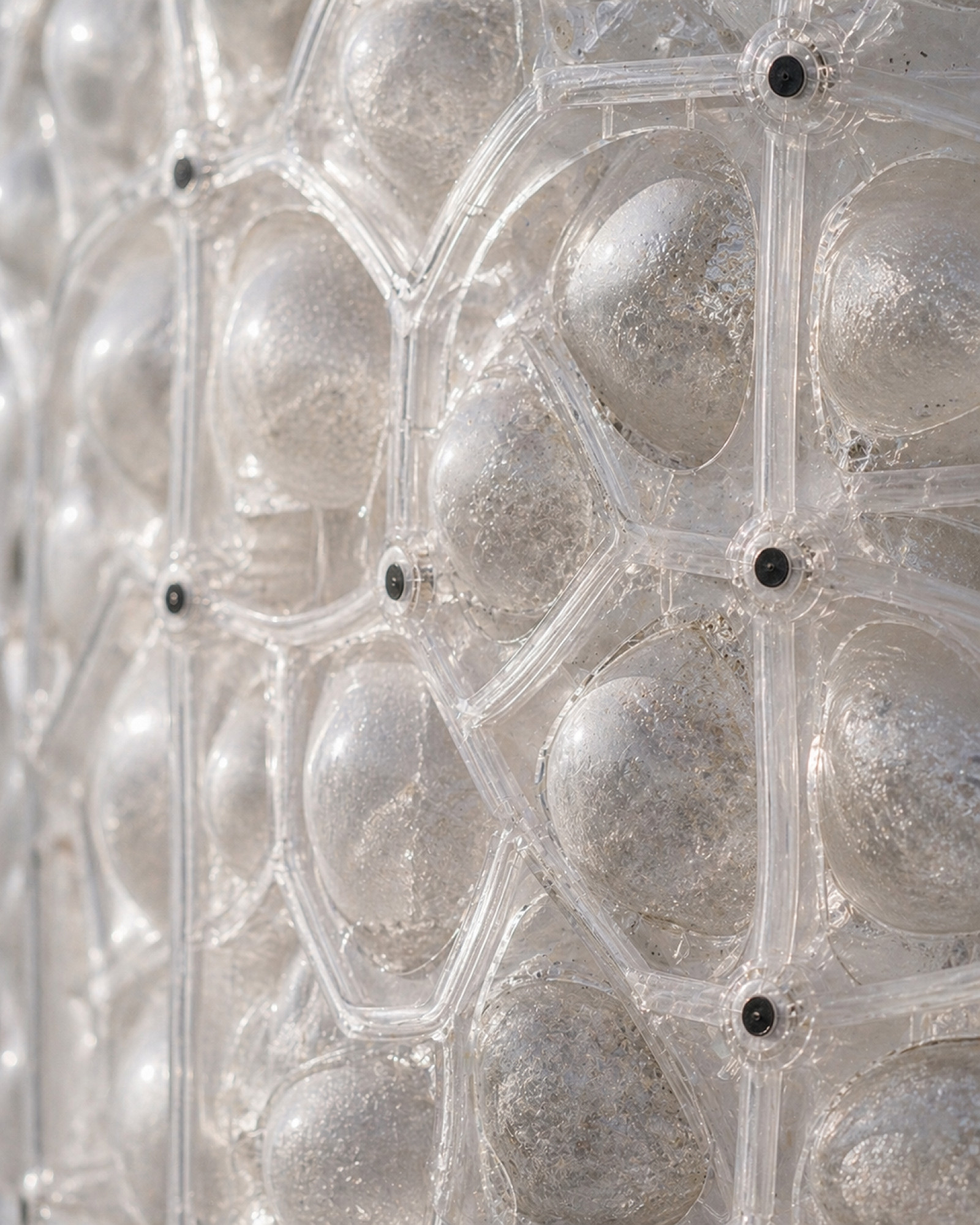
The structure is built entirely from recycled translucent plastic — a material historically associated with consumption, permanence, and environmental waste. Here, plastic is redefined as a temporary architectural medium: lightweight, modular, transportable, and intentionally impermanent. The project transforms the material from a symbol of pollution into a carrier of controlled biological transformation.
The building is designed with a planned lifespan of approximately 15 years. During this period, it functions as a fully operational architectural structure: a temporary dwelling, research pavilion, emergency shelter, or cultural space. Its lightweight modular envelope allows rapid construction with minimal environmental impact while maintaining spatial comfort and atmospheric quality.
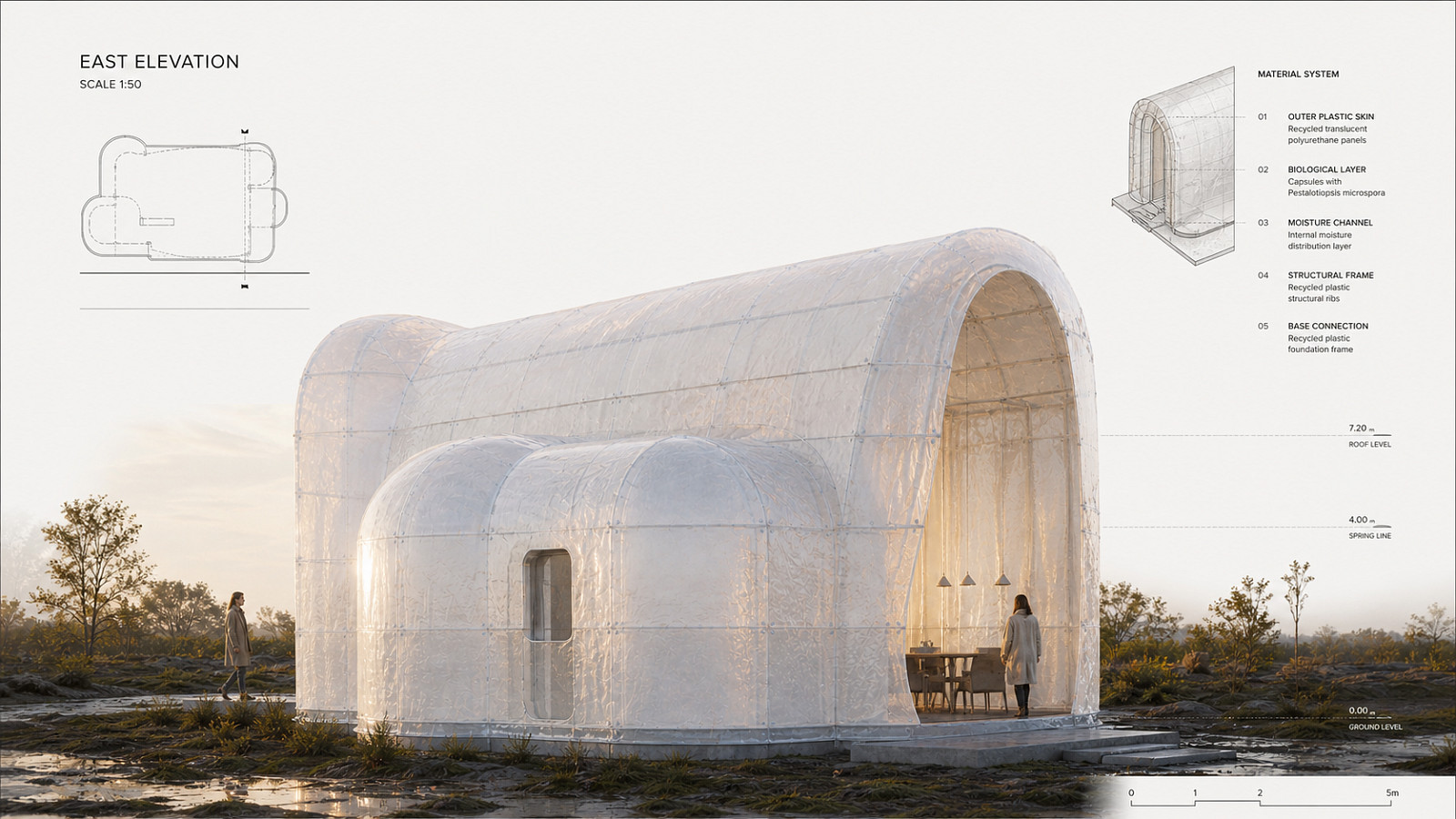
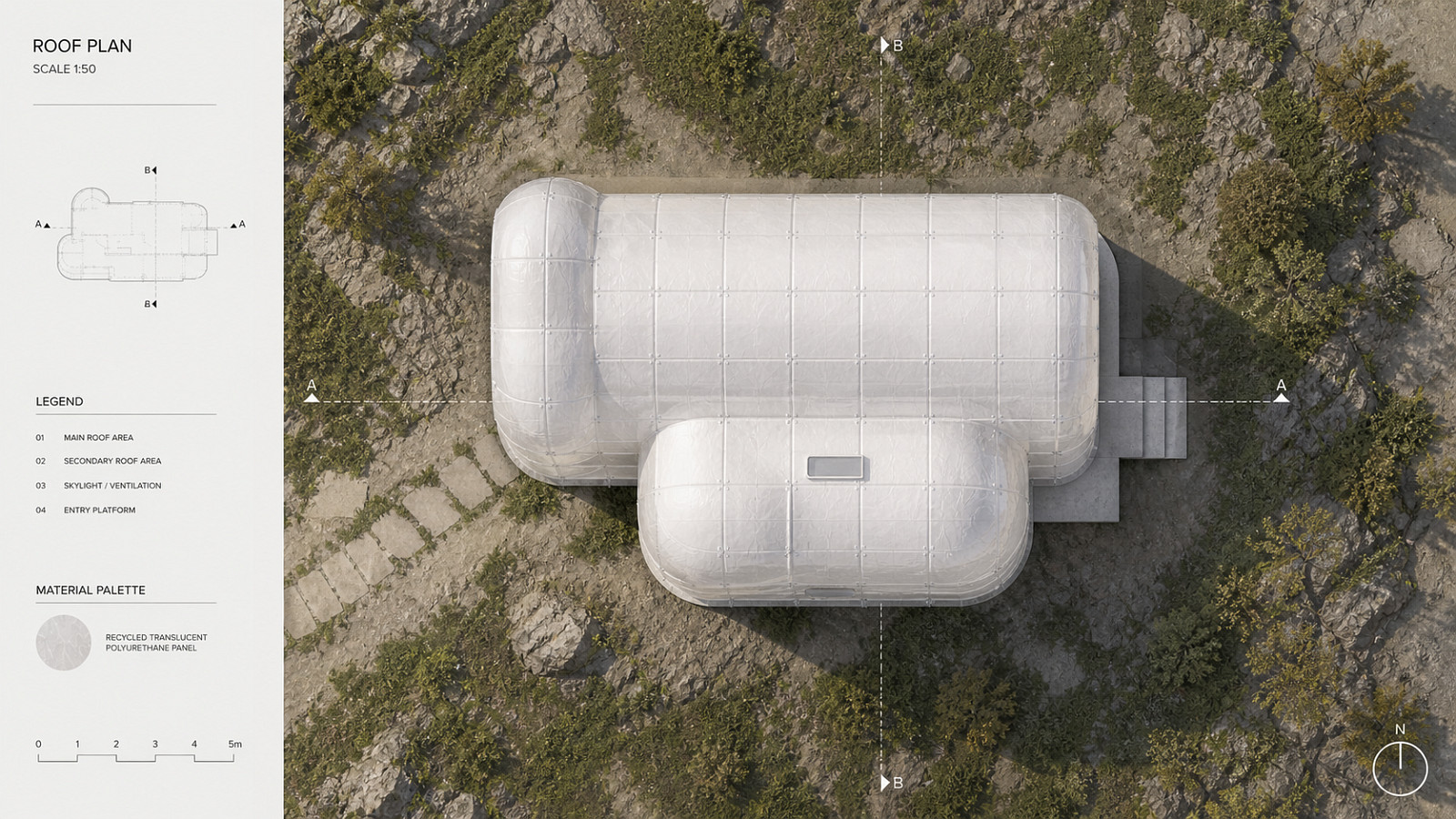
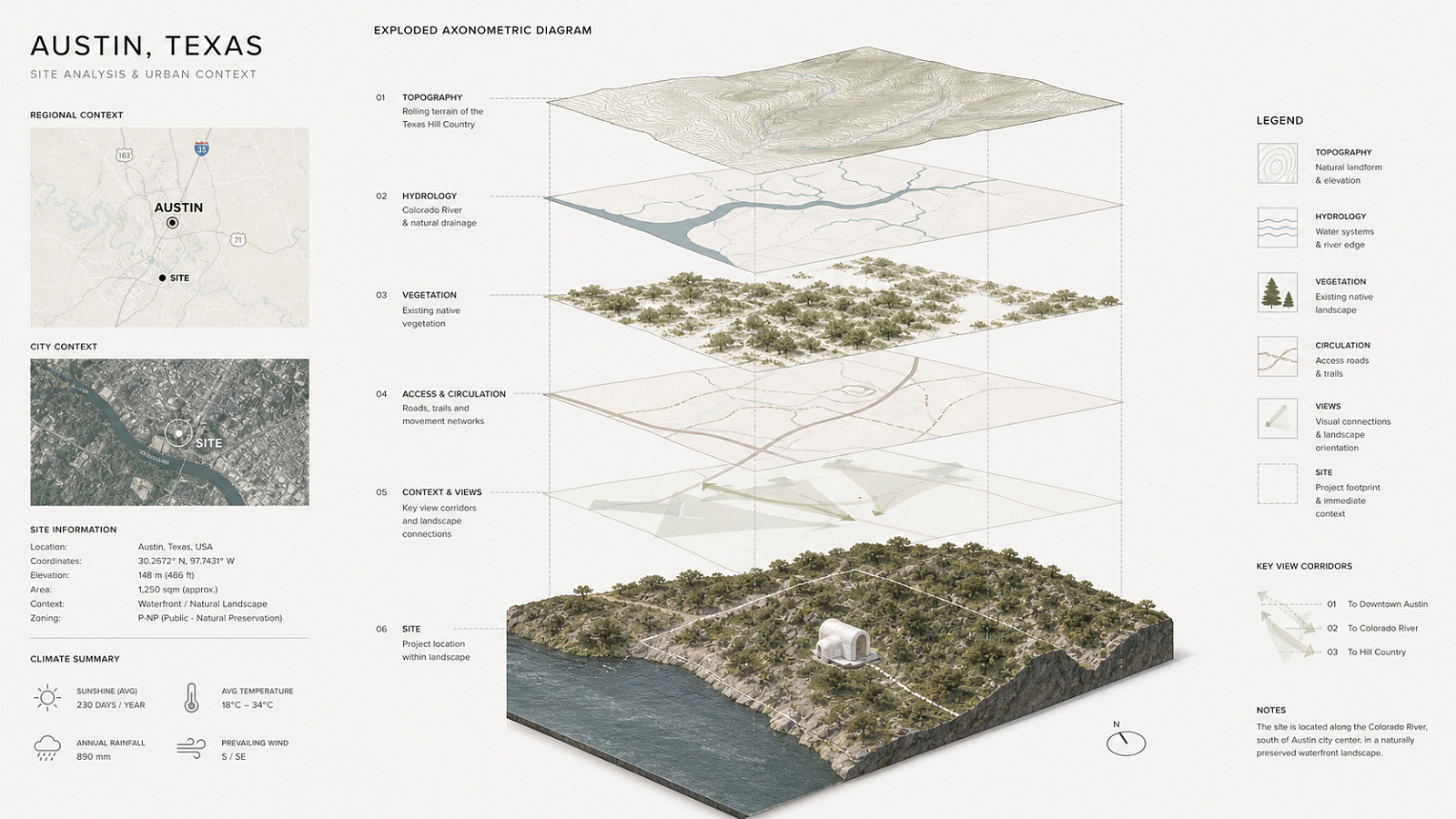
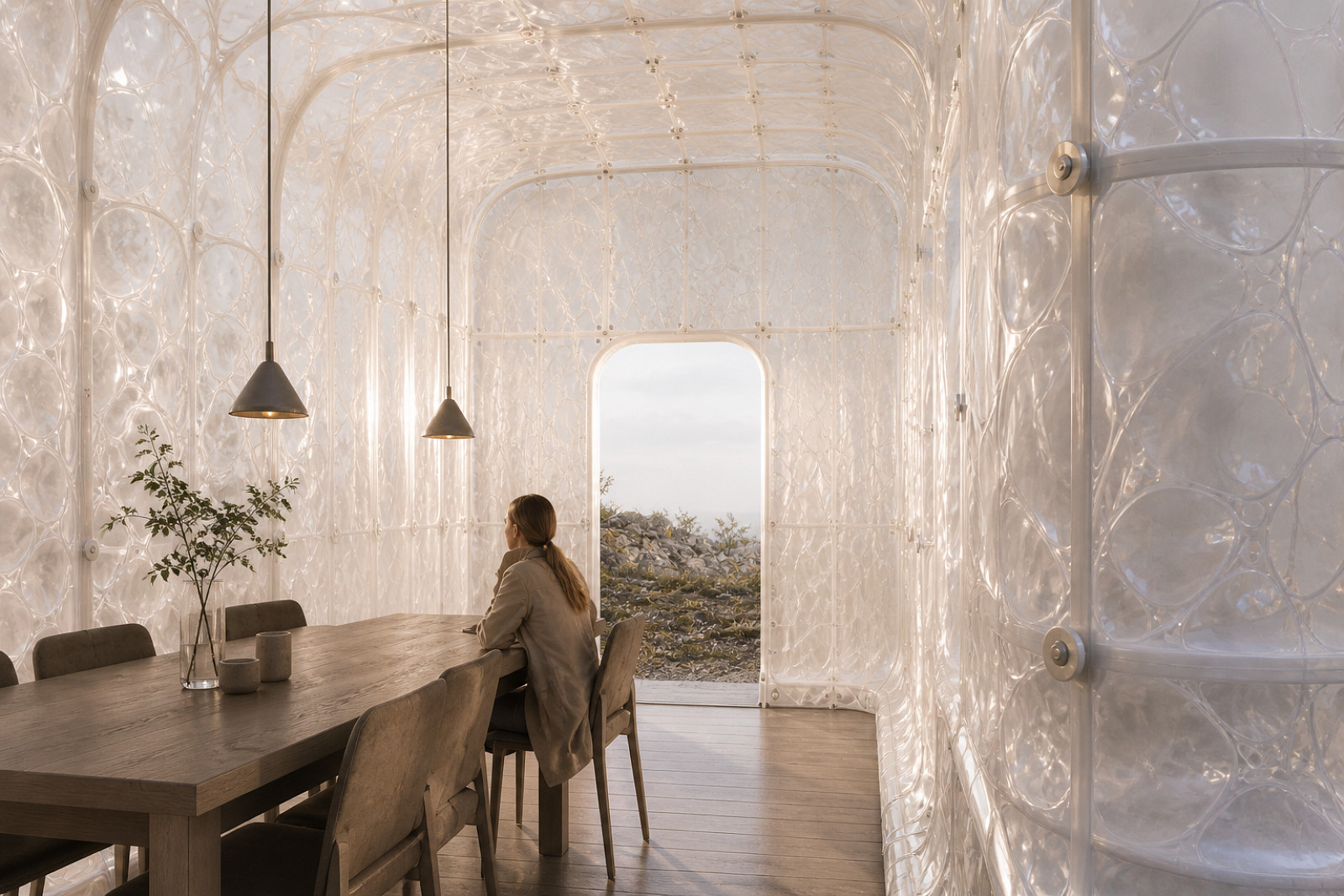
At first, the building appears almost sterile. Its soft translucent envelope creates a luminous interior atmosphere suspended between greenhouse, shelter, and futuristic pavilion. The curved geometry minimizes material use while generating structural continuity and spatial softness. The architecture touches the ground lightly, preserving the natural landscape and reducing the physical footprint of construction. Natural light diffuses through the semi-transparent skin, creating a calm interior defined by shadow, glow, texture, and changing environmental conditions.
Yet the true architectural act begins after occupation.
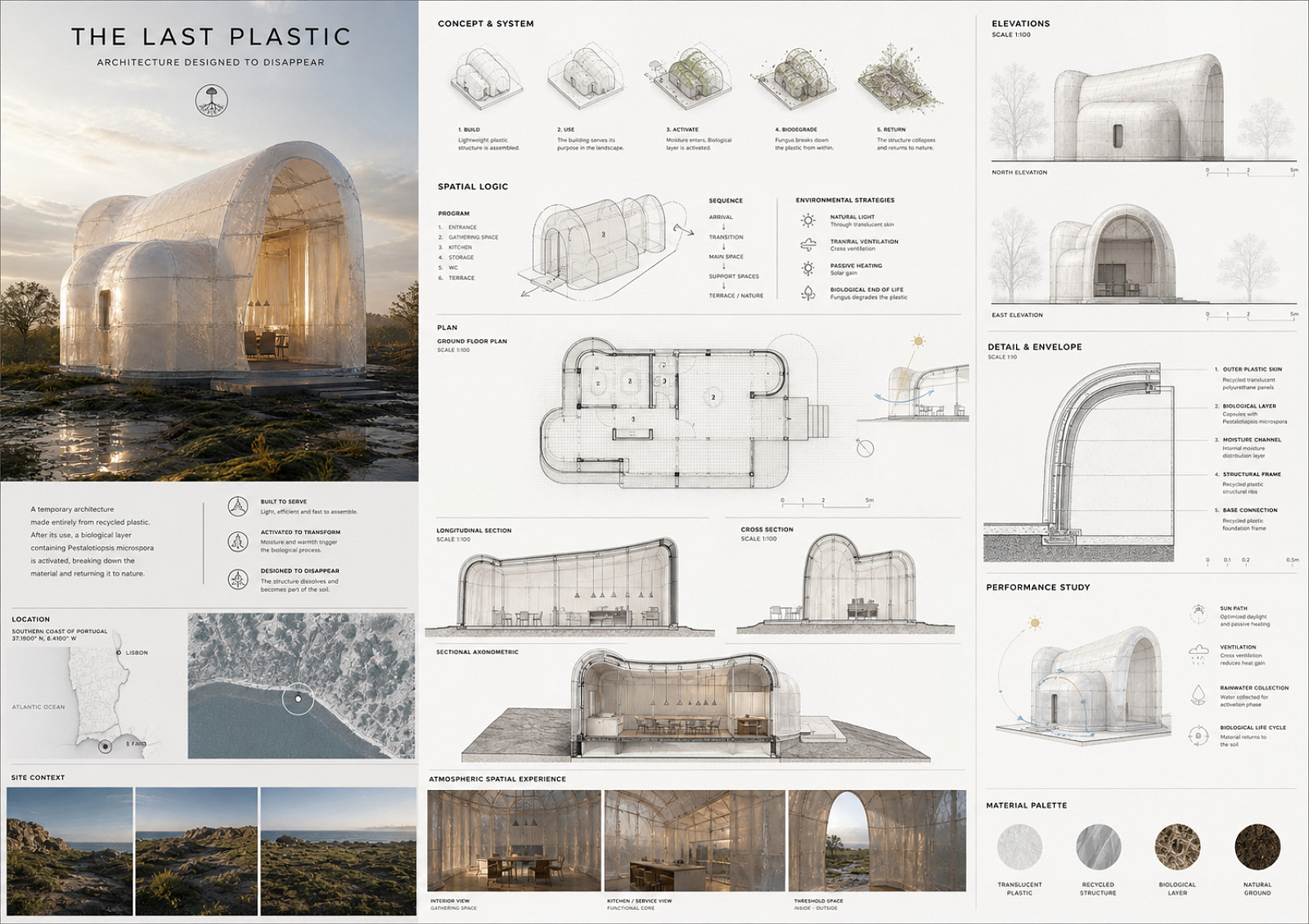
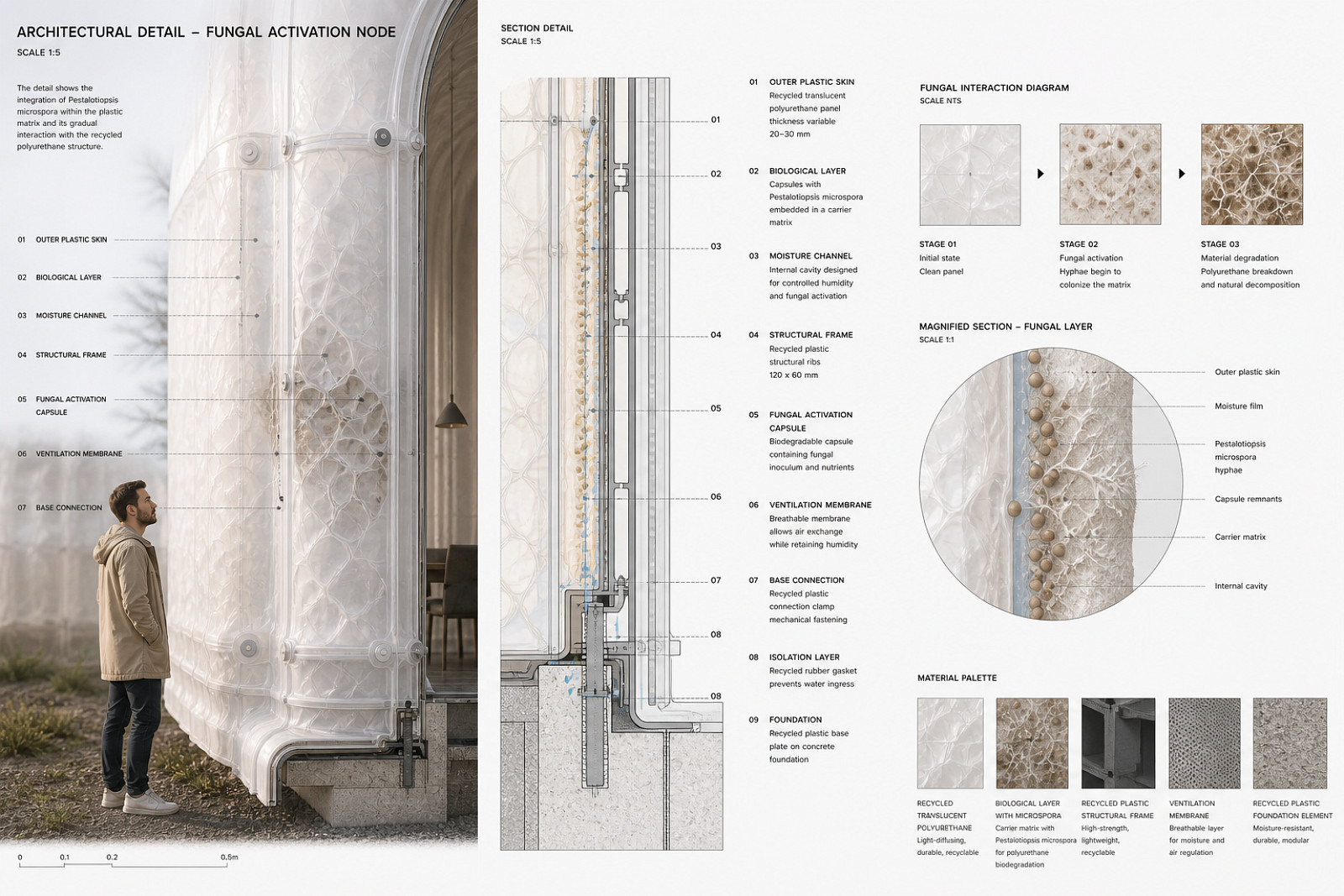
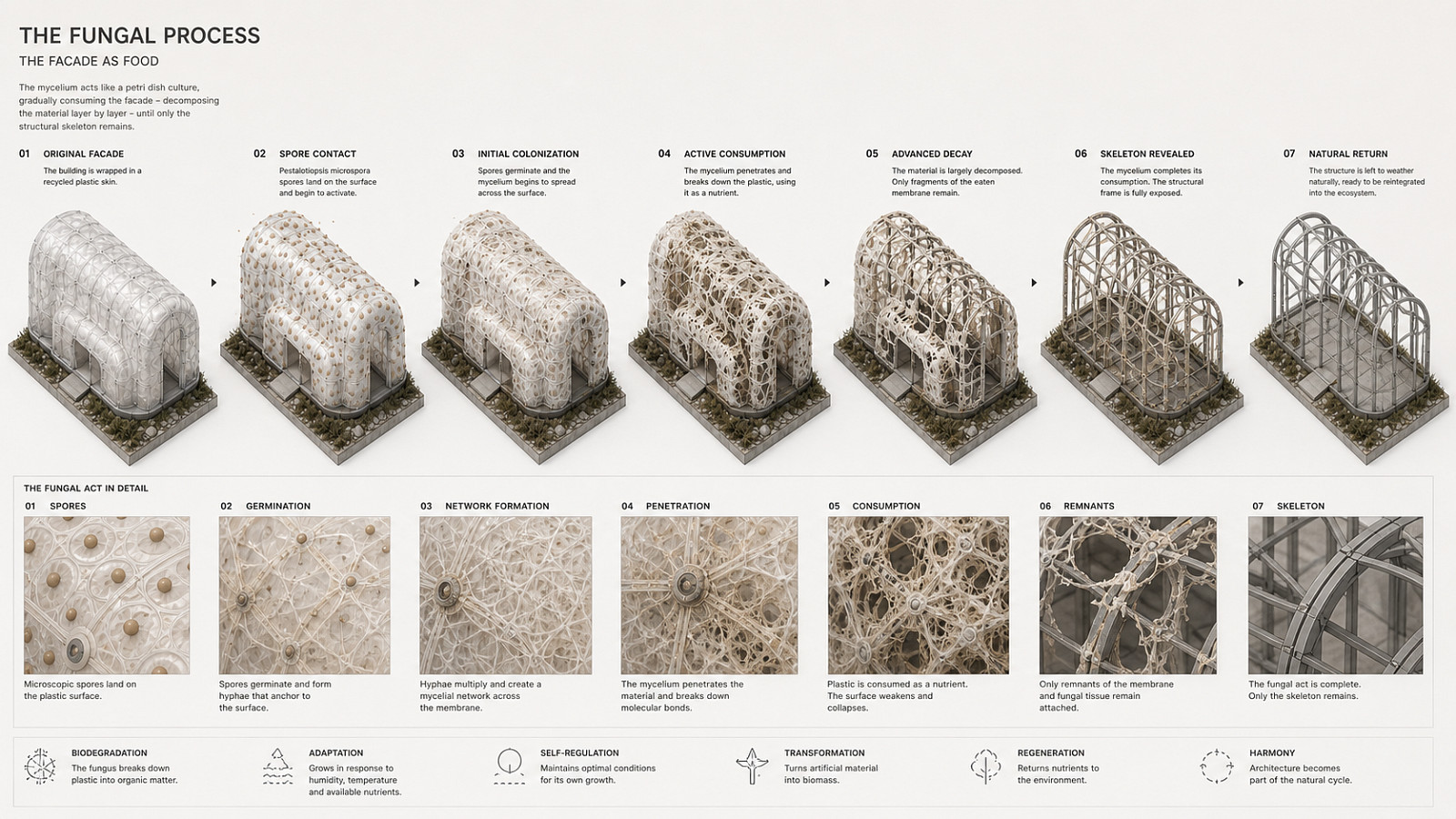
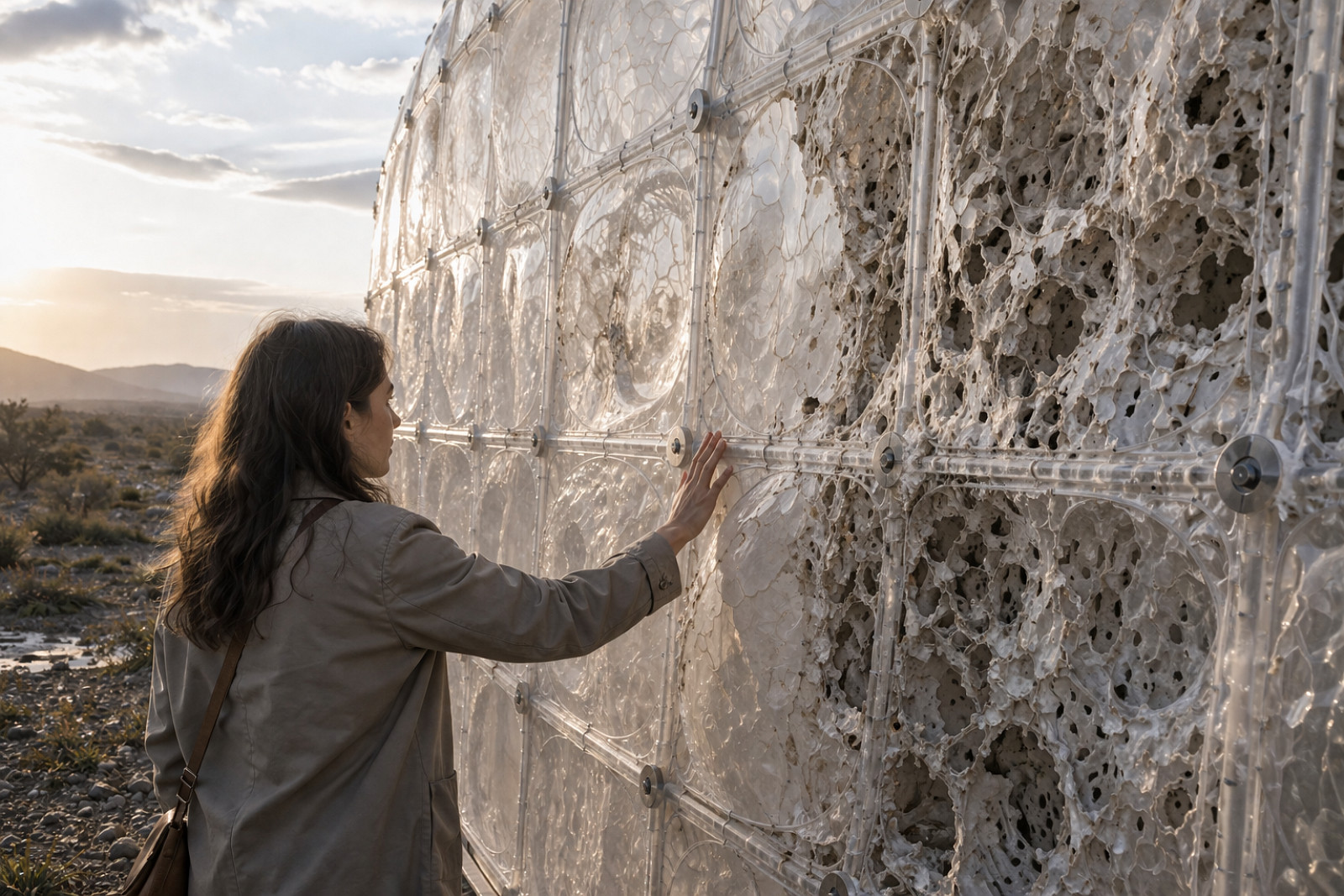
Embedded within the wall system is a dormant biological layer containing Pestalotiopsis microspora, a fungus known for its ability to metabolize polyurethane. Hidden moisture channels and activation capsules remain inactive during the building’s usable lifespan. Once the structure is no longer needed, humidity and temperature levels are gradually introduced into the envelope, initiating fungal growth inside the plastic membrane itself.
The decomposition process unfolds slowly over time:
● Years 0–15 — Full architectural performance and human occupation
● Years 15–17 — Biological activation and early fungal colonization
● Years 17–20 — Progressive weakening of the plastic envelope and structural softening
● Years 20–25 — Advanced biodegradation and collapse of non-structural layers
● Years 25–30 — Near-complete decomposition and reintegration into the landscape
The building slowly begins to change.
The translucent skin loses rigidity.
Mycelial networks spread through the inner layers.
Light penetrates through fractures and softened surfaces.
The architecture shifts from object to ecosystem.
Rather than being violently removed through demolition, the structure enters a planned process of decomposition. The project replaces the conventional architectural timeline of construction → occupation → waste with a new material cycle: assembly → habitation → activation → biodegradation → return to the landscape.
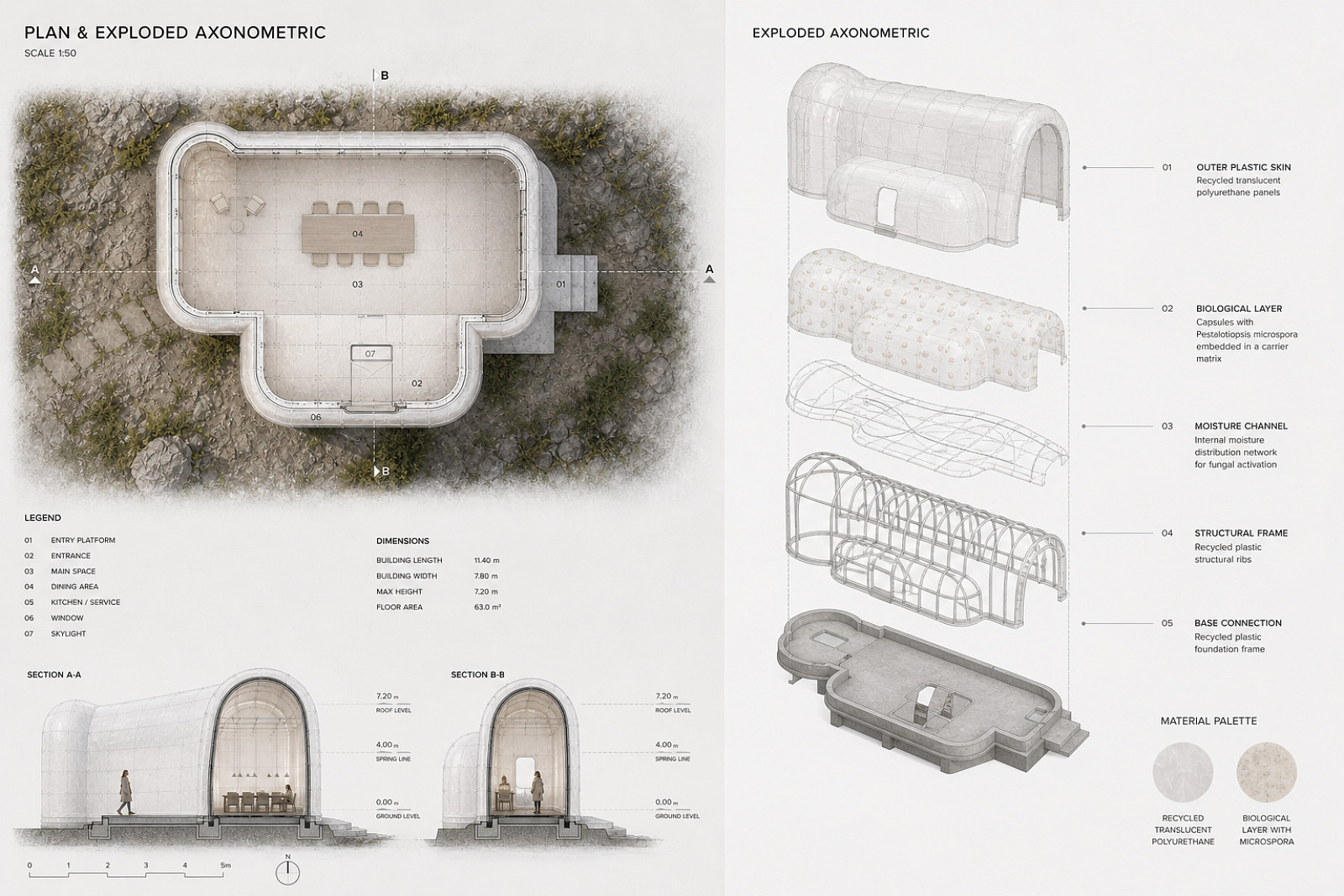
The design process itself was developed as a sequence of temporal states rather than a single static form. The project was conceived through layers: recycled plastic structure, translucent membrane, biological capsules, moisture infrastructure, human occupation, fungal activation, material erosion, and eventual reintegration into the ground. Architecture is understood not as permanence, but as a living temporal condition.
THE LAST PLASTIC ultimately questions the obsession with permanence in architecture. Not every building should remain forever. Some structures should appear lightly, serve a precise purpose, and disappear responsibly without leaving behind material violence or environmental residue.
The project proposes an architecture with a material conscience — an architecture capable not only of being built intelligently, but also of dying intelligently.
Popis projektu
THE LAST PLASTIC is a temporary architectural project designed around the full life cycle of a building: construction, occupation, transformation, decay and disappearance. The project asks what happens to architecture after it has fulfilled its purpose, and proposes a structure that does not end through demolition, but through a planned biological process.
The building is made from recycled translucent plastic and is designed to function for approximately 15 years as a temporary dwelling, research pavilion, emergency shelter or cultural space. During its active lifespan, it operates as a lightweight, modular and transportable architectural structure with minimal ground impact.
The project redefines plastic, a material usually associated with waste, permanence and pollution, as a temporary architectural medium. Its translucent envelope creates a soft luminous interior atmosphere, somewhere between a greenhouse, shelter and futuristic pavilion. The curved geometry reduces material use while creating spatial continuity, structural efficiency and a calm interior defined by light, shadow and changing environmental conditions.
After its period of use, the building enters a controlled process of biological transformation. A dormant fungal layer embedded within the wall system is gradually activated through humidity and temperature, allowing the plastic envelope to weaken, soften and decompose over time. Instead of becoming construction waste, the building slowly shifts from architectural object to ecological process.
The project proposes a new architectural timeline: assembly, habitation, activation, biodegradation and return to the landscape. It is an architecture with a material conscience — a building designed not only to be built intelligently, but also to disappear responsibly.
Technické informace
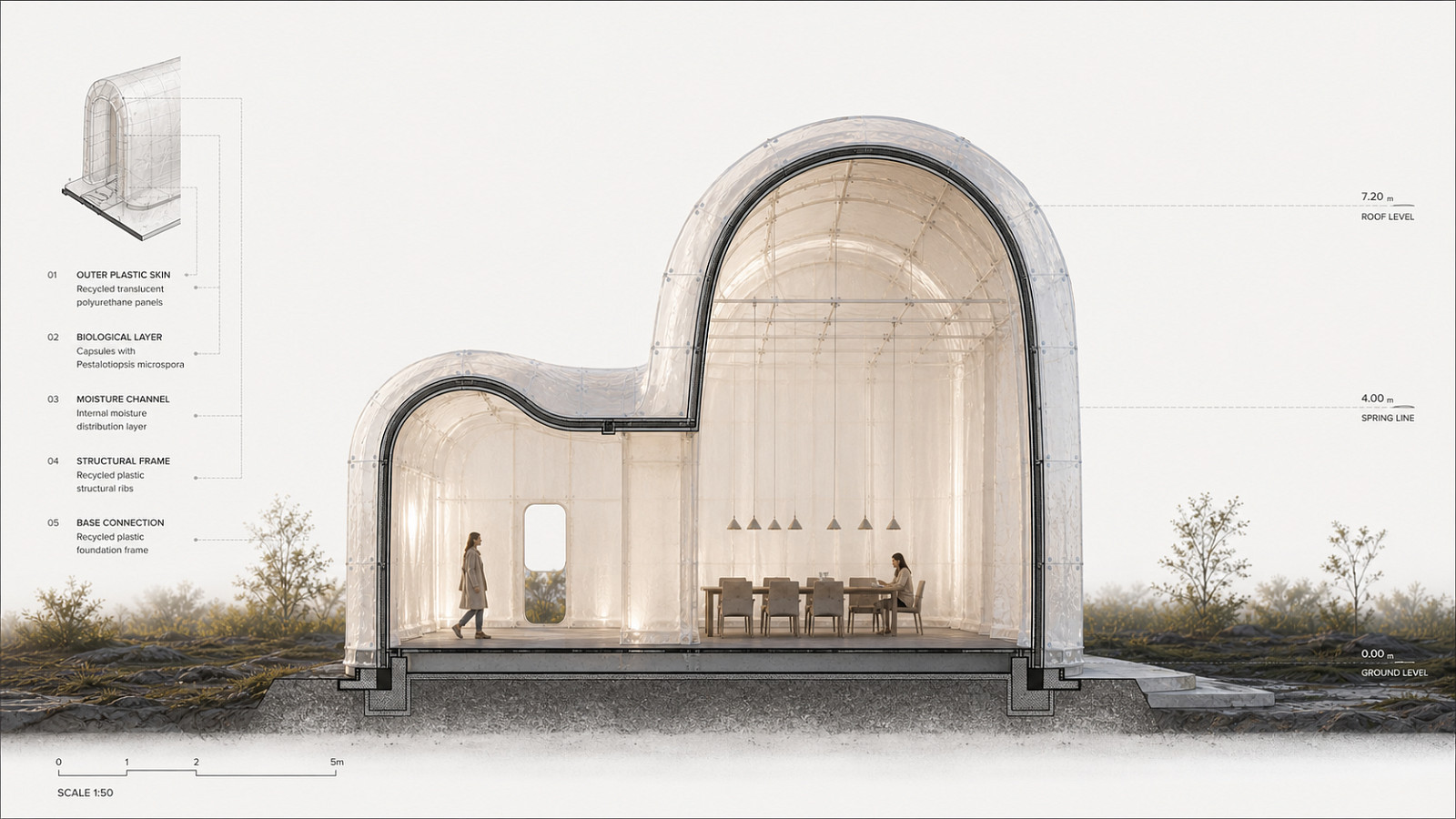
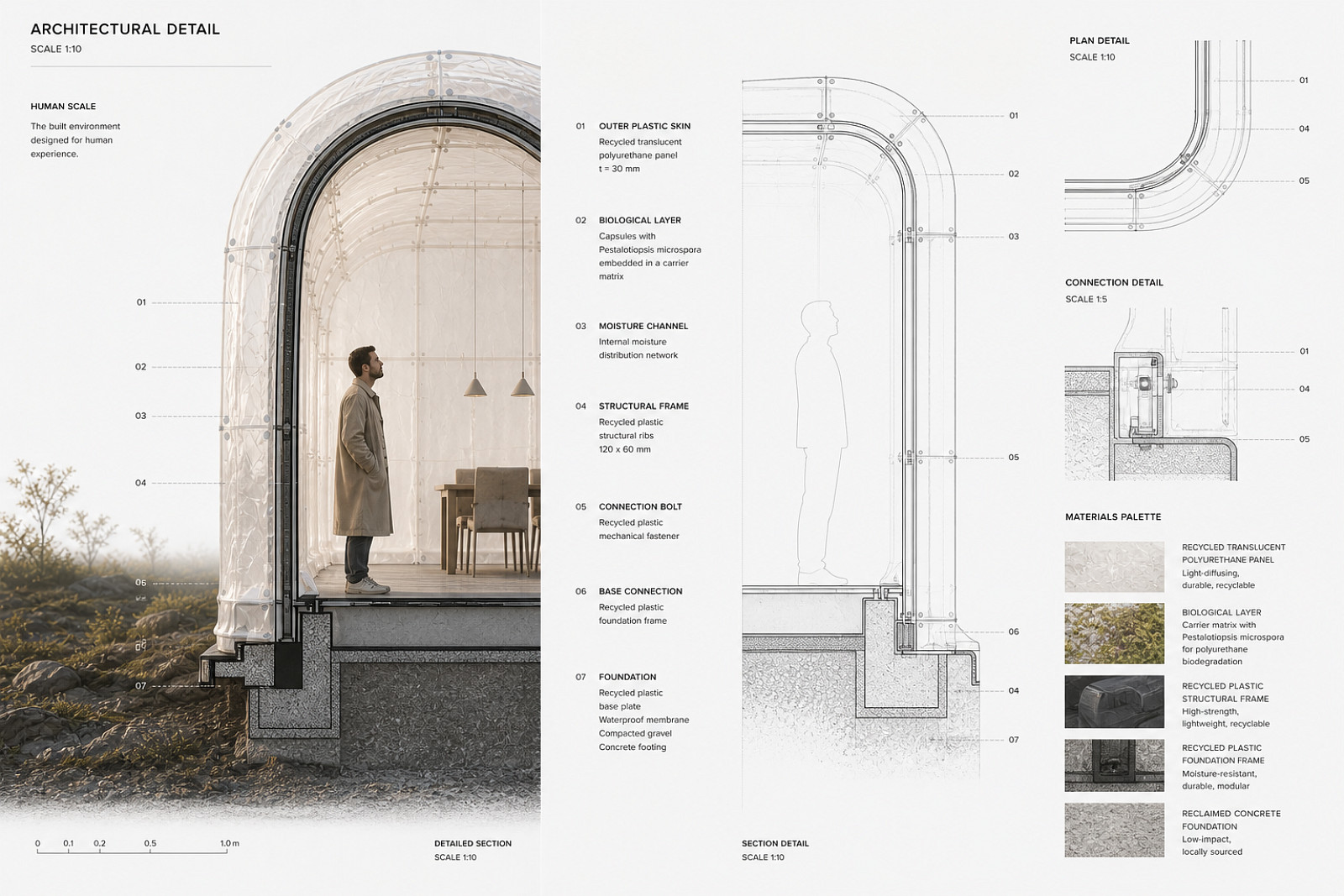
The project is based on a lightweight modular construction system made from recycled translucent plastic components. The main architectural envelope consists of curved plastic panels, a semi-transparent membrane, modular structural ribs and integrated wall layers designed to support both human occupation and later biological activation.
The building is planned with an active lifespan of approximately 15 years. During this period, it functions as a stable and usable architectural structure, providing shelter, daylight, spatial comfort and environmental protection. Its modular system allows rapid assembly, transportation, replacement of parts and reduced impact on the natural ground surface.
The wall system includes several technical layers: recycled plastic structure, translucent outer membrane, dormant biological capsules, hidden moisture channels and controlled activation systems. During the building’s usable life, the biological layer remains inactive. When the building is no longer needed, humidity and temperature are gradually introduced into the envelope to initiate fungal colonization and material breakdown.
The biological process is organized as a long-term sequence: full architectural performance during the first 15 years, early biological activation between years 15–17, progressive weakening of the plastic envelope between years 17–20, advanced biodegradation between years 20–25, and near-complete decomposition and reintegration into the landscape between years 25–30.
The material palette includes recycled translucent plastic, flexible membrane layers, lightweight modular connections, concealed moisture infrastructure, biological activation capsules and minimal foundation elements. The structure is designed to touch the ground lightly, reduce construction waste and avoid conventional demolition. Its technical logic supports the main concept of the project: architecture as a temporary material cycle that can be assembled, inhabited, biologically activated and responsibly returned to the landscape

Copyright © 2026 INSPIRELI | All rights reserved. Use of this website signifies your agreement to the Terms of Use, Privacy Policy, and use of cookies.
