The New Homeland of Migratory Birds ― Southeast Asia Business & Cultural Exchange Park


Idea projektu
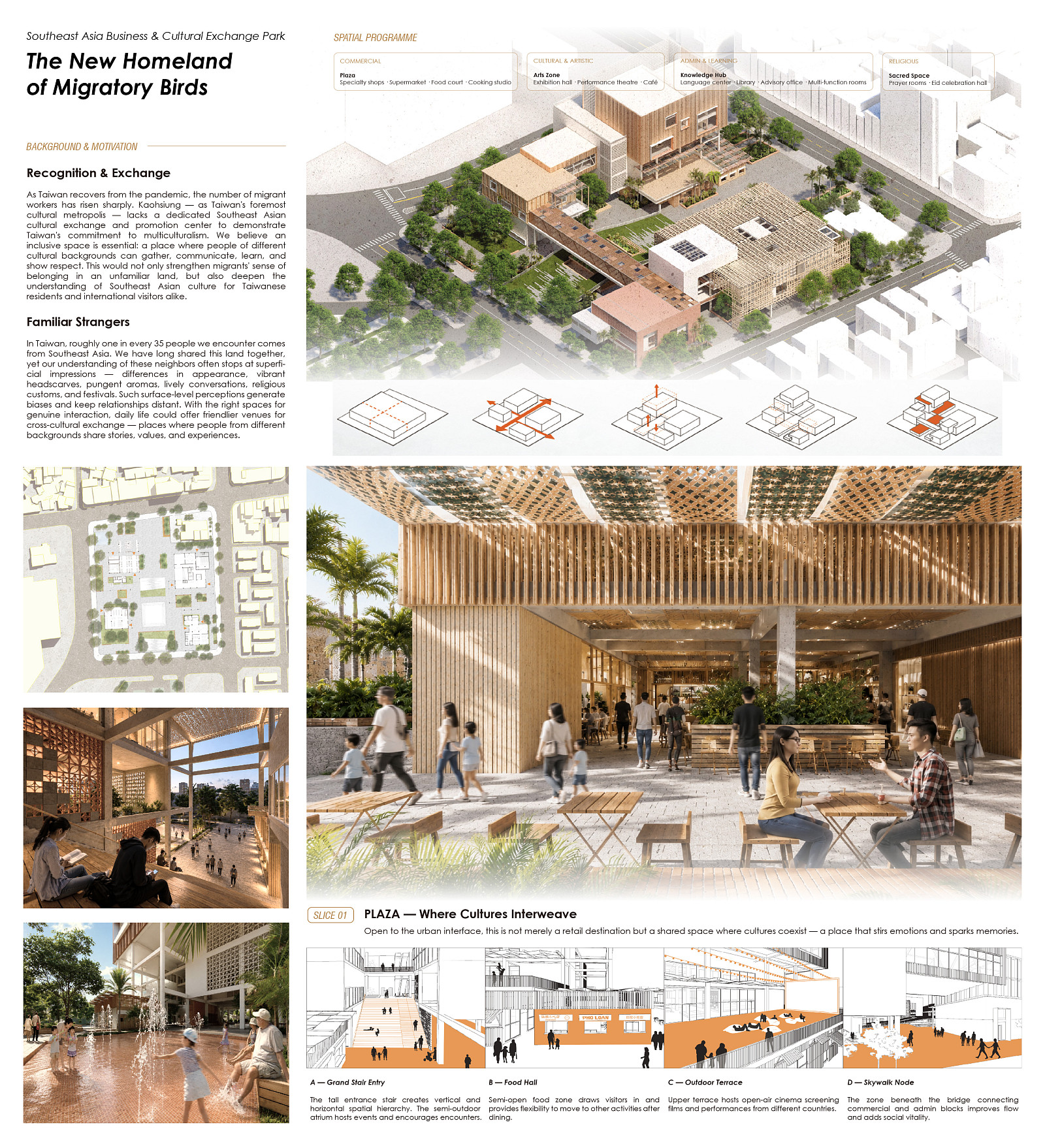
This project proposes a Southeast Asian Cultural and Commercial Exchange Park in Taiwan — not merely as a commercial complex, but as an open urban platform for cultural understanding, coexistence, and social connection.
Inspired by the migratory nature of summer birds, the project interprets the experience of Southeast Asian communities in Taiwan as a contemporary journey of migration. People arrive carrying dreams, labor, memories, and cultural identities, gradually transforming an unfamiliar city into a place of belonging. Like migratory birds seeking seasonal refuge, the project envisions architecture as a place for pause, gathering, exchange, and emotional connection.
Popis projektu
The proposal challenges the current condition in which Southeast Asian cultures in Taiwan are often spatially fragmented or limited to small commercial enclaves. Instead, the project introduces an inclusive and accessible urban environment where Taiwanese citizens and Southeast Asian communities can naturally interact through everyday activities such as food, performance, learning, exhibitions, and public gathering.
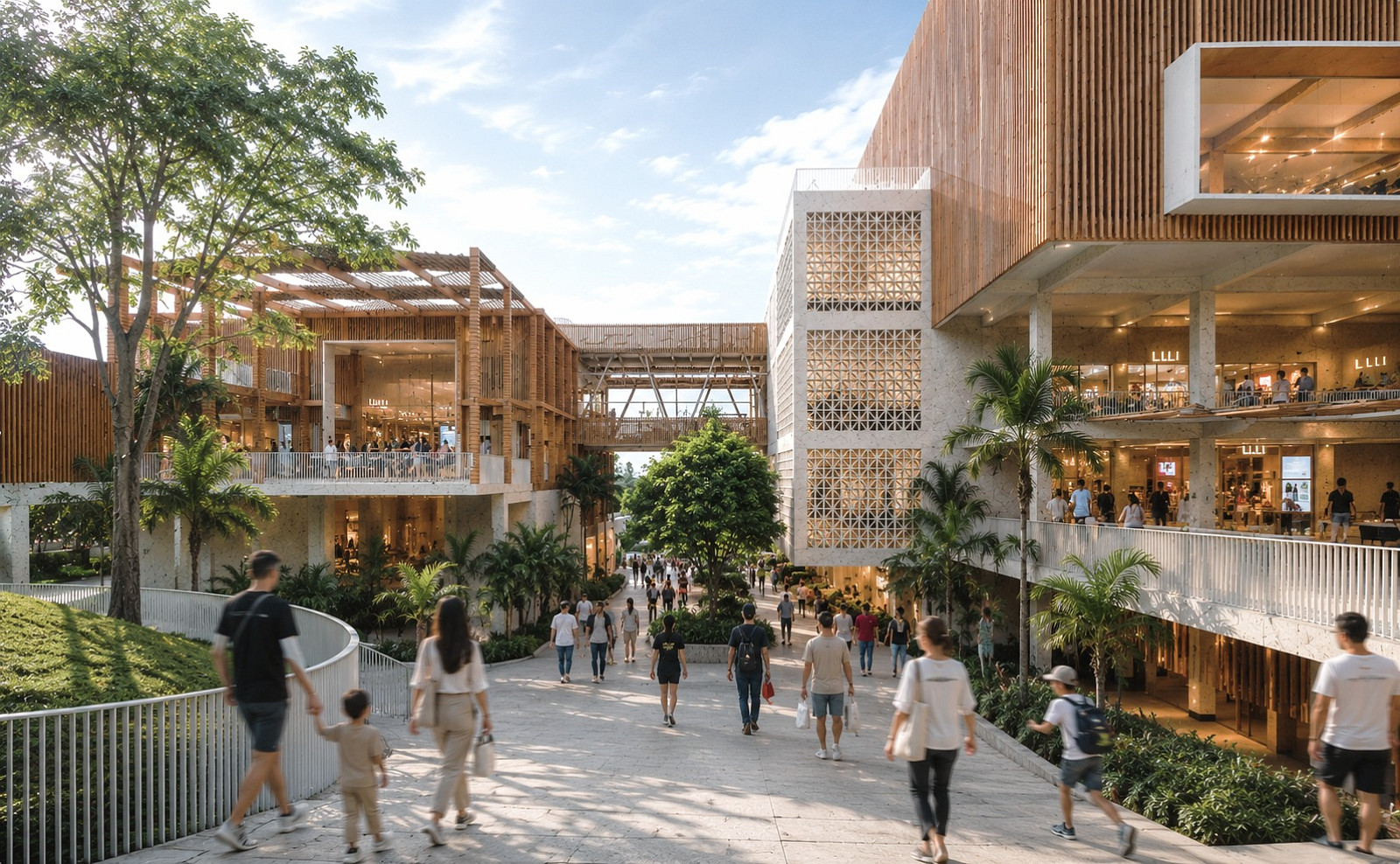
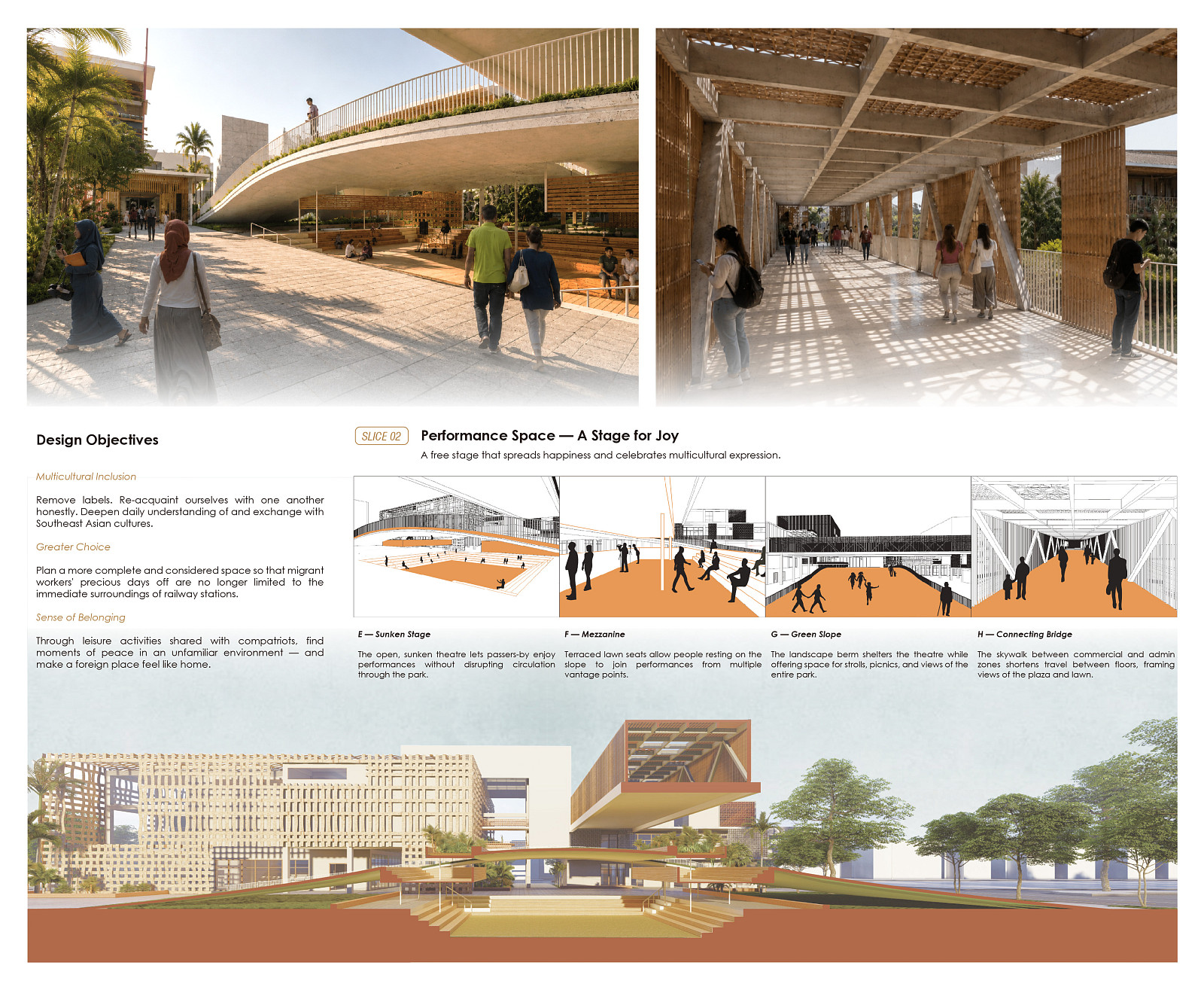
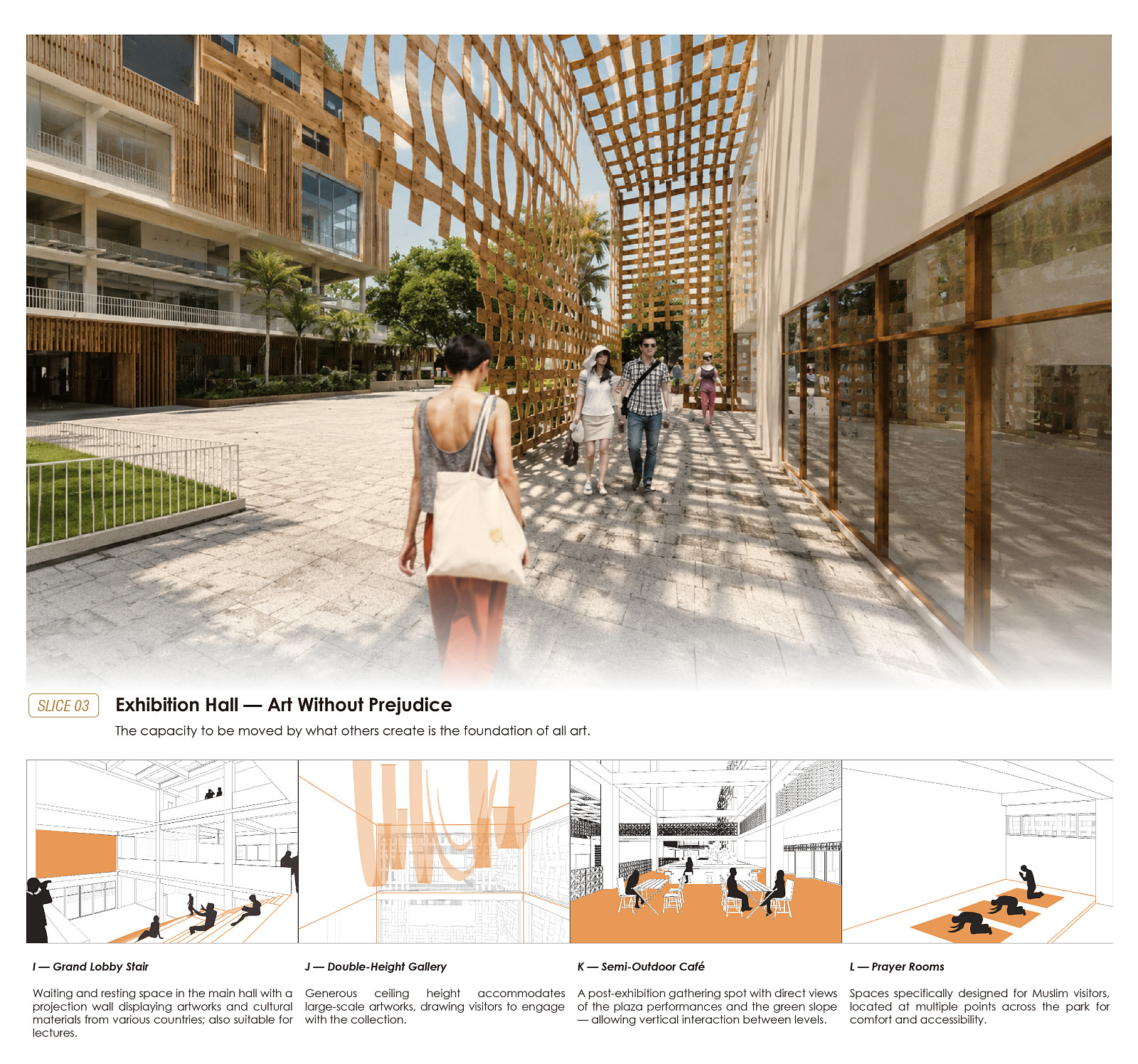
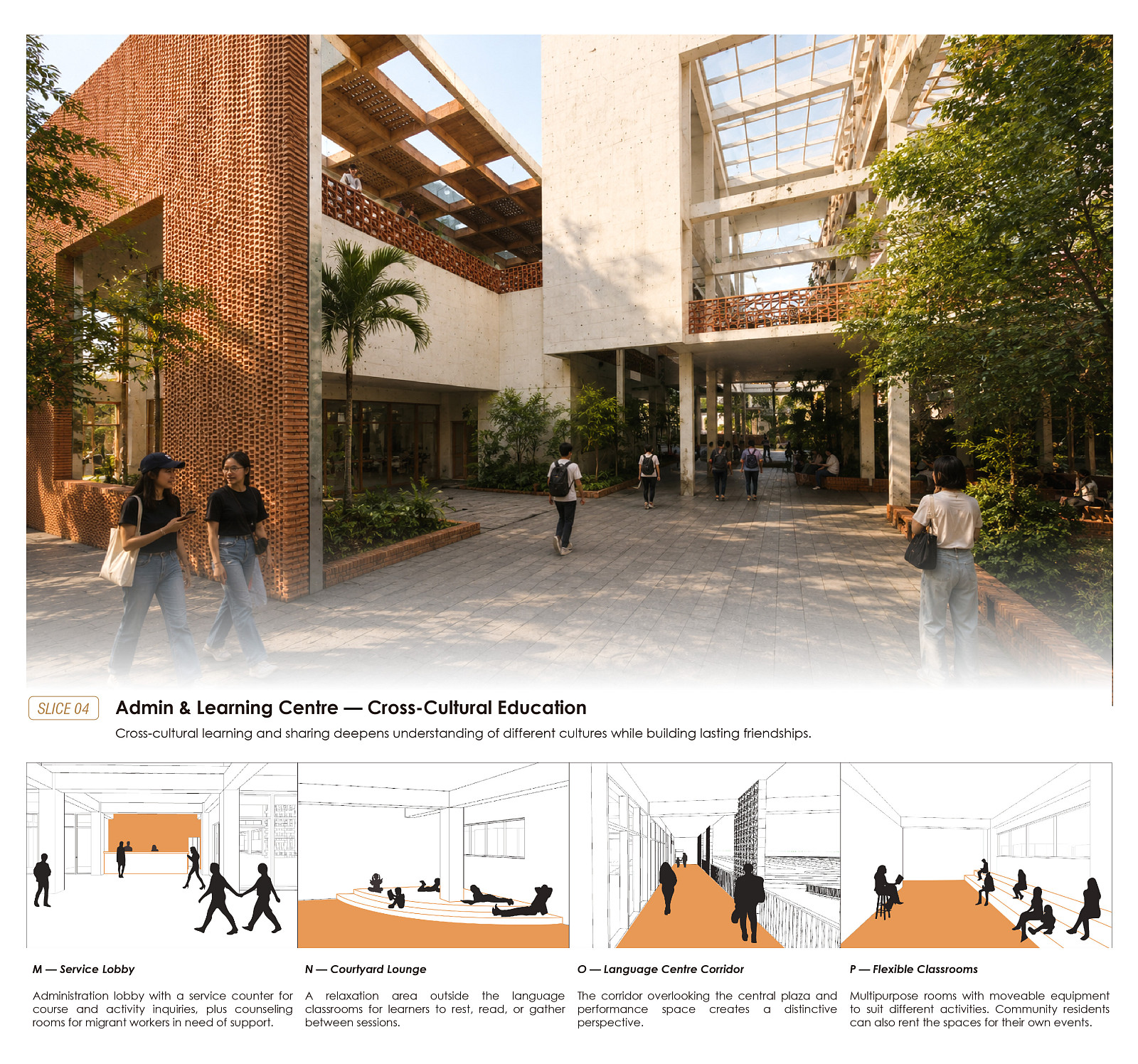
The program combines a multicultural marketplace, food district, semi-outdoor performance theater, exhibition hall, and administrative learning center. These spaces are interconnected through open circulation and public plazas that dissolve physical and cultural boundaries. The architecture encourages freedom of movement, spontaneous encounters, and shared participation, allowing culture to be experienced not as an isolated display, but as a living and evolving part of urban life.
Performance and art play a central role within the project. As one of the most direct and universal forms of human communication, artistic expression transcends language and prejudice, creating emotional resonance between people of different backgrounds. The semi-outdoor theater and public gathering spaces become platforms where cultural joy, identity, and collective memory can be freely expressed and shared.
Ultimately, the goal of the project is to foster mutual understanding and cultural coexistence within Taiwan’s increasingly diverse society. By opening the urban interface and creating spaces of inclusivity, the proposal seeks to transform cultural difference into an opportunity for dialogue, learning, and collective belonging.
Technické informace
The project adopts a hybrid structural system combining steel and reinforced concrete to achieve both spatial openness and structural stability. Steel structures are utilized to create large-span public spaces and flexible semi-outdoor environments, while concrete provides durability, thermal mass, and a strong architectural foundation suited to Taiwan’s humid climate.
The architectural language draws inspiration from Southeast Asian cultural craftsmanship. Patterned breeze blocks inspired by traditional Southeast Asian motifs are integrated into the façade design, allowing filtered daylight, natural ventilation, and shifting shadows to enrich the spatial atmosphere while enhancing visual identity. In addition, traditional weaving techniques found in Southeast Asian handicrafts are reinterpreted into contemporary architectural elements, transforming woven textures and patterns into layered façade systems that express cultural memory through material and form.

Copyright © 2026 INSPIRELI | All rights reserved. Use of this website signifies your agreement to the Terms of Use, Privacy Policy, and use of cookies.