Administrative building


Idea projektu
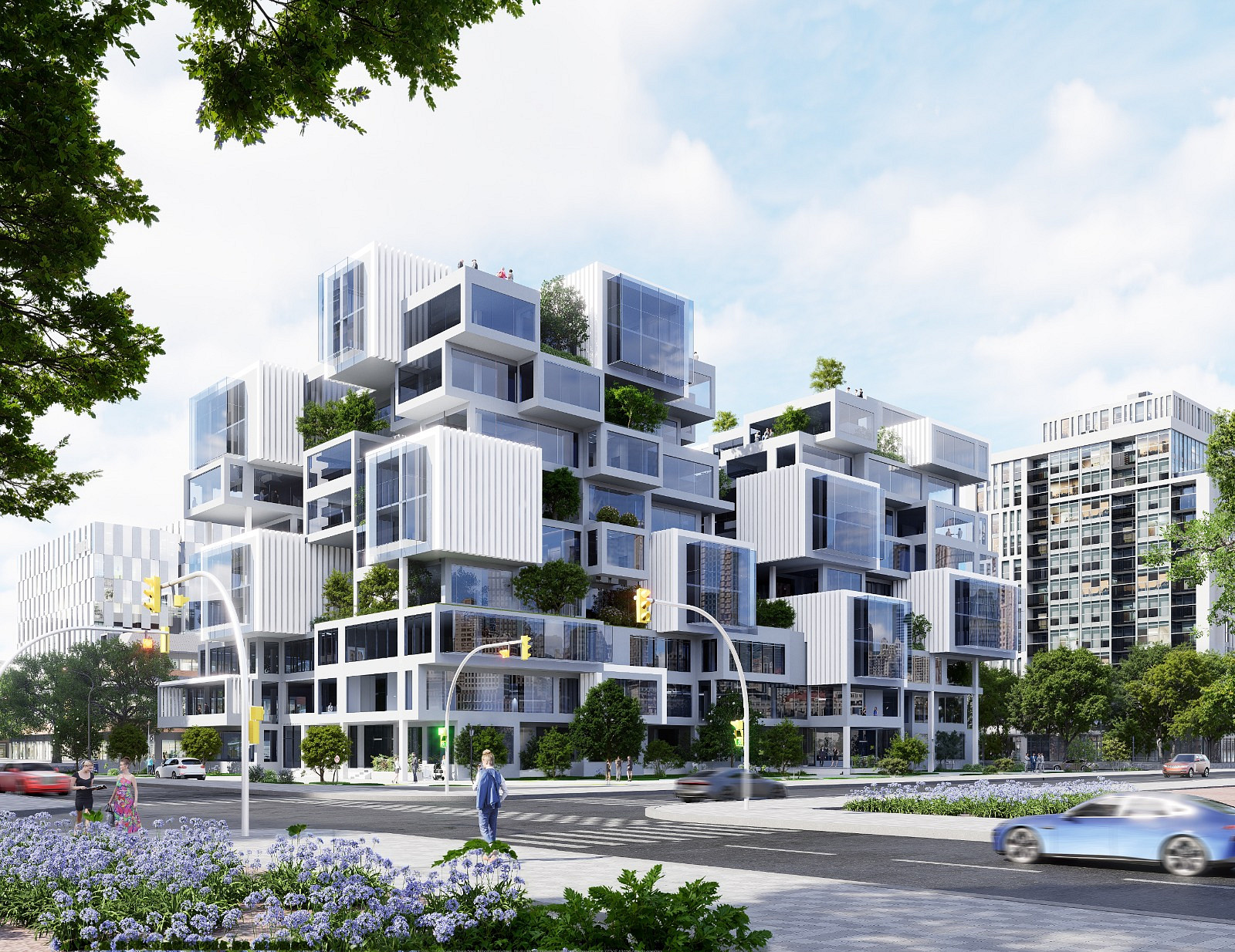
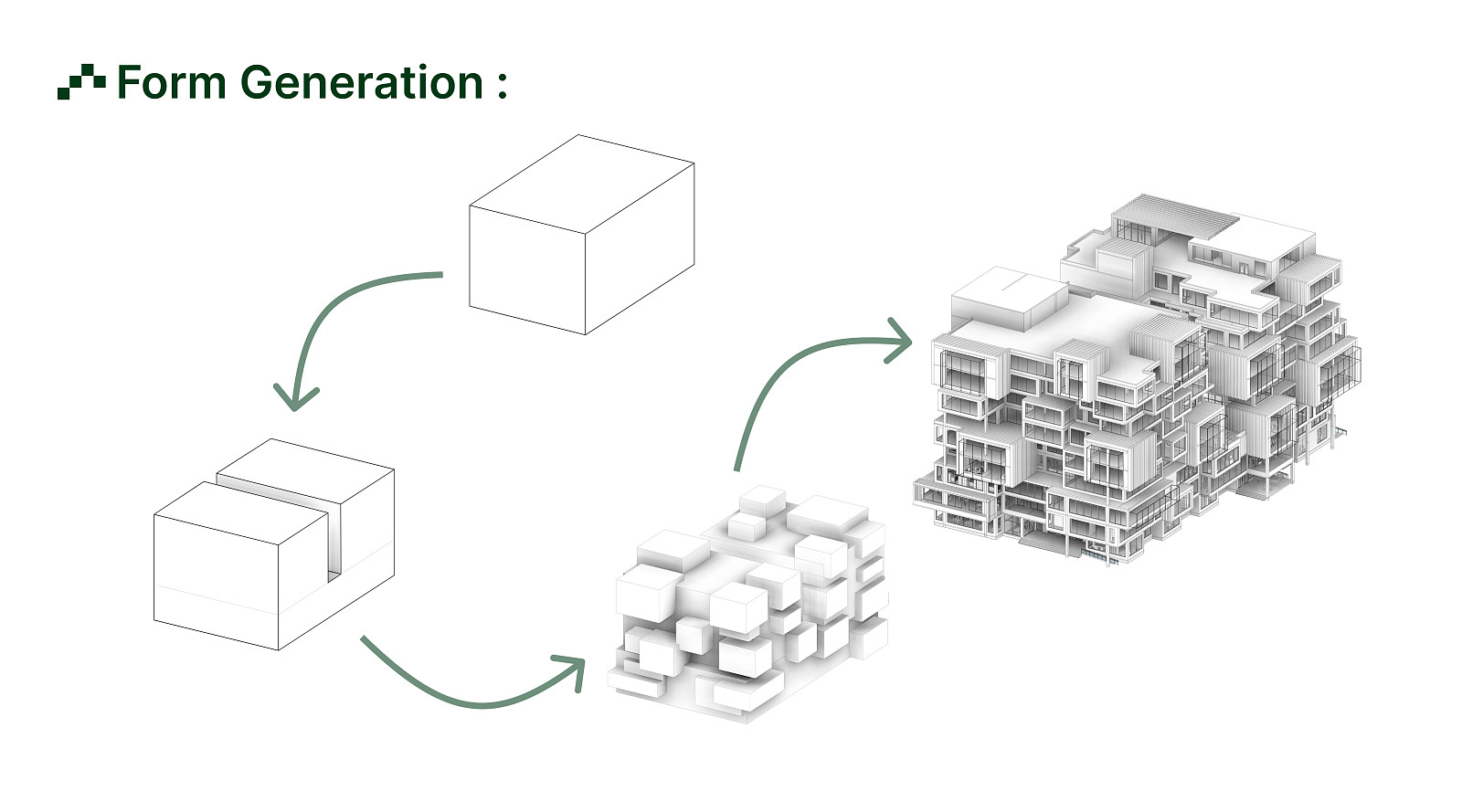
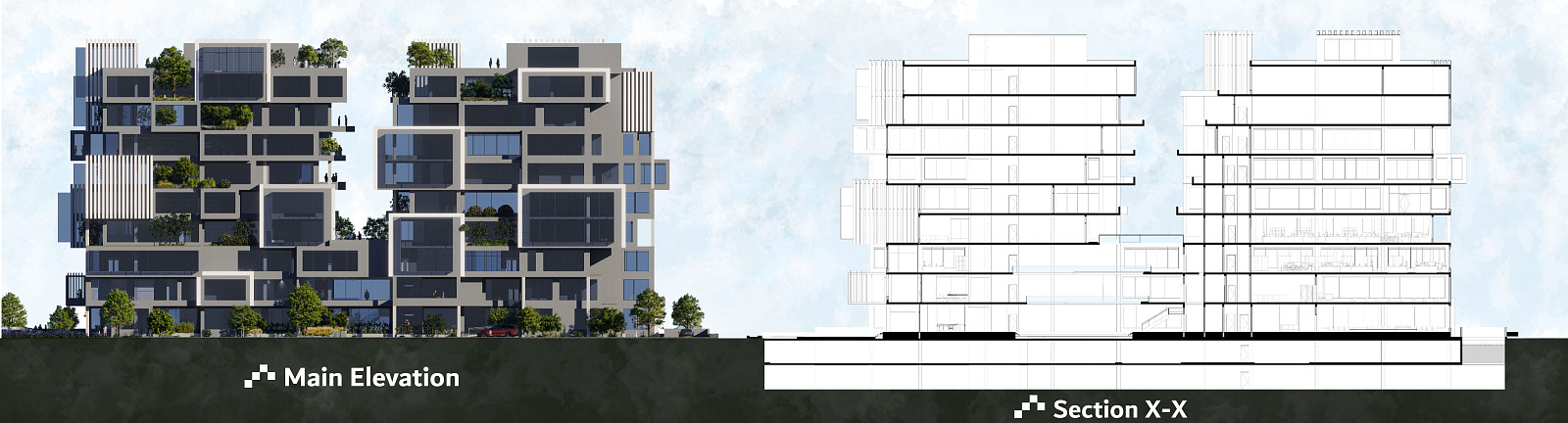
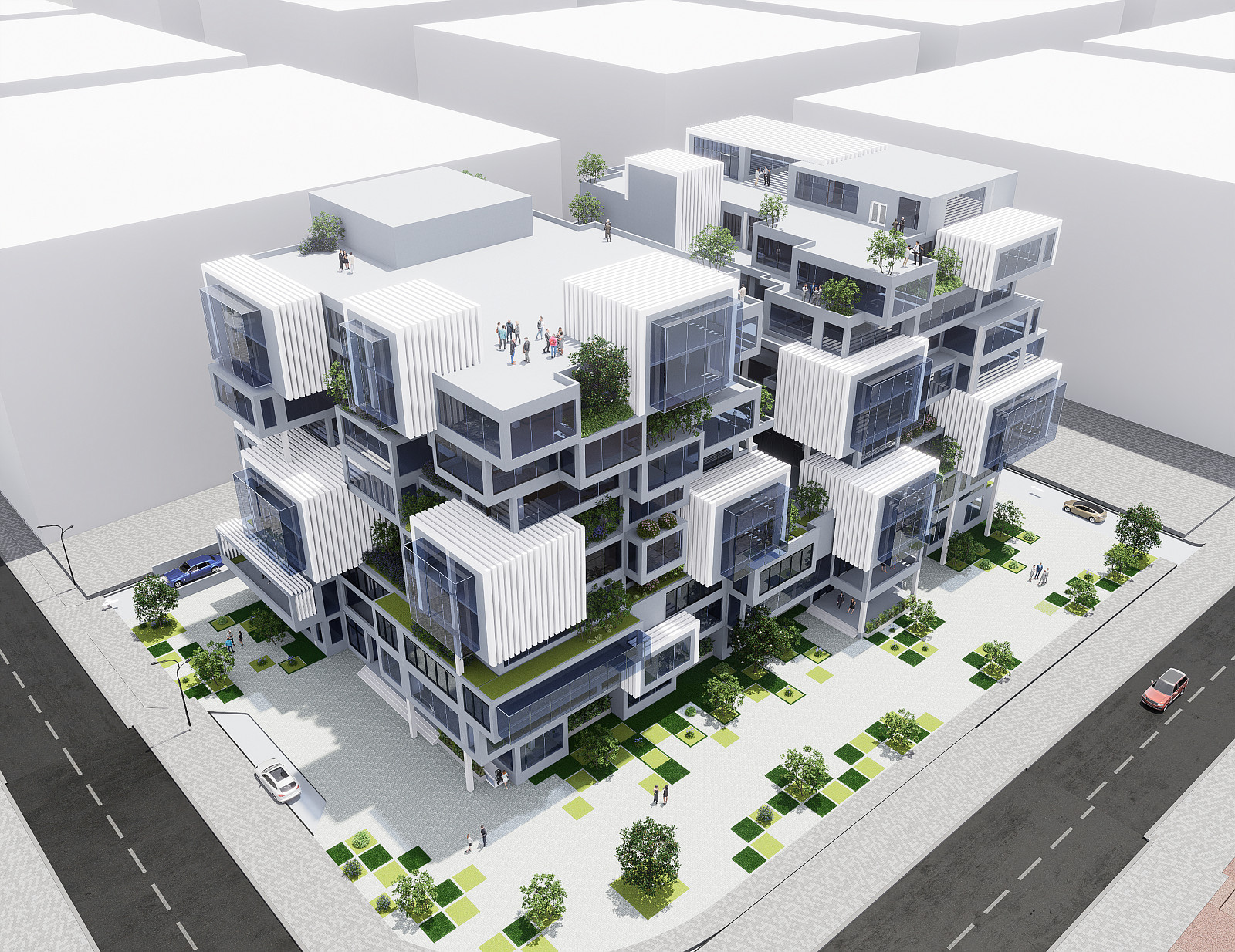
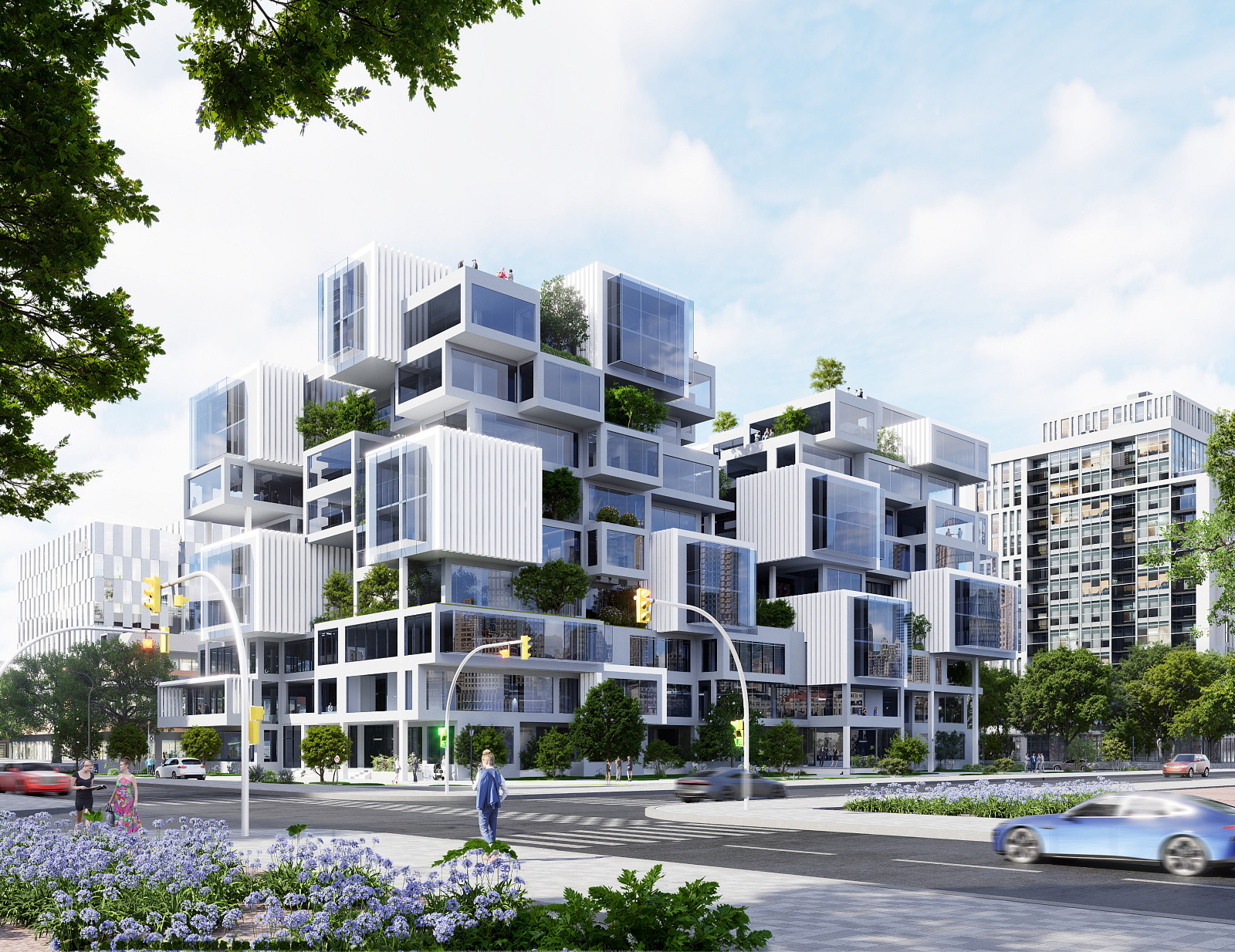
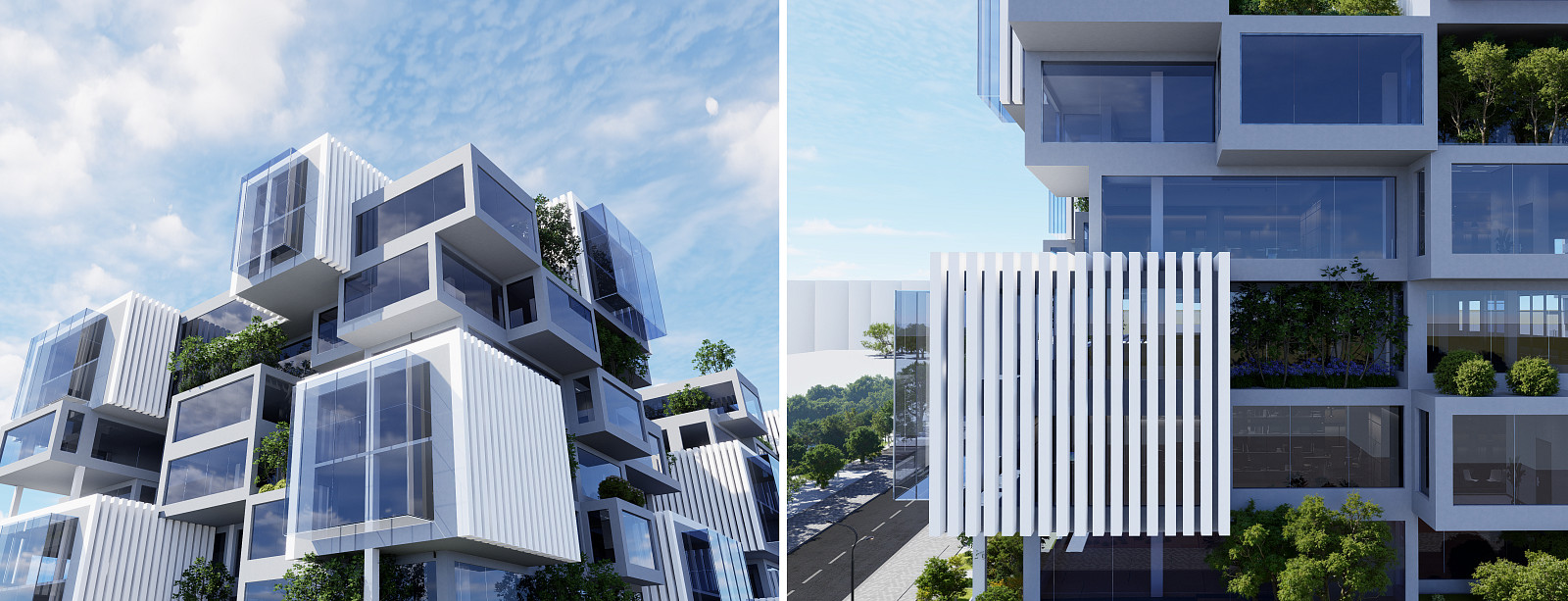
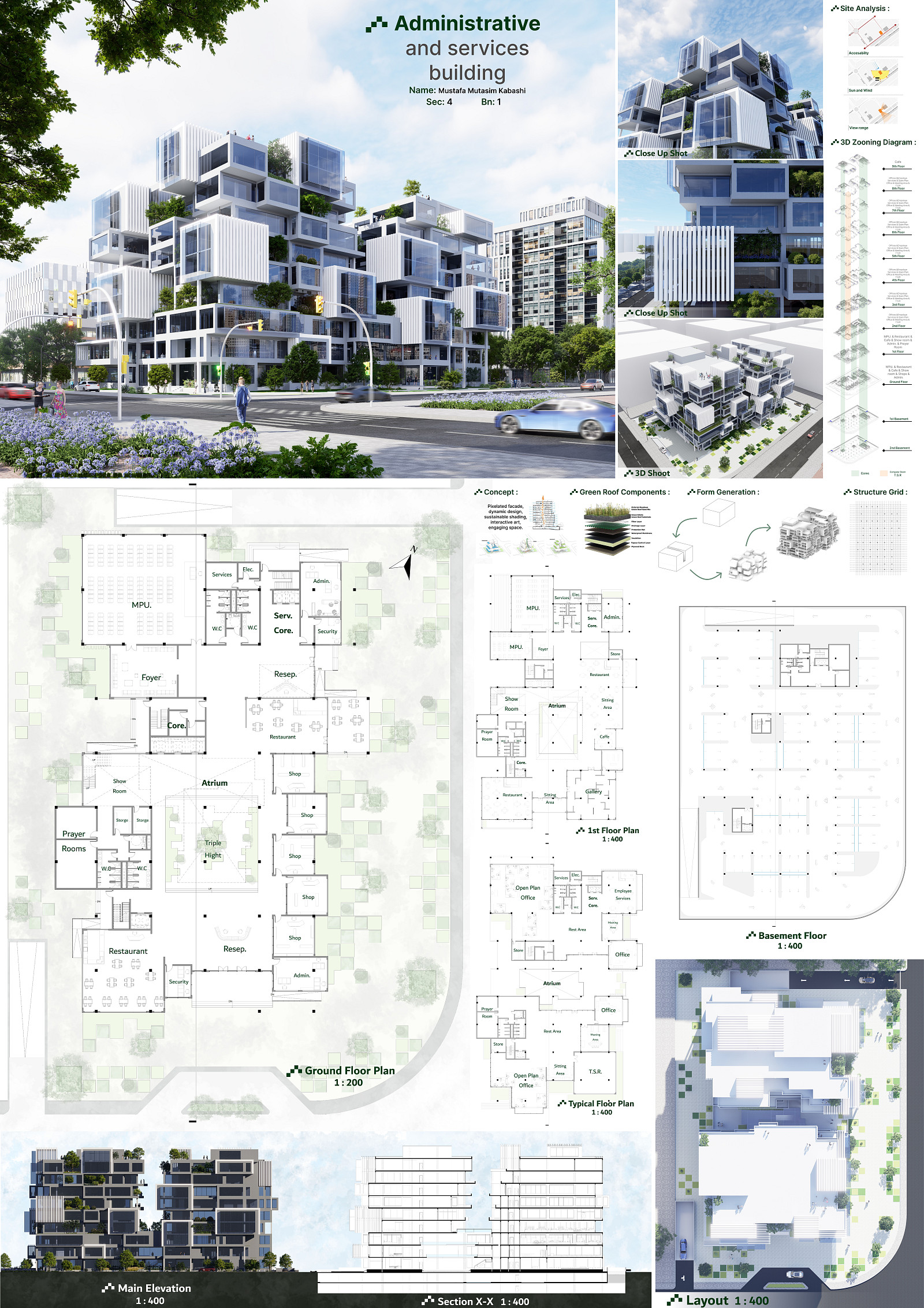
The project is driven by a modular, pixelated architectural approach, breaking down a traditional monolithic structure into dynamically shifted, interlocking cubic volumes. This sculptural fragmentation creates a playful, multi-dimensional facade while generating cascading outdoor terraces. Rooted in biophilic design, these terraces are transformed into elevated green spaces, integrating nature directly into the building's core to enhance environmental sustainability and elevate user well-being.
Popis projektu
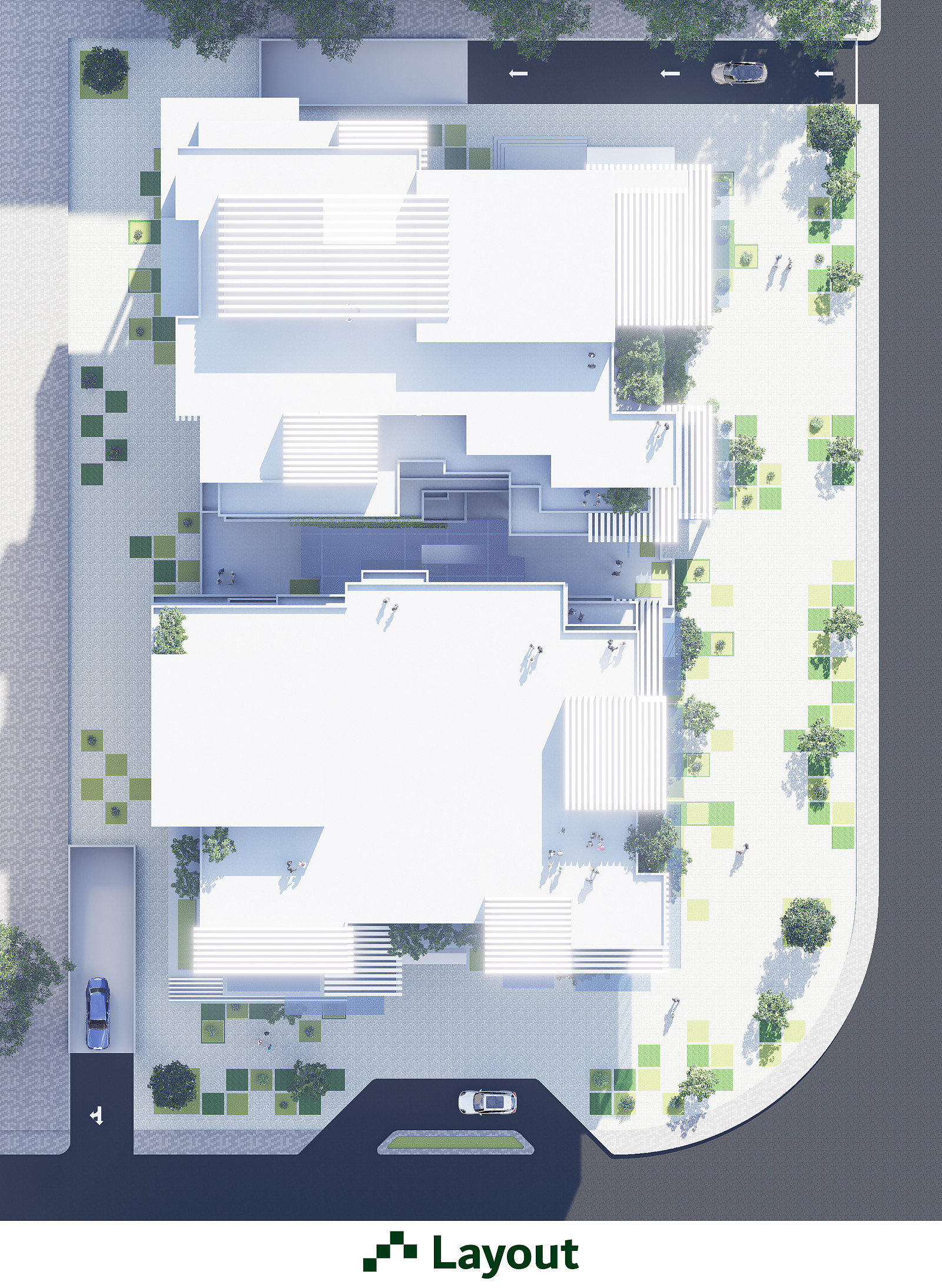
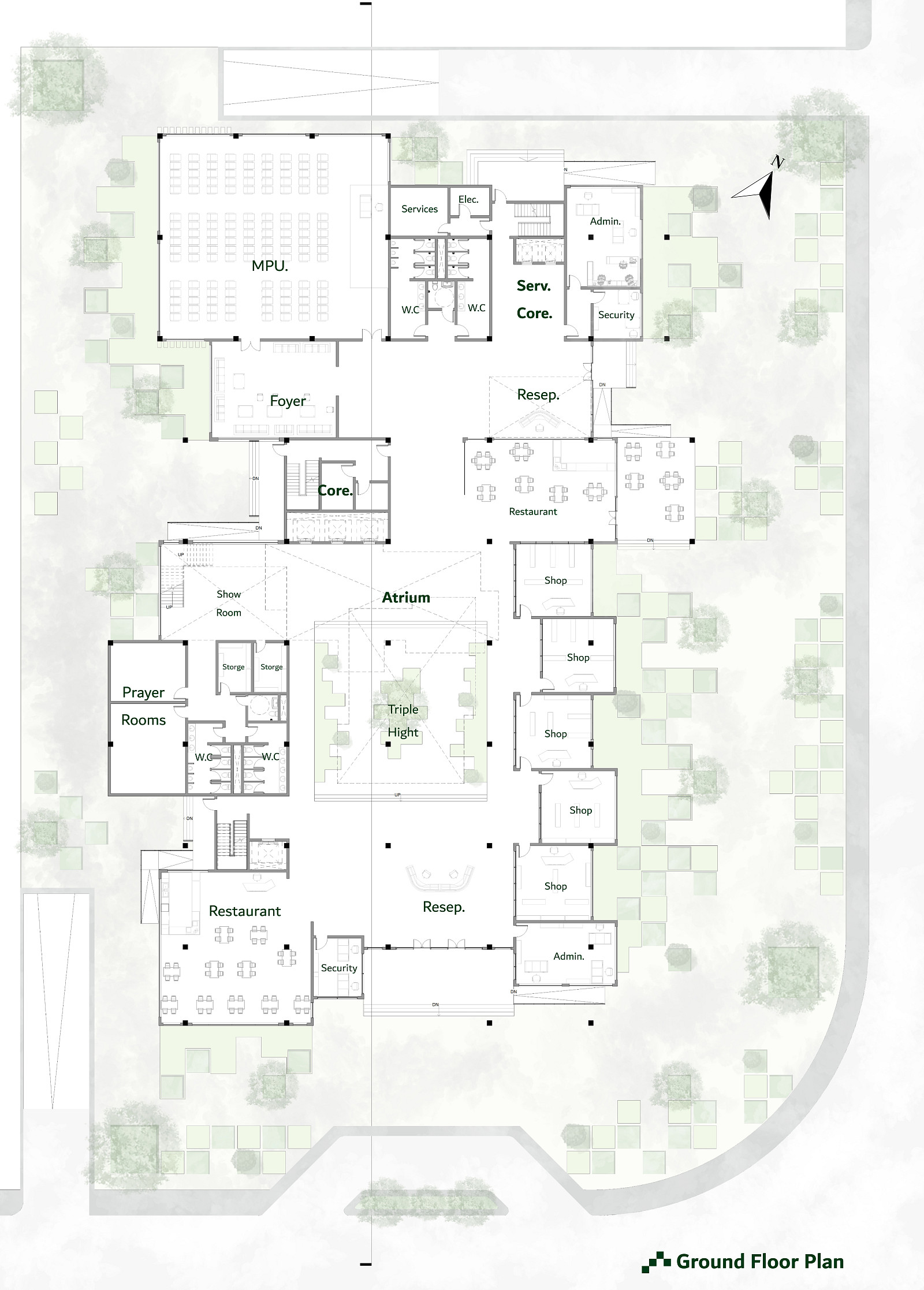
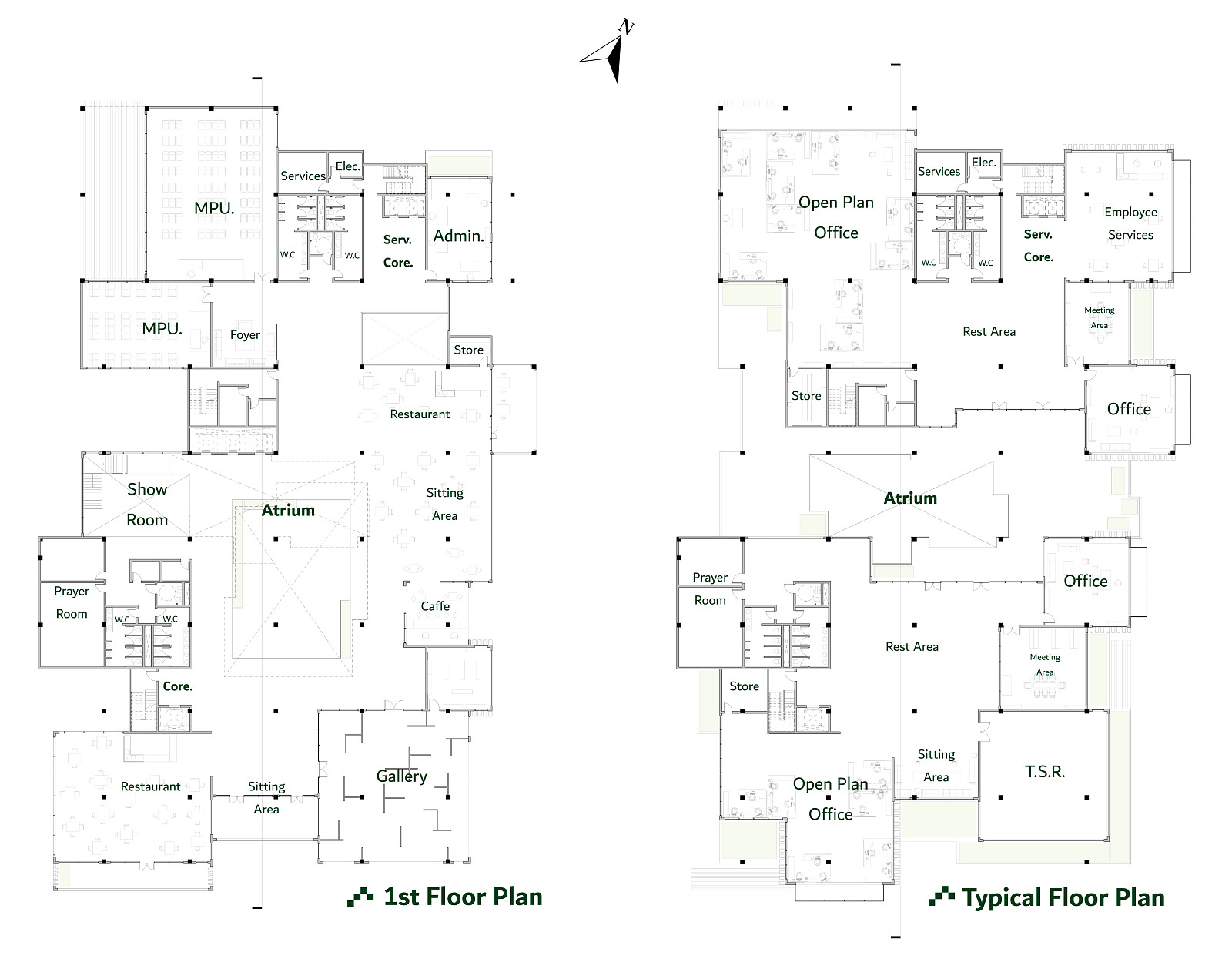
This development is a vibrant mixed-use commercial, cultural, and administrative complex featuring a highly intuitive and organized ground-floor layout. It seamlessly bridges a cultural zone—anchored by a grand Multi-Purpose Unit (MPU) with a dedicated foyer, prayer rooms, and a showroom—with a bustling commercial wing lined with retail shops and two strategically positioned restaurants. Acting as the building’s heart is a striking, triple-height central atrium featuring a large indoor tree, which serves as the primary visual anchor, social hub, and transitional space connecting the reception areas, administrative offices, and the service core.
Technické informace
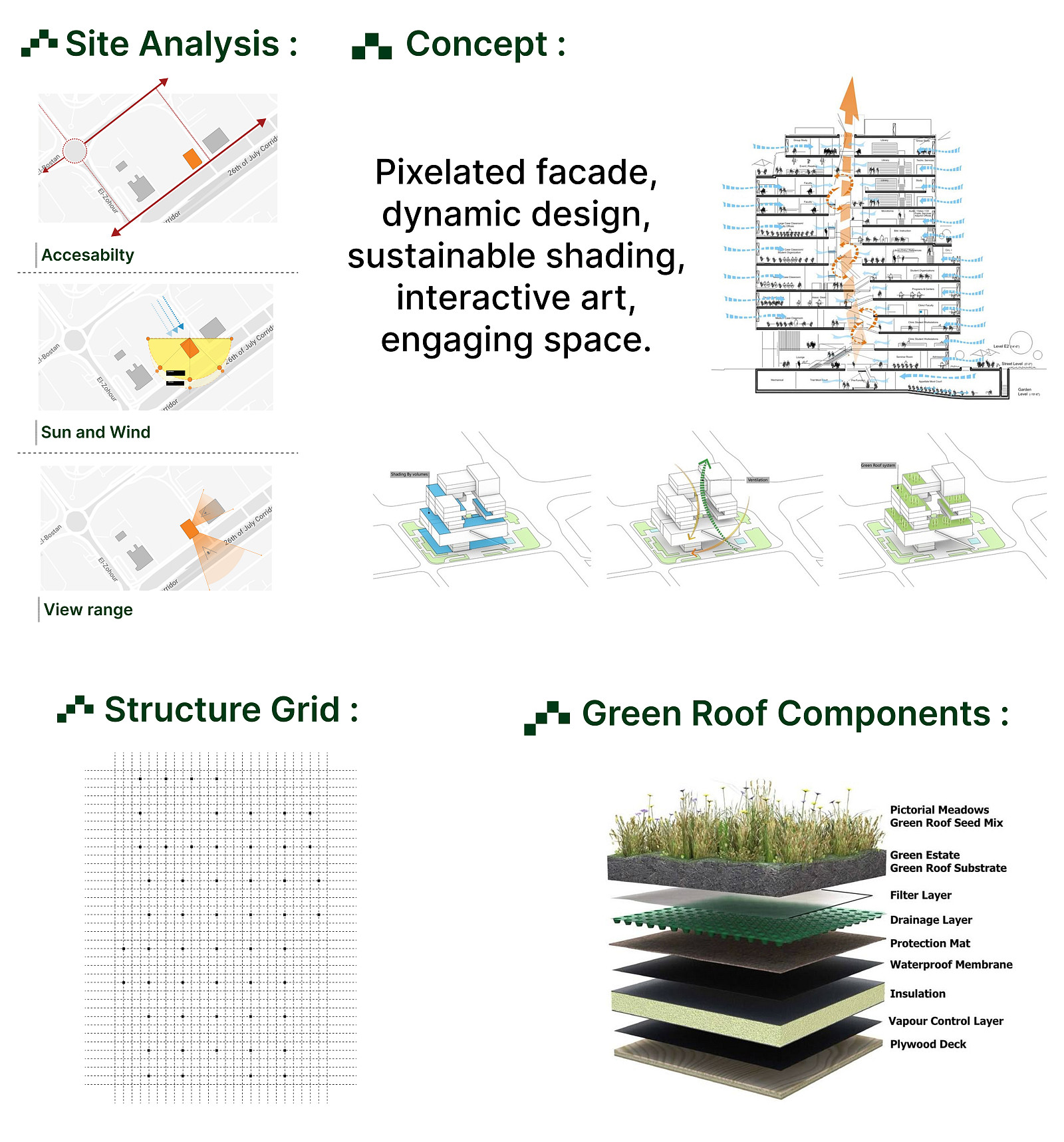
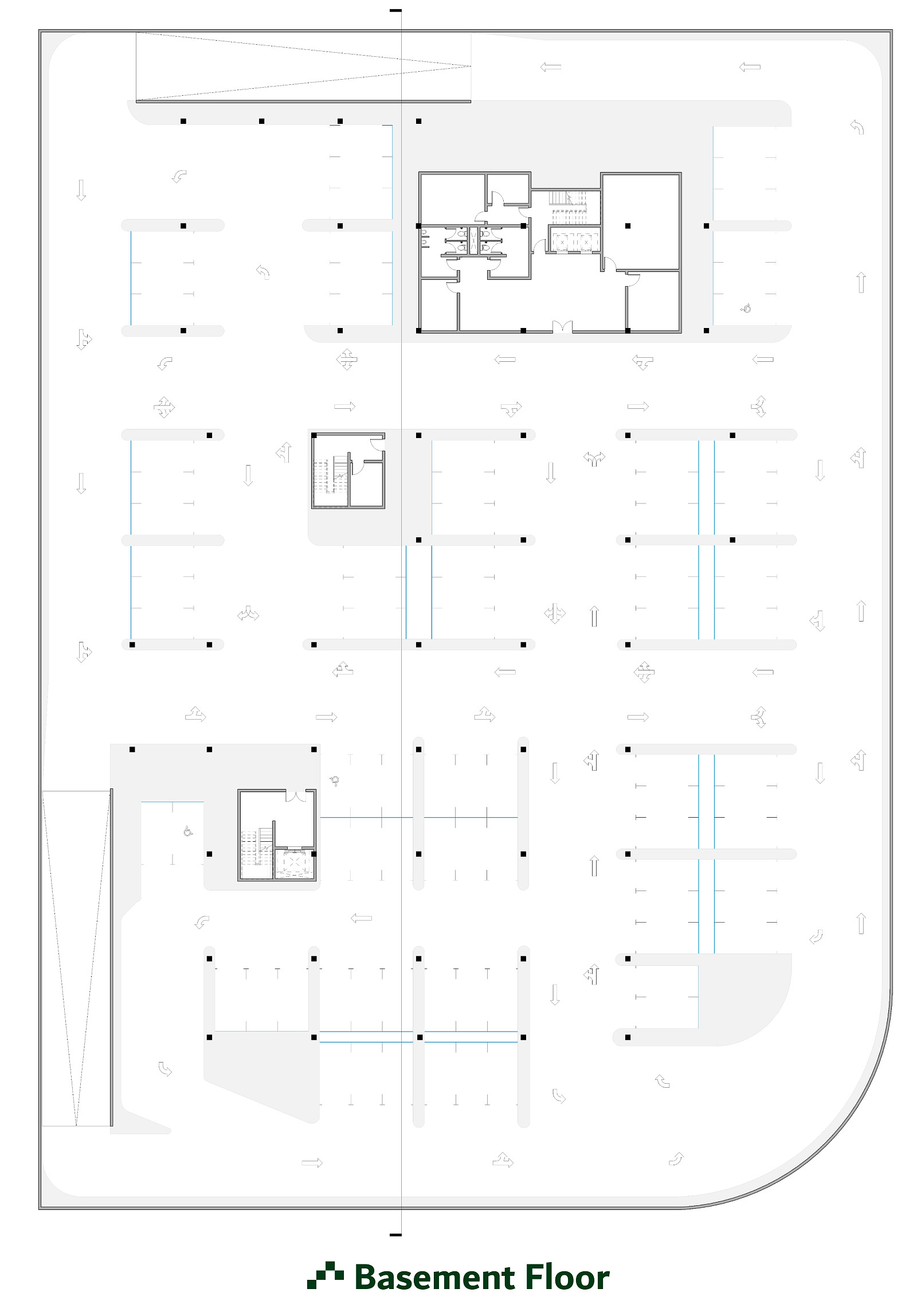
Structurally, the building utilizes a wide-span structural framework to accommodate the expansive open areas on the lower levels, combined with advanced cantilever engineering to support the dramatic, floating upper cubes without visible columns. Vertical circulation is efficiently managed through multiple strategically placed structural cores (stairs and elevators) that separate public visitors from administrative and service flows. Environmentally, the architecture leverages high-performance glass curtain walls for maximum natural daylight, while the staggered building envelope provides crucial self-shading to reduce thermal heat gain. Additionally, the open central atrium operates as a passive cooling system, utilizing the stack effect to naturally exhaust hot air and circulate fresh breezes throughout the interior.

Copyright © 2026 INSPIRELI | All rights reserved. Use of this website signifies your agreement to the Terms of Use, Privacy Policy, and use of cookies.