The Waves - symbiotic architecture


Idea projektu
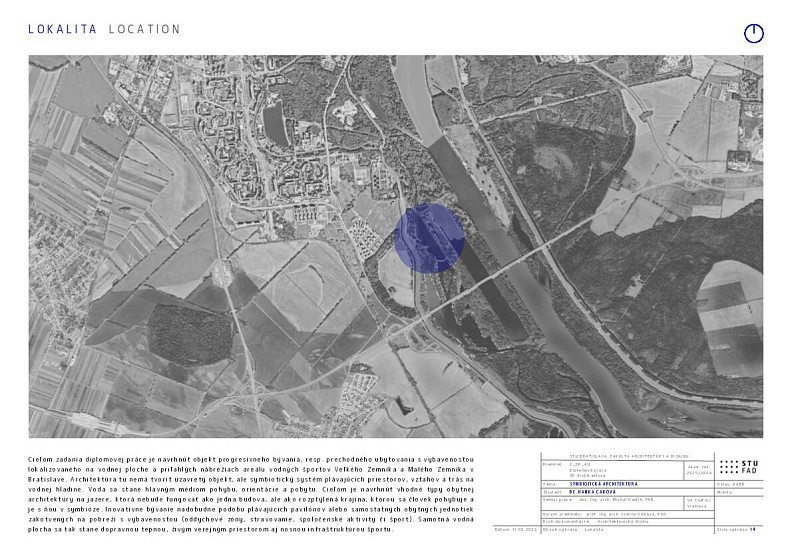
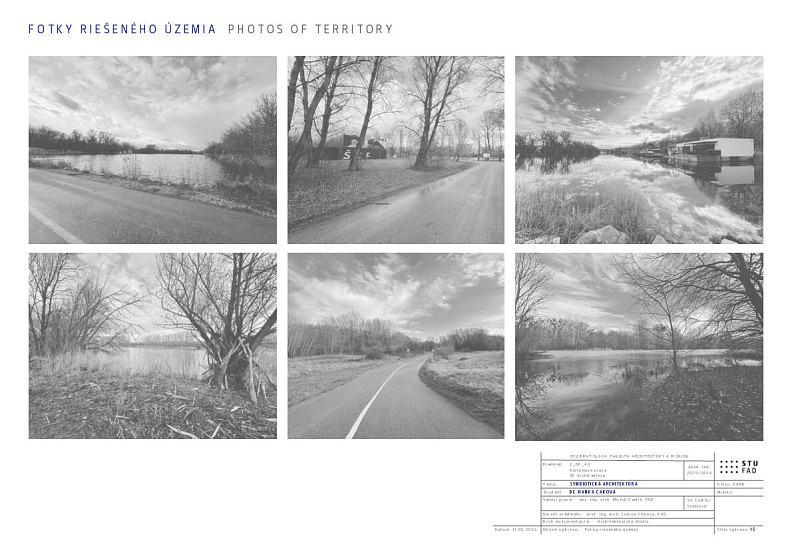
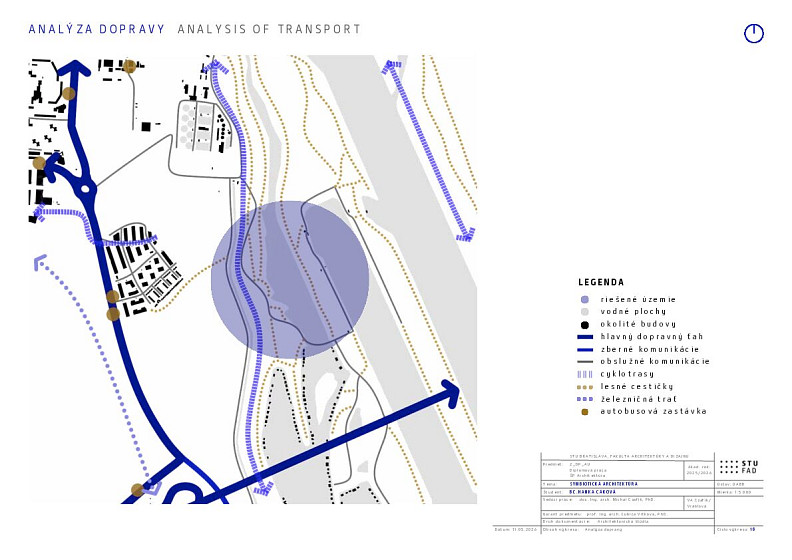
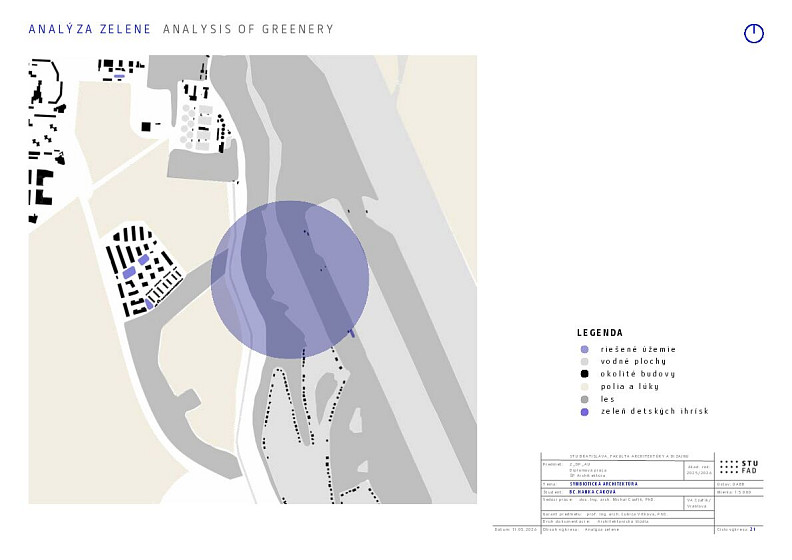
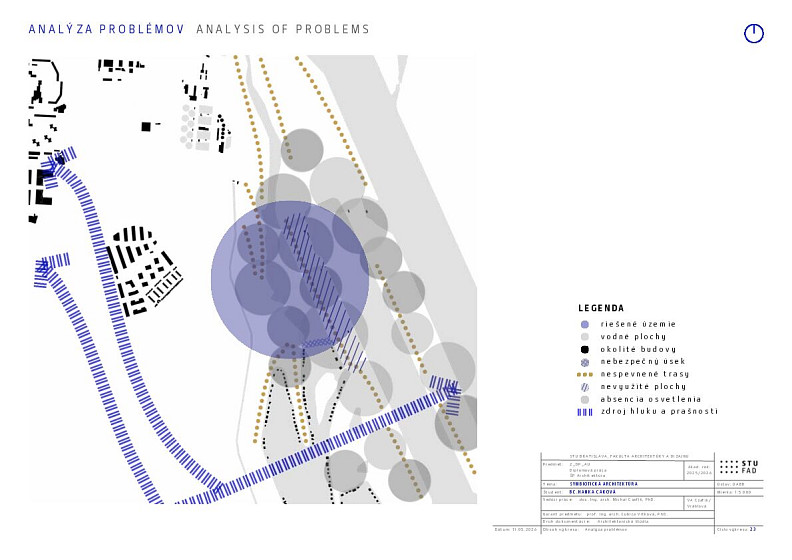
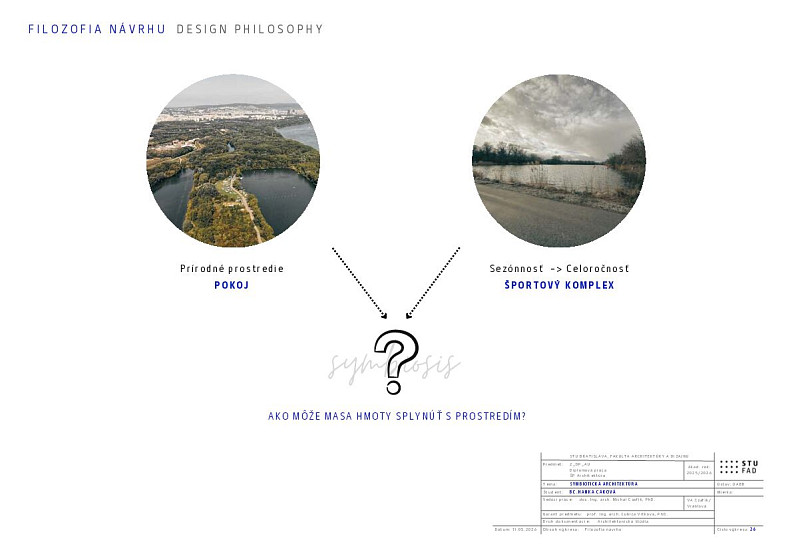
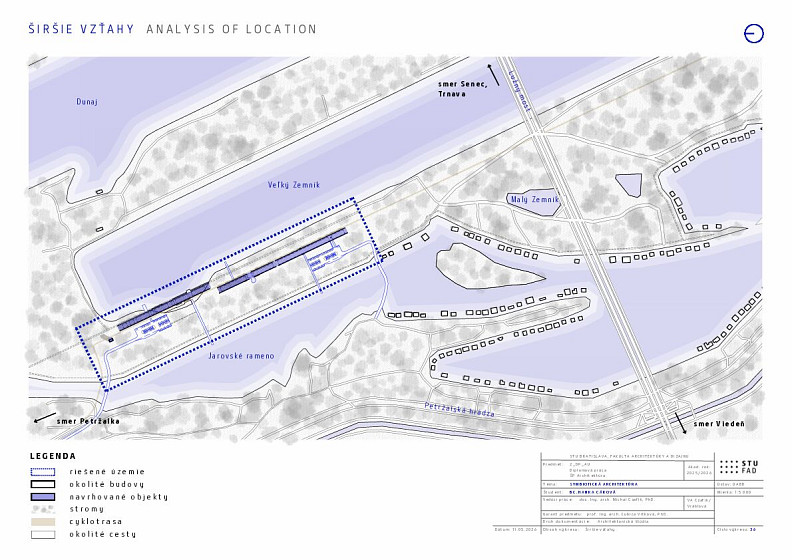
The idea for the project emerged during my first visit to the Veľký Zemník area. At first, I was strongly aware of the noise of the highway and railway, but the moment I approached the water, the noise gradually faded away and only a sense of calm remained. The trees created a natural sound barrier, and the whole area felt peaceful and harmonious. At the same time, however, the site felt rather abandoned and lifeless outside the summer season.
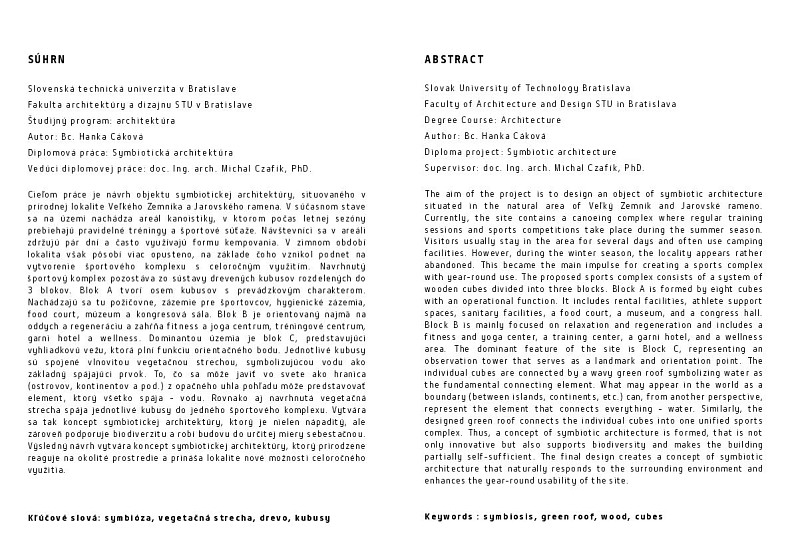
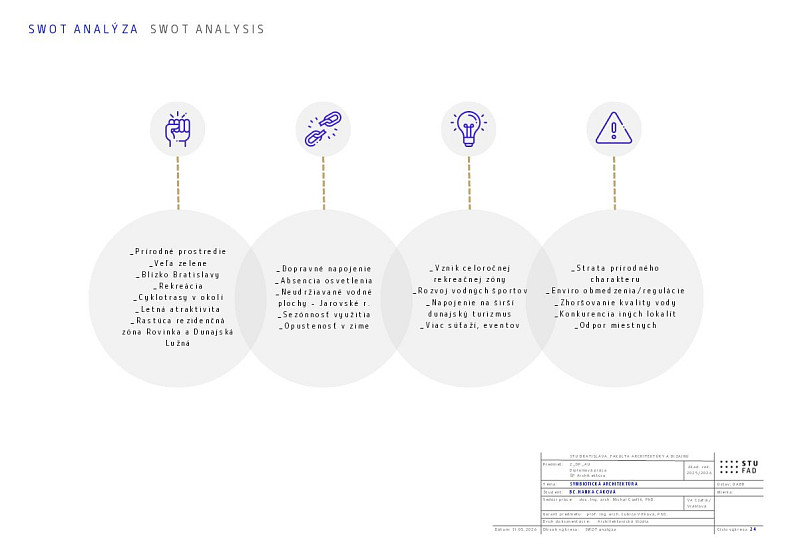
That was the moment I realized what I wanted to achieve with my design — to preserve the calm character of the natural environment while also bringing year-round life, movement, and activity into the area. During my analyses, I explored the possibilities of using the site throughout different seasons and gradually arrived at the idea of creating a sports and recreational complex with diverse functions.
However, when I thought about the word “complex,” I immediately imagined a massive structure and started asking myself: How can a large volume naturally blend into the landscape?
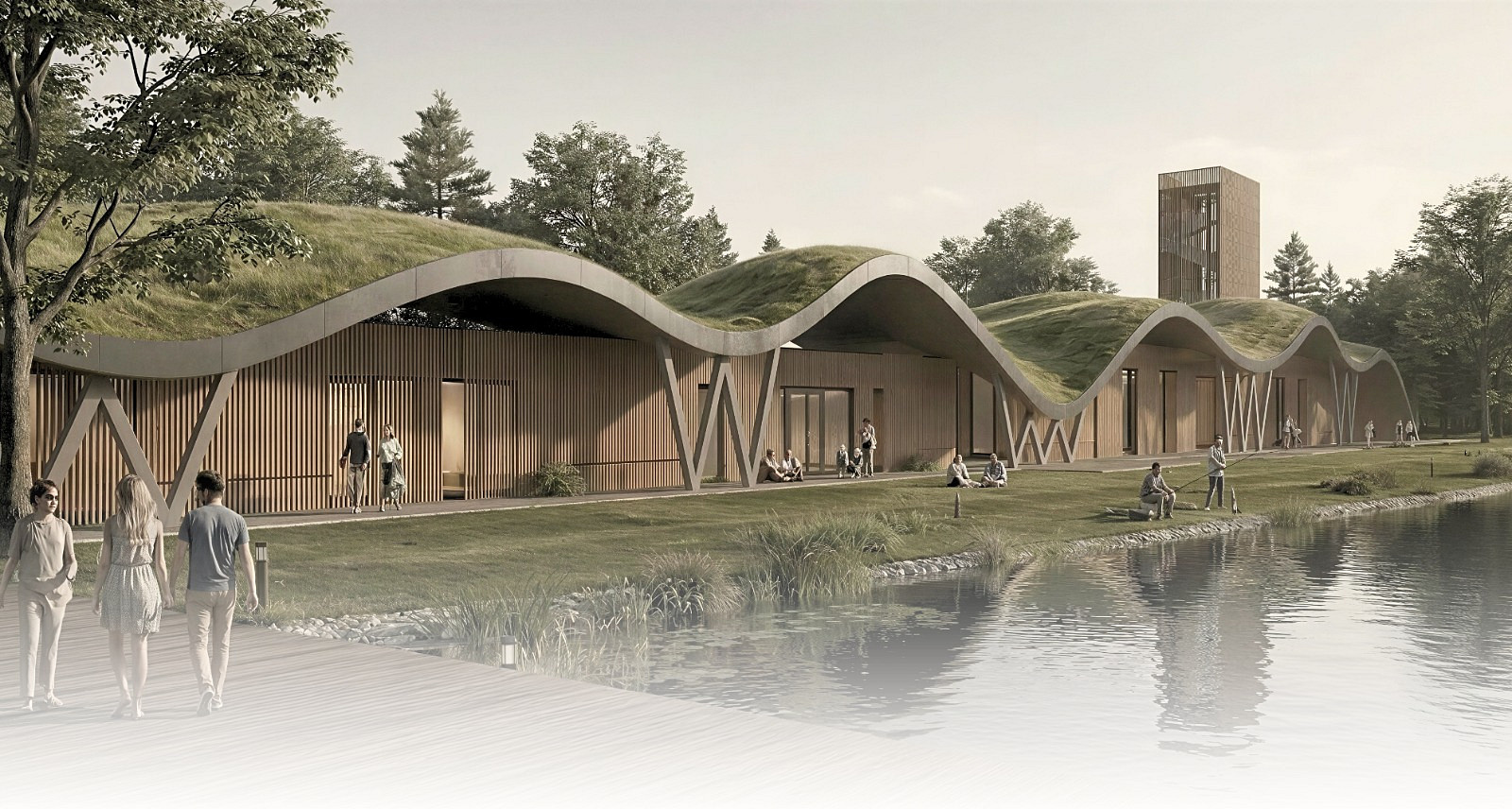
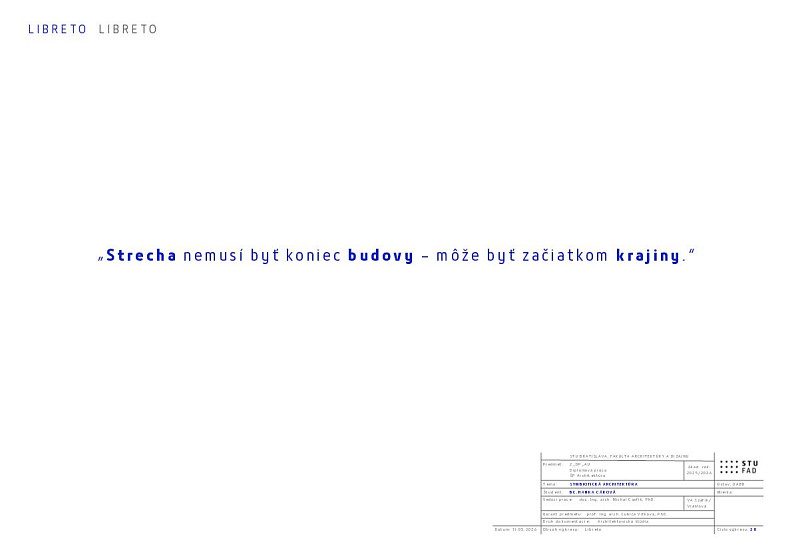
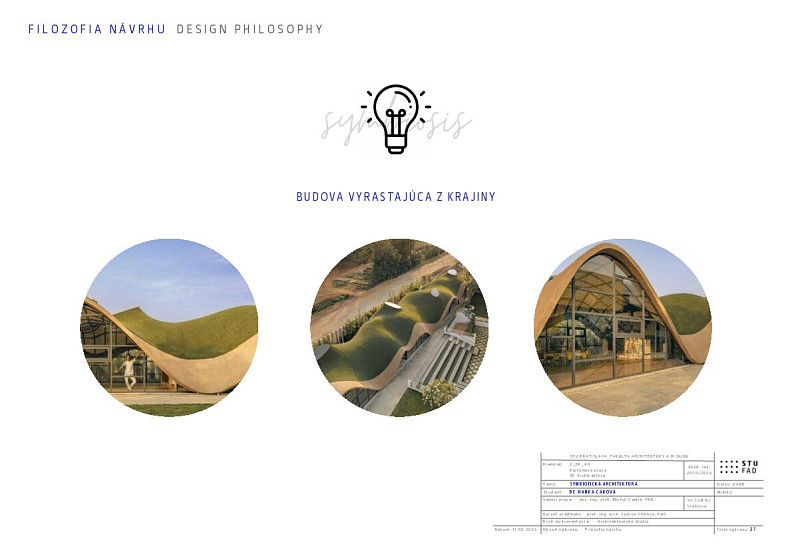
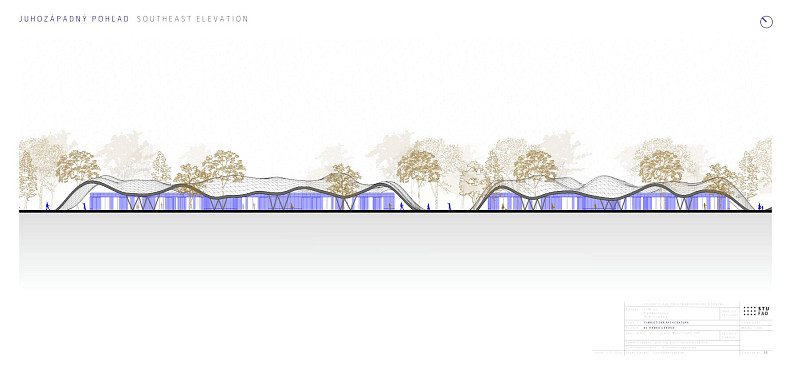
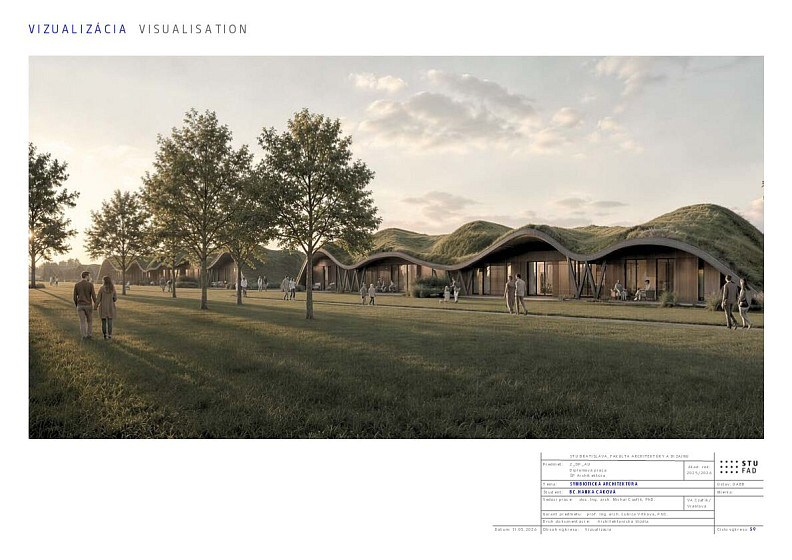
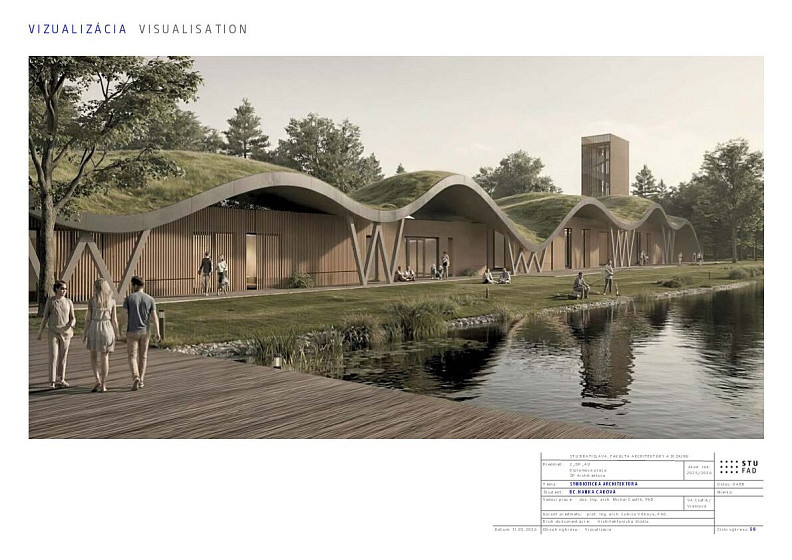
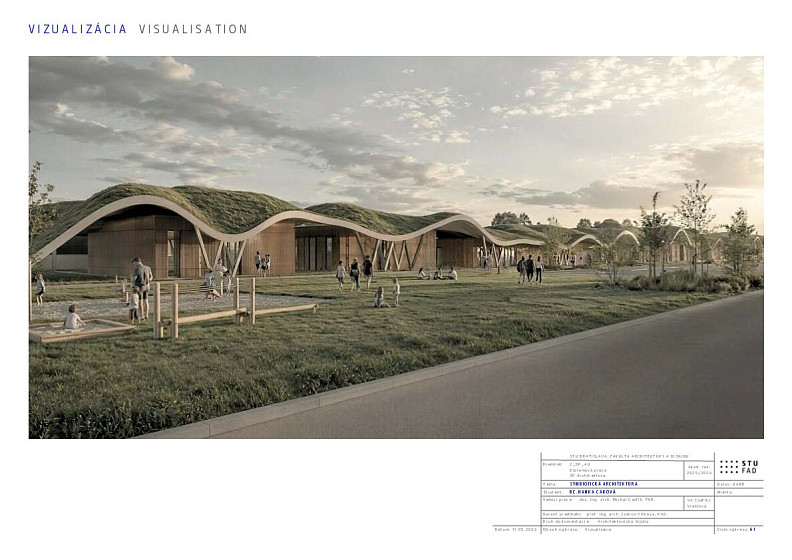
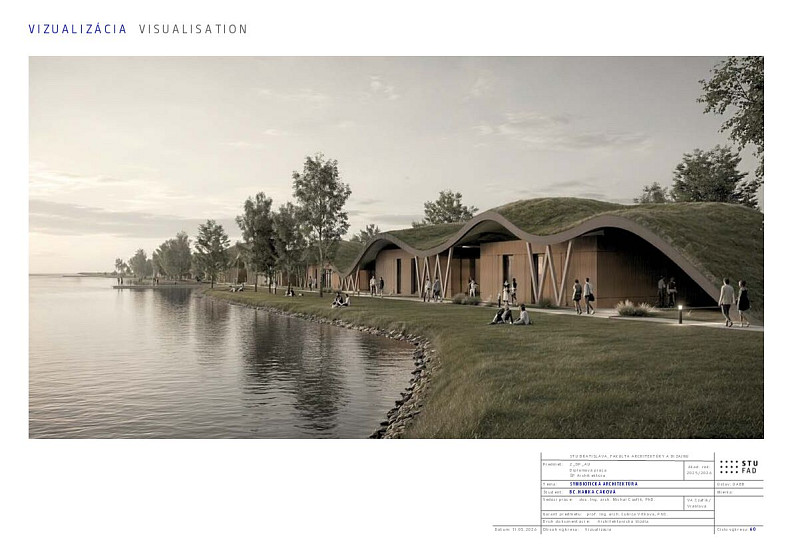
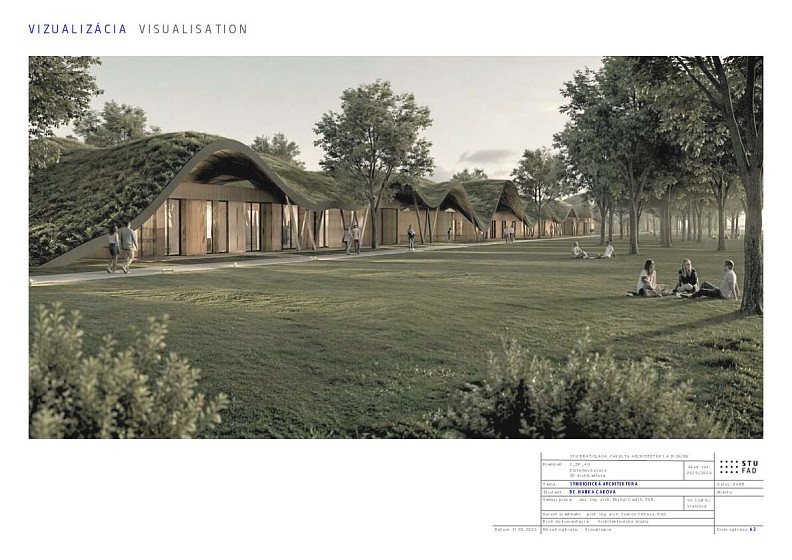
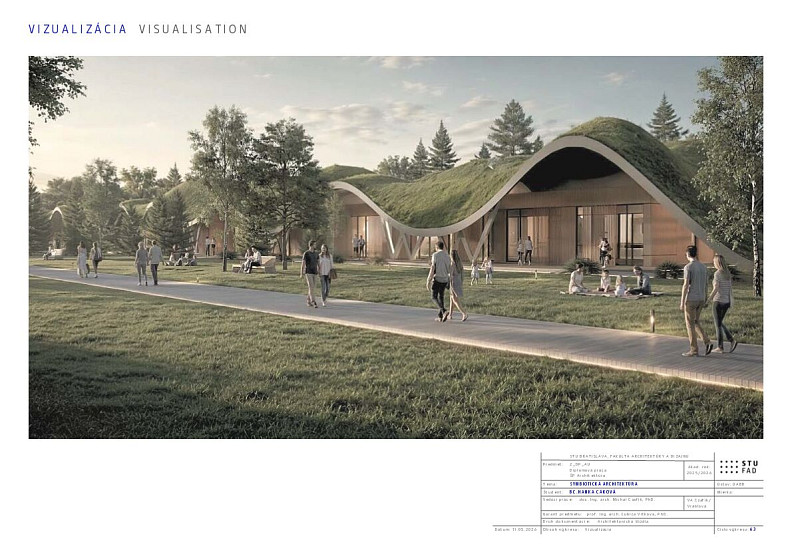
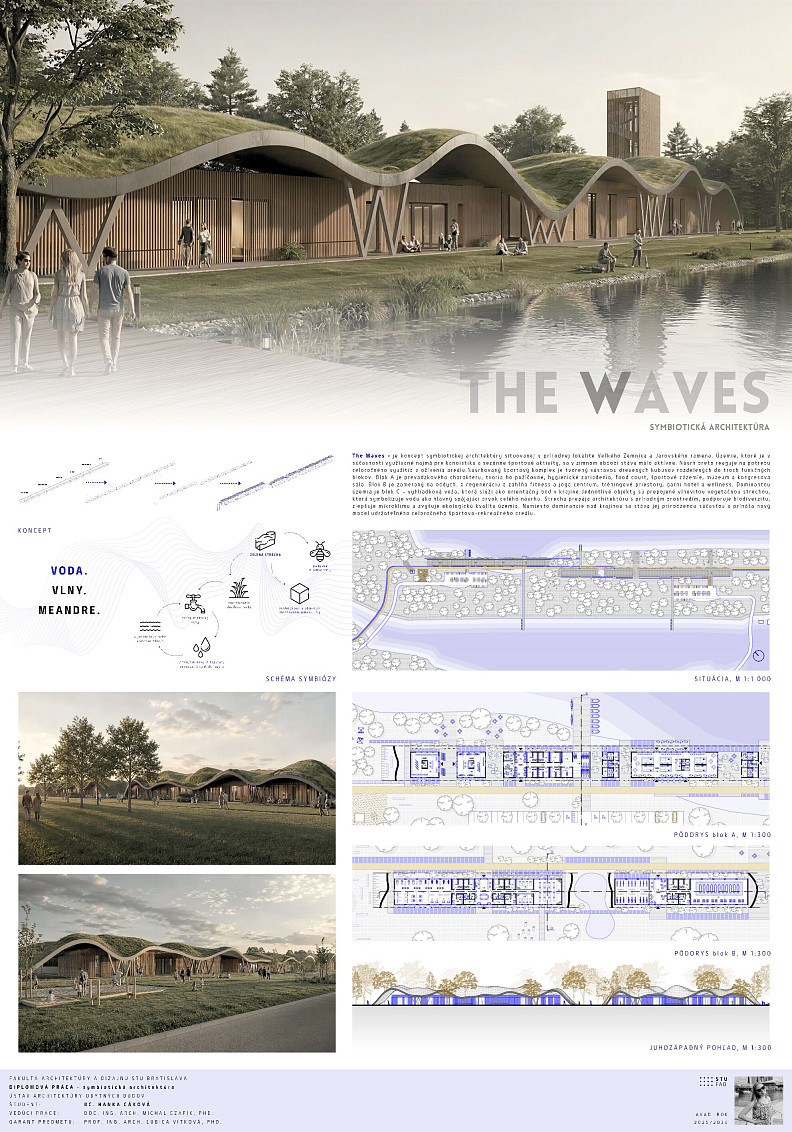
My answer was simple — a building growing out of the landscape. Because a roof does not have to be the end of a building. It can become the beginning of the landscape. This became the main philosophy of the project — a green roof that connects architecture with the terrain and becomes a continuation of the natural environment.
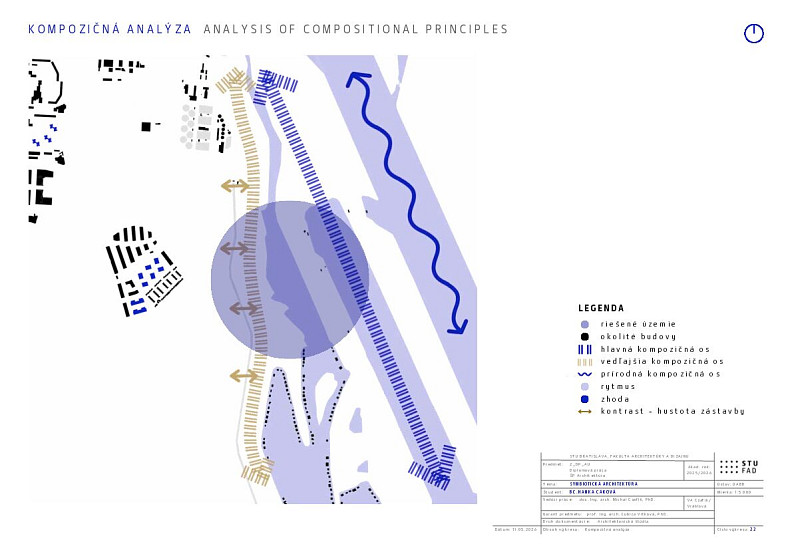
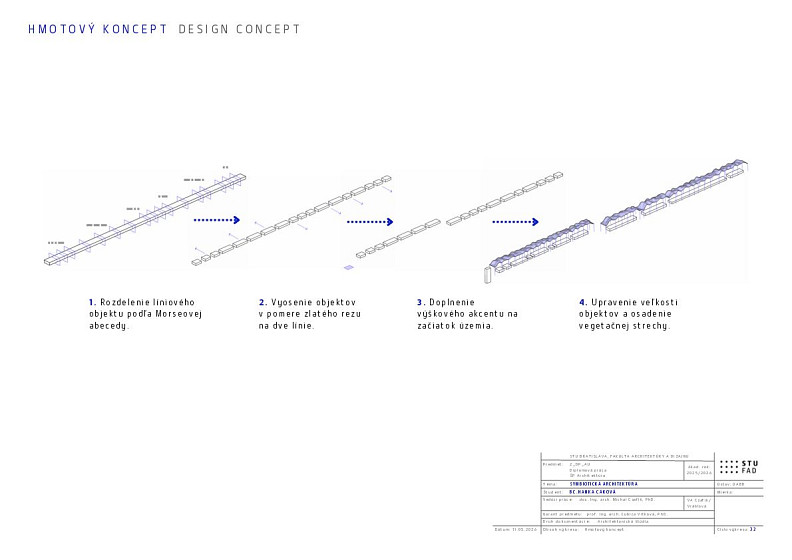
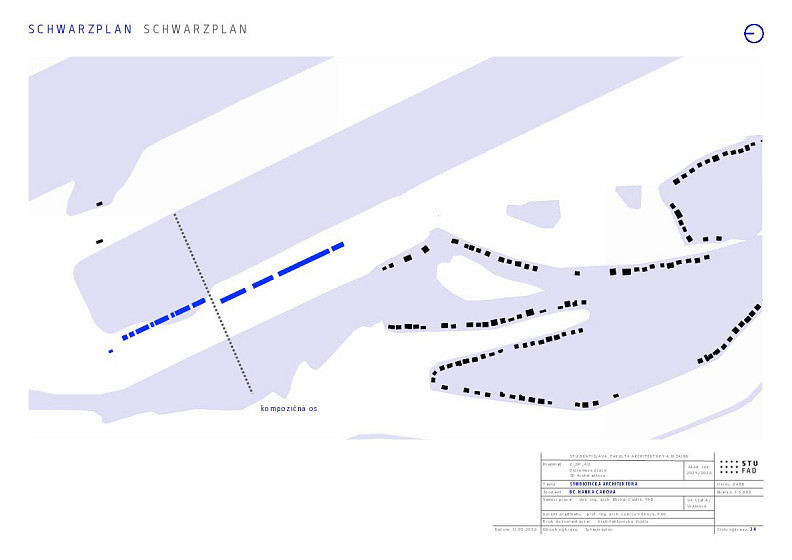
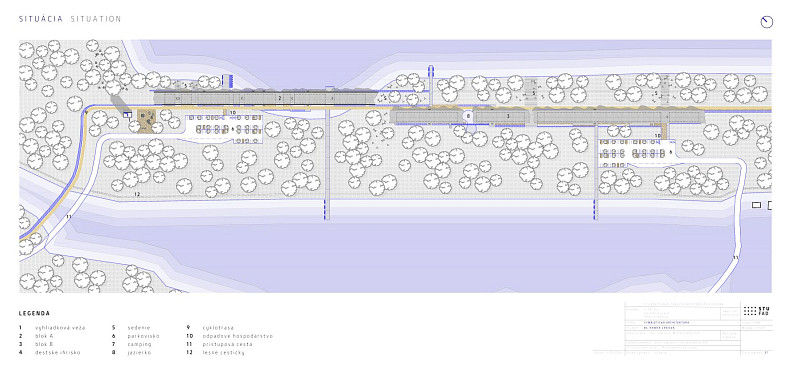
During the compositional analysis, I recognized a strong axis running along the water surface. Based on this, a linear structure positioned parallel to Veľký Zemník was created. I then gradually divided the mass into smaller cubic volumes. The inspiration came from Morse code, which was historically used in navigation and maritime communication. Since the site includes a canoeing area, I searched for a word connected to water and sport. Using the Slovak word “vodáci” (canoeists), I created the rhythm of the entire composition.
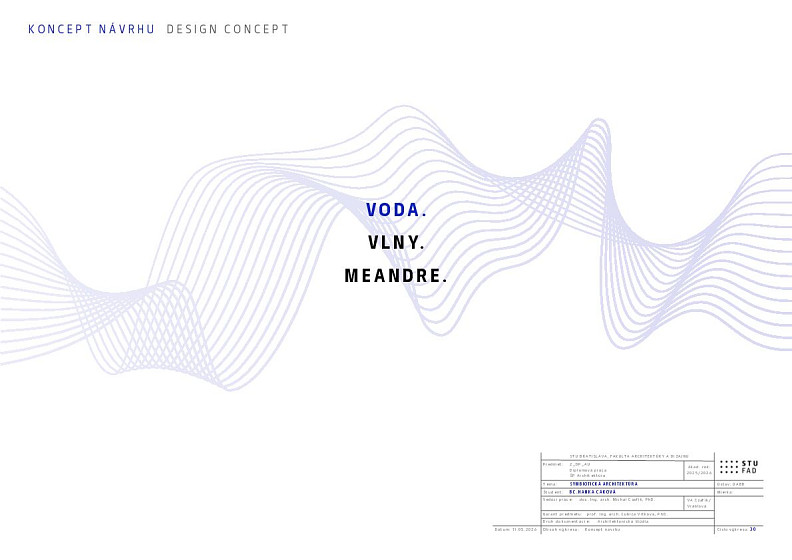
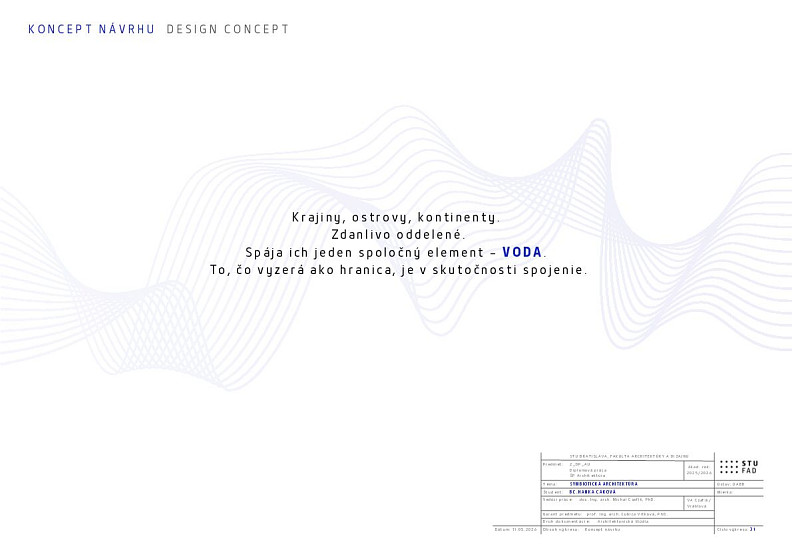
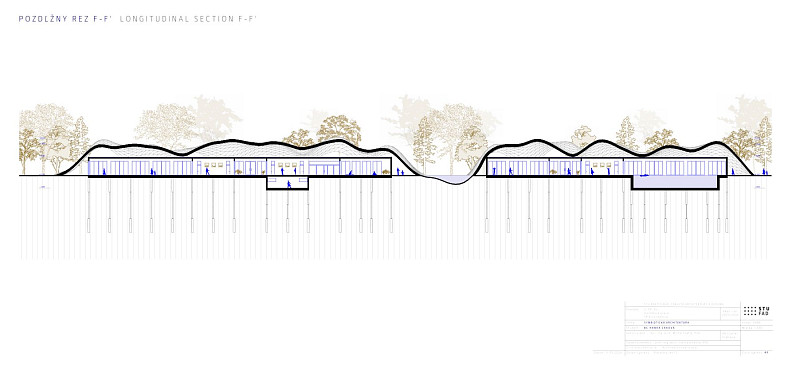
The final step was the addition of the green roof, which connects all the individual objects into one whole. The roof symbolizes water through the form of waves and meanders. Because water, on one hand, creates boundaries, but on the other hand, it connects everything together. And the same principle works in my design — the roof connects the individual cubic volumes into one symbiotic complex.
Popis projektu
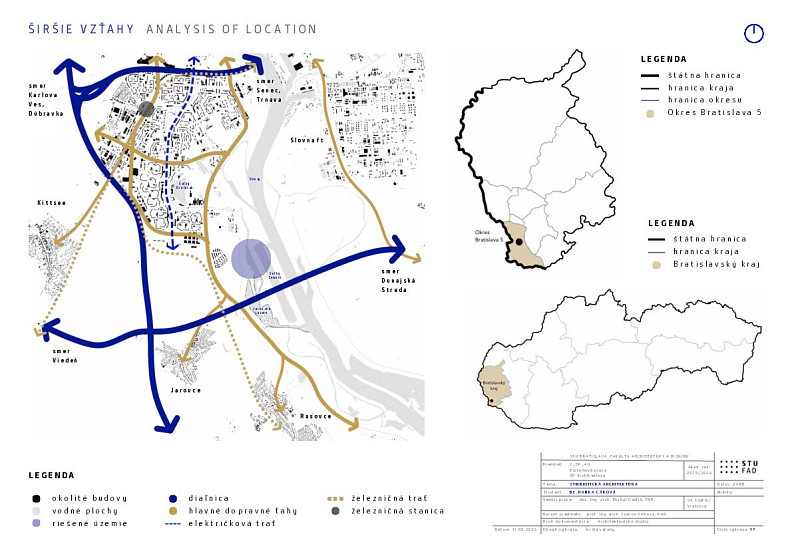
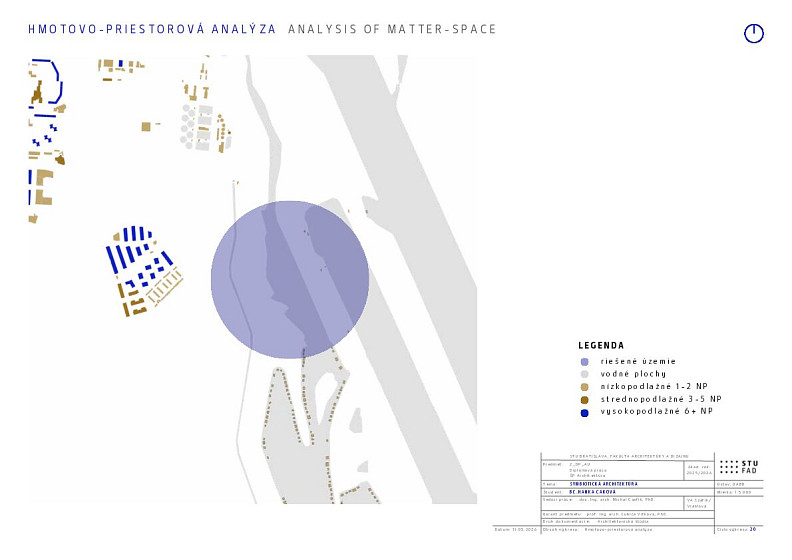
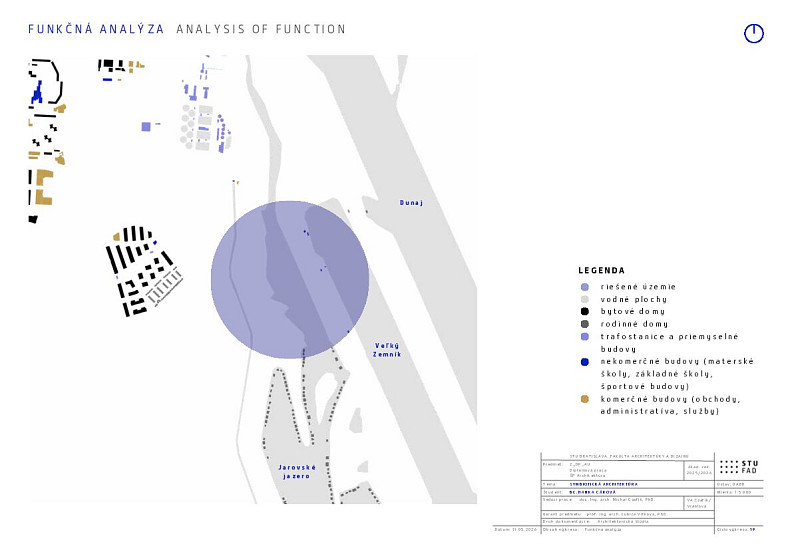
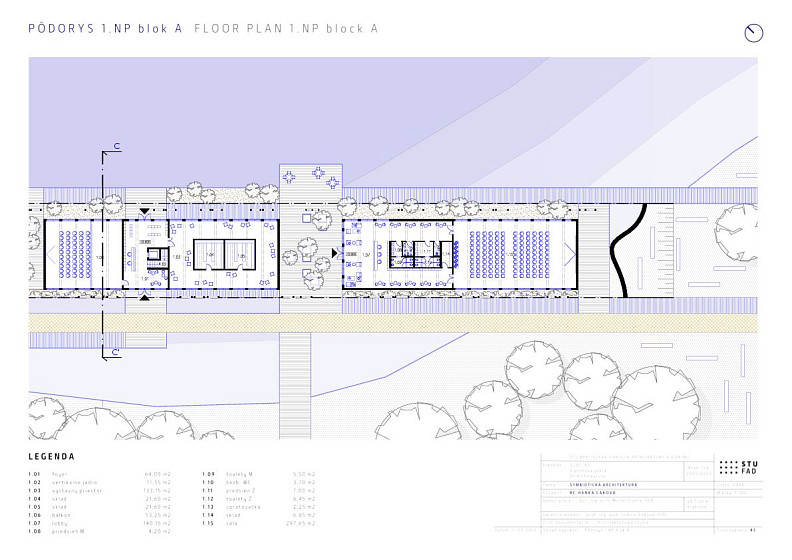
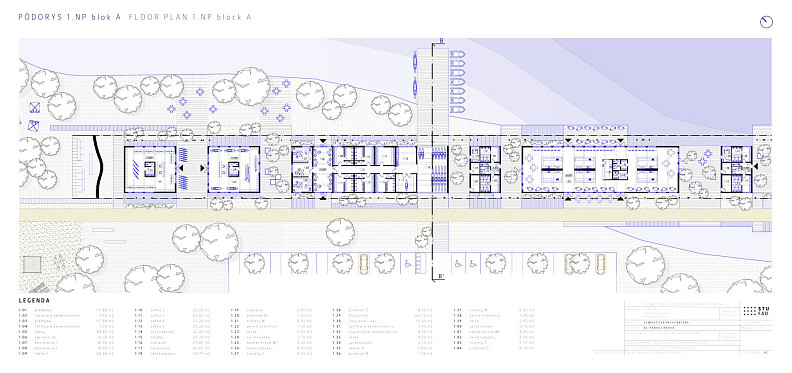
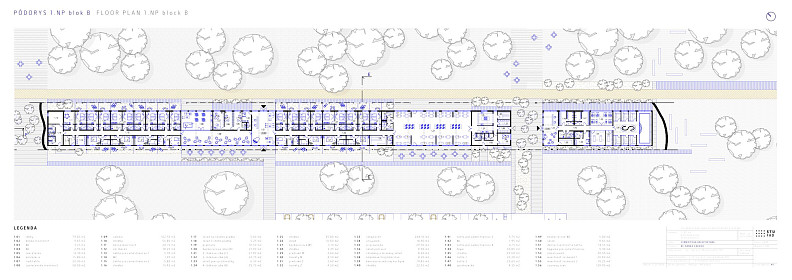
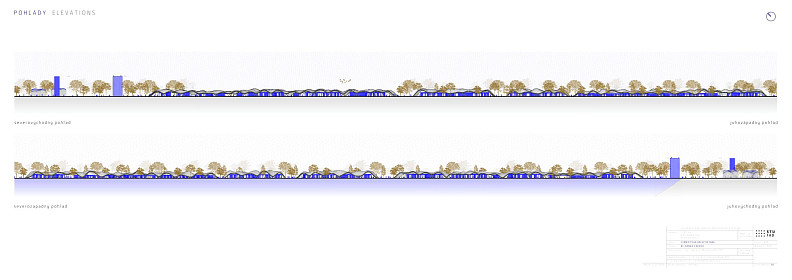
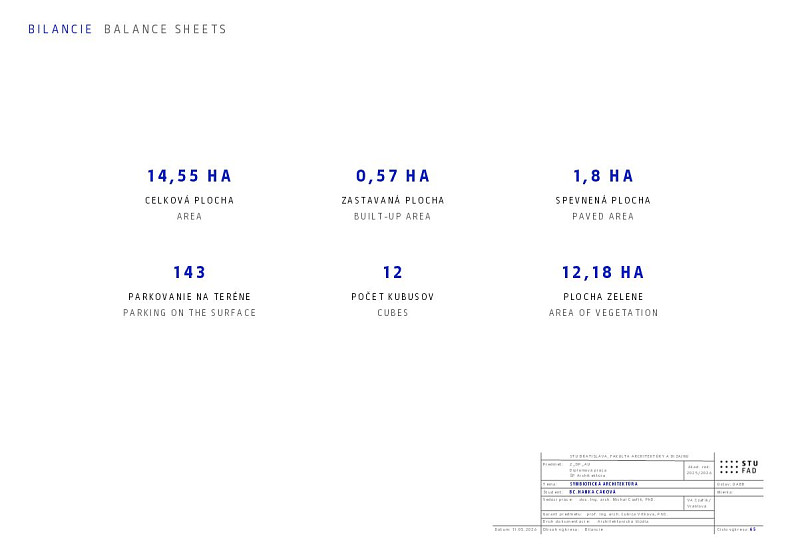
The proposed sports and recreational complex is located in the Veľký Zemník area near the Petržalka embankment in Bratislava. The urban composition of the project is based on the strong linear axis of the water surface, along which a linear structure divided into smaller cubic volumes is placed. These volumes create a rhythmic composition connected by a continuous green roof.
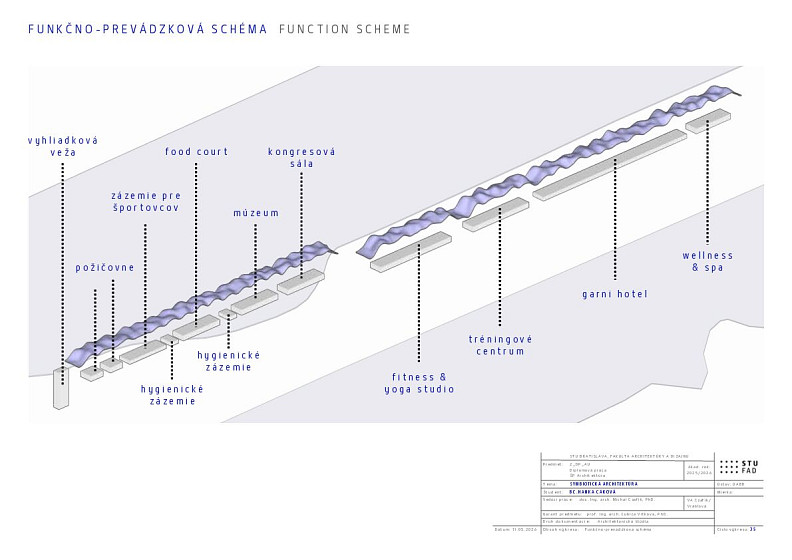
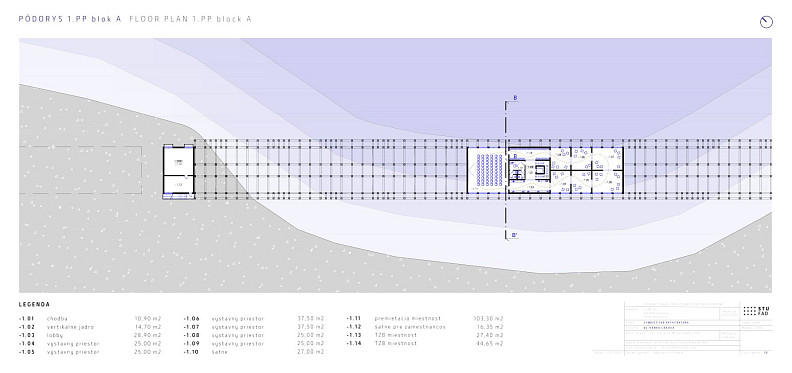
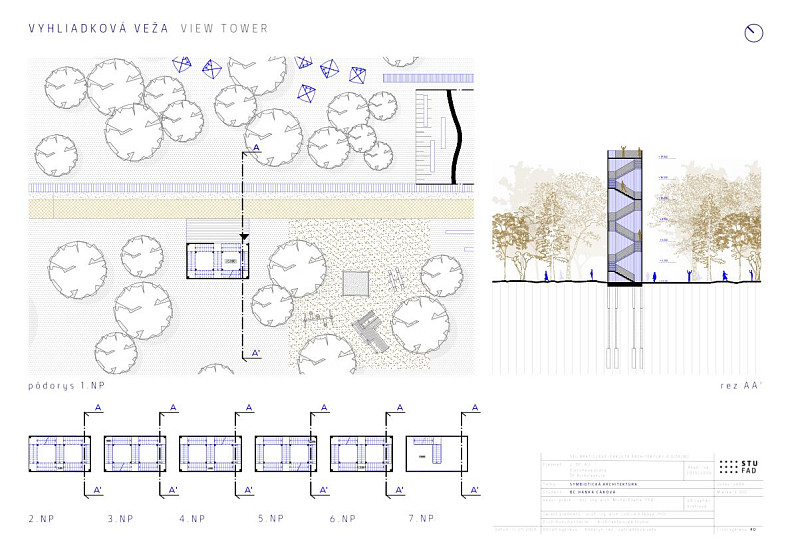
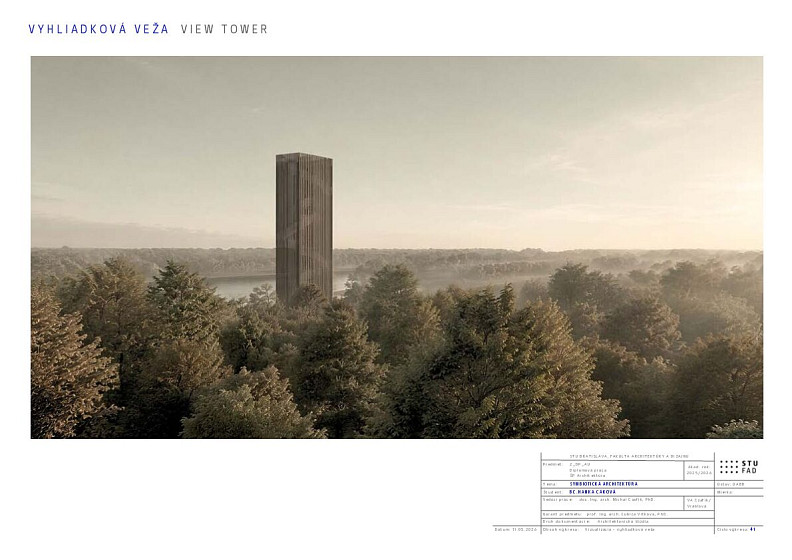
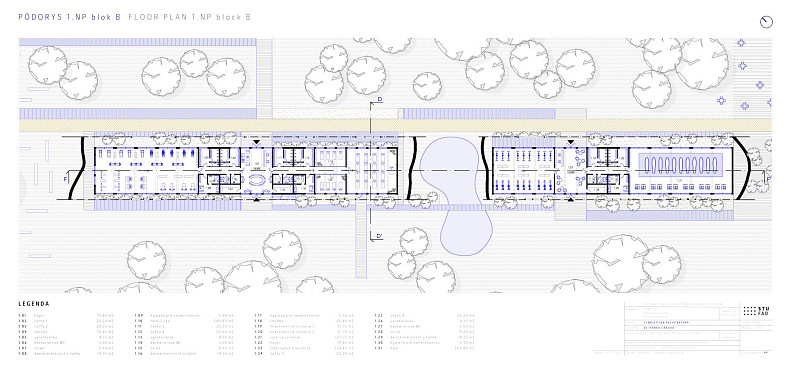
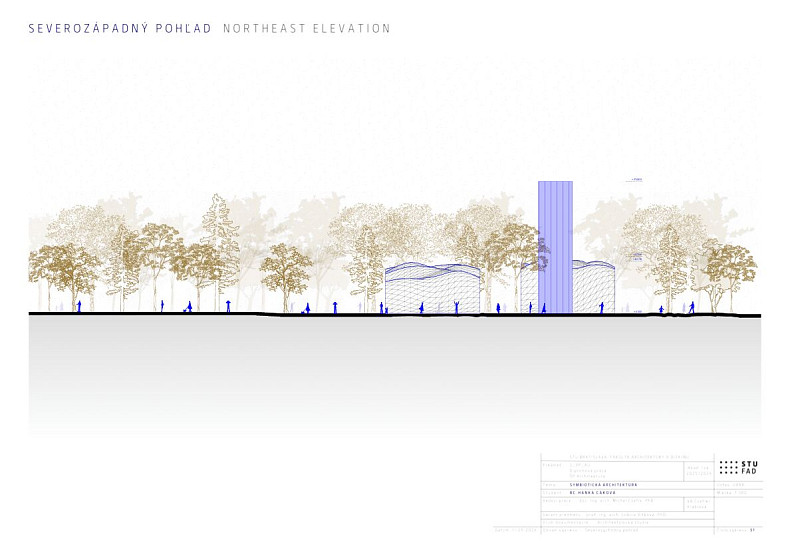
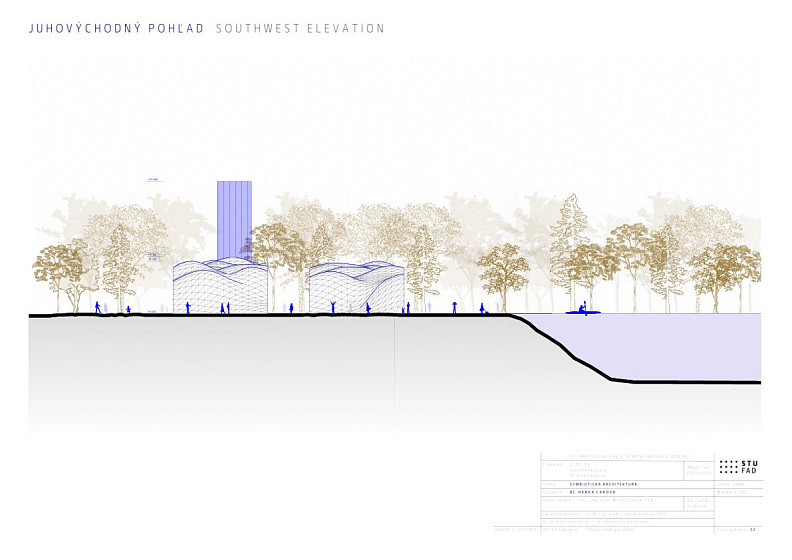
The complex consists of three main parts – an operational block, a relaxation block, and an observation tower. The operational block includes bicycle and kayak rentals, sports facilities, sanitary areas, a food court, a water museum, and a congress hall. The museum also contains an exhibition space located below the water level.
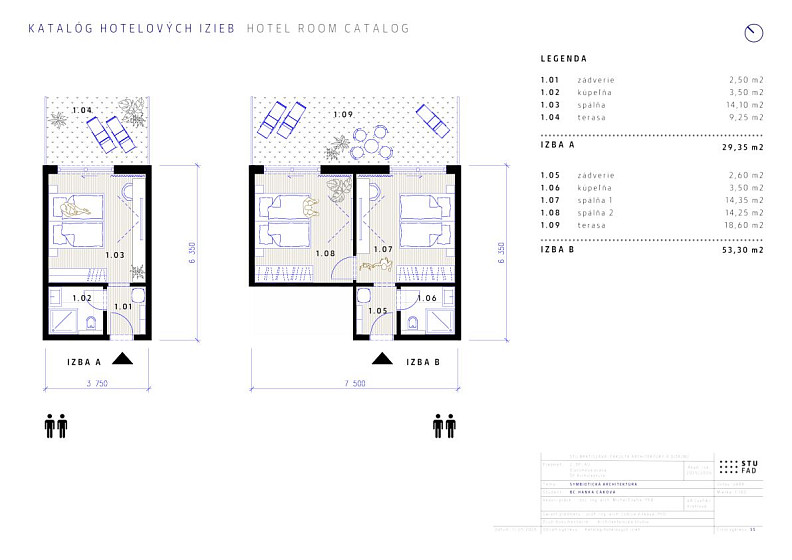
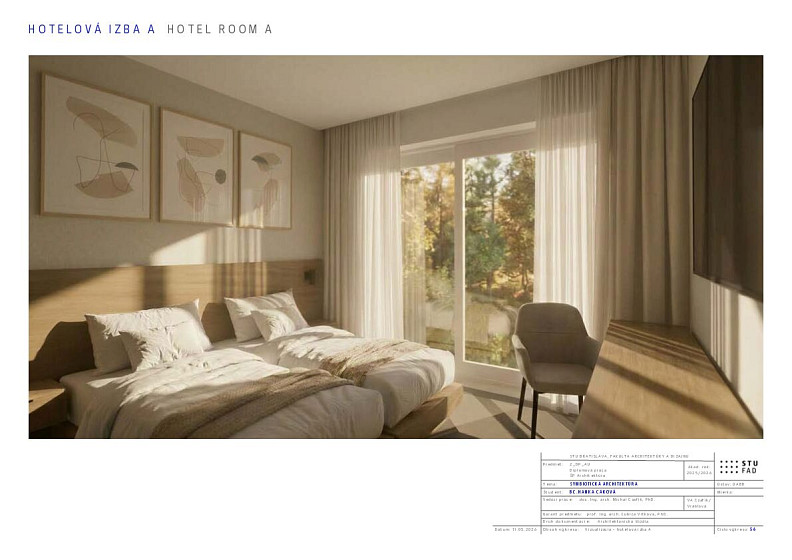
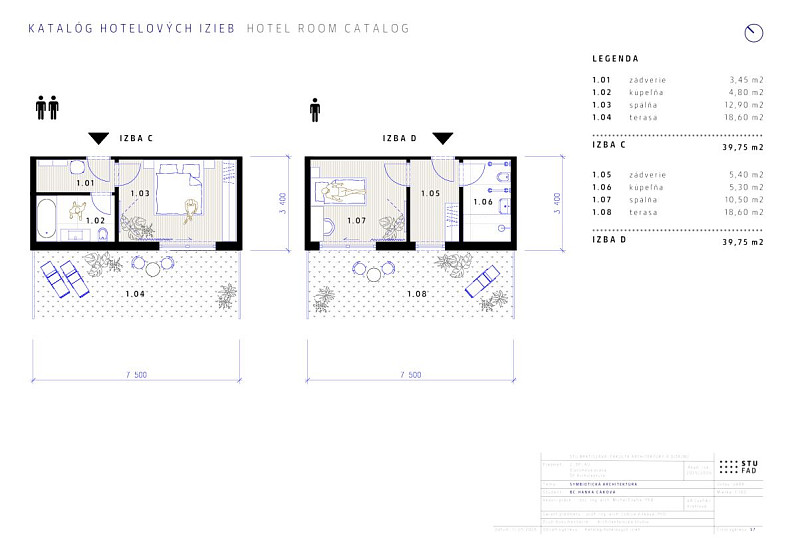
The relaxation block includes a fitness and yoga center, training facilities, a wellness center, and a garni hotel with a capacity of 50 guests. The hotel offers several room types, including family rooms and accessible rooms. The complex also includes social spaces, administration, and staff facilities.
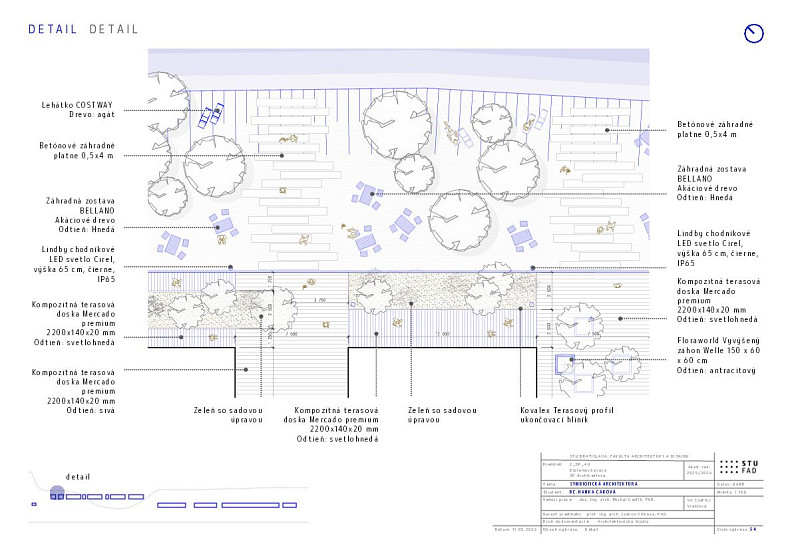
The entire area is complemented by pedestrian paths, piers, and public spaces connecting both sides of the water surfaces. The design supports sports, recreational, and social activities throughout the entire year while also creating a peaceful environment for relaxation and regeneration.
Technické informace
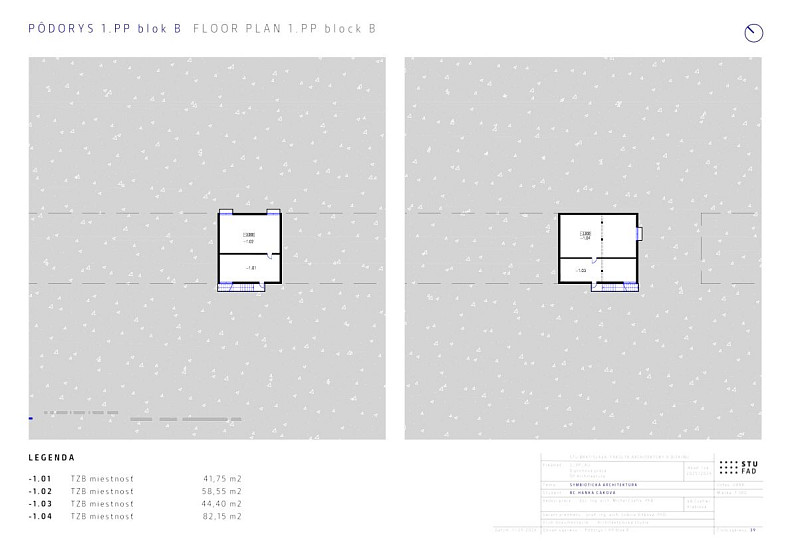
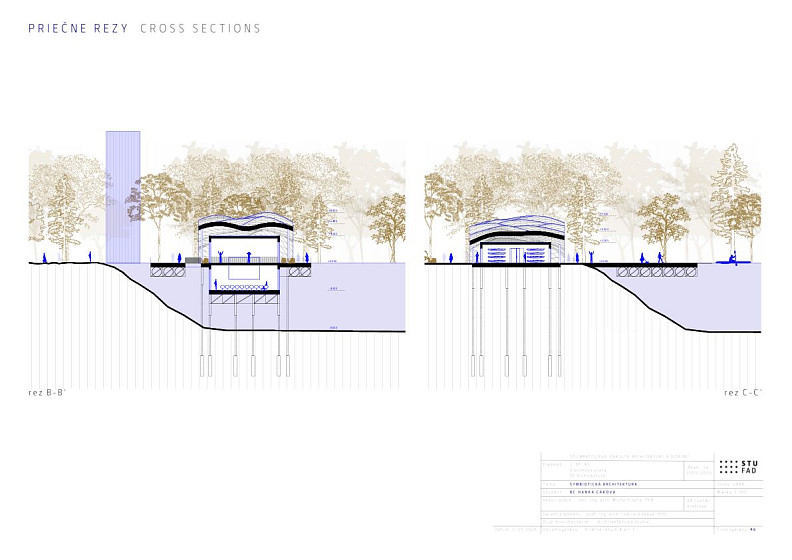
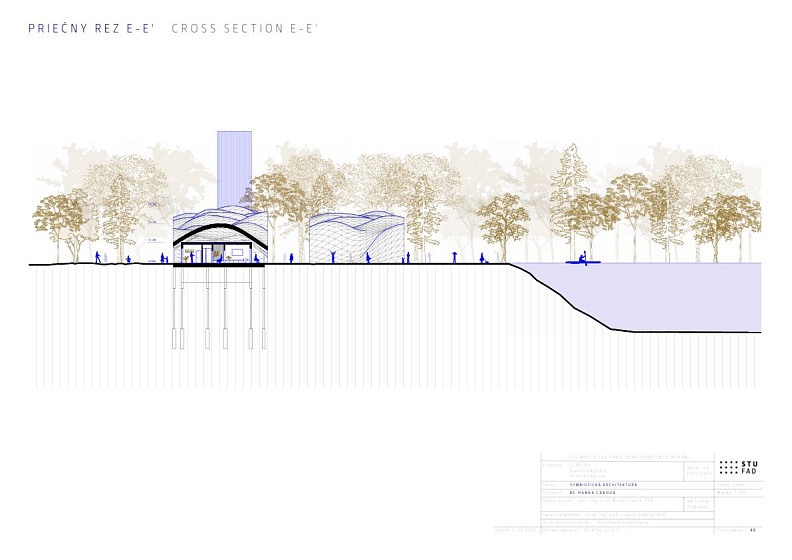
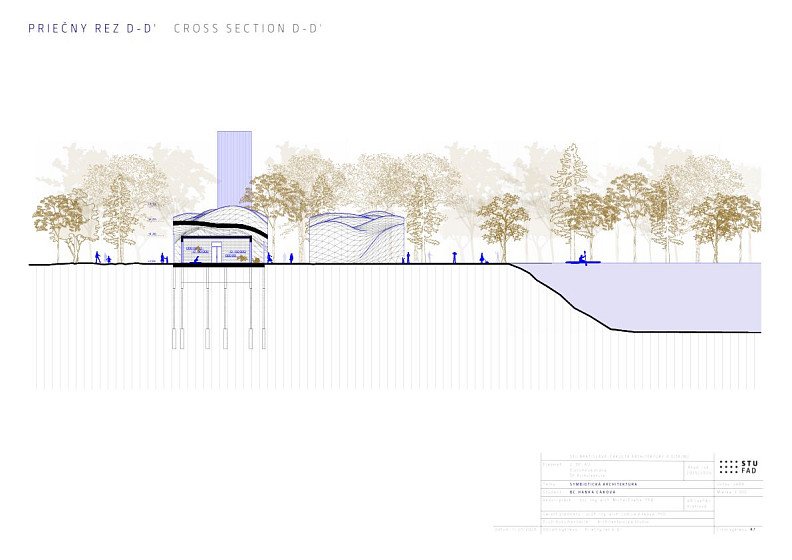
The buildings of the sports and recreational complex are designed as a system of individual timber cubic structures connected by a shared green roof. The cubic volumes are conceived as timber constructions that naturally integrate into the surrounding landscape and support the sustainable character of the project. Parts of the buildings situated above the water surface are supported by a spatial truss structure anchored by a pile foundation system. The roof structure is carried by a system of steel columns anchored into the foundations through piles. Above the water, the steel columns are placed on concrete supports transferring the loads into the pile foundation system.
The main façade material consists of wooden slats creating a unified visual envelope for both the cubic volumes and the observation tower. The façades are horizontally divided by subtle aluminum frames that create a regular façade grid and emphasize the rhythm of the structure. The window frames are designed in an anthracite finish, enhancing the modern architectural character of the building.
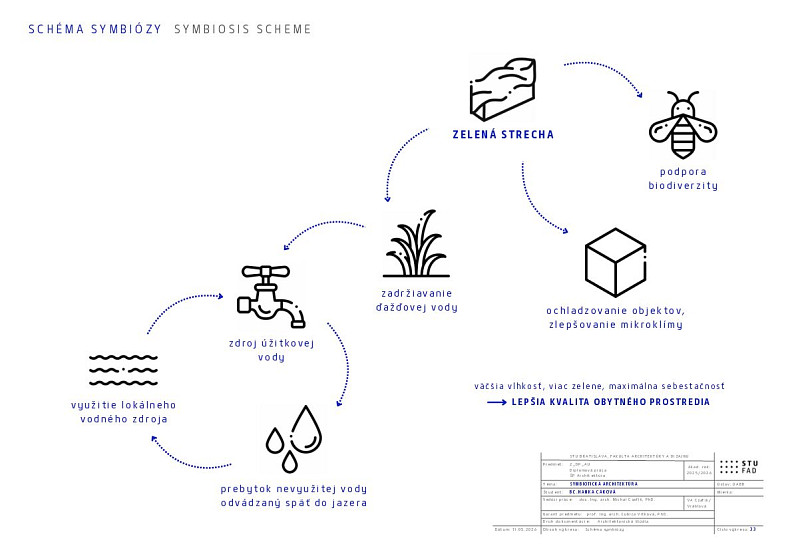
An important technical feature of the project is the green roof, which supports biodiversity, improves the microclimate, and naturally cools the buildings. The design also includes a rainwater management system – rainwater is collected, accumulated, and reused as utility water for the operation of the complex. Excess water is naturally filtered and returned back to the lake.
Dokumentace
Show PDF 1Show PDF 2Show PDF 3Show PDF 4Show PDF 5Show PDF 6Show PDF 7Show PDF 8Show PDF 9Show PDF 10Show PDF 11Show PDF 12Show PDF 13Show PDF 14Show PDF 15Show PDF 16Show PDF 17Show PDF 18Show PDF 19Show PDF 20Show PDF 21Show PDF 22Show PDF 23Show PDF 24Show PDF 25Show PDF 26Show PDF 27Show PDF 28Show PDF 29Show PDF 30Show PDF 31Show PDF 32Show PDF 33Show PDF 34Show PDF 35Show PDF 36Show PDF 37Show PDF 38Show PDF 39Show PDF 40Show PDF 41Show PDF 42Show PDF 43Show PDF 44Show PDF 45Show PDF 46Show PDF 47Show PDF 48Show PDF 49Show PDF 50Show PDF 51Show PDF 52Show PDF 53Show PDF 54Show PDF 55Show PDF 56Show PDF 57

Copyright © 2026 INSPIRELI | All rights reserved. Use of this website signifies your agreement to the Terms of Use, Privacy Policy, and use of cookies.