Decongesting Ella: A Transformative Railway Transit Hub for a Hill Town in Sri Lanka


Project idea
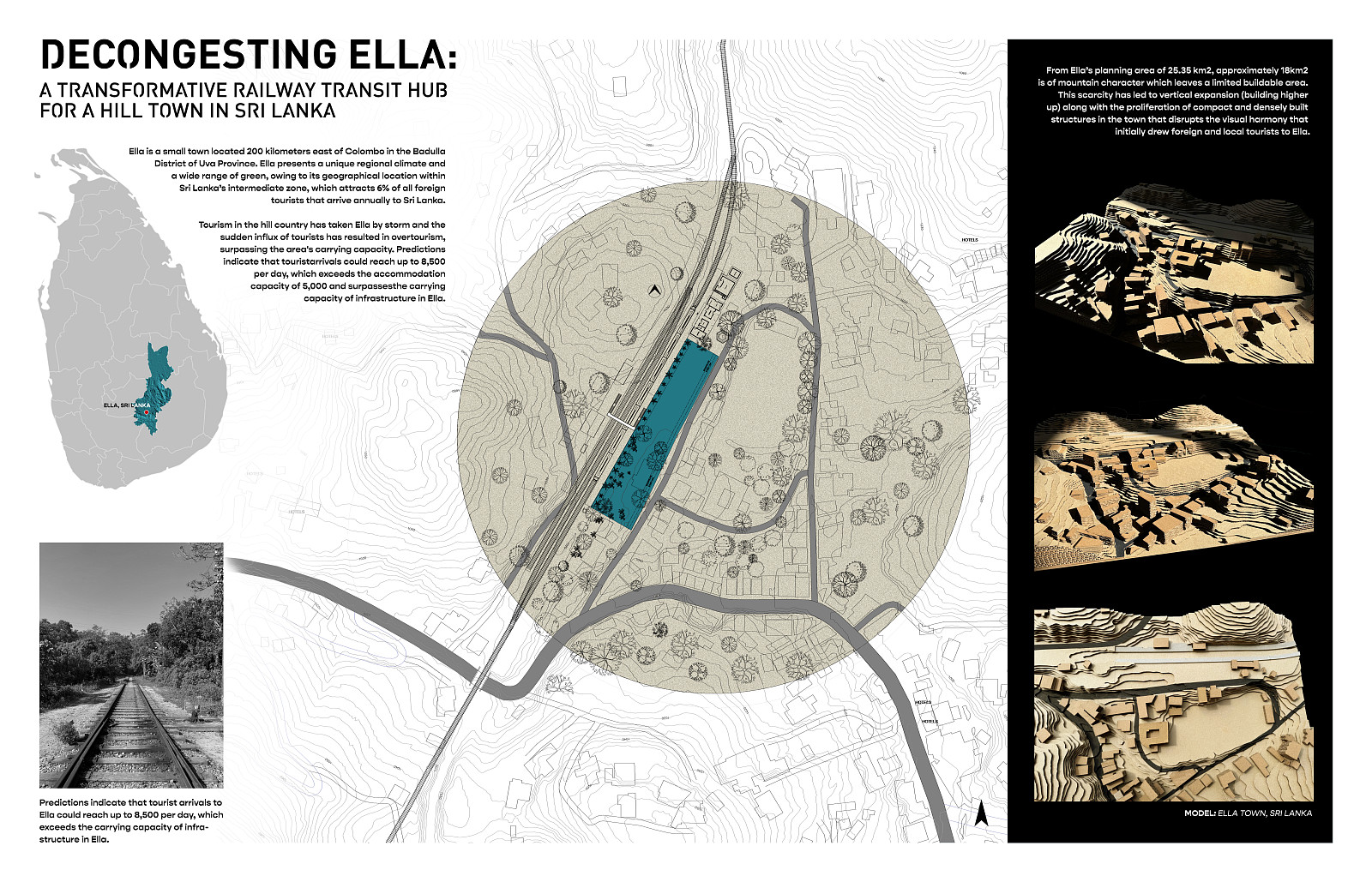
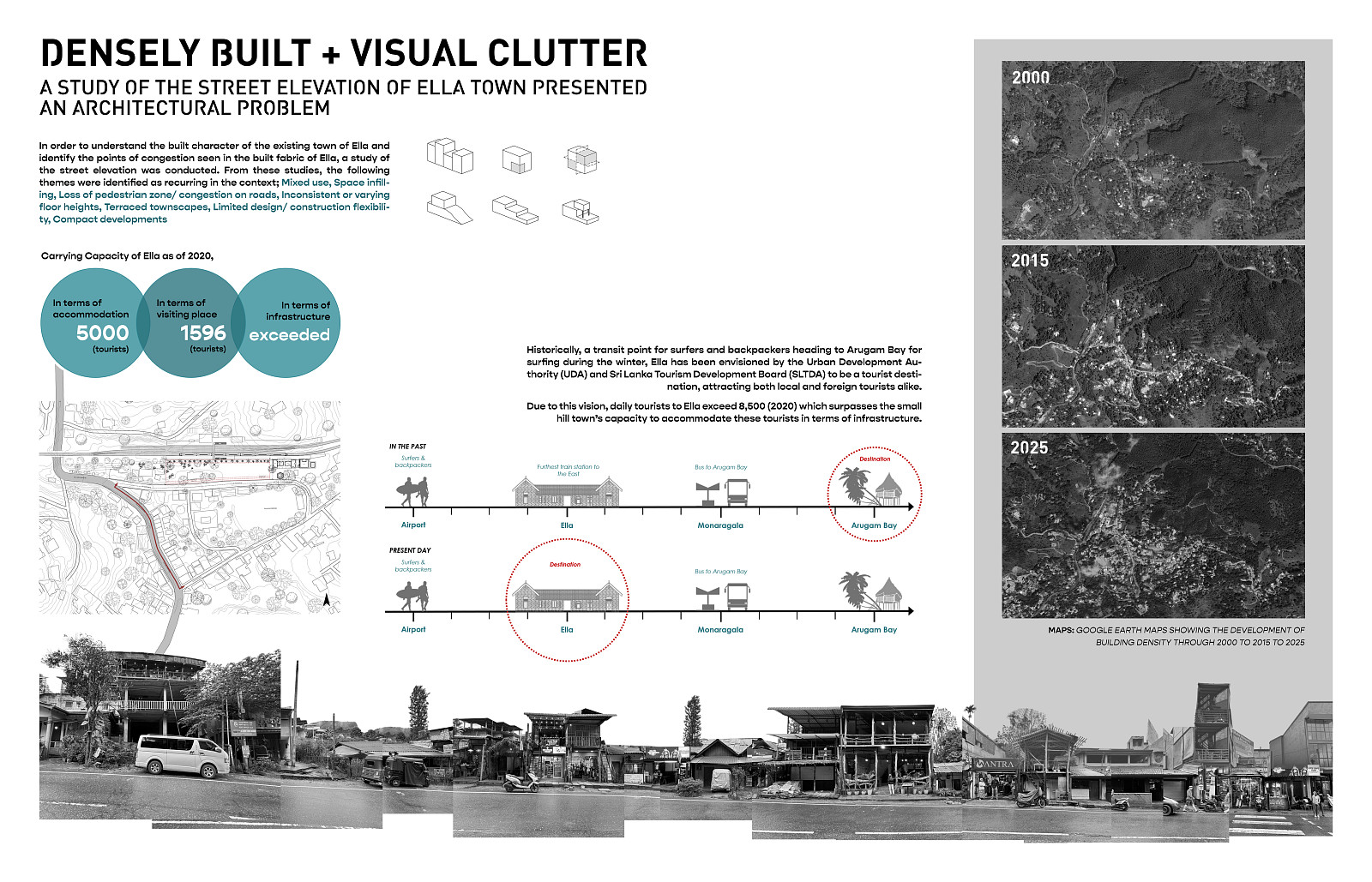
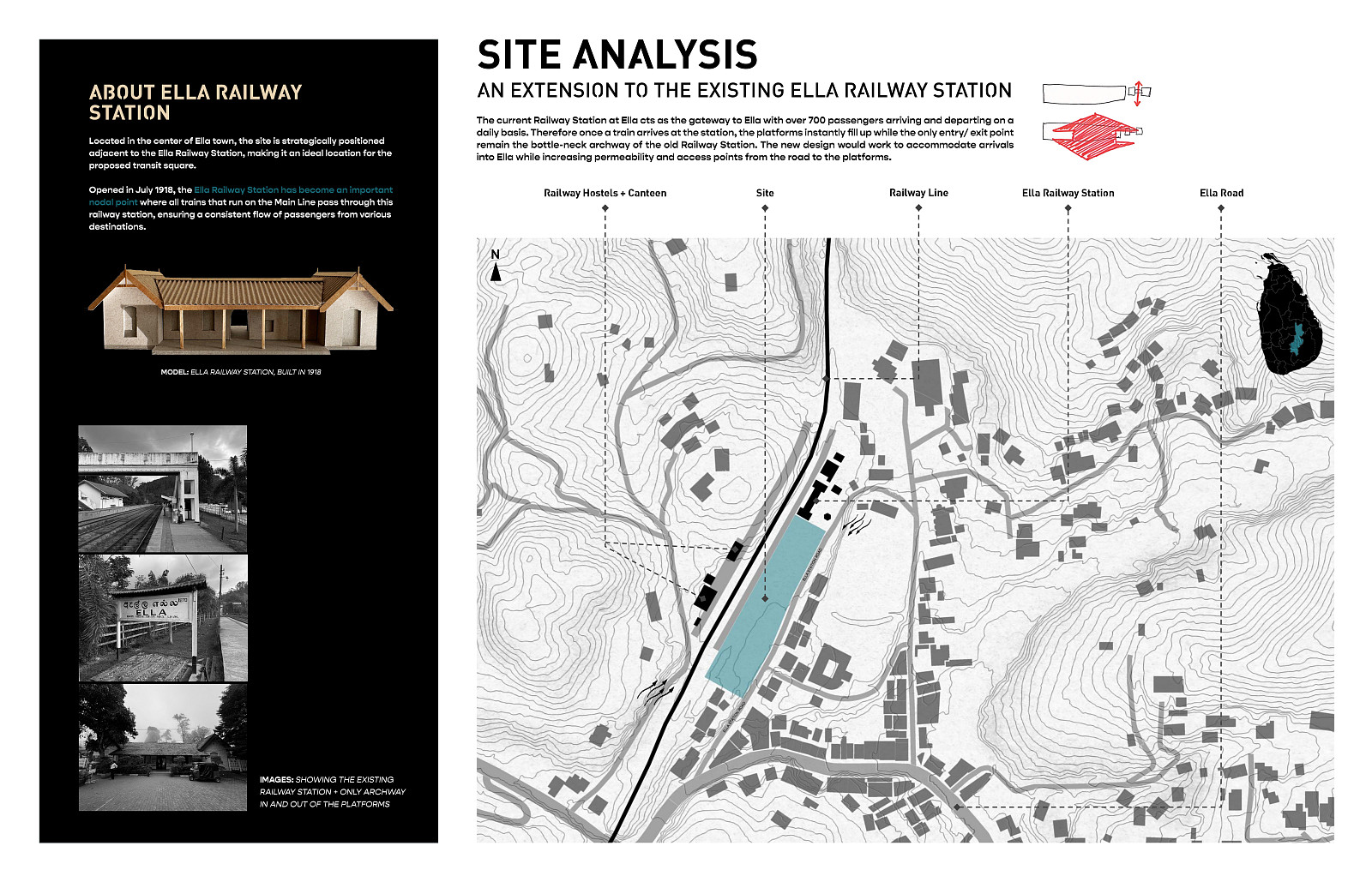
Historically, a transit point for surfers and backpackers heading to Arugam Bay for surfing during the winter, Ella has been envisioned by the Urban Development Authority (UDA) and Sri Lanka Tourism Development Board (SLTDA) to be a tourist destination, attracting both local and foreign tourists alike.
Due to this vision, daily tourists to Ella exceed 8,500 (2020), which surpasses the small hill town’s capacity to accommodate these tourists in terms of infrastructure. The focus of this design project is the development of a transit square and facility center for Ella and as tourist numbers continue to grow, there is a pressing need for facilities that can accommodate the increasing influx while maintaining the town’s visual and environmental integrity.
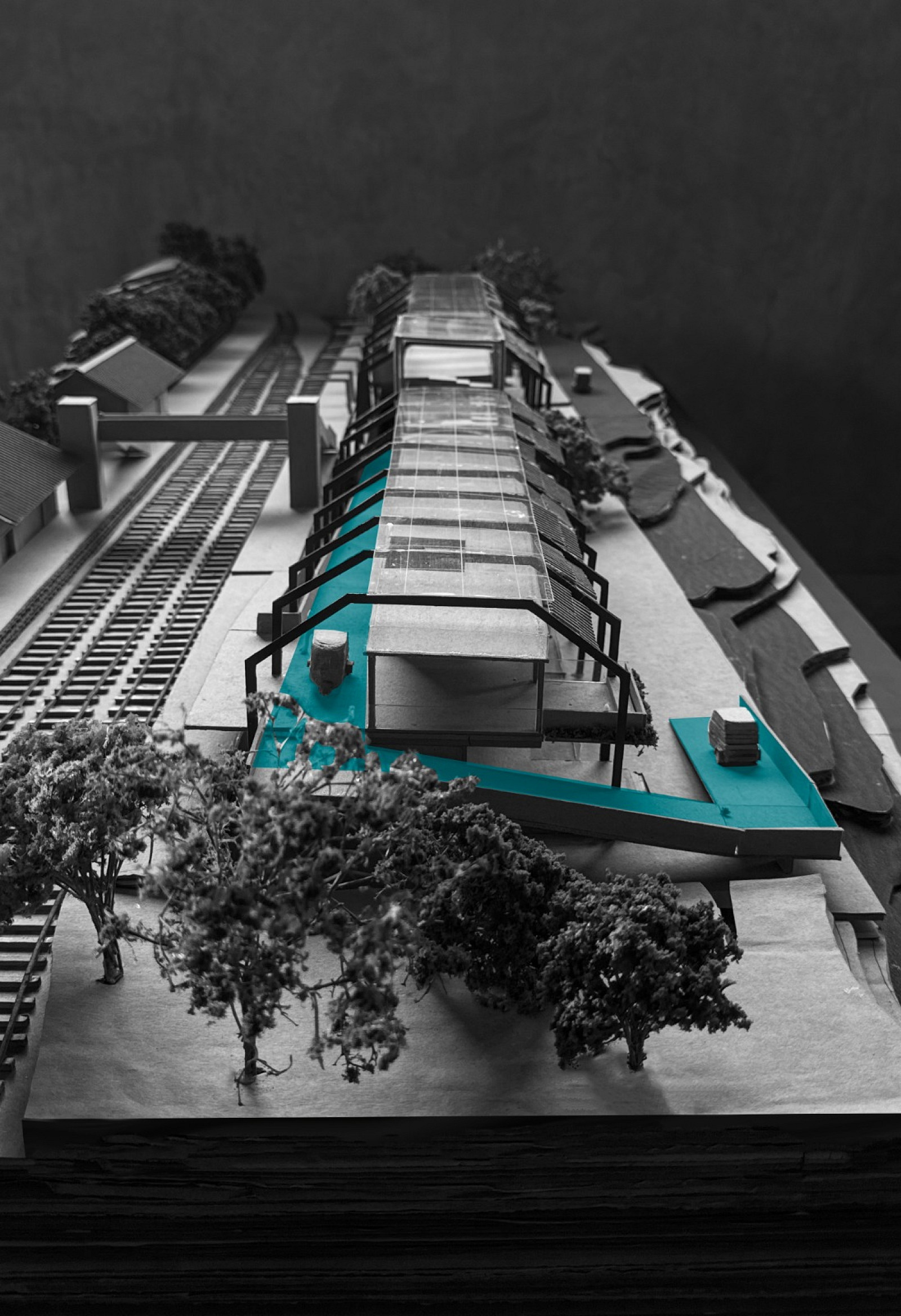
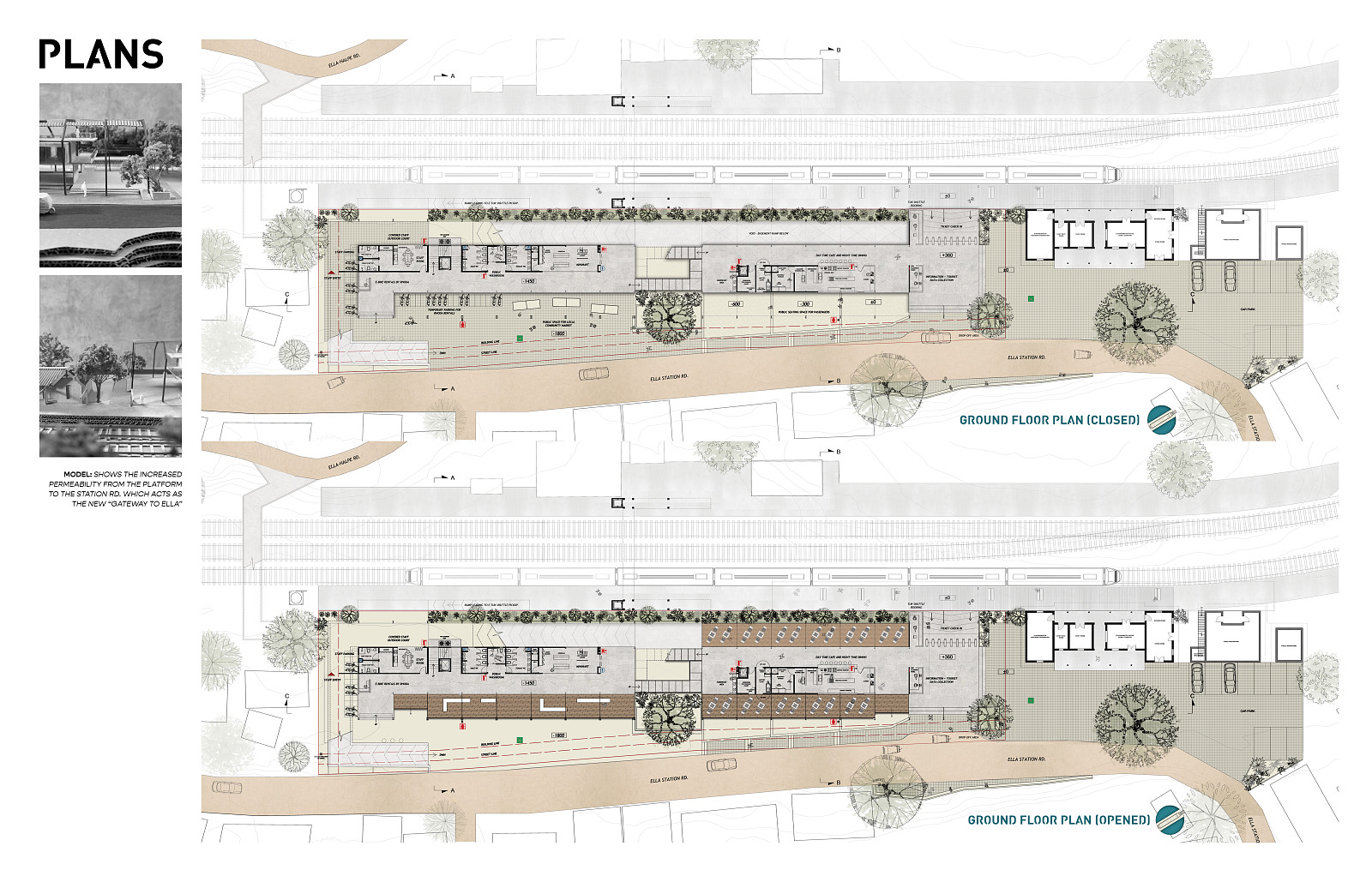
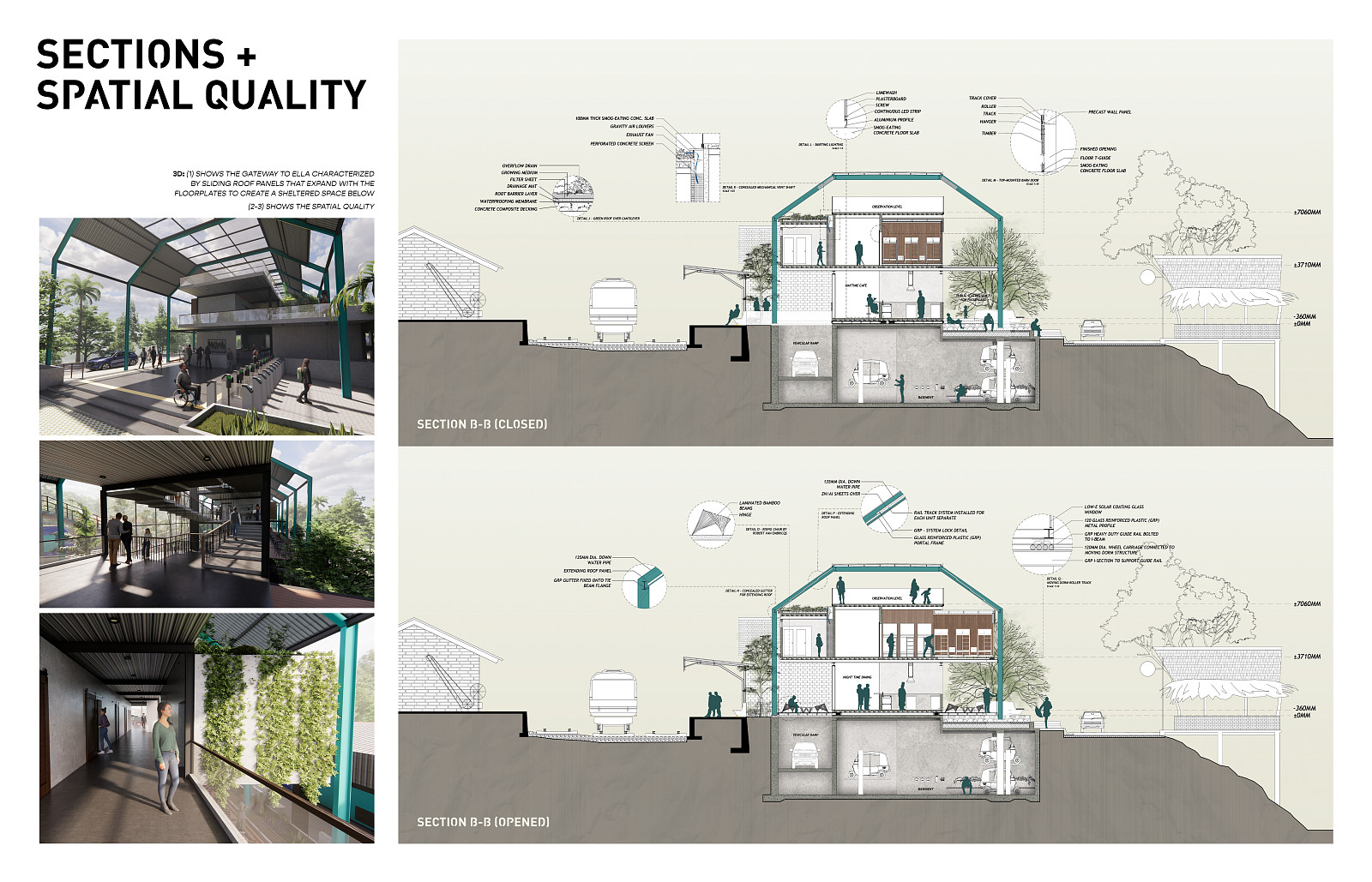
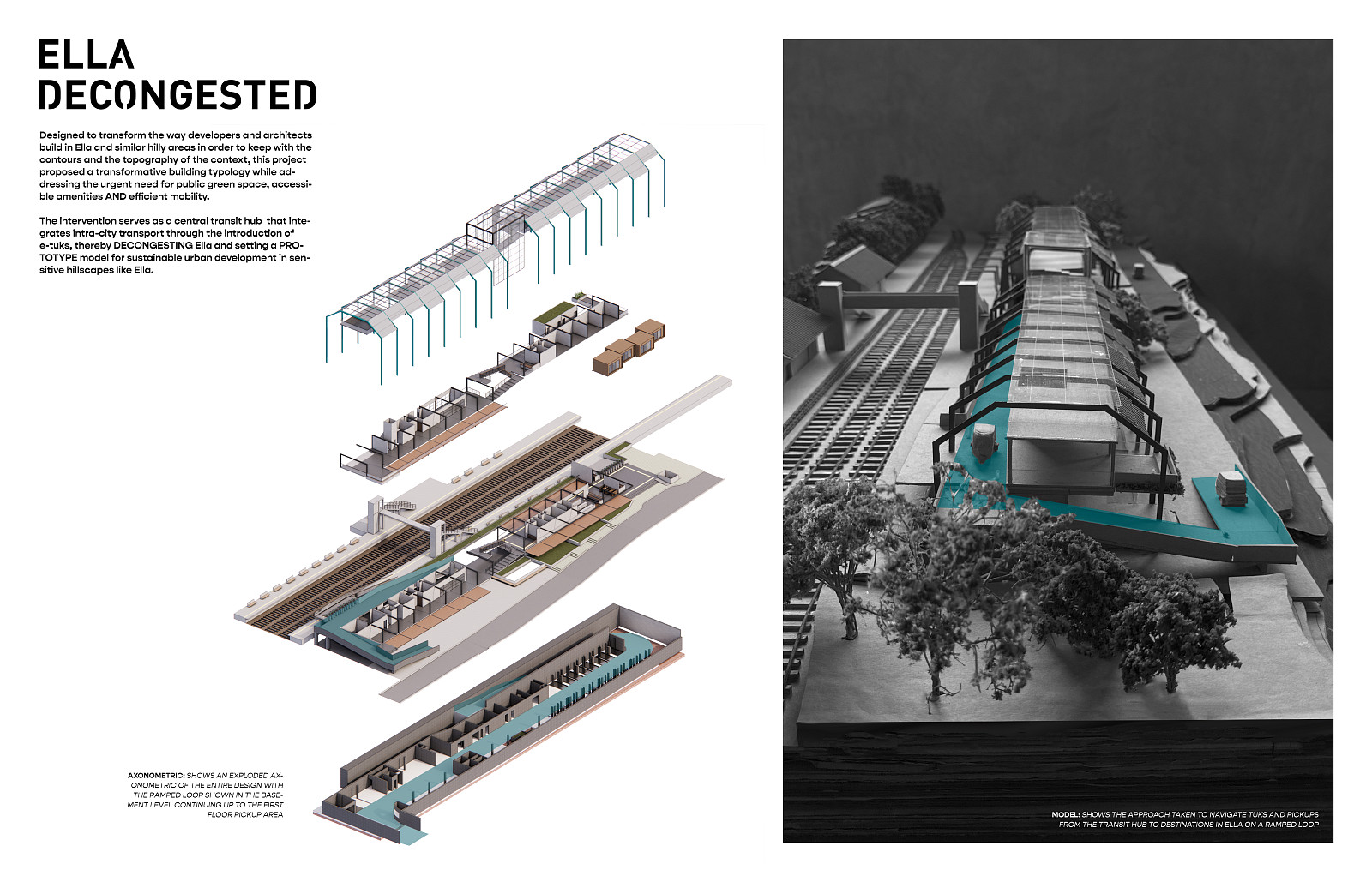
With a concept of “Decongesting Ella”, the design seeks to address this challenge by proposing a new building typology suitable for Ella's unique topography and spatial constraints. The final outcome was a transformative design responding to the seasonal rhythms of tourism through spatial adaptability.
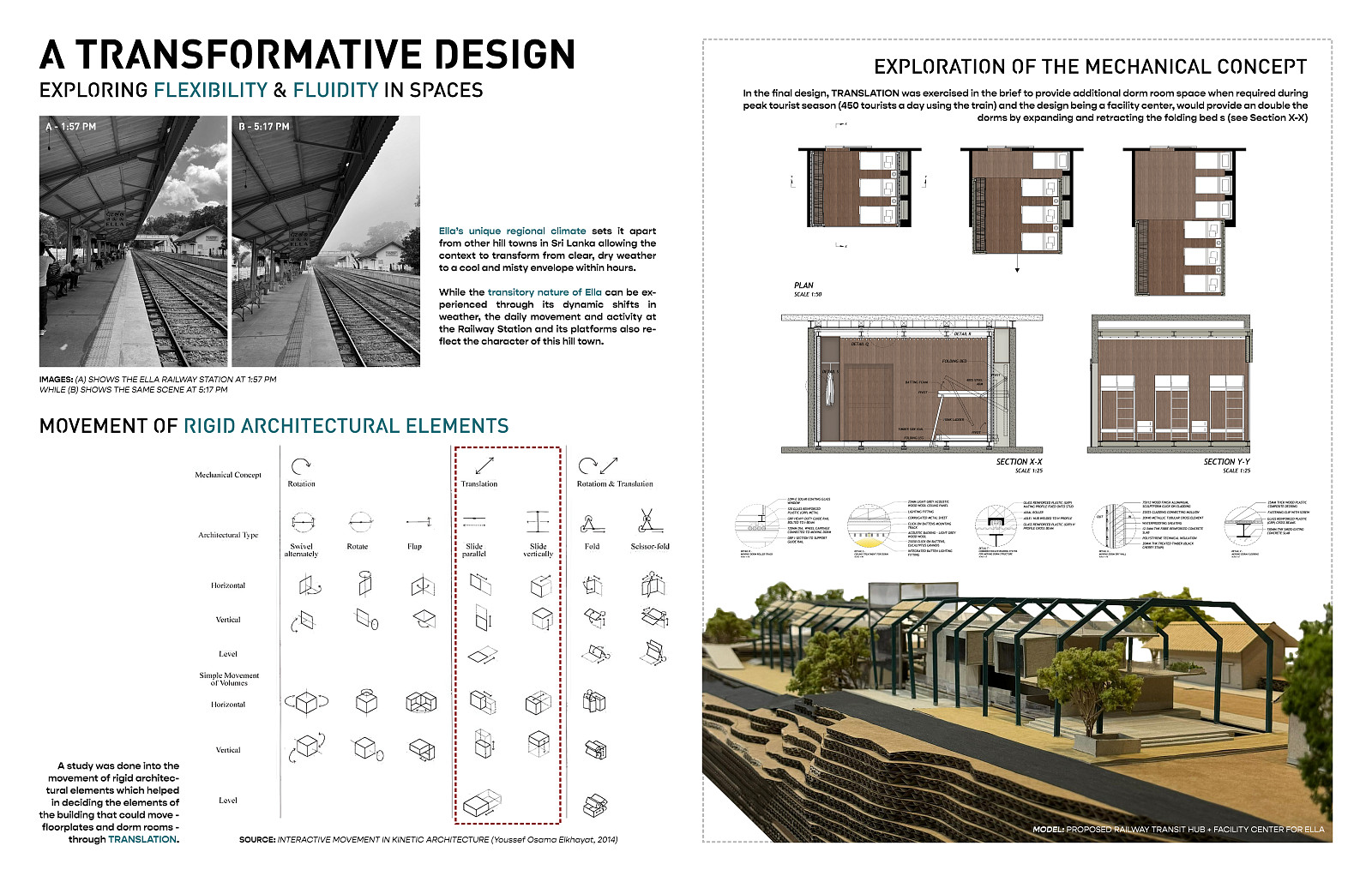
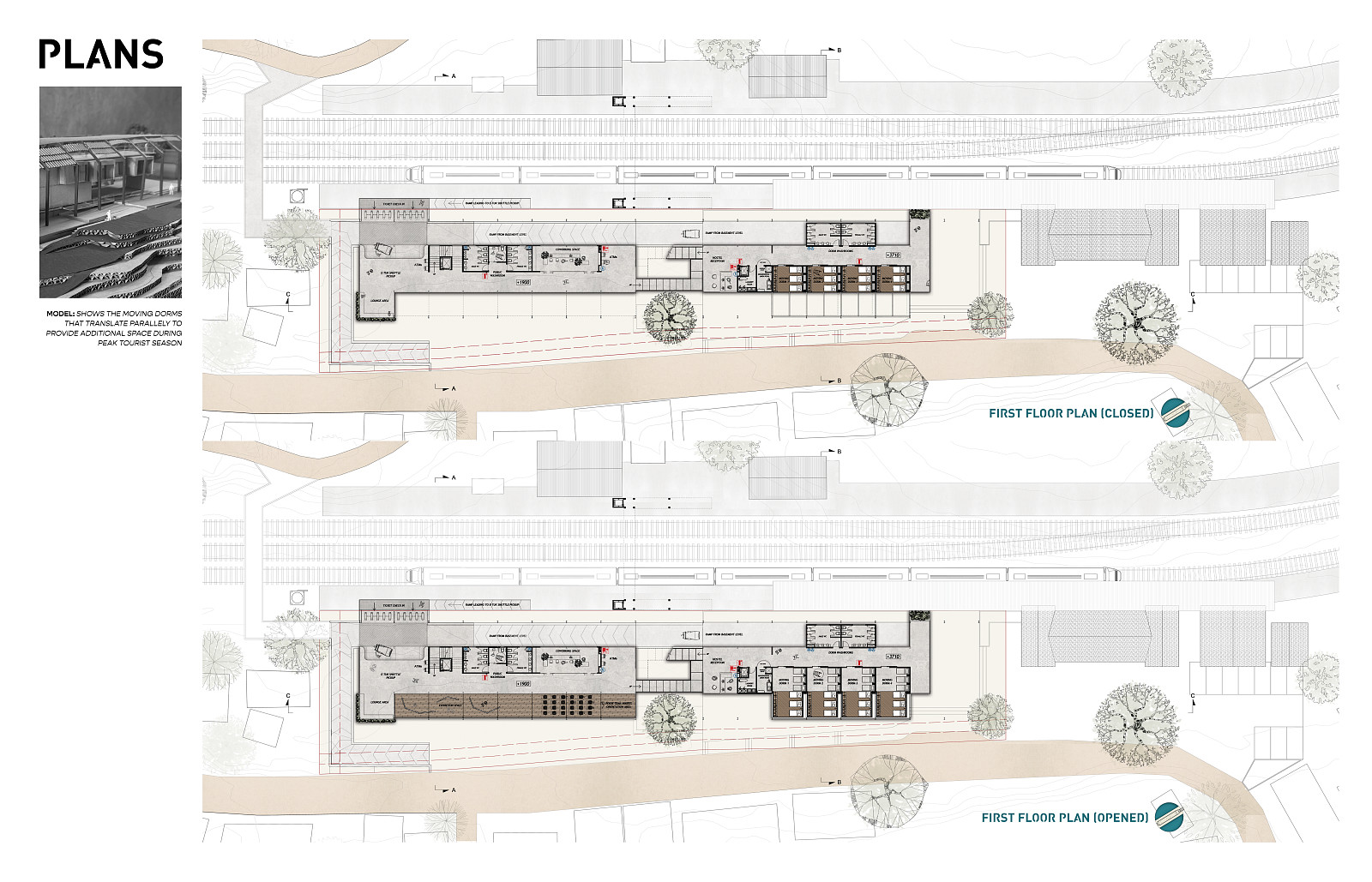
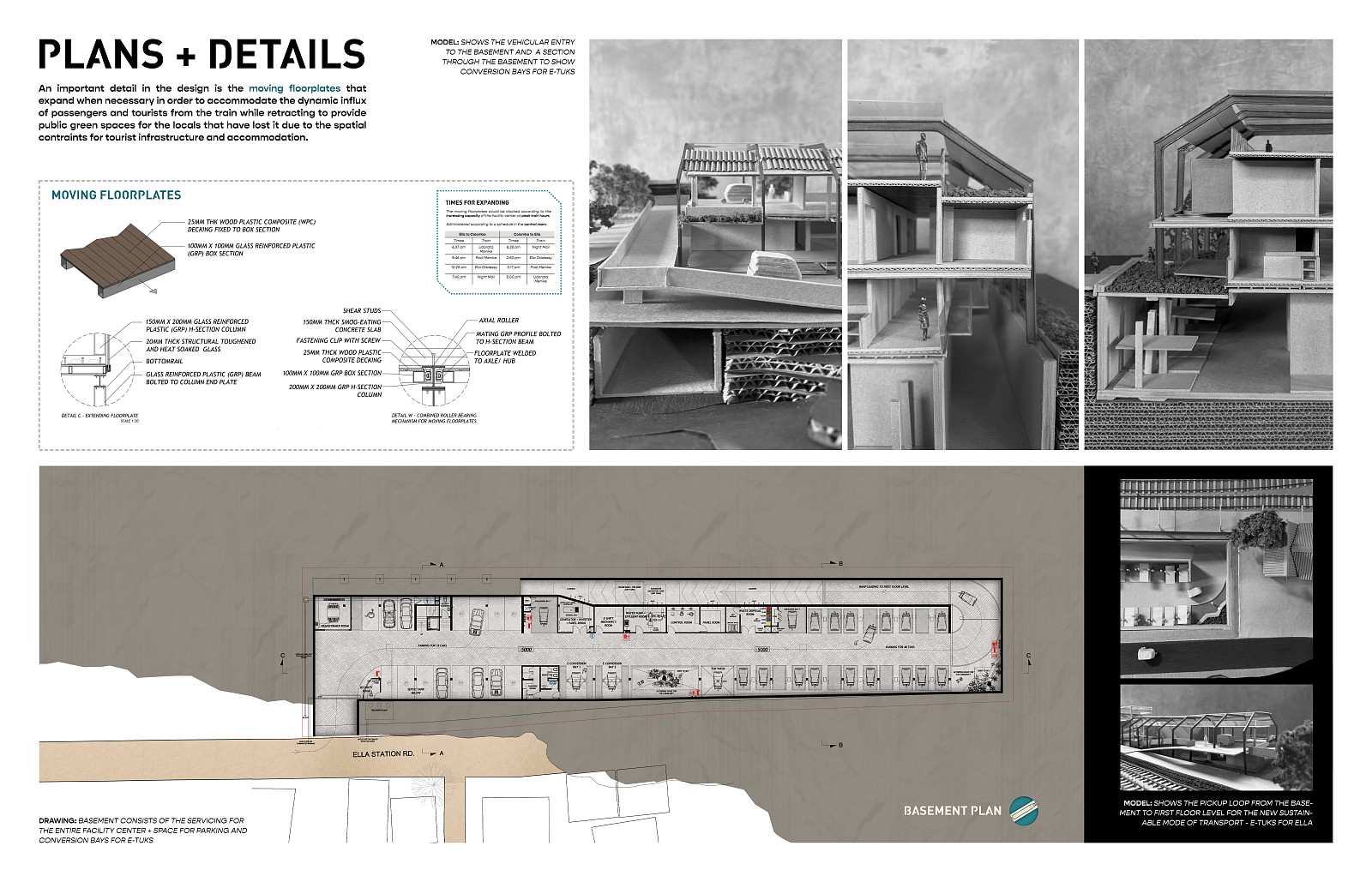
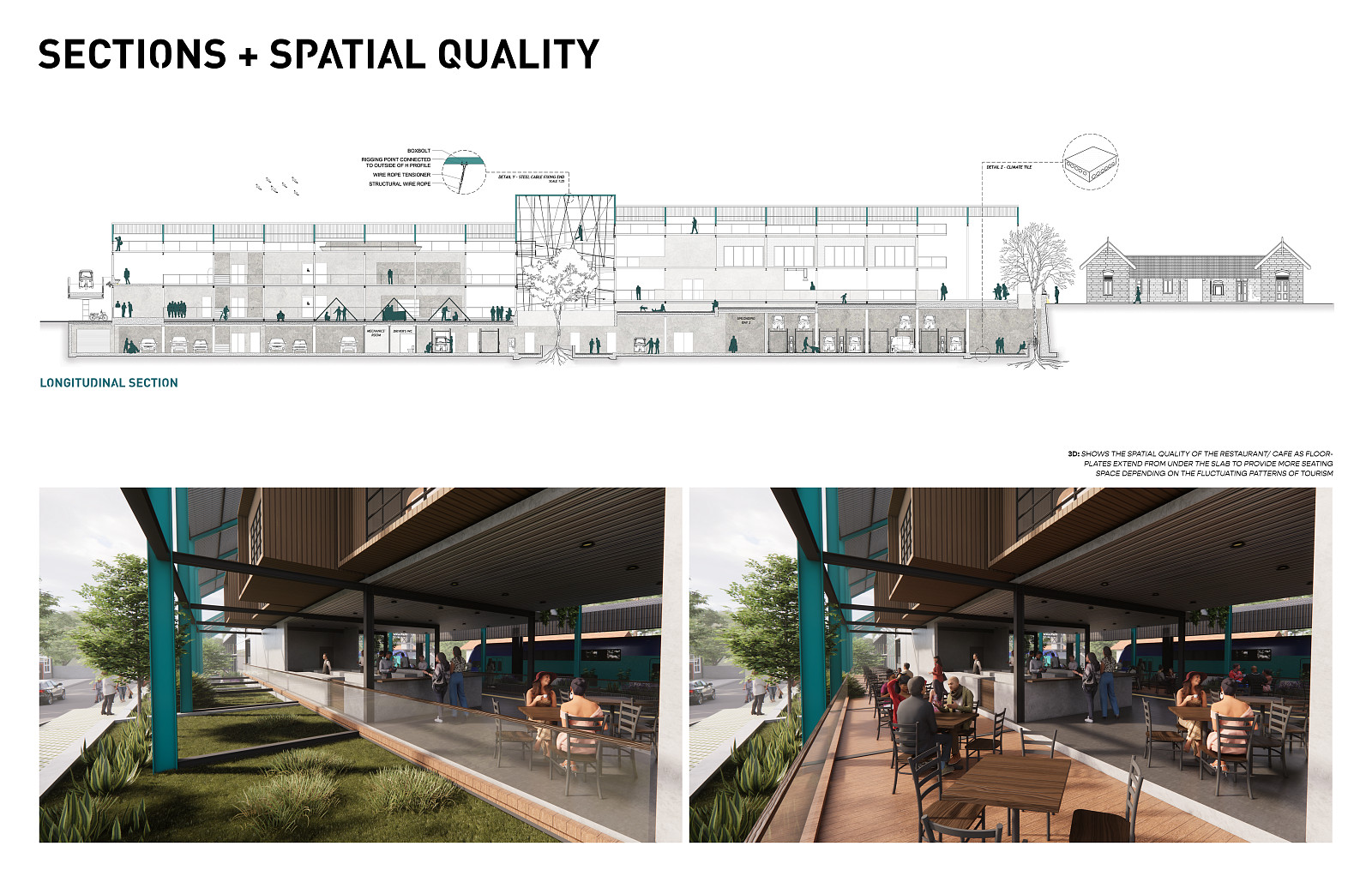
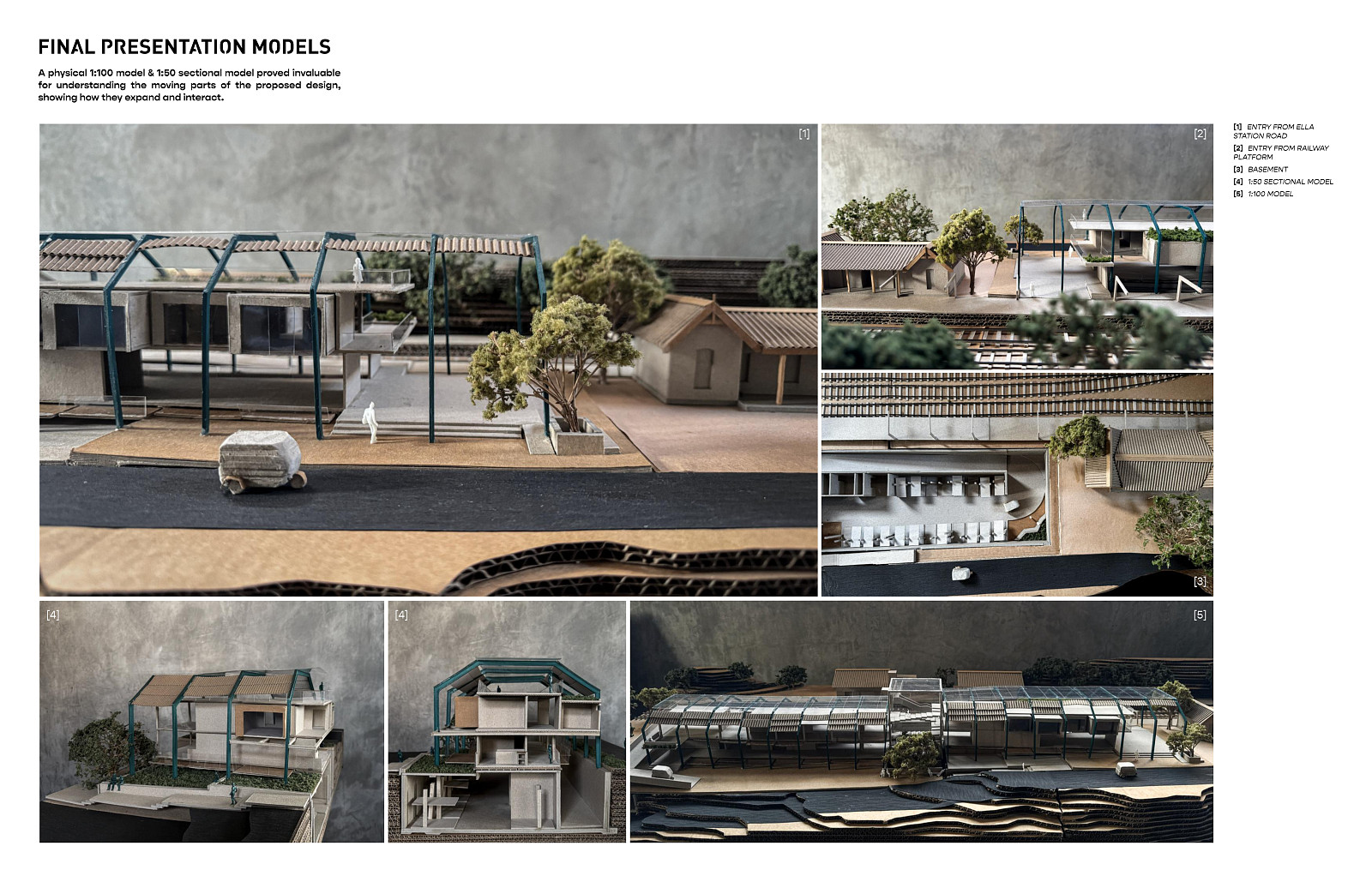
At its core, the architectural language is influenced by the mechanical concept of “translation” – referring to the movement of rigid architectural elements. This mechanism allows the building to expand and contract based on the user volume, easily responding to the transitions between high and low tourist seasons and thereby reducing congestion while maintaining minimal visual clutter within Ella’s sensitive hillscape.
Project description
Exploring flexibility and fluidity in architecture as a response to the transitory nature of the context and the site as well as its users.
Deriving a concept of transformative architecture to help solve the identified problems in Ella. While responding to the functional issue of the existing railway station, the project would work to accommodate the seasonal changes in tourist numbers and maximize the footprint depending on the functional requirements of the building.
The design project aims to provide Ella with a new building typology to resolve the scarcity of space and subsequently facilitate local needs during off-season times, when usually the spaces for tourists would be closed off or left inactive.
The primary goal of the project is to “decongest” Ella as it is now and maintain a sustainable transit hub in a highly environmentally sensitive area such as Ella.
To achieve sustainability within the center and its operation, the following objectives for the design were established;
- Become an “agent for change” for sustainable building practices that stick with the building height restrictions to preserve the views in Ella.
- Solve the issue of scarcity of space in response to the lack of buildable area.
- Centralize the intracity transportation and implement sustainable mobility in Ella to reduce the congestion on the roads and depollute the air.
- Provide public space (for local use) that has been lost due to overdevelopment for tourism.
- Visually decongest Ella to maintain the visual harmony in line with the 5-color green spectrum.
Technical information
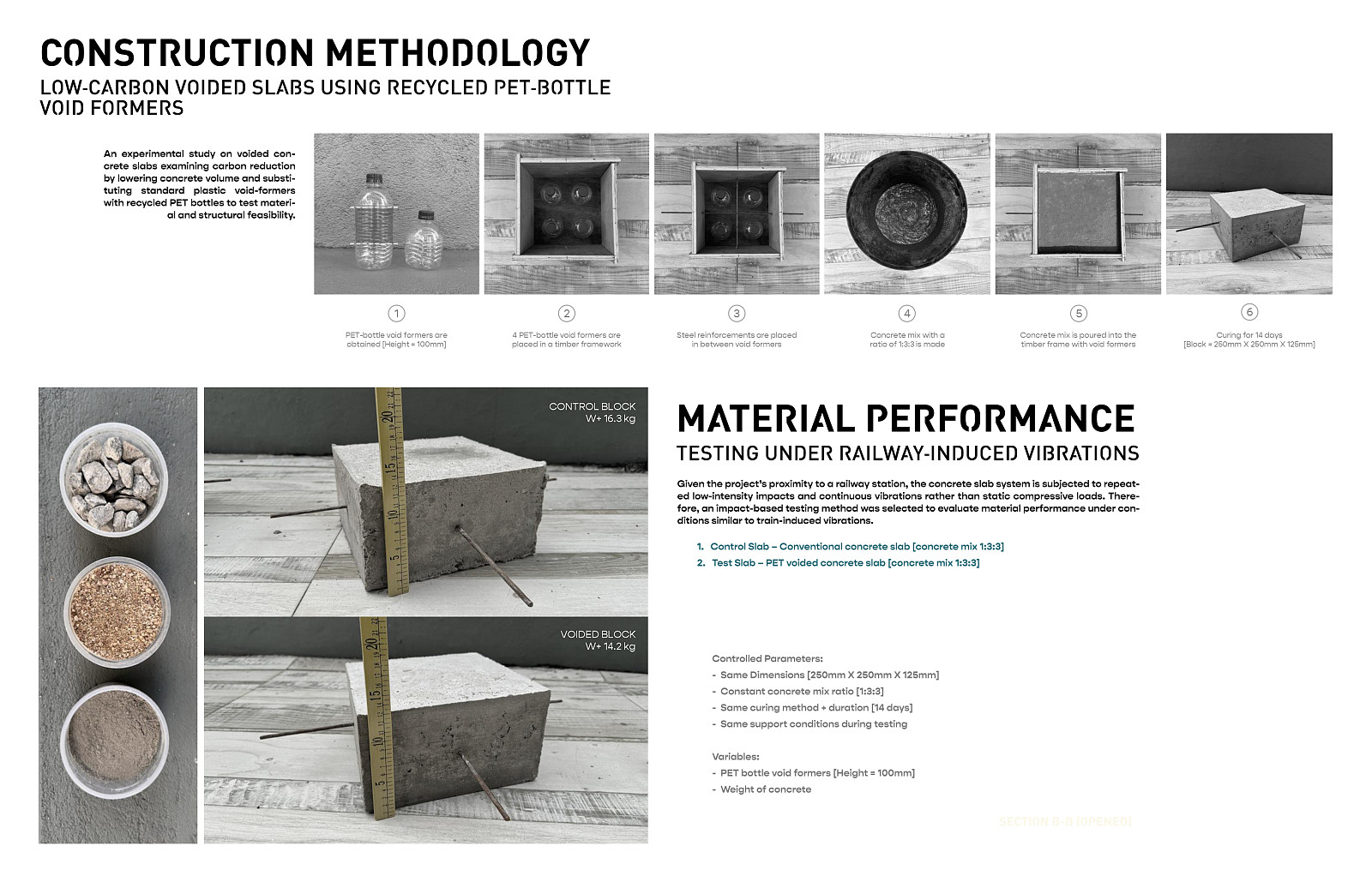
An experimental study on voided concrete slabs examining carbon reduction by lowering concrete volume and substituting standard plastic void-formers with recycled PET bottles to test material and structural feasibility was undertaken.
Given the project’s proximity to a railway station, the concrete slab system is subjected to repeated low-intensity impacts and continuous vibrations rather than static compressive loads. Therefore, an impact-based testing method was selected to evaluate material performance under conditions similar to train-induced vibrations.
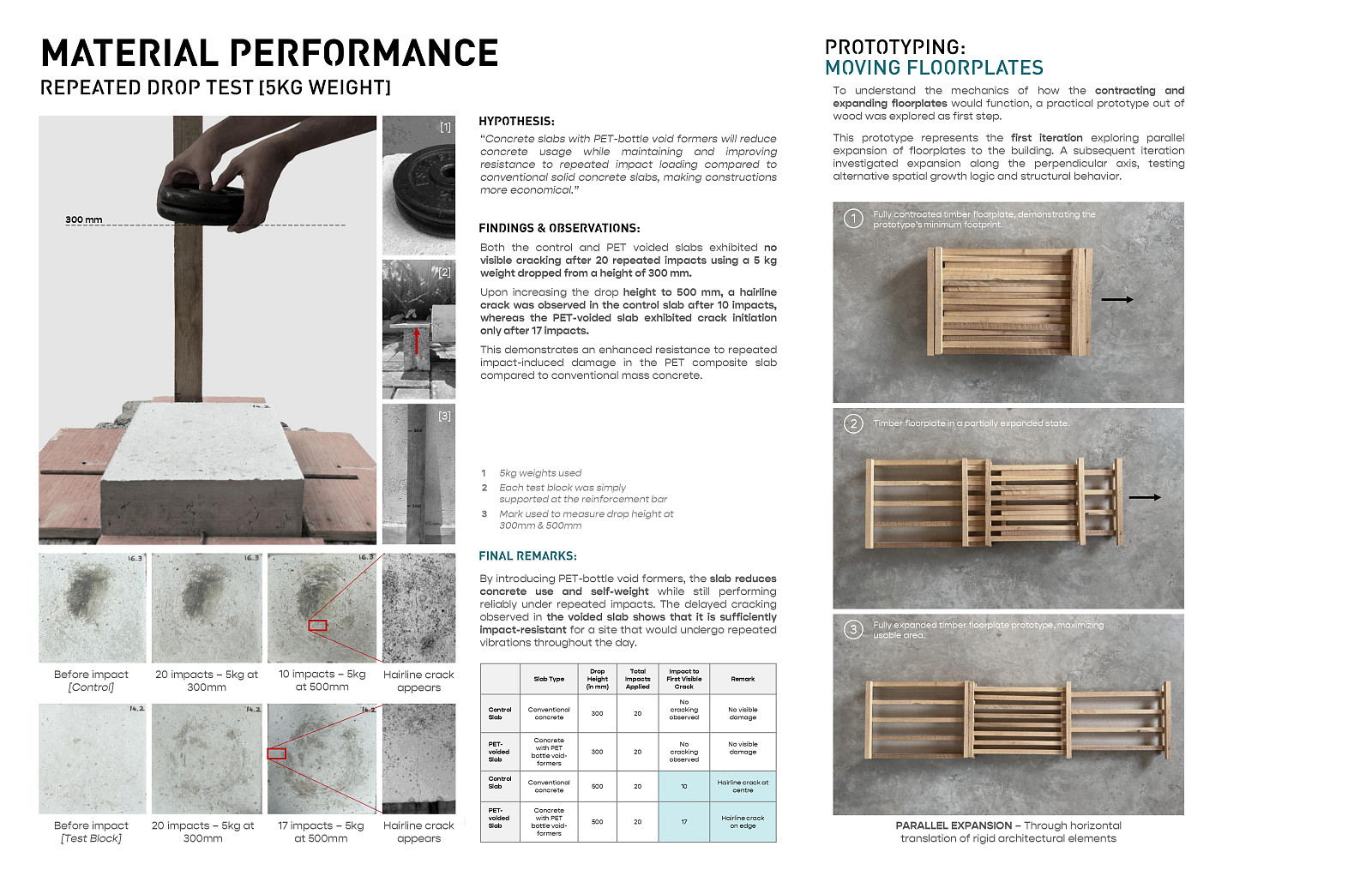
Findings & Observations:
- Both the control and PET voided slabs exhibited no visible cracking after 20 repeated impacts using a 5 kg weight dropped from a height of 300 mm.
- Upon increasing the drop height to 500 mm, a hairline crack was observed in the control slab after 10 impacts, whereas the PET-voided slab exhibited crack initiation only after 17 impacts.
- This demonstrates an enhanced resistance to repeated impact-induced damage in the PET composite slab compared to conventional mass concrete.
By introducing PET-bottle void formers, the slab reduces concrete use and self-weight while still performing reliably under repeated impacts. The delayed cracking observed in the voided slab shows that it is sufficiently impact-resistant for a site that would undergo repeated vibrations throughout the day.


Copyright © 2026 INSPIRELI | All rights reserved. Use of this website signifies your agreement to the Terms of Use, Privacy Policy, and use of cookies.