Research and Educational Center Design dedicated to the protection of the natural landscape in Hel


Project idea
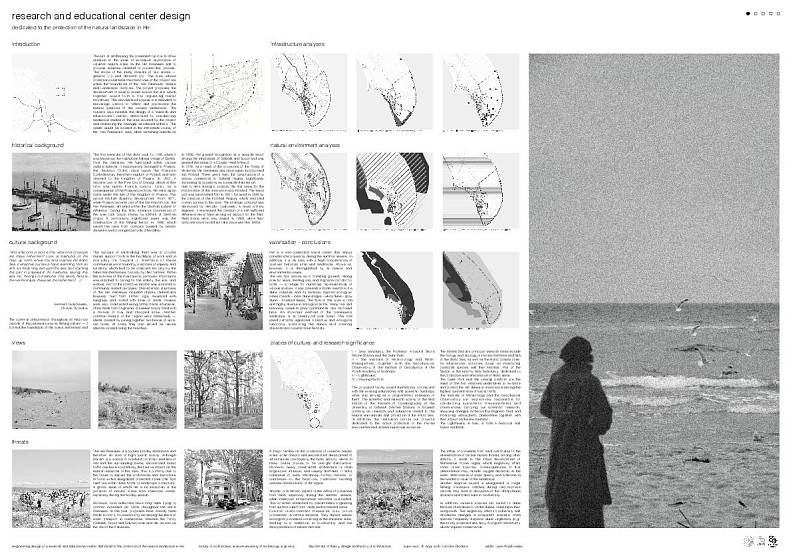
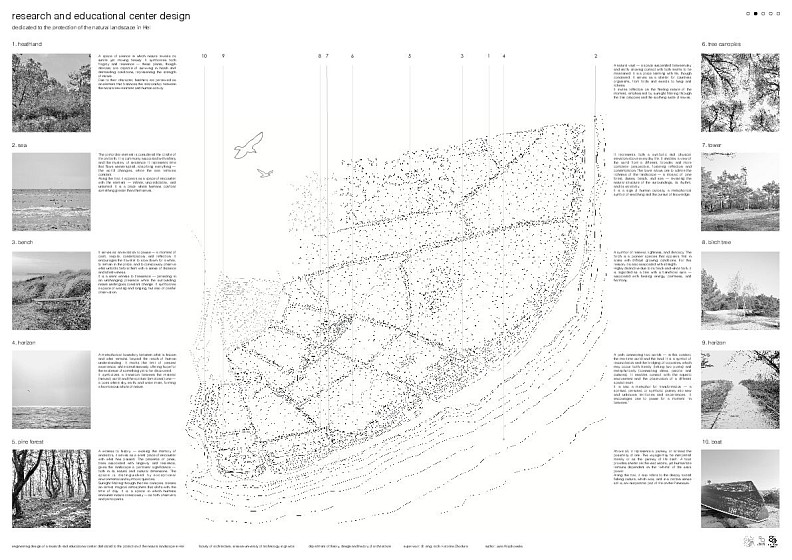
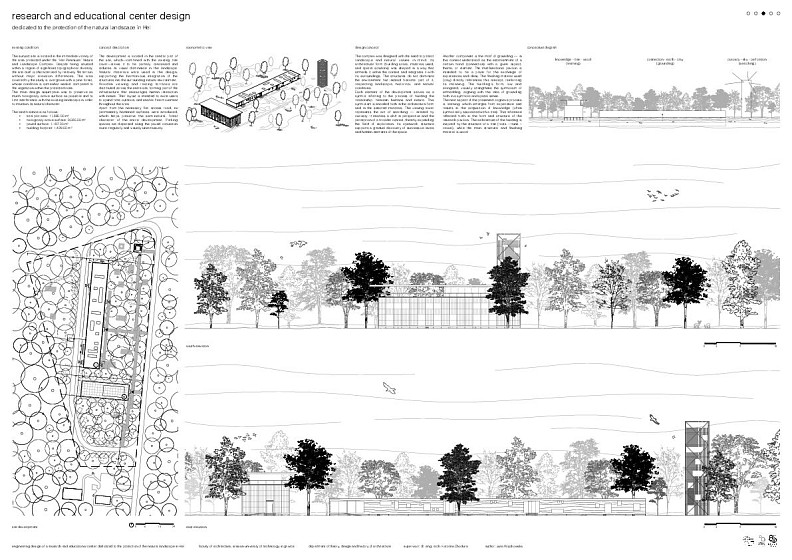
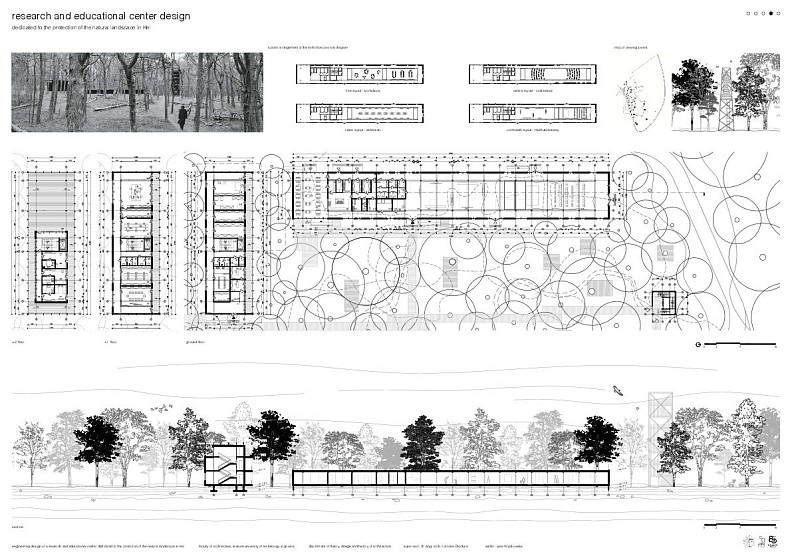
The aim of addressing the presented topic is to draw attention to the issue of excessive exploitation of valuable natural areas on the Hel Peninsula and to propose solutions intended to prevent this process. The scope of the study consists of two scales — general and detailed. The area whose protection constitutes the main focus of the project lies within the boundaries of the “Hel Peninsula” Nature and Landscape Complex. The project proposes the development of several points across the site, which together would form a trail regulating tourist movement. The encountered spaces are intended to encourage visitors to reflect and appreciate the natural qualities of the coastal landscape. The concept also includes the design of a research and educational center dedicated to conducting landscape studies of the area covered by the project and monitoring the changes introduced within it. The center would be located in the immediate vicinity of the “Hel Peninsula” area, while remaining outside its protected boundaries.
Project description
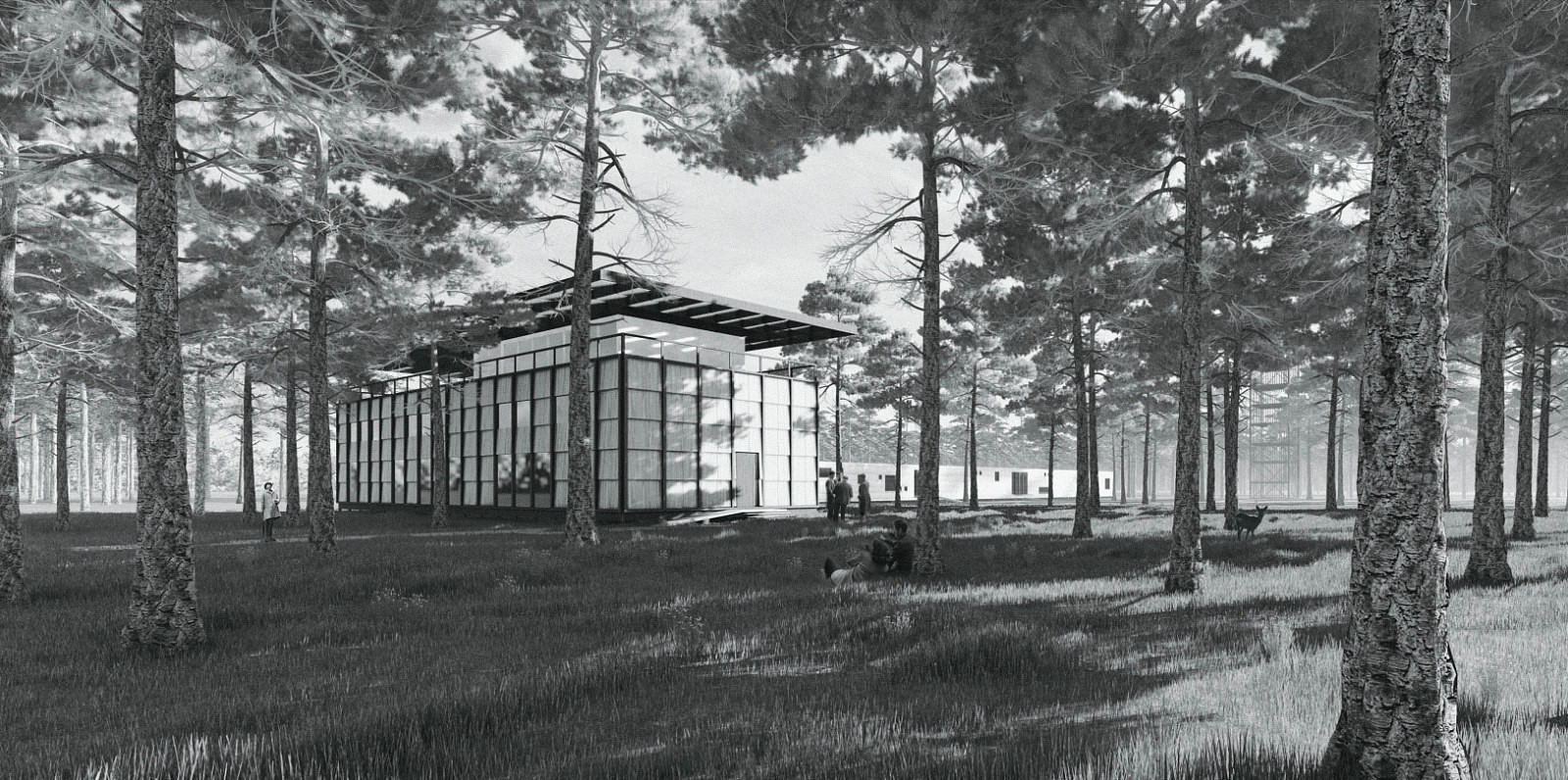
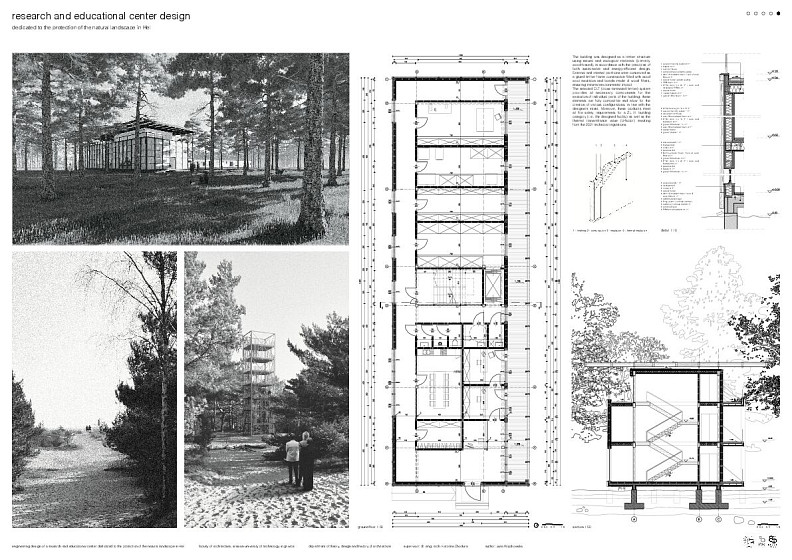
The development is located in the central part of the site, which combined with the existing tree cover allows it to be partially concealed and reduces its visual dominance in the landscape. Natural materials were used in the design, supporting the harmonious integration of the structures into the surrounding natural environment. Wooden viewing and resting terraces are distributed across the entire site, forming part of the infrastructure that encourages human interaction with nature. Their layout is intended to invite users to spend time outdoors and enable free movement throughout the area. The complex was designed with the need to protect landscape and natural values in mind. Its architectural form (building scale, materials used, and spatial solutions) was shaped in a way that embeds it within the context and integrates it with its surroundings. The structures do not dominate the environment but instead become part of it, respecting landscape, historical, and natural conditions. Each element of the development serves as a symbol referring to the process of building the relationship between humans and nature. This symbolism is encoded both in the architectural form and in the selected materials. The viewing tower represents the act of searching — initiated by curiosity. It enables a shift in perspective and the perception of a broader context, thereby expanding the field of exploration. Its openwork structure supports a gradual discovery of successive levels and hidden elements of the space. Another component is the motif of grounding — in this context understood as the establishment of a certain bond (connection) with a given aspect, theme, or element. The multifunctional pavilion is intended to be a place for the exchange of experiences and ideas. The finishing material used (clay) directly references this concept, reinforcing its meaning. The building’s form, low and elongated, visually strengthens the symbolism of embedding, aligning with the idea of grounding both in a symbolic and spatial sense. The next aspect of the presented cognitive process is learning, which emerges from experience and results in the acquisition of knowledge. Knowledge is often symbolically associated with a tree — a reference reflected both in the form and structure of the research pavilion. The architecture of the building is inspired by the structure of a tree (roots – trunk – crown), while the main structural and finishing material is wood. The chosen materials emphasize the local and traditional character of construction typical for the Peninsula.
Technical information
The building was designed as a timber structure using natural and ecological materials (primarily wood-based), in accordance with the principles of both sustainable and energy-efficient design. External and internal partitions were conceived as a glued timber frame construction filled with wood wool insulation and boards made of wood fibers, ensuring minimal environmental impact. The selected CLT (cross-laminated timber) system provides all necessary components for the execution of individual parts of the building; these elements are fully compatible and allow for the creation of various configurations, in line with the designer’s intent.
Documentation

Copyright © 2026 INSPIRELI | All rights reserved. Use of this website signifies your agreement to the Terms of Use, Privacy Policy, and use of cookies.