Interpretation Center


Project idea
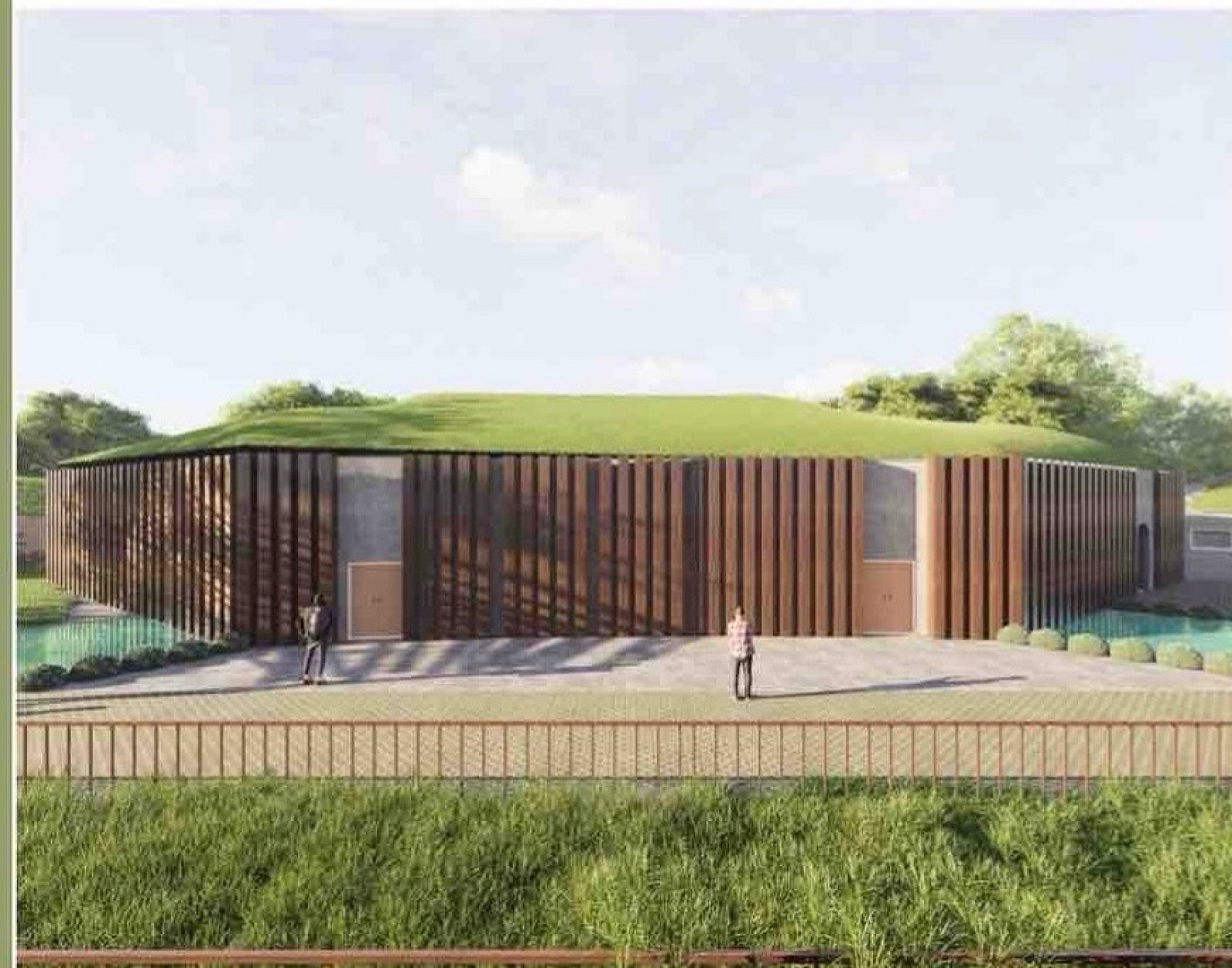
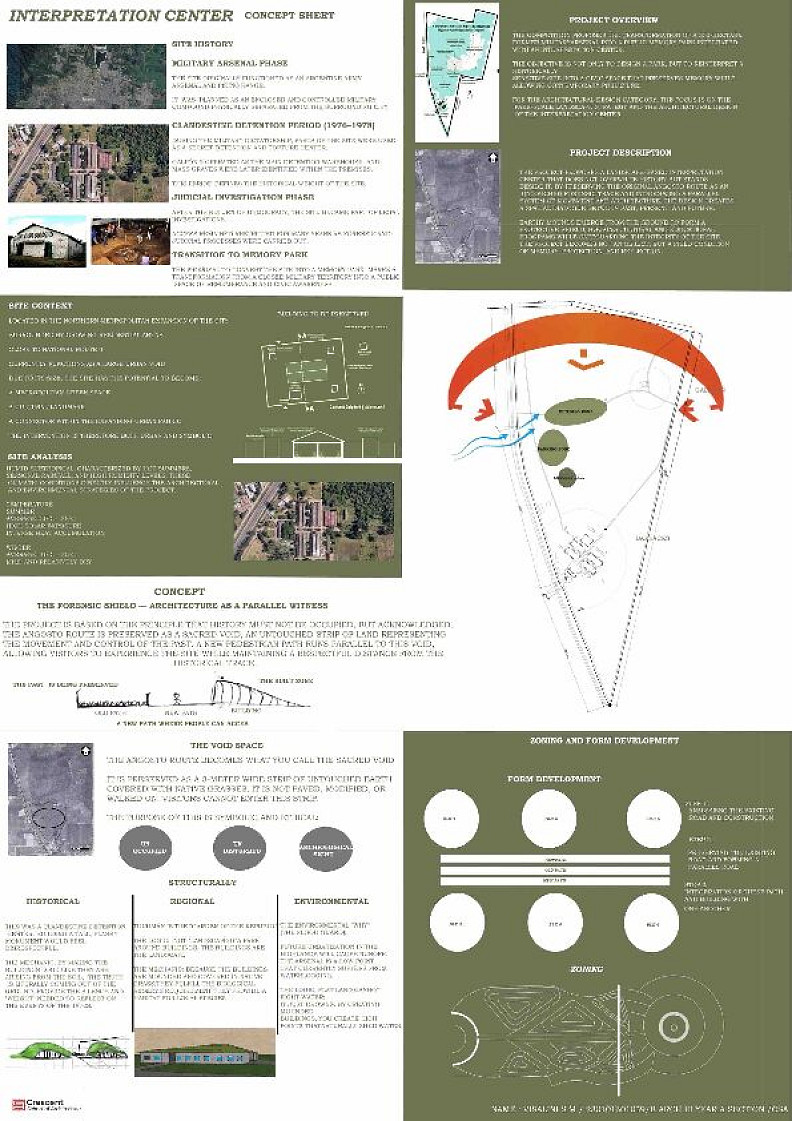
The Forensic Shield — Architecture as a Parallel Witness. The project is based on the principle that history must not be occupied, but acknowledged. A former military arsenal is transformed into a public memory park integrated with an interpretation center, preserving the original Angosto route as a sacred void while introducing a parallel system of movement and architecture.
Project description
The competition proposes the transformation of a 350-hectare former military arsenal into a public memory park integrated with an interpretation center. The objective is not only to design a park, but to reinterpret a historically sensitive site into a civic space that preserves memory while allowing contemporary public use. The project proposes a landscape-based interpretation center that does not overwrite history but stands beside it. By preserving the original Angosto route as an untouched forensic trace and introducing a parallel system of movement and architecture, the design creates a spatial dialogue between past, present, and future. The Angosto route is preserved as a 3-meter wide strip of untouched earth covered with native grasses that visitors cannot enter, serving as both a symbolic and ethical element. Earthy mounds emerge from the ground to form a protective shield, housing cultural and educational programs while safeguarding the integrity of the site.
Technical information
The site is located in the northern metropolitan expansion of the city, surrounded by growing residential areas, close to National Route 9. The climate is humid subtropical with hot summers, seasonal rainfall, and high humidity. Summer average is 20-30°C with high solar exposure and intense heat accumulation. Winter average is 10-20°C, mild and relatively dry. The form development involves analyzing existing road and construction, preserving the existing road and forming a parallel road, then integrating these paths and buildings with one another. Buildings are mounded and covered in native grasses to fulfill biological reserve requirements and provide habitat for local species, while also managing stormwater runoff as the arsenal is a low point that currently suffers from waterlogging.
Documentation

Copyright © 2026 INSPIRELI | All rights reserved. Use of this website signifies your agreement to the Terms of Use, Privacy Policy, and use of cookies.