Unseen : Seen - The Journey Through Hidden Histories

Project idea
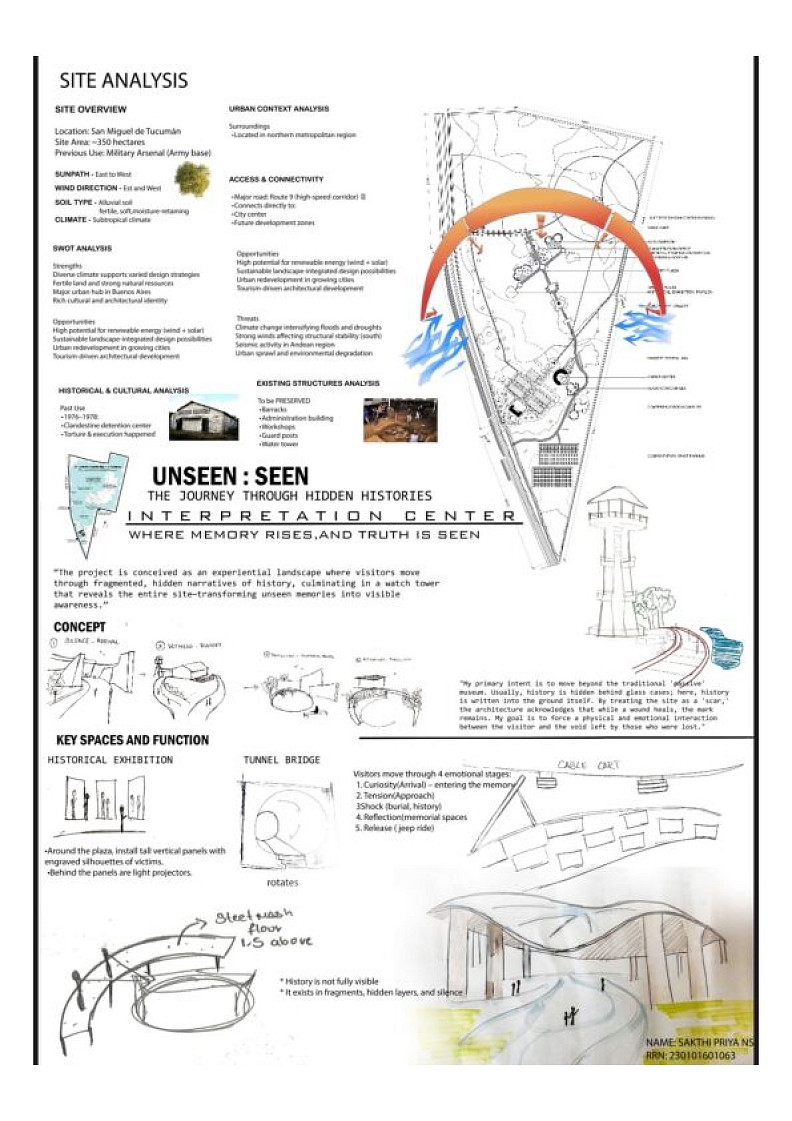
An interpretation center conceived as an experiential landscape where visitors move through fragmented, hidden narratives of history, culminating in a watch tower that reveals the entire site—transforming unseen memories into visible awareness.
Project description
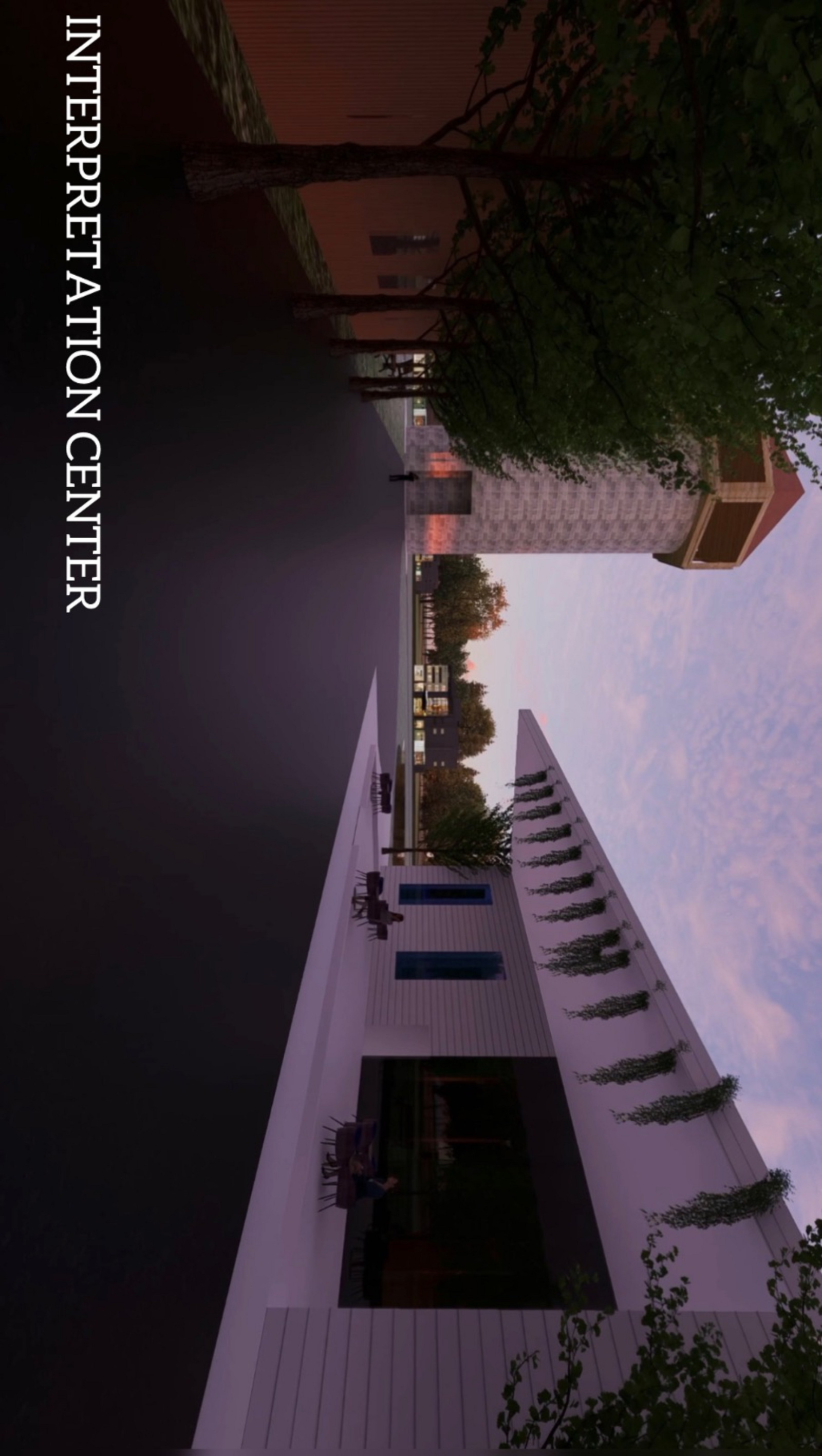
Located on a former military arsenal (army base) site in San Miguel de Tucumán, Argentina, spanning approximately 350 hectares, the project repurposes a site that served as a clandestine detention center during 1976-1978 where torture and execution occurred. The design moves beyond the traditional passive museum by treating the site as a 'scar' where history is written into the ground itself. Visitors move through four emotional stages: Curiosity (Arrival) entering the memory, Tension (Approach), Shock (burial, history), Reflection (memorial spaces), and Release (jeep ride). Key spaces include a historical exhibition with tall vertical panels featuring engraved silhouettes of victims with light projectors behind them, a tunnel bridge, and a cable cart. Existing structures to be preserved include barracks, administration building, workshops, guard posts, and water tower.
Technical information
The site features alluvial soil that is fertile, soft, and moisture-retaining with a subtropical climate. Sun path runs east to west with wind direction from east and west. Access is via Route 9 high-speed corridor connecting directly to the city center. Design incorporates steel mesh flooring at 1.5m above grade, rotating elements, and sustainable landscape-integrated design with potential for renewable energy (wind and solar). The project addresses threats including climate change intensifying floods and droughts, strong winds affecting structural stability, and seismic activity in the Andean region.
Documentation

Copyright © 2026 INSPIRELI | All rights reserved. Use of this website signifies your agreement to the Terms of Use, Privacy Policy, and use of cookies.