Interpretation Center


Project idea
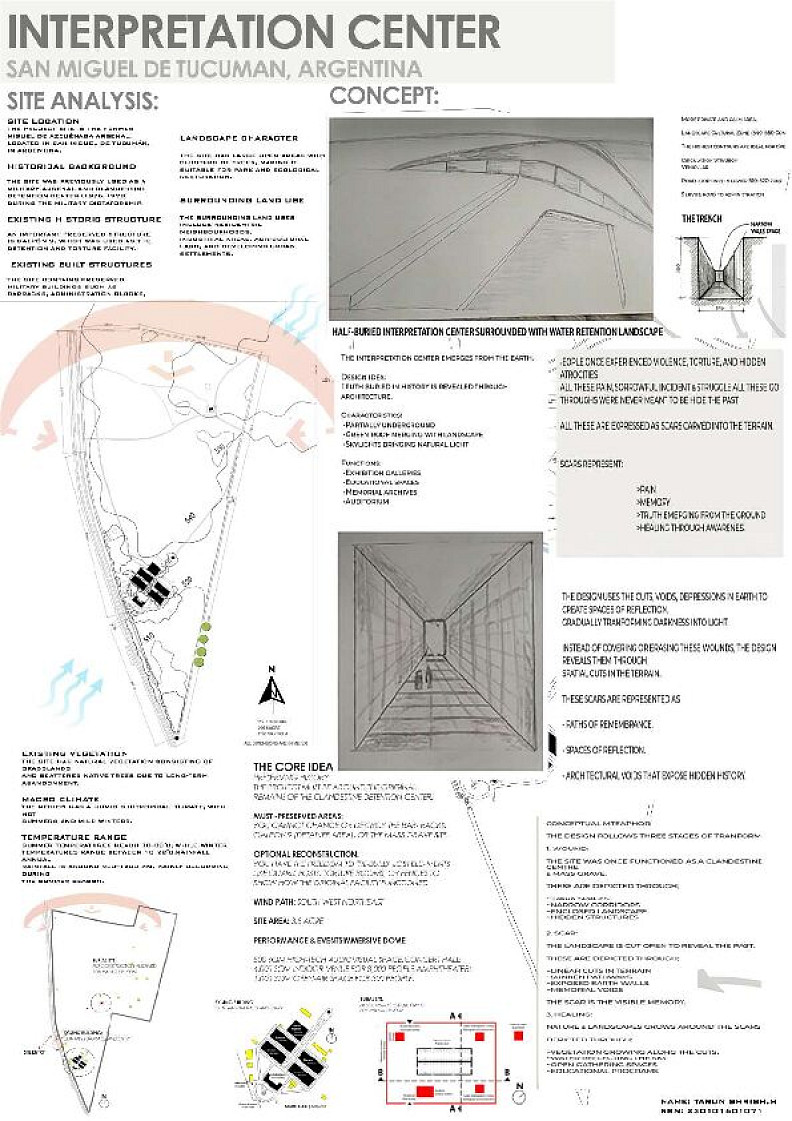
A half-buried interpretation center surrounded with water retention landscape in San Miguel de Tucuman, Argentina. The design idea is that truth buried in history is revealed through architecture, with the building emerging from the earth as scars carved into the terrain representing pain, memory, and healing through awareness.
Project description
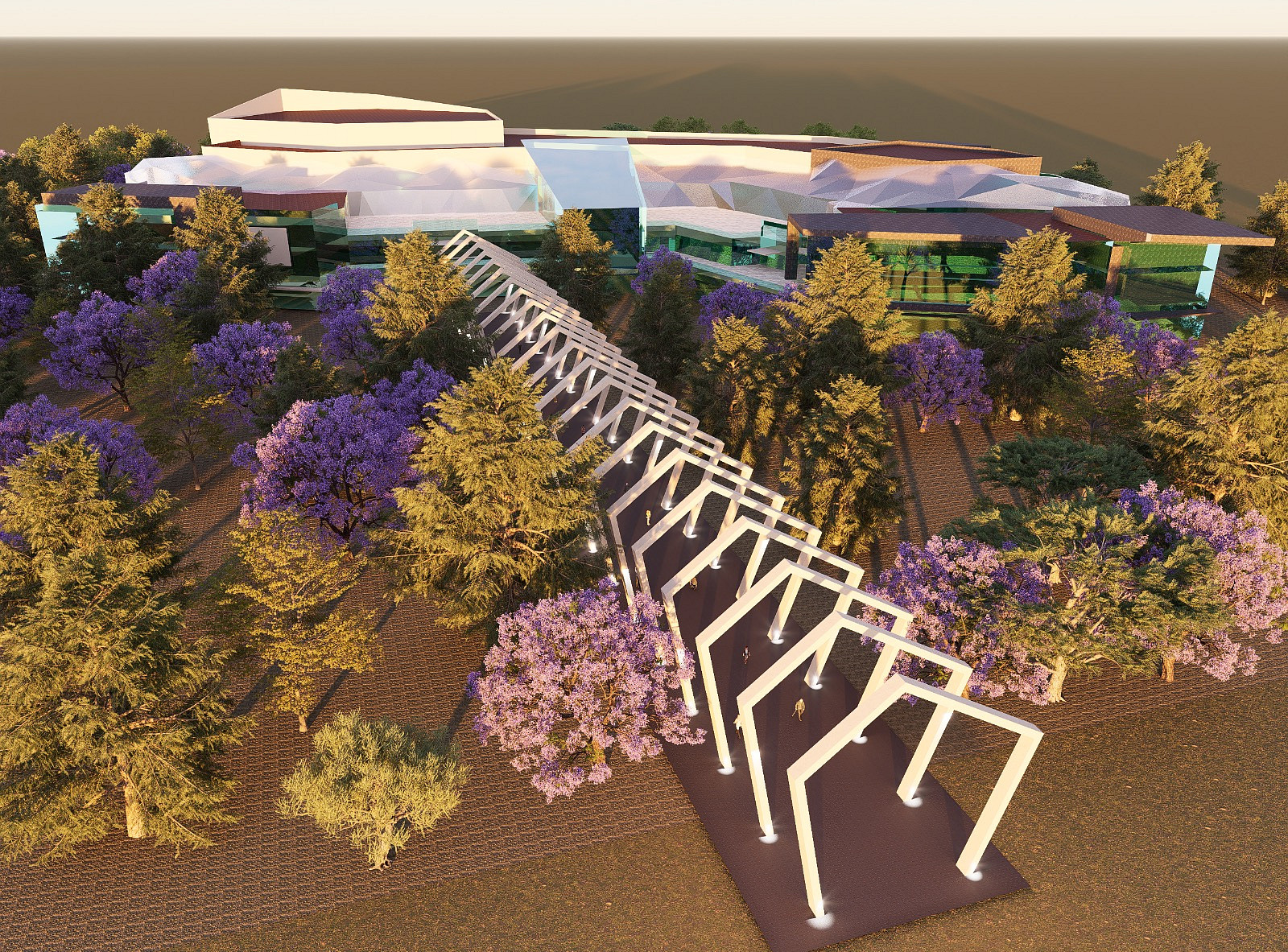
The project is located on the former Miguel de Azcuénaga Arsenal, a site previously used as a military arsenal and clandestine detention center during the military dictatorship (1976-1978). The interpretation center is partially underground with a green roof merging with the landscape and skylights bringing natural light. Functions include exhibition galleries, educational spaces, memorial archives, and an auditorium. The design follows three conceptual stages: Wound (dark spaces, narrow corridors, enclosed landscape depicting the site's history as a clandestine center and mass grave), Scar (linear cuts in terrain, sunken pathways, exposed earth walls, and memorial voids revealing the past), and Healing (vegetation growing along the cuts, water reflecting the sky, open gathering spaces, and educational programs). The design uses cuts, voids, and depressions in earth to create spaces of reflection, gradually transforming darkness into light.
Technical information
Site area: 3.8 acres (119.7 hectares). Performance and events include a 500 sqm high-tech audiovisual space/concert hall, 4,000 sqm indoor venue for 8,000 people/amphitheater, and 1,000 sqm open-air space for 500 people. The region has a humid subtropical climate with hot summers and mild winters. Summer temperatures reach 30-38°C, winter temperatures range between 10-22°C. Annual rainfall is around 900-1200mm. Wind path: south west to northeast. Must-preserve areas include the original remains of the clandestine detention center, bar-racks, Galpon 9 (detainee area), and the mass grave site. No construction allowed for a radius of 200m around the burial site.
Documentation


Copyright © 2026 INSPIRELI | All rights reserved. Use of this website signifies your agreement to the Terms of Use, Privacy Policy, and use of cookies.