Arsenal Memory Park


Project idea
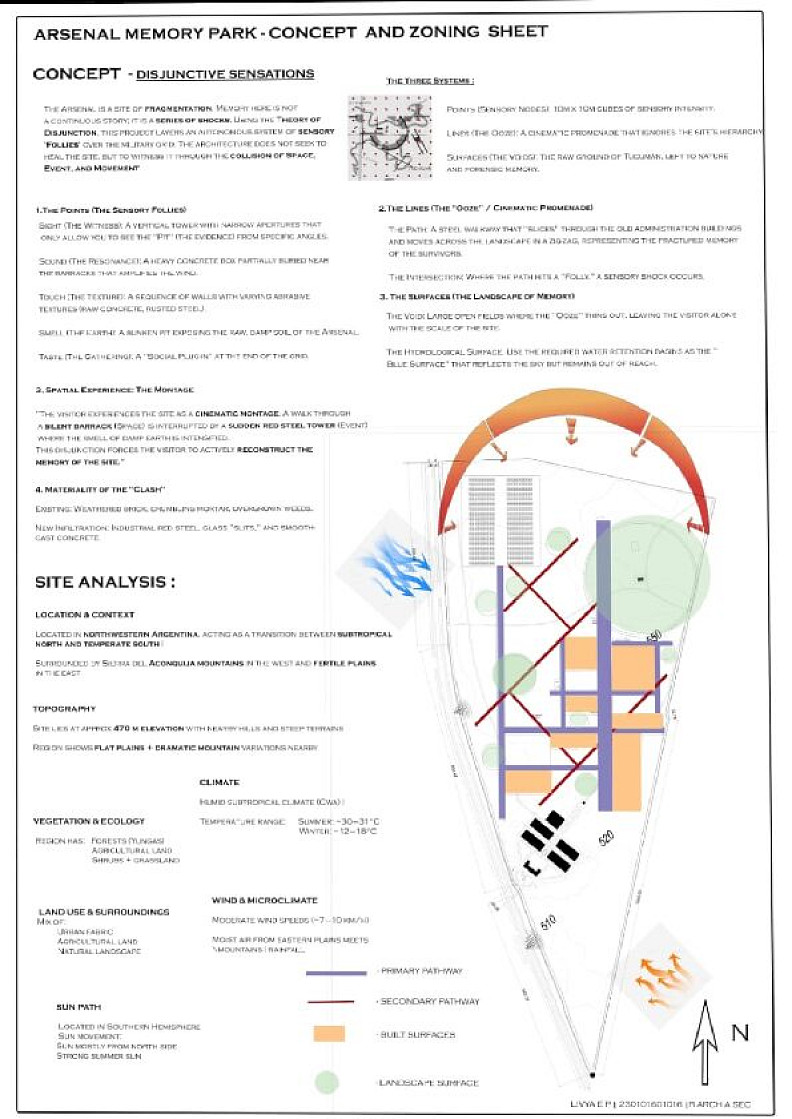
A memorial park on a former arsenal site using the Theory of Disjunction, layering an autonomous system of sensory 'follies' over the military grid. The architecture does not seek to heal the site but to witness it through the collision of Space, Event, and Movement, creating disjunctive sensations that force visitors to actively reconstruct the memory of the site.
Project description
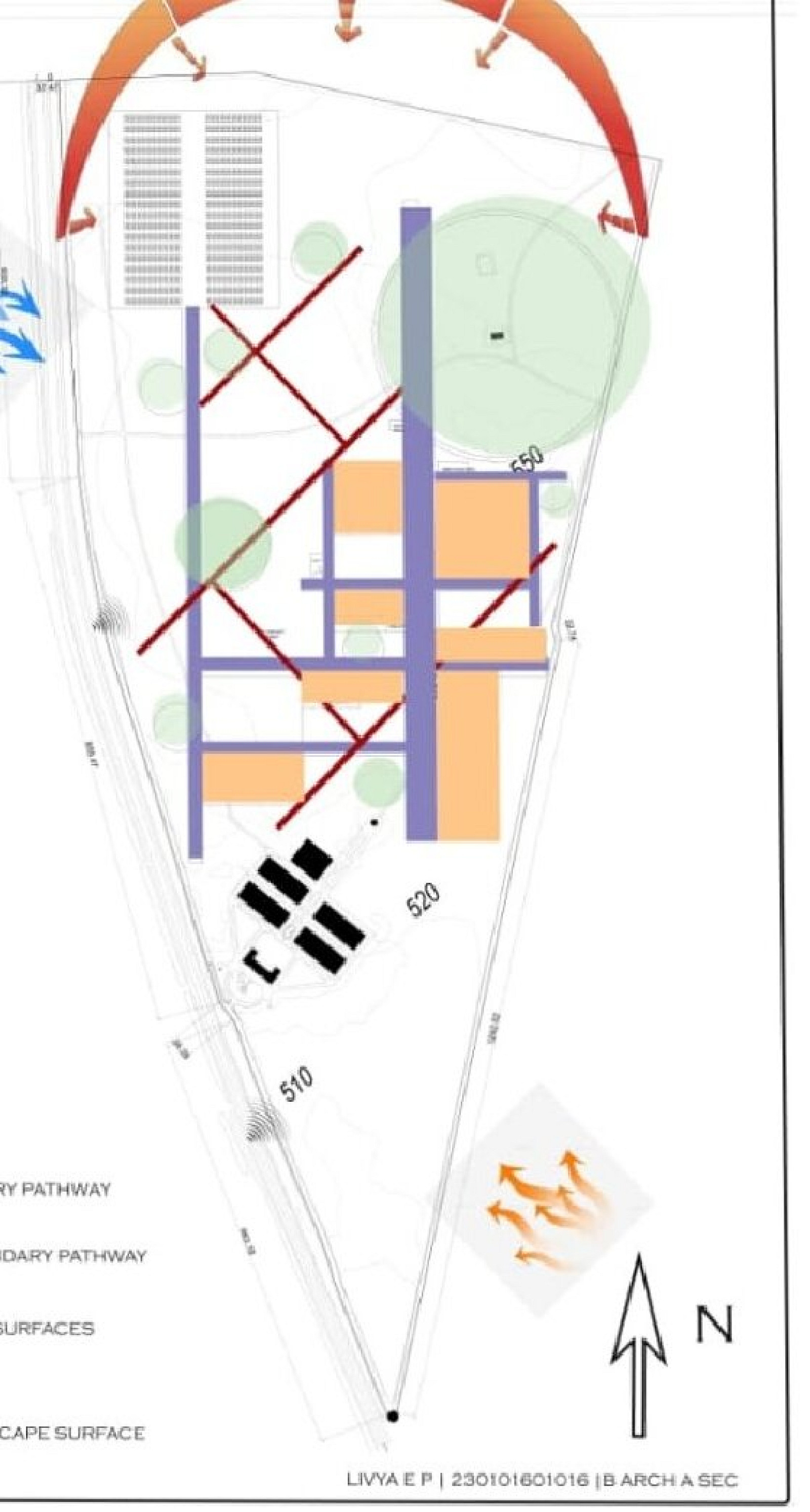
The project is organized through three systems: Points (Sensory Nodes) as 10m x 10m cubes of sensory intensity, Lines (The Ooze) as a cinematic promenade that ignores the site's hierarchy, and Surfaces (The Voids) as the raw ground of Tucumán left to nature and forensic memory. The sensory follies engage sight through a vertical tower with narrow apertures, sound through a heavy concrete box partially buried near barracks that amplifies wind, touch through sequences of walls with varying abrasive textures, smell through a sunken pit exposing raw damp soil, and taste through a social plugin at the grid's end. The cinematic promenade is a steel walkway that slices through old administration buildings in a zig-zag pattern representing the fractured memory of survivors. The landscape features large open fields where the 'ooze' thins out and hydrological surfaces using water retention basins as reflective 'blue surfaces.'
Technical information
Located in northwestern Argentina at approximately 470m elevation, surrounded by Sierra del Aconquija mountains. Humid subtropical climate (CWA) with summer temperatures of 30-31°C and winter temperatures of 12-18°C. Moderate wind speeds of 7-10 km/h with moist air from eastern plains meeting mountains causing rainfall. Materiality involves existing weathered brick, crumbling mortar, and overgrown weeds contrasted with new infiltrations of industrial red steel, glass slits, and smooth-cast concrete. The site includes primary and secondary pathways, built surfaces, and landscape surfaces.
Documentation

Copyright © 2026 INSPIRELI | All rights reserved. Use of this website signifies your agreement to the Terms of Use, Privacy Policy, and use of cookies.
