Interpretation center


Project idea
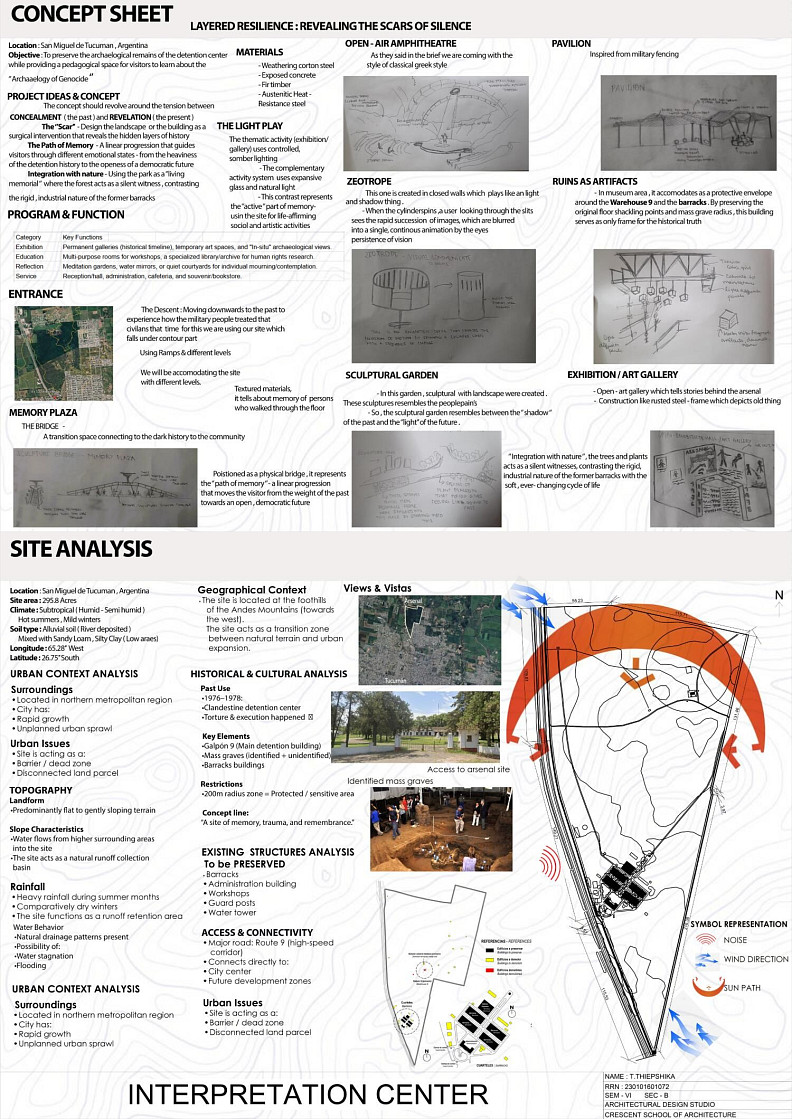
To preserve the archaeological remains of a former detention center in San Miguel de Tucuman, Argentina, while providing a pedagogical space for visitors to learn about the 'Archaeology of Genocide.' The concept revolves around the tension between concealment (the past) and revelation (the present), using the metaphor of a 'scar' as a surgical intervention that reveals hidden layers of history.
Project description
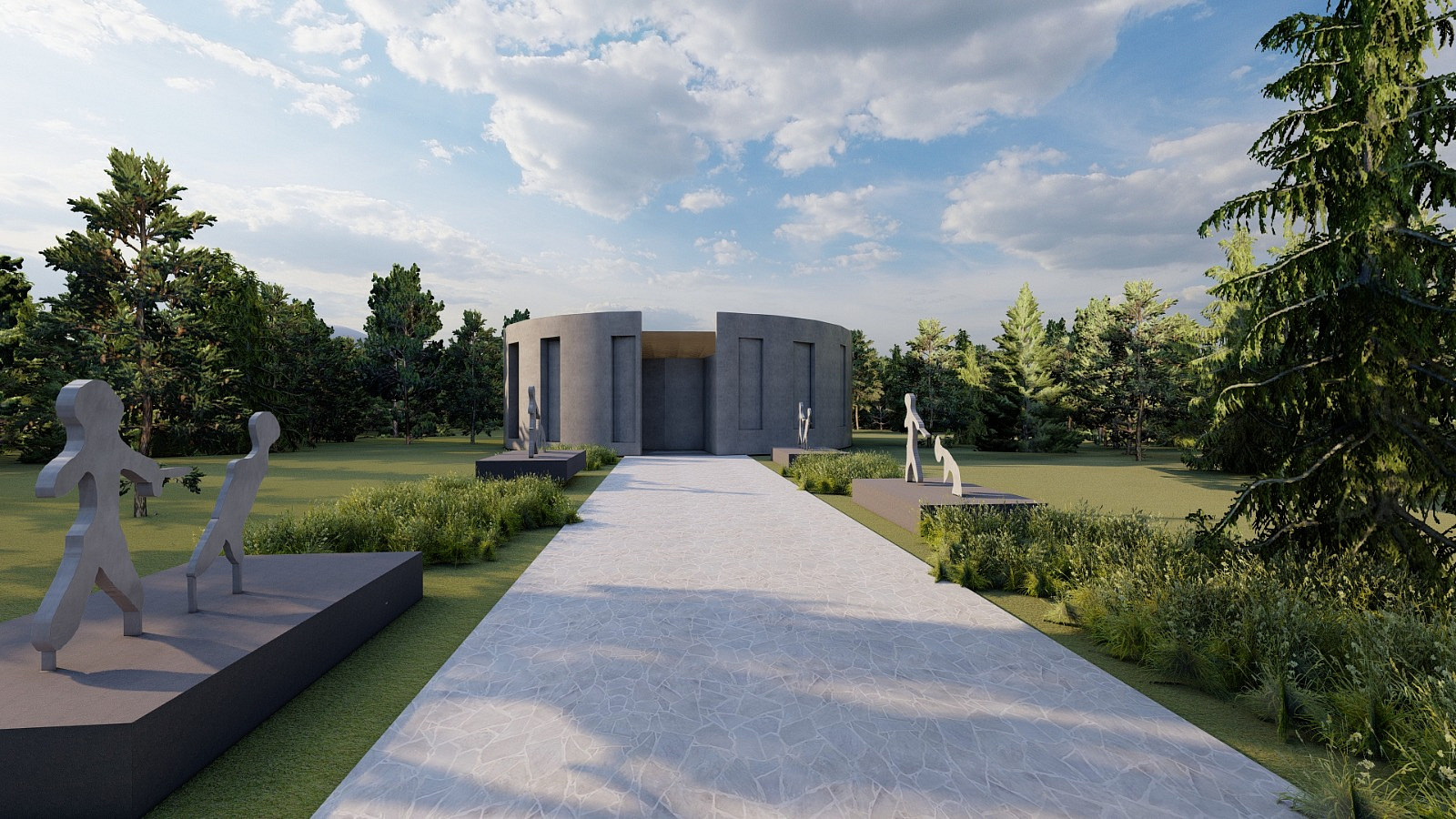
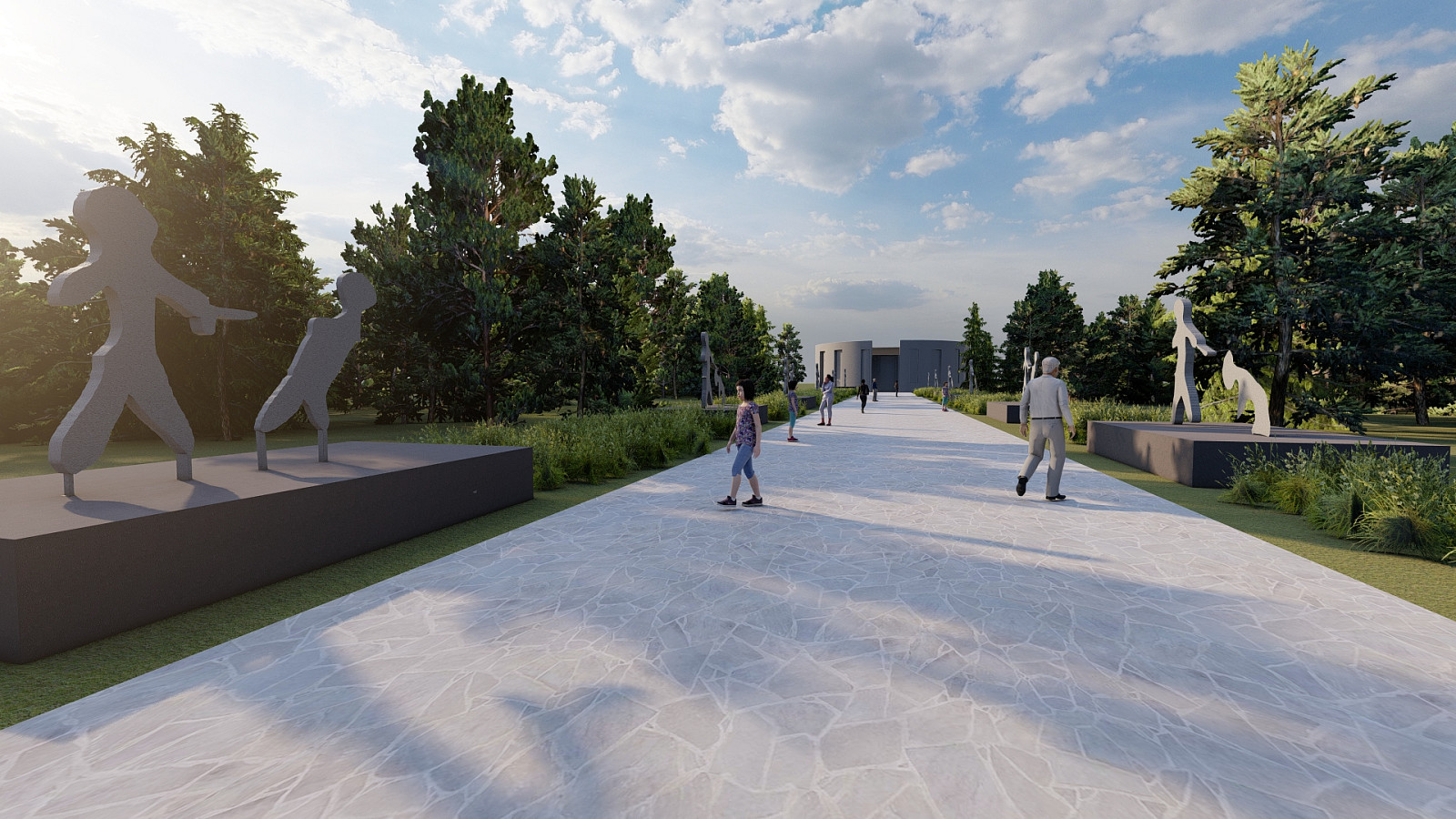
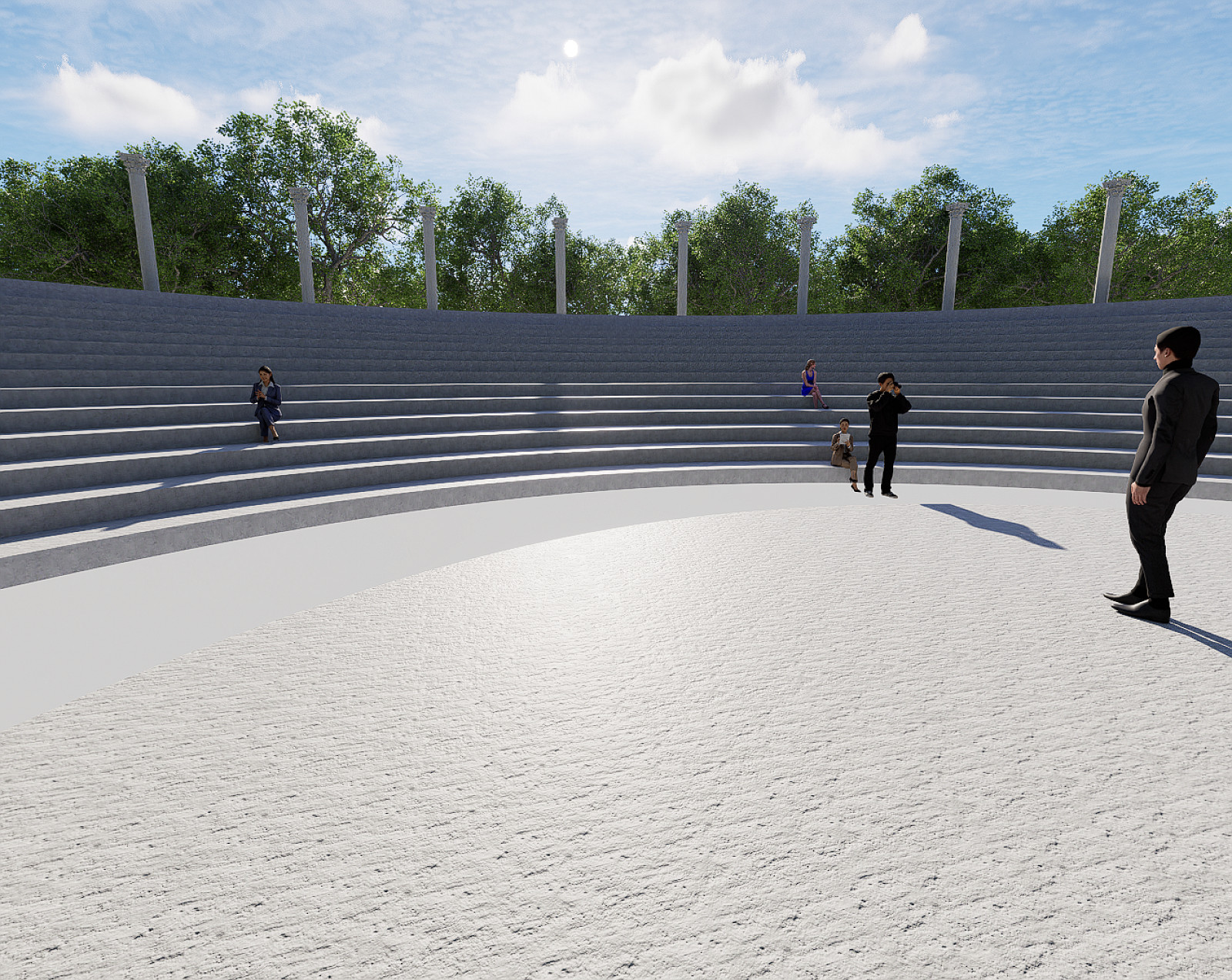
The Interpretation Center is designed as a memorial and educational complex on the site of a former clandestine detention center (1976-1978) where torture and executions occurred. The project features a 'Path of Memory' - a linear progression guiding visitors through different emotional states from the heaviness of detention history to the openness of a democratic future. Key programmatic elements include permanent exhibition galleries with historical timelines and in-situ archaeological views, an open-air amphitheatre inspired by classical Greek style, a pavilion inspired by military fencing, a sculptural garden bridging the 'shadow' of the past and the 'light' of the future, an exhibition/art gallery constructed with rusted steel frames depicting old things, a memory plaza, and a bridge serving as a transition space connecting dark history to the community. The design integrates nature as a 'living memorial' where the forest acts as a silent witness, contrasting the rigid industrial nature of the former barracks. Existing structures including barracks, administration building, workshops, guard posts, and watch tower are preserved.
Technical information
Materials include weathering corten steel, exposed concrete, fir timber, and austenitic heat-resistance steel. The site area is 295.8 acres on predominantly flat to gently sloping terrain with alluvial soil (river deposited) mixed with sandy loam and silty clay. The light play system uses controlled somber lighting with expansive glass and natural light to create contrast between active memory spaces and life-affirming social and artistic activities. Ramps and different levels accommodate the site's contour, with a 200m radius protected/sensitive zone around mass graves. The site functions as a natural runoff collection basin with natural drainage patterns.
Documentation

Copyright © 2026 INSPIRELI | All rights reserved. Use of this website signifies your agreement to the Terms of Use, Privacy Policy, and use of cookies.