Folded Plate Geometry - Bus Shelter


Project idea
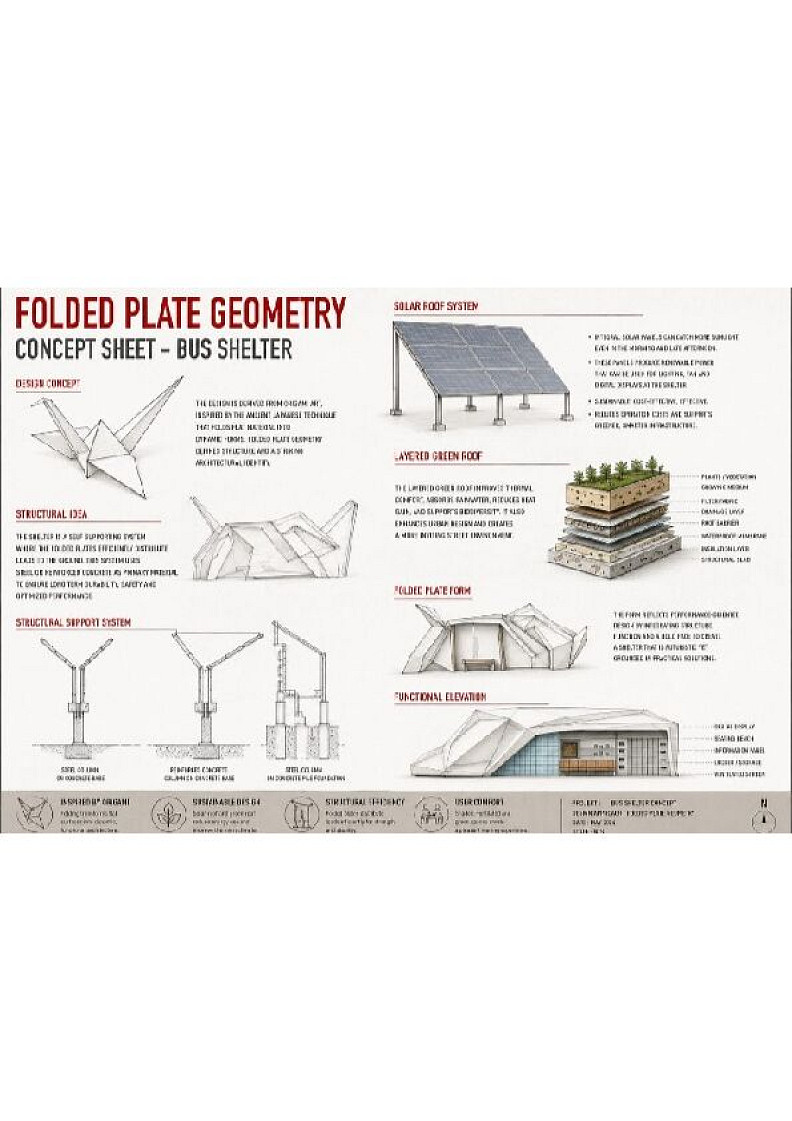
A bus shelter design derived from origami art, inspired by the ancient Japanese technique that folds flat material into dynamic forms. Folded plate geometry defines structural and a striking architectural identity.
Project description
The shelter is a self-supporting system where folded plates efficiently distribute loads to the ground. The design integrates a solar roof system with integral solar panels that catch more sunlight even in the morning and late afternoon, producing renewable power for lighting, fan and digital displays. A layered green roof improves thermal comfort, absorbs rainwater, reduces heat gain, supports biodiversity, and enhances urban design creating a more inviting street environment. The form reflects performance-oriented design by interweaving structure, function and a bold face to create a shelter that is futuristic yet grounded in practical solutions.
Technical information
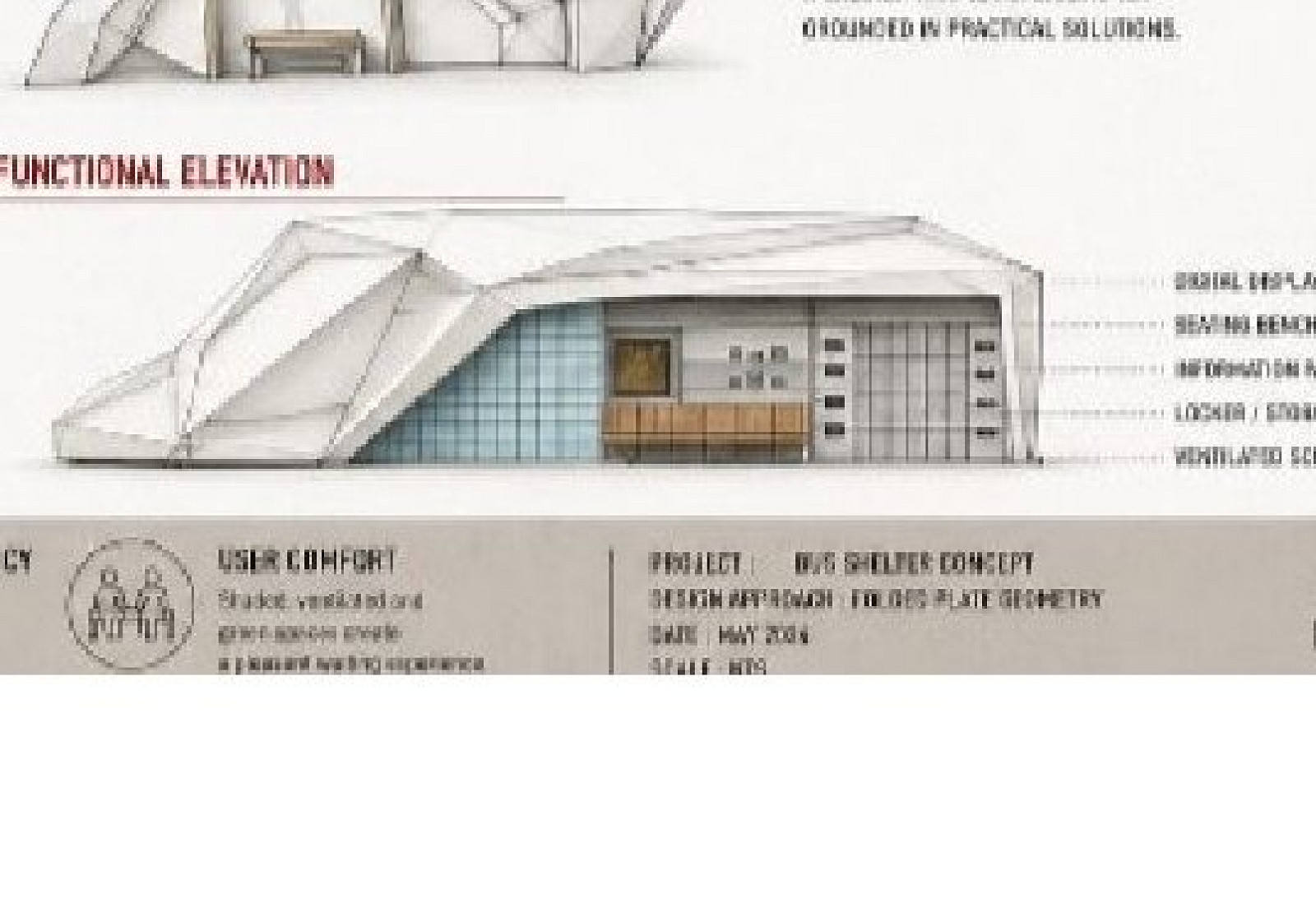
The system uses steel or reinforced concrete as primary material to ensure long-term durability, safety and optimized performance. Structural support options include steel column on concrete base, reinforced concrete column on concrete base, and steel column on concrete pile foundation. The layered green roof consists of plants/vegetation, growing medium, filter fabric, drainage layer, root barrier, waterproof membrane, insulation layer, and structural slab. Functional elevation includes digital display, seating bench, information panel, locker/storage, and ventilated screen. The design approach follows folded plate geometry principles. Date: May 2024.
Documentation

Copyright © 2026 INSPIRELI | All rights reserved. Use of this website signifies your agreement to the Terms of Use, Privacy Policy, and use of cookies.