From Silence to Justice


Project idea
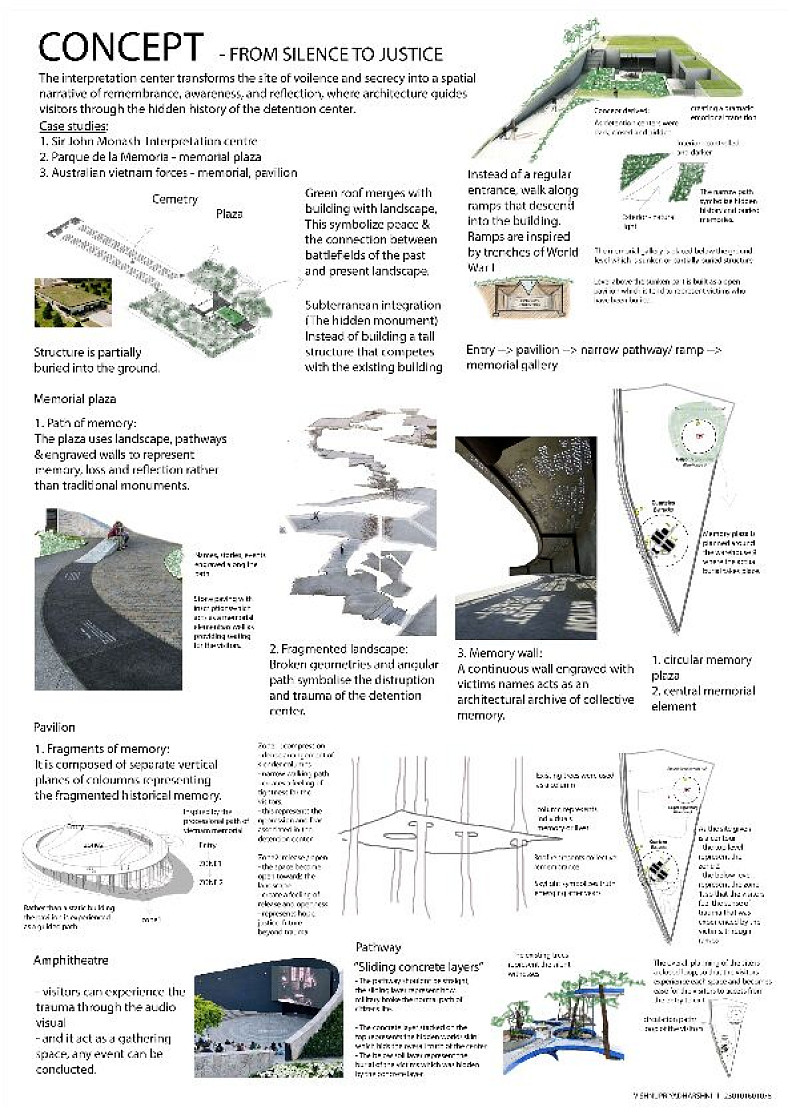
The interpretation center transforms a site of violence and secrecy into a spatial narrative of remembrance, awareness, and reflection, where architecture guides visitors through the hidden history of a detention center.
Project description
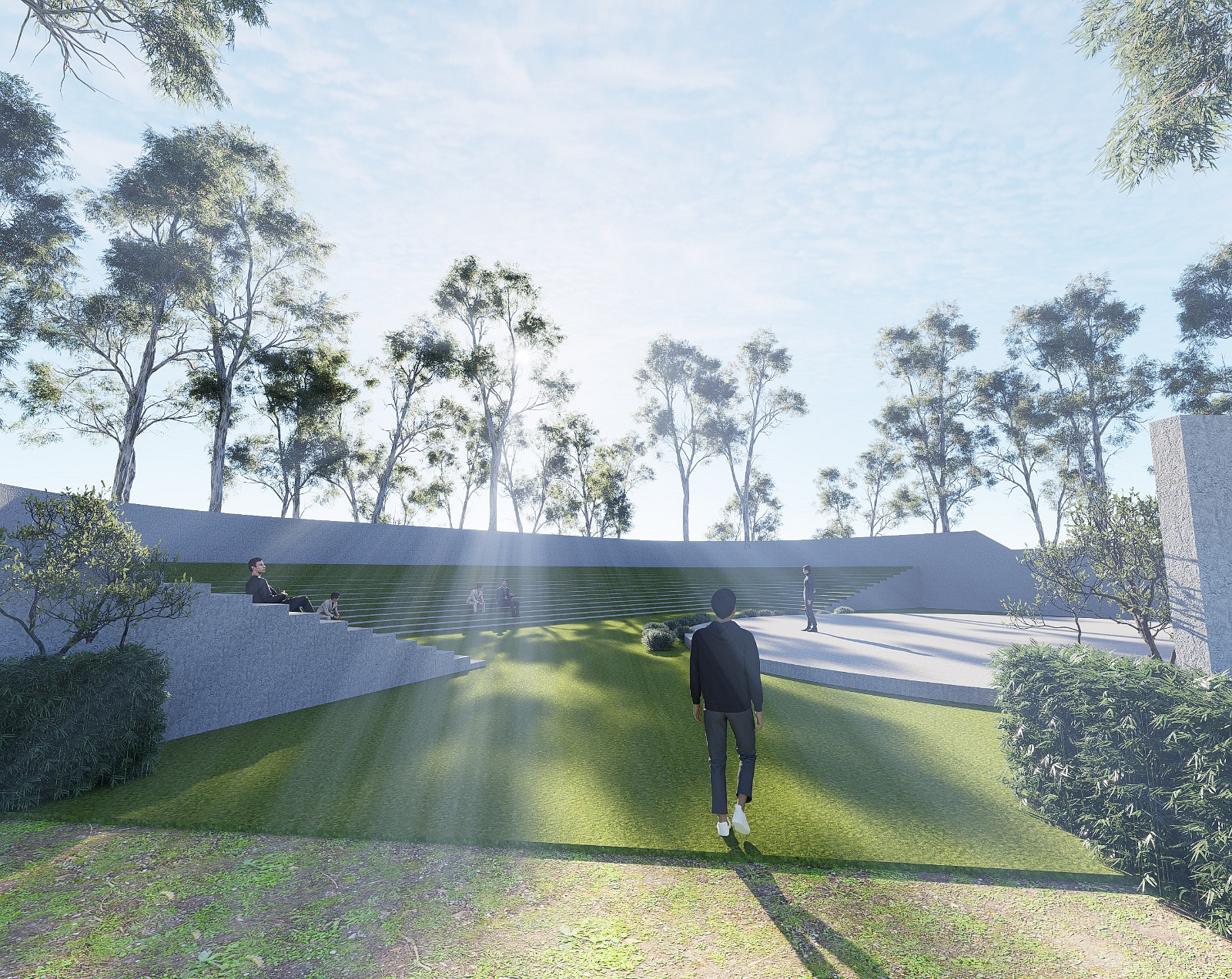
The project is an interpretation center conceived as a memorial complex comprising a memorial plaza, pavilion, pathway, and amphitheatre. The concept derives from the dark, closed, and hidden nature of detention centers, creating a dramatic emotional transition from exterior natural light to controlled darker interior spaces. The structure is partially buried into the ground as a subterranean integration - a hidden monument that doesn't compete with existing buildings. A green roof merges the building with the landscape, symbolizing peace and connection between battlefields of the past and present landscape. Instead of a regular entrance, visitors walk along ramps inspired by WWI trenches that descend into the building. The memorial plaza uses landscape, pathways, and engraved walls to represent memory, loss, and reflection. The pavilion is composed of separate vertical planes of columns representing fragmented historical memory, organized in two zones - compression (dense, narrow, representing oppression) and release (open toward landscape, representing hope and justice). A continuous memory wall engraved with victims' names acts as an architectural archive of collective memory. The pathway features sliding concrete layers representing how military broke normal paths of citizens' lives. An amphitheatre serves as a gathering space for audio-visual experiences of trauma.
Technical information
The memorial gallery is placed below ground level as a sunken or partially buried structure. The level above the sunken part is built as an open pavilion representing victims who have been buried. The site planning follows a closed loop circulation path for visitor access. Existing trees are incorporated as structural columns. Stone paving with inscriptions acts as memorial elements and seating. The pathway consists of concrete layers stacked on top representing the hidden world, with soil layers below representing burial of victims. The overall planning follows a contour with the top level representing Zone 2 and the below level representing Zone 1, connected through ramps.
Documentation

Copyright © 2026 INSPIRELI | All rights reserved. Use of this website signifies your agreement to the Terms of Use, Privacy Policy, and use of cookies.