See the Unseen, Museum of Synesthesia


Project idea
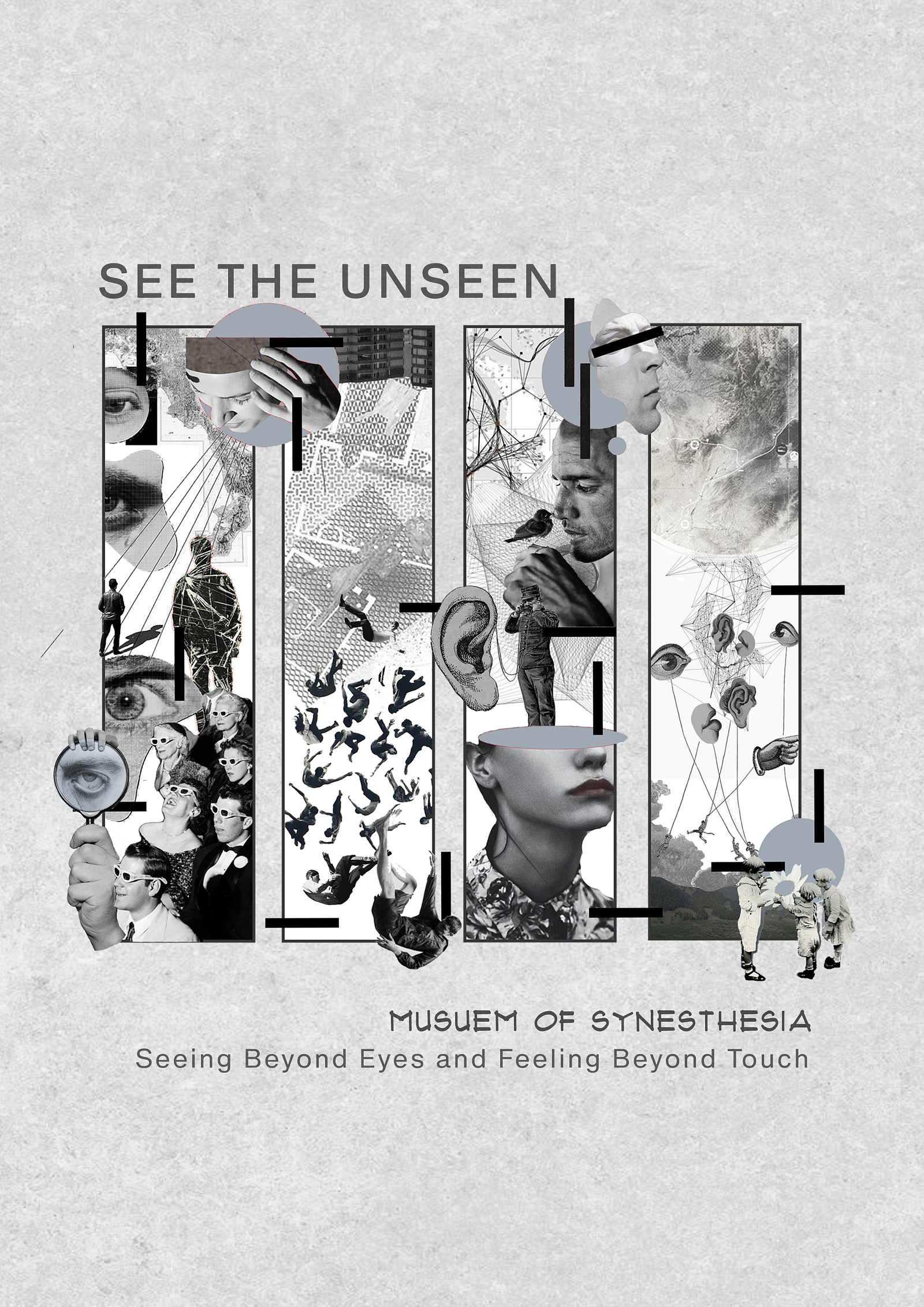
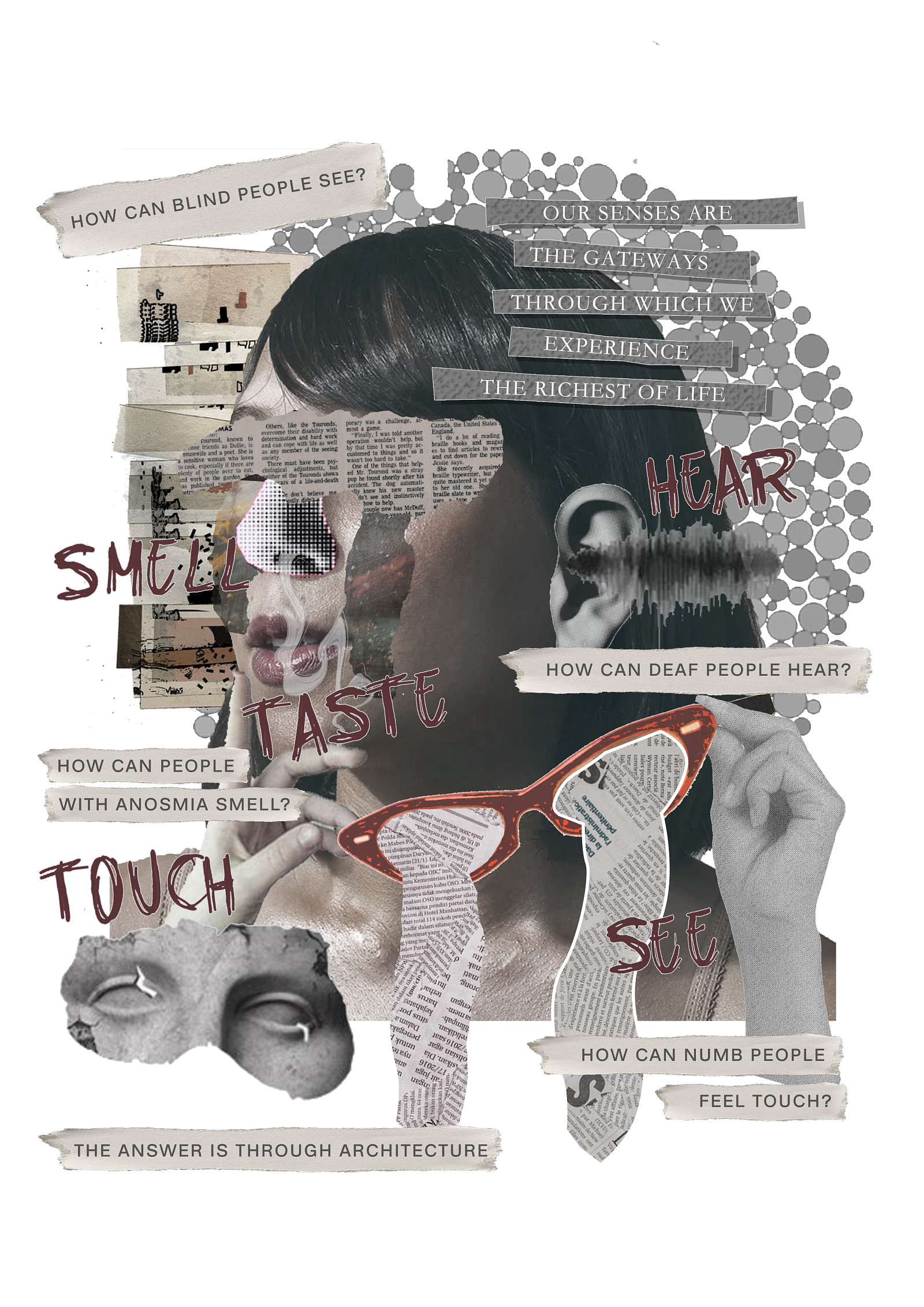
Seen The Unseen is a museum born from the idea of the senses, questioning, How can the blind see? How can the deaf hear? How can those with anosmia smell?And how can those with numbness feel touch?
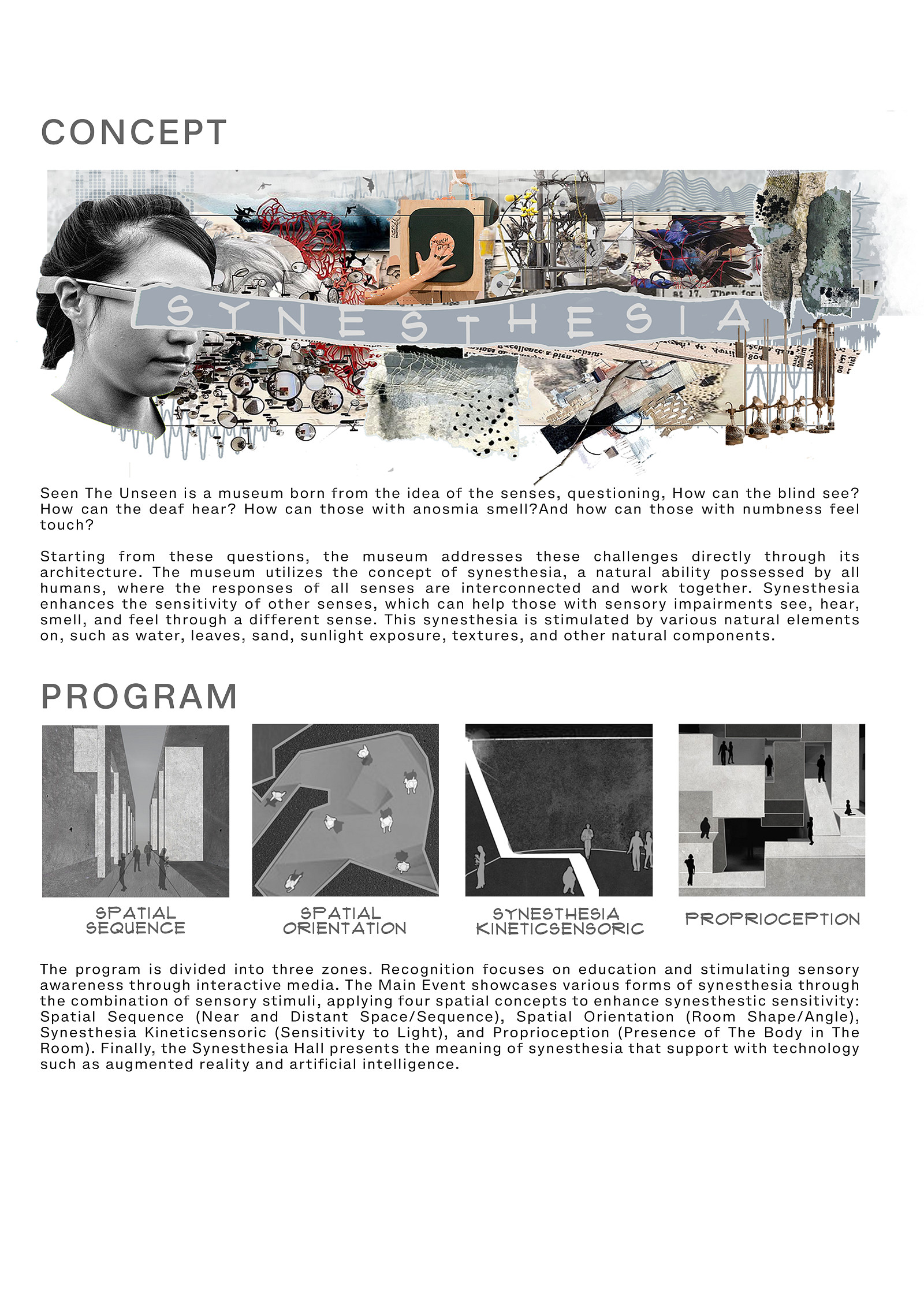
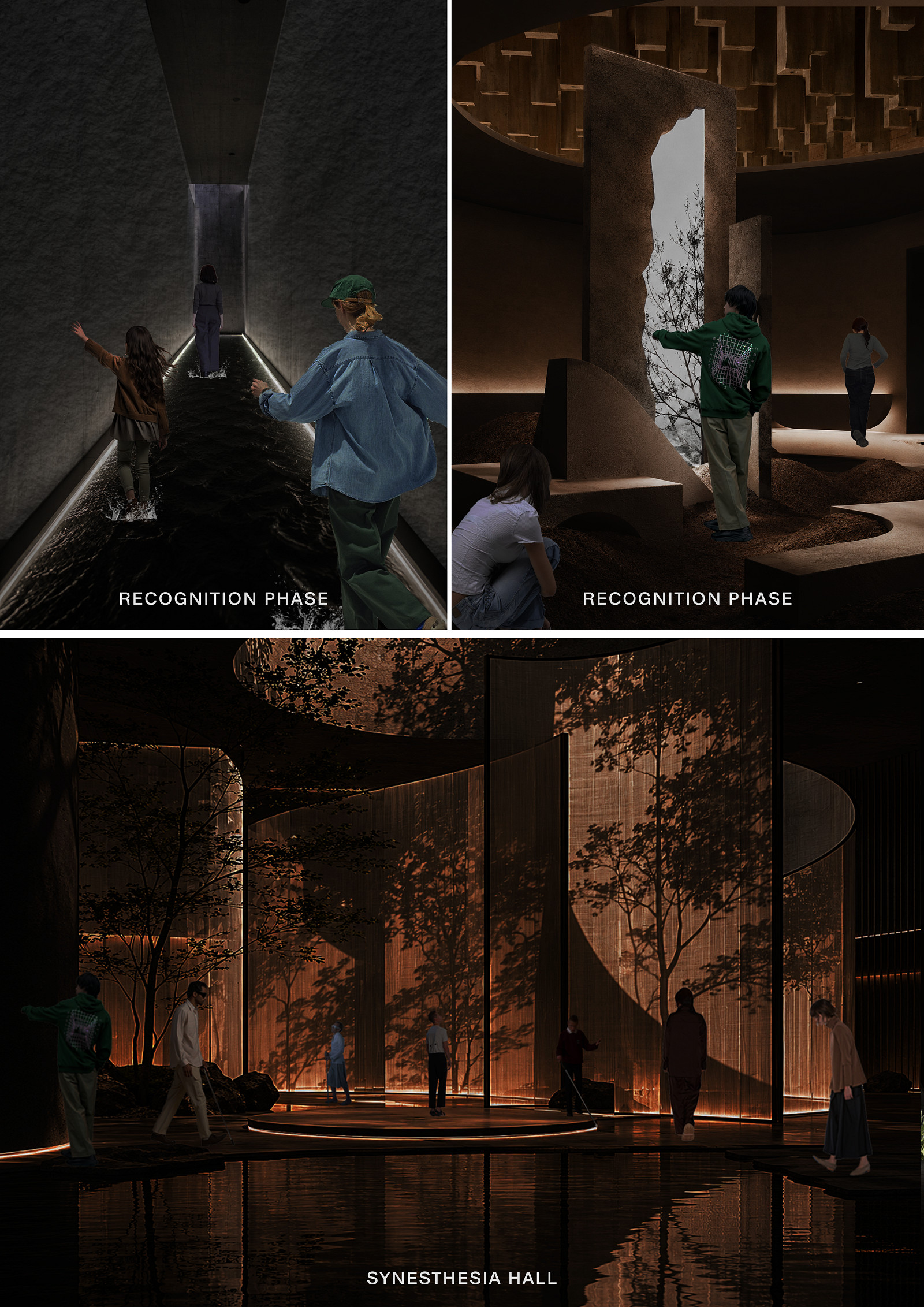
Starting from these questions, the museum addresses these challenges directly through its architecture. The museum utilizes the concept of synesthesia, a natural ability possessed by all humans, where the responses of all senses are interconnected and work together. Synesthesia enhances the sensitivity of other senses, which can help those with sensory impairments see, hear, smell, and feel through a different sense. This synesthesia is stimulated by various natural elements on, such as water, leaves, sand, sunlight exposure, textures, and other natural components.
Project description
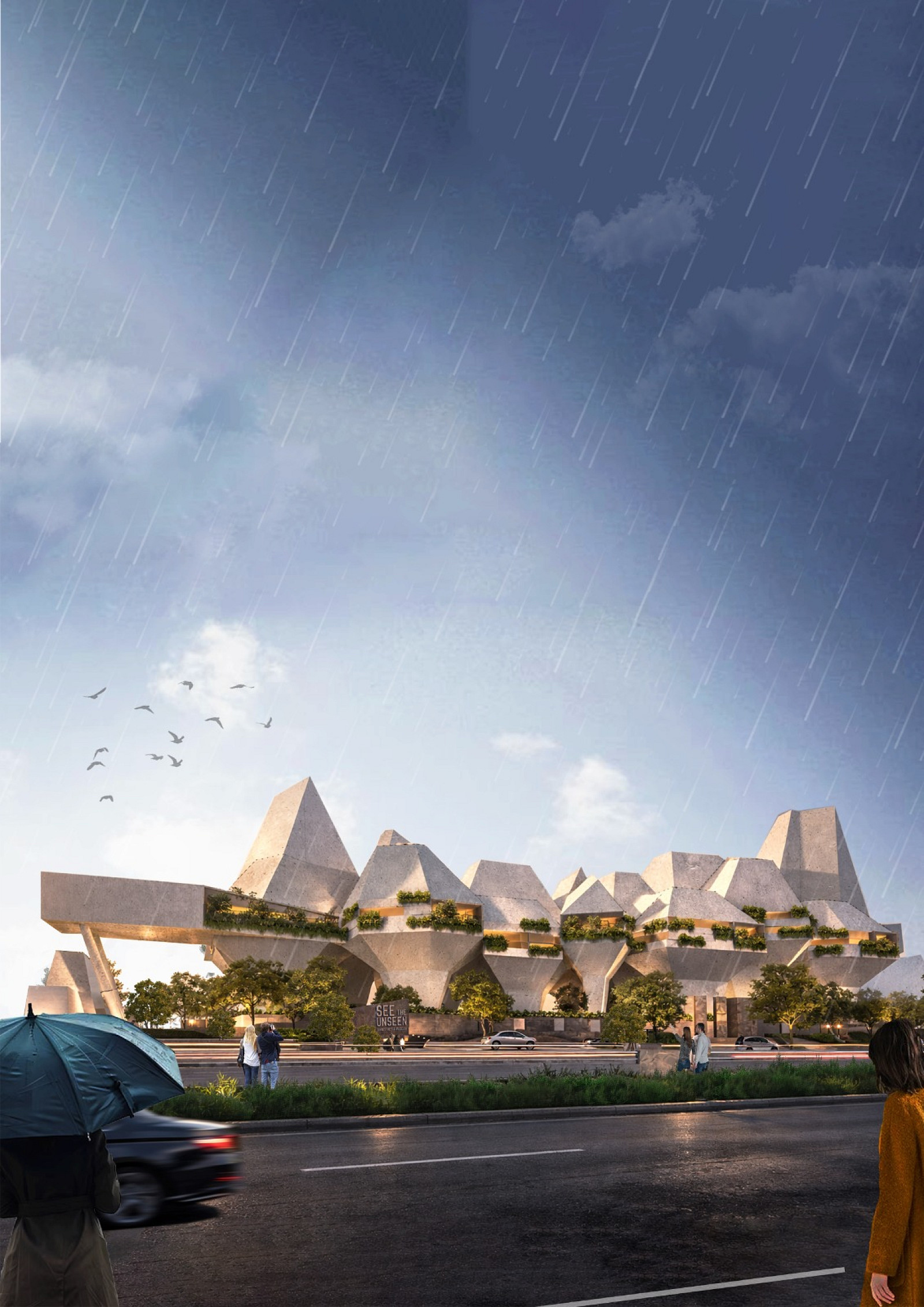
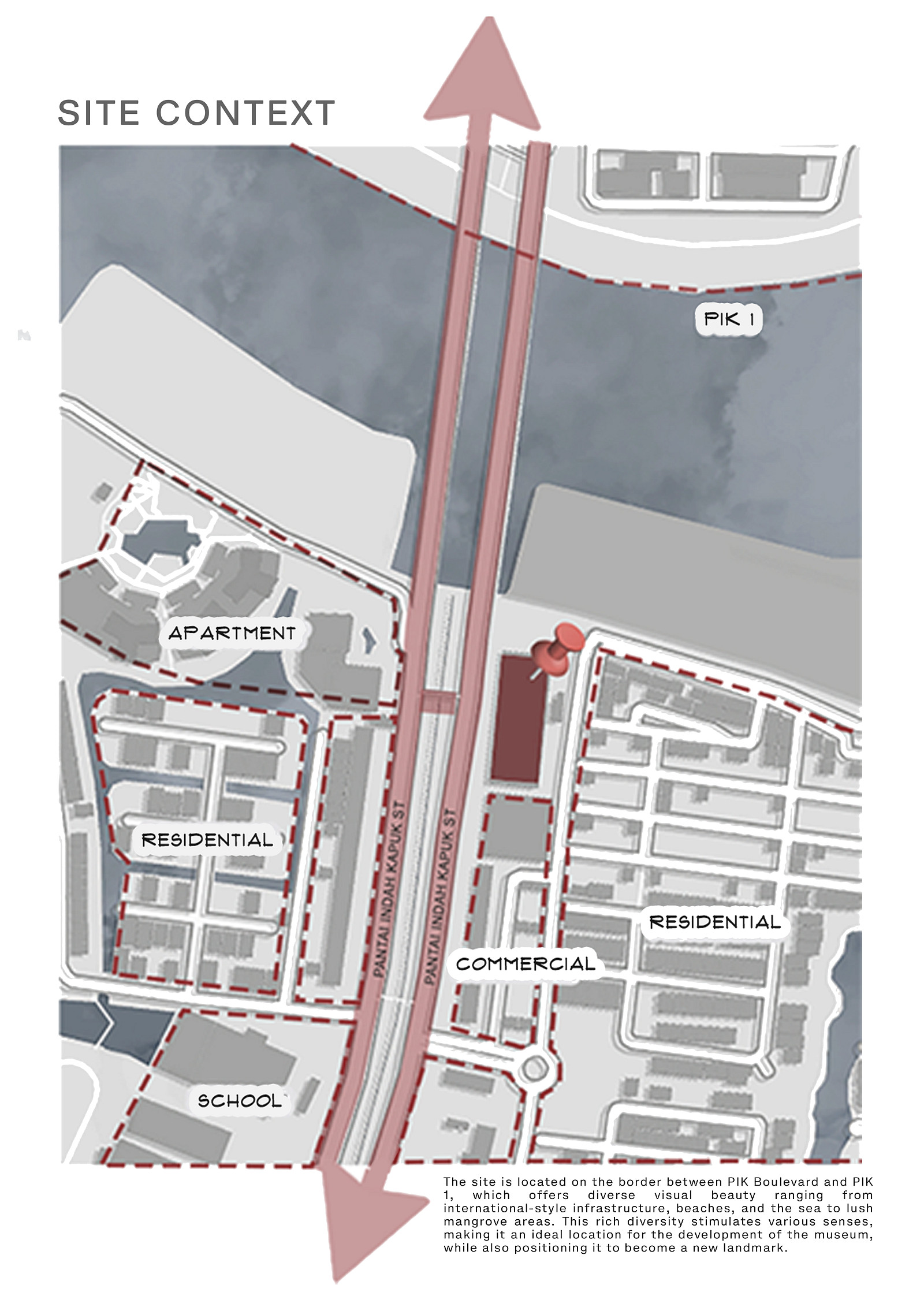
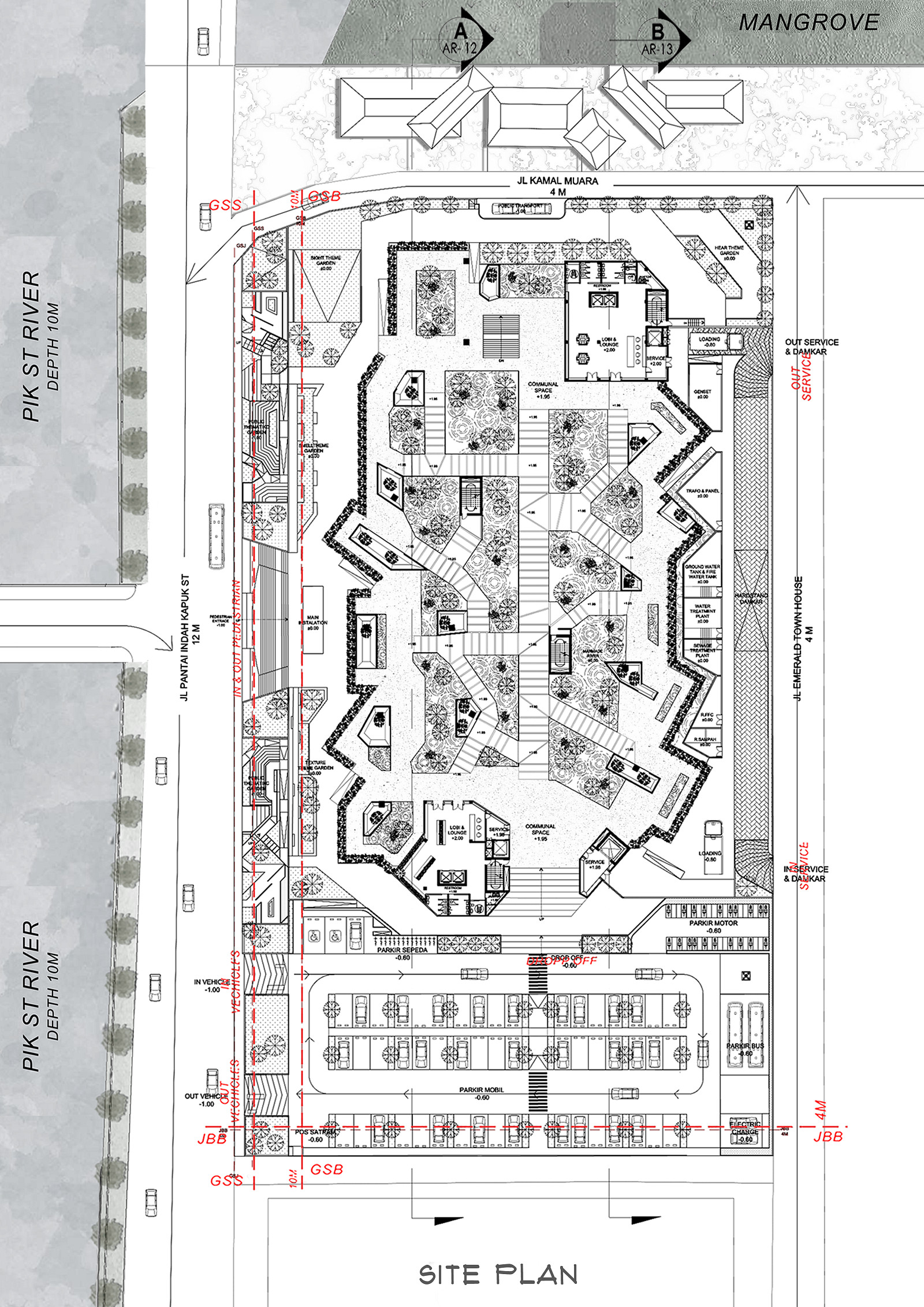
The site is located on the border between PIK Boulevard and PIK 1, which offers diverse visual beauty ranging from international-style infrastructure, beaches, and the sea to lush mangrove areas. This rich diversity stimulates various senses, making it an ideal location for the development of the museum, while also positioning it to become a new landmark.
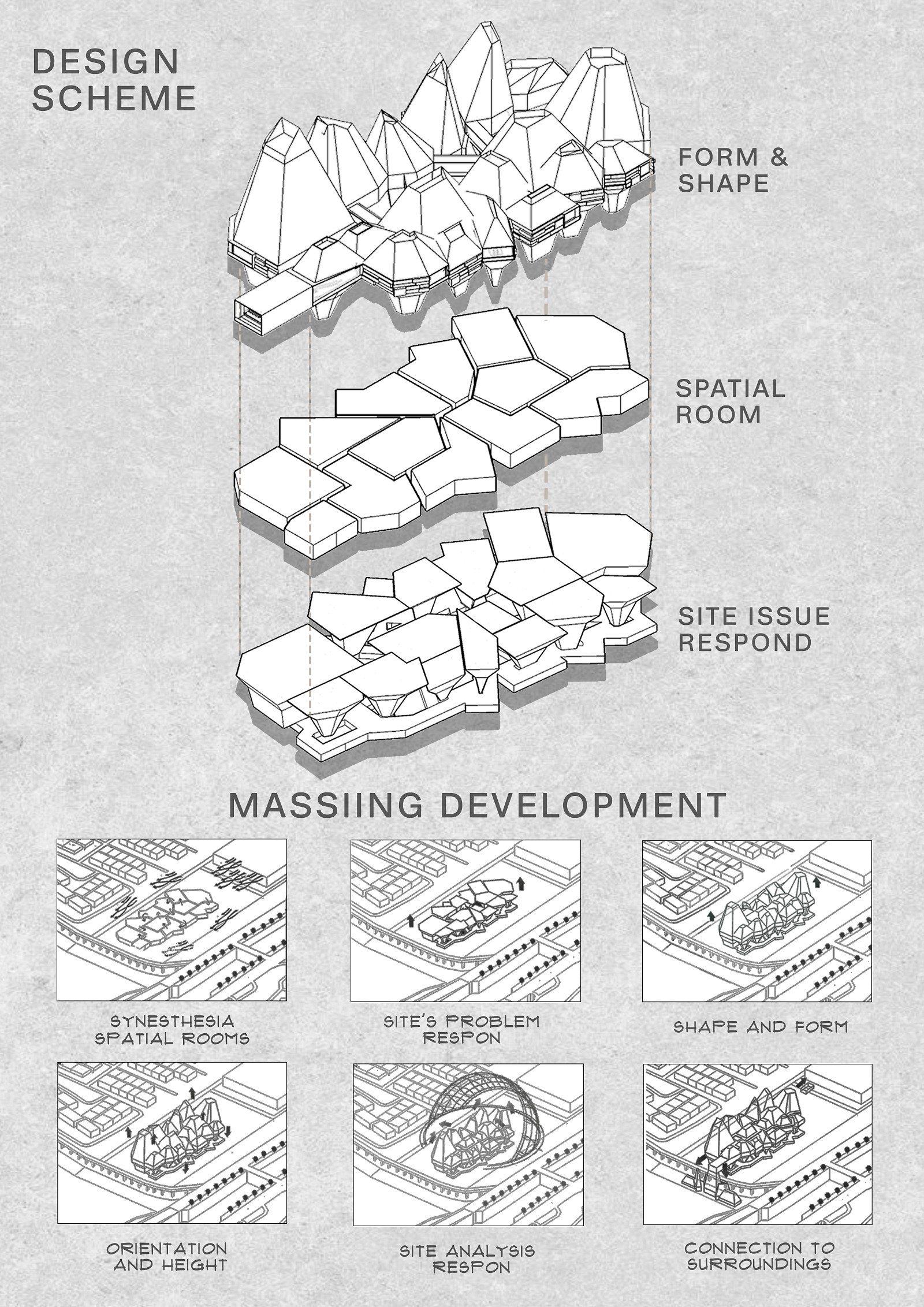
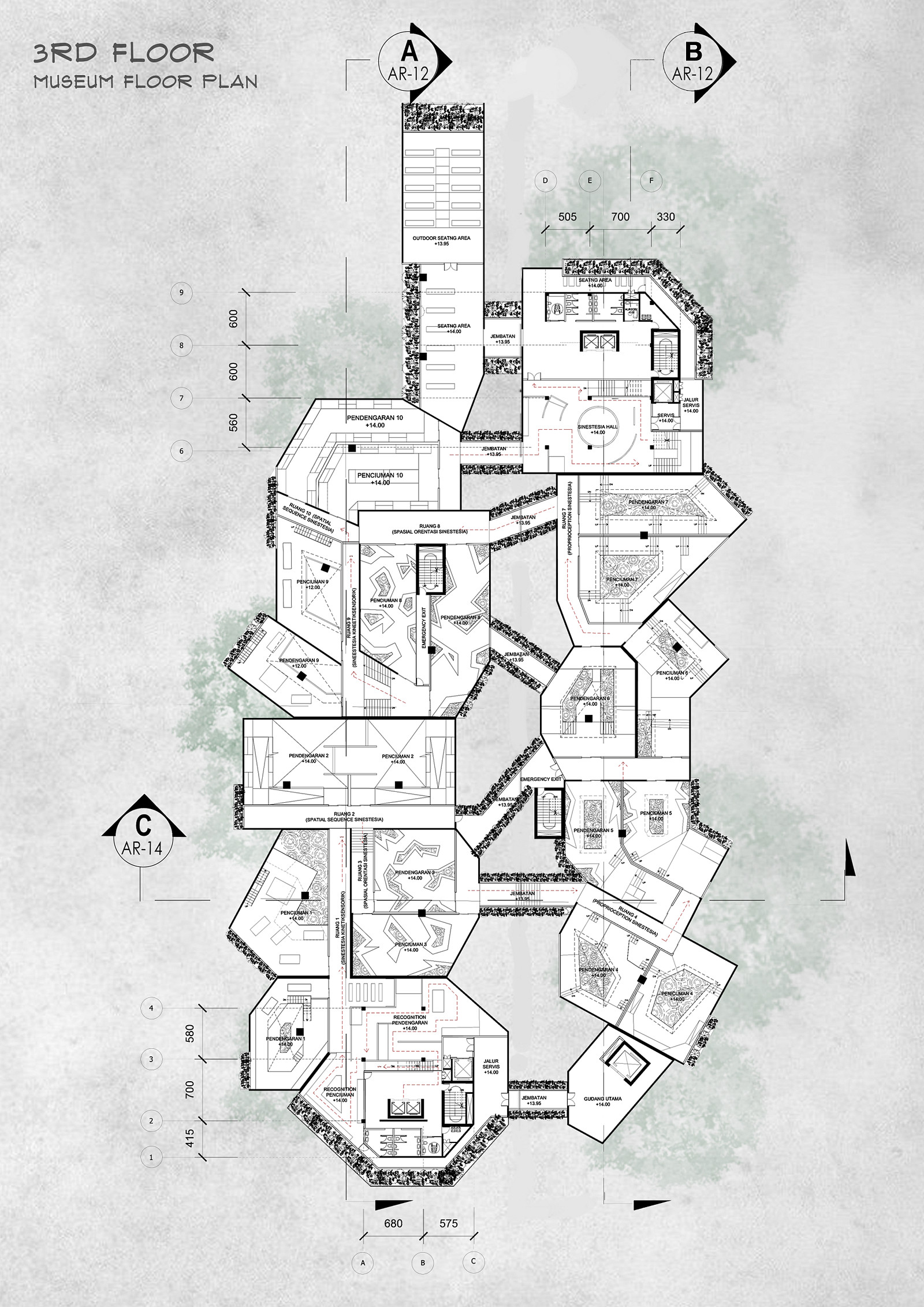
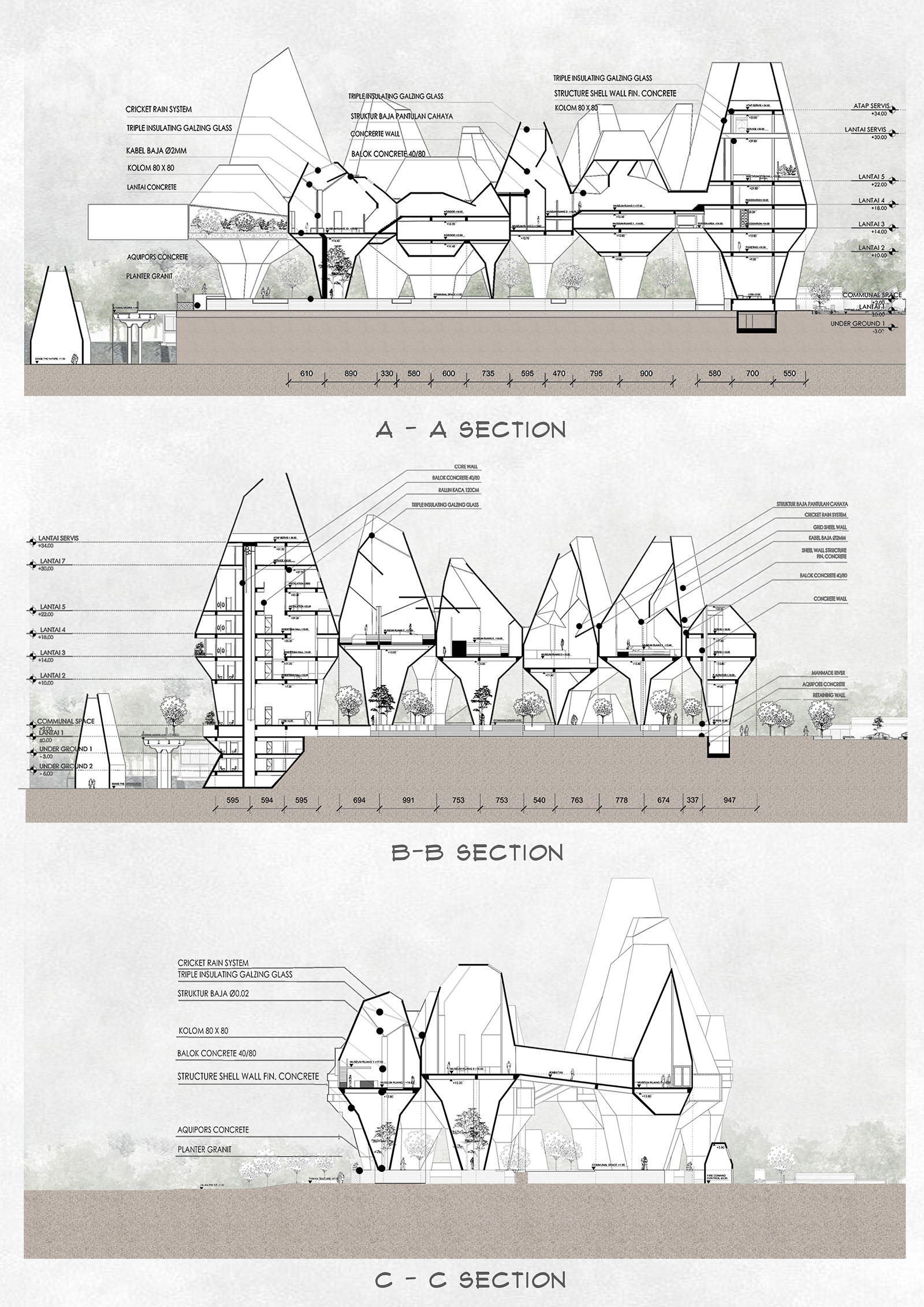
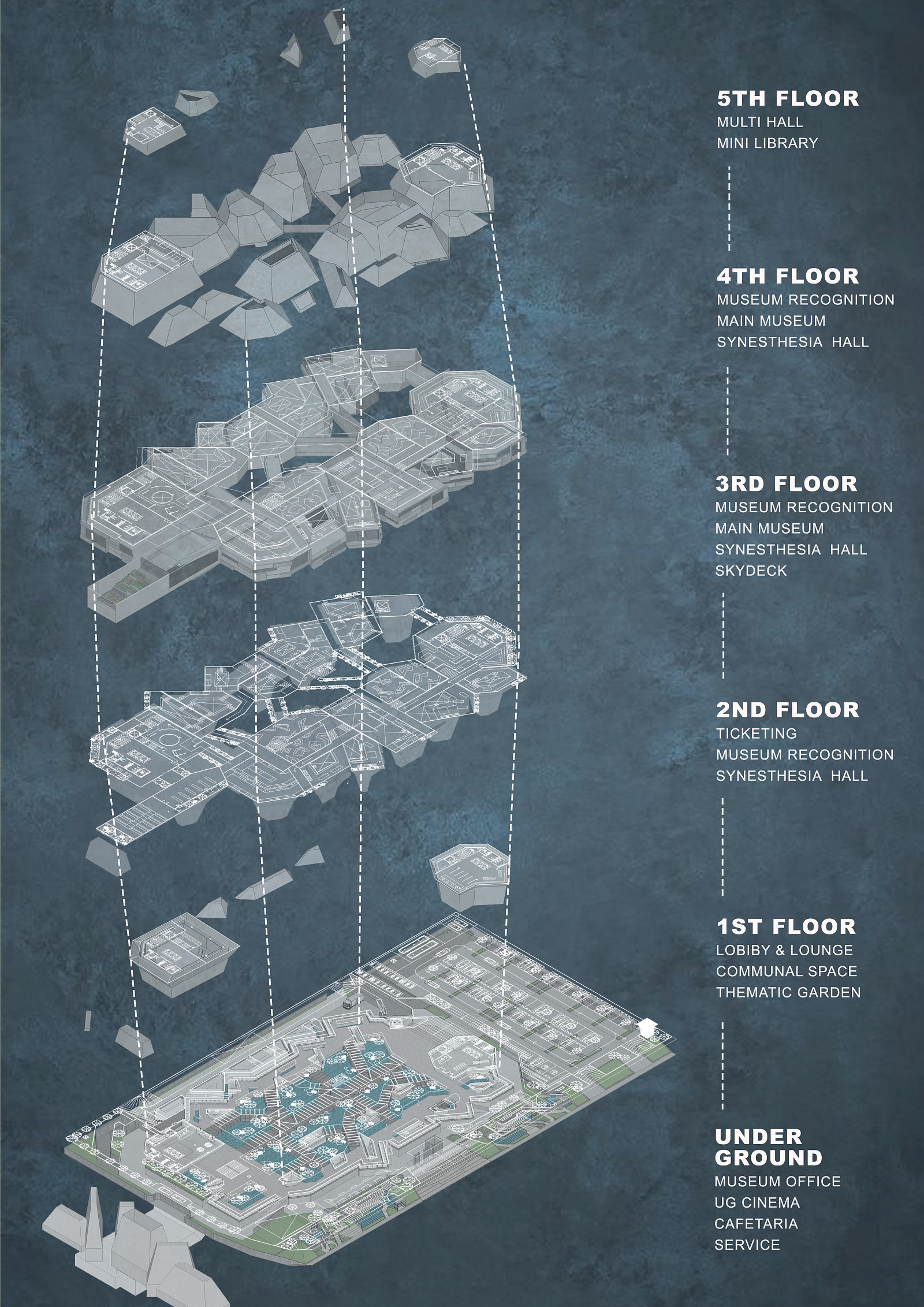
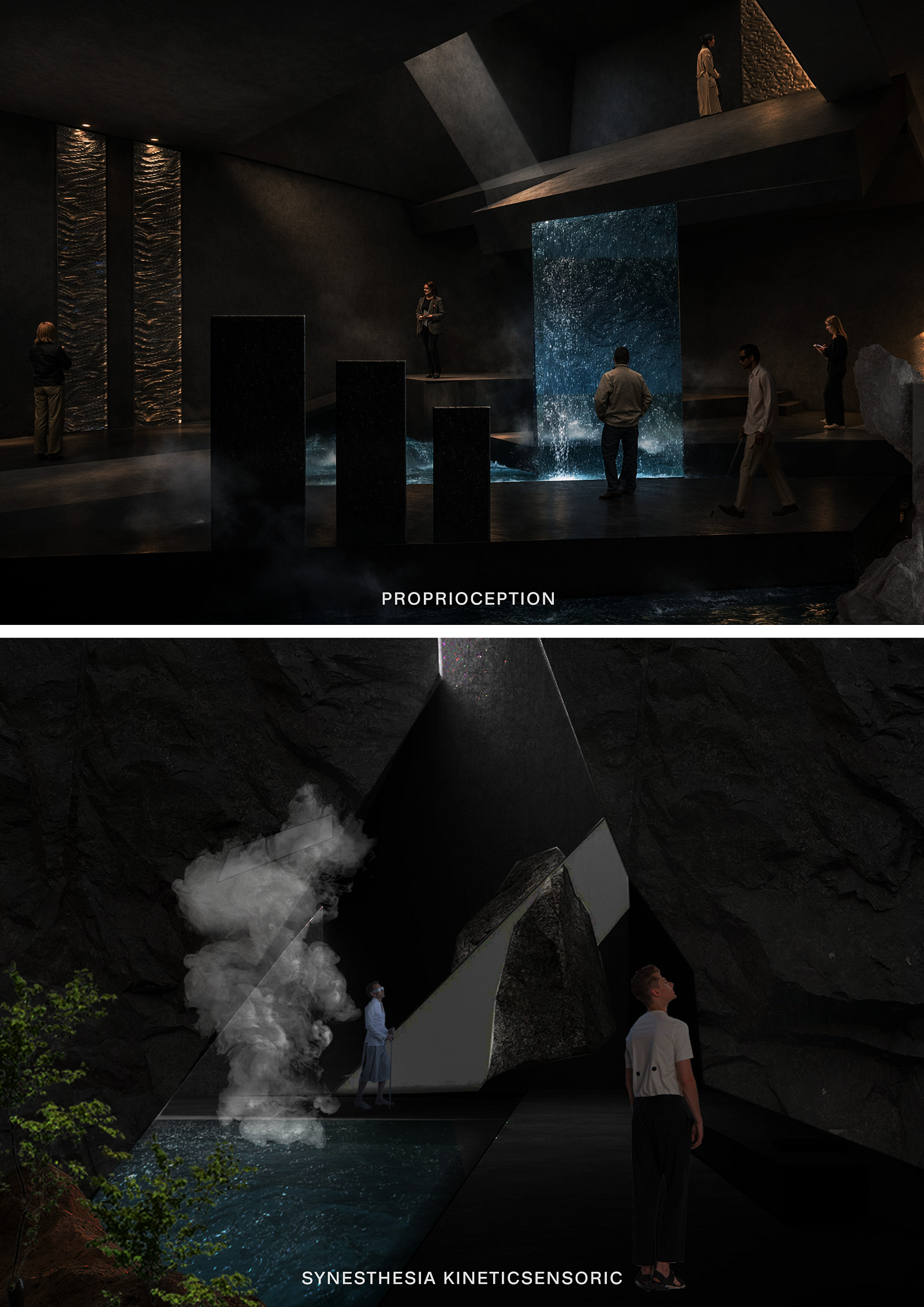
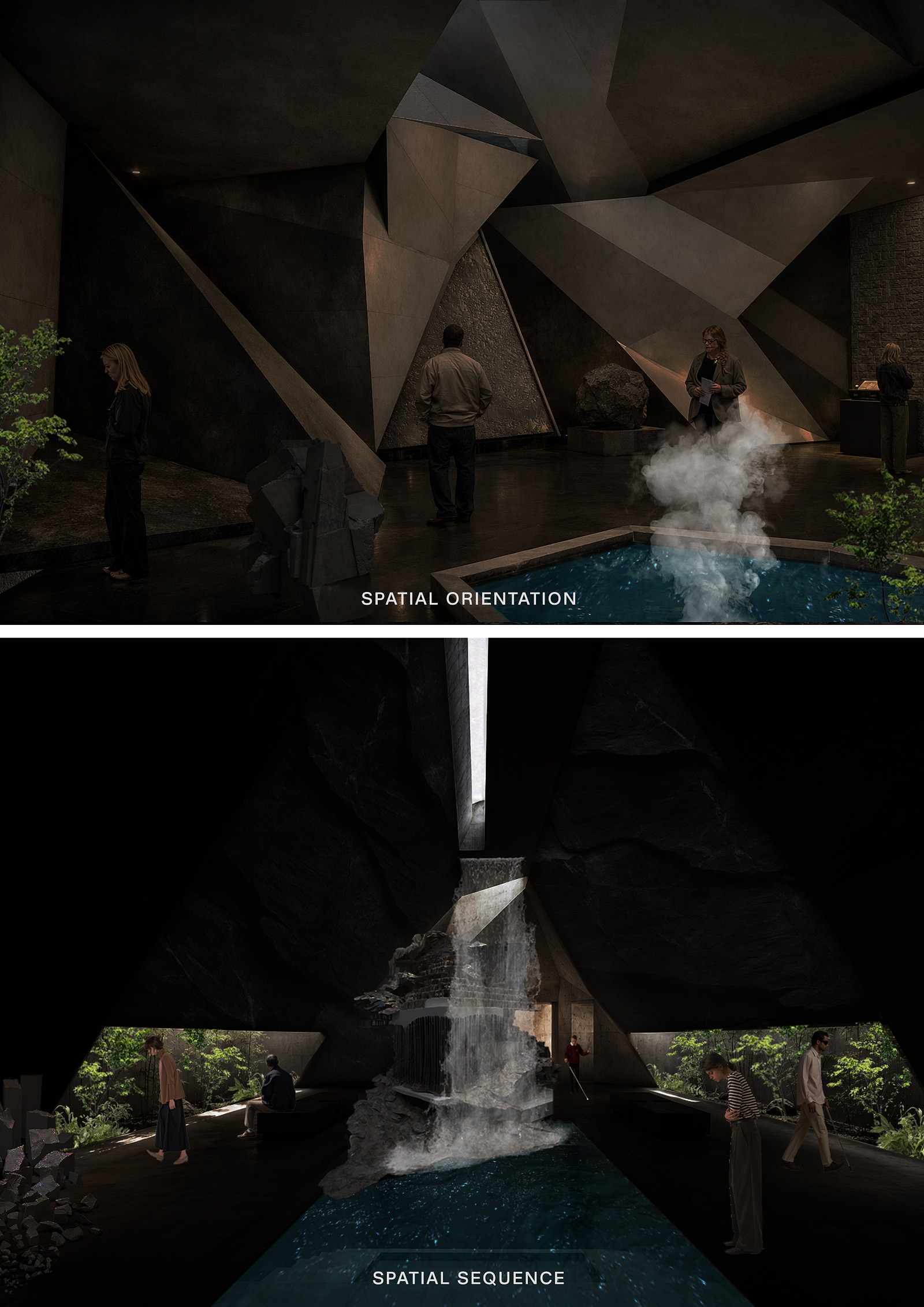
The program is divided into three zones. Recognition focuses on education and stimulating sensory awareness through interactive media. The Main Event showcases various forms of synesthesia through the combination of sensory stimuli, applying four spatial concepts to enhance synesthestic sensitivity: Spatial Sequence (Near and Distant Space/Sequence), Spatial Orientation (Room Shape/Angle), Synesthesia Kineticsensoric (Sensitivity to Light), and Proprioception (Presence of The Body in The Room). Finally, the Synesthesia Hall presents the meaning of synesthesia that support with technology such as augmented reality and artificial intelligence.
Technical information
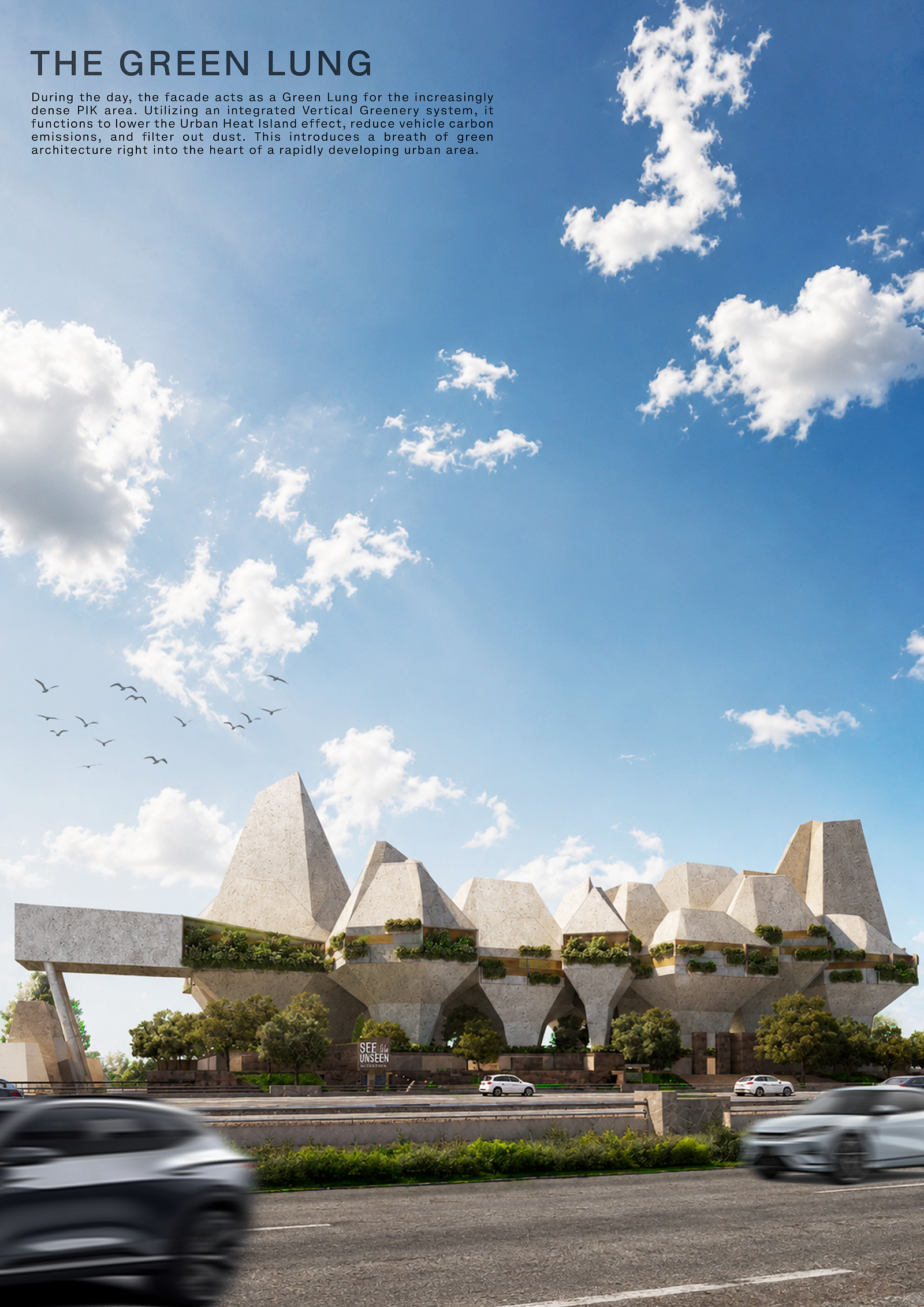
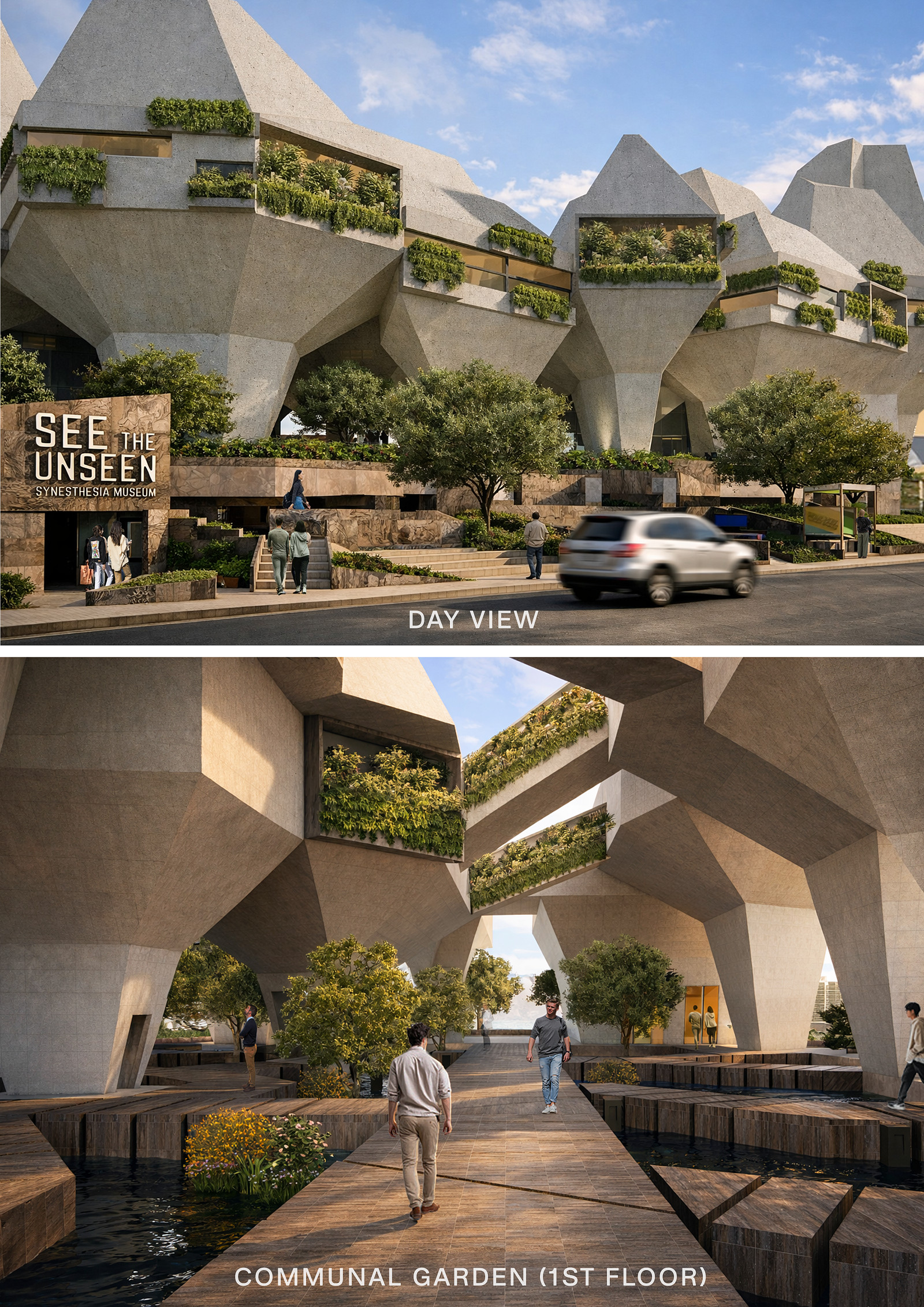
During the day, the facade acts as a Green Lung for the increasingly dense PIK area. Utilizing an integrated Vertical Greenery system, it functions to lower the Urban Heat Island effect, reduce vehicle carbon emissions, and filter out dust. This introduces a breath of green architecture right into the heart of a rapidly developing urban area.
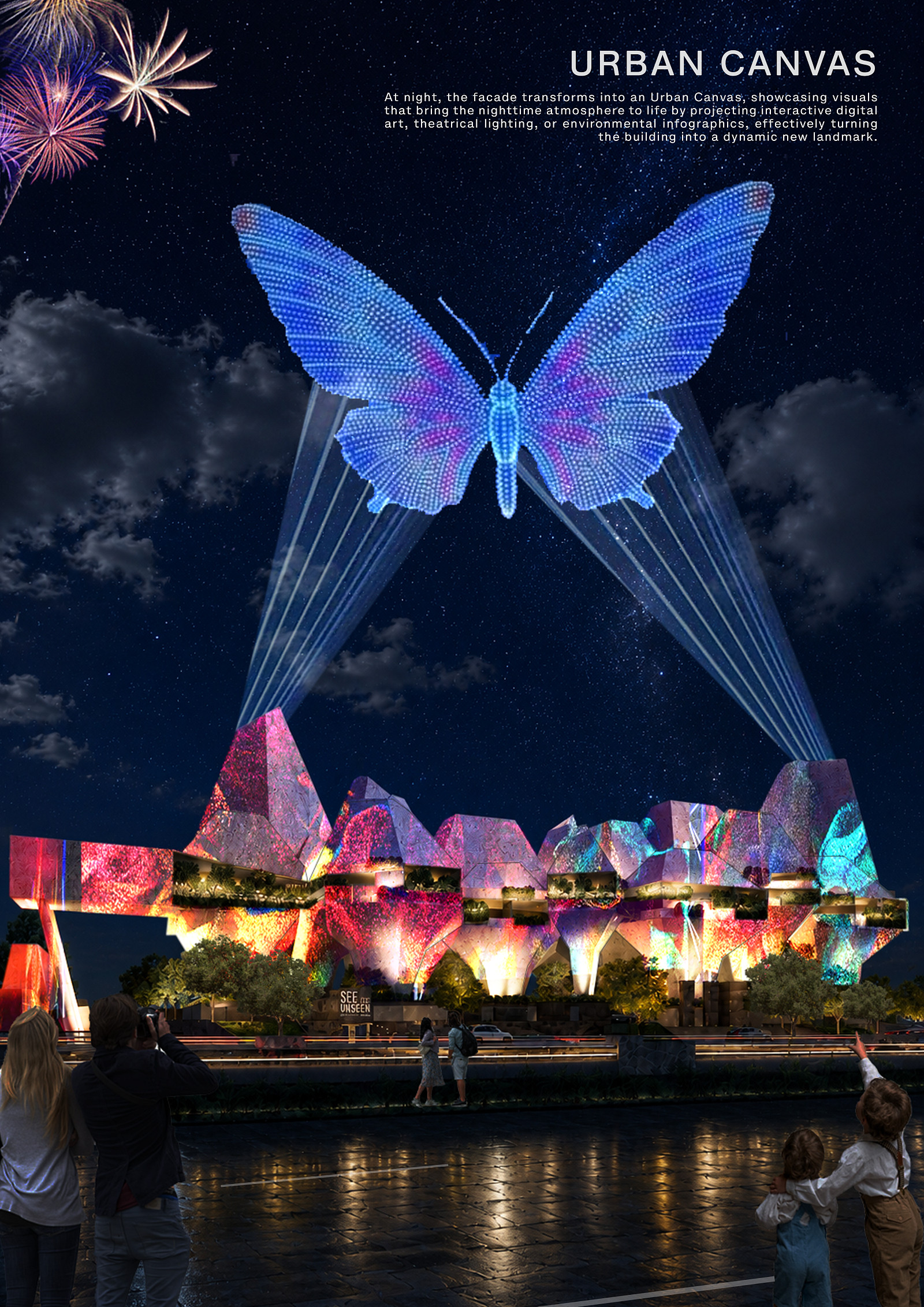
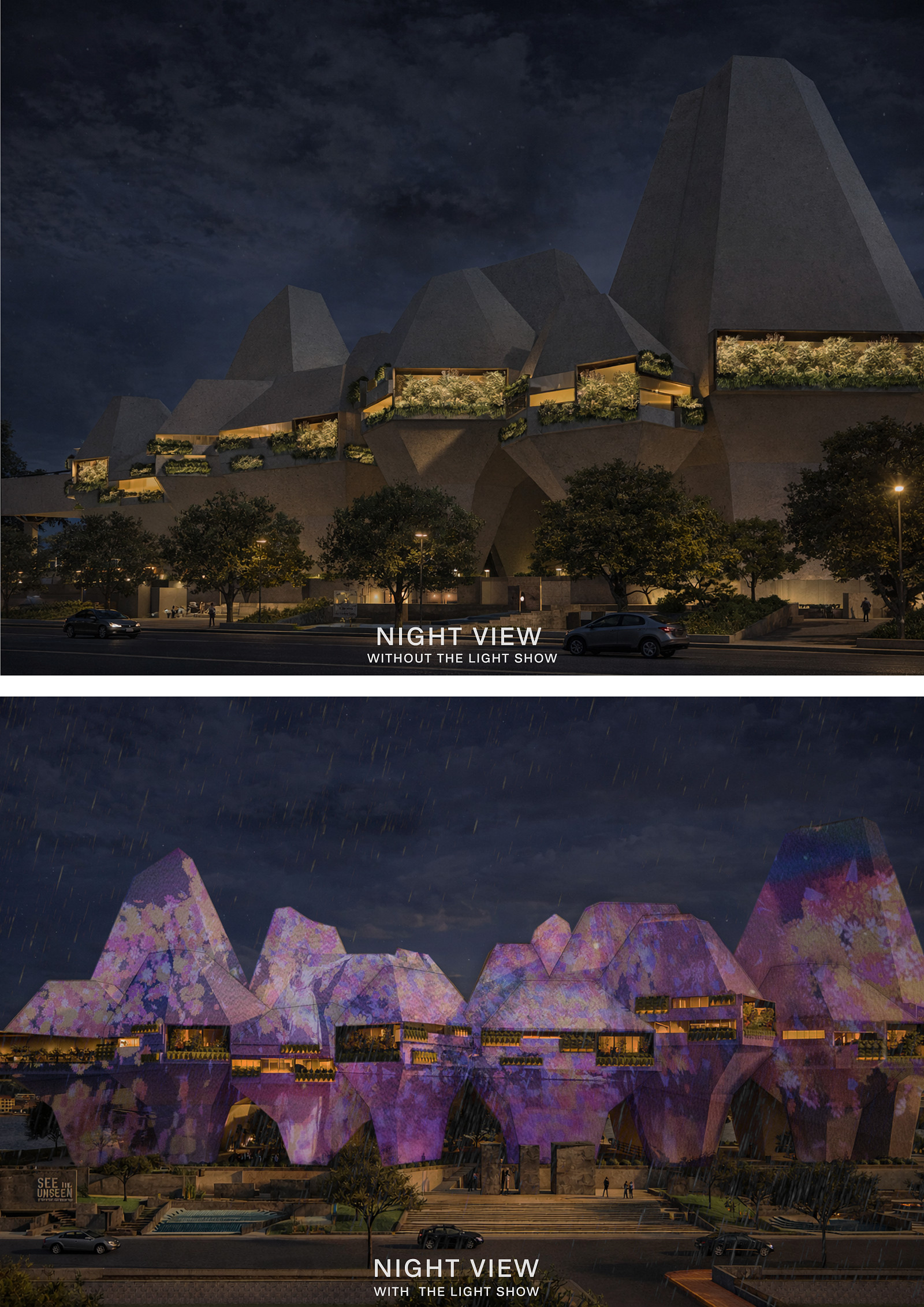
At night, the facade transforms into an Urban Canvas, showcasing visuals that bring the nighttime atmosphere to life by projecting interactive digital art, theatrical lighting, or environmental infographics, effectively turning the building into a dynamic new landmark.


Copyright © 2026 INSPIRELI | All rights reserved. Use of this website signifies your agreement to the Terms of Use, Privacy Policy, and use of cookies.
