DOVER-DUNKIRK


Project idea
The White Cliffs of Dover have long stood as both a natural wonder and a silent witness to history. It was here, along the Strait of Dover, that one of the most remarkable acts of human courage unfolded — the Dunkirk evacuation of 1940. What made this moment extraordinary was not only the scale of the rescue, but its nature: hundreds of civilian vessels voluntarily crossed the Channel, driven not by orders, but by will.
Winston Churchill, in his address to the House of Commons on June 4, 1940, refused to let Dunkirk be remembered as defeat. He called it a "miracle of deliverance" — a moment where the human spirit, against all odds, chose not to surrender.
Christopher Nolan's film Dunkirk captured this spirit through the cinematic frame — the vast panorama of the Strait, filled with warships and civilian boats moving toward Dunkirk, and then returning across the same waters with soldiers on board. Two directions. One sea.
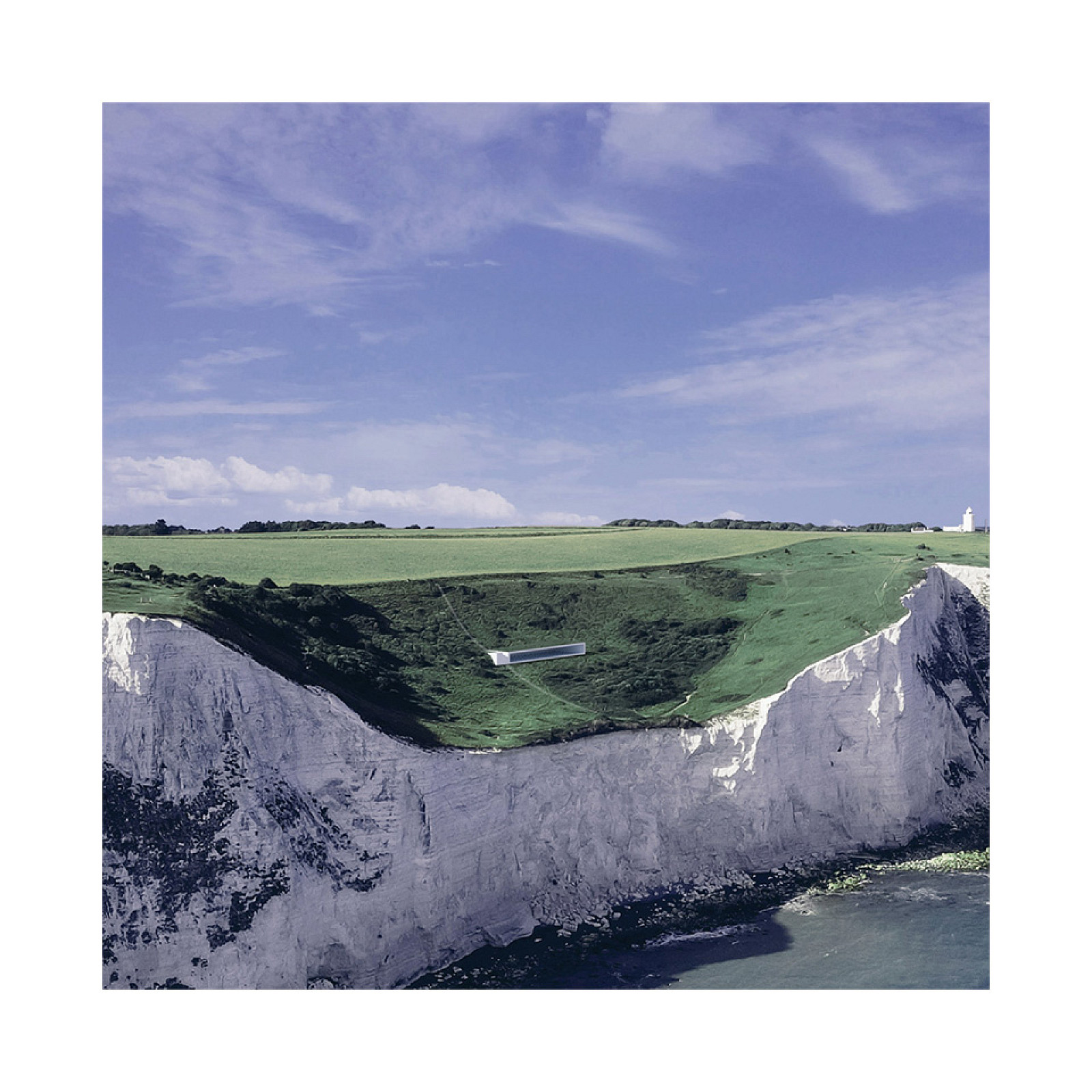
DOVER-DUNKIRK seeks to translate this cinematic panorama into architecture. The building does not merely function as a viewpoint — it is a memorial. Carved into the chalk bedrock of the cliffs, the journey through the space guides visitors deeper into the past, until they arrive at the viewpoint where the historical panorama within and the present panorama of the Strait without converge into one — just as Nolan's frame once held both history and the horizon.
Project description
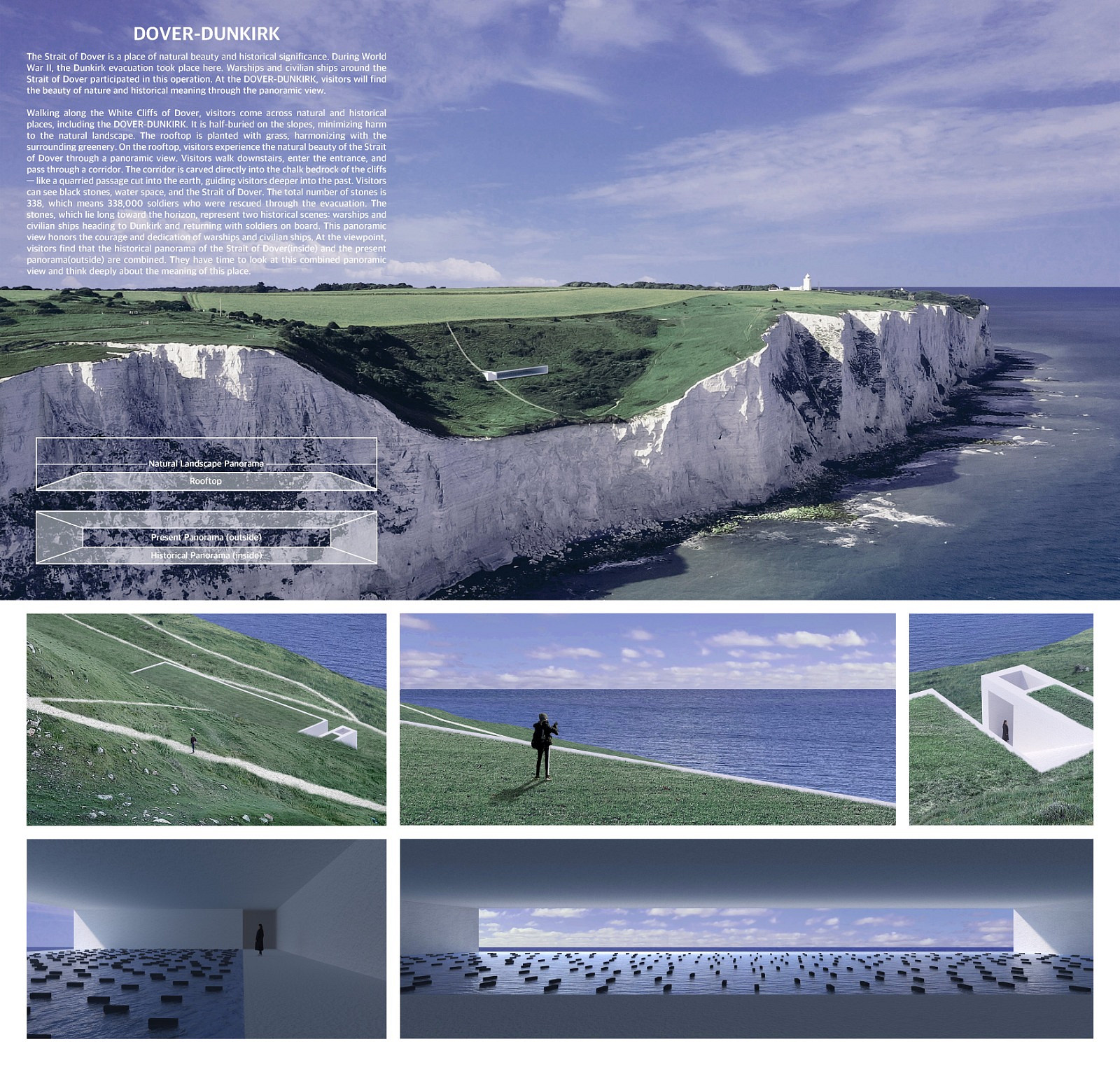
The Strait of Dover is a place of natural beauty and historical significance. During World War II, the Dunkirk evacuation took place here. Warships and civilian ships around the Strait of Dover participated in this operation. At the DOVER-DUNKIRK, visitors will find the beauty of nature and historical meaning through the panoramic view.
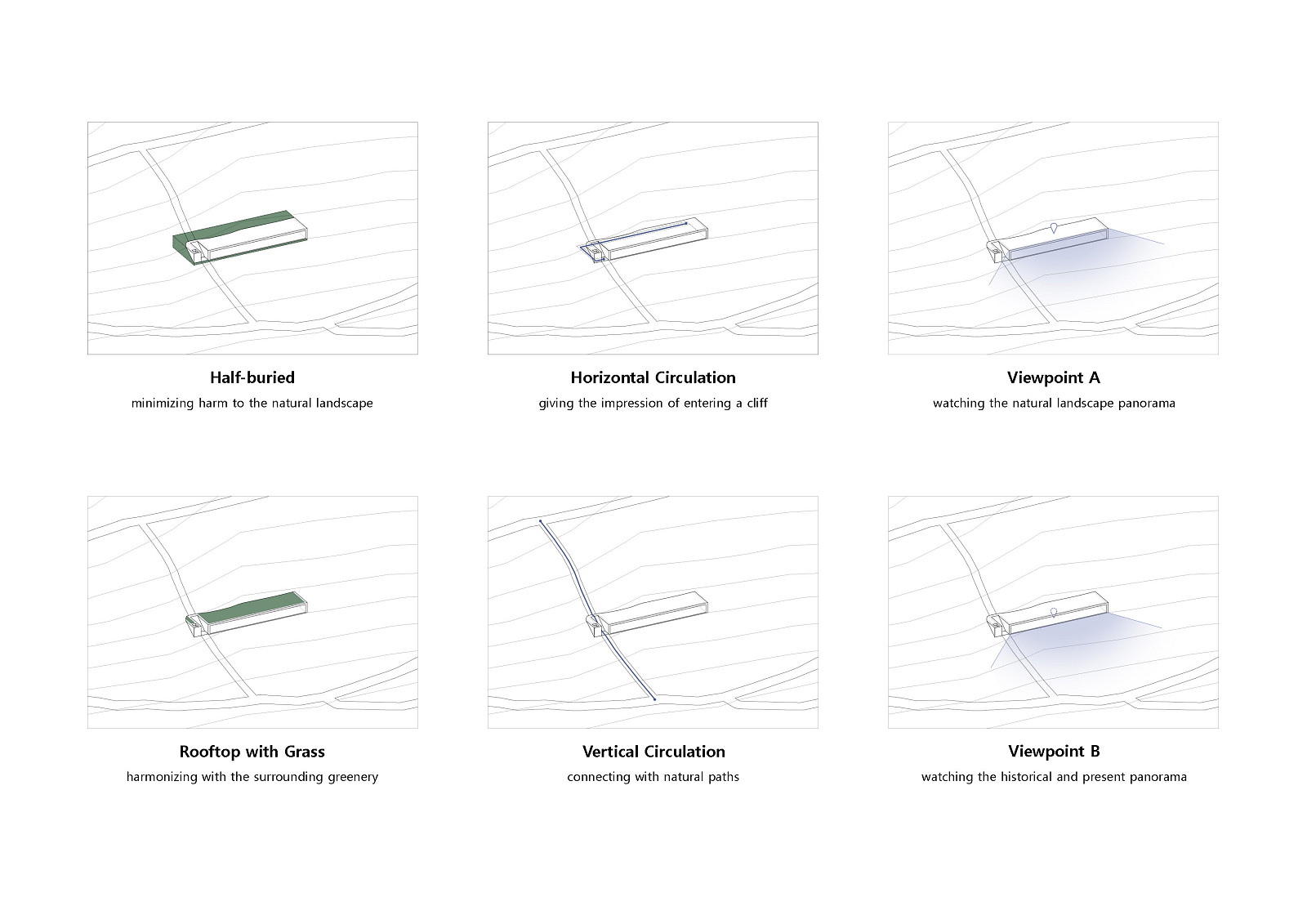
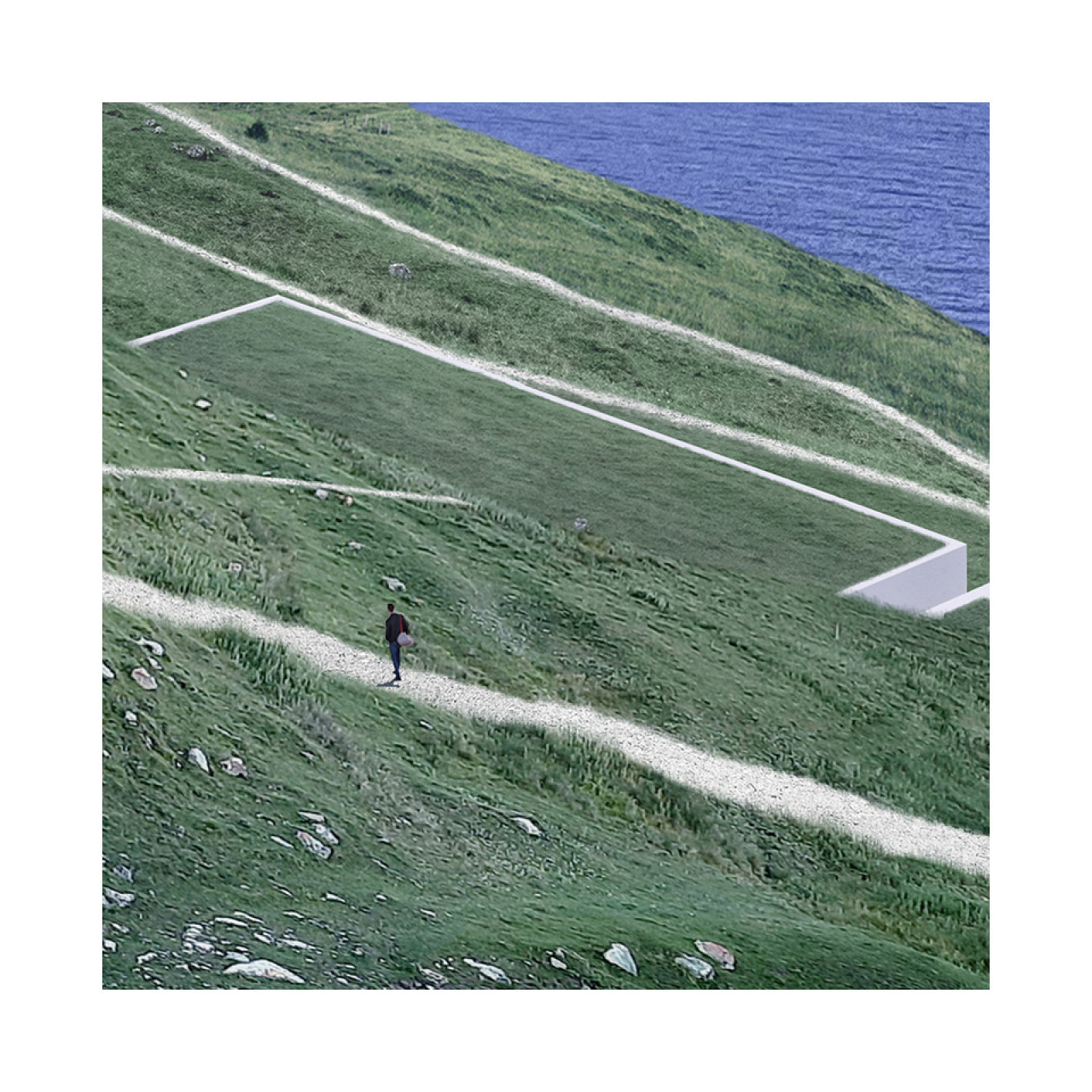
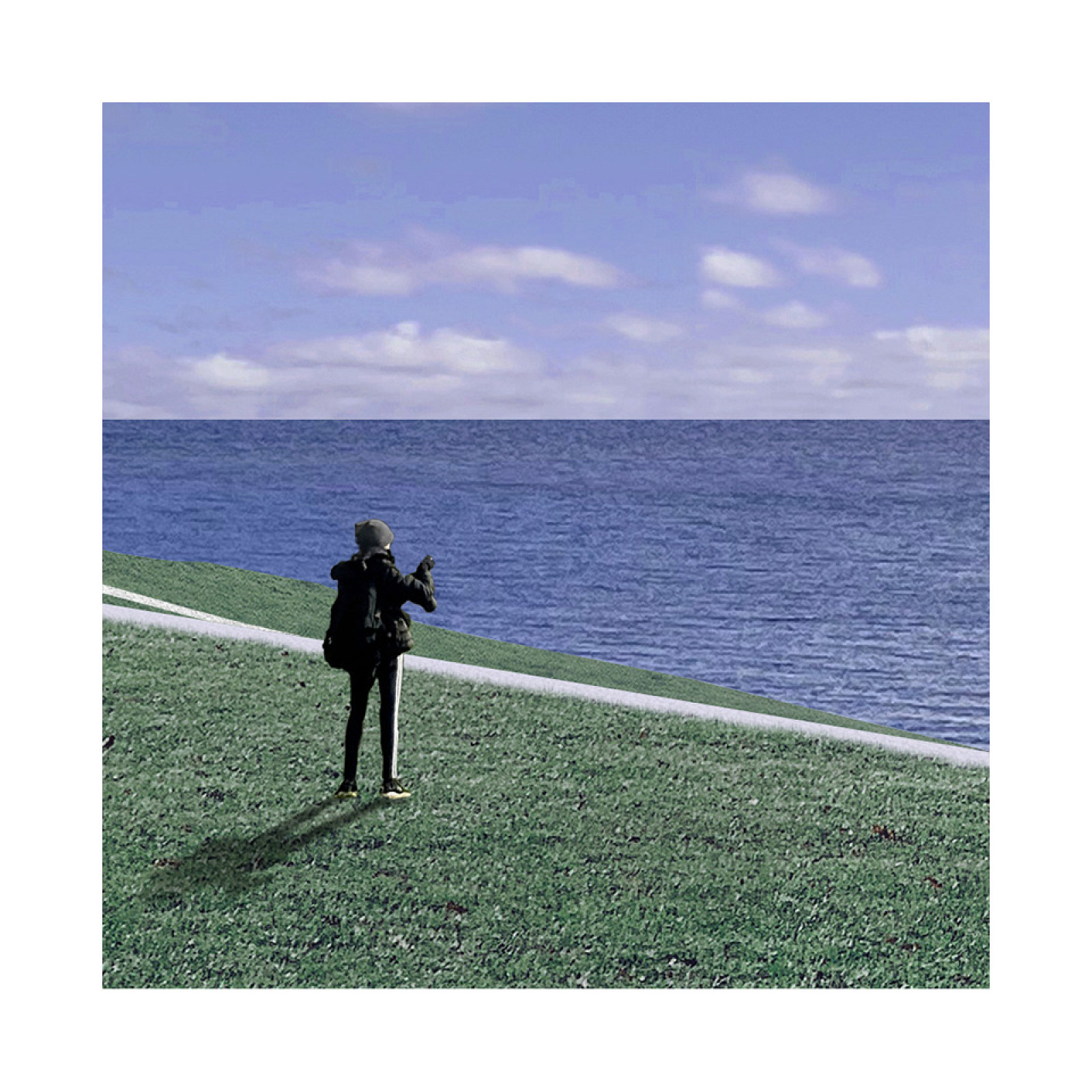
Walking along the White Cliffs of Dover, visitors come across natural and historical places, including the DOVER-DUNKIRK. It is half-buried on the slopes, minimizing harm to the natural landscape. The rooftop is planted with grass, harmonizing with the surrounding greenery. On the rooftop, visitors experience the natural beauty of the Strait of Dover through a panoramic view.
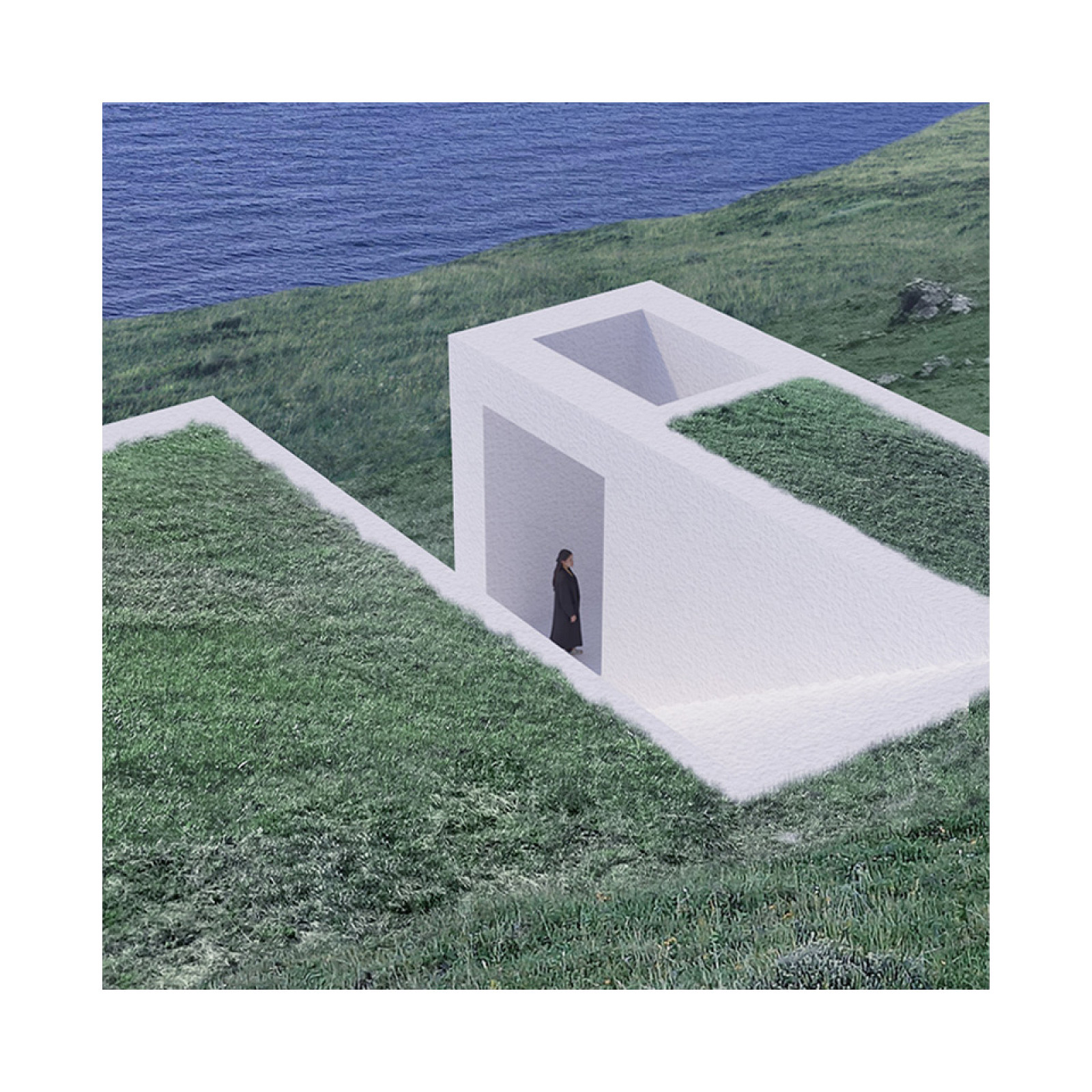
Visitors walk downstairs, enter the entrance, and pass through a corridor. The corridor is carved directly into the chalk bedrock of the cliffs — like a quarried passage cut into the earth, guiding visitors deeper into the past.
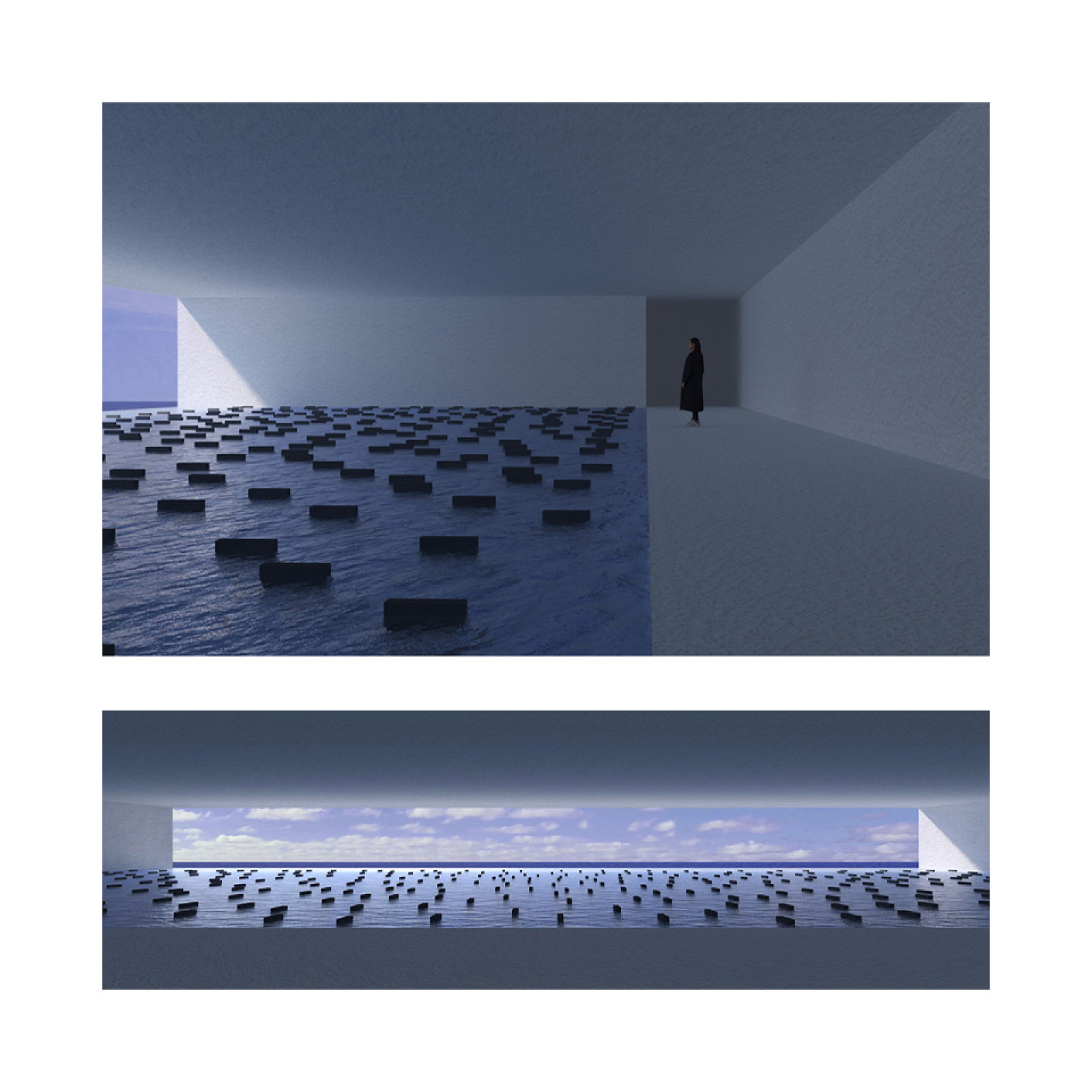
Visitors can see black stones, water space, and the Strait of Dover. The total number of stones is 338, which means 338,000 soldiers who were rescued through the evacuation. The stones, which lie long toward the horizon, represent two historical scenes: warships and civilian ships heading to Dunkirk and returning with soldiers on board. This panoramic view honors the courage and dedication of warships and civilian ships.
At the viewpoint, visitors find that the historical panorama of the Strait of Dover(inside) and the present panorama(outside) are combined. They have time to look at this combined panoramic view and think deeply about the meaning of this place.
Technical information
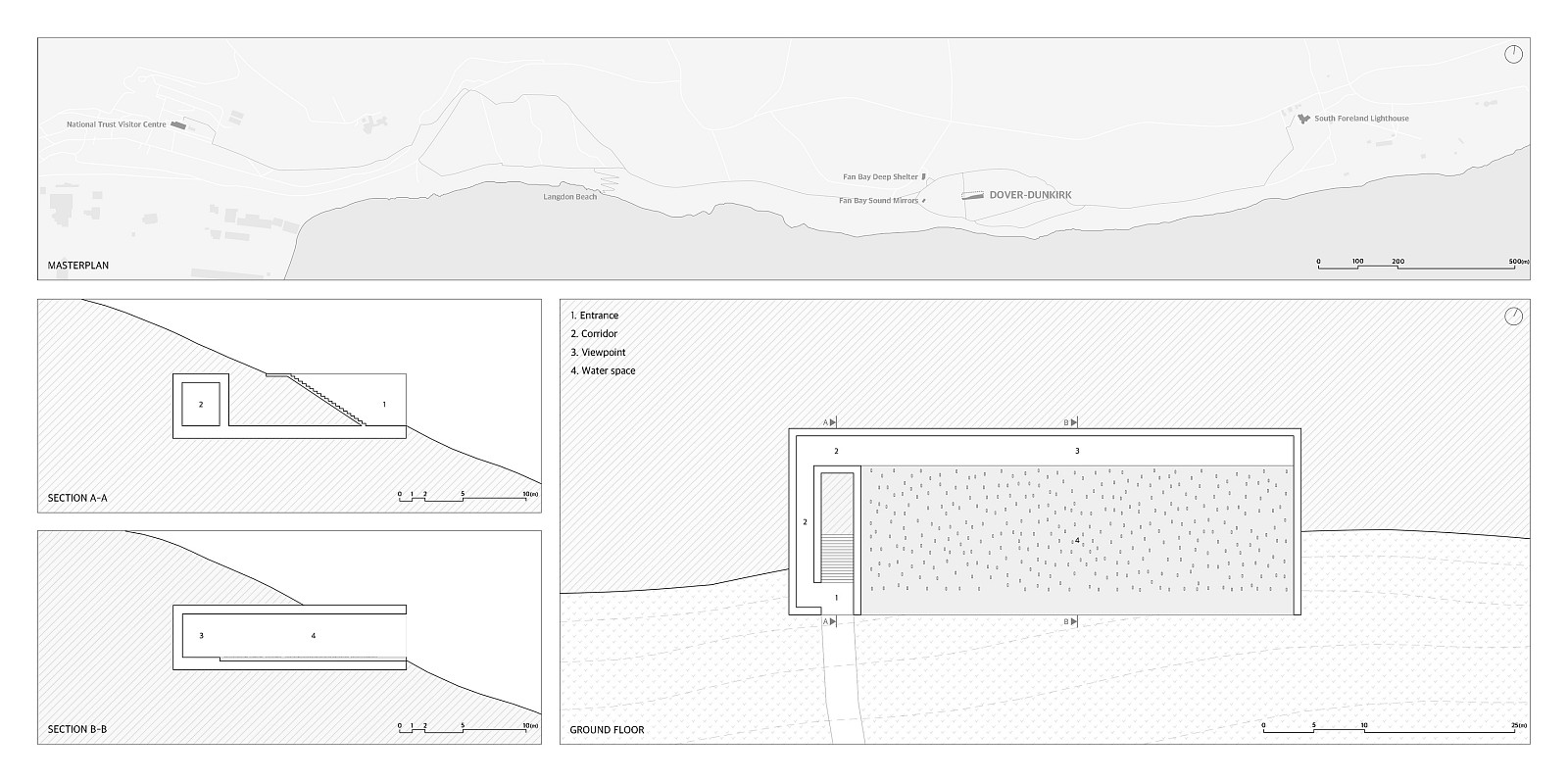
Adjacent to the DOVER-DUNKIRK site lies Fan Bay Deep Shelter — a series of tunnels excavated directly into the chalk bedrock of the White Cliffs by the Royal Engineers in 1940-1941, serving as underground accommodation for the gun battery above during the Second World War. This structure shares a fundamental method with our proposal: cutting into the earth itself as an act of defense, concealment, and endurance.
DOVER-DUNKIRK draws from this same logic. The primary construction strategy is excavation — carving the main space directly into the chalk bedrock of the cliffs, in the manner of a quarried passage. This approach is driven by two inseparable intentions.
The first is landscape. The walking route along the White Cliffs — from the National Trust Visitor Centre to South Foreland Lighthouse — preserves an uninterrupted natural panorama, free from architectural intrusion. DOVER-DUNKIRK respects this precedent: by burying the main space underground, emerging only halfway above the surface, and planting the rooftop with grass, the building becomes invisible from the cliff path, leaving the natural landscape intact.
The second is memory. To descend into the chalk — as soldiers once did at Fan Bay — is to leave the present behind. The excavated corridor, lined with the raw chalk of the cliffs, does not simulate history: it is built from the same material, in the same ground, that witnessed it.
DOVER-DUNKIRK stands at the boundary between land and sea, between above and below, between past and present — a place that is at once a viewpoint and a memorial.


Copyright © 2026 INSPIRELI | All rights reserved. Use of this website signifies your agreement to the Terms of Use, Privacy Policy, and use of cookies.