Arsenal Memory Park


Project idea
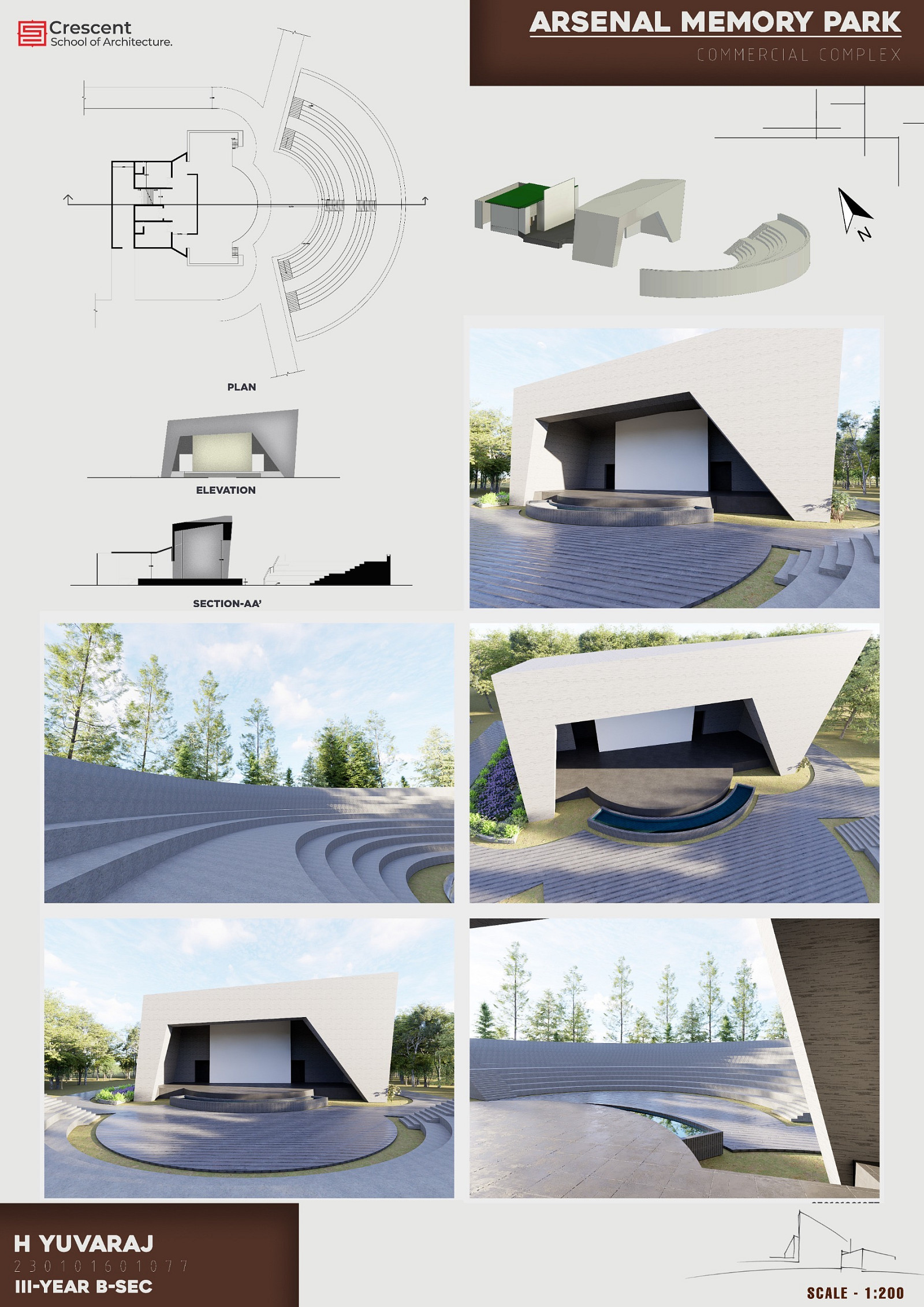
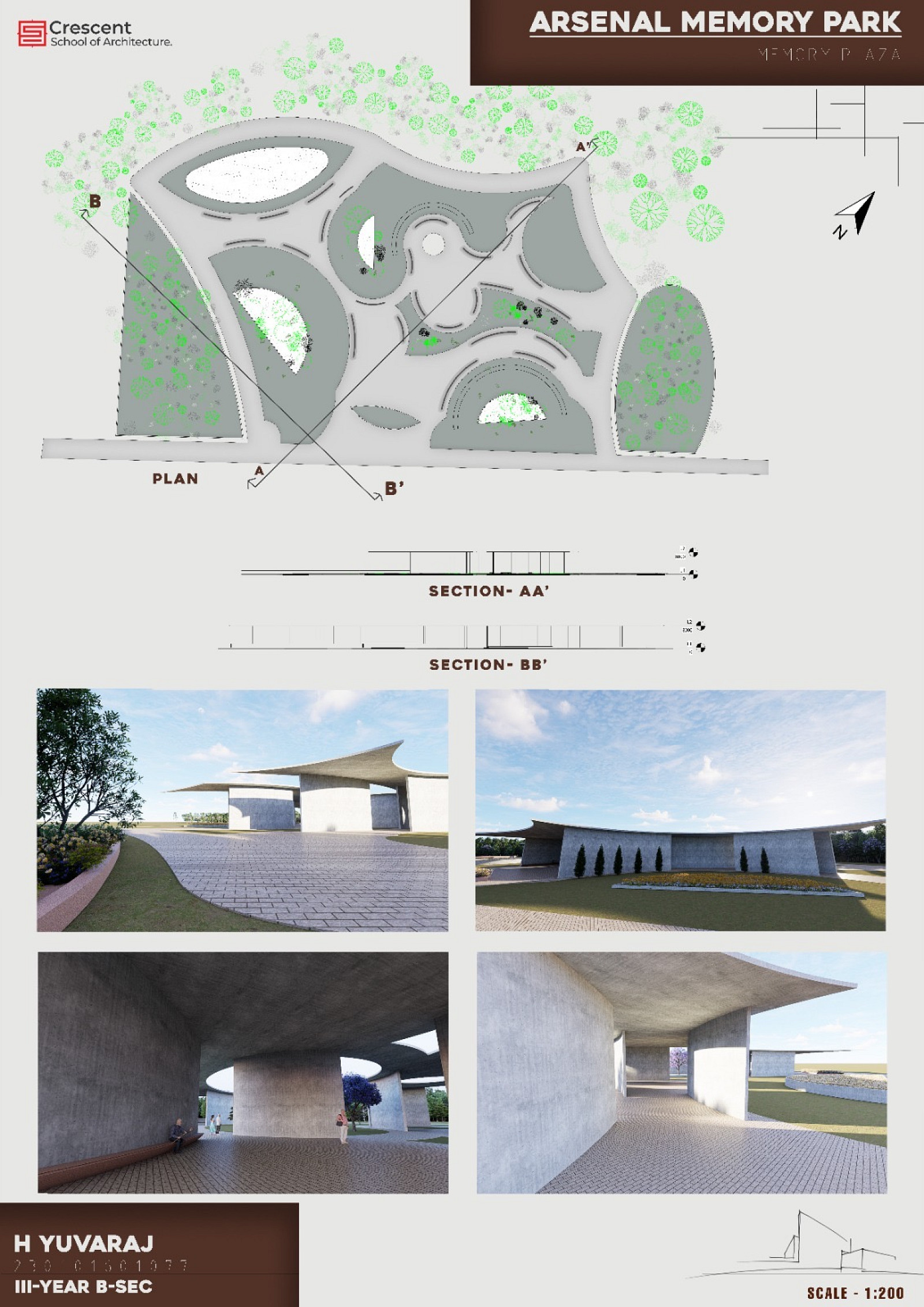
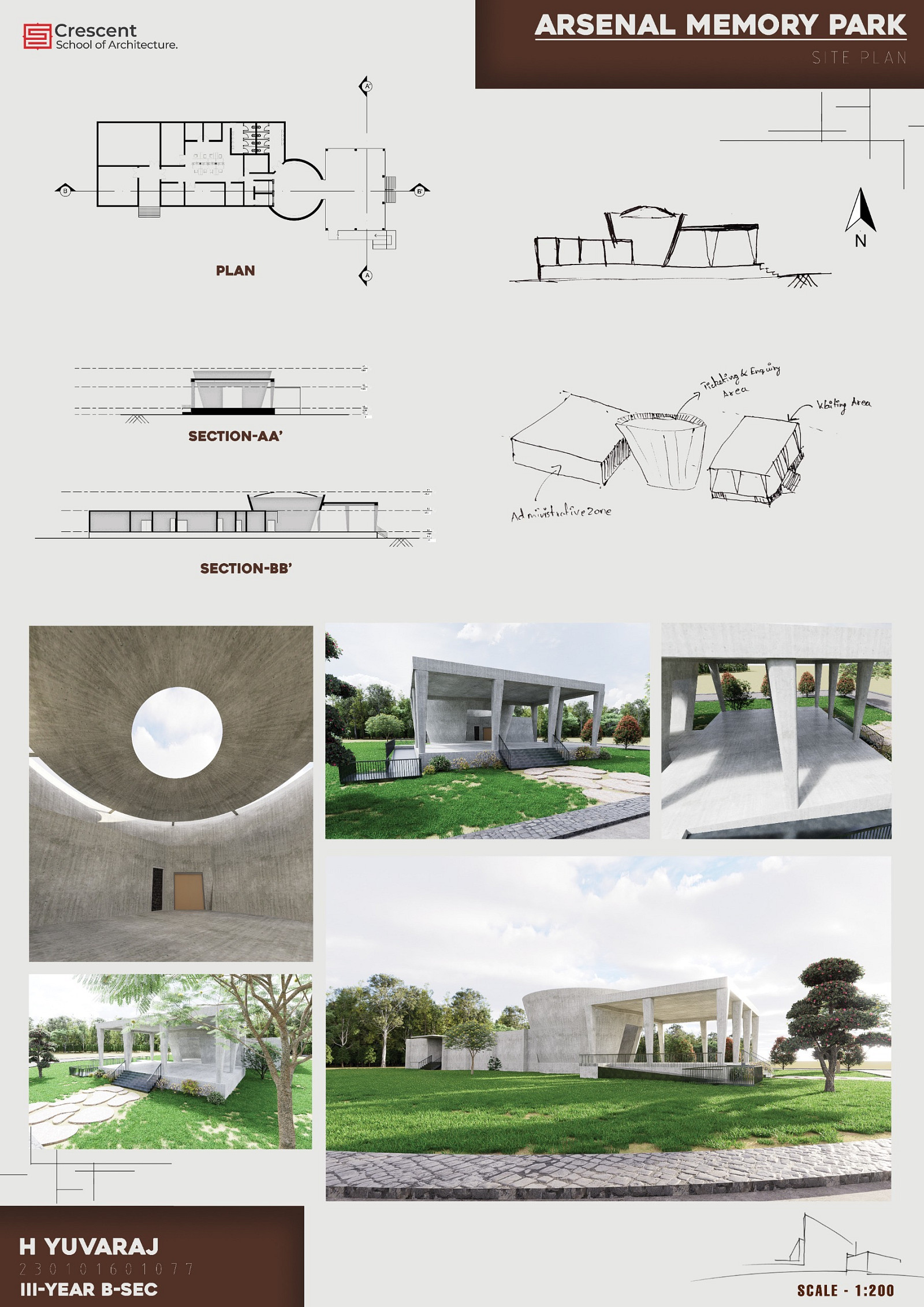
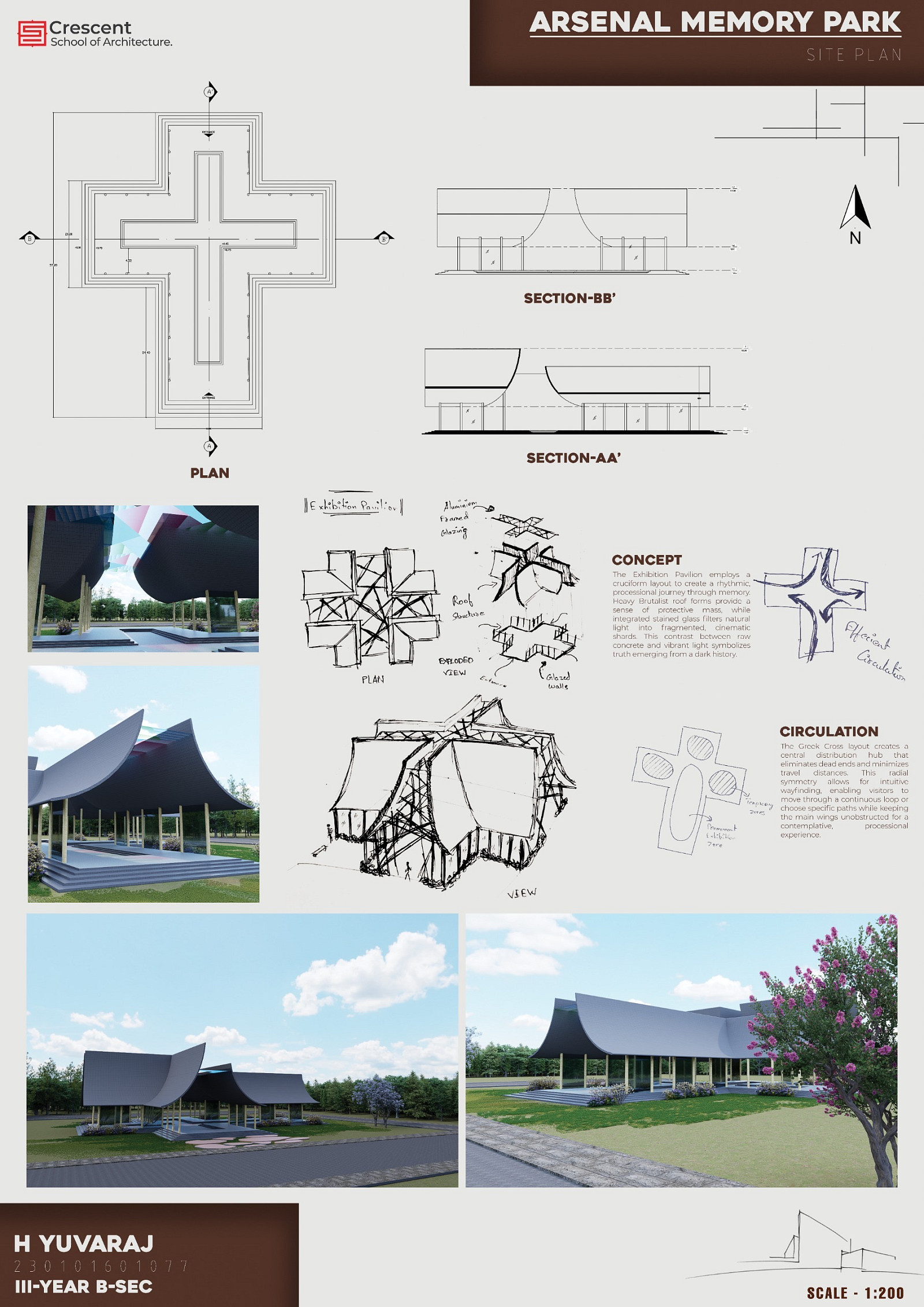
Transformation of a historical military-industrial landscape into a memory park that acts as a symbolic threshold between memory, ecology, and public life, using brutalist design philosophy with honest material expression.
Project description
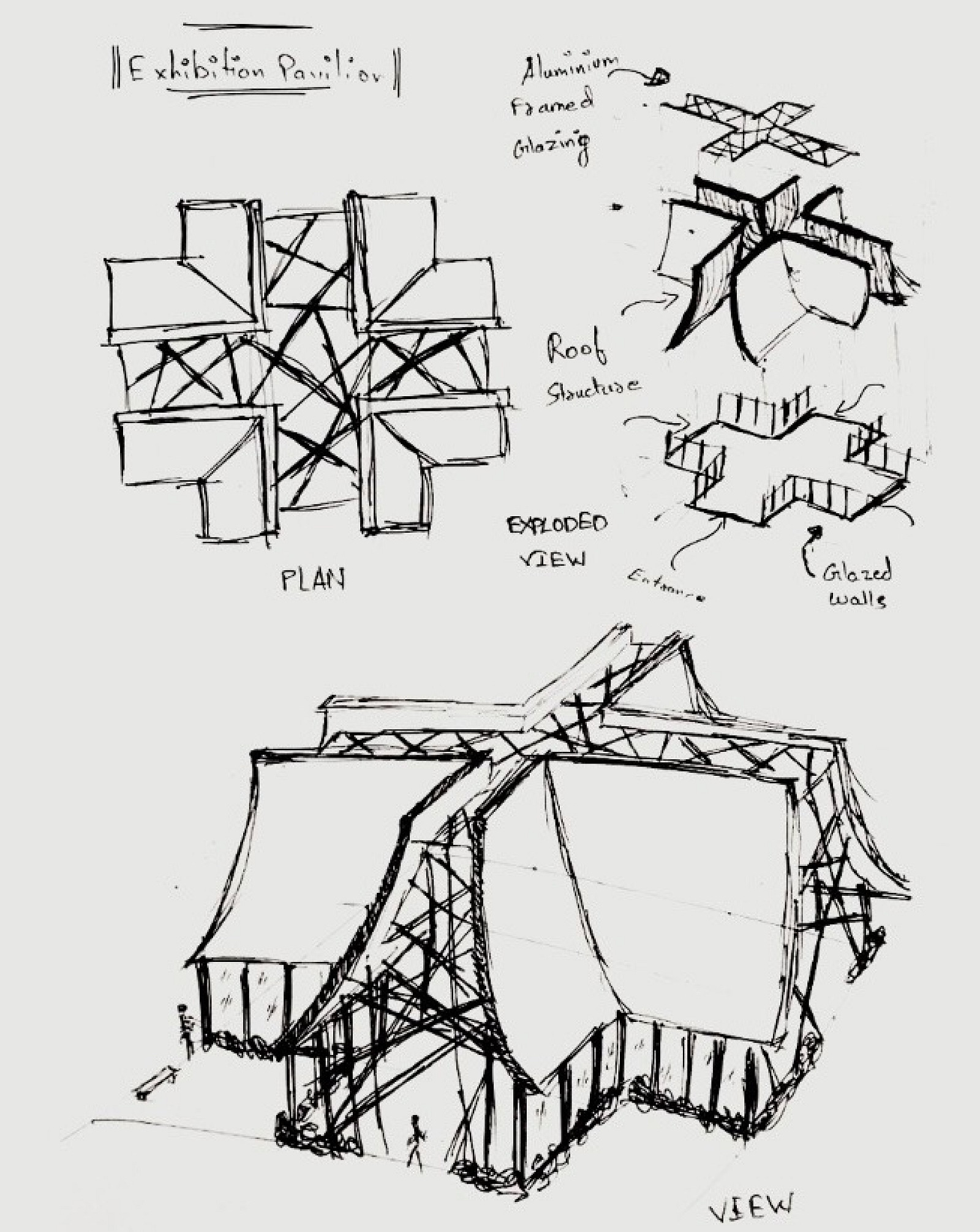
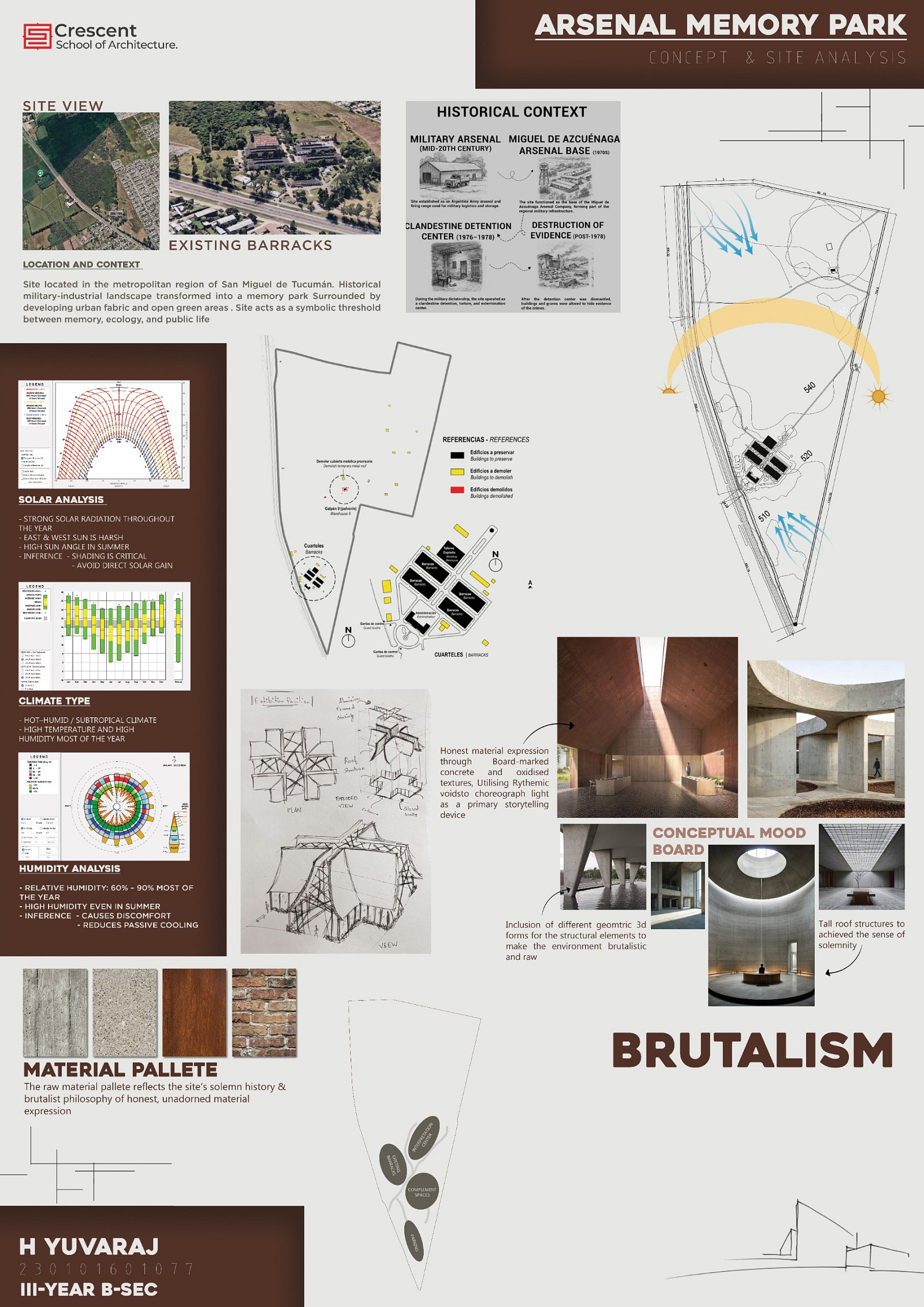
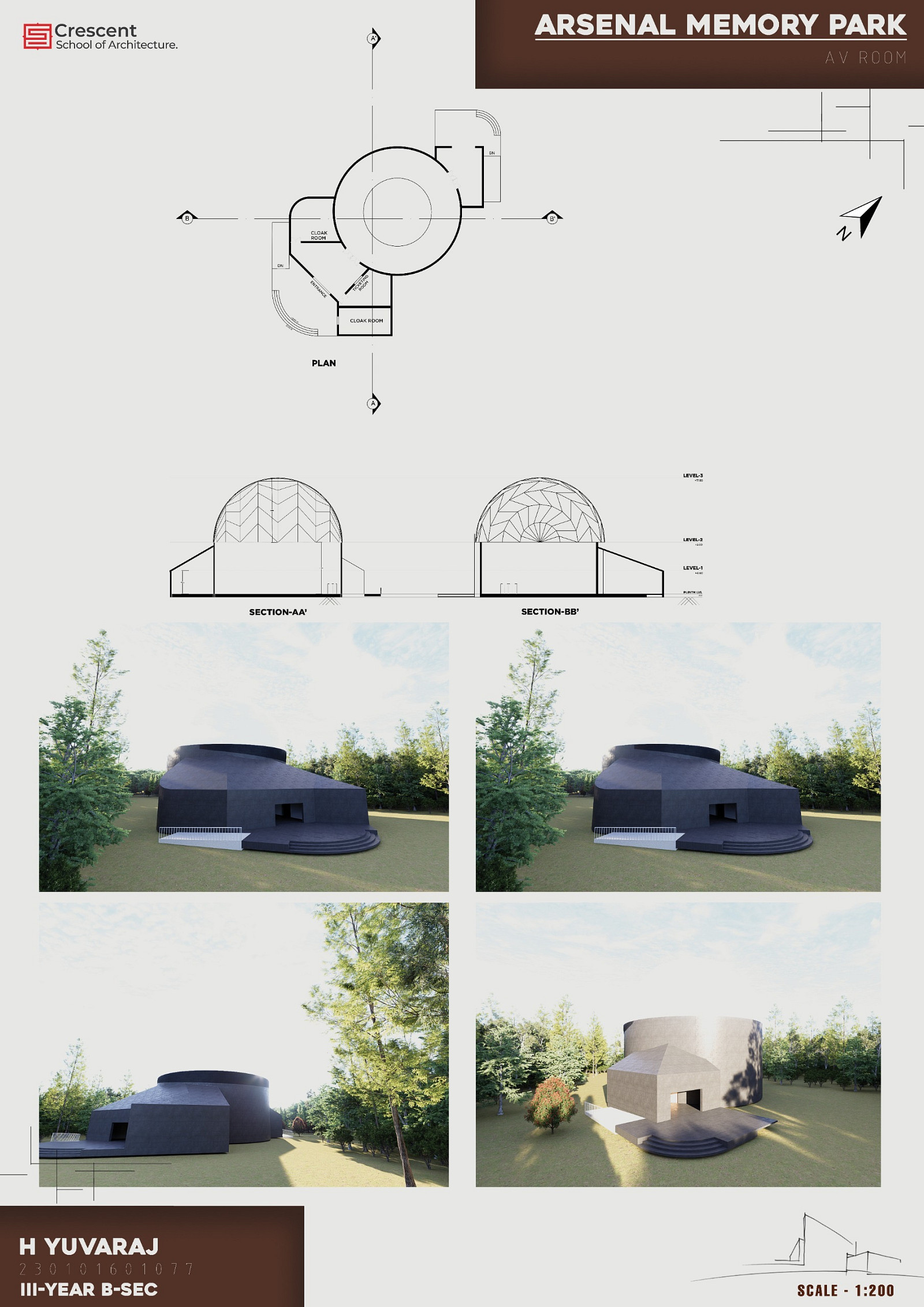
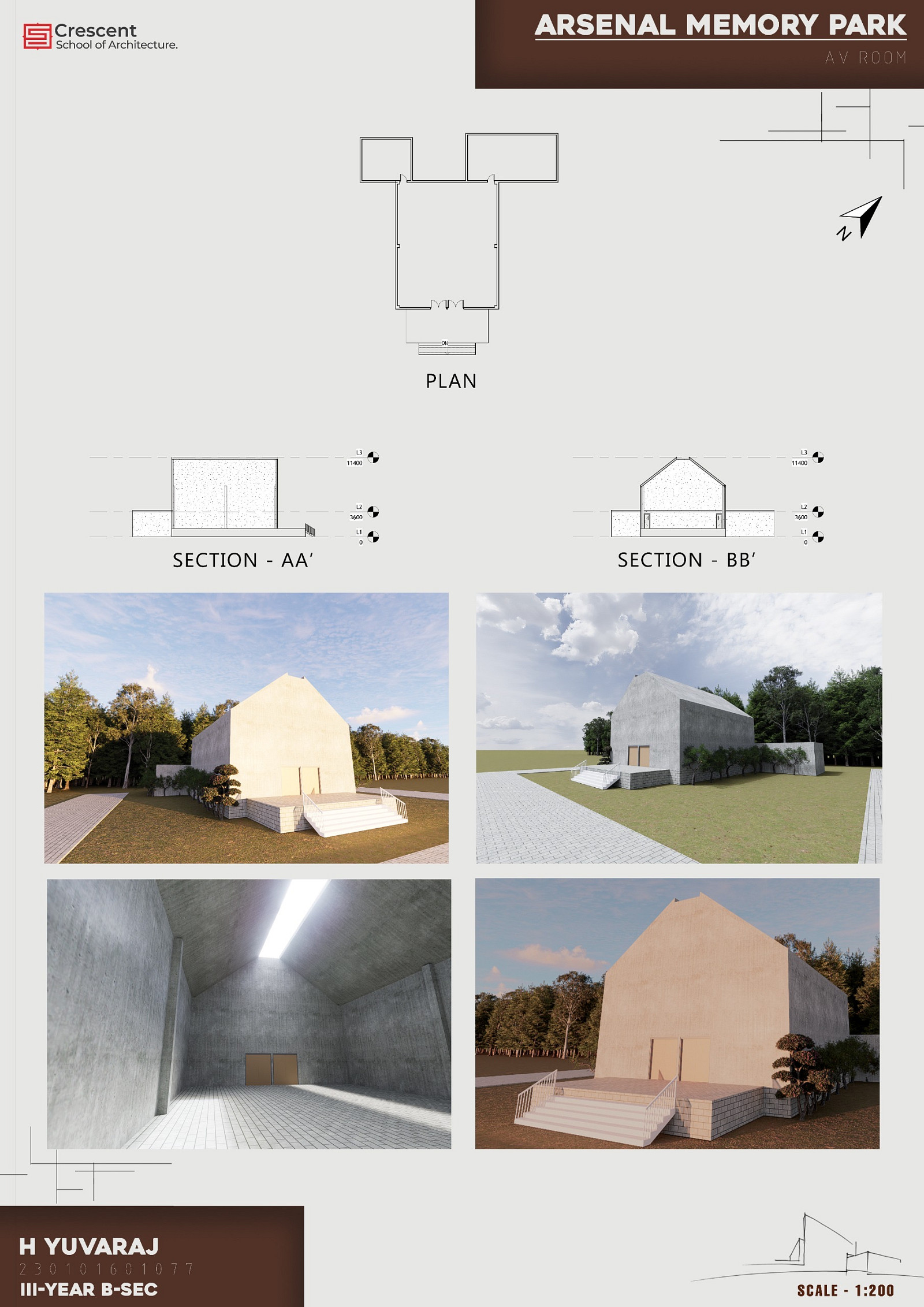
The site is located in the metropolitan region of San Miguel de Tucumán, Argentina. The historical military-industrial landscape, formerly the Miguel de Azcuénaga Arsenal Base and a clandestine detention center during the military dictatorship (1976-1978), is transformed into a memory park. Surrounded by developing urban fabric and open green areas, the site acts as a symbolic threshold between memory, ecology, and public life. The design employs a brutalist approach with board-marked concrete and oxidised textures, utilizing rhythmic voids to choreograph light as a primary storytelling device. Different geometric 3D forms for structural elements create a brutalistic and raw environment, while tall roof structures achieve a sense of solemnity.
Technical information
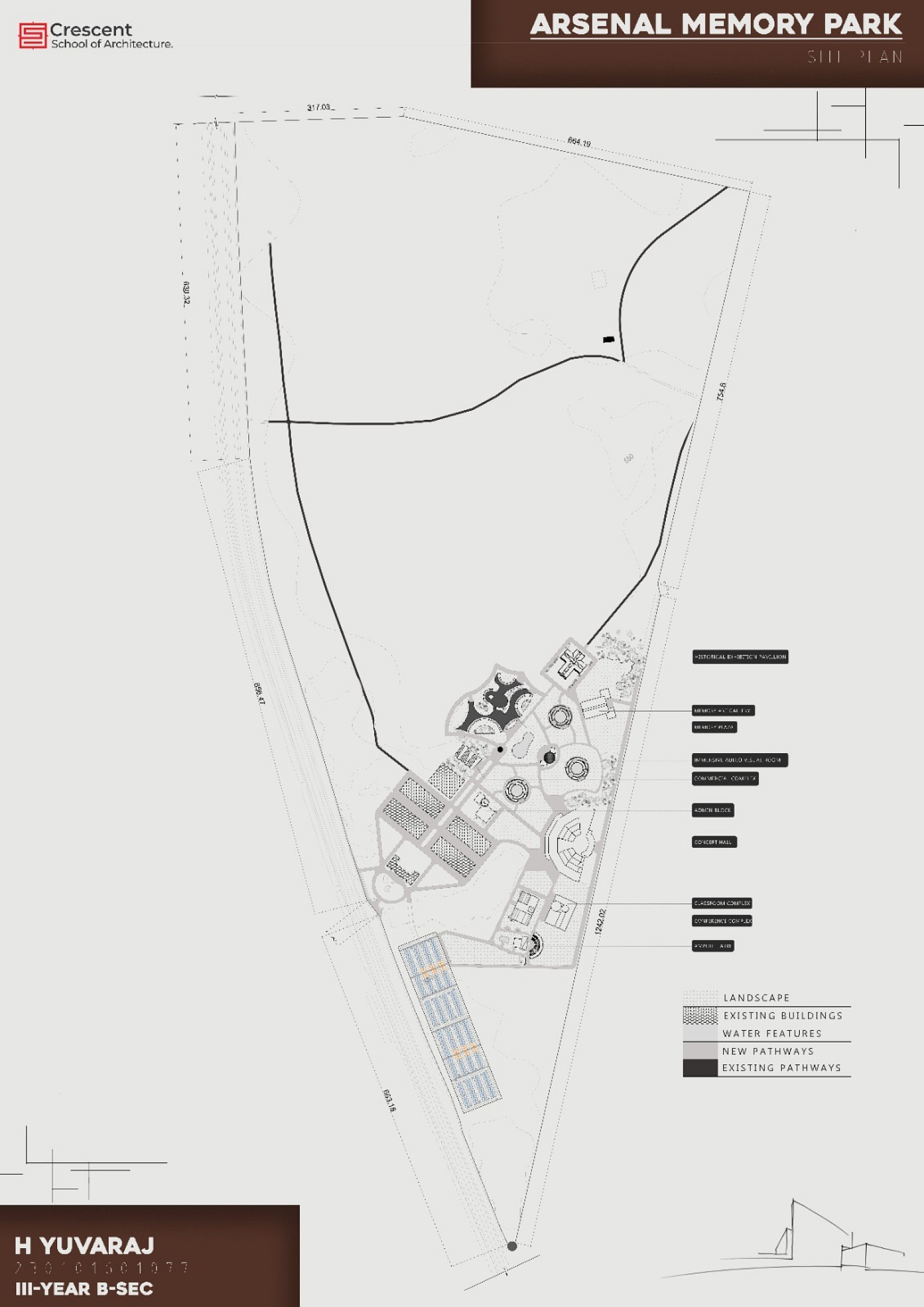
Solar analysis indicates strong solar radiation throughout the year with harsh east and west sun and high sun angle in summer, making shading critical to avoid direct solar gain. The climate is hot-humid/subtropical with high temperature and humidity most of the year. Relative humidity ranges from 60-90%, causing discomfort and reducing passive cooling. The raw material palette reflects the site's solemn history and brutalist philosophy of honest, unadorned material expression. The site plan references existing barracks with buildings to preserve, buildings to demolish, and already demolished buildings.

Copyright © 2026 INSPIRELI | All rights reserved. Use of this website signifies your agreement to the Terms of Use, Privacy Policy, and use of cookies.