Trace of Memory - From Void to Voice


Project idea
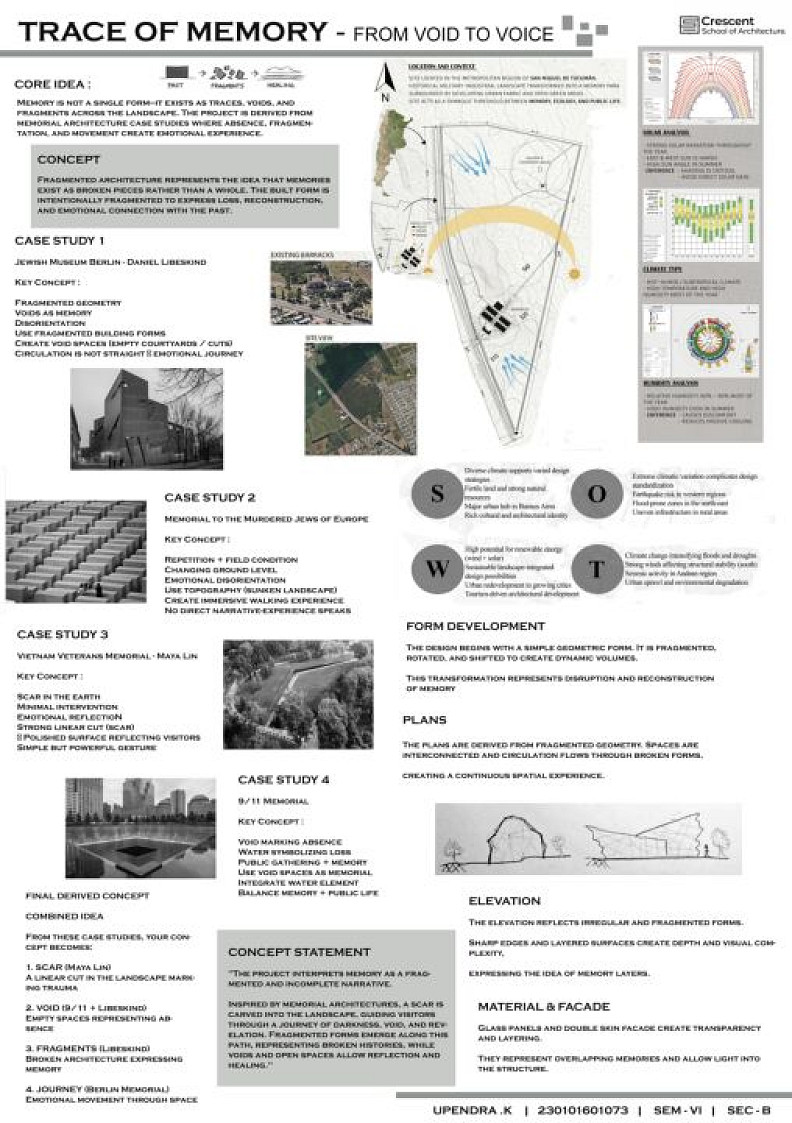
Memory is not a single form—it exists as traces, voids, and fragments across the landscape. The project is derived from memorial architecture case studies where absence, fragmentation, and movement create emotional experience.
Project description
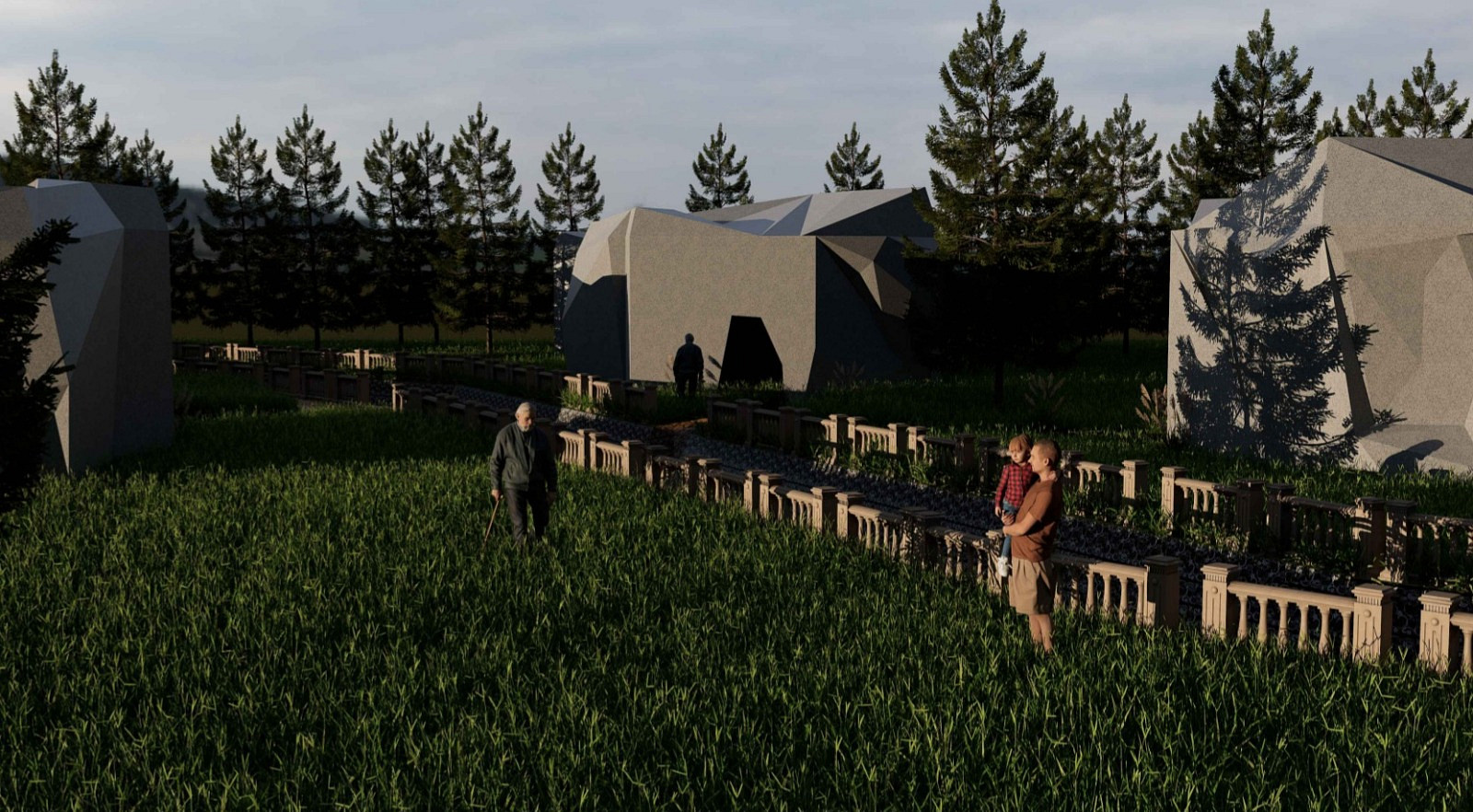
Inspired by memorial architectures, a scar is carved into the landscape, guiding visitors through a journey of darkness, void, and revelation. Fragmented forms emerge along this path, representing broken histories, while voids and open spaces allow reflection and healing. The site is located in the metropolitan region of San Miguel de Tucumán, a historical military-industrial landscape transformed into a memory park surrounded by developing urban fabric and open green areas. The site acts as a symbolic threshold between memory, ecology, and public life. The design begins with a simple geometric form that is fragmented, rotated, and shifted to create dynamic volumes, representing disruption and reconstruction of memory. The plans are derived from fragmented geometry with interconnected spaces and circulation flowing through broken forms, creating a continuous spatial experience.
Technical information
Glass panels and double skin facade create transparency and layering, representing overlapping memories and allowing light into the structure. The elevation reflects irregular and fragmented forms with sharp edges and layered surfaces creating depth and visual complexity. Solar analysis indicates strong solar radiation throughout the year with high sun angle in summer, requiring critical shading to avoid direct solar gain. Hot-humid/subtropical climate with high temperature and humidity most of the year. Relative humidity 60%-90% most of the year reduces passive cooling effectiveness.
Documentation

Copyright © 2026 INSPIRELI | All rights reserved. Use of this website signifies your agreement to the Terms of Use, Privacy Policy, and use of cookies.