Rain Atrium


Project idea
The main concept of this project is based on “bringing nature back into the heart of a commercial space,” where architecture is not merely a luxurious shell, but an active participant in natural cycles.
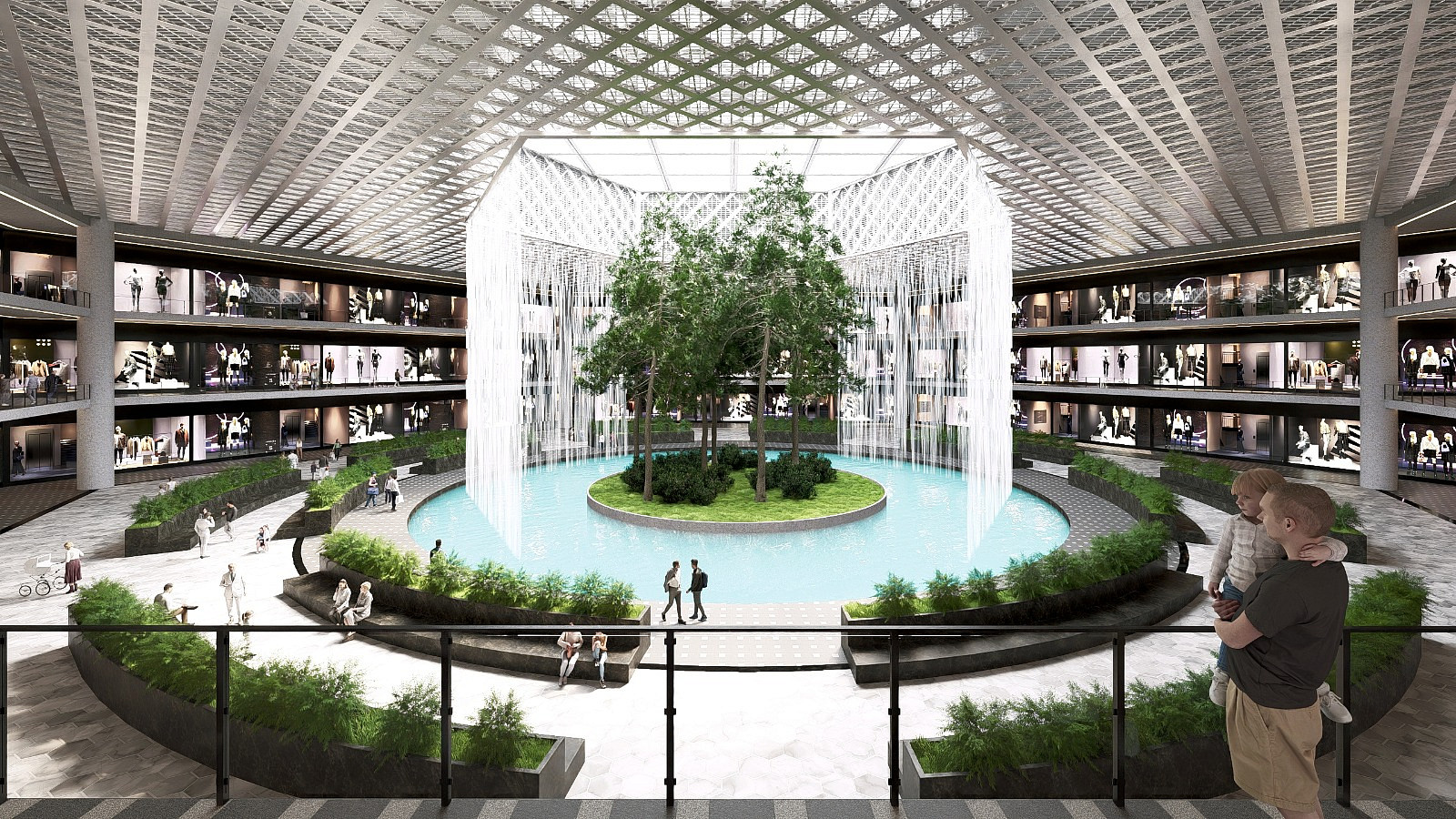
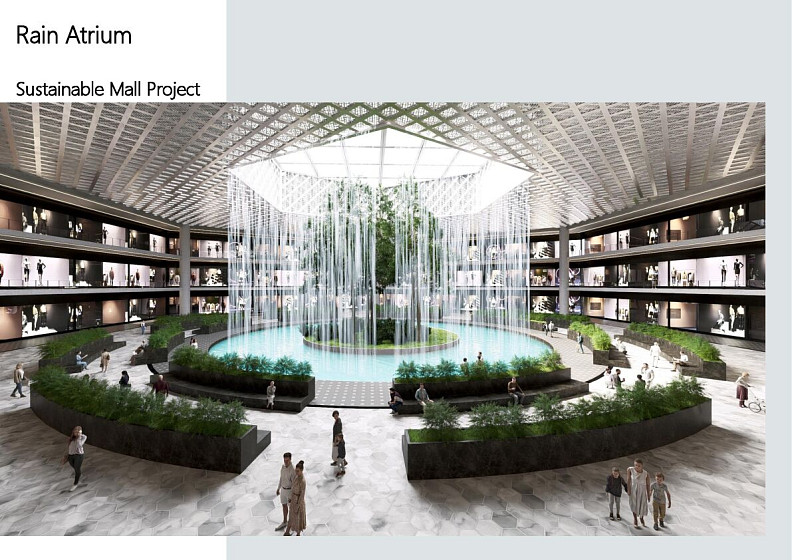
At the center of the complex, a large atrium with a lattice roof is designed to channel natural light and collect rainwater. The rainwater gathered from the roof flows through vertical water features into the central pool, creating a calming visual experience while also being reused for the irrigation of the indoor landscape and the building’s water management system.
This continuous flow of water not only reduces dependence on urban water resources, but also helps regulate the indoor microclimate, improves humidity levels, and creates the atmosphere of a contemporary urban garden. The integration of light, water, and greenery transforms the shopping experience into a unique sensory journey.
In this project, rainwater is not treated merely as a functional element, but as a defining part of the architectural identity — expressing sustainability through space, light, and movement.
Project description
The proposed solution involves the design and integration of a sustainable rainwater harvesting and water management system within the central atrium of the development. The project transforms the atrium into an active environmental feature that collects, filters, stores, and reuses rainwater while enhancing the architectural experience of the space.
The scope includes:
Design of a roof-based rainwater collection system integrated into the atrium skylight structure.
Installation of concealed gutters and drainage channels to capture rainfall efficiently.
Development of transparent vertical water conveyance elements that visually display the movement of water through the building.
Creation of a central water feature and storage basin for temporary collection and distribution of harvested rainwater.
Integration of natural filtration systems using gravel, sand, activated carbon, and aquatic vegetation.
Construction of an underground storage cistern for long-term rainwater retention.
Design of a pumping and recirculation system to support water reuse applications.
Reuse of harvested water for landscape irrigation, evaporative cooling, decorative water features, and non-potable building services.
Integration of architectural lighting and educational display elements to communicate the water cycle to building users.
Coordination of architectural, structural, mechanical, plumbing, and sustainability systems to ensure efficient operation and maintenance.
Project Deliverables
Detailed architectural wall sections.
Rainwater collection and distribution diagrams.
Water storage and filtration system layouts.
MEP coordination drawings.
Sustainability and water-saving performance analysis.
3D visualization and presentation renderings.
Expected Outcomes
Reduced potable water consumption.
Improved environmental performance of the building.
Enhanced user experience through visible water-cycle architecture.
Contribution toward green building certification goals.
Creation of a landmark atrium that combines sustainability, education, and architectural innovation.
This scope is particularly suitable for inclusion in an architectural thesis, design report, sustainability strategy, or concept development package.
Technical information
From a technical perspective, the project is designed around an integrated rainwater harvesting and environmental control system, expressed directly through the central atrium section.
The roof structure is shaped as a large-span lattice canopy that guides rainwater toward the central oculus. This geometry allows water to be naturally collected through gravity and directed into a vertical water column positioned at the core of the atrium. The falling water acts as both an environmental feature and a passive cooling element within the space.
Beneath the central pool, an underground technical reservoir is integrated into the structural foundation system. Rainwater is filtered and stored in this lower tank, where mechanical pumps and circulation systems redistribute the water back to the overhead discharge system, creating a continuous closed-loop cycle. Excess water is redirected into secondary storage and irrigation networks for the landscape areas.
The water body also contributes to the building’s microclimate performance. Evaporative cooling from the central pool helps reduce ambient temperature within the atrium, while the open skylight above supports stack ventilation by allowing warm air to rise and escape naturally. Combined with daylight penetration through the roof opening, the system reduces dependency on artificial lighting and mechanical cooling during daytime operation.
Structurally, the circular basin acts as both an architectural centerpiece and a concealed service zone housing filtration equipment, drainage channels, and maintenance access. The stepped landscape surrounding the pool creates informal seating areas while integrating planted zones that benefit from recycled rainwater irrigation.
Overall, the section demonstrates how environmental sustainability, water management, structural logic, and spatial experience are merged into a single architectural system rather than treated as separate components.
Documentation

Copyright © 2026 INSPIRELI | All rights reserved. Use of this website signifies your agreement to the Terms of Use, Privacy Policy, and use of cookies.