Coastal Fracture


Project idea
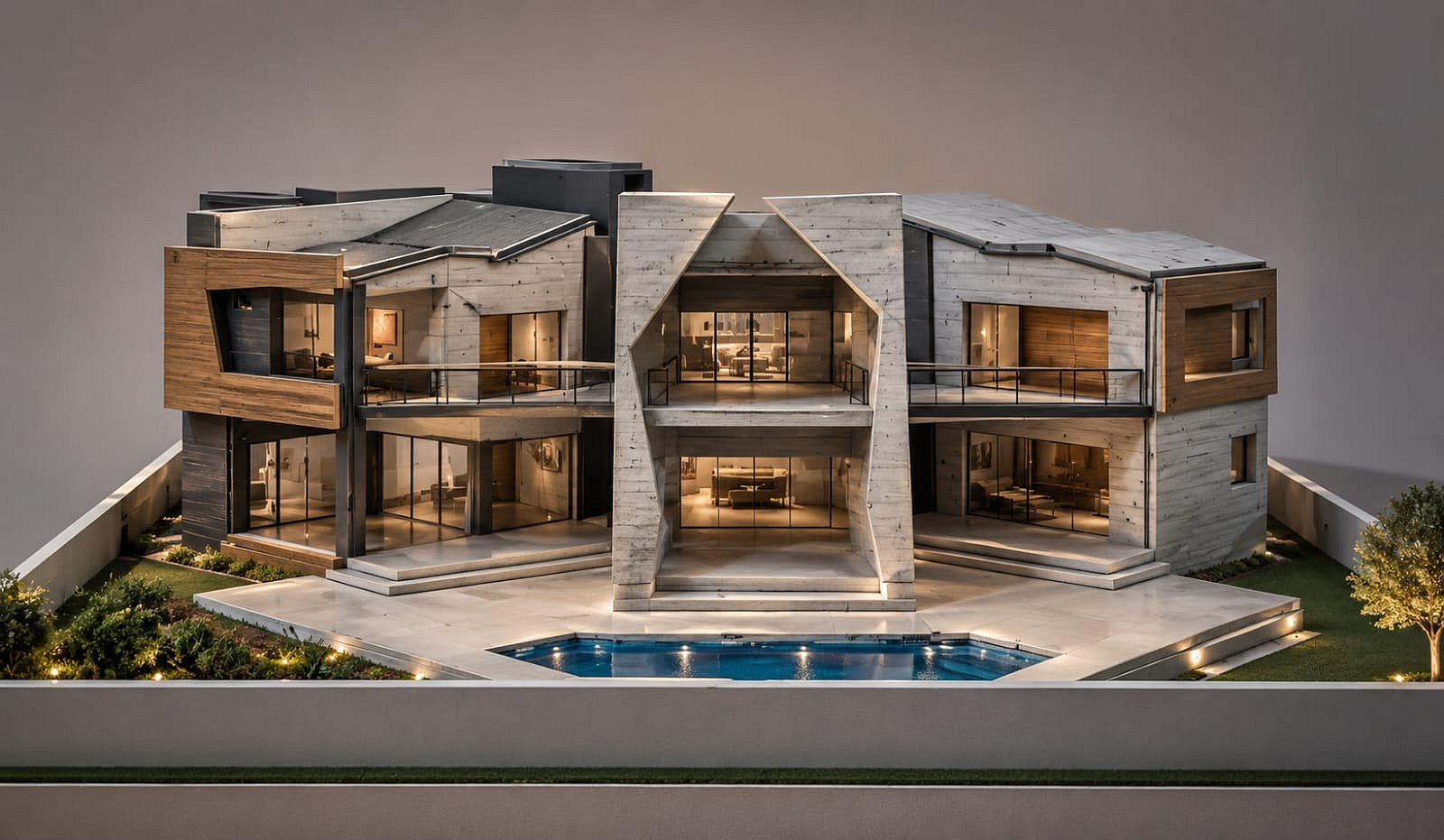
A residential design concept inspired by coastal erosion and rock fracture patterns, where the building mass is fragmented to abstract coastal erosion forms, creating a dynamic interplay between land and sea.
Project description
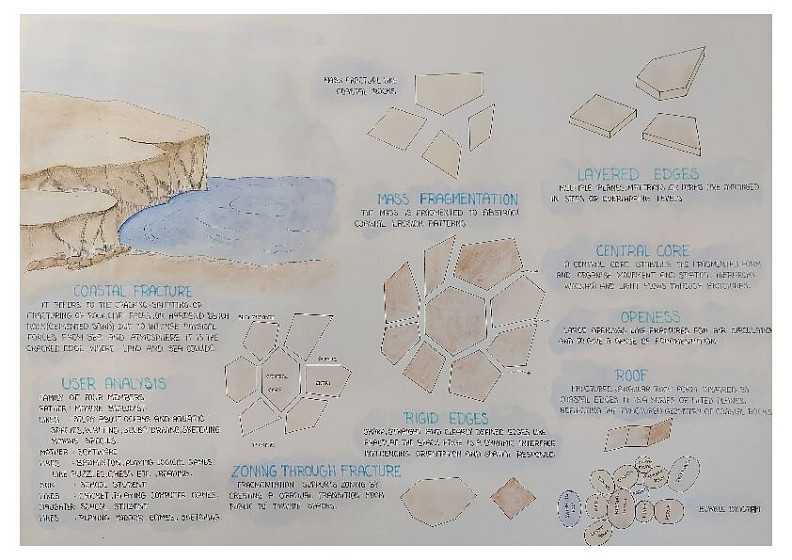
The project explores the concept of coastal fracture — the cracking, splitting, and fracturing of rock, cliff faces, or hardened beach rock due to intense physical forces from sea and atmosphere. The design uses mass fragmentation to abstract coastal erosion patterns, with layered edges where multiple planes, materials, or forms are arranged in steps or overlapping levels. A central core stabilizes the fragmented form and organizes movement and spatial hierarchy, allowing wind, air, and light to flow through fractures. The design features large openings like fractures for air circulation, rigid edges with sharp, straight, and clearly defined forms, and a fractured angular roof inspired by coastal edges as a series of tilted planes. Zoning through fracture supports a gradual transition from public to private spaces. The program serves a family of four members including a marine biologist father, with spaces including kitchen, dining, living room, bedrooms, swimming pool, guest room, servants room, utility room, and parking.
Technical information
The building employs fragmentation-based zoning creating semi-private, public, and private zones organized around a central core with an entry point. The roof consists of fractured angular tilted planes reflecting coastal rock geometry. The bubble diagram indicates functional spaces including swimming pool, kitchen, dining, living, bedrooms, guest room, servants room, utility room, foyer, porch, and parking areas.
Documentation

Copyright © 2026 INSPIRELI | All rights reserved. Use of this website signifies your agreement to the Terms of Use, Privacy Policy, and use of cookies.