Spitalfield Commons


Project idea
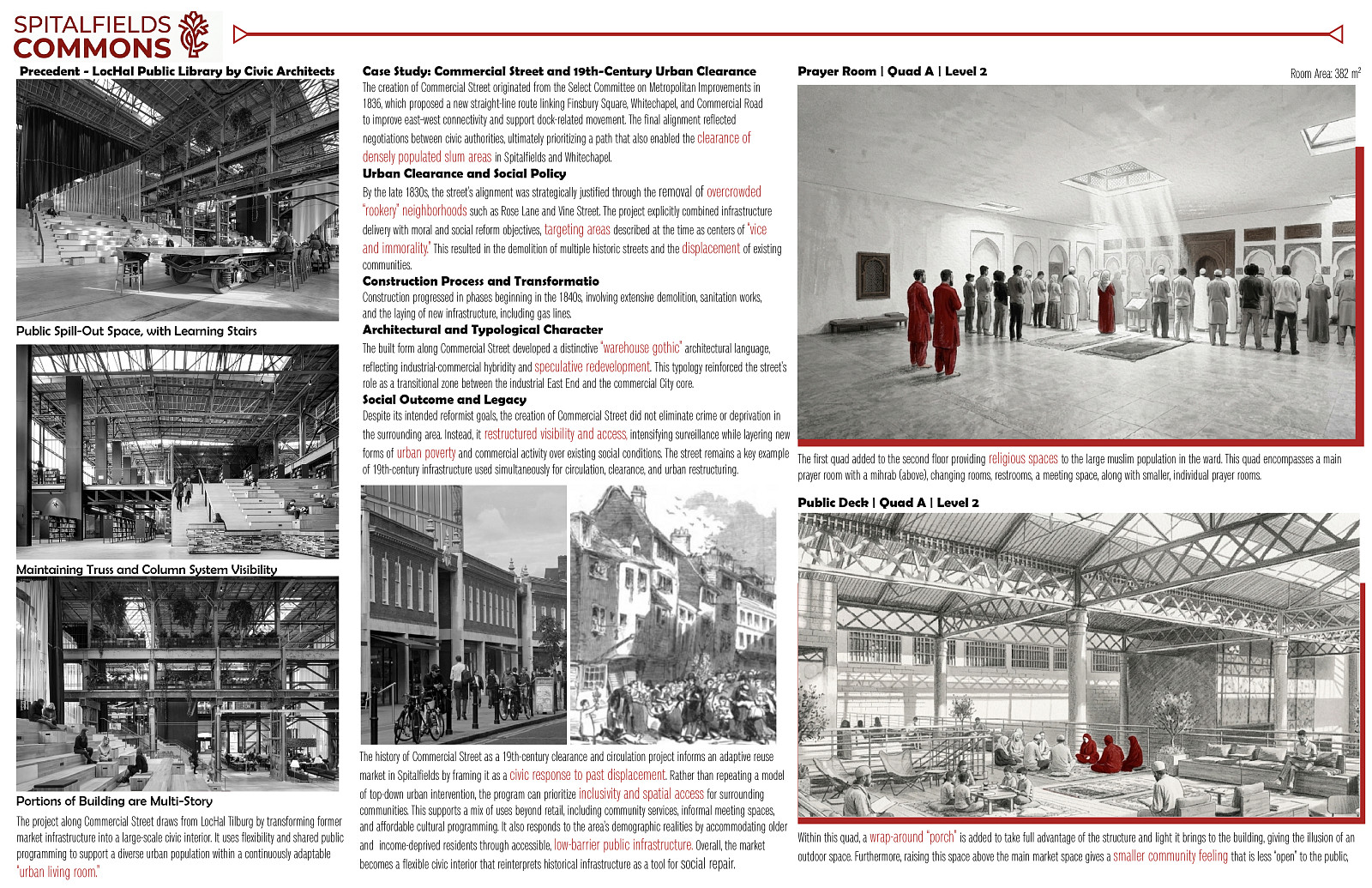
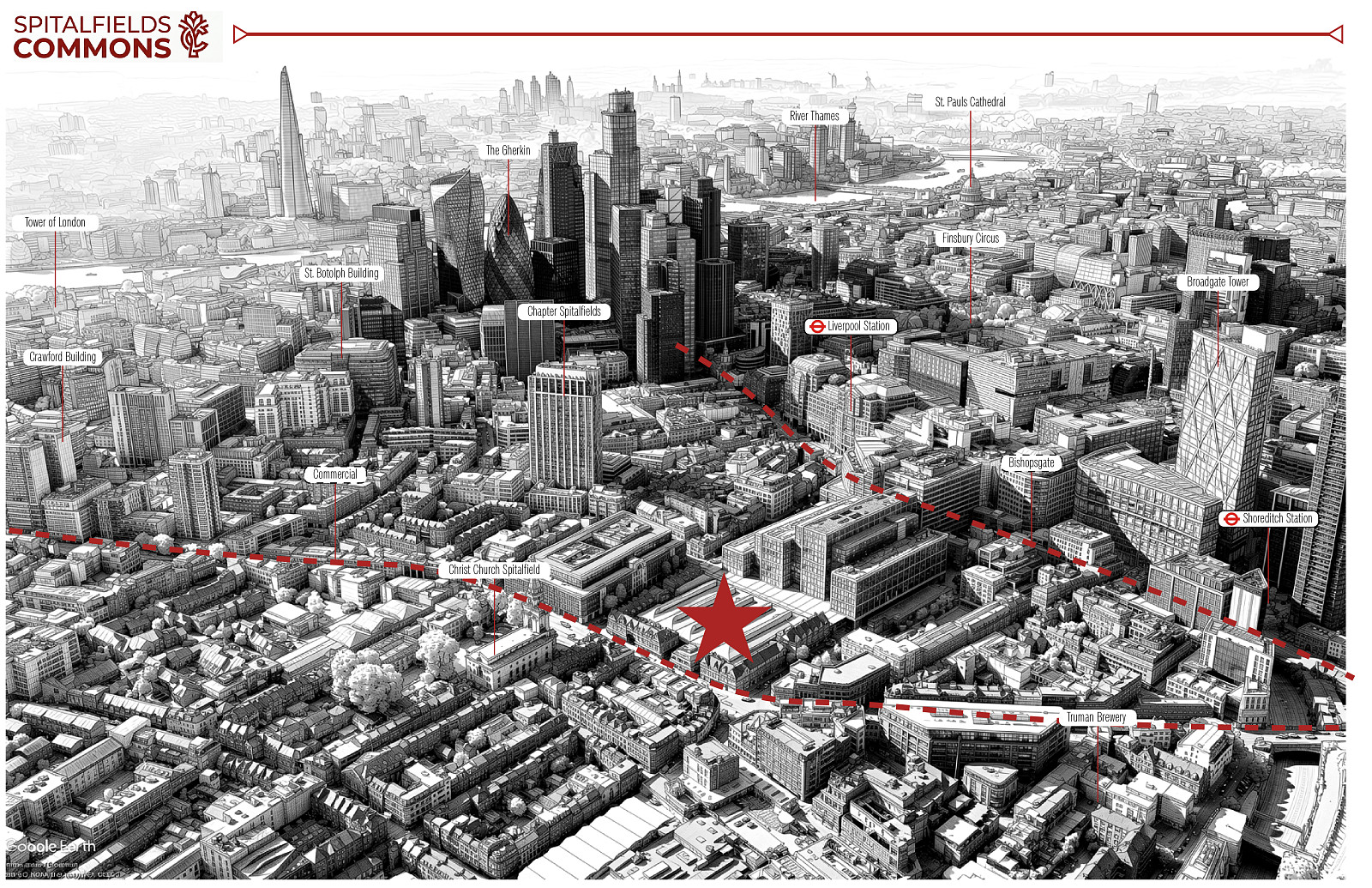
Spitalfields Commons is an adaptive reuse proposal for London's historic Spitalfields Market that transforms the existing market hall into a flexible civic commons. Rather than introducing significant new construction, the project works within the existing structure to expand the market's capacity to support community life beyond retail activity.
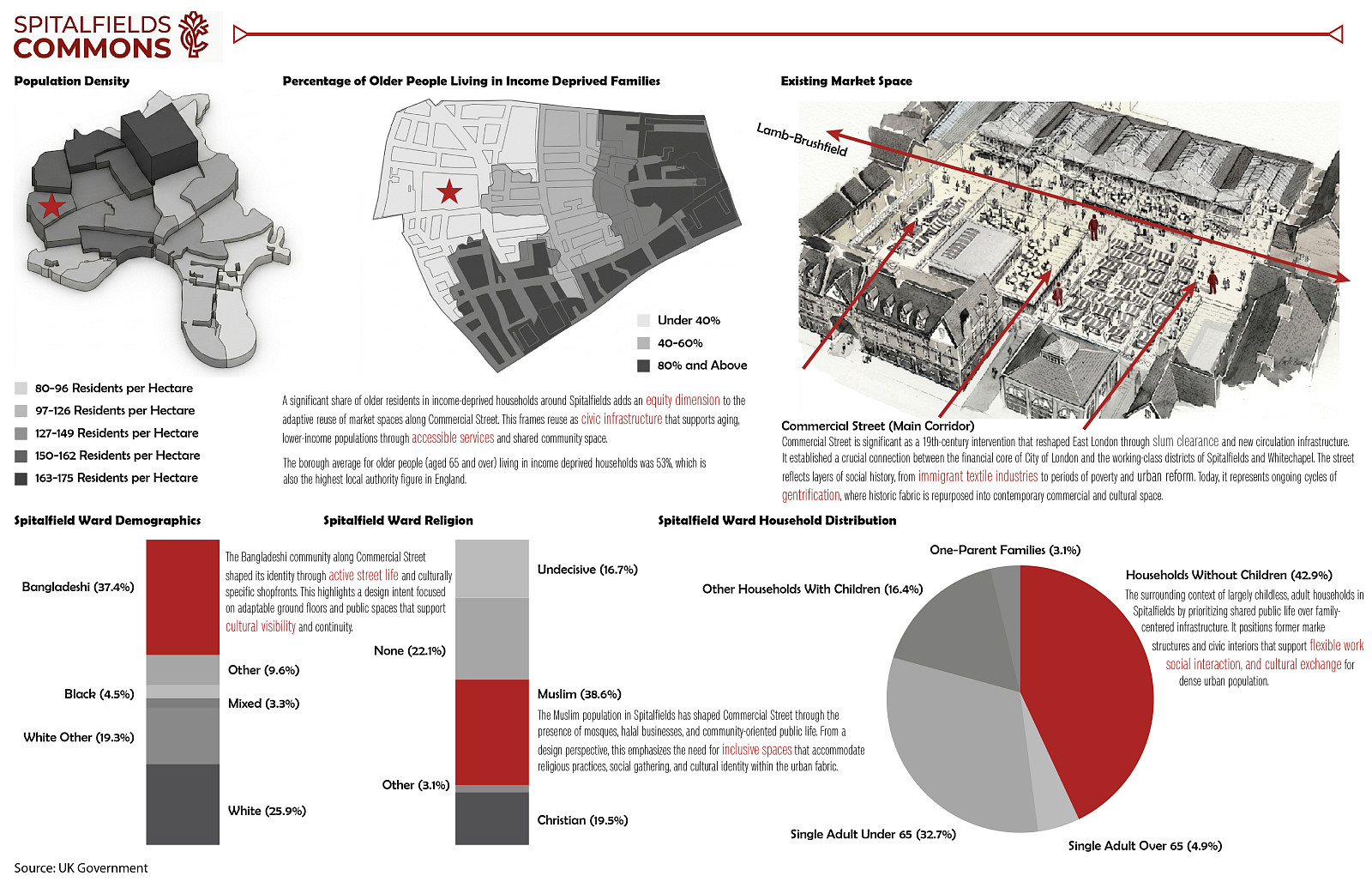
The proposal responds to the changing nature of urban markets and the need for accessible public space in central London. By treating the market hall as a shared civic infrastructure rather than a single-purpose commercial venue, the project allows the building to support different uses throughout the day, week, and year.
The concept of the commons is understood as a system of collective access and adaptability. Through flexible occupancy, reconfigurable stalls, and time-based programming, Spitalfields Market becomes a space that can accommodate commerce, culture, gathering, and emergency community needs within the same architectural framework.
Project description
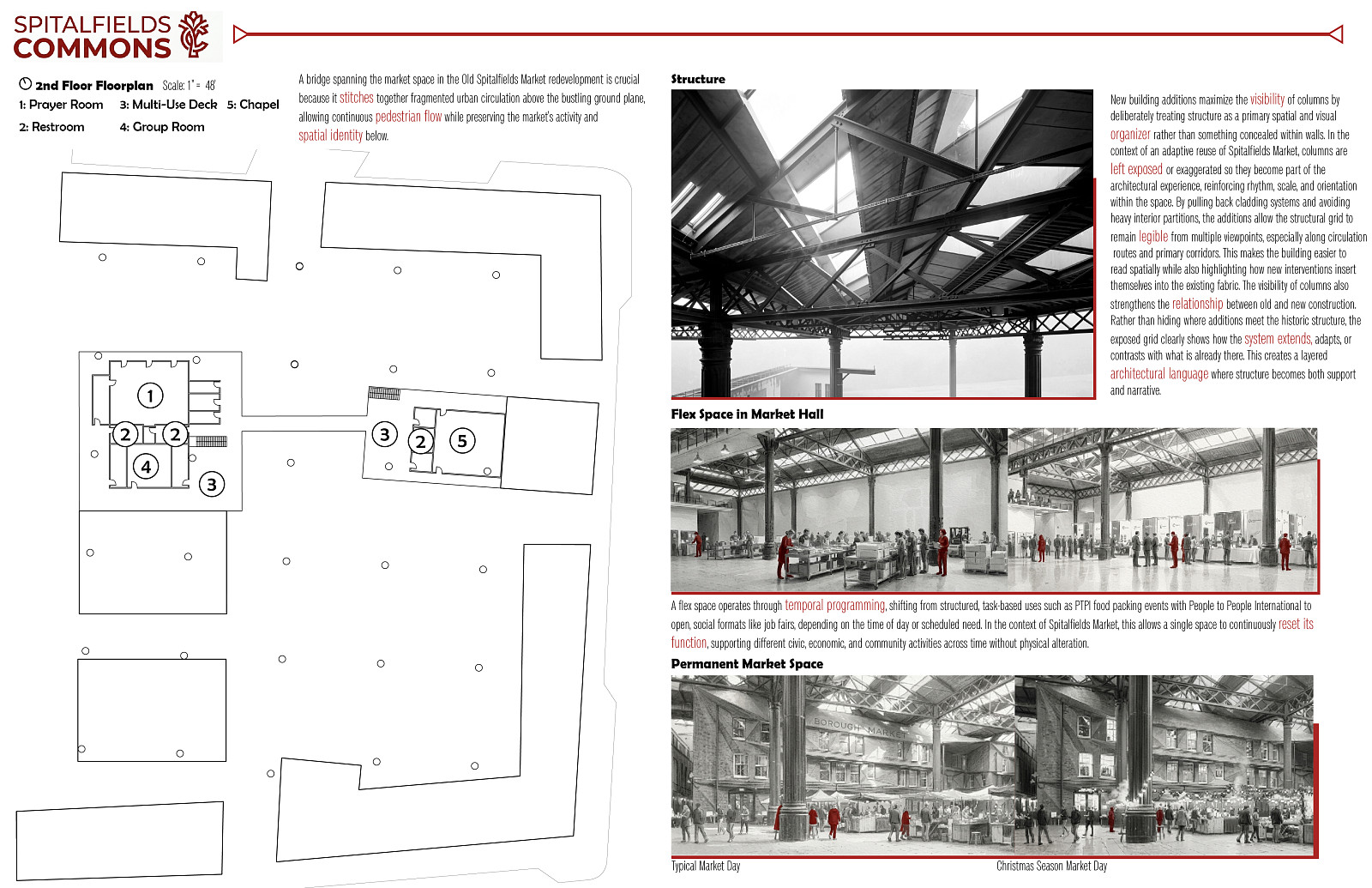
Spitalfields Commons retains the existing market hall as the primary spatial and structural framework of the project. The proposal recognizes that the building's large-span interior, open floor plate, and exposed structure already possess the qualities necessary to support a broad range of activities.
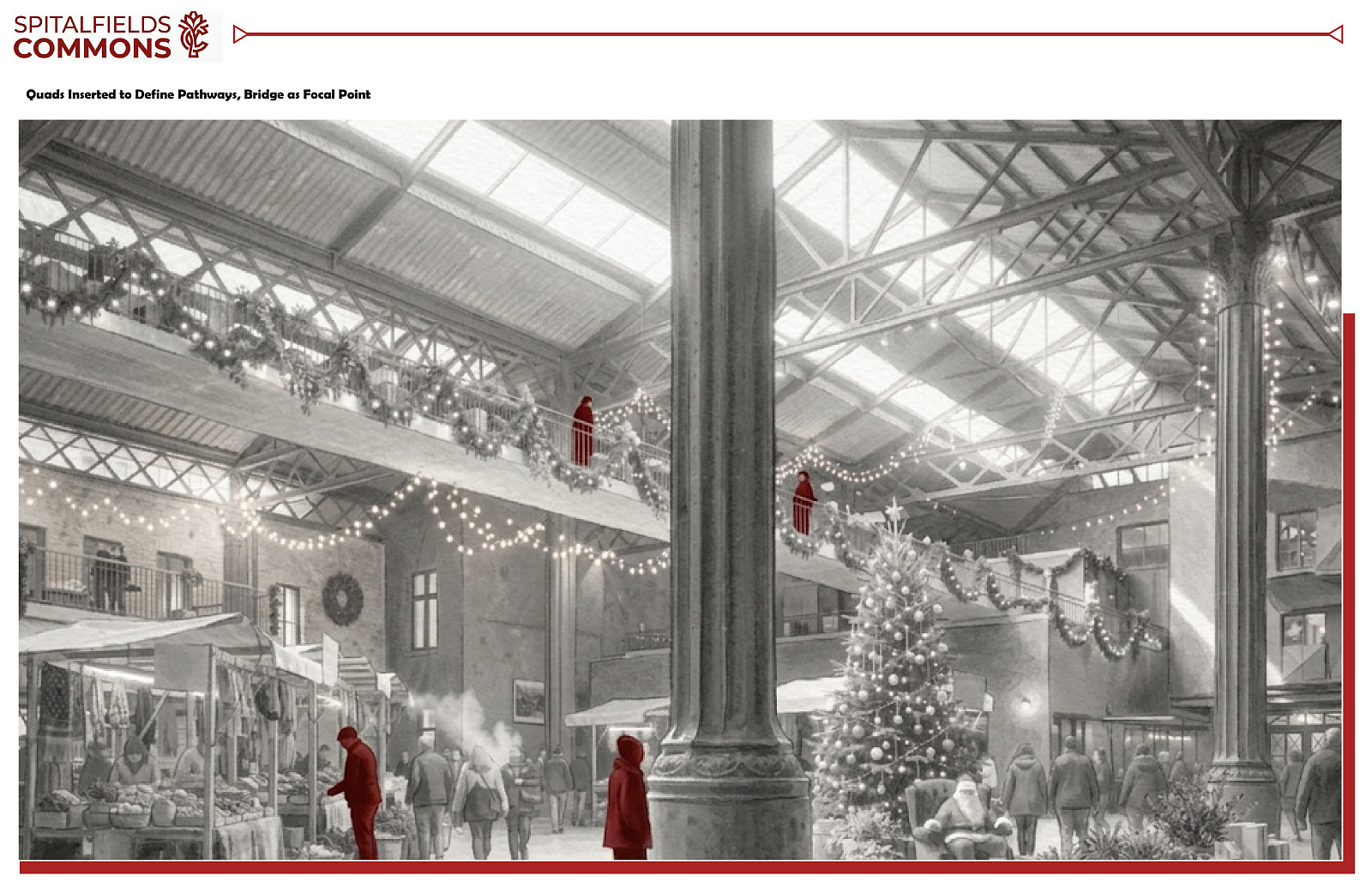
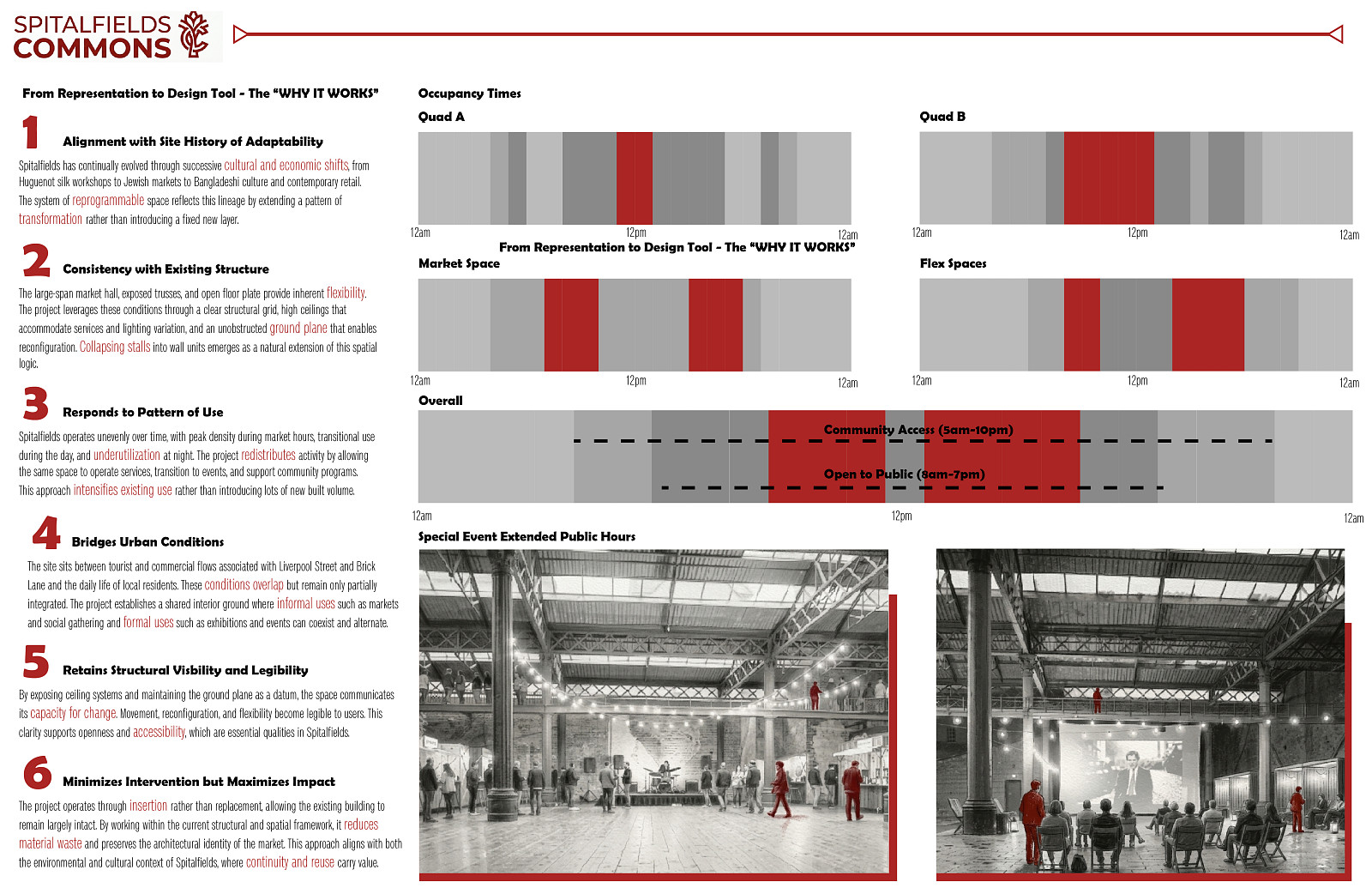
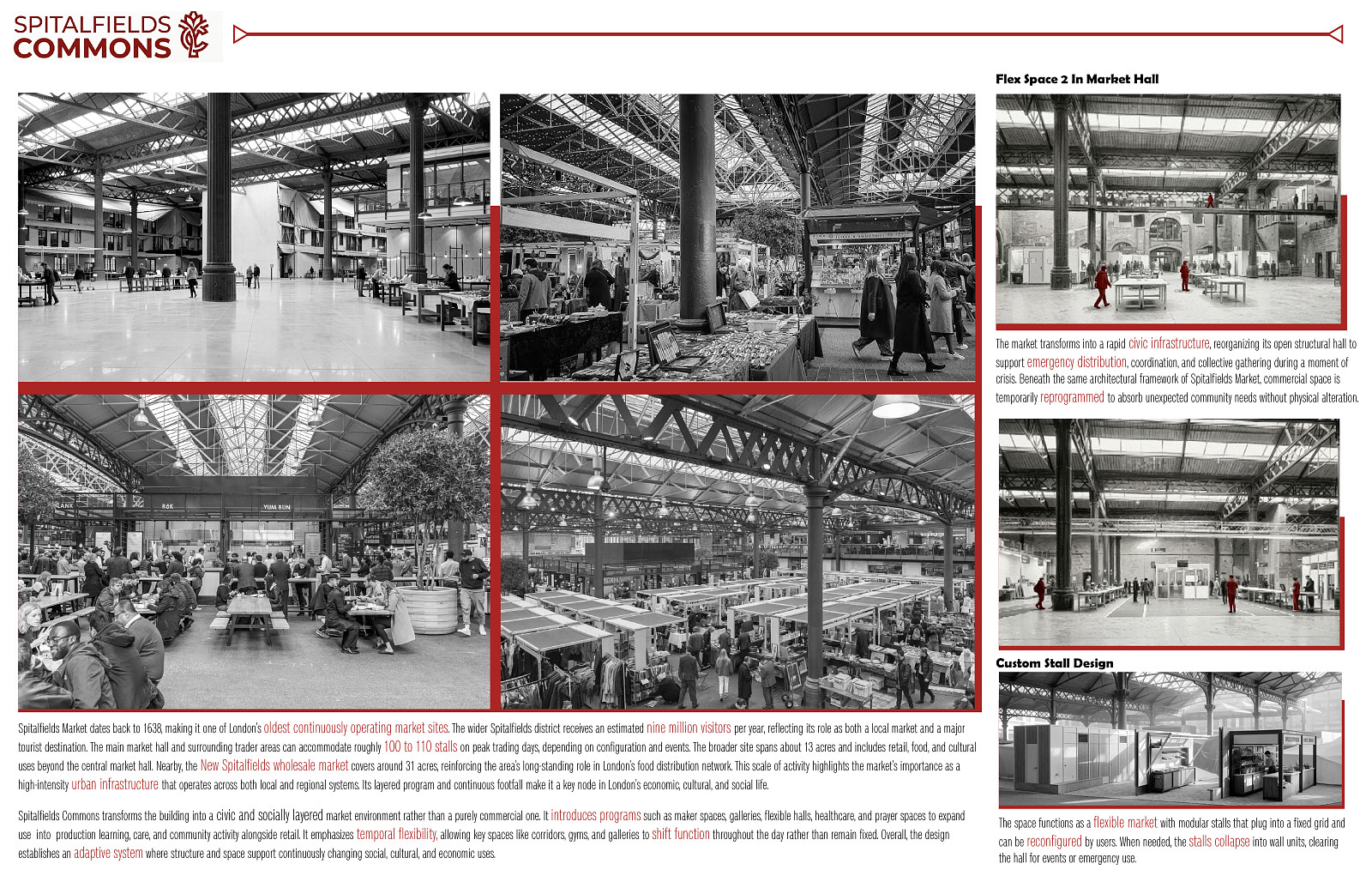
The market continues to function as a commercial destination during peak trading periods, accommodating vendors, food markets, and local businesses. Rather than replacing these uses, the project introduces a system of adaptable stalls and flexible occupation zones that allow the space to be reconfigured as demand changes throughout the day.
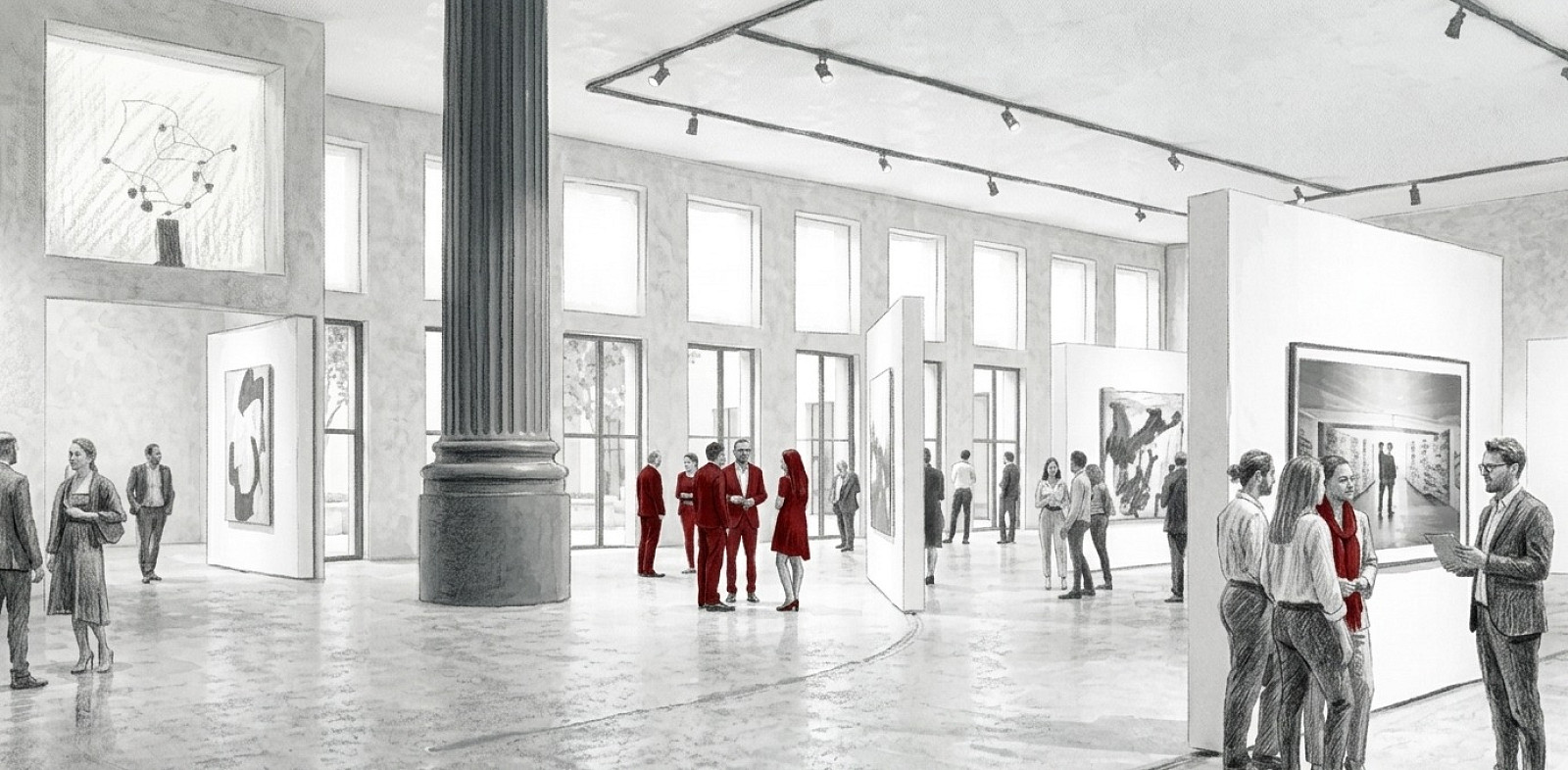
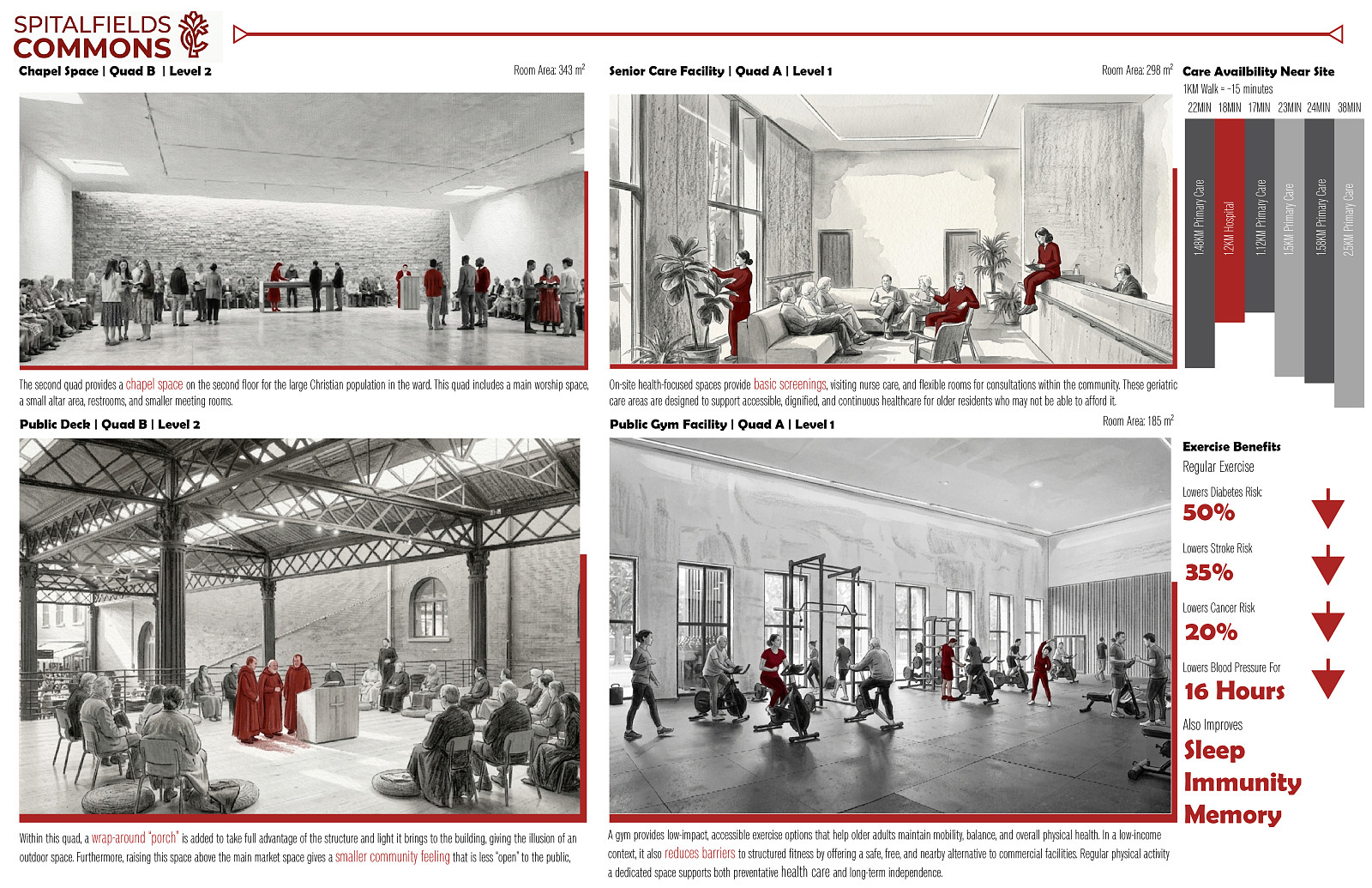
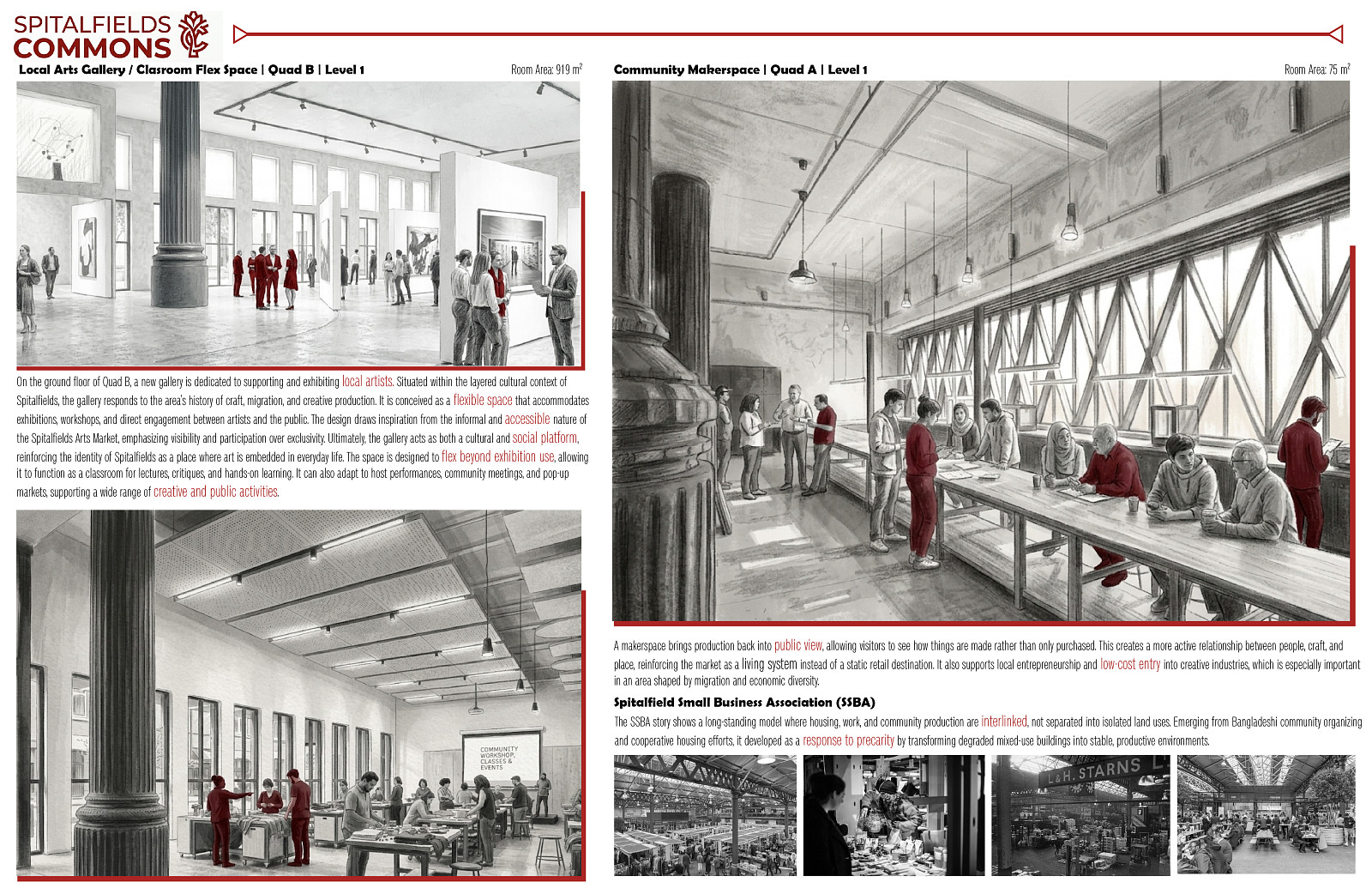
Outside peak market hours, portions of the hall transition into civic and cultural uses. Open floor areas can support exhibitions, community gatherings, performances, workshops, public events, and social activities. The project establishes a framework where multiple programs can coexist, overlap, and evolve without requiring permanent spatial separation.
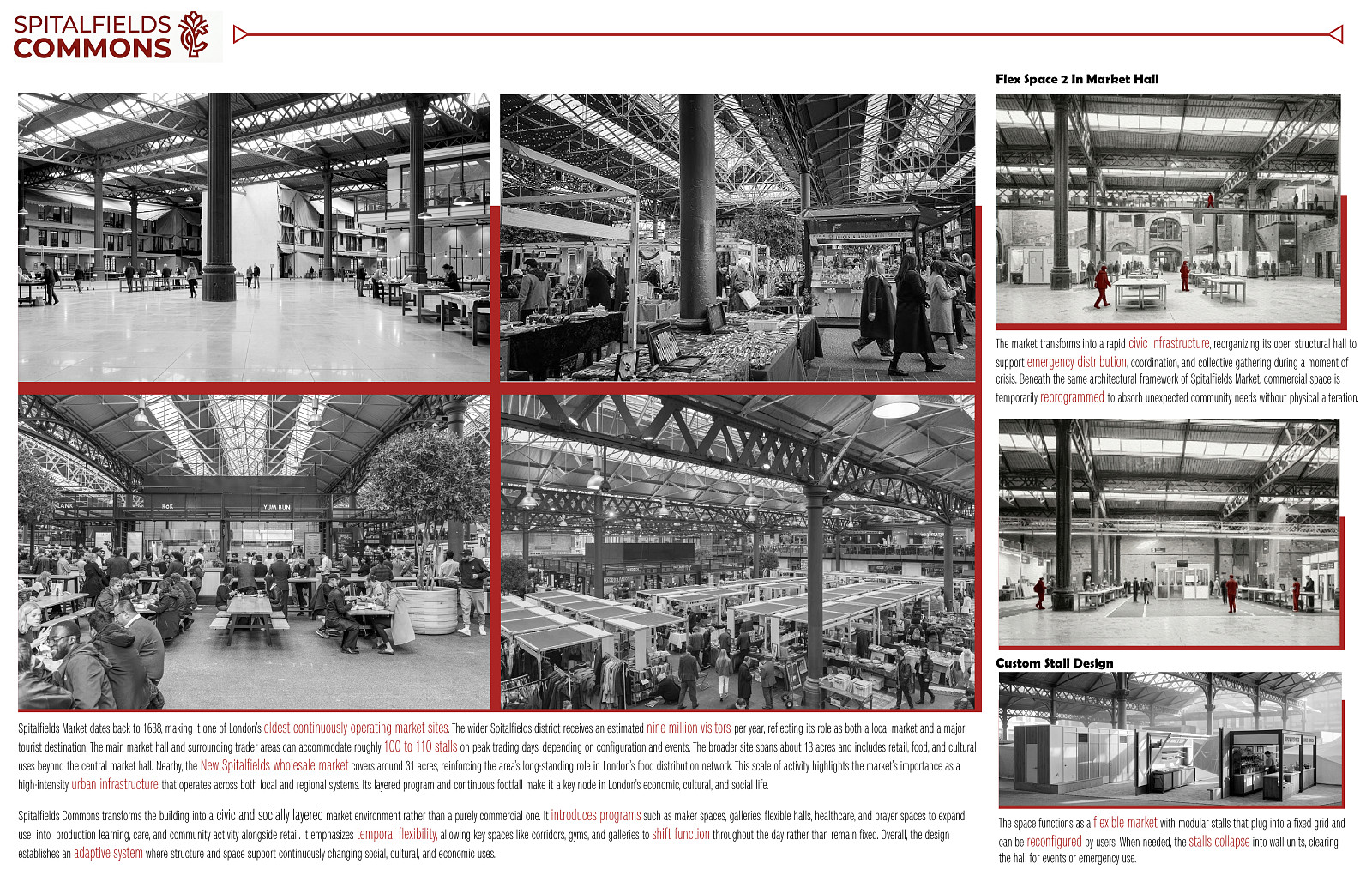
A key component of the proposal is the ability for market infrastructure to collapse, expand, or reorganize according to need. Vendor stalls are designed as modular units that can operate independently during market hours while allowing larger unobstructed spaces to emerge for events and community functions.
The project also considers exceptional circumstances. During periods of emergency or heightened community need, the market hall can operate as a temporary civic resource capable of supporting coordination, distribution, gathering, or relief functions. The existing building becomes a resilient piece of public infrastructure without requiring major physical alteration.
Through this approach, Spitalfields Commons transforms the market from a fixed commercial environment into an adaptable civic interior capable of supporting changing social, cultural, and economic activities over time.
Technical information
The proposal is based on the preservation and adaptive reuse of the existing Spitalfields Market structure.
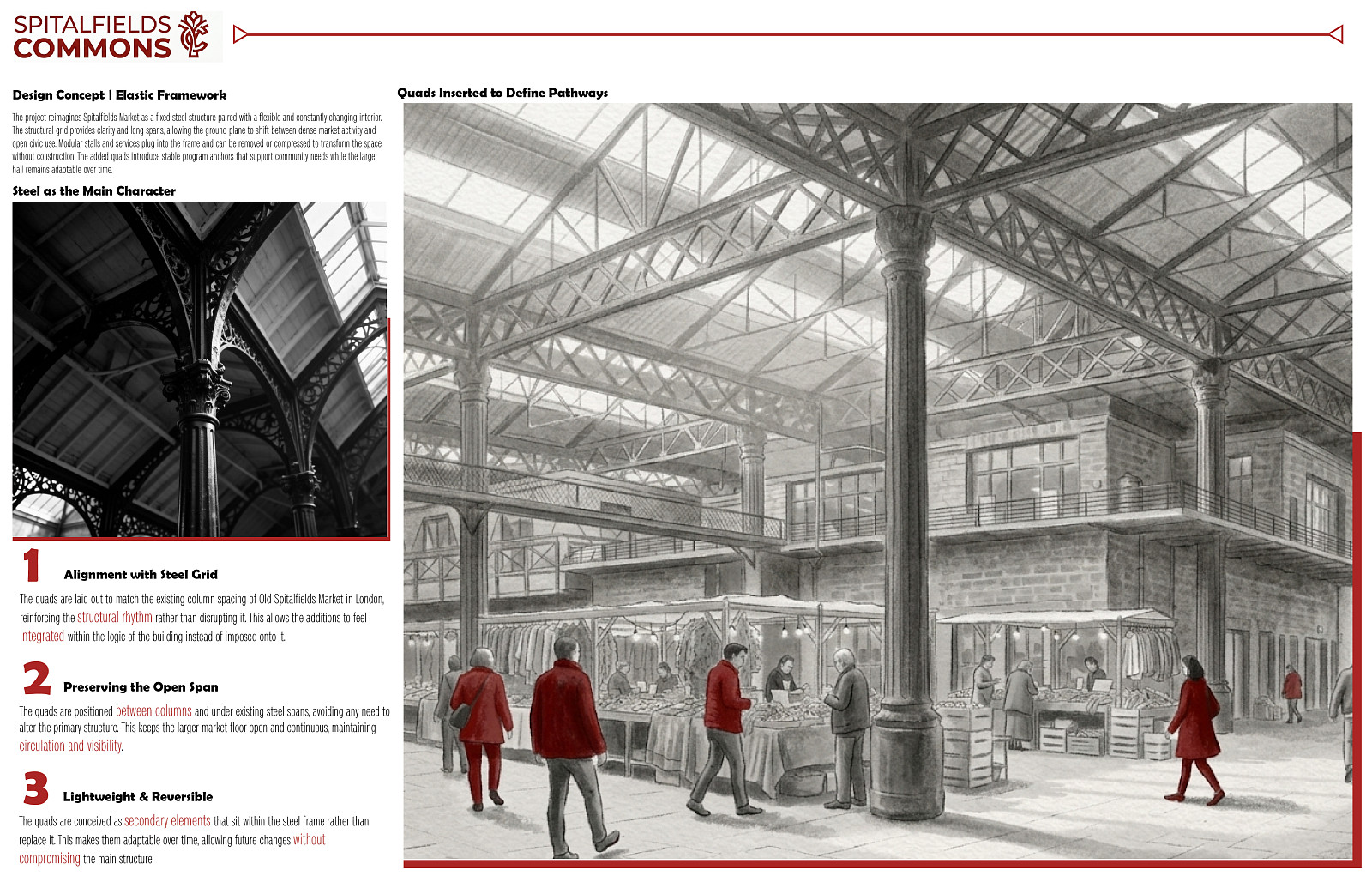
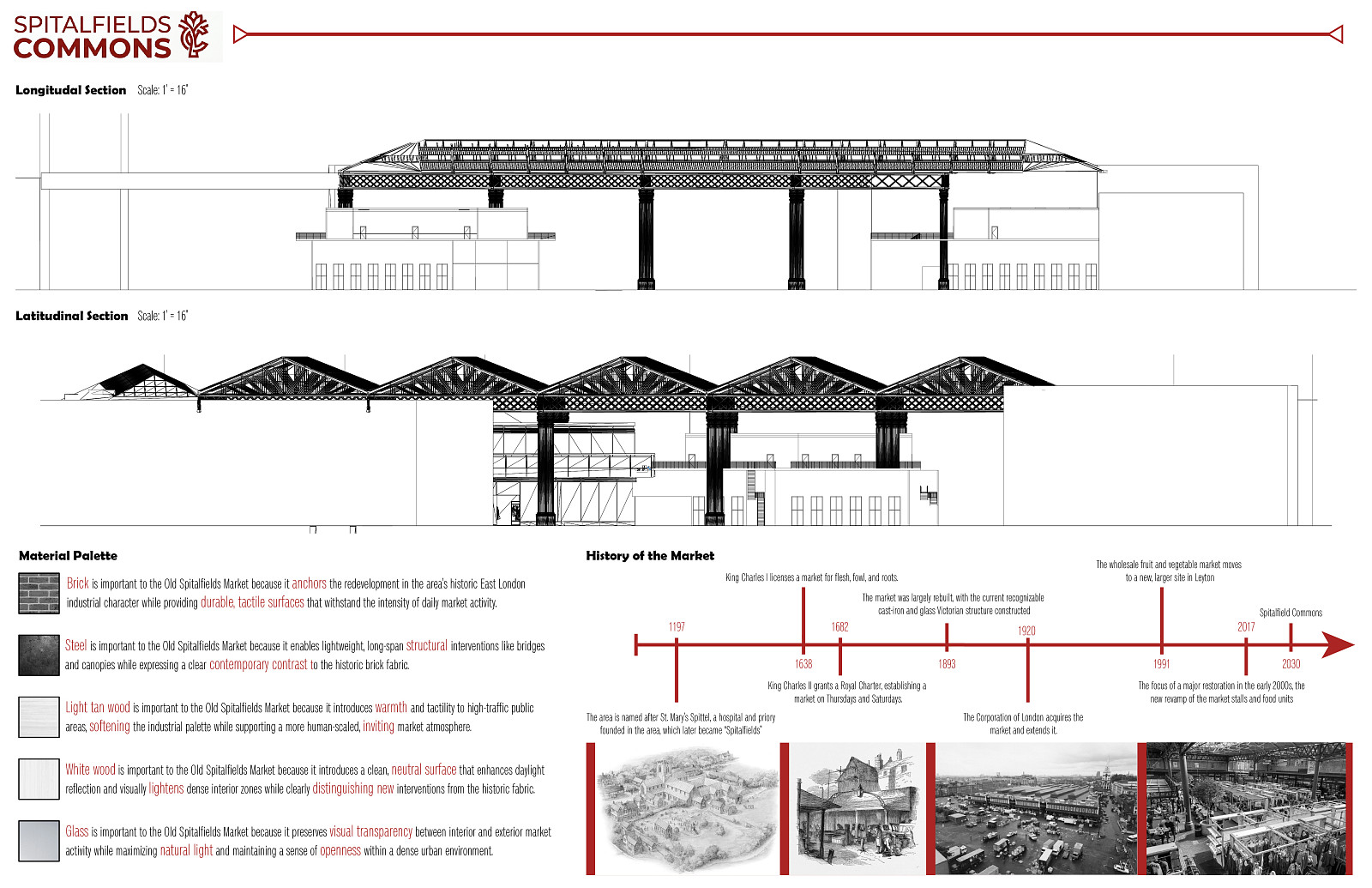
The primary steel frame, roof system, and open-span hall are retained as the project's defining architectural elements. New interventions are intentionally minimal and operate within the logic of the existing building. Rather than constructing substantial additions, the design focuses on flexible occupation strategies and lightweight market infrastructure.
A modular stall system forms the primary architectural intervention. These units can be arranged, expanded, reduced, or consolidated according to operational needs. This allows the market hall to transition between commercial activity, public events, and civic functions while maintaining a consistent spatial framework.
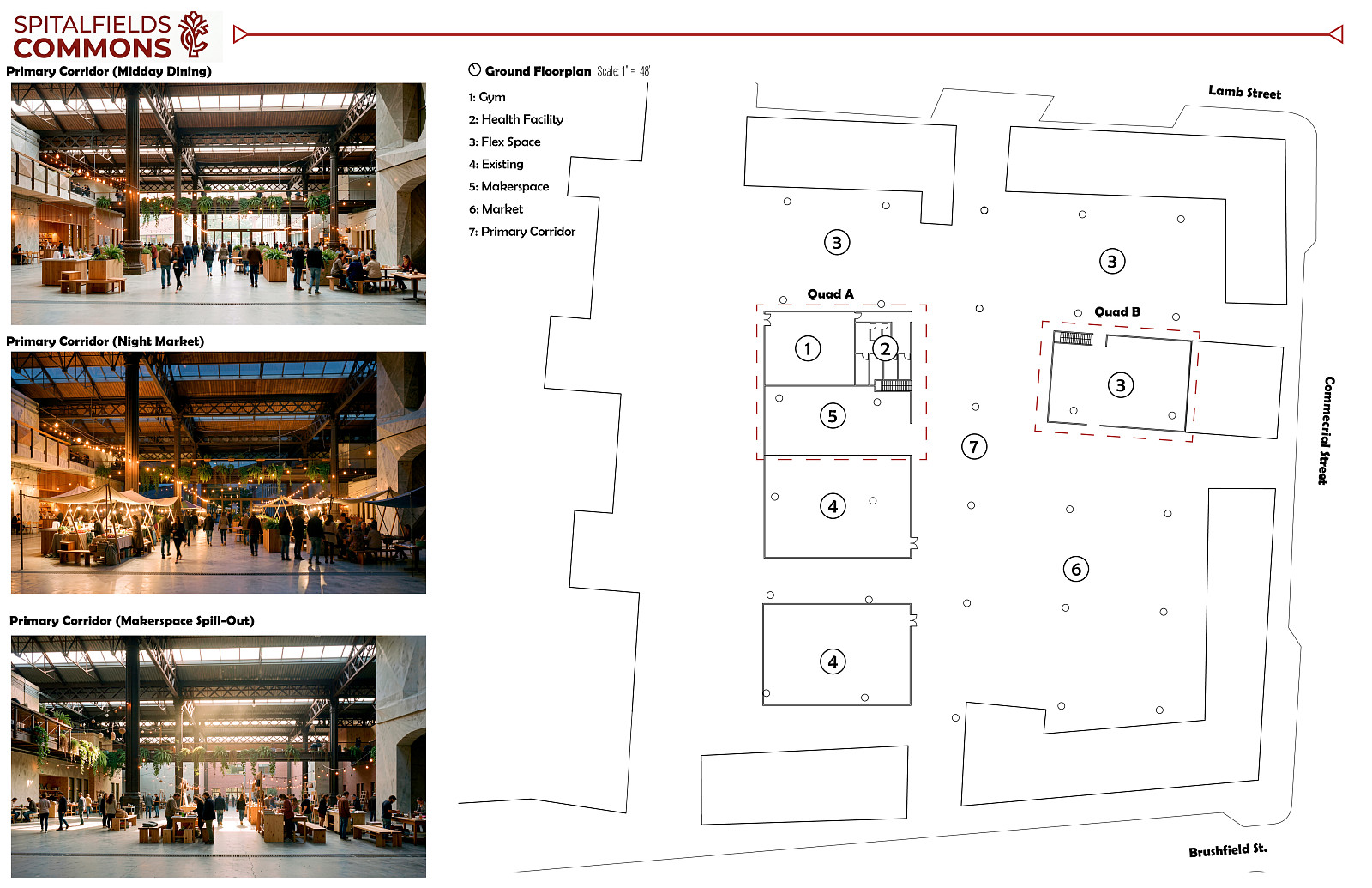
The open floor plan enables multiple occupancy configurations. Different zones within the hall can operate simultaneously or independently, supporting varying levels of activity throughout the day. Occupancy studies inform how spaces shift between market use, community access, and event programming.
Environmental performance relies largely on the existing qualities of the building. The hall's volume, roof structure, and daylight access support natural ventilation and passive environmental regulation. Any upgrades are designed to improve performance while preserving the character and openness of the market.
Accessibility is maintained through clear circulation routes across the ground plane, ensuring that changing configurations remain legible and inclusive for all users.
The project's primary strategy is adaptability rather than expansion. By minimizing physical intervention and maximizing programmatic flexibility, Spitalfields Commons demonstrates how an existing market can operate as long-term civic infrastructure while preserving its historic identity and continuing commercial function.

Copyright © 2026 INSPIRELI | All rights reserved. Use of this website signifies your agreement to the Terms of Use, Privacy Policy, and use of cookies.