Clear Creek Weave


Project idea
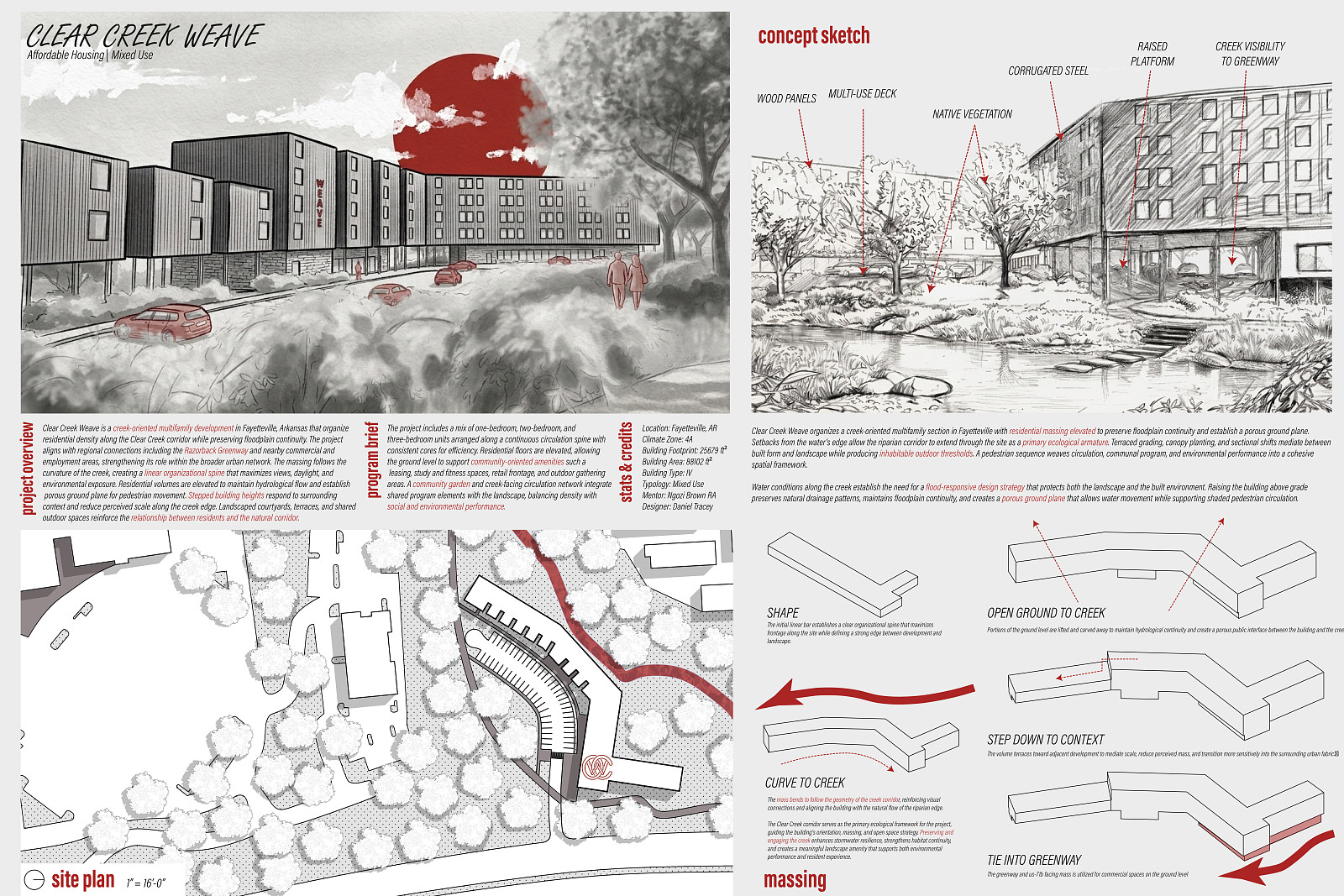
Clear Creek Weave is a housing and ecological redevelopment proposal located along the Clear Creek corridor in Fayetteville, Arkansas. The project responds to two intersecting pressures in the city: the rising cost and scarcity of affordable housing, and the gradual separation of urban development from the Ozark landscape and creek systems that define Fayetteville’s identity.
As Fayetteville continues to grow through University of Arkansas expansion, regional migration, and economic development, pressure increases on both housing supply and environmentally sensitive land at the city’s edges. Clear Creek Weave proposes a strategy of infill and corridor-based development that strengthens existing urban fabric while restoring ecological continuity along Clear Creek.
The project is structured around the idea of weaving. Housing, community programs, circulation, and landscape are interlaced into a continuous system rather than separated functions. Clear Creek becomes the central organizing feature, acting as a public ecological corridor that connects residents to water, vegetation, and a broader network of trails and green infrastructure across Fayetteville.
The result is a neighborhood model that integrates affordability, ecological restoration, and civic life into a single framework rooted in the specific conditions of northwest Arkansas.
Project description
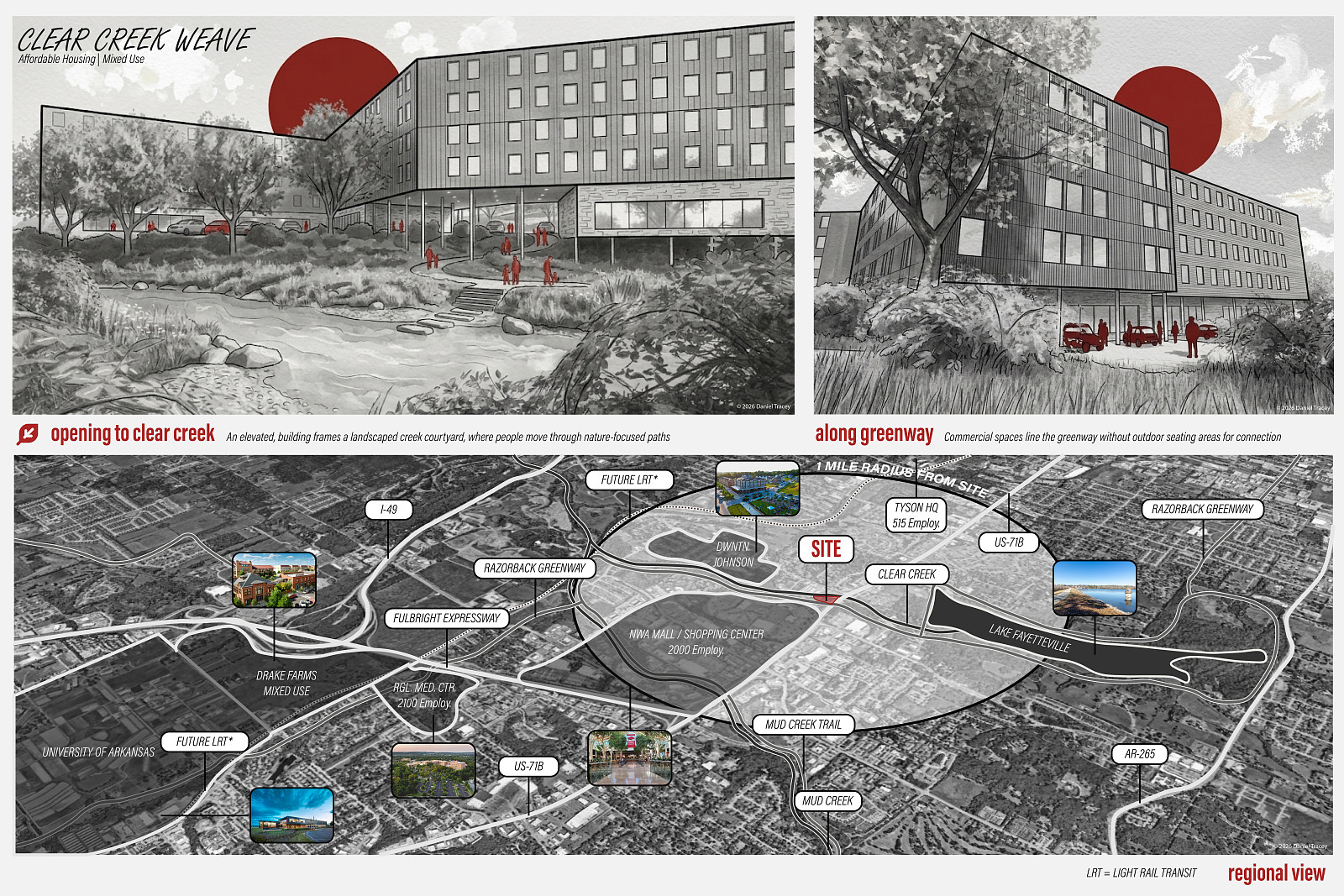
Clear Creek Weave proposes a mid-rise, mixed-use residential development situated within walking and biking distance of Fayetteville’s broader trail network, including connections to the Razorback Greenway and nearby neighborhood streets.
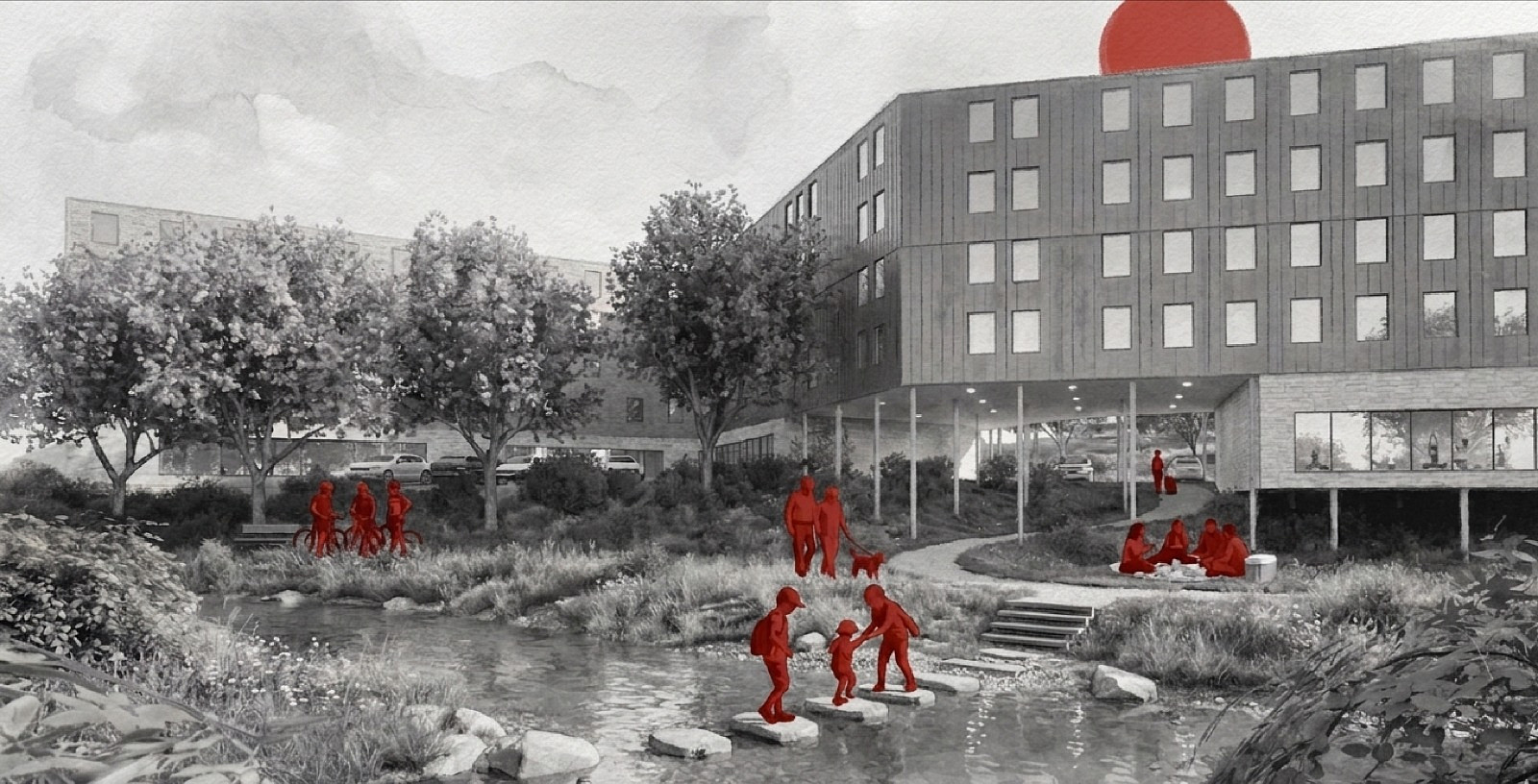
The building is organized around a continuous internal circulation system that functions as a social spine. This space is not simply a corridor but an interior civic environment shaped to encourage informal encounters, shared visibility, and daily interaction among residents. It connects directly to a sequence of outdoor rooms, courtyards, and landscaped terraces that extend toward Clear Creek.
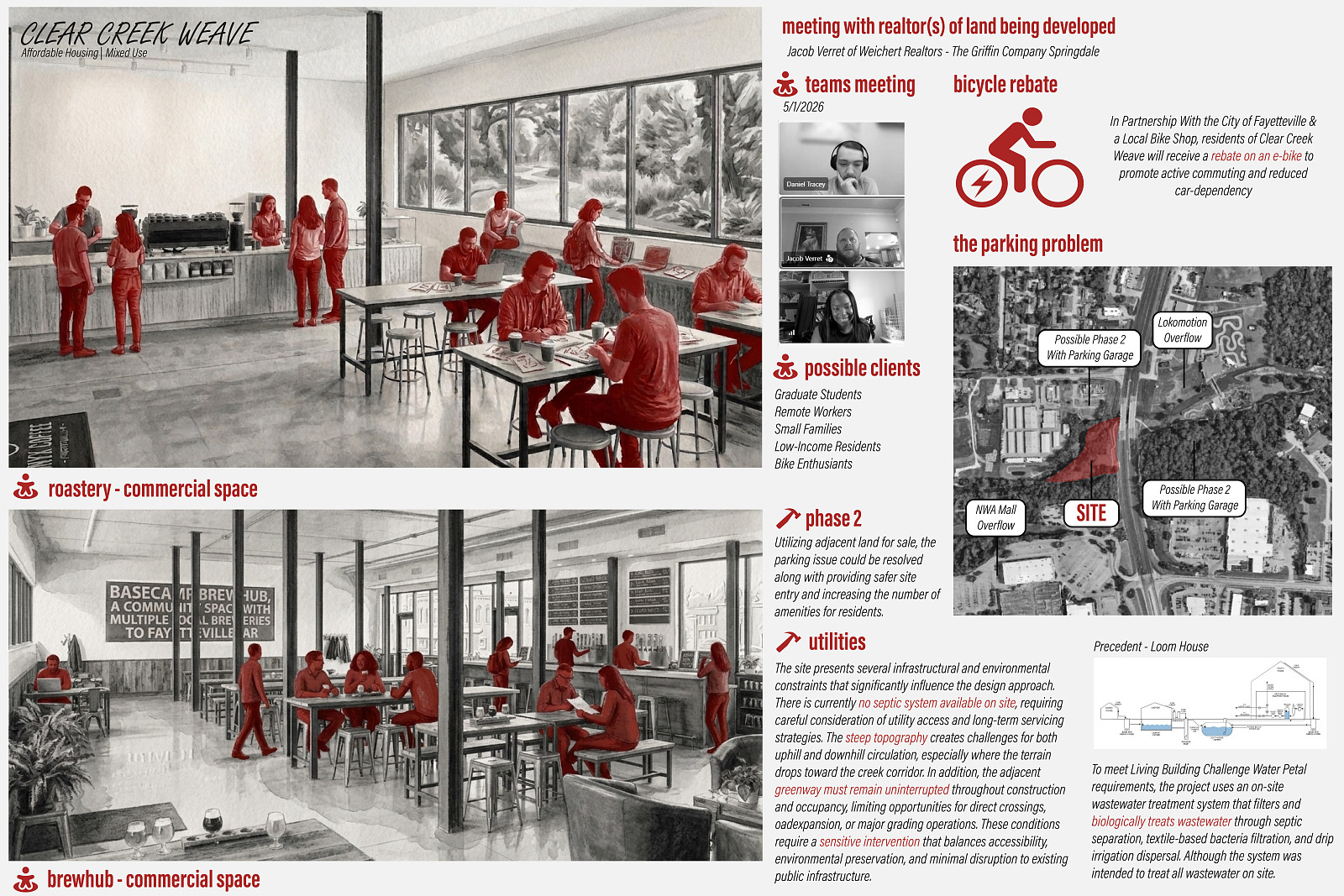
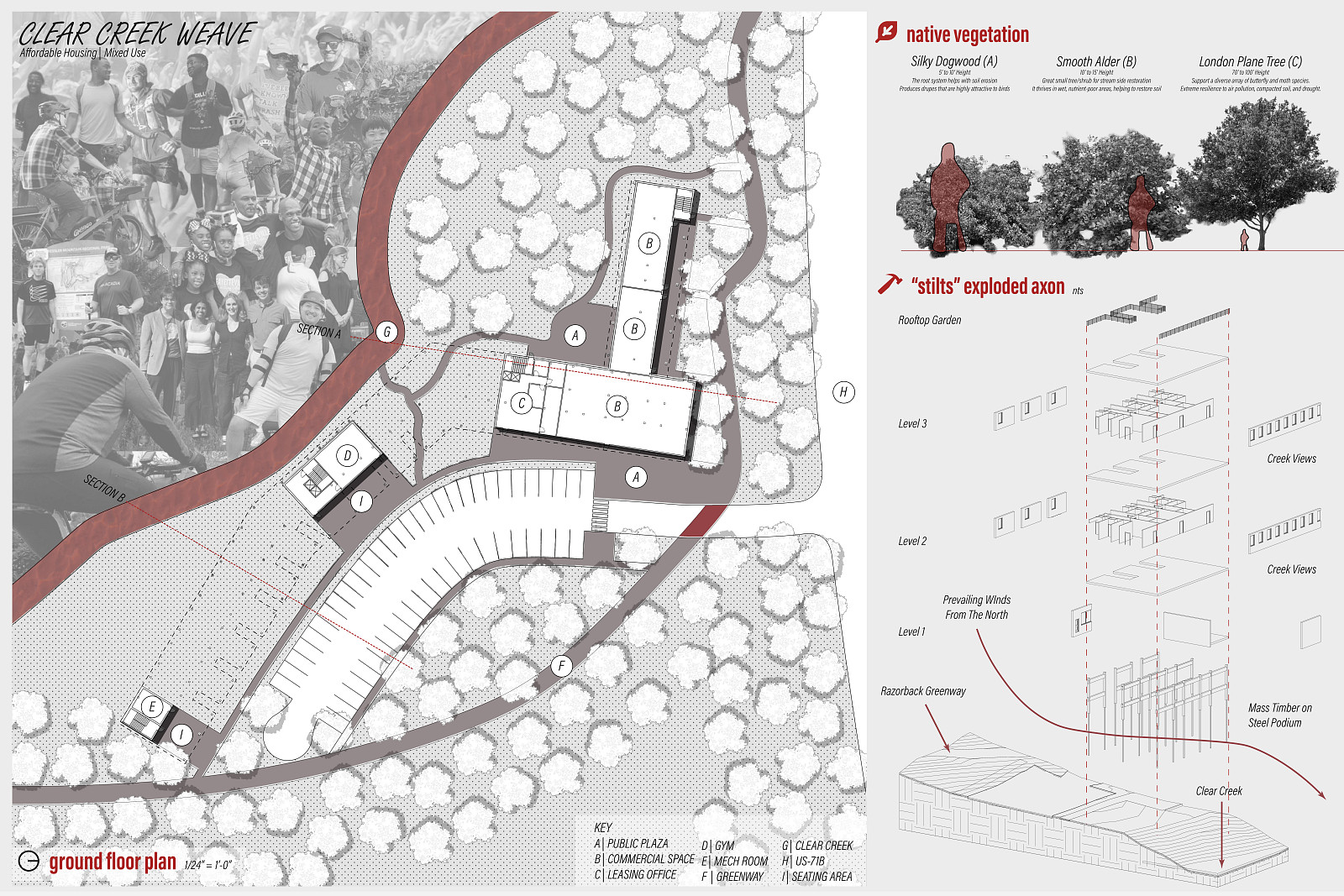
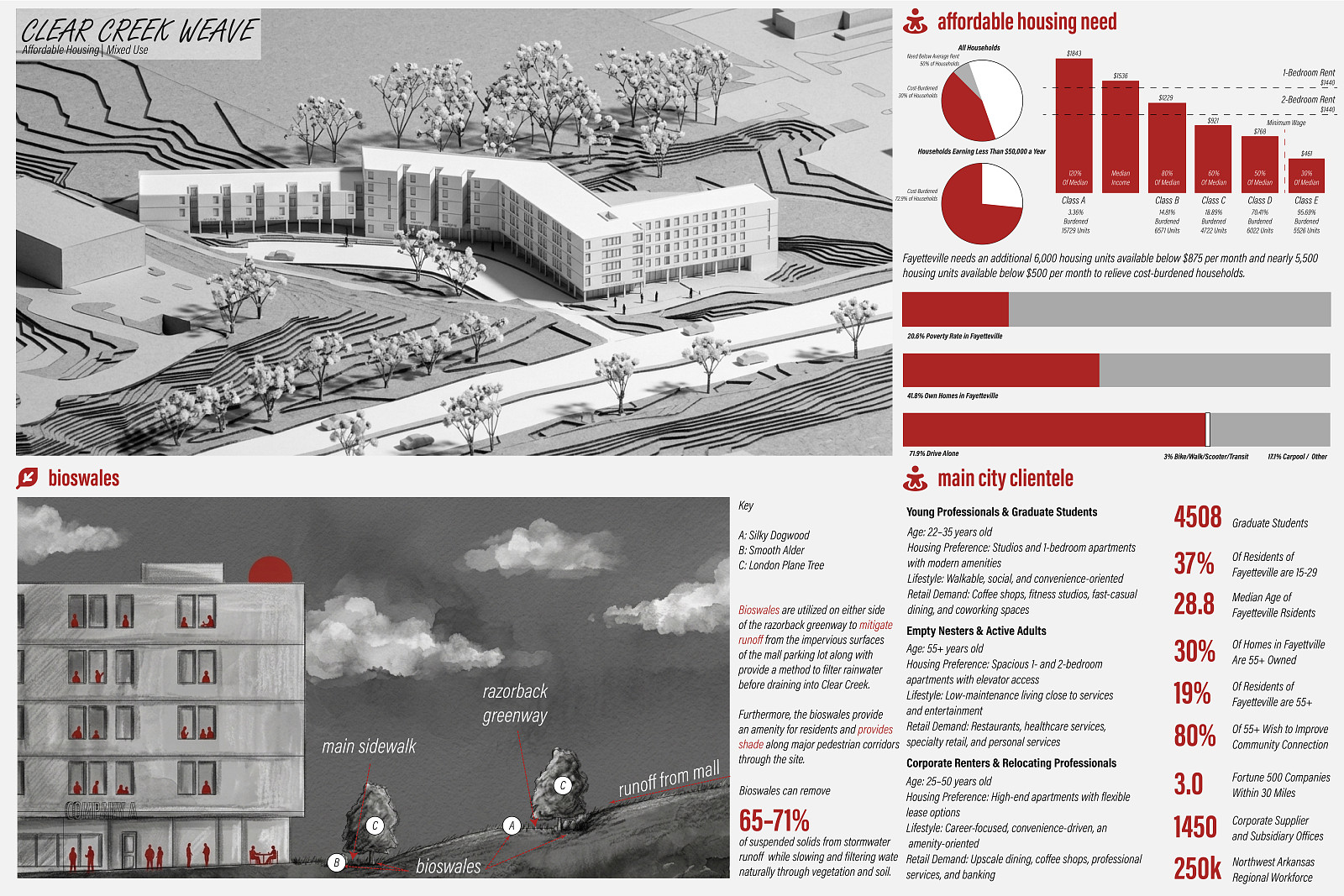
At ground level, the project is deeply embedded in Fayetteville’s community structure. Program includes affordable childcare that supports working families and University of Arkansas students, shared kitchens for community gatherings and cultural events, flexible rooms that can support workshops or educational partnerships, and small neighborhood commercial spaces that serve daily needs without requiring car trips. These uses reflect Fayetteville’s mixed population of students, service workers, faculty, and long-term residents.
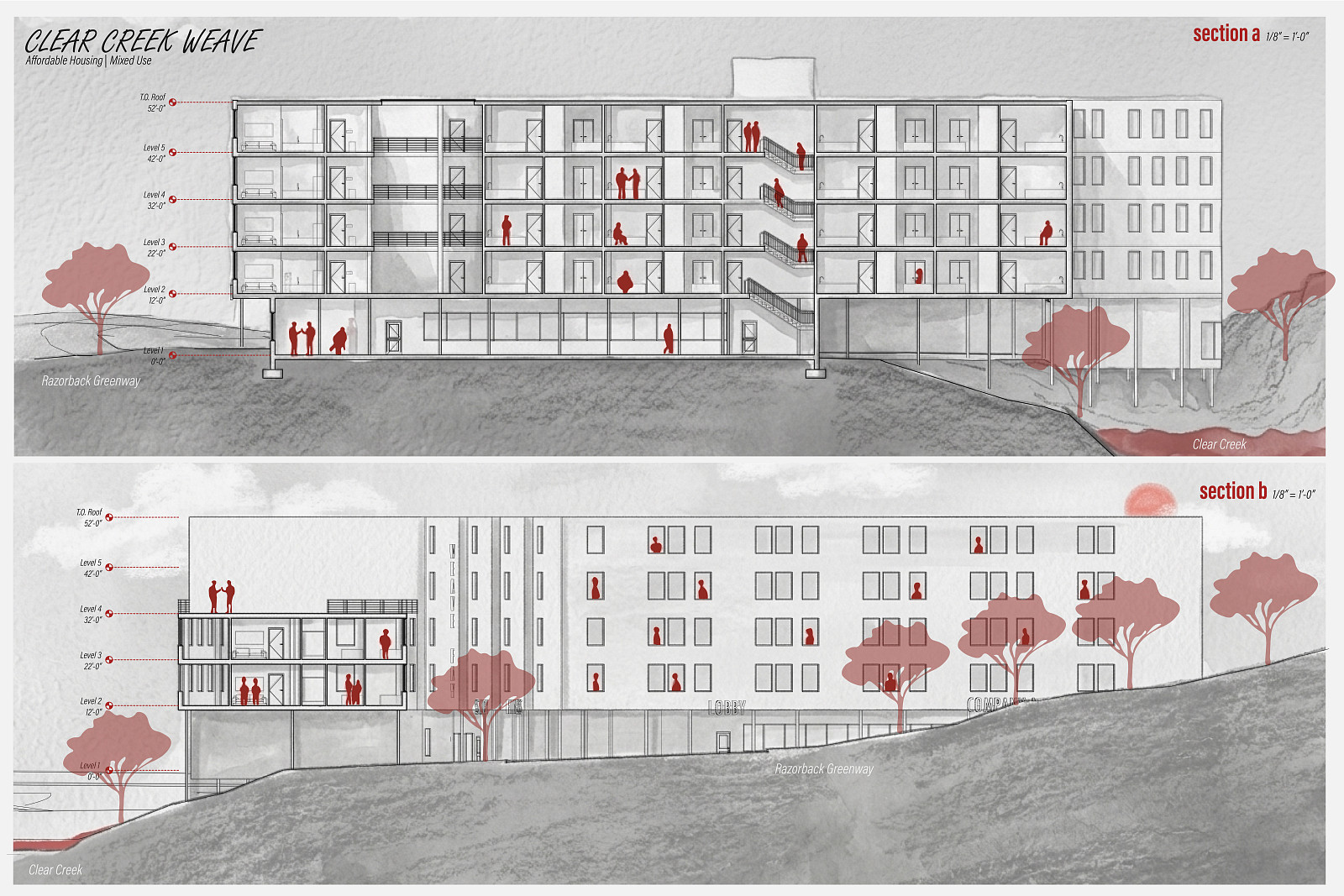
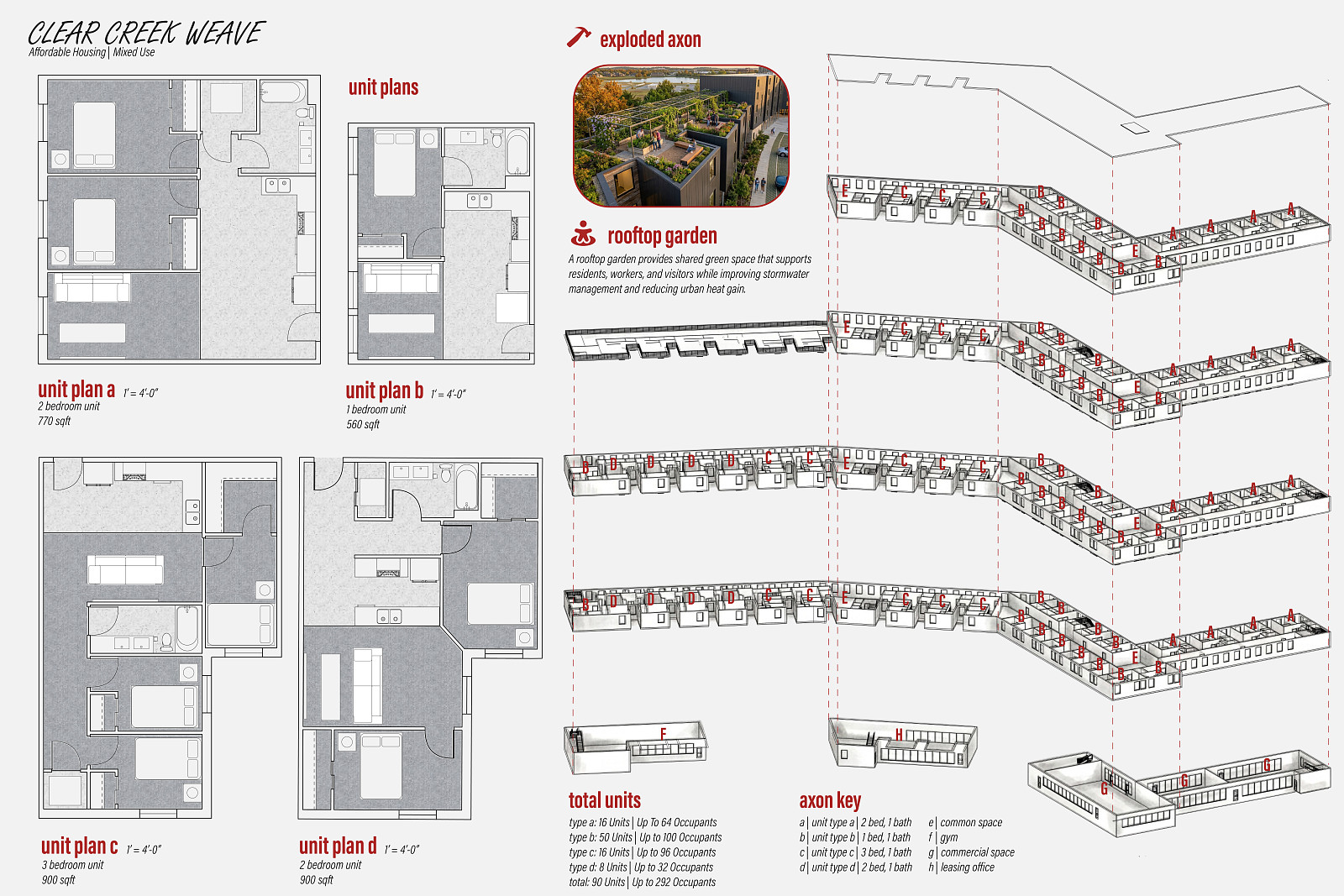
Upper residential floors provide a range of unit types designed to support different household structures found in the city. This includes smaller units for students and single occupants, larger family-oriented apartments, and layouts that allow for shared living arrangements. The intent is to create long-term housing stability rather than short-term turnover driven only by student cycles.
Units are oriented to maximize daylight and cross ventilation while framing views toward either the Ozark foothills, mature tree canopy, or the Clear Creek corridor. These visual connections reinforce the relationship between everyday living and the surrounding landscape.
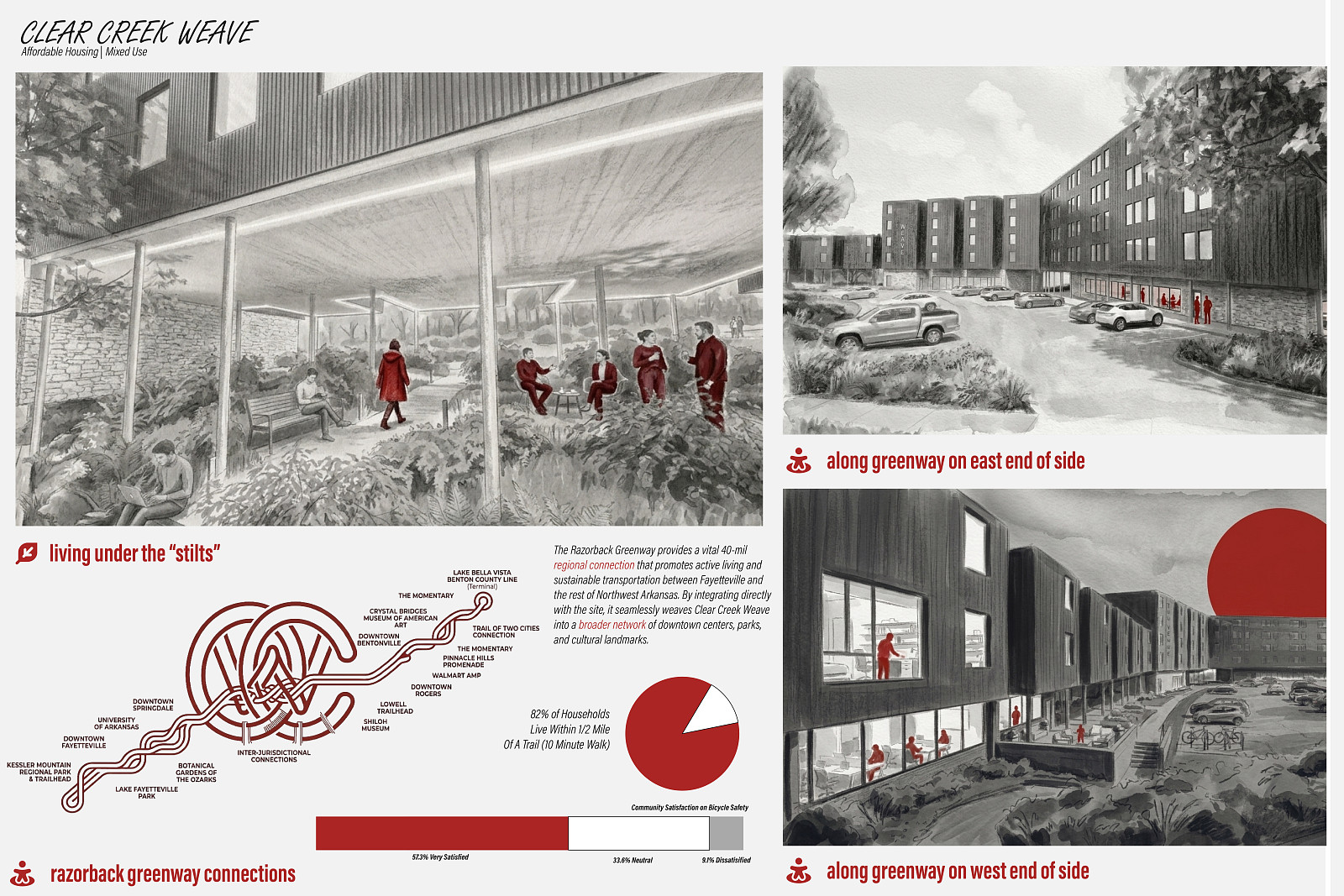
The landscape design extends the ecological logic of Clear Creek into the site. Native Ozark vegetation, riparian plant communities, and stormwater retention landscapes are used to restore habitat continuity and improve water quality within the watershed. The creek edge is treated as a public ecological space that supports walking, reflection, environmental learning, and seasonal change.
Pedestrian and bicycle routes connect the site directly into Fayetteville’s trail network, reinforcing non-vehicular mobility as a primary form of movement and linking the project to the city’s established green infrastructure system.
Technical information
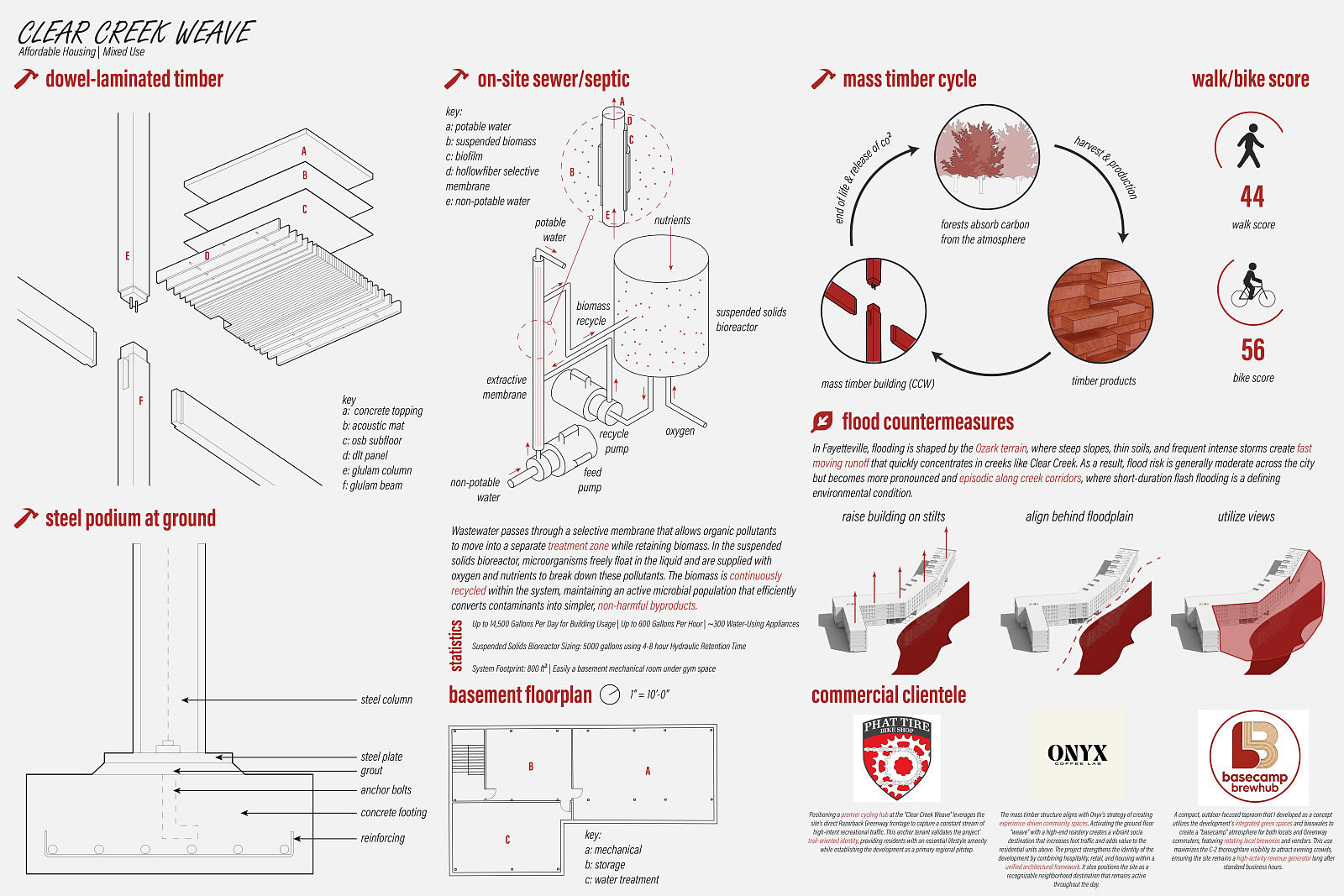
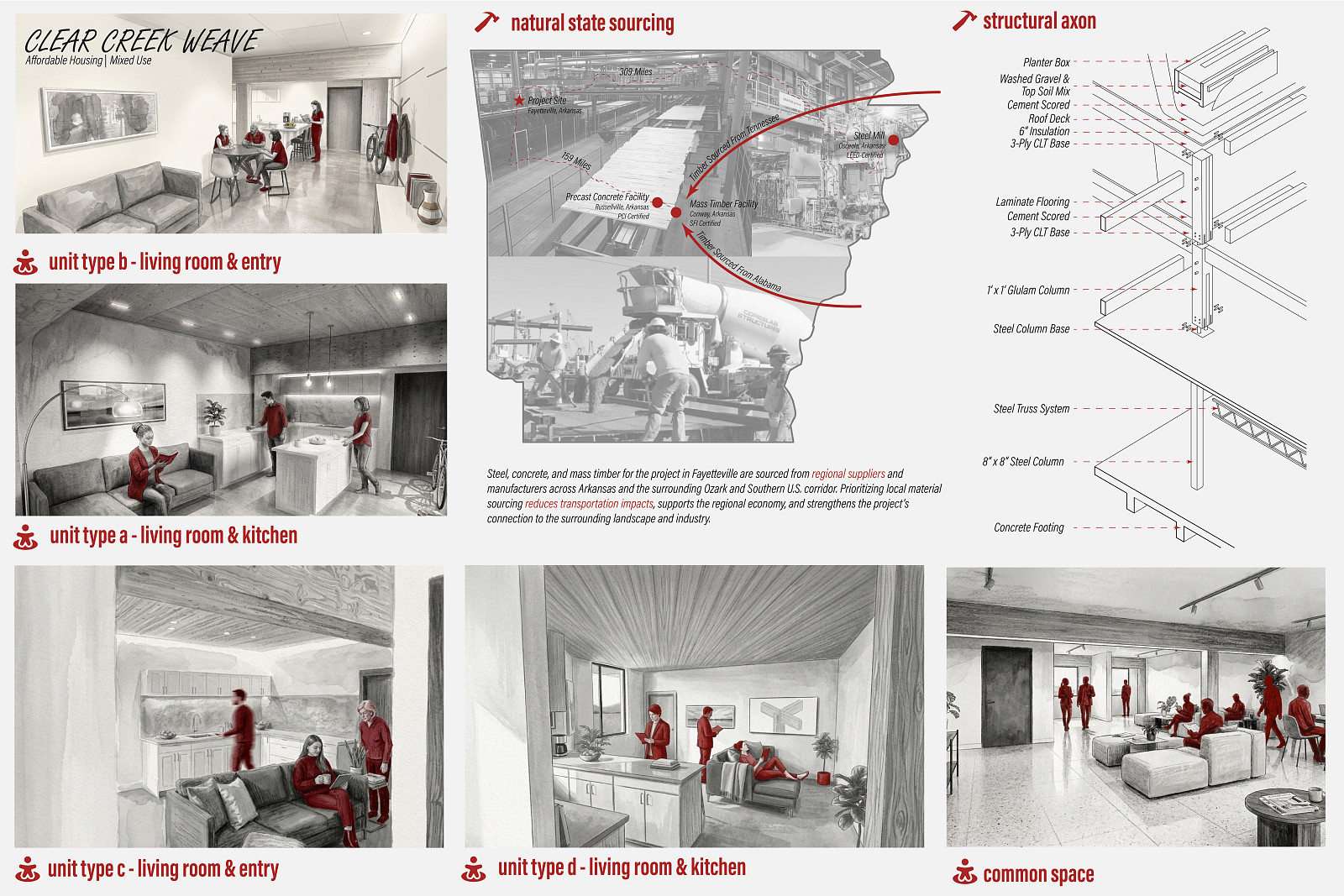
Clear Creek Weave is structured as a mid-rise multifamily building organized through a consistent structural grid that supports long-span communal spaces at the ground level and efficient residential planning above. The structural system is designed for durability, adaptability over time, and construction efficiency without relying on repetitive modular units.
The building envelope responds directly to Fayetteville’s climate conditions in northwest Arkansas. Hot humid summers and mild winters inform a strategy of deep shading, operable windows, and cross ventilation paths that reduce reliance on mechanical cooling. Facade articulation is used to control solar gain while maintaining visual connection to the surrounding landscape.
Stormwater management is a central technical component due to Clear Creek’s role within the local watershed. The site integrates bioswales, terraced planting beds, and permeable ground surfaces that slow, filter, and distribute runoff before it enters the creek system. These strategies reduce peak flow impact and contribute to improved water quality downstream.
The ecological design prioritizes native Ozark plant communities that support pollinators, birds, and seasonal biodiversity patterns. Planting strategies are selected to reinforce regional identity while also stabilizing soil and supporting long-term ecological resilience along the creek corridor.
Universal accessibility is integrated throughout the project, ensuring barrier-free access to residential, community, and landscape spaces. Circulation routes are designed for intuitive navigation, visual clarity, and equal access to creek-adjacent public areas.
Transportation planning prioritizes walking and cycling as primary modes of movement. Direct connections to Fayetteville’s trail system reduce dependence on private vehicles, while limited and carefully placed parking preserves ground-level space for landscape and community use.
Ultimately, Clear Creek Weave positions housing in Fayetteville as an active participant in ecological repair and urban continuity, strengthening the relationship between the city’s growth patterns and the natural systems that define the region.

Copyright © 2026 INSPIRELI | All rights reserved. Use of this website signifies your agreement to the Terms of Use, Privacy Policy, and use of cookies.