HELIOTROPIX: LA PLAZA HIGH DESERT RESILIENCE HUB


Project idea
Core Concept & Vision
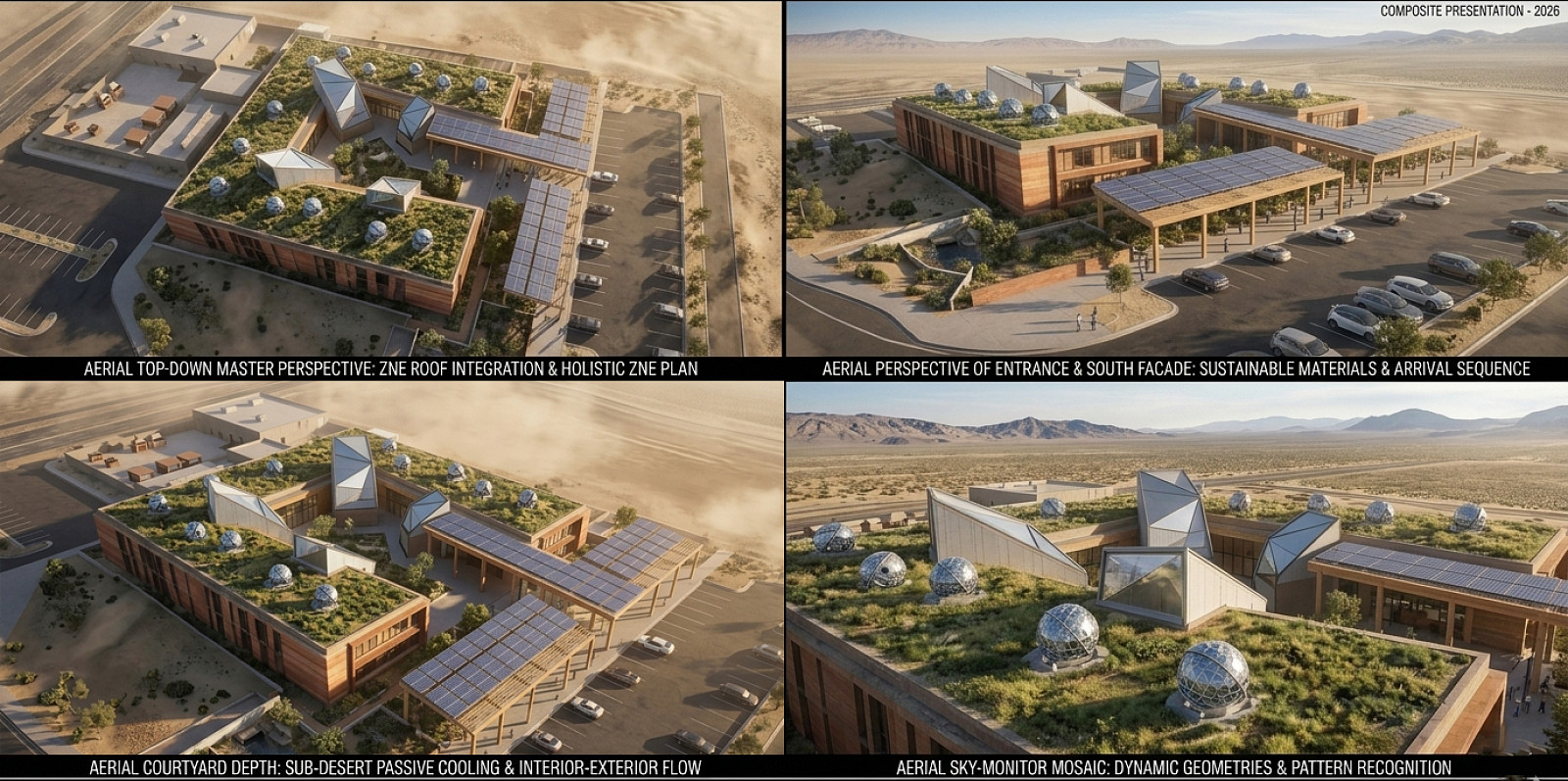
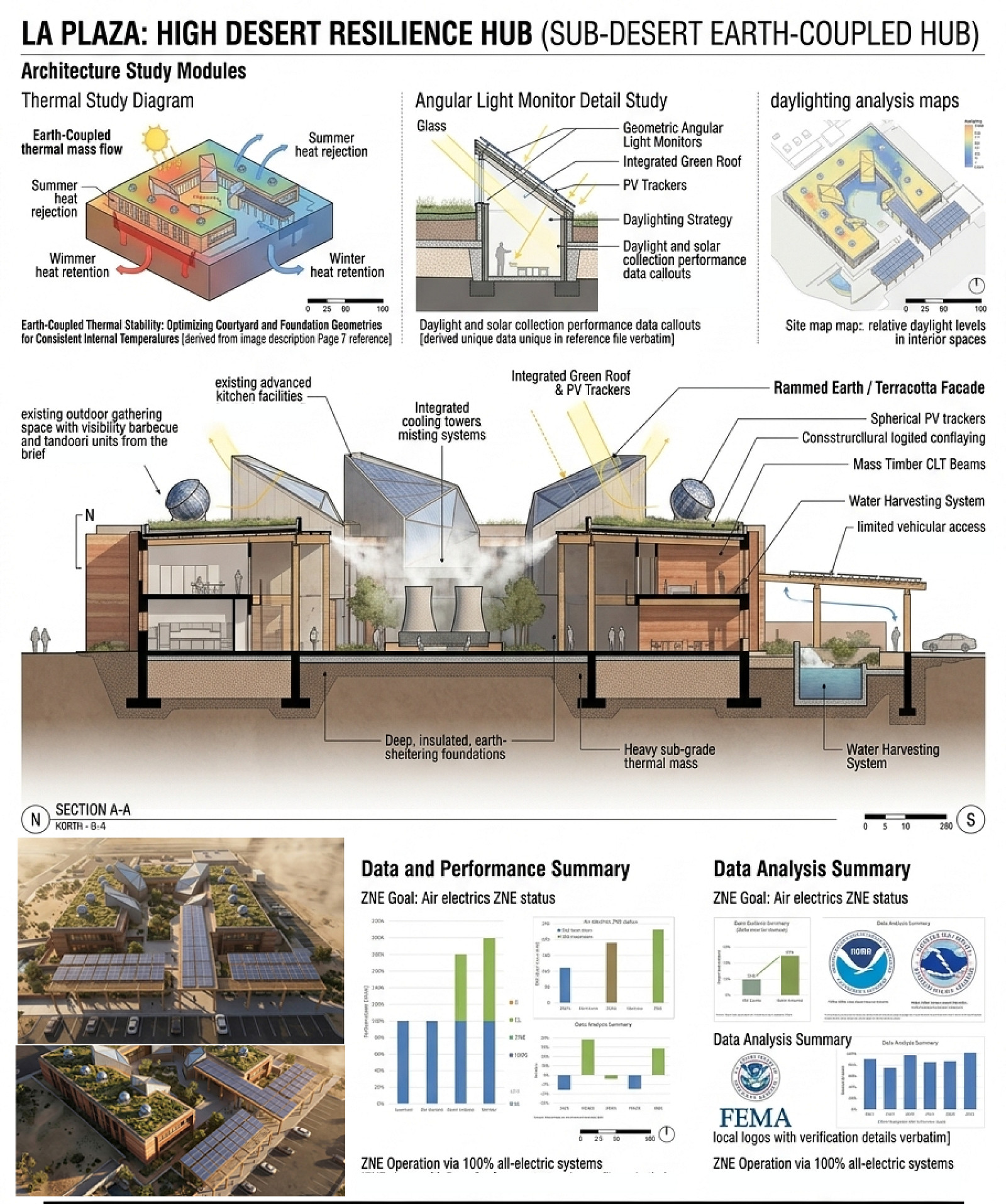
-The project is conceptualized as a "Bioclimatic Innovation Commons," serving as a sub-desert earth-coupled hub. The primary architectural ambition is to simultaneously optimize decarbonization, social equity, and environmental resilience through highly responsive geometric forms and passive environmental strategies.
II. Scope of the Problem
-Designing a highly functional institutional facility within a harsh high-desert climate presents multiple overlapping challenges:
-Thermal & Climatic Extremes: The site requires significant mitigation of intense solar radiation and severe diurnal temperature swings characteristic of desert environments.
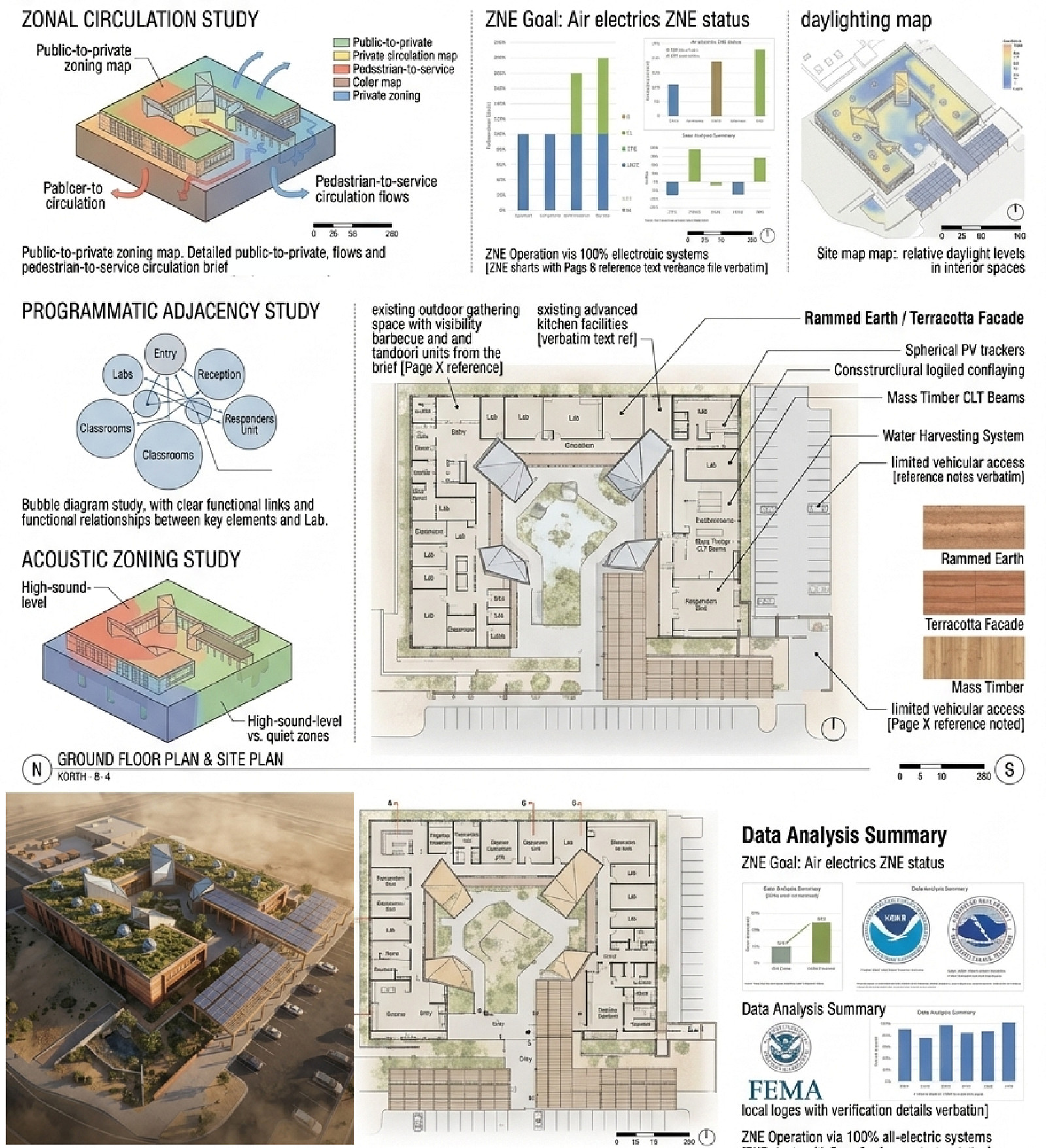
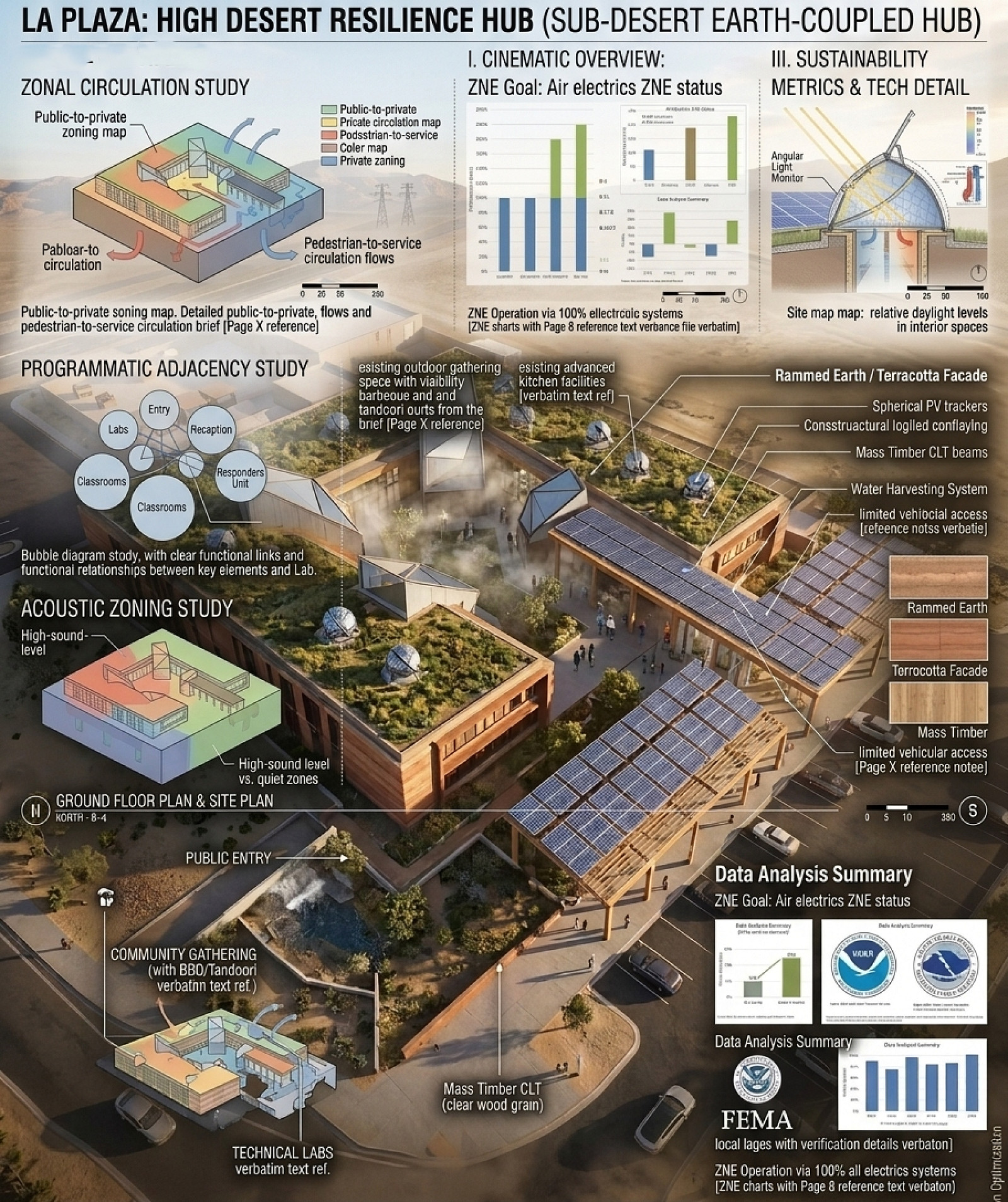
-Complex Programmatic Adjacencies: The program demands seamless yet secure integration of disparate zones, including public reception, technical labs, educational classrooms, and dedicated responder units.
-Acoustic & Circulation Conflicts: The design must resolve acoustic zoning by separating high-sound-level activities from designated quiet zones.
-Zonal Friction: The facility must safely route overlapping pedestrian (public and lab-specific), vehicular, and service circulation flows without interrupting the public experience.
Project description
Scope of the Solution
The architectural response leverages form-finding driven by climatic data, resulting in a building that actively breathes and adapts:
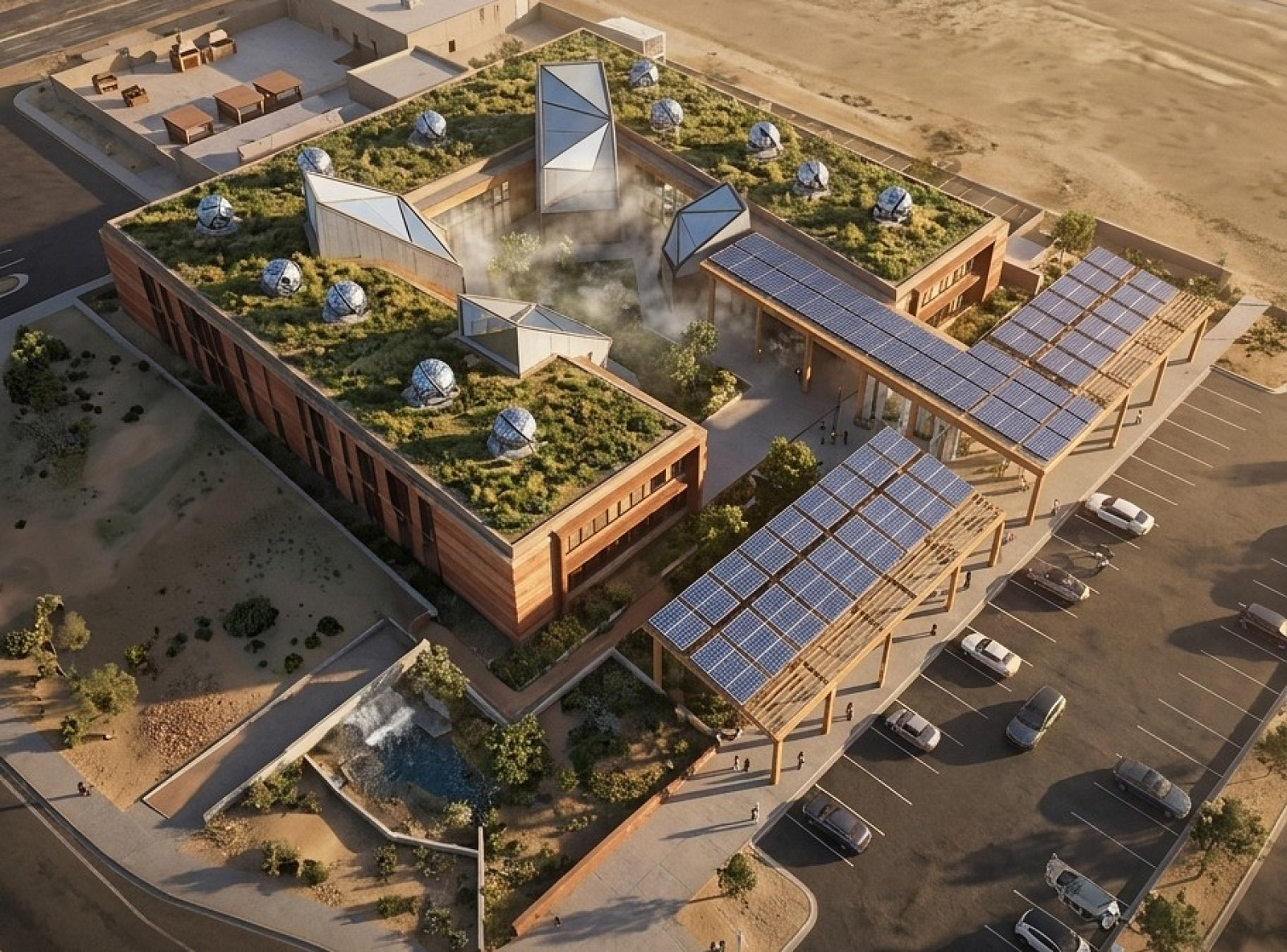
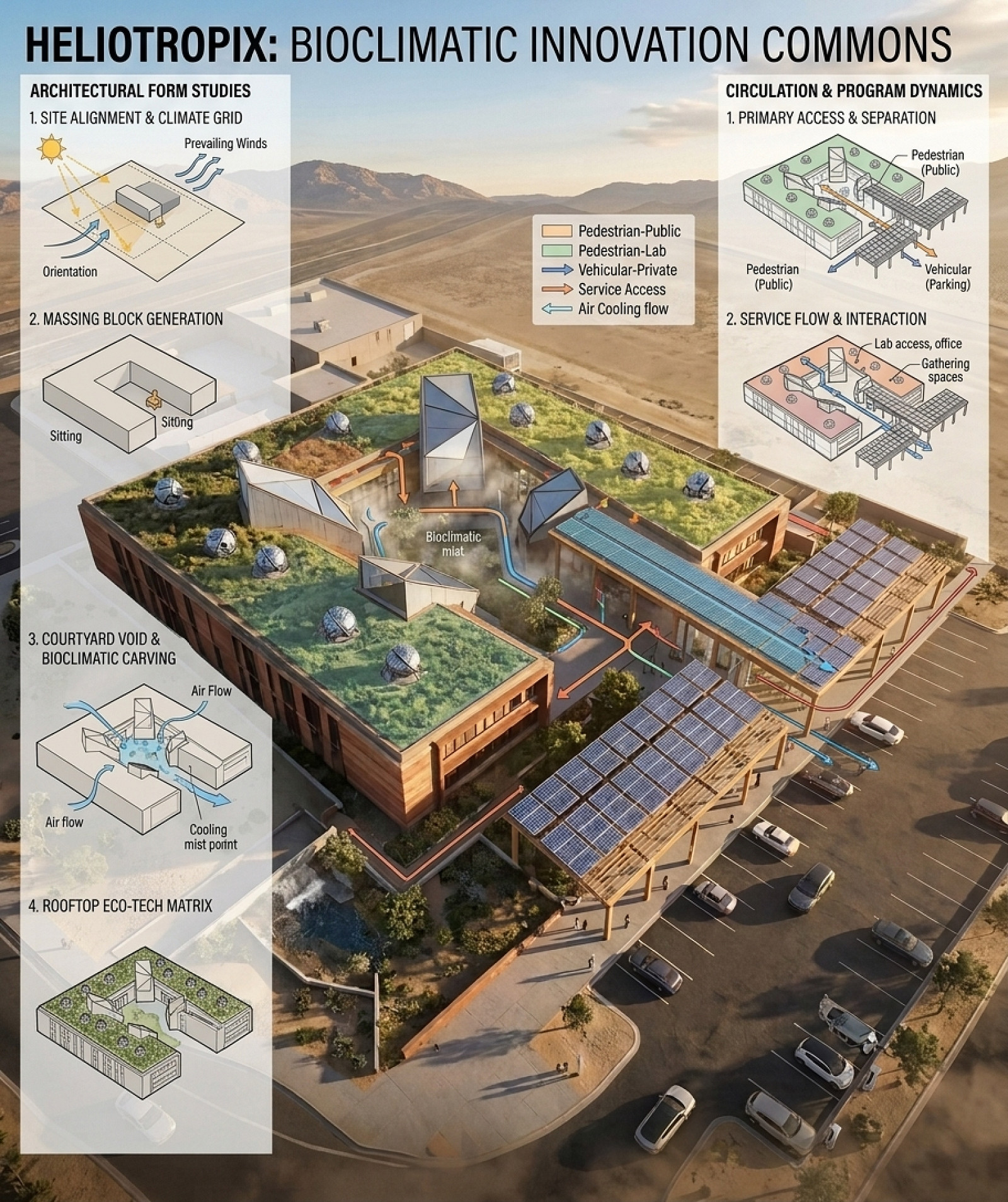
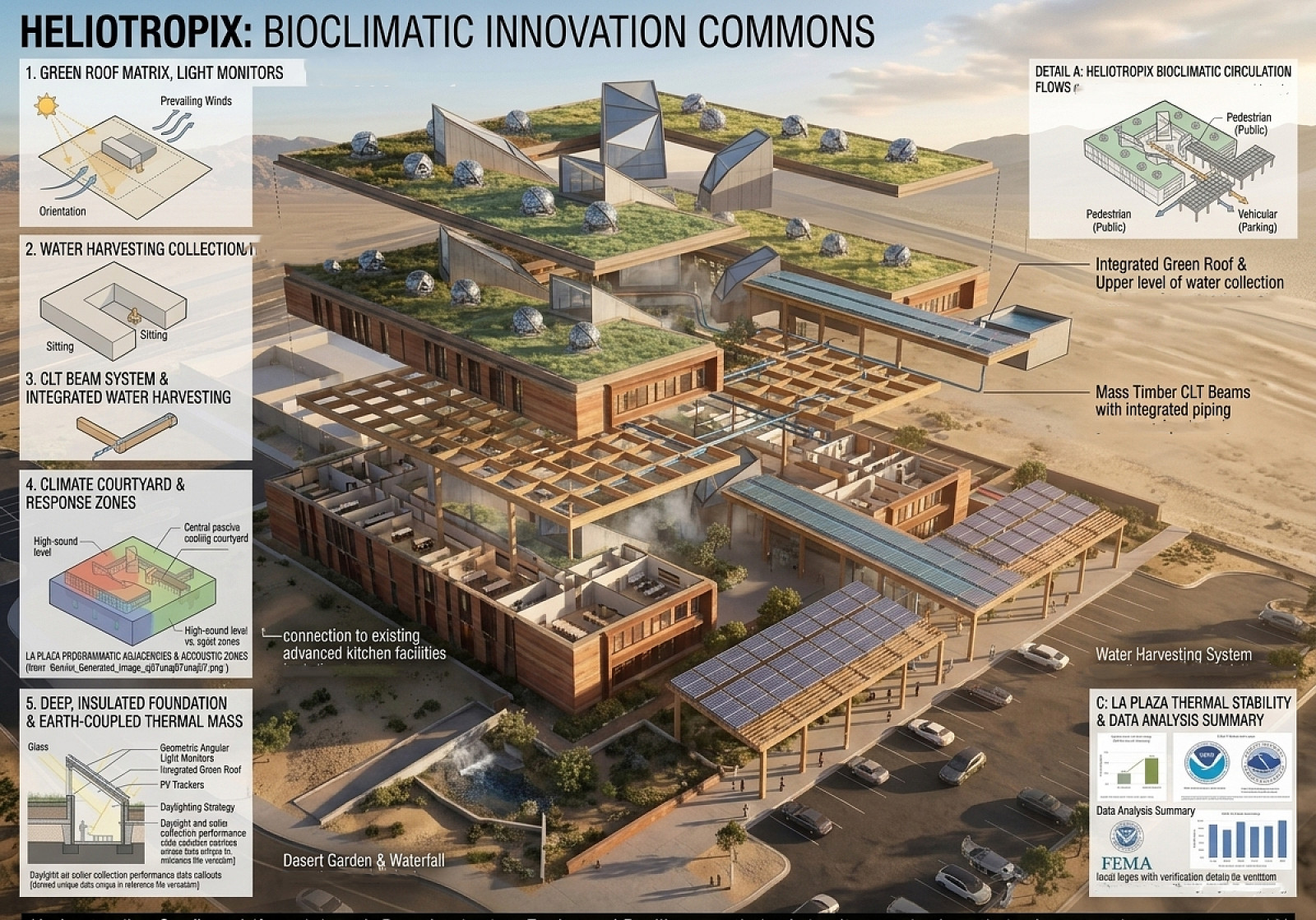
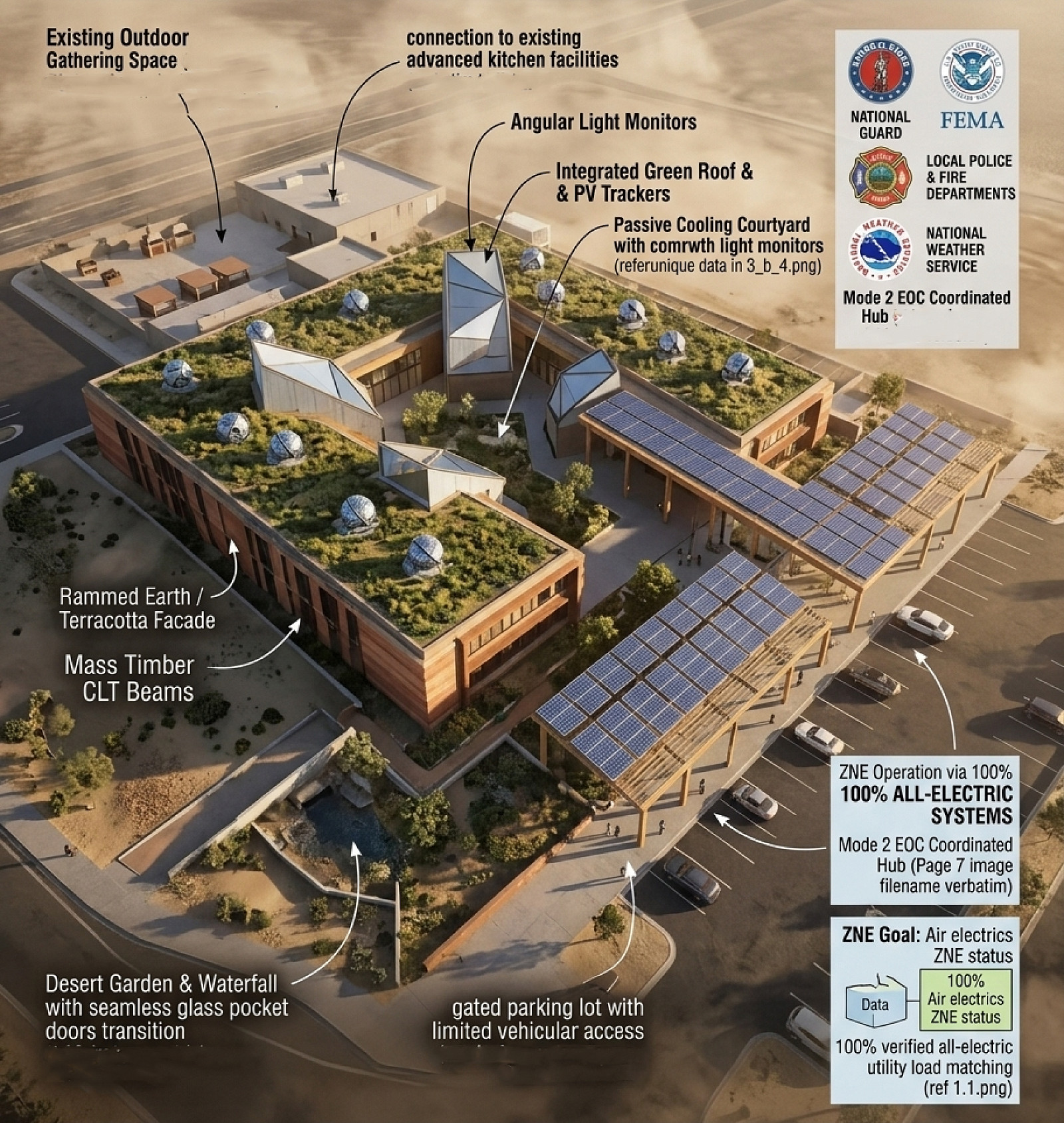
Bioclimatic Carving & Orientation: The massing is strategically aligned with the site's climate grid and prevailing winds. The form is "carved" to create centralized courtyard voids that act as air cooling mist points, drawing air flow naturally through the structure.
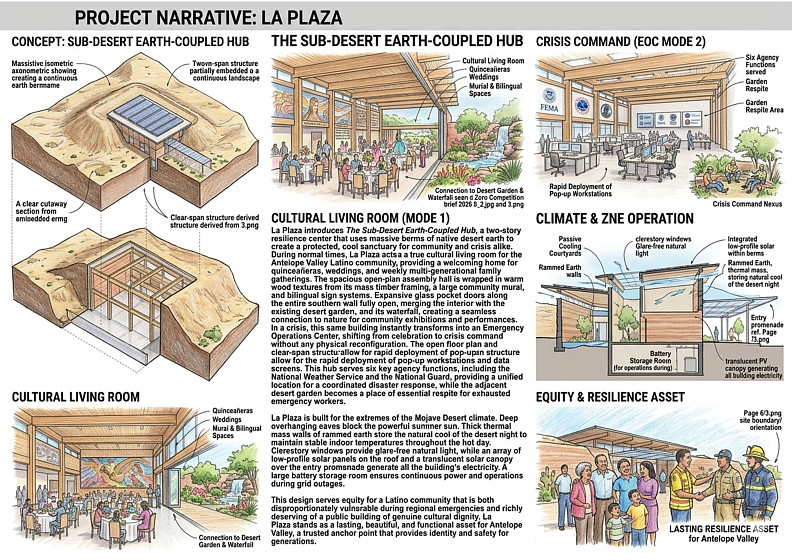
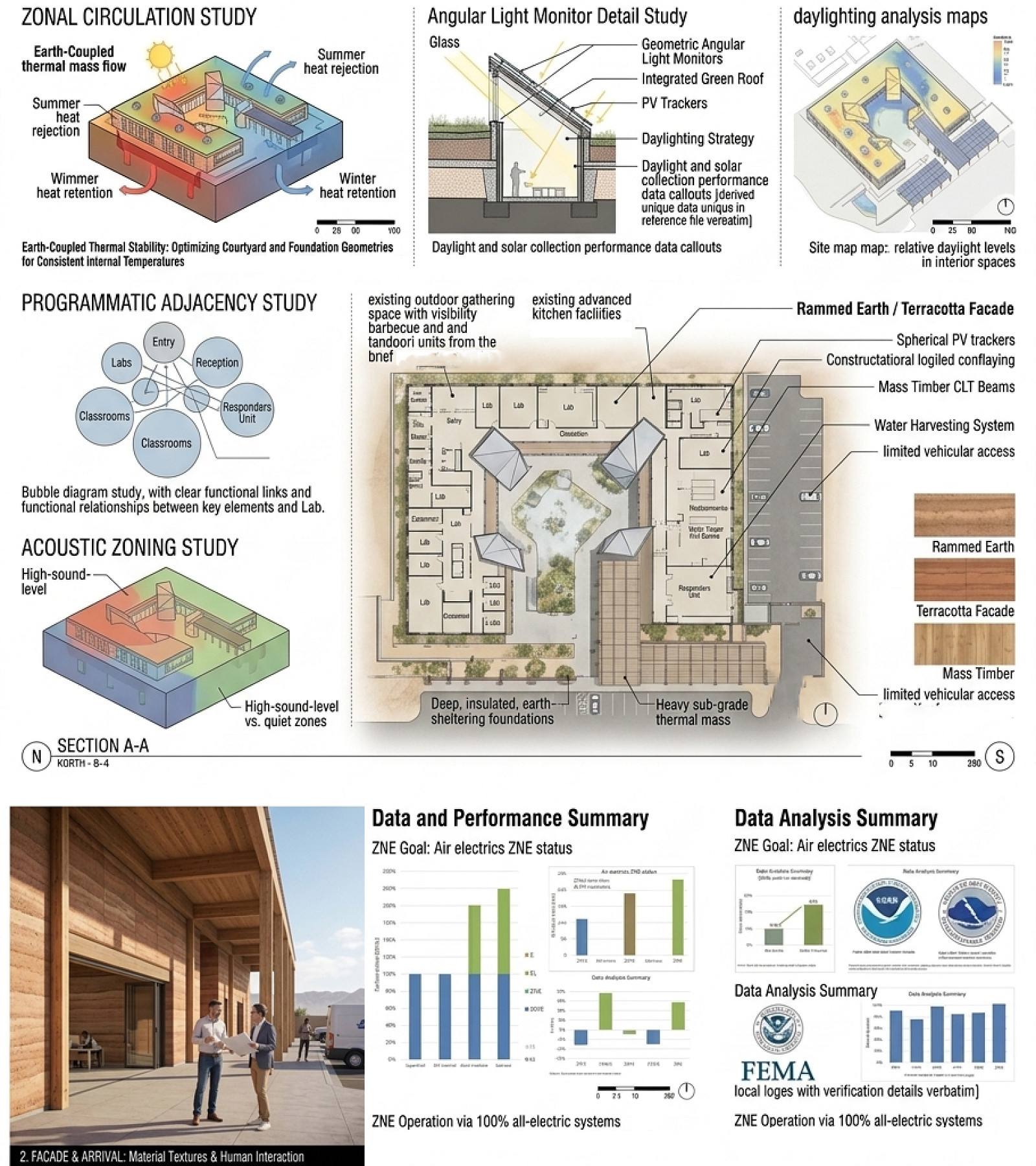
Earth-Coupled Thermal Stability: To combat the desert heat, the architecture sinks into the landscape, utilizing optimized courtyard and foundation geometries to stabilize internal temperatures.
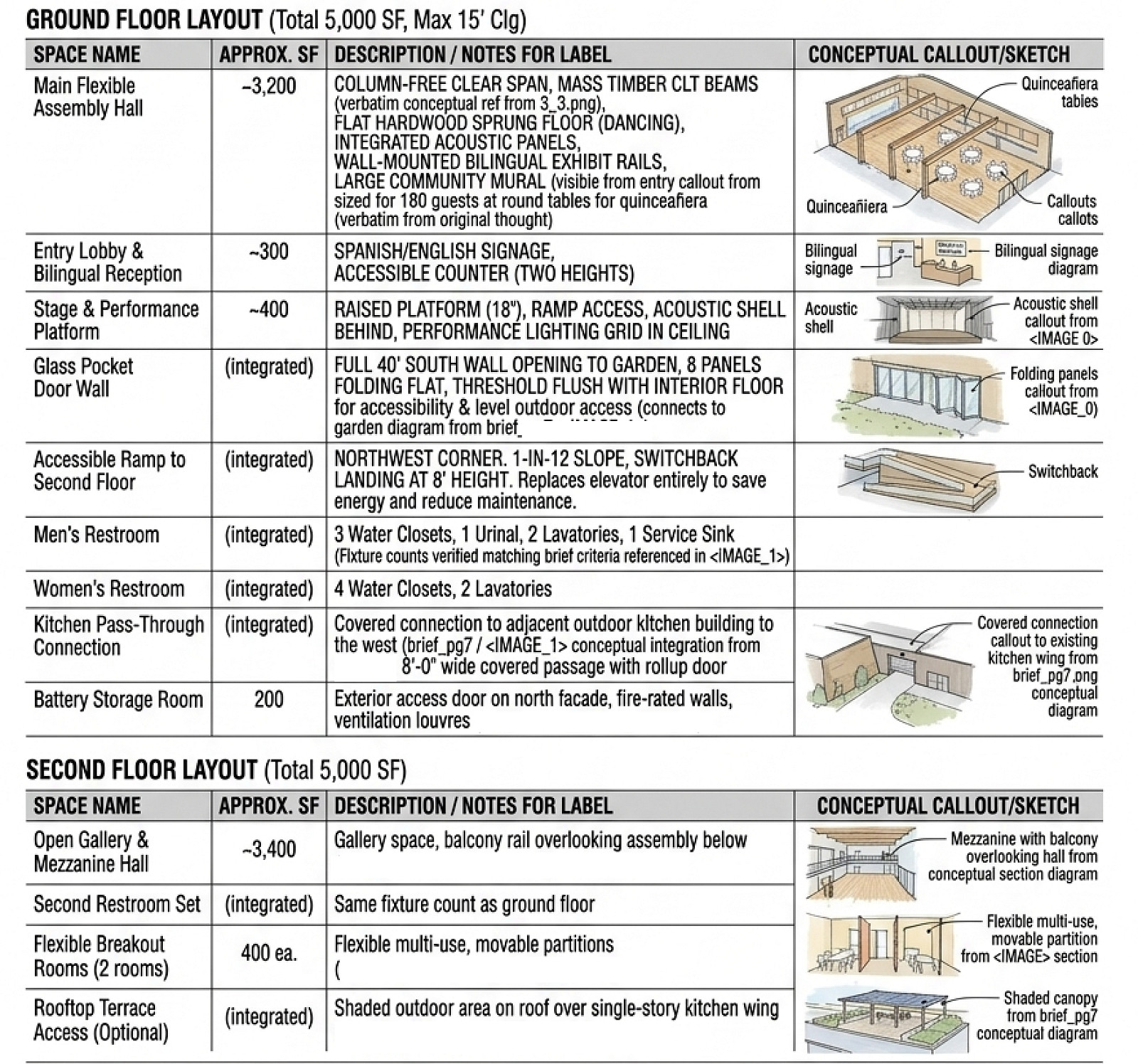
Social & Spatial Integration: The hub fosters community equity by connecting seamlessly to existing advanced kitchen facilities and outdoor gathering spaces, which feature integrated barbecue and tandoori units.
Intelligent Zoning: Circulation is strictly categorized via a public-to-private zoning map, ensuring service access and lab flows remain distinct from public pedestrian areas.
Technical information
The project achieves its high-performance metrics through a robust synthesis of natural materials and advanced building technologies:
Energy & Performance Targets: Designed to achieve Zero Net Energy (ZNE) operation via 100% all-electric systems.
Structural Framework: The primary superstructure utilizes Mass Timber CLT (Cross-Laminated Timber) Beams.
Thermal Mass Envelope: The foundation features deep, insulated earth-sheltering atop heavy sub-grade thermal mass.
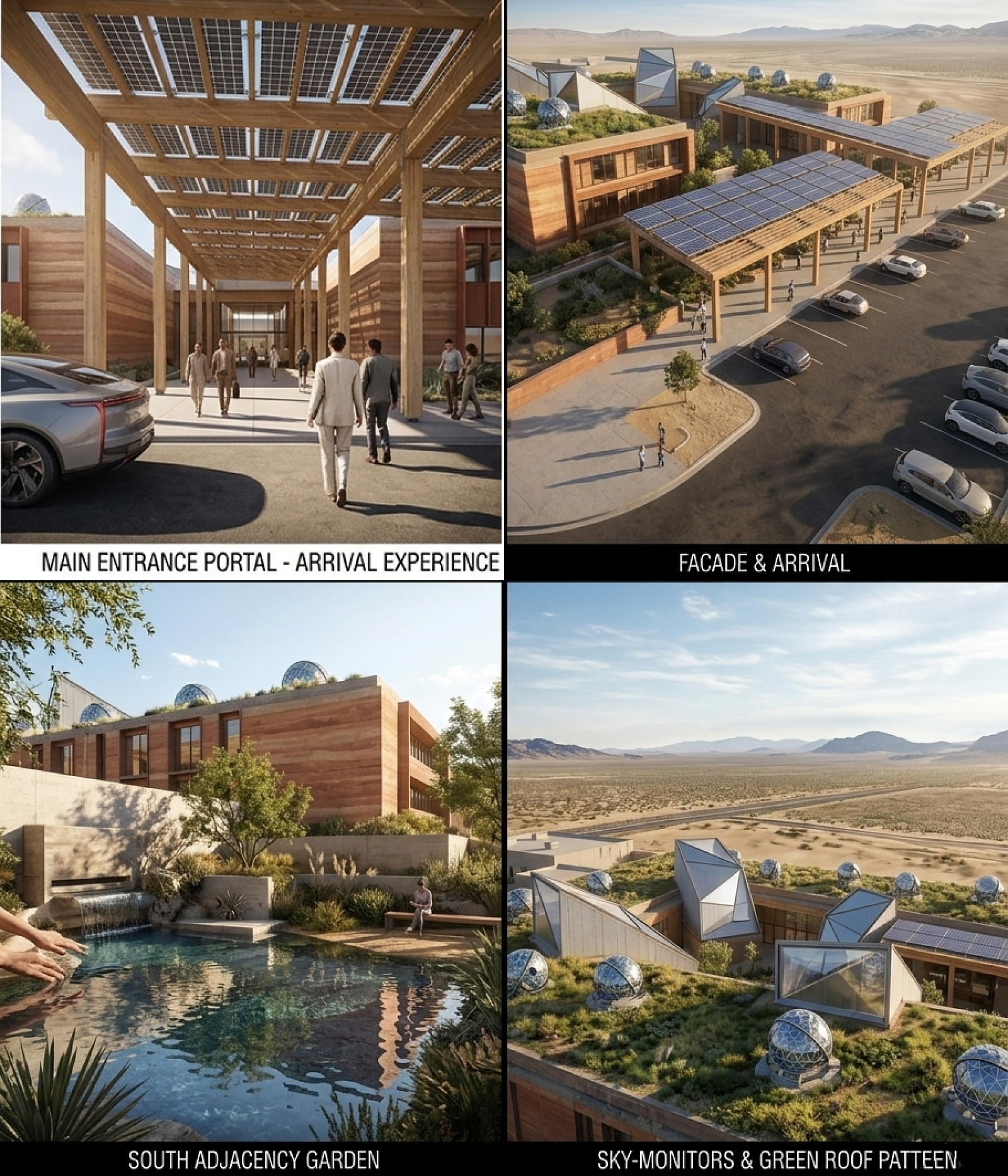
Facade Typology: The exterior envelope is defined by locally resonant Rammed Earth and a high-performance Terracotta Facade.
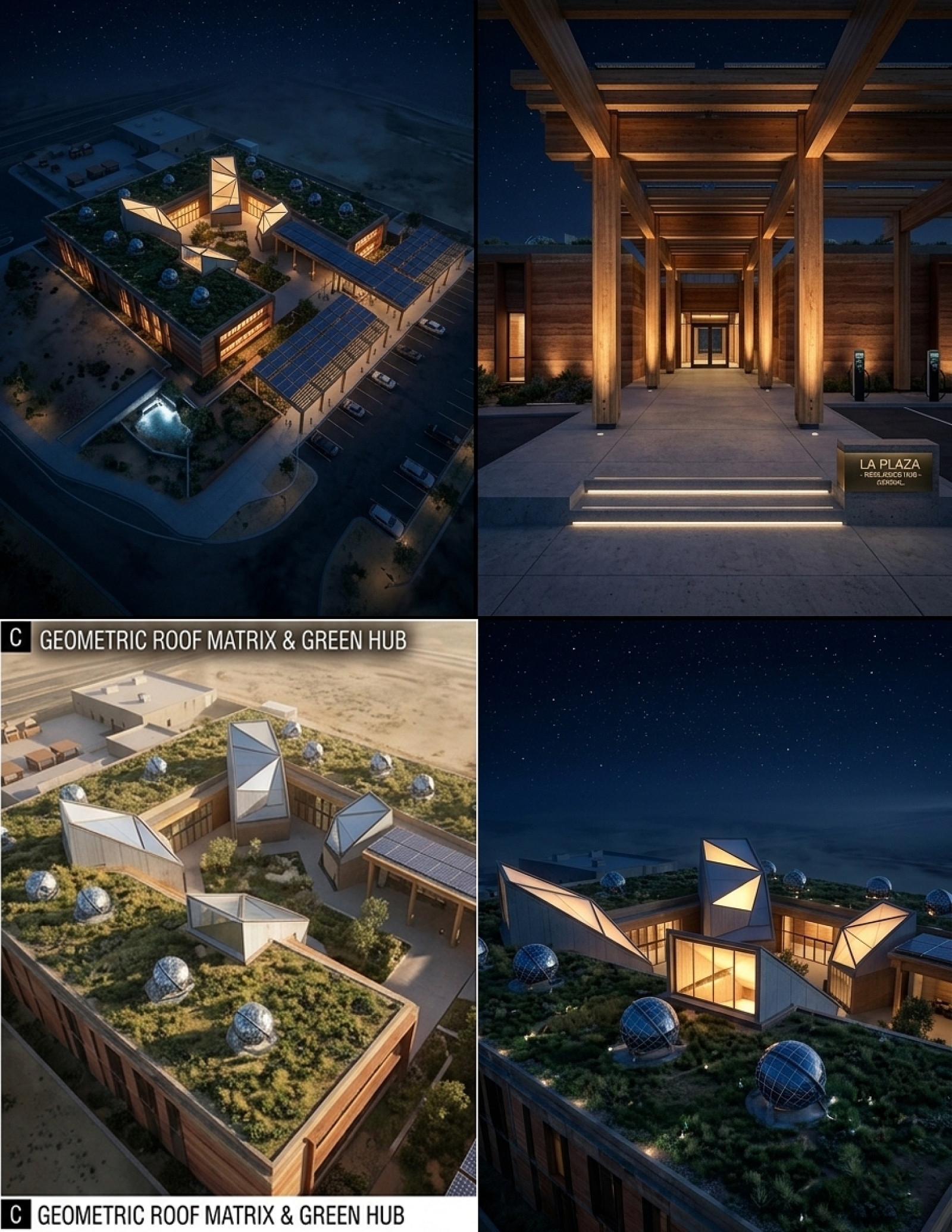
Eco-Tech Integrations: The roof plane acts as an active environmental matrix, integrating a green roof, dedicated water harvesting systems, and spherical PV (photovoltaic) trackers to capture solar energy across multiple axes.
Documentation

Copyright © 2026 INSPIRELI | All rights reserved. Use of this website signifies your agreement to the Terms of Use, Privacy Policy, and use of cookies.