Integration, Creativity and Recreation Center


Project idea
The project's goal is to create a space for all ages, for residents and tourists alike. The building aims to provide an attractive, year-round offering, something that's lacking in the Gdynia Orłowo district.
Project description
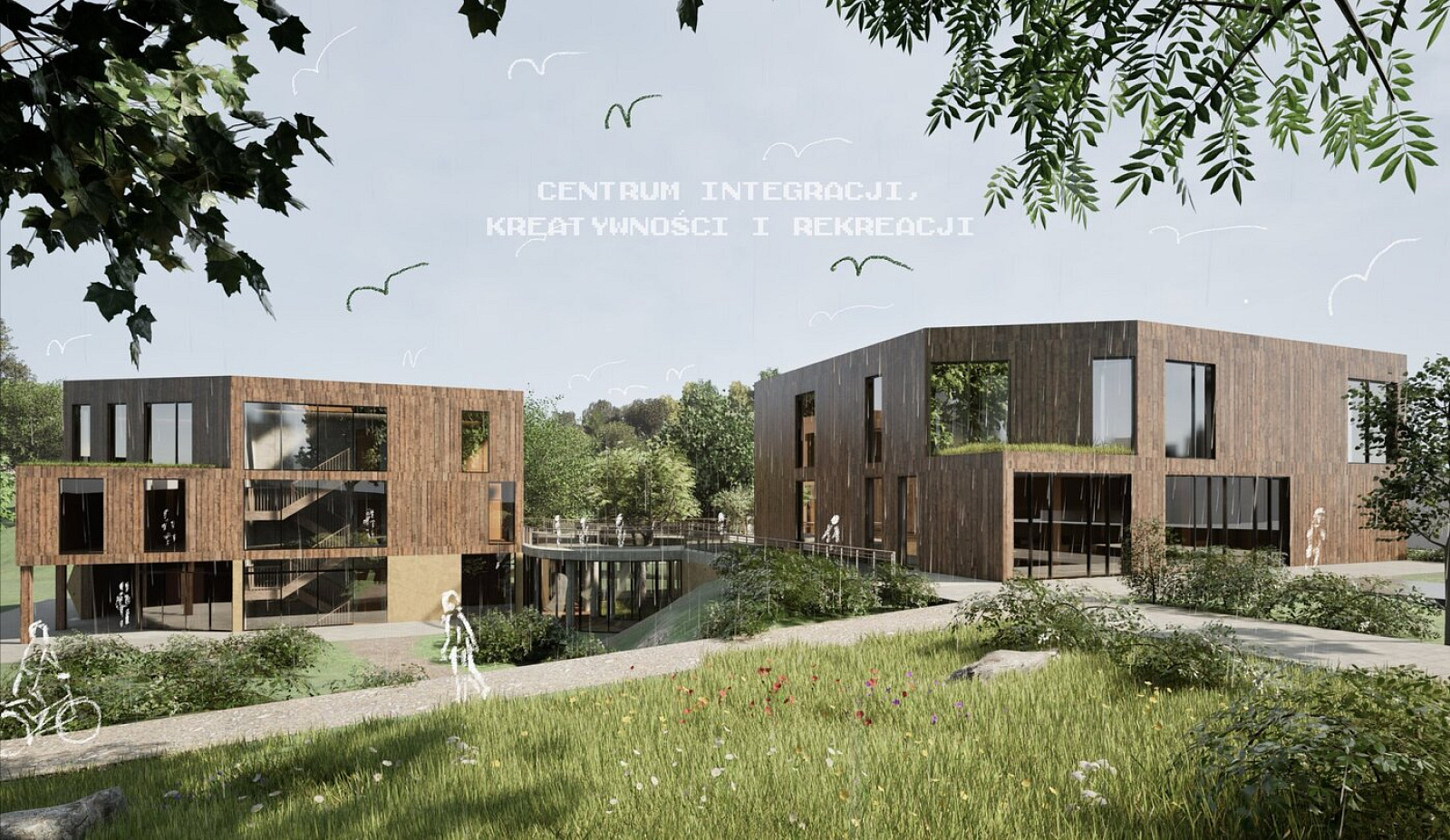
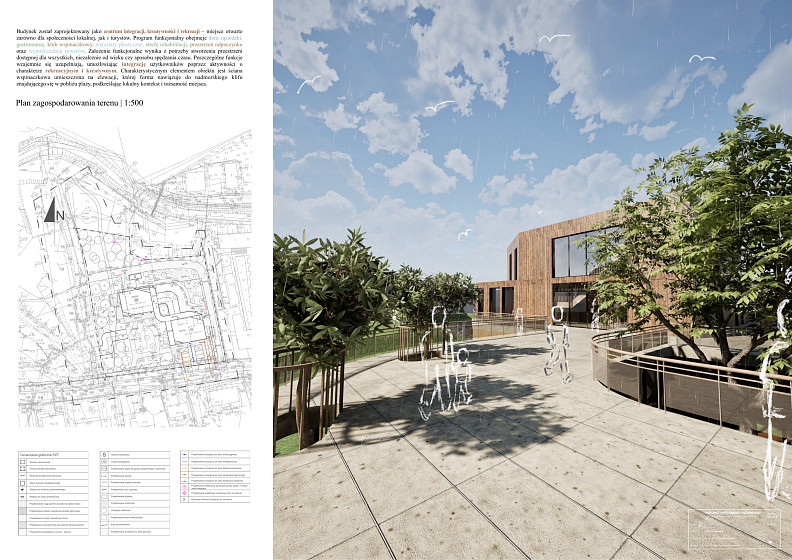
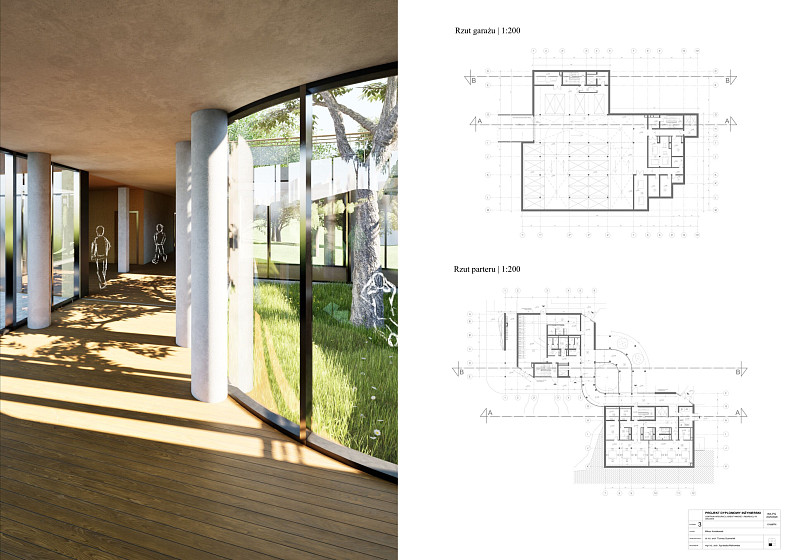
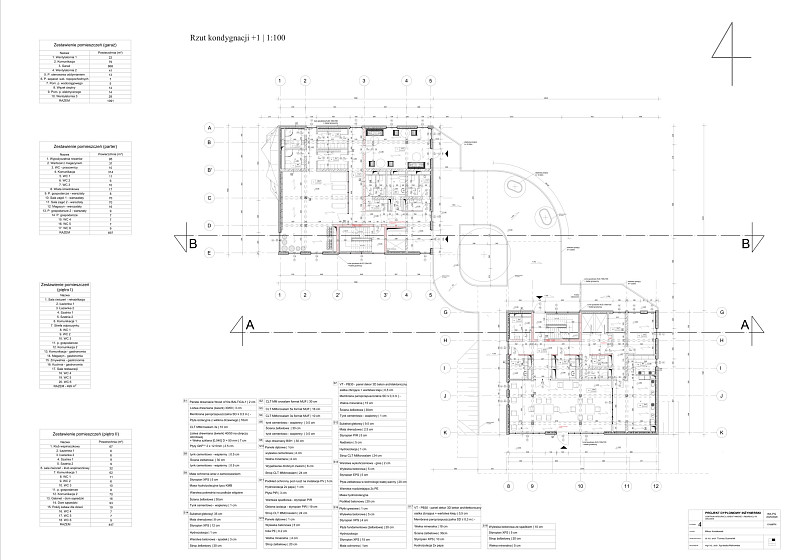
The building was designed as a centre for integration, creativity and recreation — a place open to both the local community and tourists. The functional programme includes a neighbourhood house, gastronomy, a climbing club with a training hall and representative area, a rehabilitation zone, art workshops, a bicycle rental and a relaxation area. The individual functions complement each other, enabling the integration of users through recreational and creative activities, regardless of age.
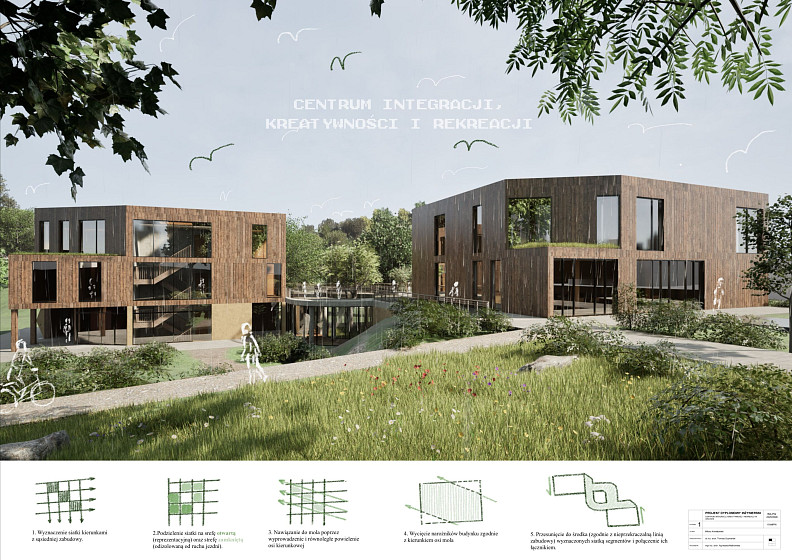
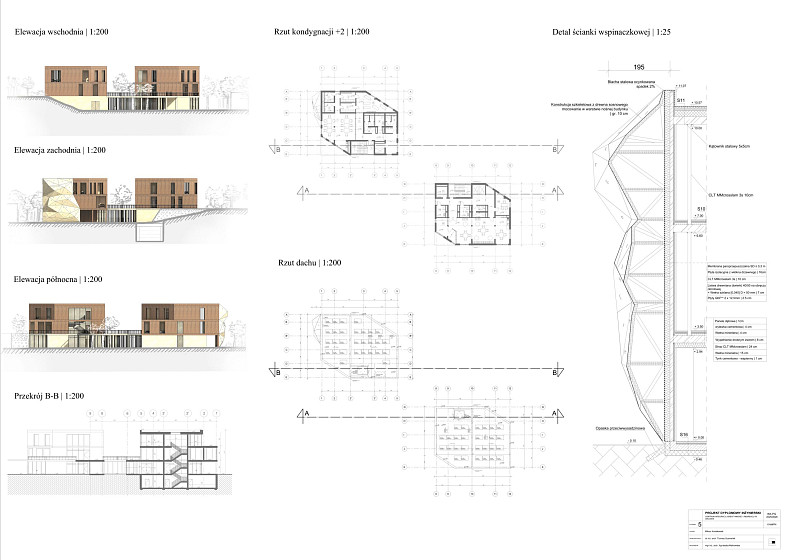
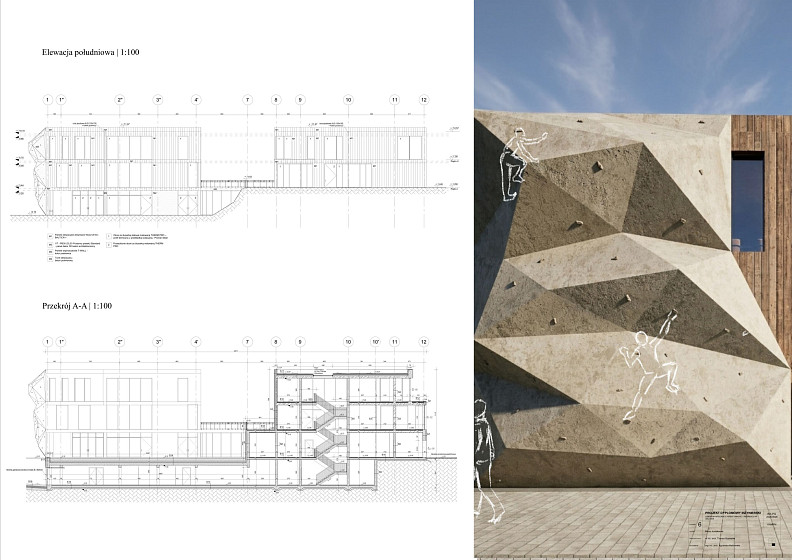
The building's massing was derived from a directional grid defined by the neighbouring buildings' setback lines, supplemented by axes parallel to the Orłowo pier that cut the corners of the volume — giving the form dynamism and a symbolic connection to a key landmark of the district. Two segments connected by a link through which existing trees freely grow are clad in vertical timber boards referencing the tradition of the fishing cutters of Orłowo beach, and architectural concrete panels imitating sandstone at ground level, continuing the motif of the nearby cliff. The defining feature of the western facade is a climbing wall — a direct reference to the Kępa Redłowska cliff.
The building fits into the urban context through its reference to the geometry of the neighbouring development, respect for the existing trees on the plot, and direct connection to the tourist trail running along the site's boundary.
Technical information
The building features a mixed structural system combining reinforced concrete and cross-laminated timber (CLT) with glued laminated timber (BSH) columns. The reinforced concrete technology was applied to the elements requiring the highest rigidity and load-bearing capacity — the link connecting the two segments, the south-eastern ground-floor segment, the staircase cores and the underground garage. The remaining, predominant part of the structure was designed in CLT technology, ensuring high load-bearing capacity at significantly reduced self-weight, excellent thermal and acoustic insulation performance, and a low carbon footprint.
The building's foundations are mixed: a foundation slab was applied in zones without an underground garage, while the garage itself was constructed using white tank technology — a fully waterproof reinforced concrete structure that eliminates the need for external waterproofing membranes, particularly justified by the high groundwater level resulting from the site's coastal location.
The flat roofs are finished with a protective layer, PV substrate and bituminous waterproofing membrane at 2% slope. On the corner islands of the top floor, an additional layer of substrate and extensive vegetation forms green roofs. The climbing wall on the western facade is anchored to the structural layer of the external wall via a wooden structural frame, which transfers dynamic loads from climbing use without interrupting the continuity of the wall's thermal insulation.
Documentation
Show PDF 1Show PDF 2Show PDF 3Show PDF 4Show PDF 5Show PDF 6

Copyright © 2026 INSPIRELI | All rights reserved. Use of this website signifies your agreement to the Terms of Use, Privacy Policy, and use of cookies.