Návštěvnické centrum CEG FSv ČVUT


Project idea
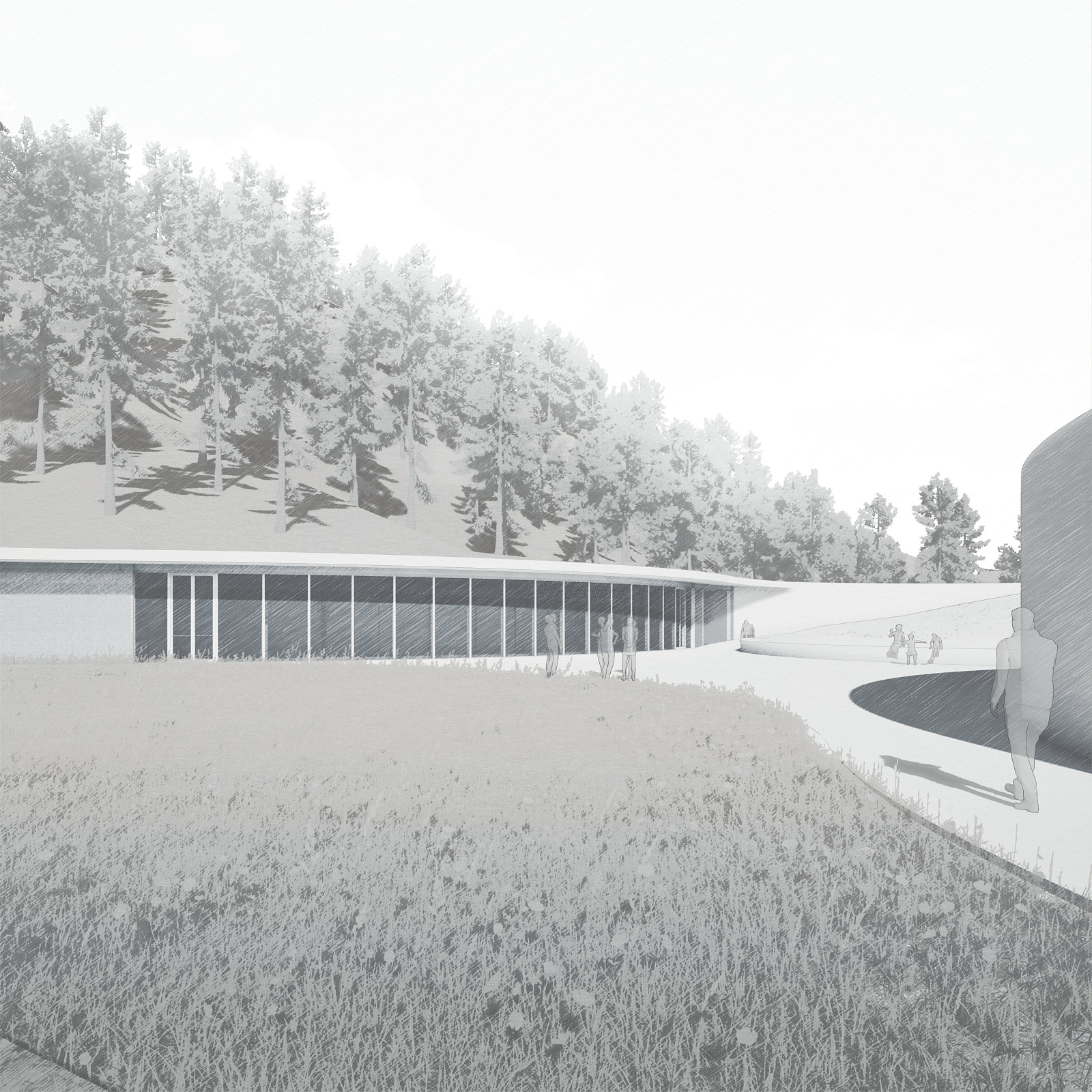
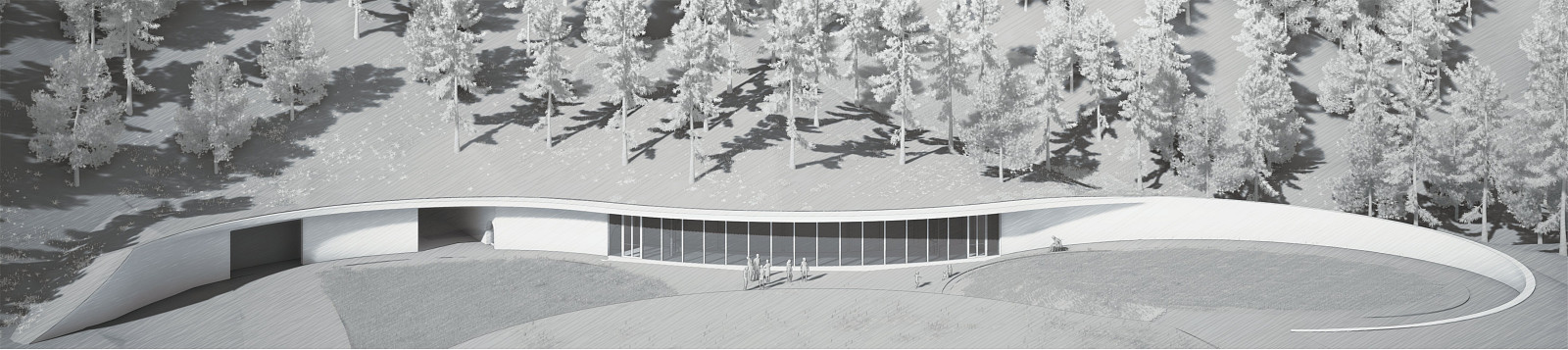
The primary vision for the CEG FSV CTU Visitor Center is to create a seamless, organic dialogue between the new architecture, the natural morphology of the terrain, and the existing portal of the Josef tunnel. Instead of imposing a rigid, standalone structure, the design acts as a fluid extension of the landscape itself. The fundamental idea is to use pure geometry—specifically circles and the golden ratio—to generate an organic form that naturally embraces the site. The goal is to create a respectful, contemporary public entrance that guides visitors into the hillside while serving as an inviting gateway to the university's underground research facility.
Project description
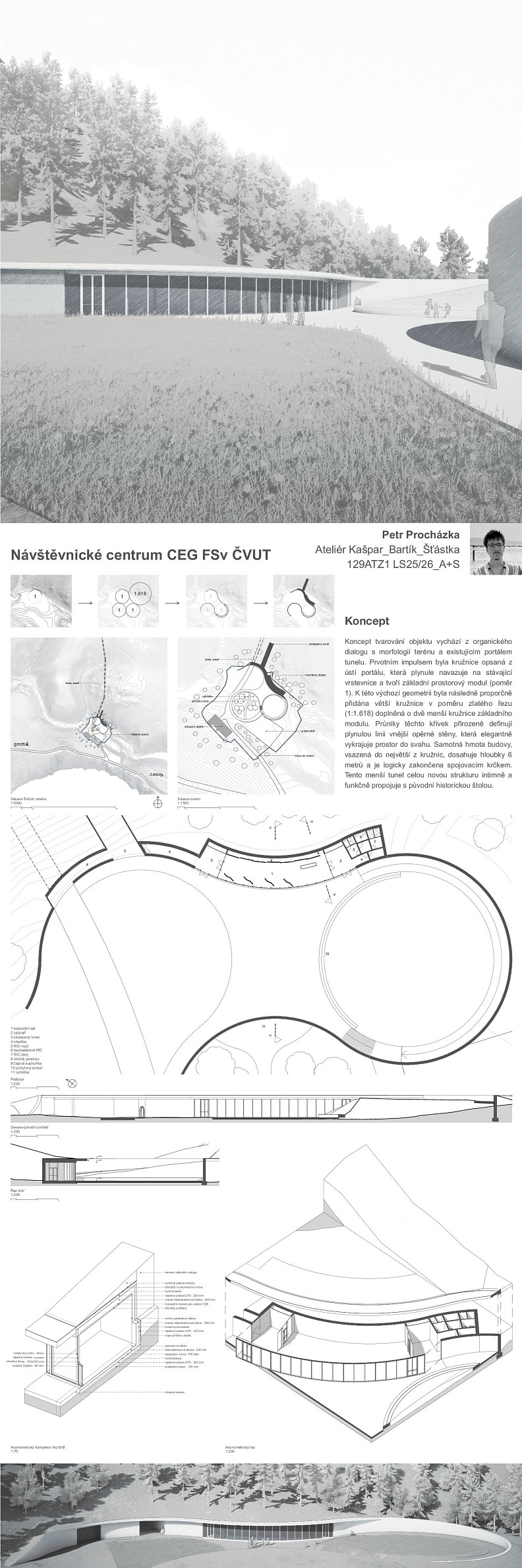
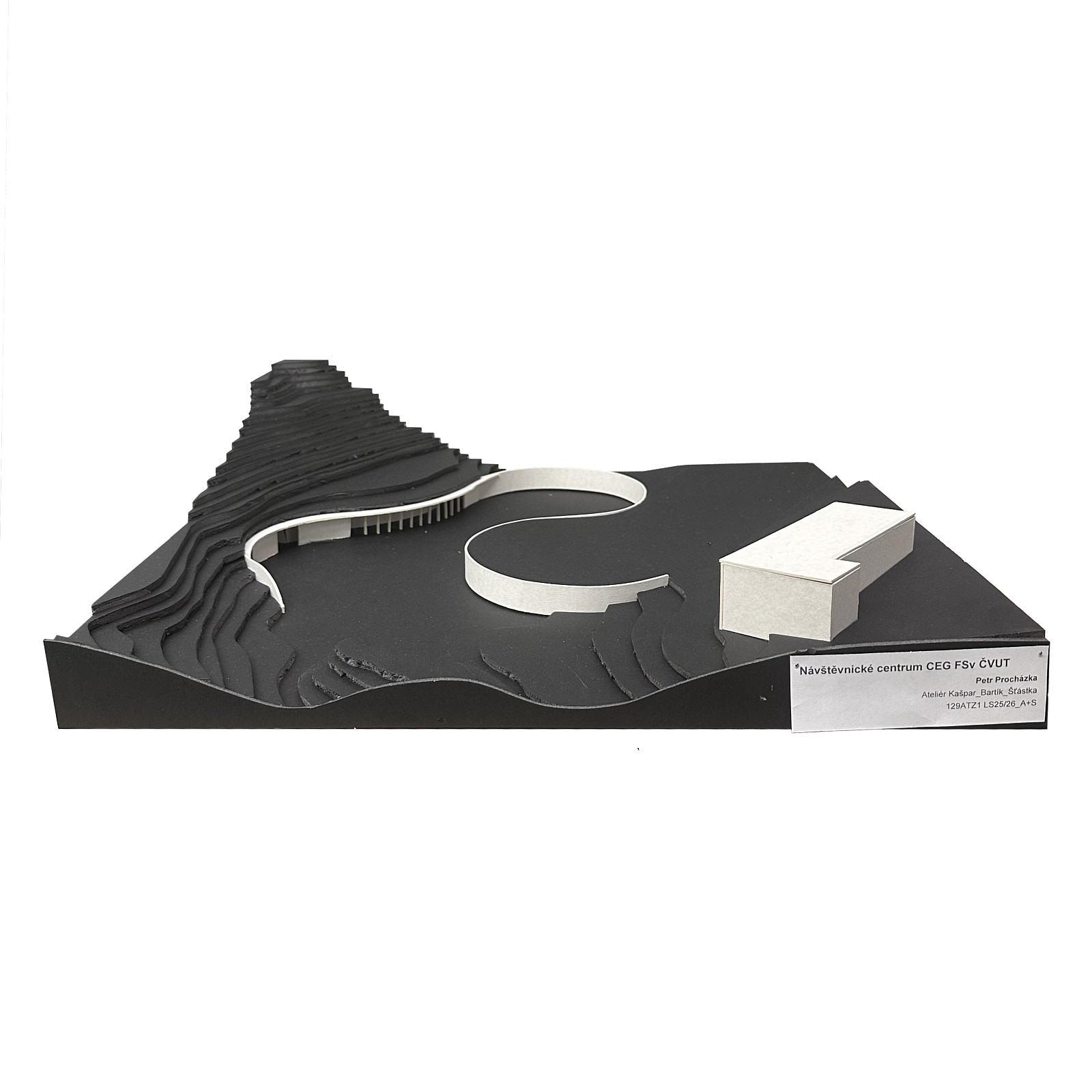
The architectural form is generated through a precise geometric process. The initial spatial module is defined by a circle inscribed around the original tunnel portal. To this base, a larger circle proportioned by the golden ratio (1:1.618) is added, alongside two supplementary circles. The intersections of these curves generate the continuous, sweeping line of the exterior retaining wall, elegantly carving a new public plaza into the hillside. In terms of function, the new visitor center provides comprehensive facilities for public tours of the research tunnel—including a ticketing area, visitor equipment distribution zones, restrooms, and a flexible space for exhibitions or multi-functional use. The main building mass is embedded within the largest circle, reaching a depth of 6 meters into the terrain, and logically culminates in a narrow connecting neck that transitions directly into the Josef tunnel.
Technical information
The visitor center is designed as an earth-sheltered structure, deeply integrated into the sloping terrain. A key structural element is the robust, curved retaining wall that holds back the hillside and defines the exterior public space. Because the building reaches a subterranean depth of 6 meters, it requires sophisticated retaining and waterproofing systems. To minimize the visual and environmental footprint, the structure is topped with a continuous green roof. This roof seamlessly merges with the surrounding forest landscape, essentially continuing the natural terrain over the building. The functional connection to the existing CTU research tunnel is resolved via a newly excavated subterranean corridor.
Documentation
Created in:


Copyright © 2026 INSPIRELI | All rights reserved. Use of this website signifies your agreement to the Terms of Use, Privacy Policy, and use of cookies.