Informační cetrum Vltavská


Project idea
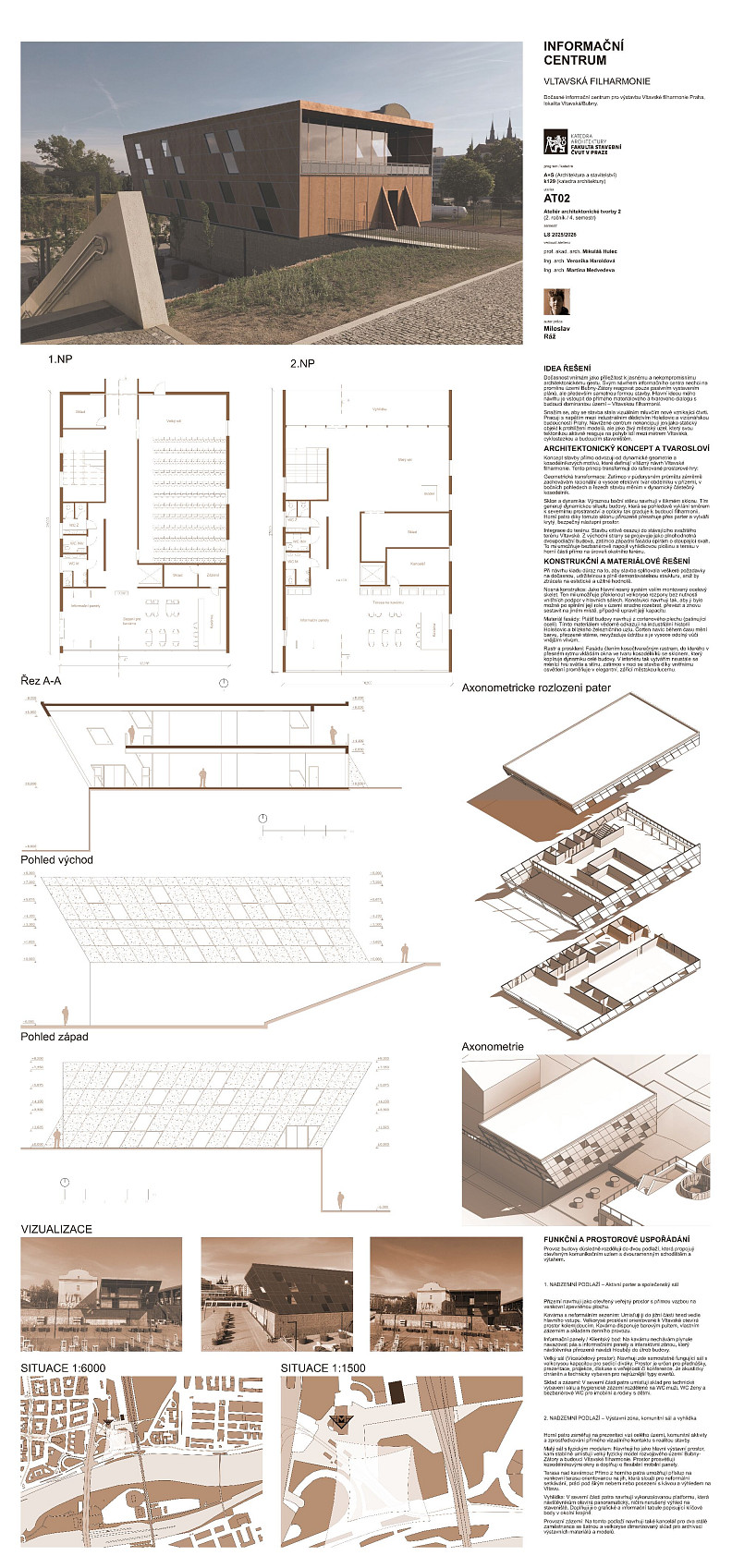
The project is a temporary information center for the construction of the Vltava Philharmonic in Prague, located in the Vltavská/Bubny area. It approaches the design as a clear and uncompromising architectural gesture, serving as a link between the historical and future character of Prague's Bubny-Zátory district while initiating a meaningful dialogue between materiality and the surrounding context.
Project description
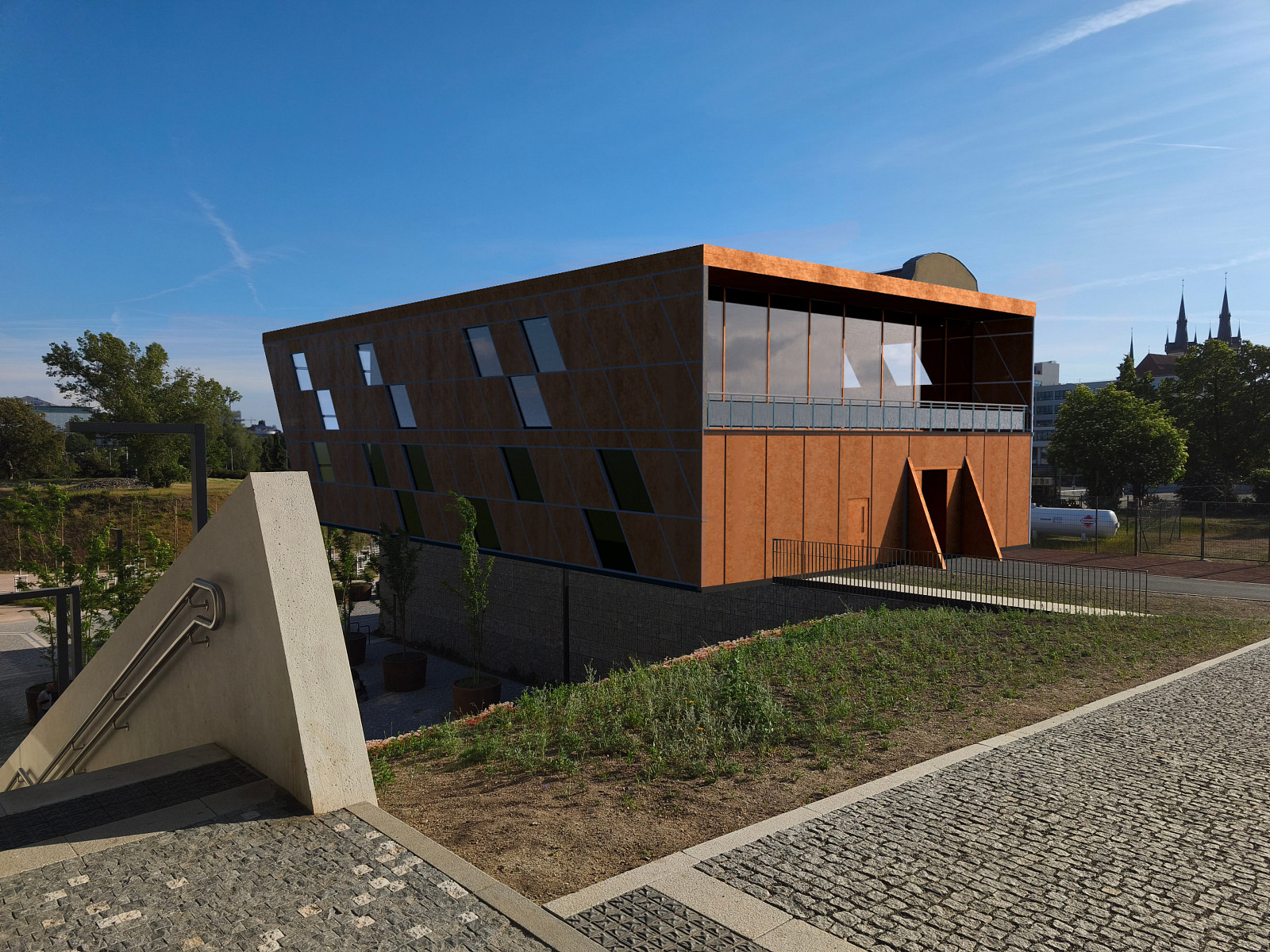
The building's concept derives from dynamic geometry and cascading masses that define the spatial relationships of the Vltava Philharmonic. The form transforms into a refined spatial composition. The design uses a sloped lateral wall as a key element, generating dynamic silhouette that connects interior spaces with the exterior through gradual transitions. The building integrates into the existing terrain of the Vltava riverbank, appearing as a two-story structure from the upper side while its northern part descends directly to the riverbank level. The ground floor functions as an active public space with a social hall, café, and information panels. The upper floor contains an exhibition zone, community hall, and a viewing terrace overlooking the Vltava river and the future Philharmonic building.
Technical information
The structural design uses a steel frame system with modular assembly allowing disassembly and reassembly at different locations. The building facade is clad in corten steel panels (weathering steel) referencing the industrial history of the area, naturally patinating over time without maintenance. The facade features a louvered system creating a dynamic interplay of light and shadow. The ground floor is designed as an open public space with direct access to the surrounding area, while the upper floor includes exhibition spaces, a small auditorium, and a terrace with views toward the river.
Documentation

Copyright © 2026 INSPIRELI | All rights reserved. Use of this website signifies your agreement to the Terms of Use, Privacy Policy, and use of cookies.