The Contraform (Escaping A.I. ?)


Project idea
The project responds to the growing influence of artificial intelligence and digital technologies on everyday life. As society becomes increasingly dependent on automated systems, virtual interactions, and algorithm-driven experiences, opportunities for genuine human connection, creativity, and critical thinking are gradually diminishing.
The proposal envisions an architectural refuge where individuals can temporarily escape the pressures of an AI-dominated environment and reconnect with authentic human experiences. Rather than rejecting technology, the project promotes a balanced relationship between humans and machines by creating spaces that encourage learning, collaboration, creativity, reflection, and social engagement. The architecture becomes a physical catalyst for meaningful interaction, human agency, and collective growth.
Project description
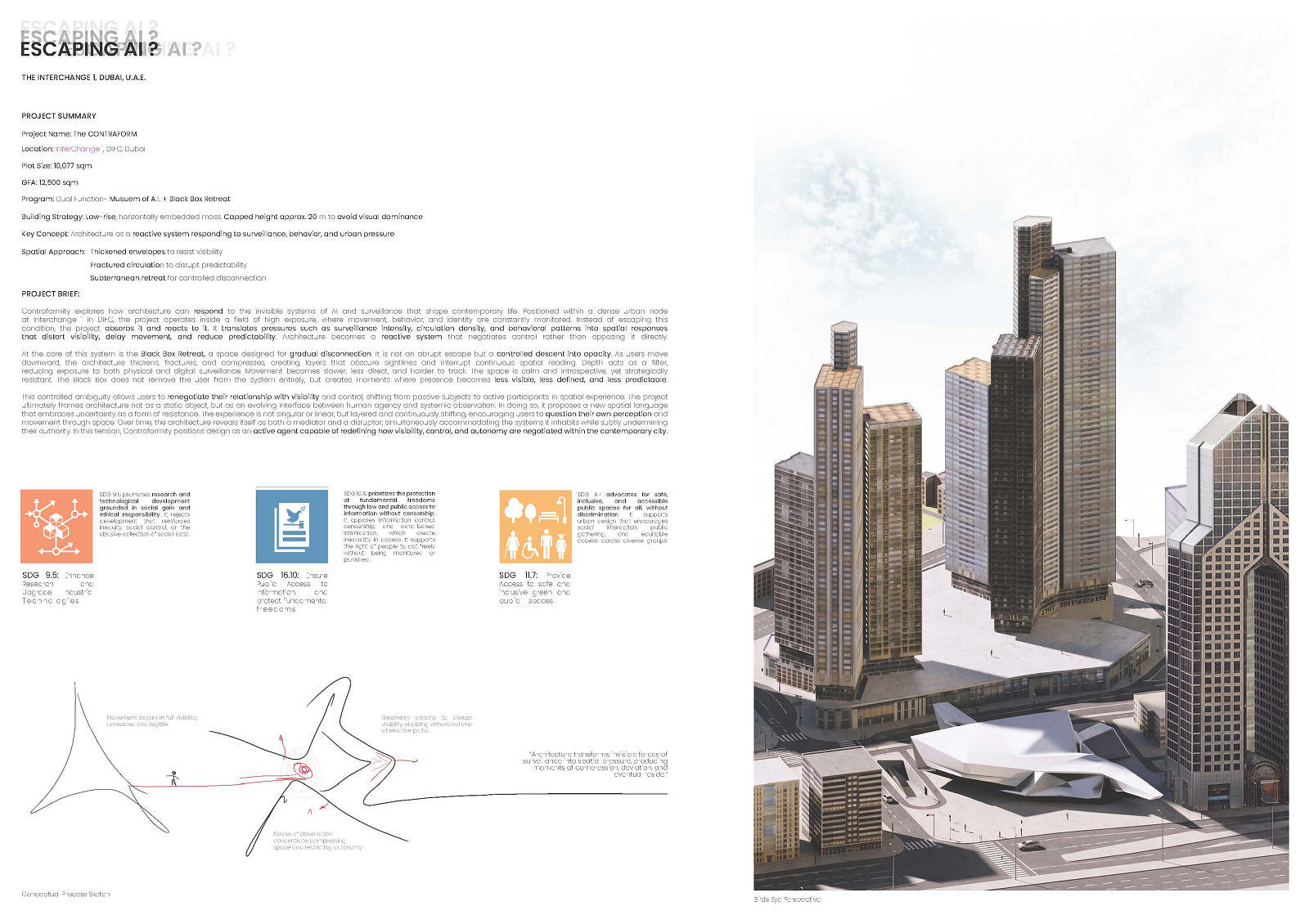
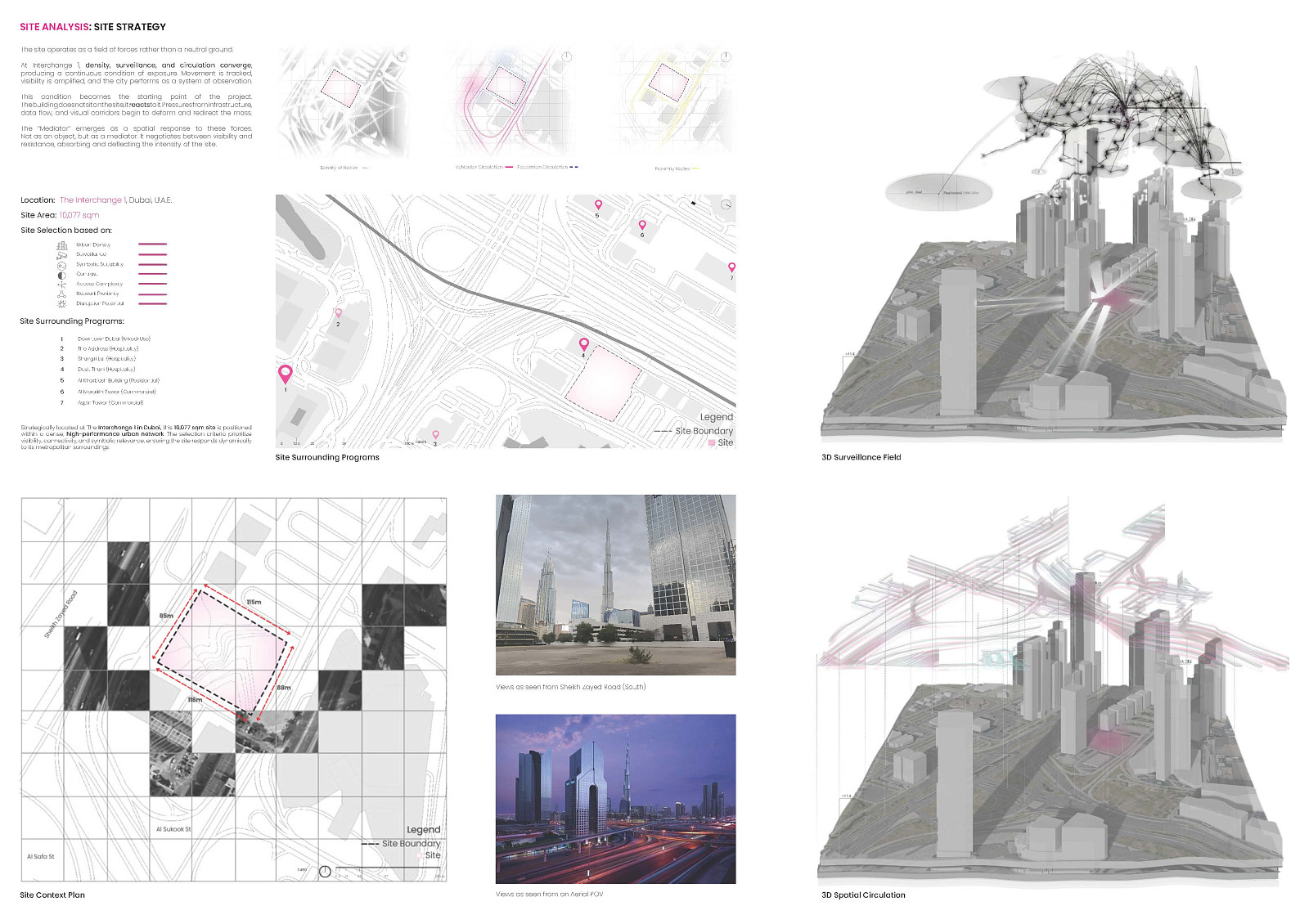
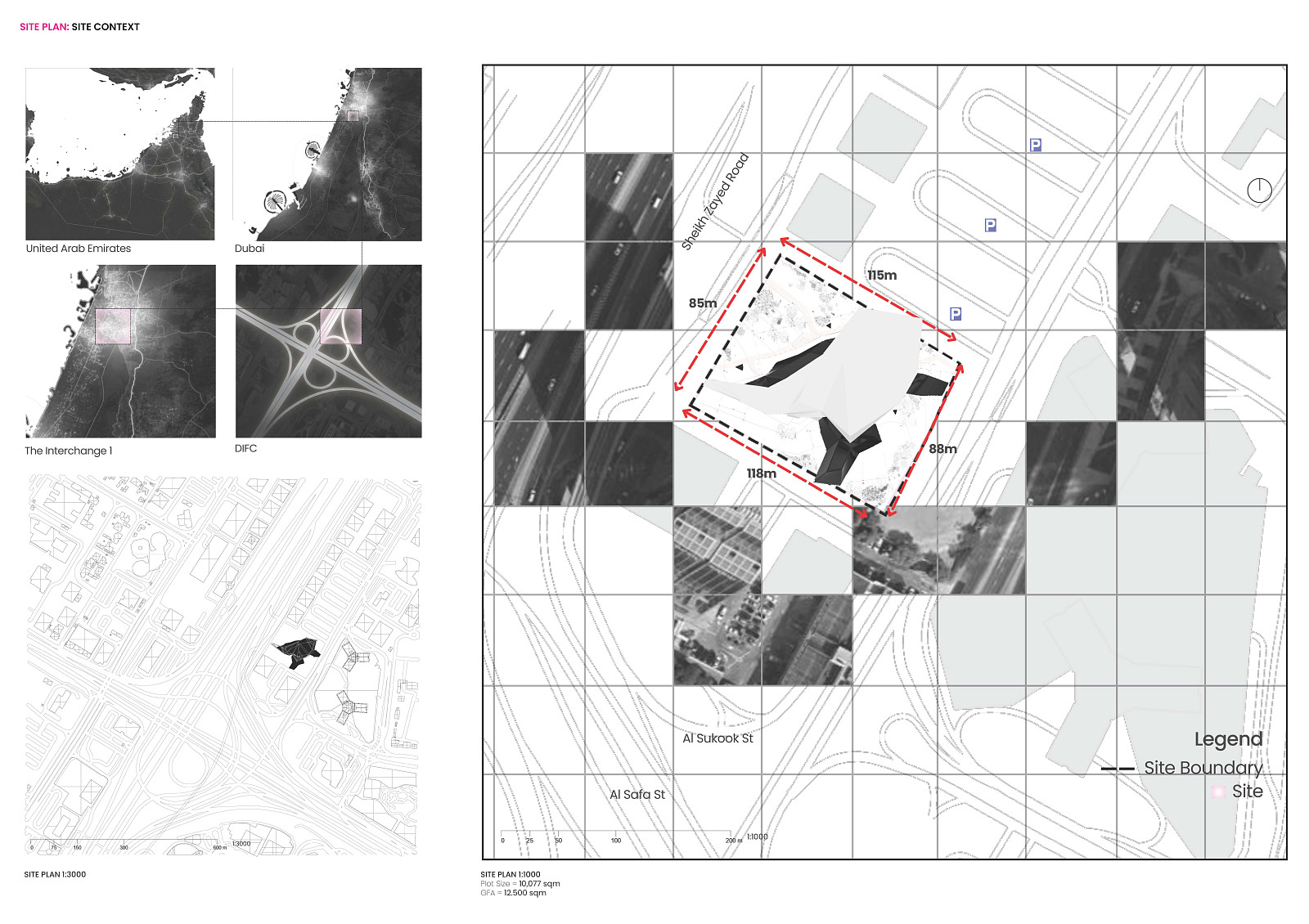
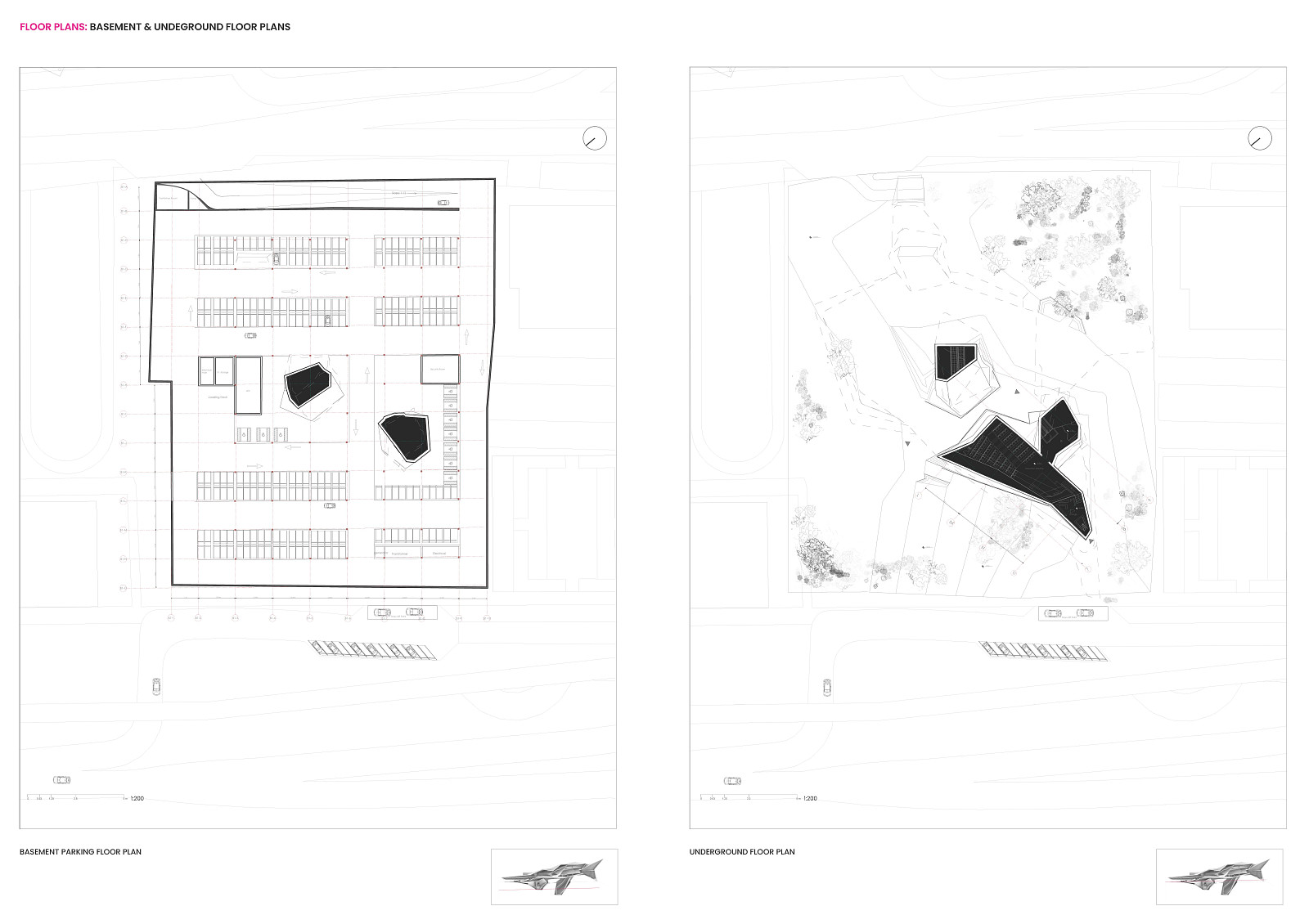
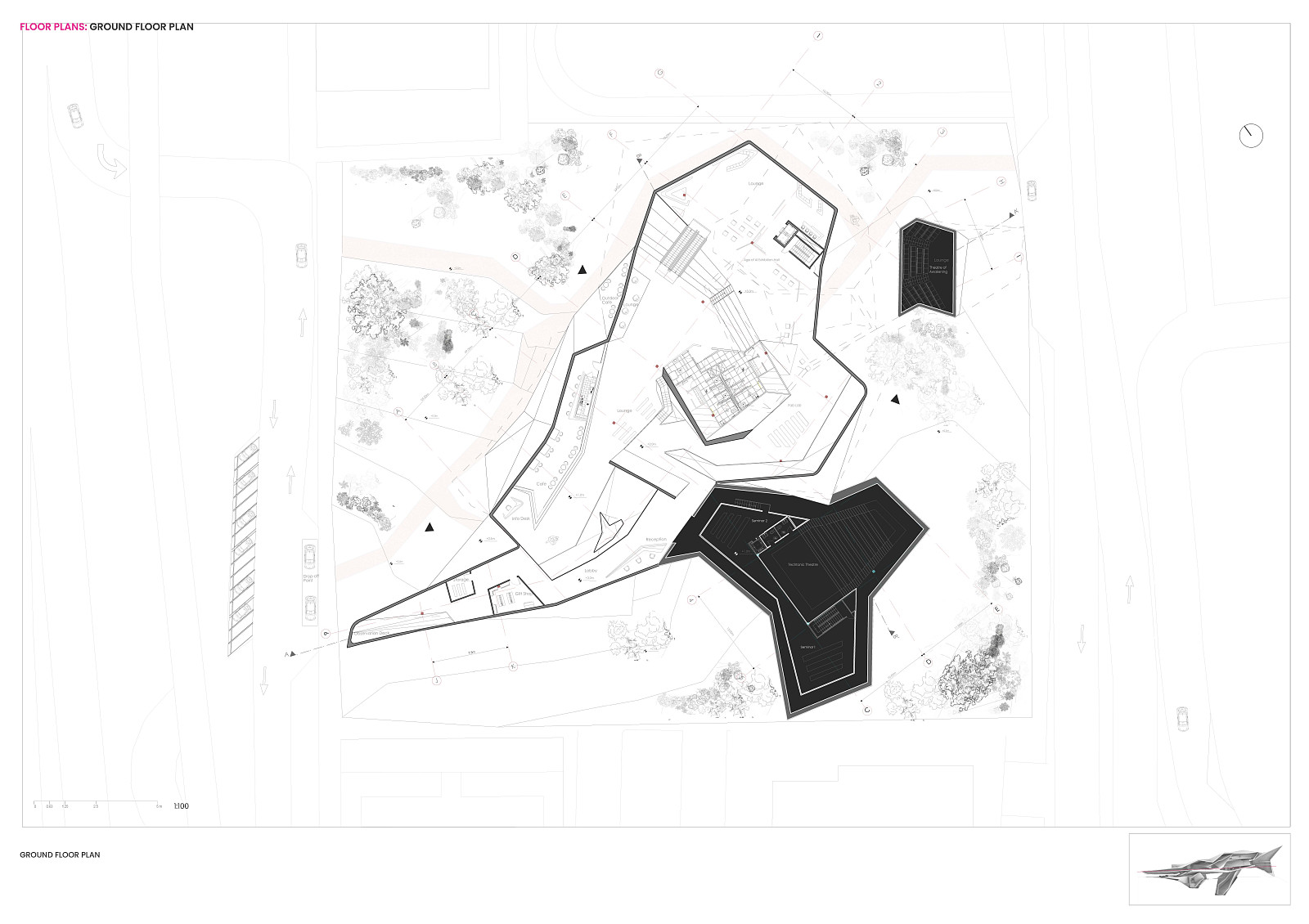
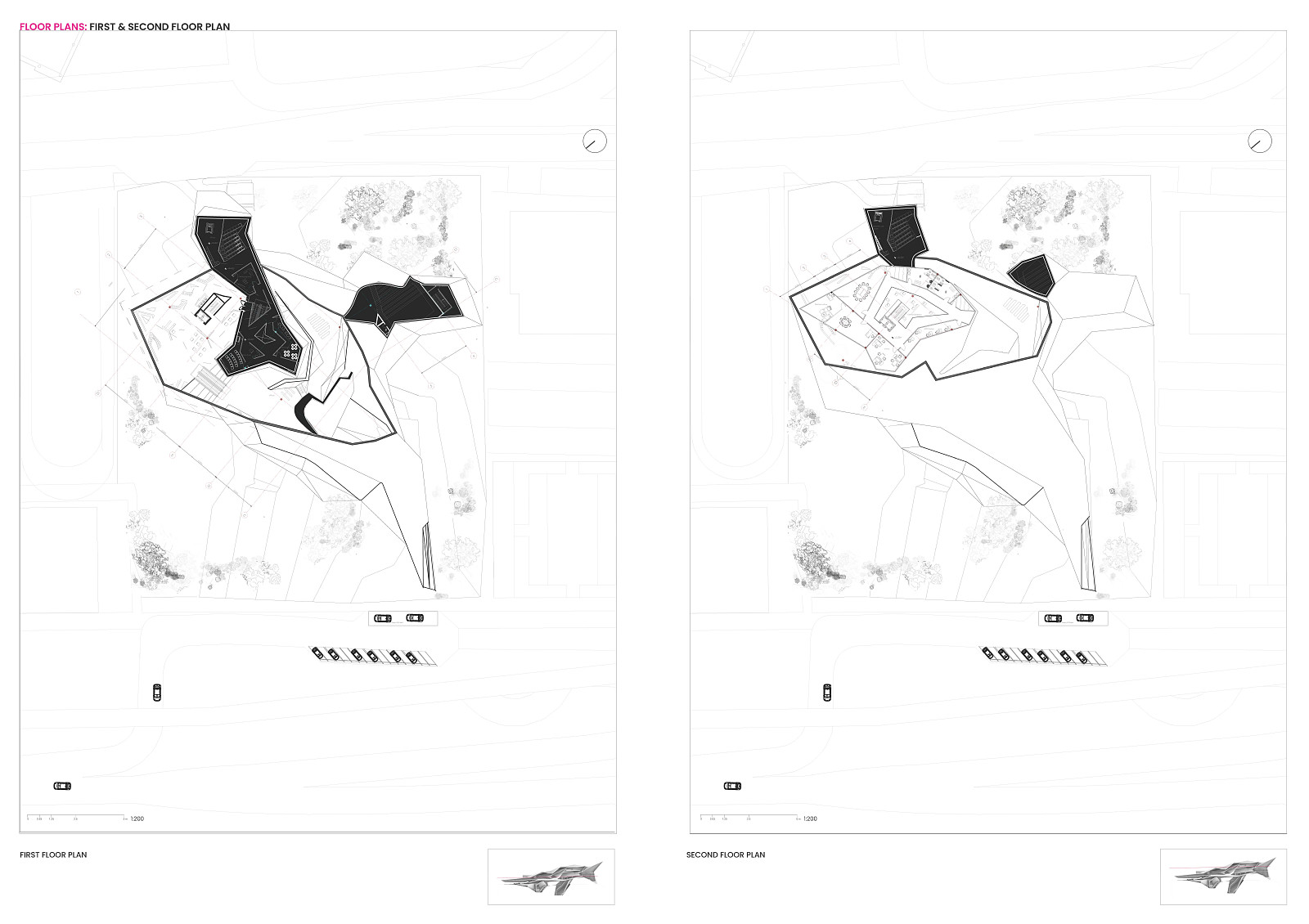
The project is conceived as a Human Exchange and Innovation Center located within Dubai International Financial Centre (DIFC). It provides a sequence of interconnected spaces designed to promote human-centered activities that cannot be replicated through artificial intelligence alone.
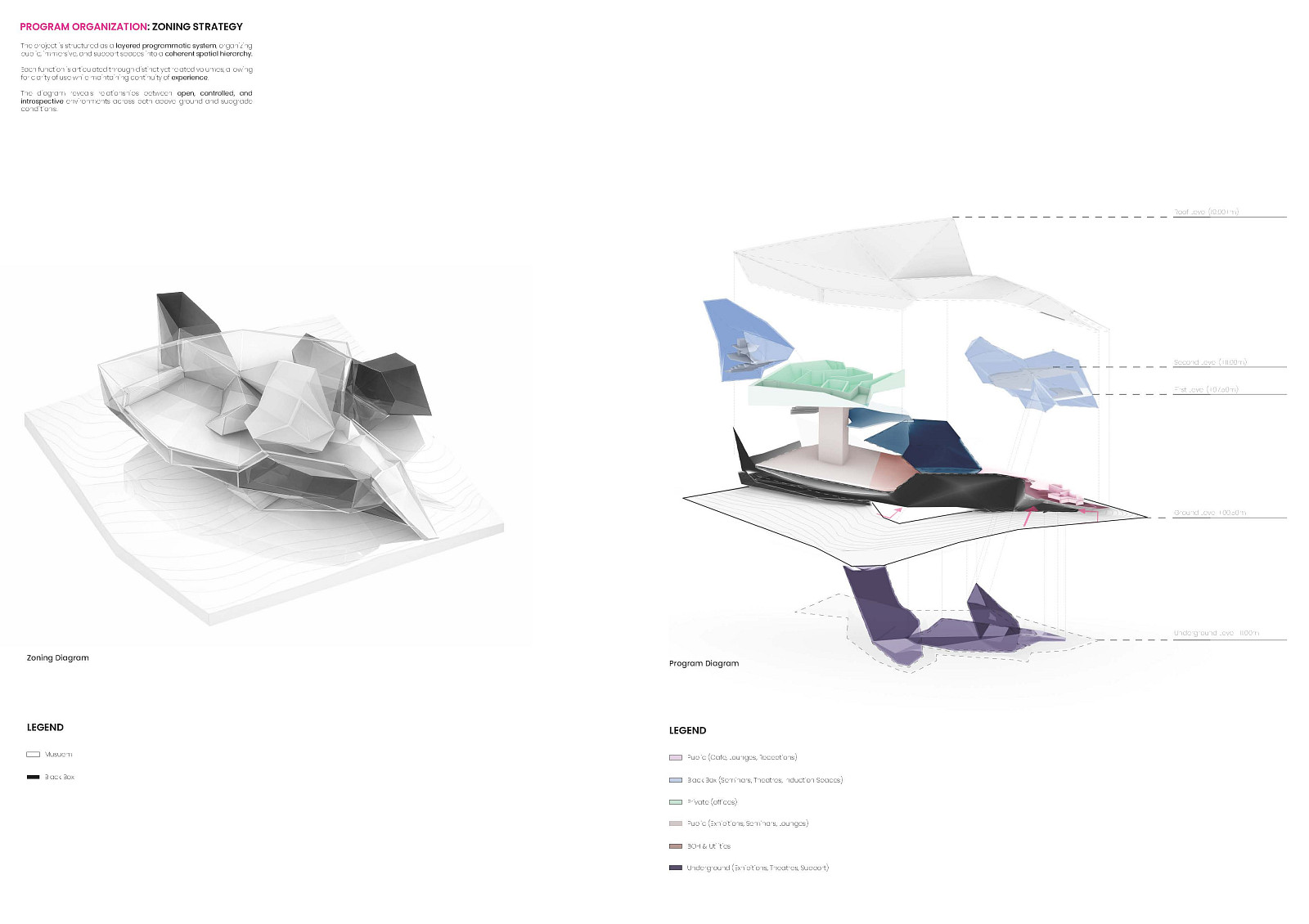
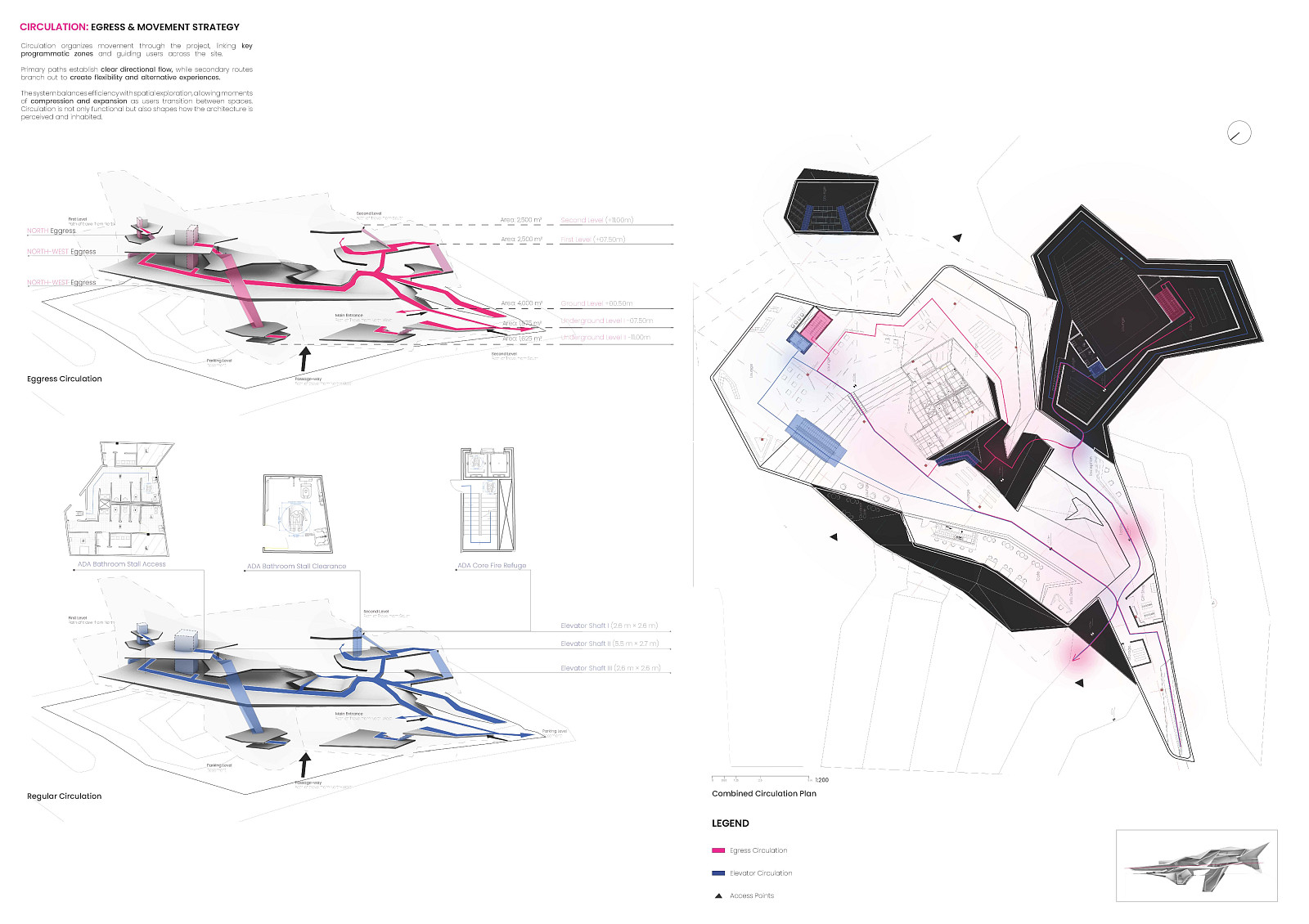
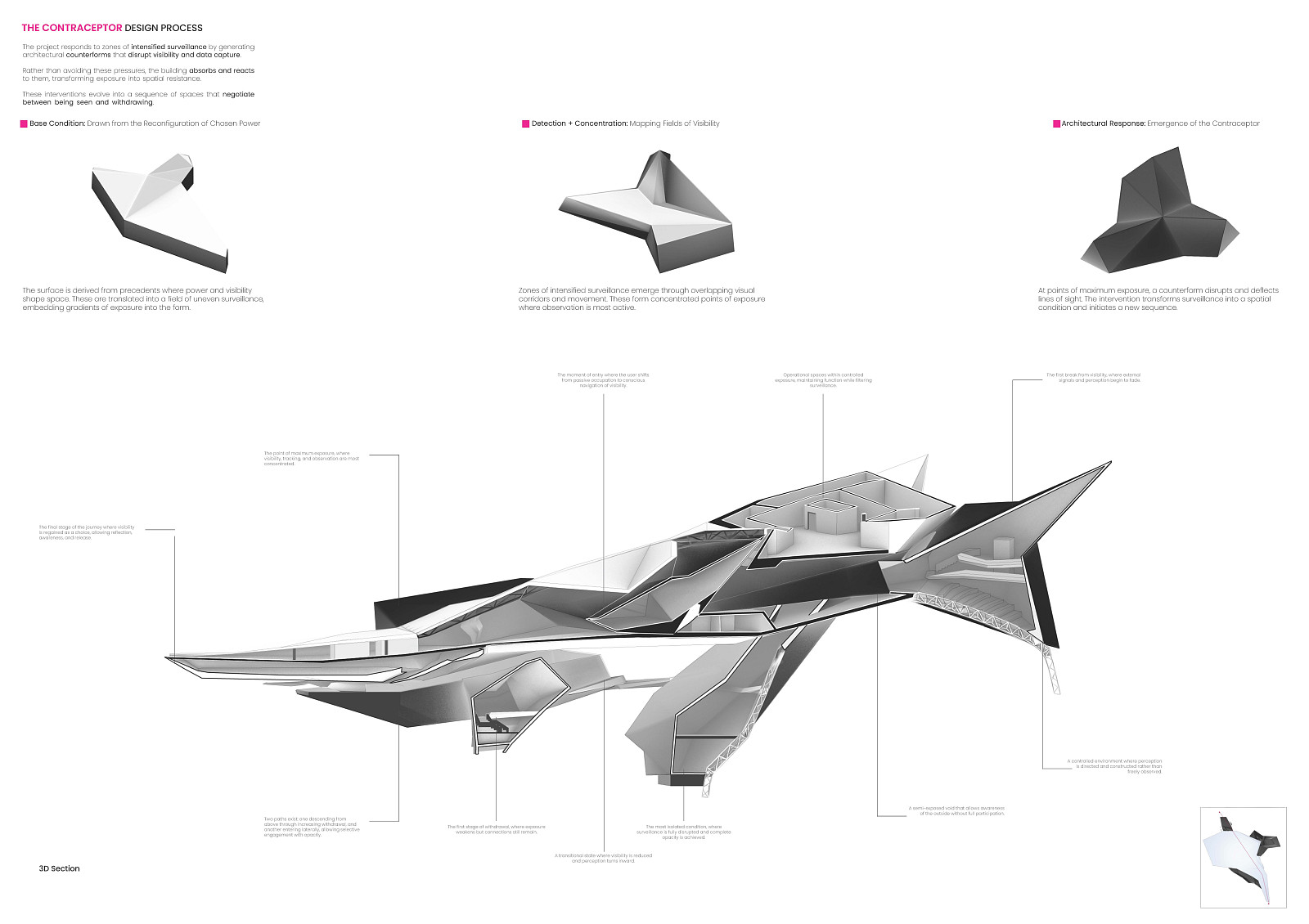
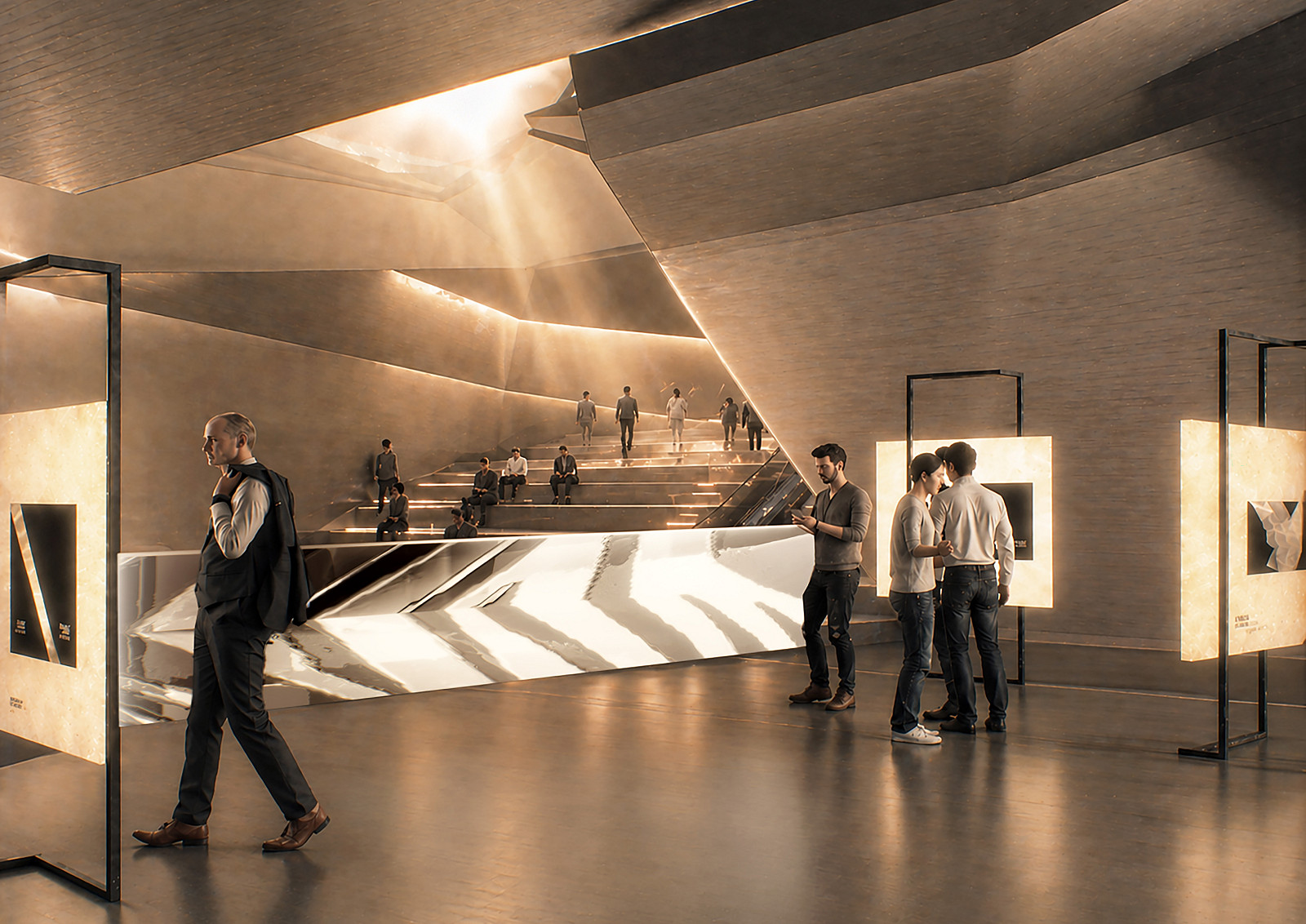
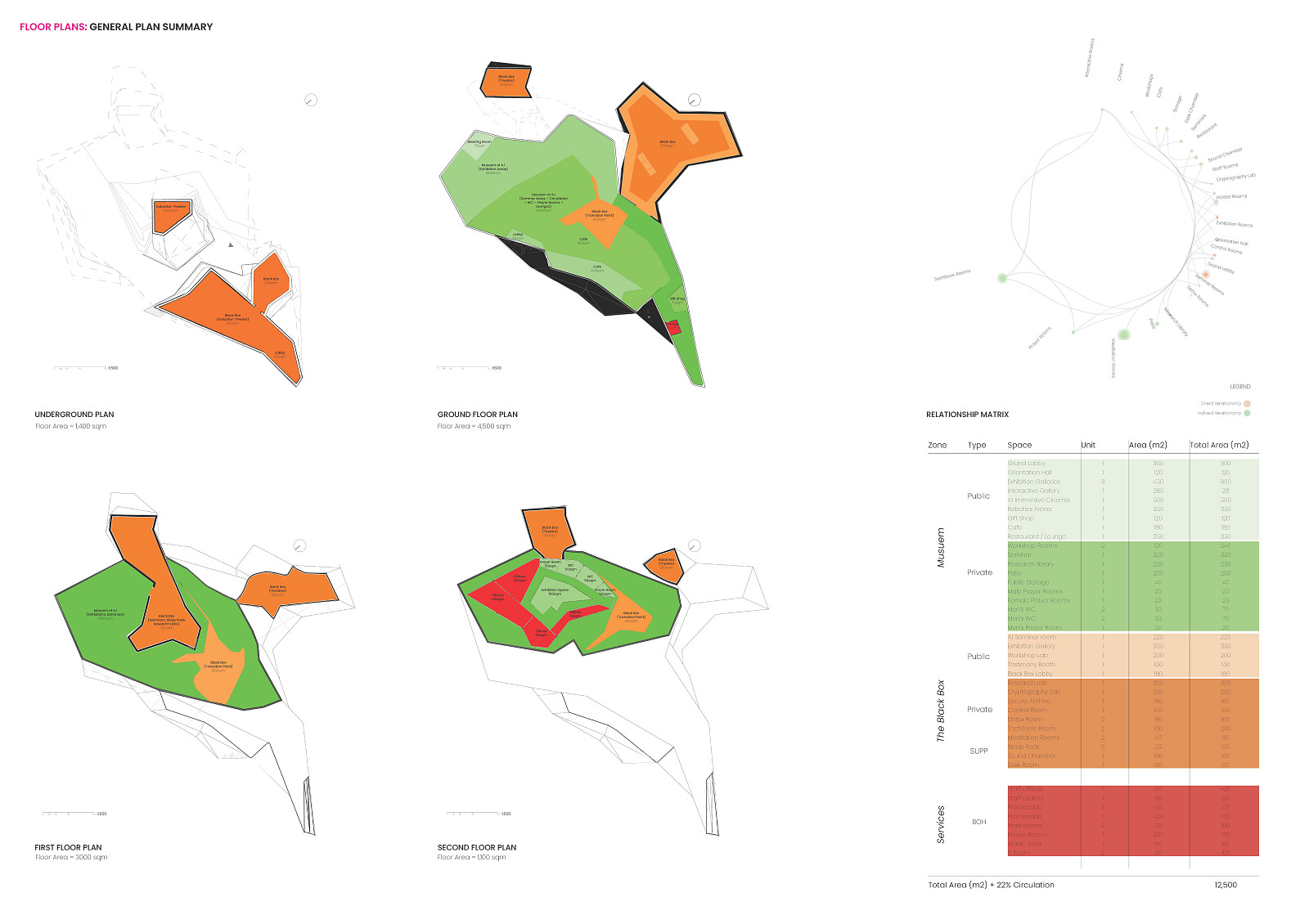
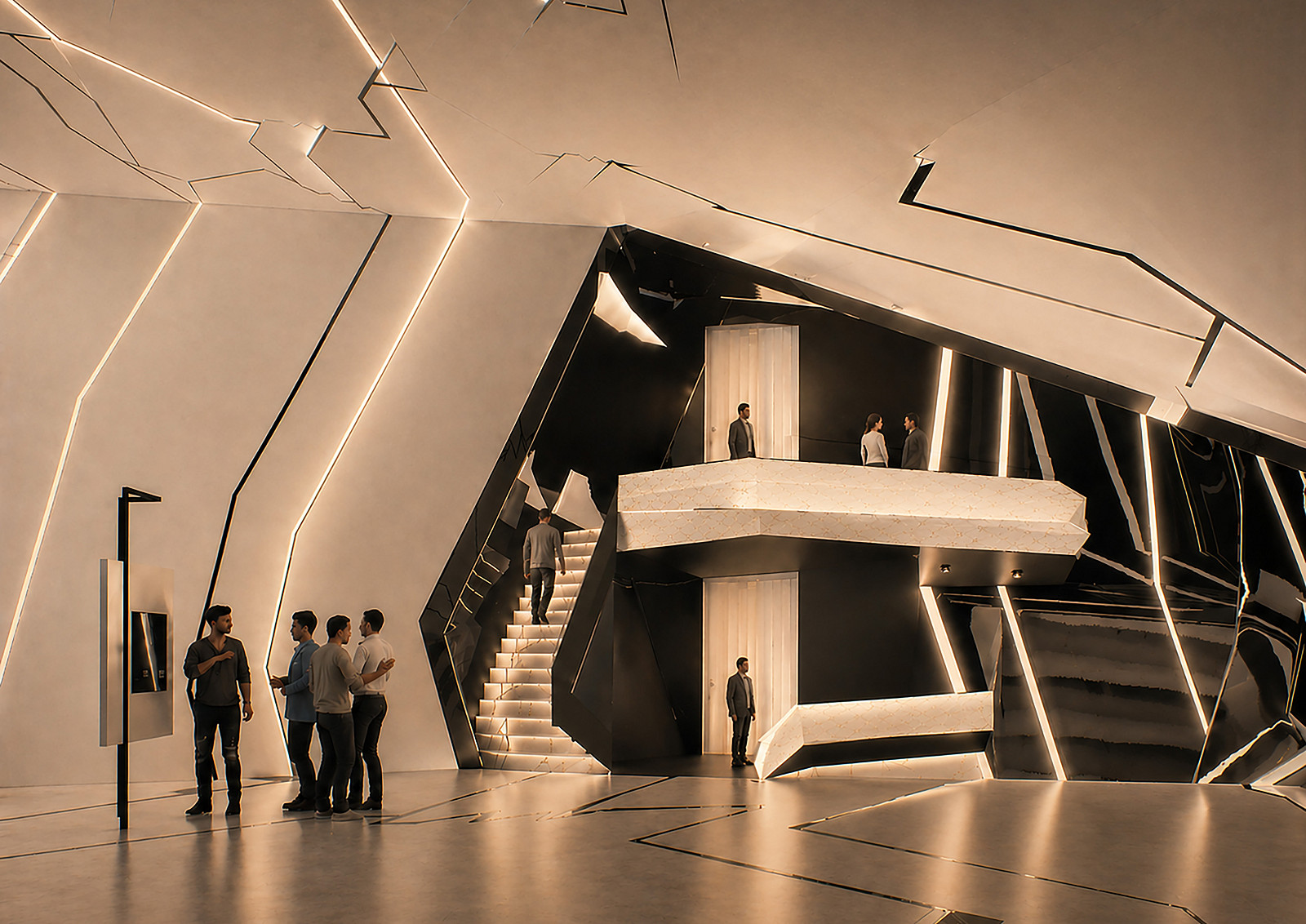
The program includes collaborative workspaces, maker laboratories, exhibition galleries, discussion forums, learning environments, innovation studios, public gathering spaces, wellness areas, and cultural venues. These functions are organized around shared communal spaces that encourage face-to-face interaction, knowledge exchange, and interdisciplinary collaboration.
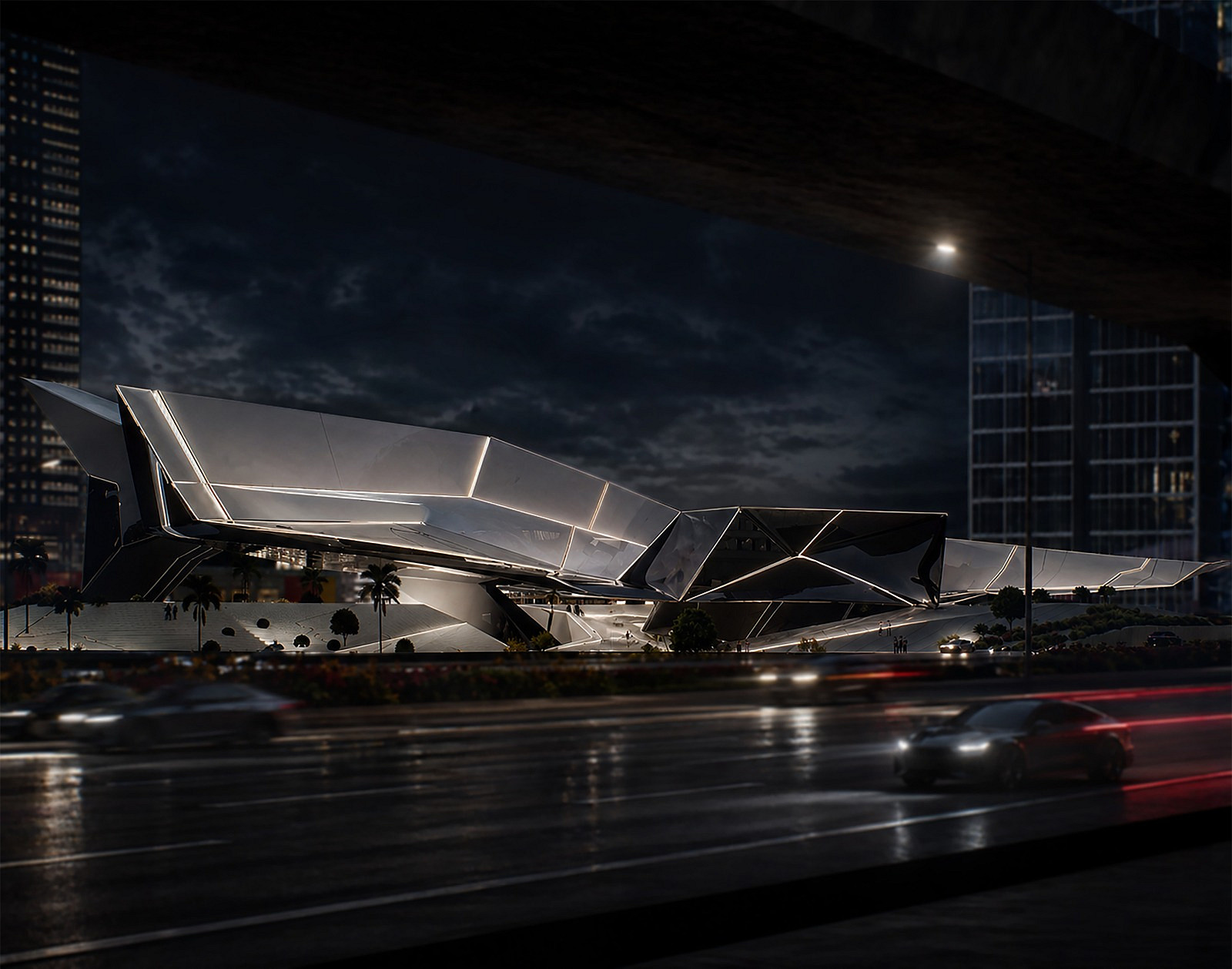
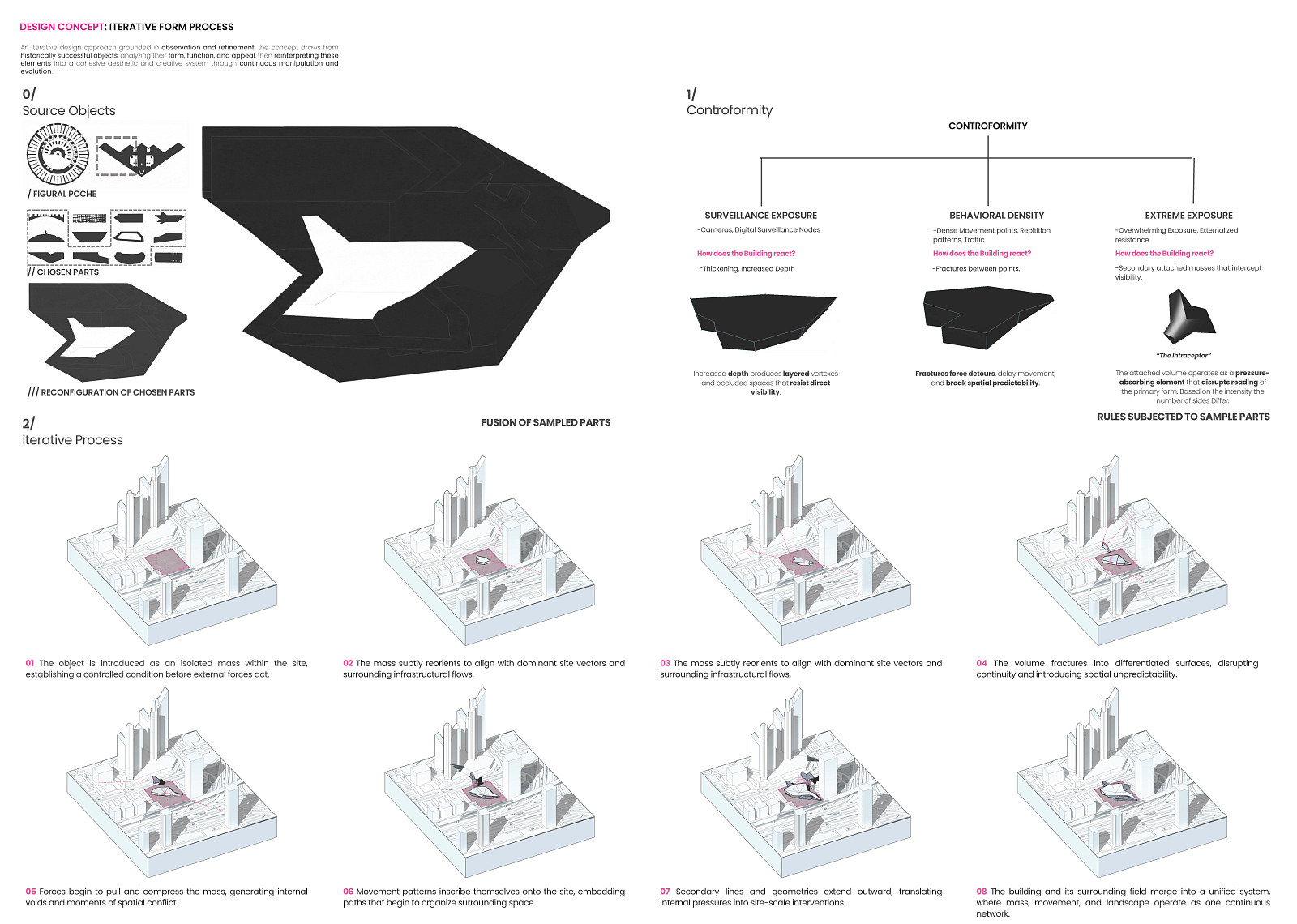
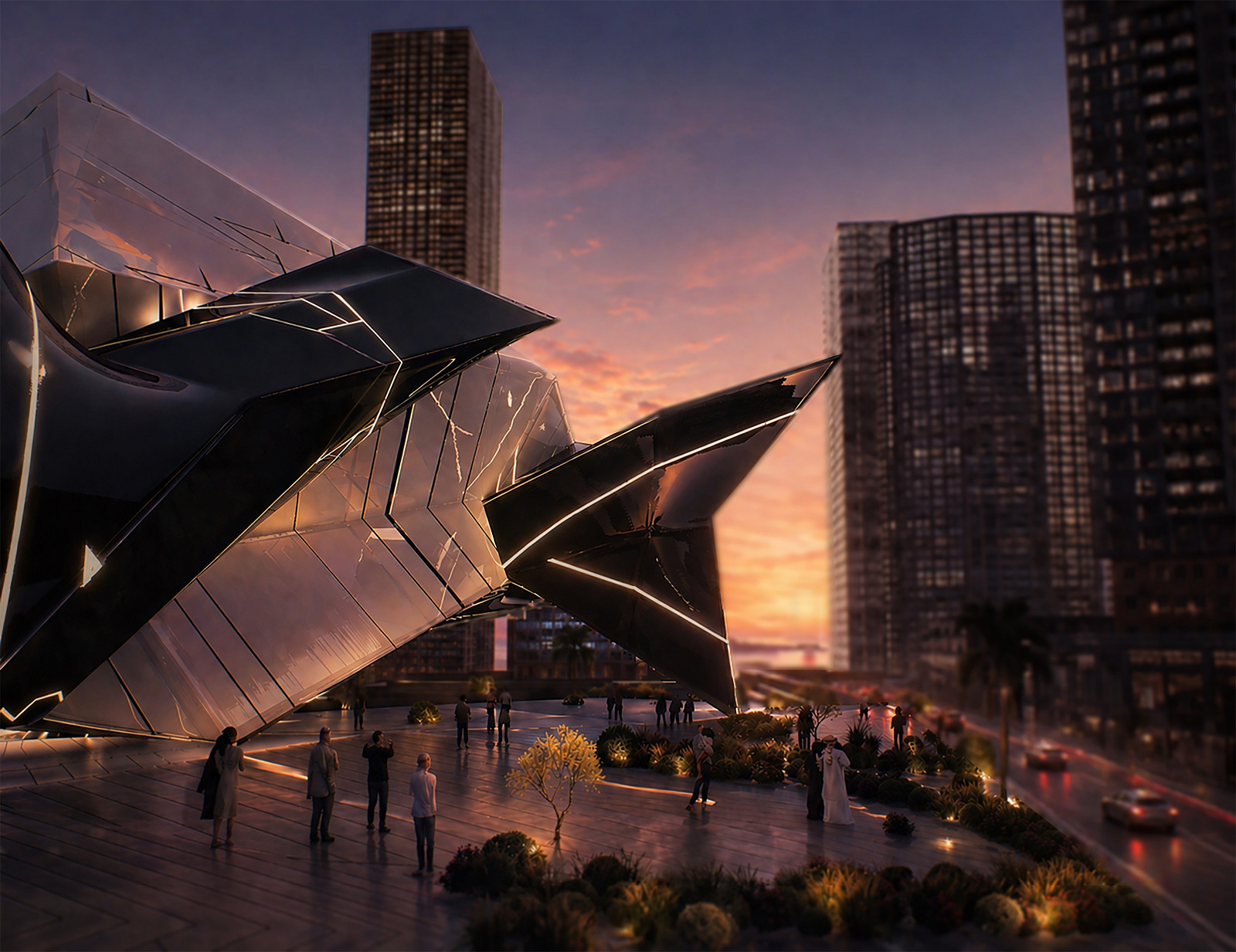
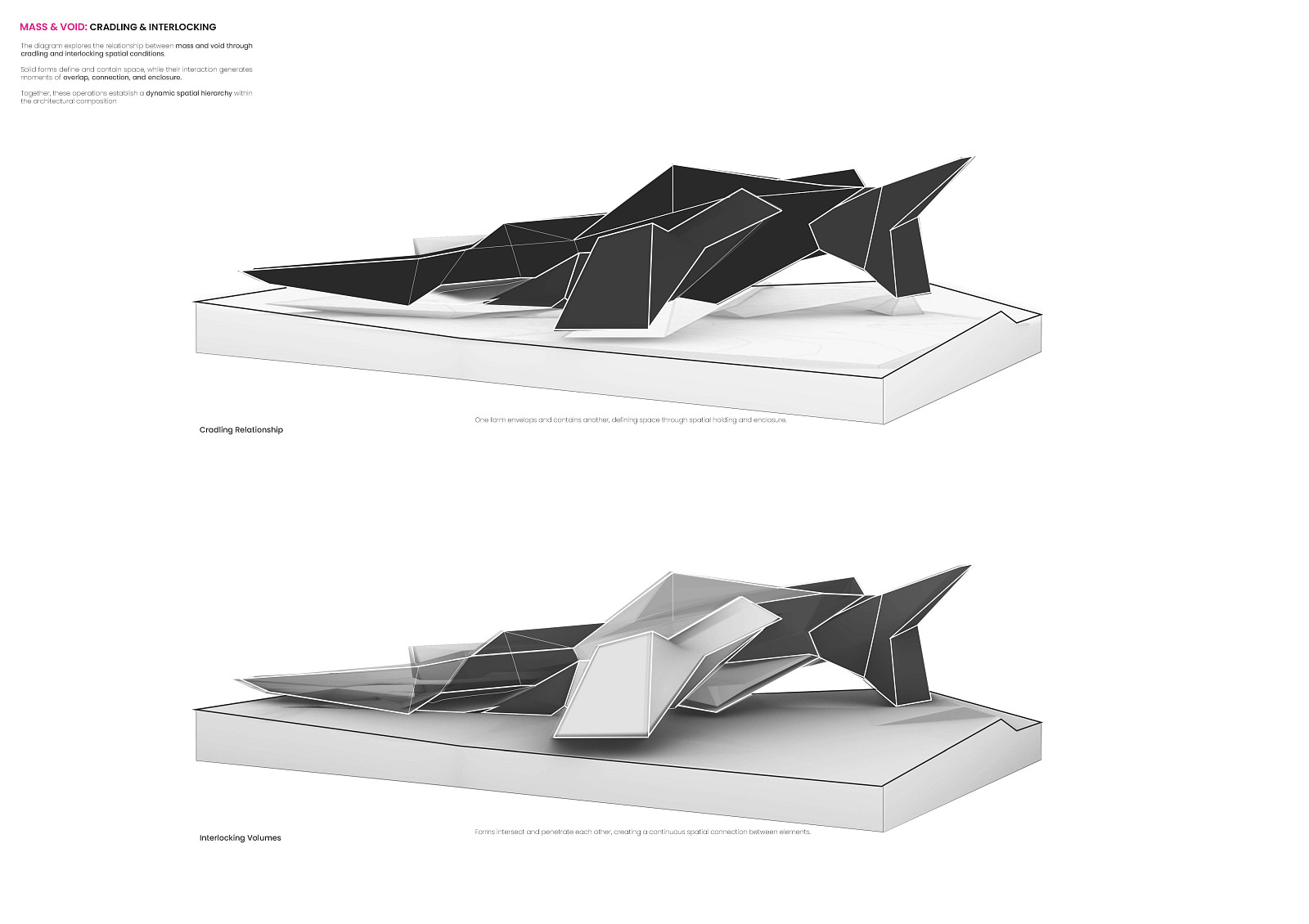
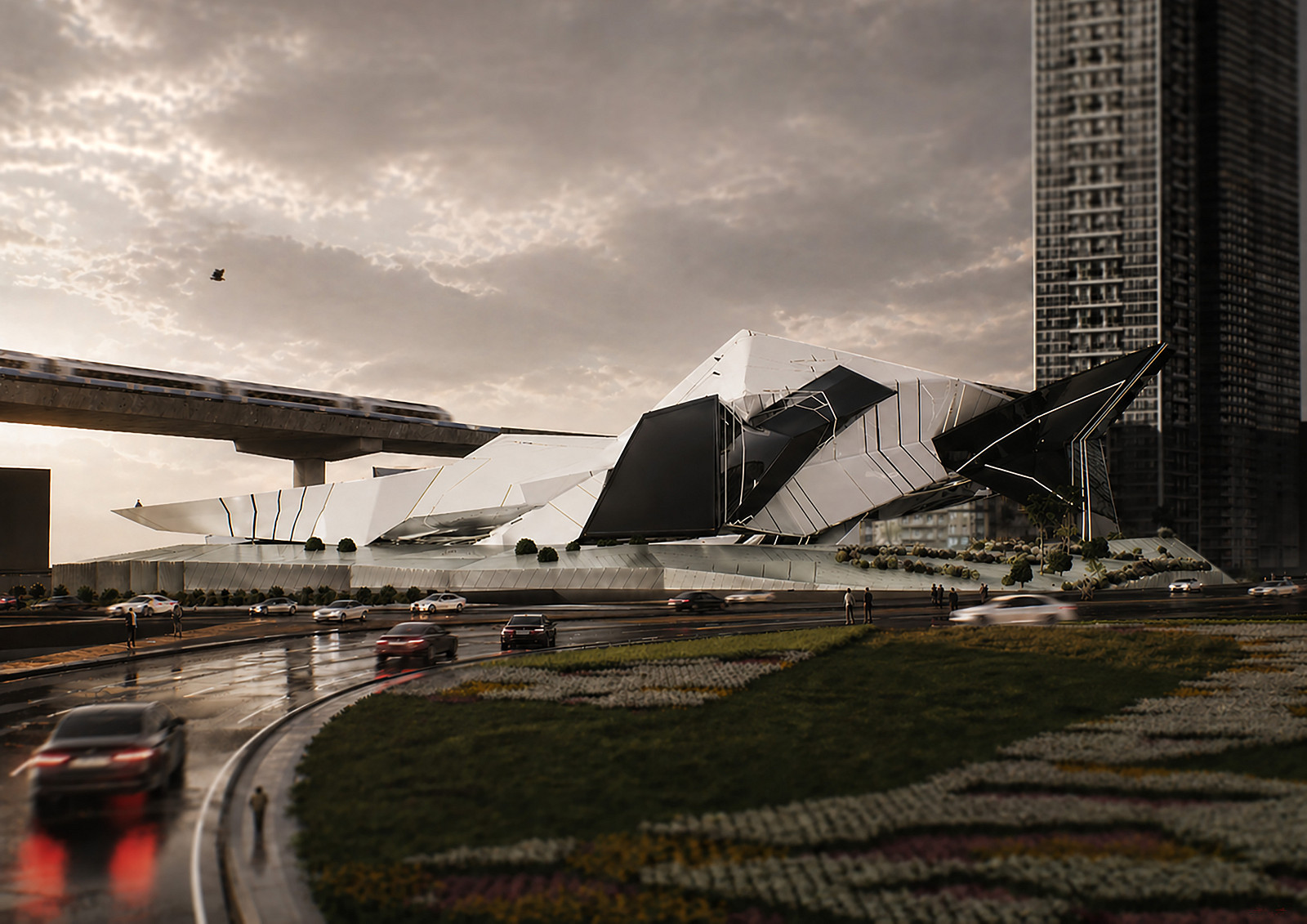
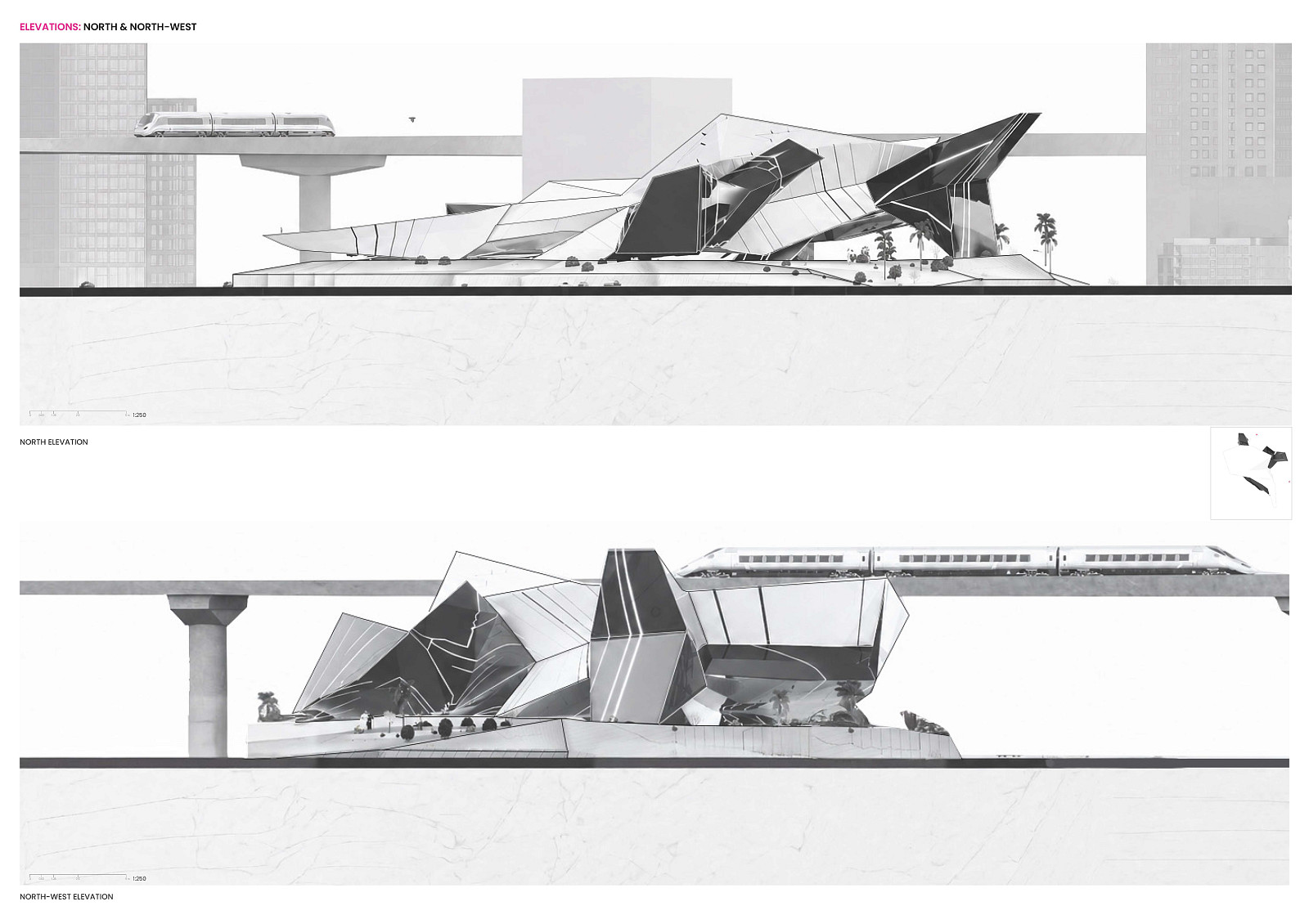
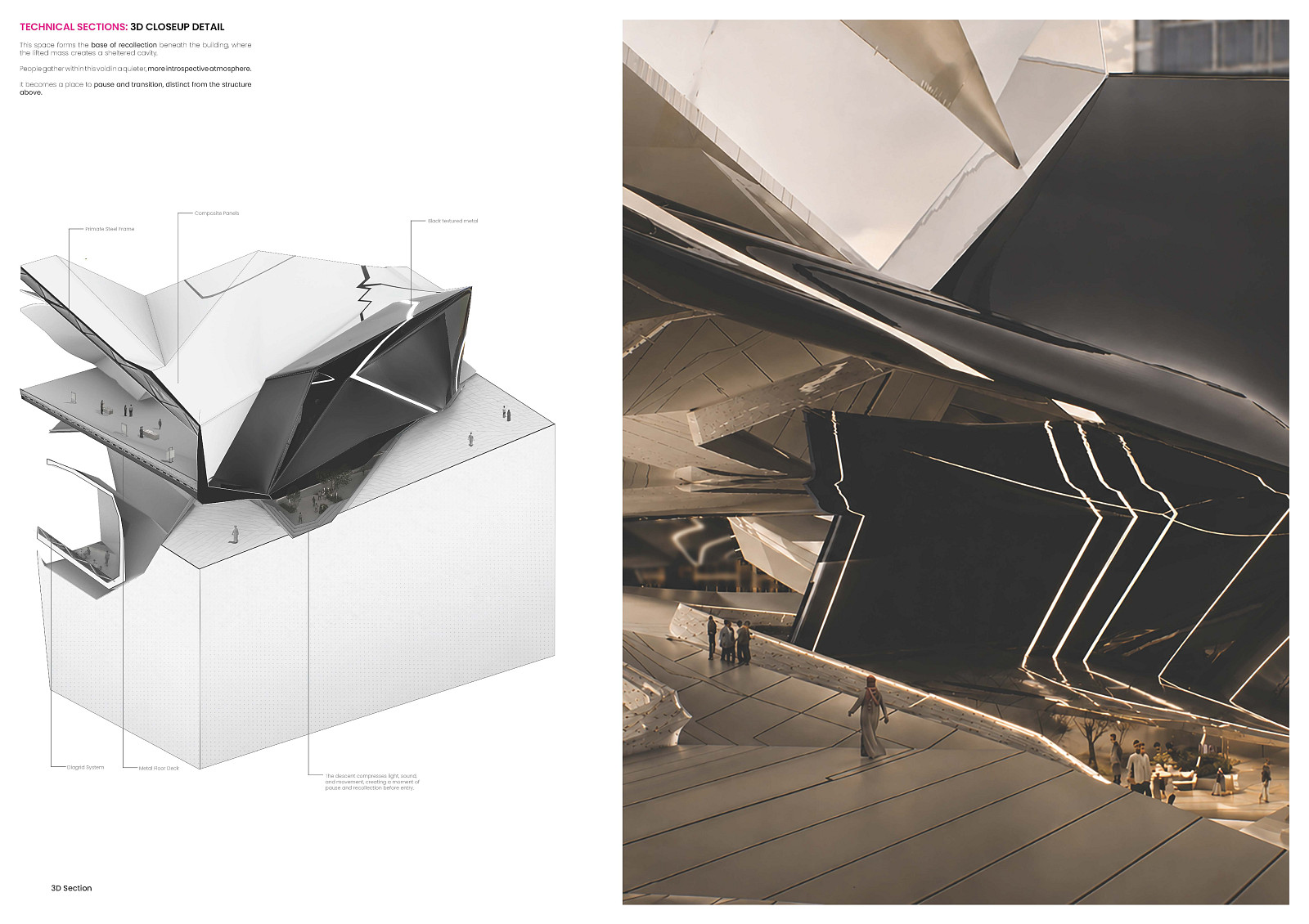
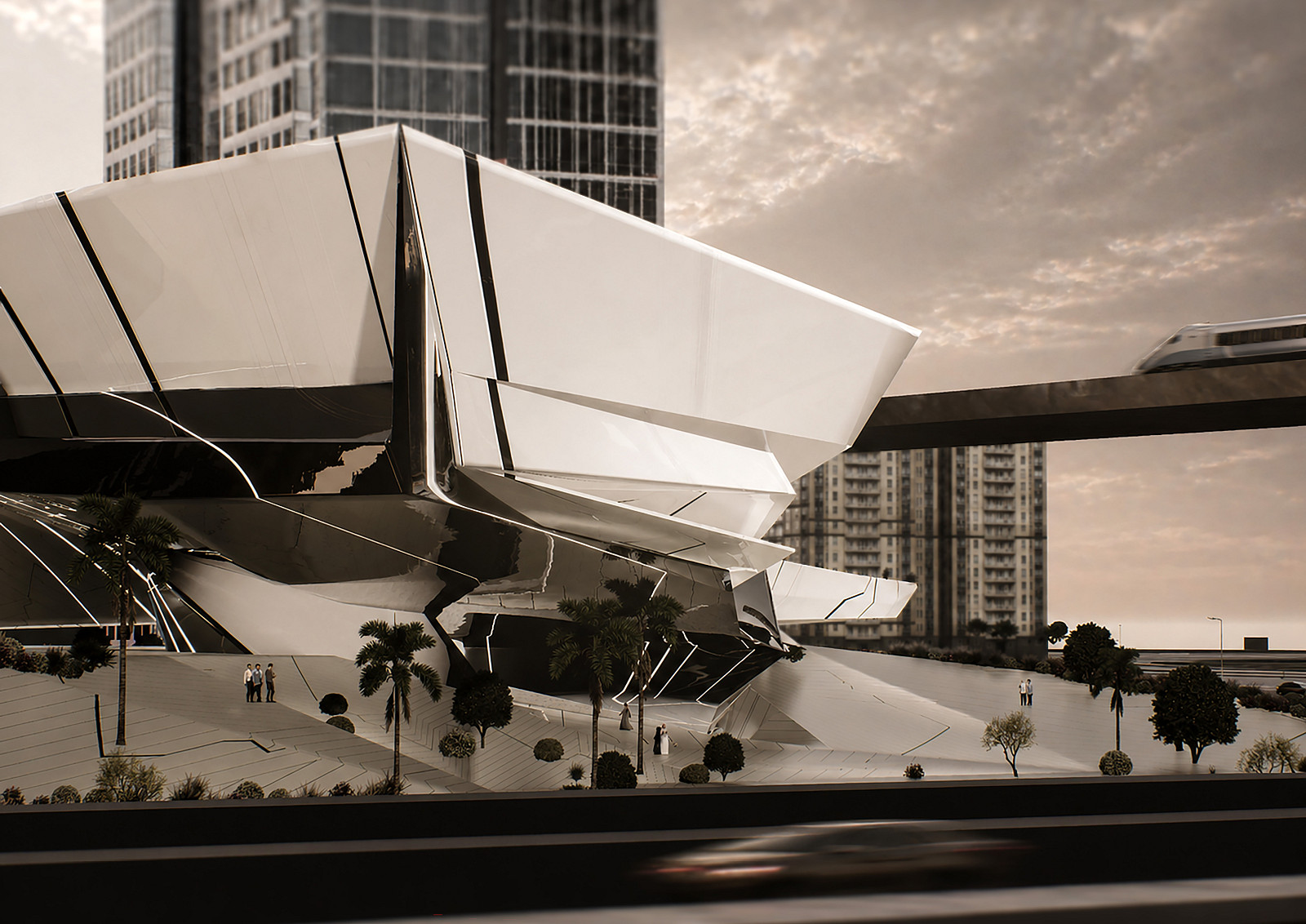
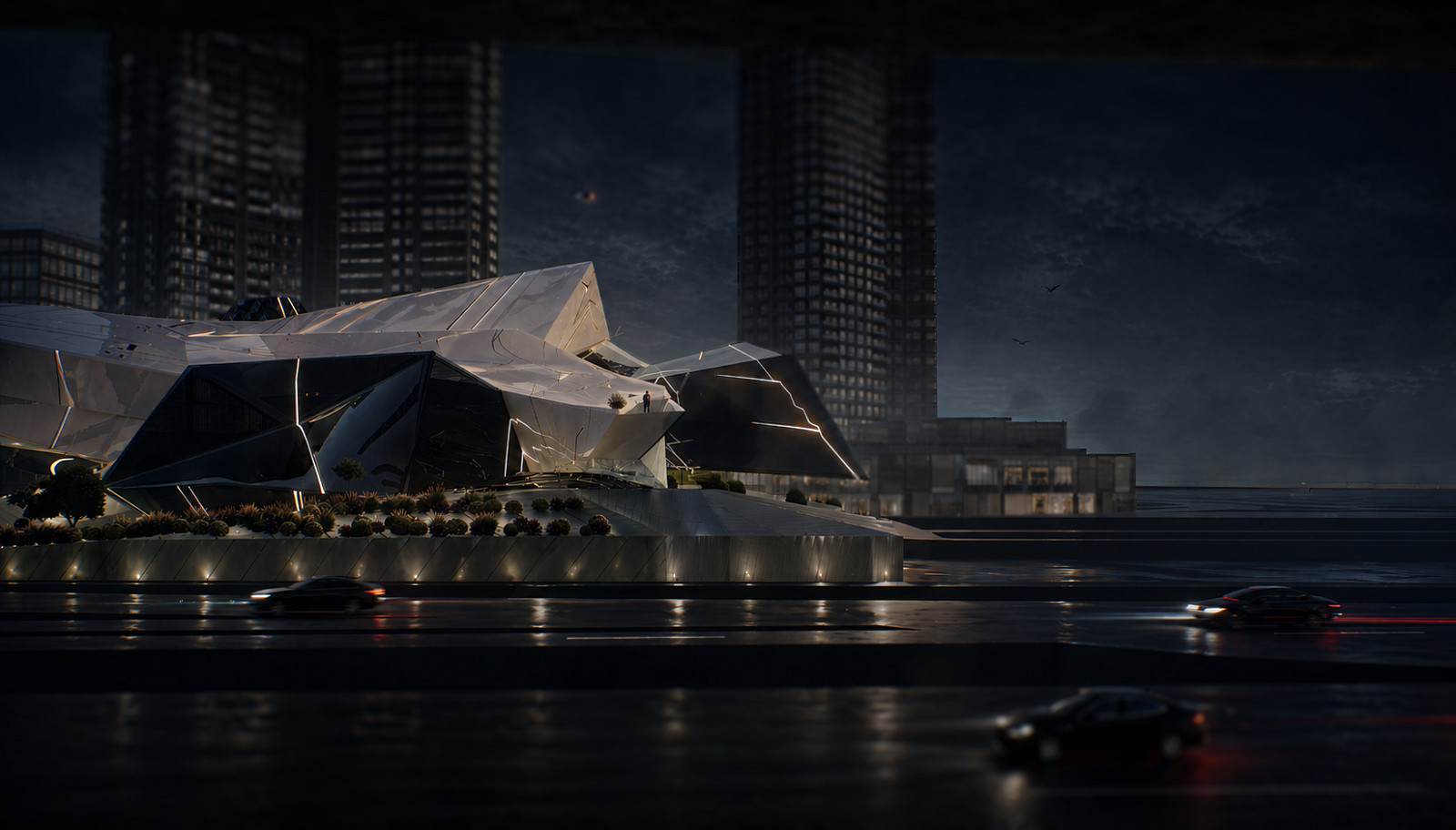
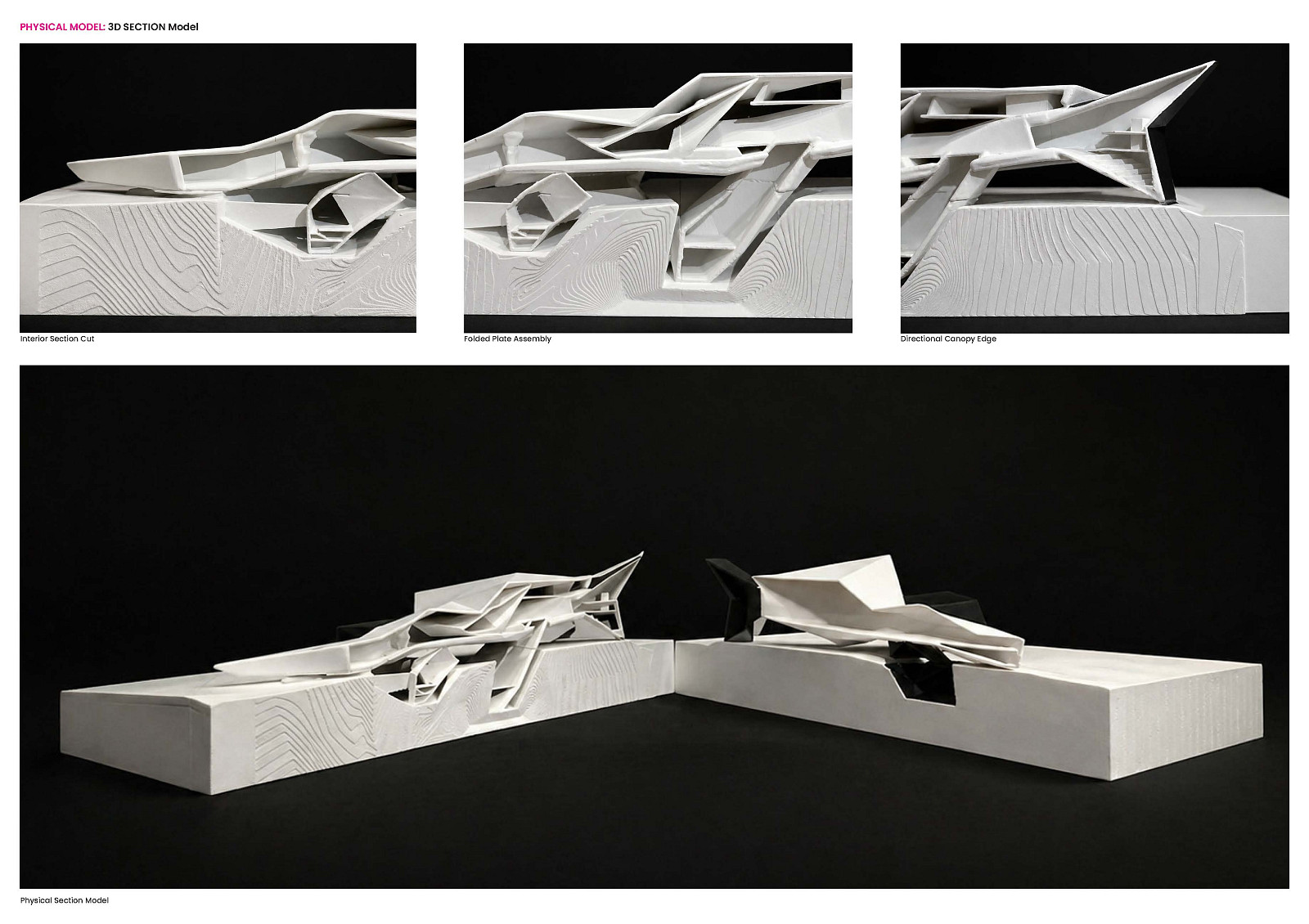
The architectural form reflects the complexity of human thought and interaction through a network of interconnected volumes and public spaces. The building operates as both a destination and a platform where individuals can rediscover creativity, curiosity, craftsmanship, and community beyond the digital realm.
Technical information
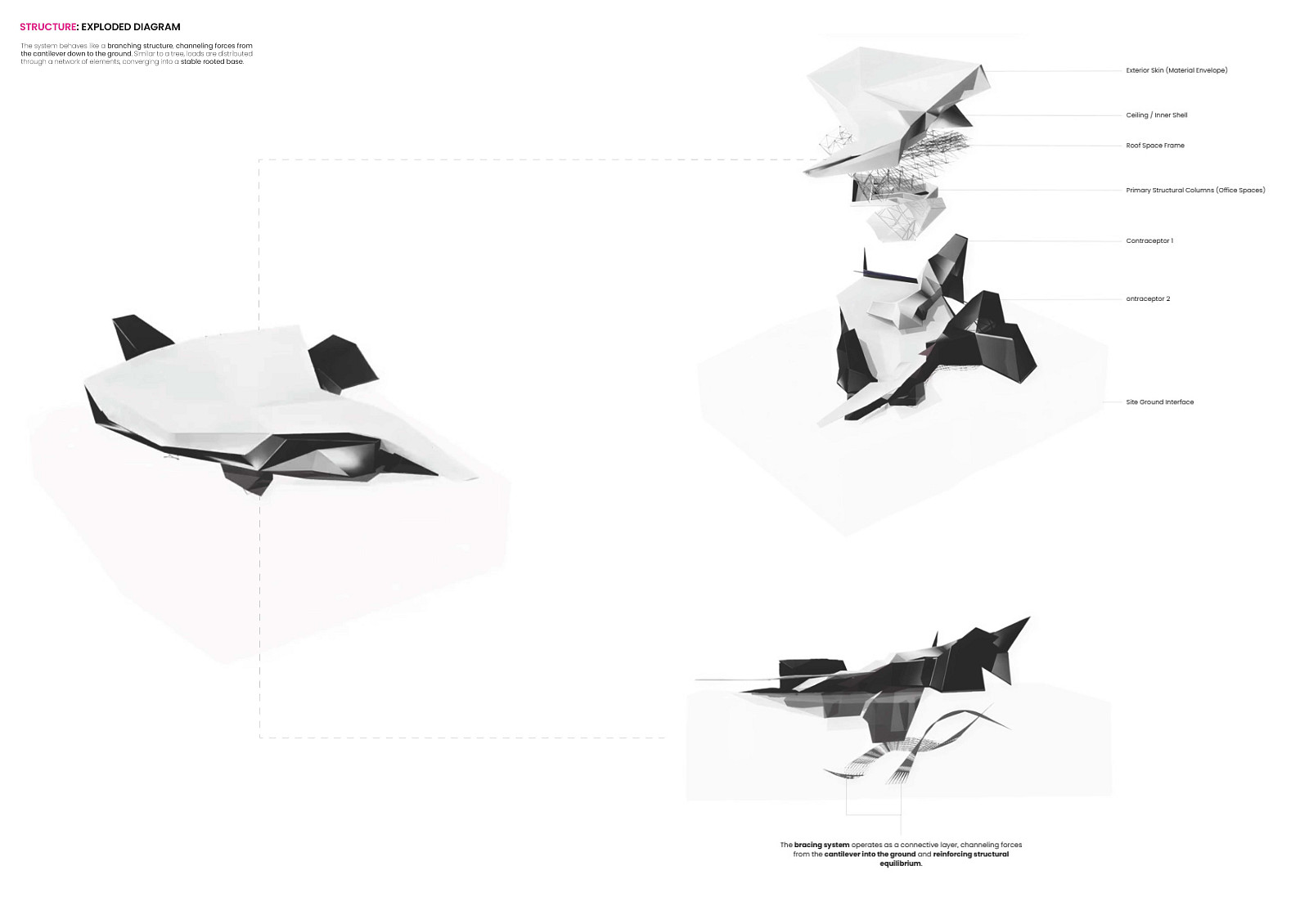
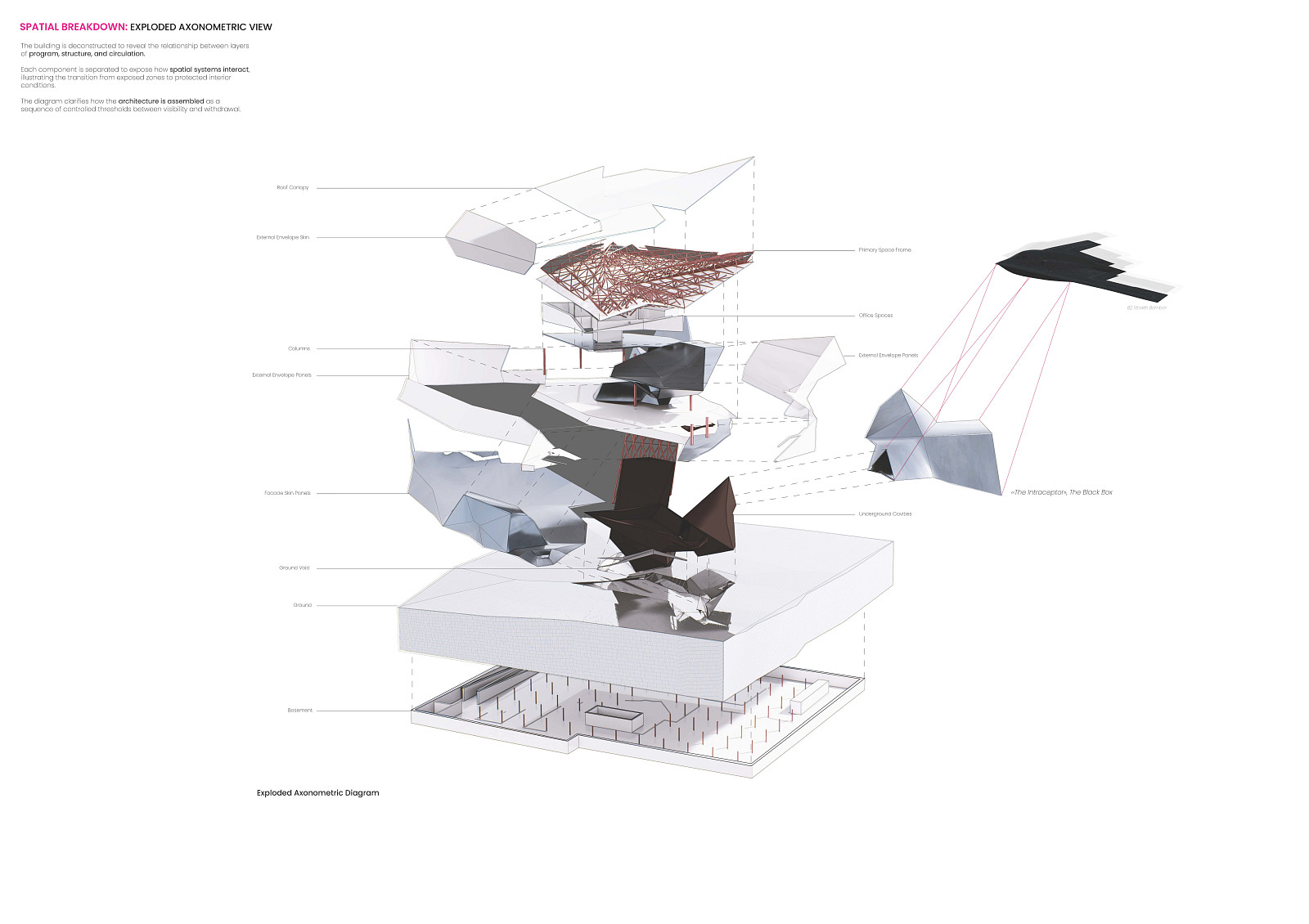
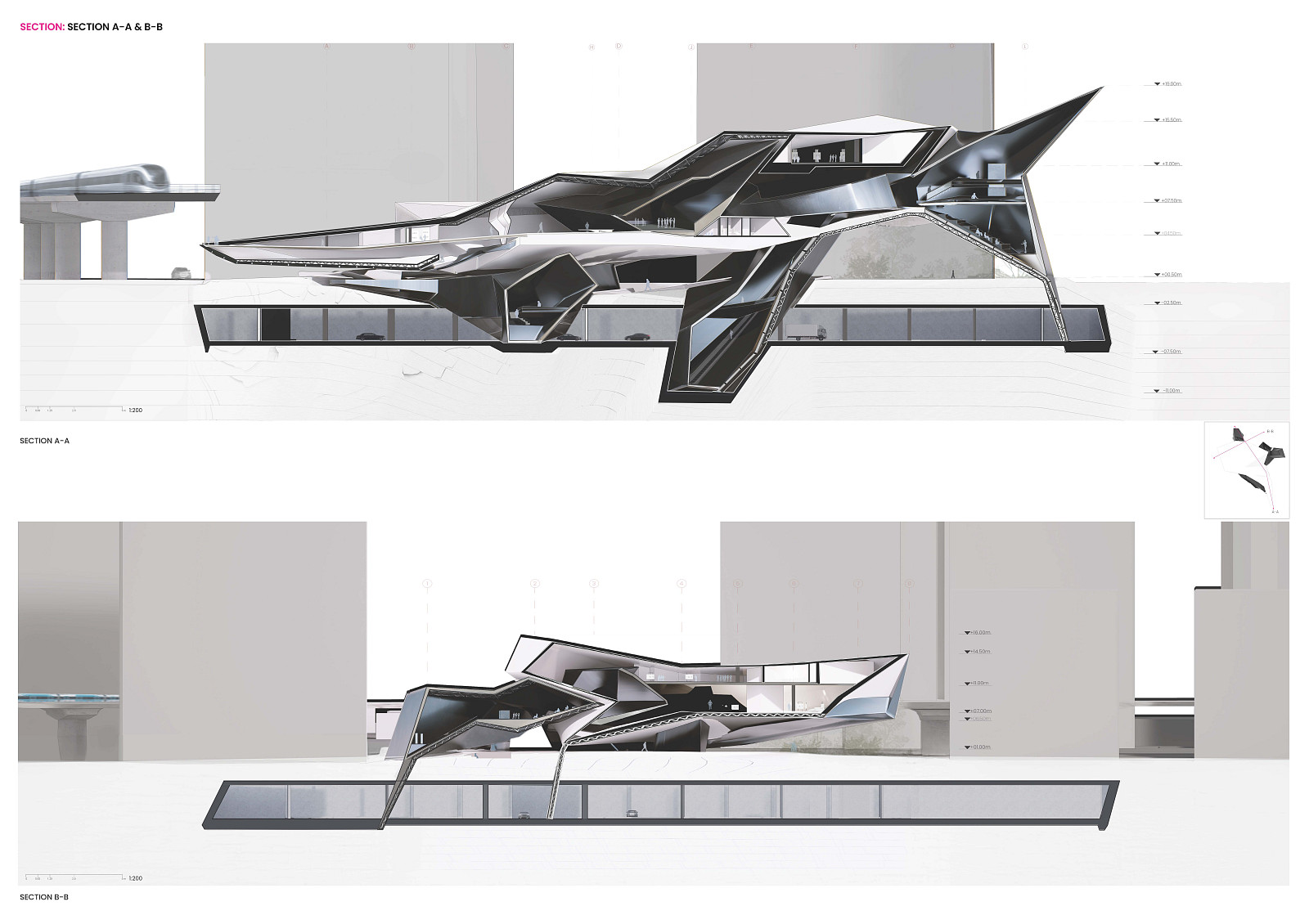
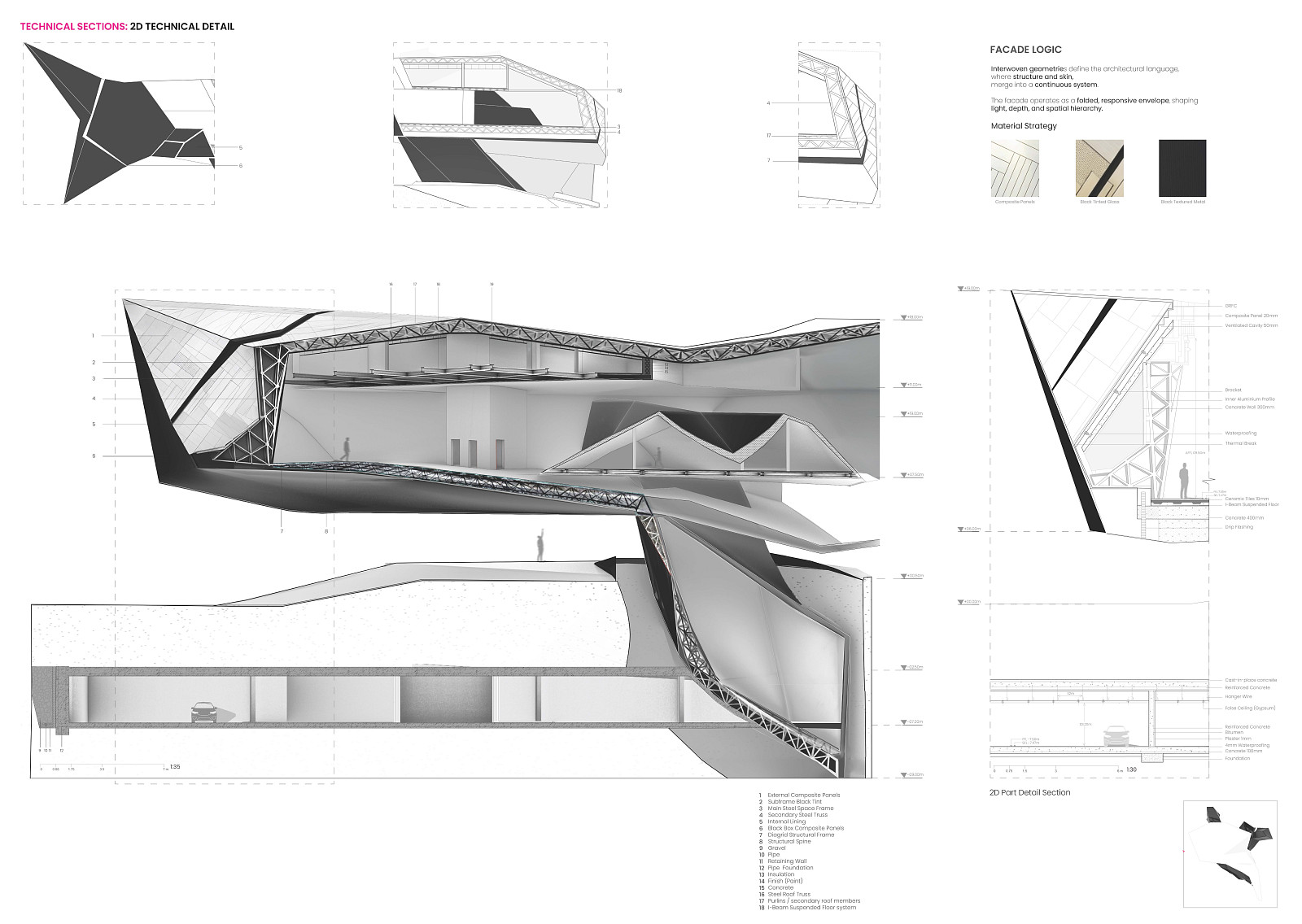
The project is designed using a hybrid structural system consisting of reinforced concrete cores and foundations combined with a long-span steel frame structure. This approach provides structural stability while allowing large column-free interior spaces that support flexible programmatic requirements.
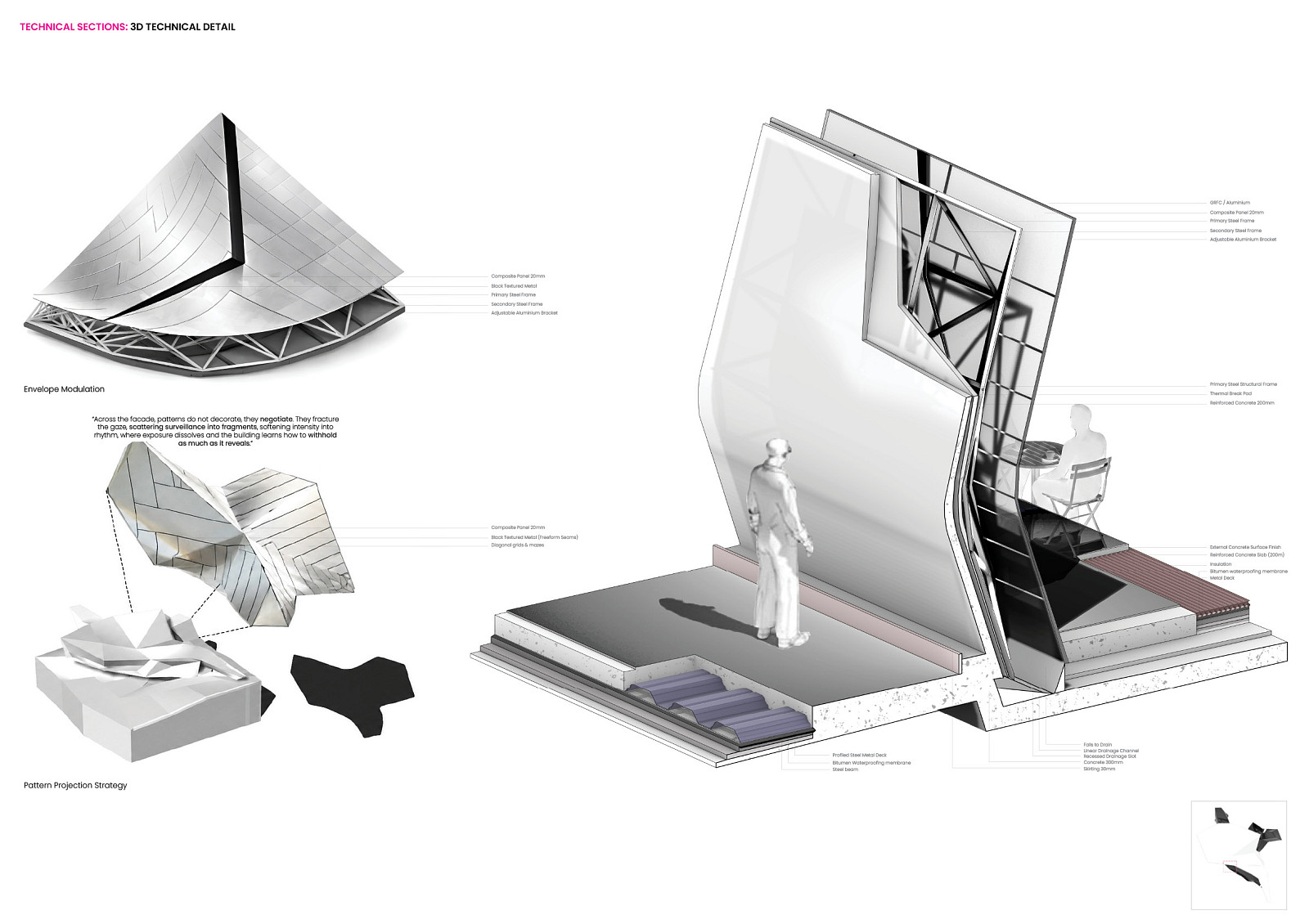
The external envelope is composed of a faceted panelized facade system. The facade consists of composite aluminium panels mounted on a secondary aluminium support frame, supported by a primary steel structure. High-performance insulated glazing is integrated within selected facade zones to maximize natural daylight while controlling solar heat gain. Thermal breaks and insulation layers are incorporated throughout the envelope to improve energy efficiency and occupant comfort.
The building is constructed using prefabricated facade panels and modular steel components to improve construction accuracy, reduce waste, and accelerate on-site assembly. The faceted geometry is digitally coordinated through parametric modelling and BIM workflows, enabling precise fabrication and installation of complex architectural elements.
Floor systems consist of reinforced concrete slabs supported by steel beams and columns, while the roof structure utilizes lightweight steel trusses. Interior finishes include polished concrete, engineered timber surfaces, acoustic wall treatments, and metal panel systems selected for durability, maintenance efficiency, and long-term adaptability.
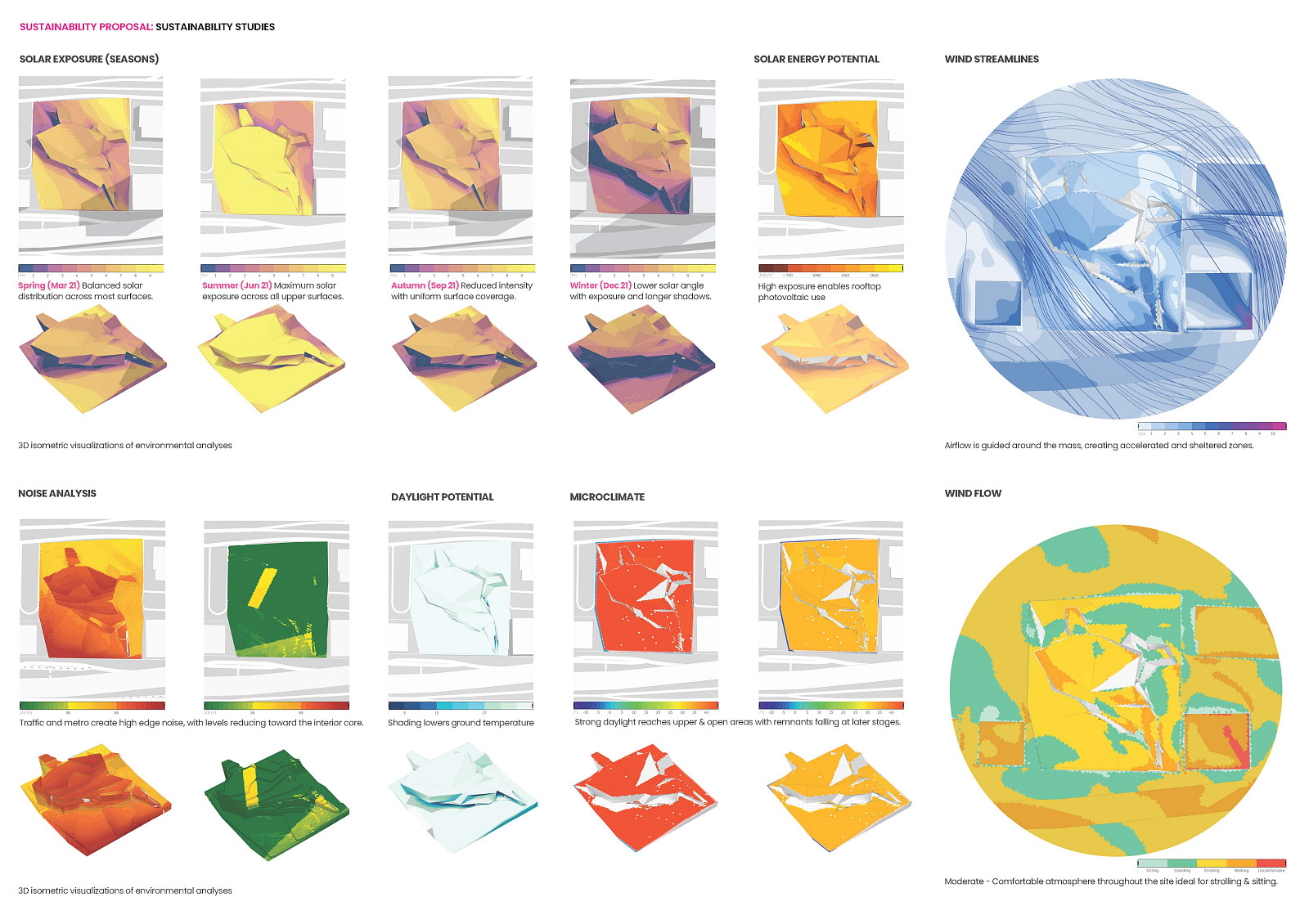
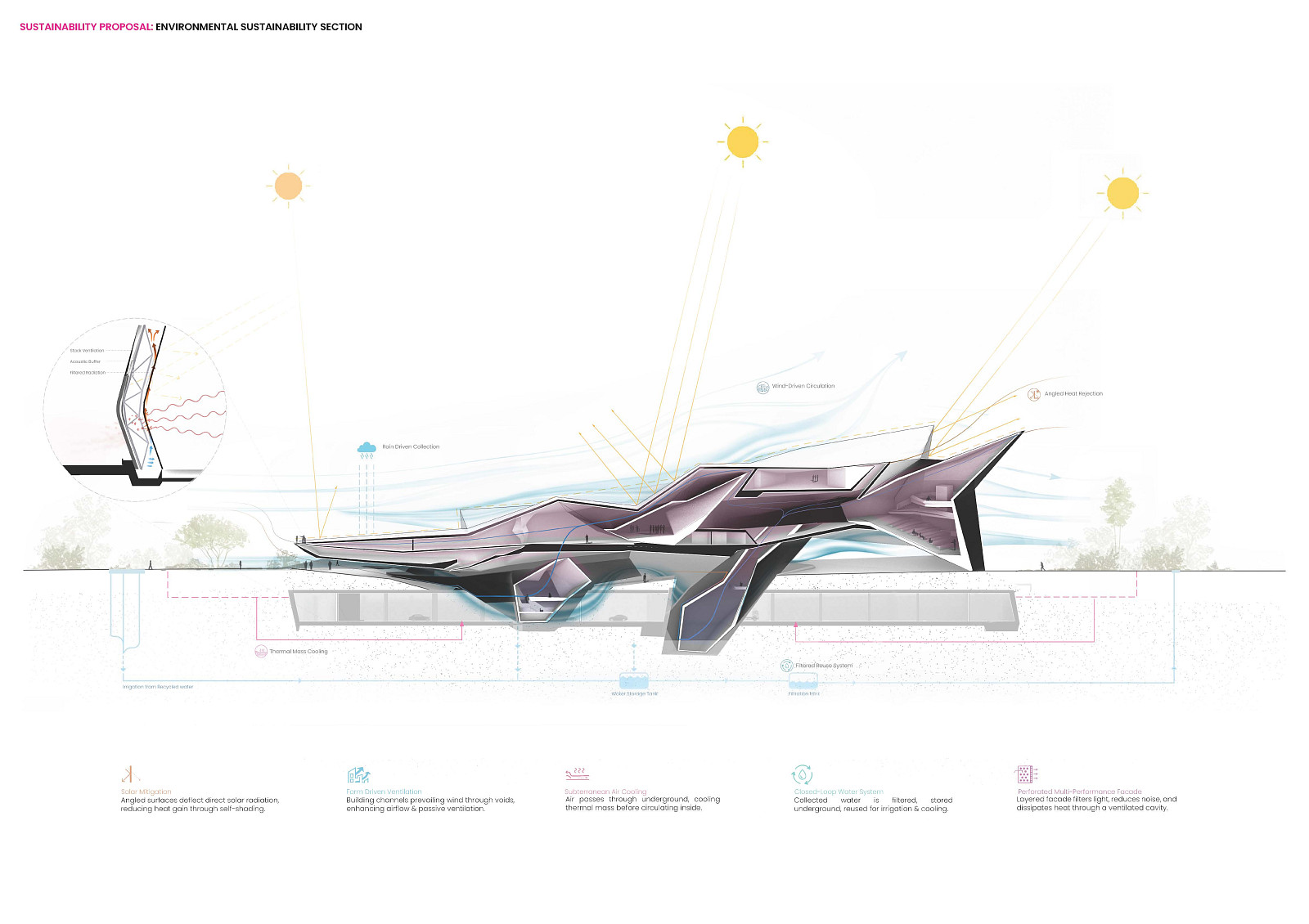
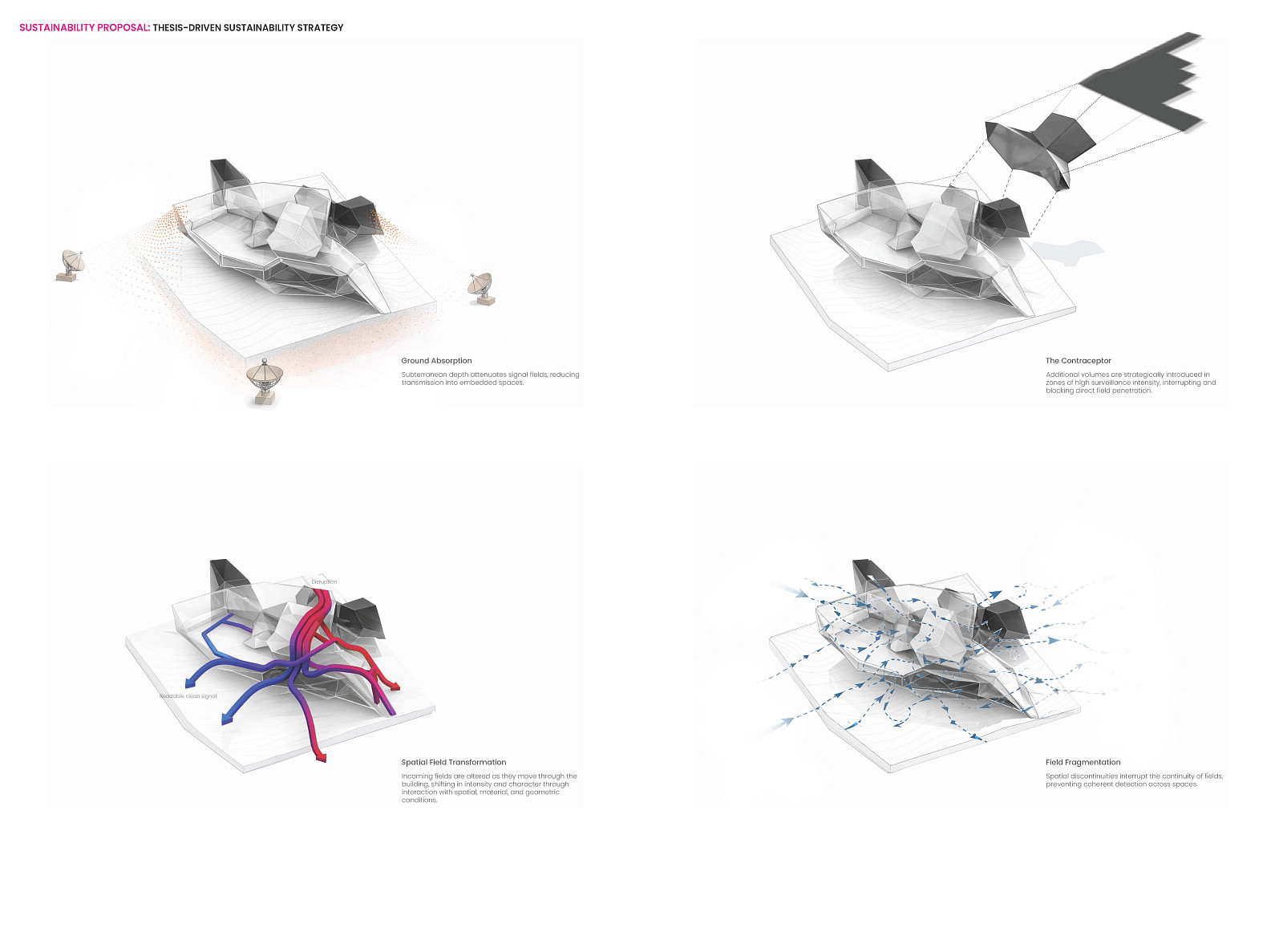
The construction strategy prioritizes sustainability through material optimization, modular assembly techniques, passive environmental design, and high-performance building envelope systems.

Copyright © 2026 INSPIRELI | All rights reserved. Use of this website signifies your agreement to the Terms of Use, Privacy Policy, and use of cookies.