Unspoken Tales


Project idea
UNSPOKEN TALES was developed in response to a growing disconnect between witnessing conflict and understanding its human reality. In an age where wars are consumed through screens, and statistics, people often become distant observers of suffering rather than active witnesses to it. While news reports document events, they rarely communicate the emotional and psychological realities of those who live through them.
Focusing on Myanmar's civil conflict, the project explores how architecture can preserve and communicate human experiences that are often lost within historical records, media coverage, and numerical data. Rather than allowing personal stories to disappear behind documentation and statistics, the project seeks to transform conflict from something merely seen into something emotionally and spatially understood.
The project emerged from a desire to expand the role of architecture beyond physical construction and position it as a medium of storytelling, empathy, and collective memory. Through interviews with conflict survivors, emotional and psychological experiences are translated into navigable virtual environments where architecture becomes a language capable of expressing fear, loss, uncertainty, resilience, and hope. Rather than focusing solely on form or function, the project investigates architecture as an ethical, emotional, and cultural act capable of revealing dimensions of human experience that conventional media cannot fully convey.
At a time when war is often consumed through distant images and headlines, the project confronts the gap between seeing and truly understanding. By transforming survivor testimonies into immersive spatial experiences, it allows visitors to engage with emotional realities rather than observe events passively, creating a deeper understanding of the human consequences of conflict.
The objective is to create a virtual archive that preserves human stories while offering a new framework for understanding conflict through spatial experience rather than conventional representation. Although grounded in Myanmar's civil conflict, the methodology is intentionally transferable and can be applied to other contexts affected by war, displacement, trauma, and collective memory, demonstrating how architecture can become a vessel for understanding, remembrance, and human connection. Myanmar was selected following extensive research into contemporary conflict zones, as its ongoing humanitarian crisis has generated profound personal and collective experiences that remain comparatively underrepresented in global awareness despite their significance and impact.
Project description
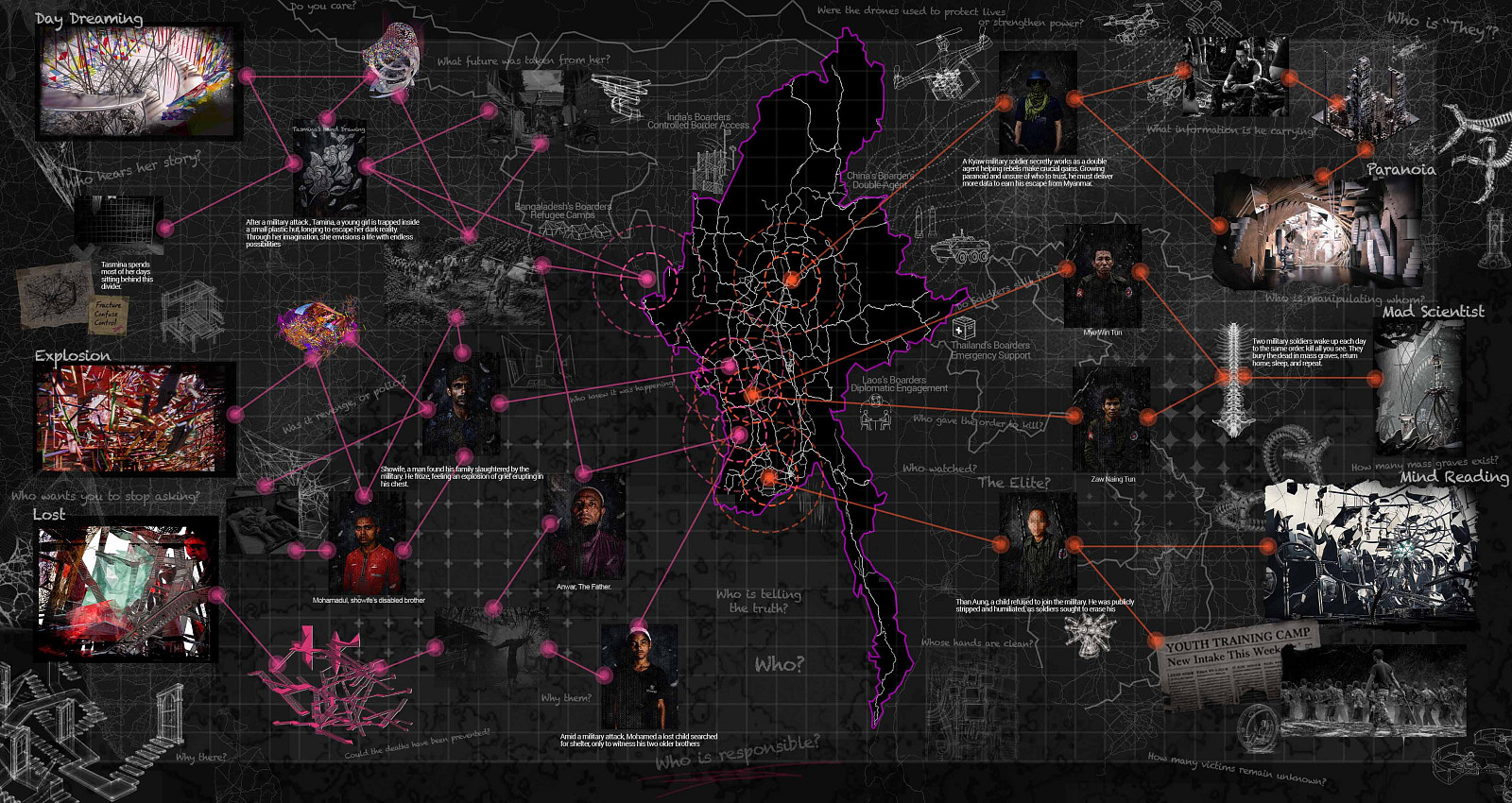
UNSPOKEN TALES is an immersive virtual archive that transforms personal testimonies from Myanmar's civil conflict into spatial narratives. Developed through Constructivist Grounded Theory and existential phenomenology, the project uses interviews with eleven survivors to translate lived experiences into architectural environments that communicate psychological and emotional states rather than literal events.
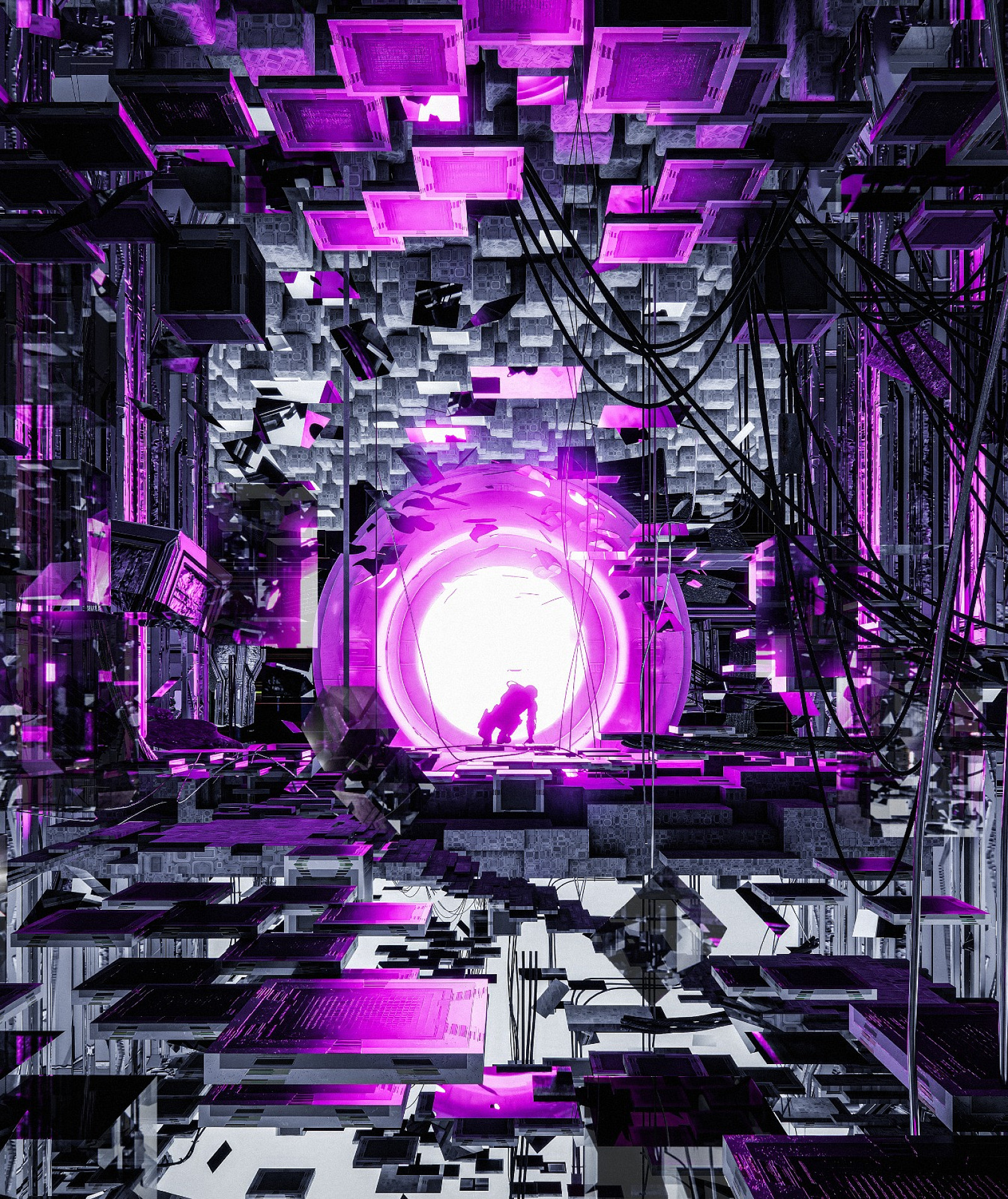
Instead of designing a buildable structure, the project explores architecture as a medium for expressing memory, trauma, and human experience. Fragmented geometries, layered compositions, spatial distortions, and symbolic architectural elements are used to convert testimonies into emotional landscapes that visitors can navigate and experience.
The project is organized around Null, a transitional realm that functions as the central navigational space. Visitors enter different narrative worlds through portals, each representing a survivor's story and emotional condition. After each encounter, visitors return to Null and continue their journey until reaching a final threshold symbolizing healing and hope.
The archive includes both civilian and military perspectives and serves as a virtual repository of collective memory. By allowing users to move through and experience these narratives, the project creates an alternative form of documentation in which conflict is understood through spatial immersion rather than observation alone.
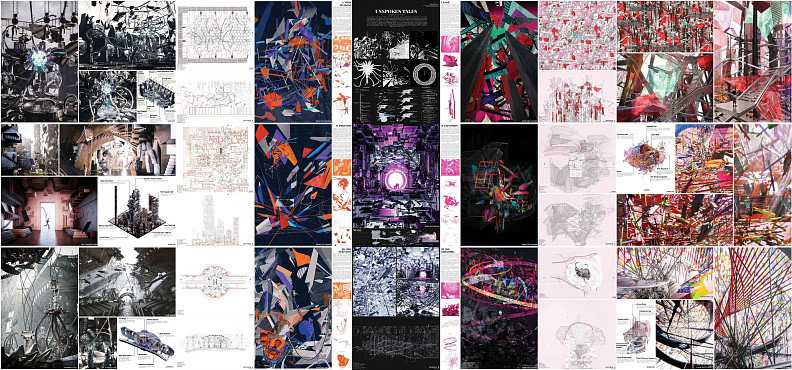
The Null realm connects six narrative portals, each based on an individual testimony preserved within the archive and designed to embody a specific emotional condition.
The civilian narratives include, Lost: the story of a child separated from his father in a forest, symbolizing disorientation, separation, and the feeling of being lost.
Explosion: is a memory frozen around the violent destruction of a home, symbolizing helplessness and the feeling of standing powerless while witnessing tragedy unfold.
Daydreaming: is a psychological escape into imagination, symbolizing withdrawal from reality and the longing for a life that has been lost.
The military narratives include, Mind Reading: which explores how power can exploit and manipulate vulnerable individuals, symbolizing domination and psychological control.
Paranoia: is a journey through fear, suspicion, and uncertainty, symbolizing the constant anxiety of not knowing who is with you and who is against you.
Mad Scientist: portrays mechanized violence and systematic destruction, symbolizing the normalization of violence as part of everyday routine.
Together, these portals transform unheard personal experiences into immersive spatial narratives that visitors can navigate and emotionally engage with.
Technical information
The project is developed as a non-physical digital environment and virtual archive. Its design process is based on qualitative research conducted through in-depth interviews with eleven survivors of Myanmar's civil conflict. Testimonies were analyzed using Constructivist Grounded Theory to identify recurring themes, emotions, and experiential patterns that informed the architectural language.
Spatial narratives were generated through iterative drawing, abstraction, fragmentation, and deconstructive composition techniques. The project consists of a central hub space (Null) connected to multiple immersive narrative environments through interactive portals. Each environment employs symbolic geometry, spatial sequencing, scale manipulation, and atmospheric design to communicate specific psychological and emotional conditions.
The final outcome is presented as an immersive virtual experience that enables users to navigate, explore, and engage with a digital archive of collective memory through architecture-based storytelling.
Documentation


Copyright © 2026 INSPIRELI | All rights reserved. Use of this website signifies your agreement to the Terms of Use, Privacy Policy, and use of cookies.