Interior design inspired by Spanish cuisine


Project idea
Casa de Tapas – Interior Design Inspired by Spanish Cuisine
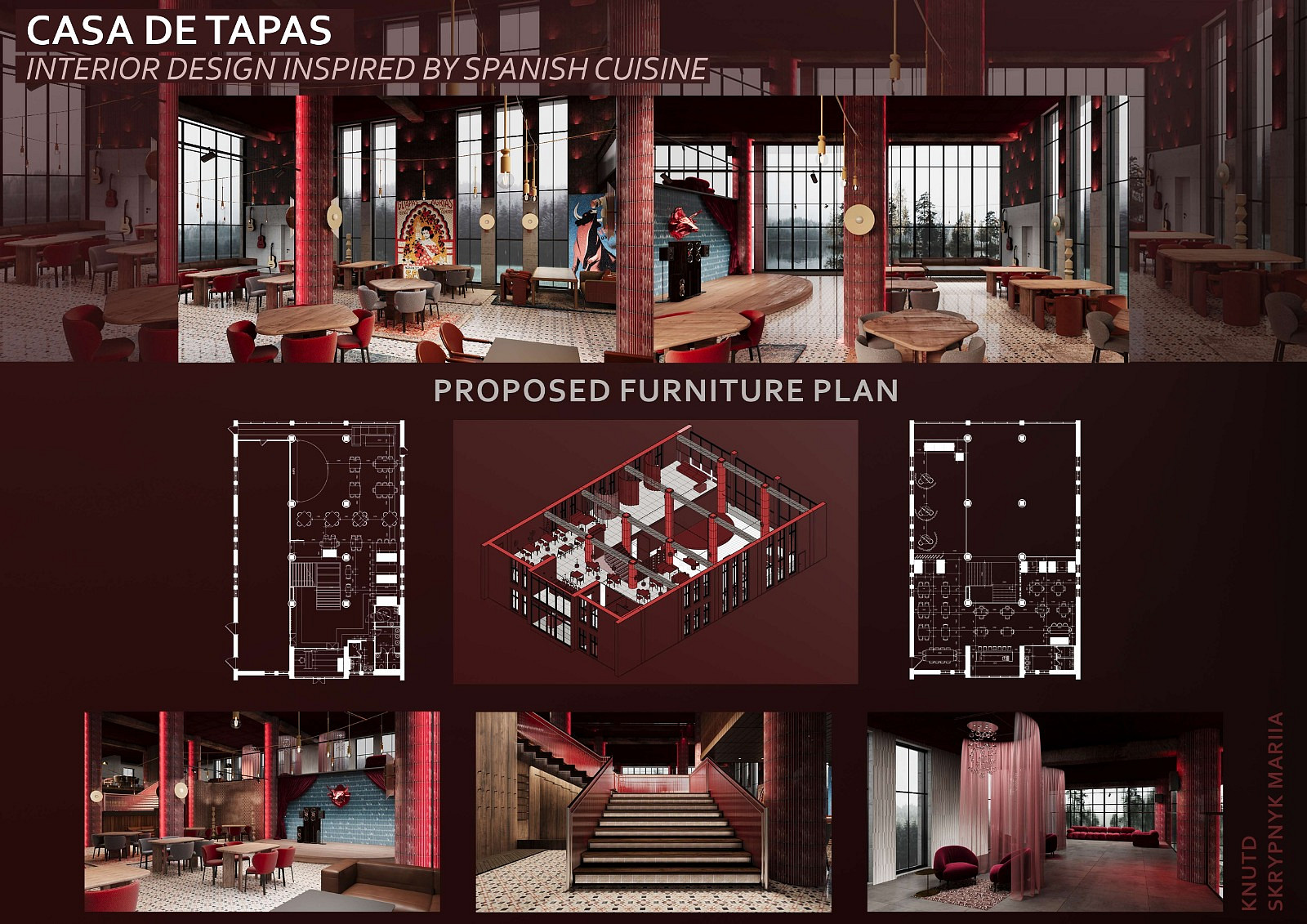
This project presents the interior design concept for Casa de Tapas, a contemporary restaurant inspired by the rich cultural heritage, social traditions, and culinary identity of Spain. The design aims to create an immersive dining environment that reflects the vibrant atmosphere of Spanish gastronomy while providing a functional and memorable experience for visitors.
The concept is based on the interpretation of Spanish culture through architectural forms, materials, colors, lighting, and spatial organization. Warm red tones, natural wood finishes, textured surfaces, and expressive decorative elements are combined to evoke the passion, energy, and authenticity associated with traditional Spanish cuisine. Large industrial-style windows and an open spatial layout contribute to a welcoming atmosphere, while carefully designed focal points strengthen the restaurant’s visual identity.
A key objective of the project is to establish a balance between aesthetics and functionality. The furniture arrangement has been developed to optimize circulation, maximize seating capacity, and ensure comfort for both guests and staff. Special attention has been given to the zoning of dining areas, social spaces, and circulation routes in order to support efficient restaurant operations and enhance the overall user experience.
The project also explores the role of interior design in shaping emotional engagement. Through the use of dramatic lighting, carefully selected materials, and spatial hierarchy, the restaurant encourages social interaction and creates a distinctive sense of place. The central staircase and stage area serve as architectural landmarks that strengthen the connection between different levels and contribute to the dynamic character of the interior.
Ultimately, the goal of this project is to develop a restaurant environment that not only accommodates the practical requirements of contemporary hospitality design but also communicates the spirit of Spanish culture through a cohesive and immersive interior experience. The design seeks to create a destination where architecture, cuisine, and atmosphere come together to form a unique and memorable setting for visitors.
Project description
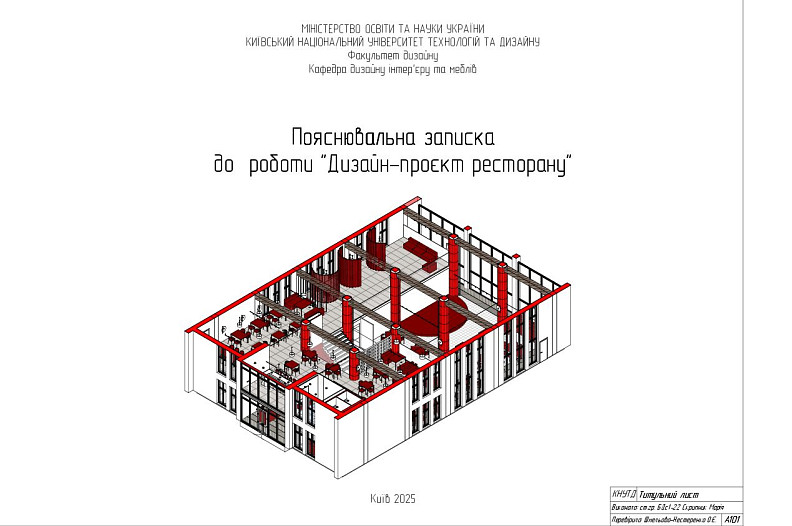
The project includes a portfolio of drawings, renderings, and a presentation tablet.
Technical information
The selected premises comprise two levels. During the design development process, it was decided to introduce a mezzanine level while preserving the full-height volume adjacent to the large panoramic windows. This approach maintains visual openness, enhances the perception of spaciousness, and allows natural light to penetrate deep into the interior, creating an airy and welcoming atmosphere.
The structural framework of the building is formed by reinforced concrete columns, while the enclosing walls are constructed of brick masonry. The extensive use of panoramic glazing ensures a high level of natural illumination and contributes to favorable indoor environmental quality.
As part of the redevelopment strategy, several emergency evacuation routes were incorporated to ensure compliance with safety requirements, including dedicated evacuation exits. The proposed construction works include the installation of kitchen facilities, sanitary areas, additional structural elements, and the main circulation core with a feature staircase.
The central staircase serves as a key architectural and compositional element of the project. Beyond its functional role, it acts as a visual focal point that organizes the interior space, strengthens vertical connectivity between levels, and reinforces the overall identity and character of the design concept.
Documentation


Copyright © 2026 INSPIRELI | All rights reserved. Use of this website signifies your agreement to the Terms of Use, Privacy Policy, and use of cookies.