Rhizome 315


Project idea
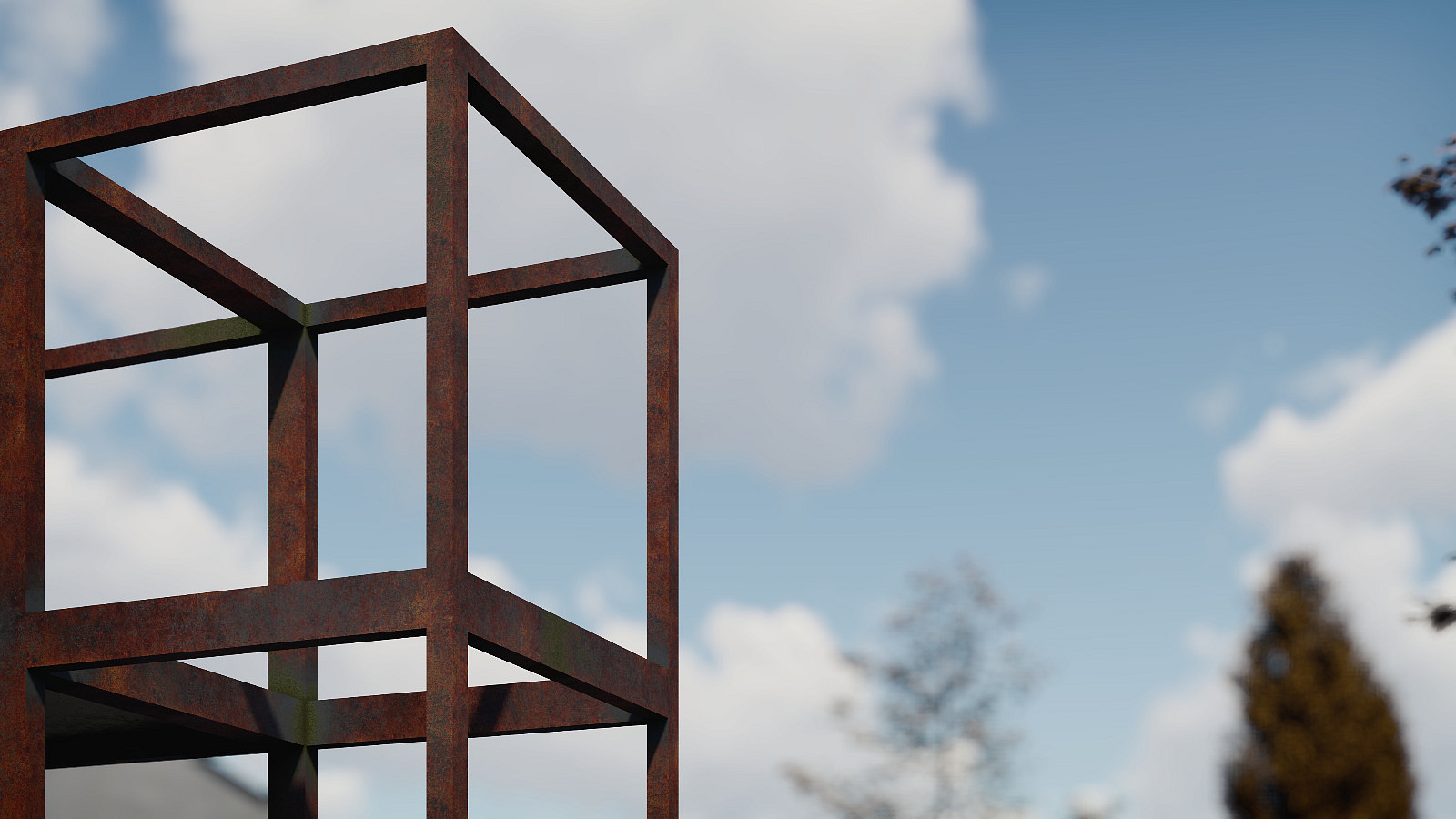
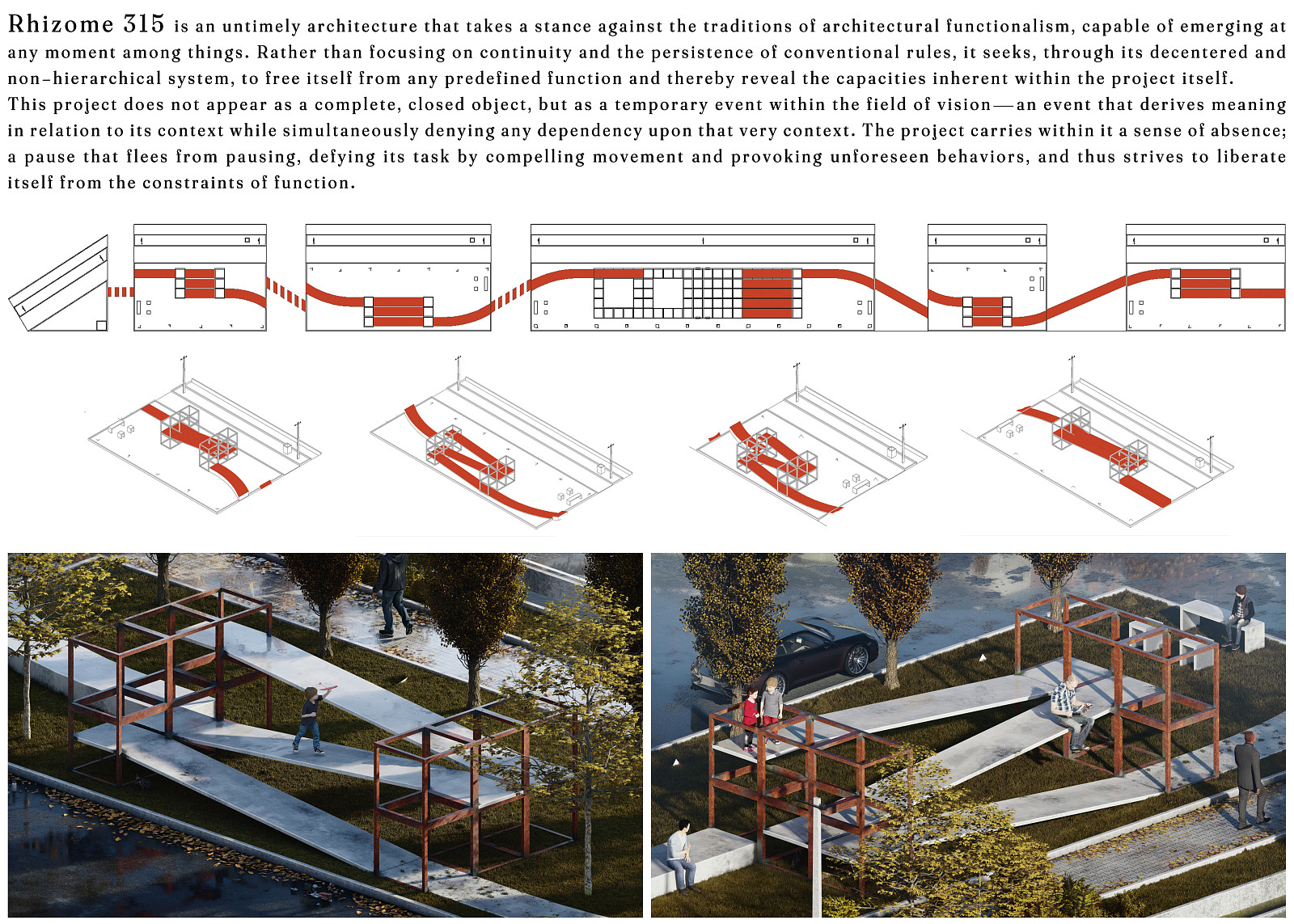
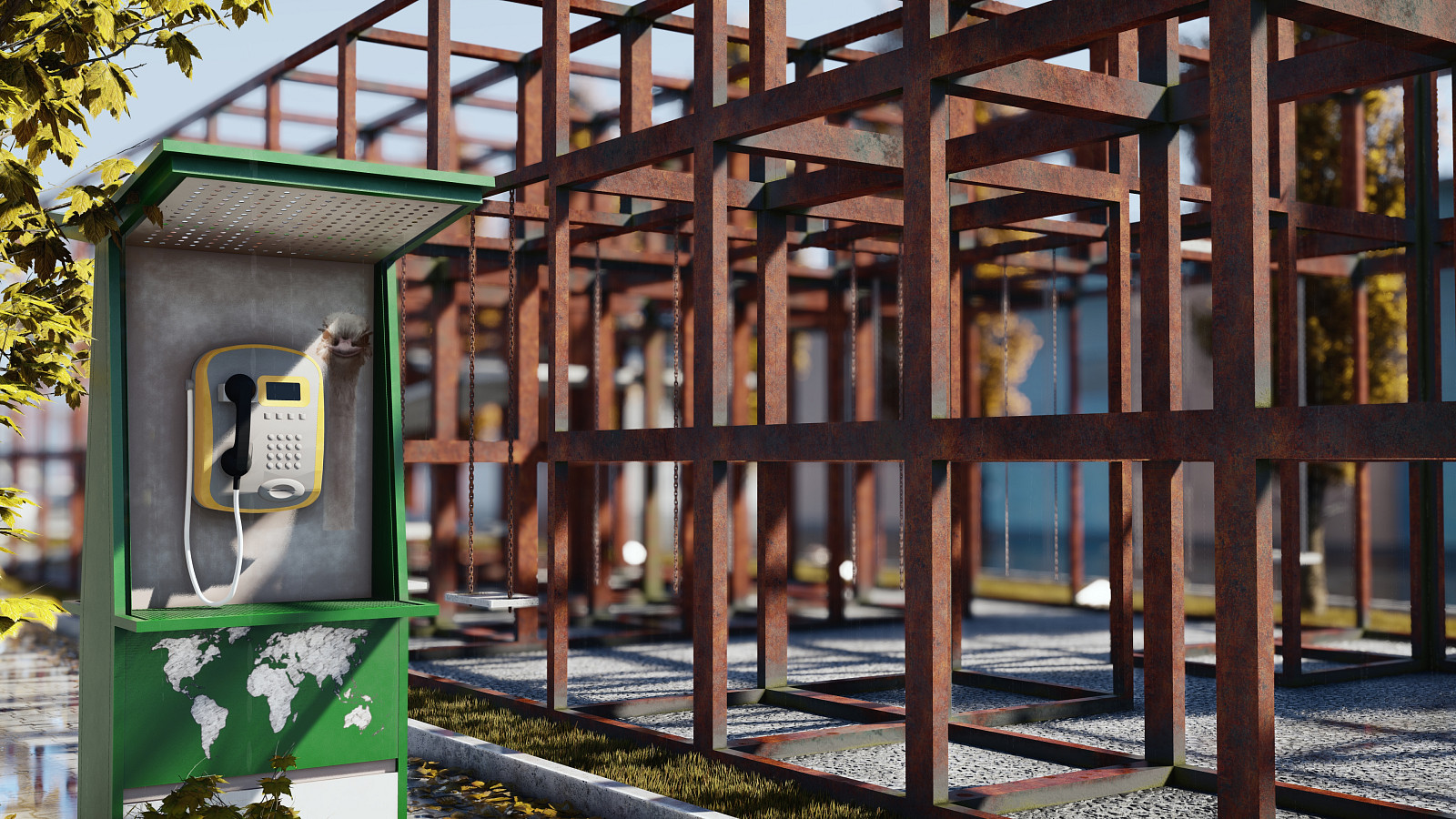
Rhizome 315 is an untimely architecture that takes a stance against the traditions of architectural functionalism, capable of emerging at any moment among things. Rather than focusing on continuity and the persistence of conventional rules, it seeks, through its decentered and non-hierarchical system, to free itself from any predefined function and thereby reveal the capacities inherent within the project itself.
This project does not appear as a complete, closed object, but as a temporary event within the field of vision—an event that derives meaning in relation to its context while simultaneously denying any dependency upon that very context. The project carries within it a sense of absence; a pause that flees from pausing, defying its task by compelling movement and provoking unforeseen behaviors, and thus strives to liberate itself from the constraints of function.
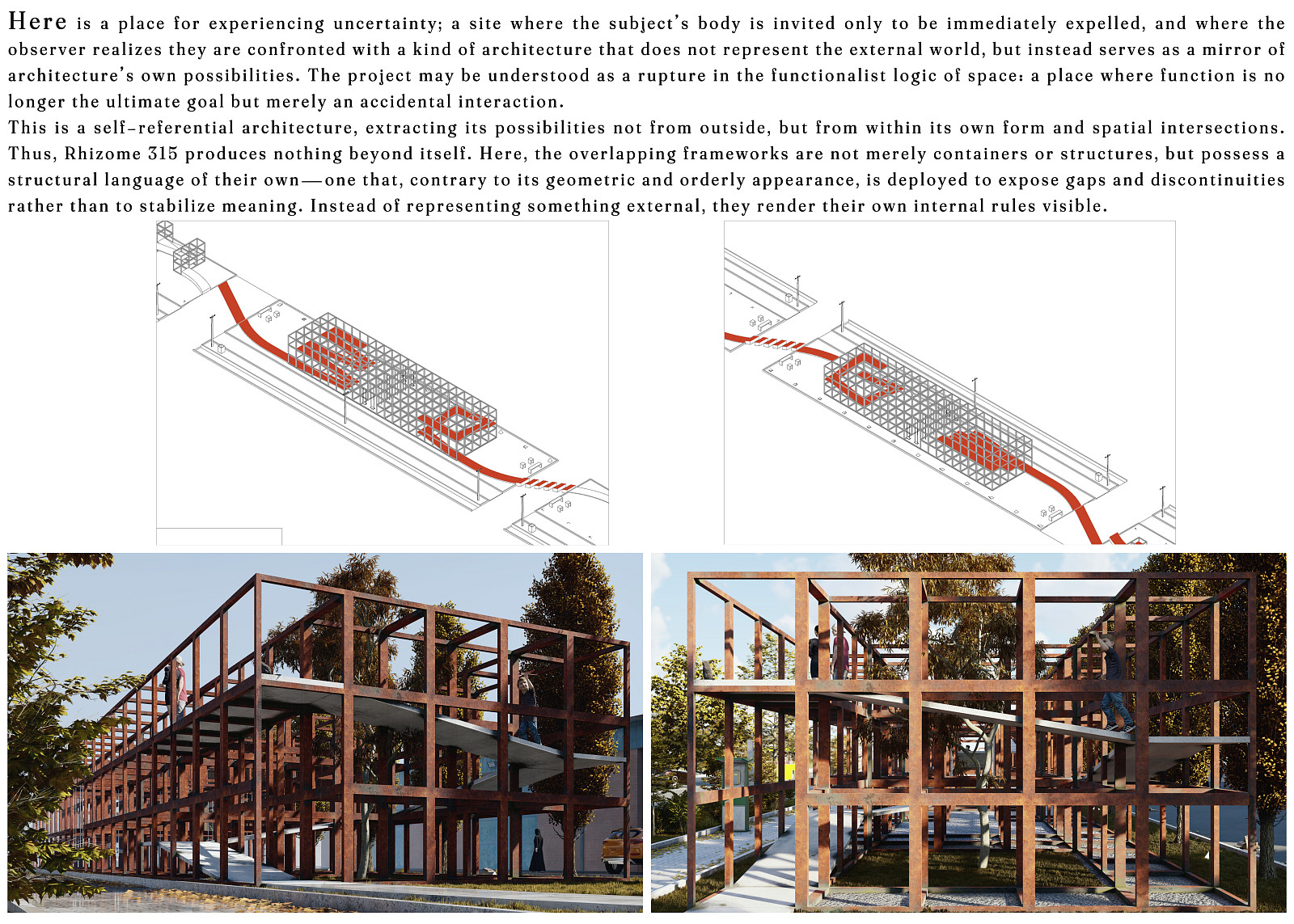
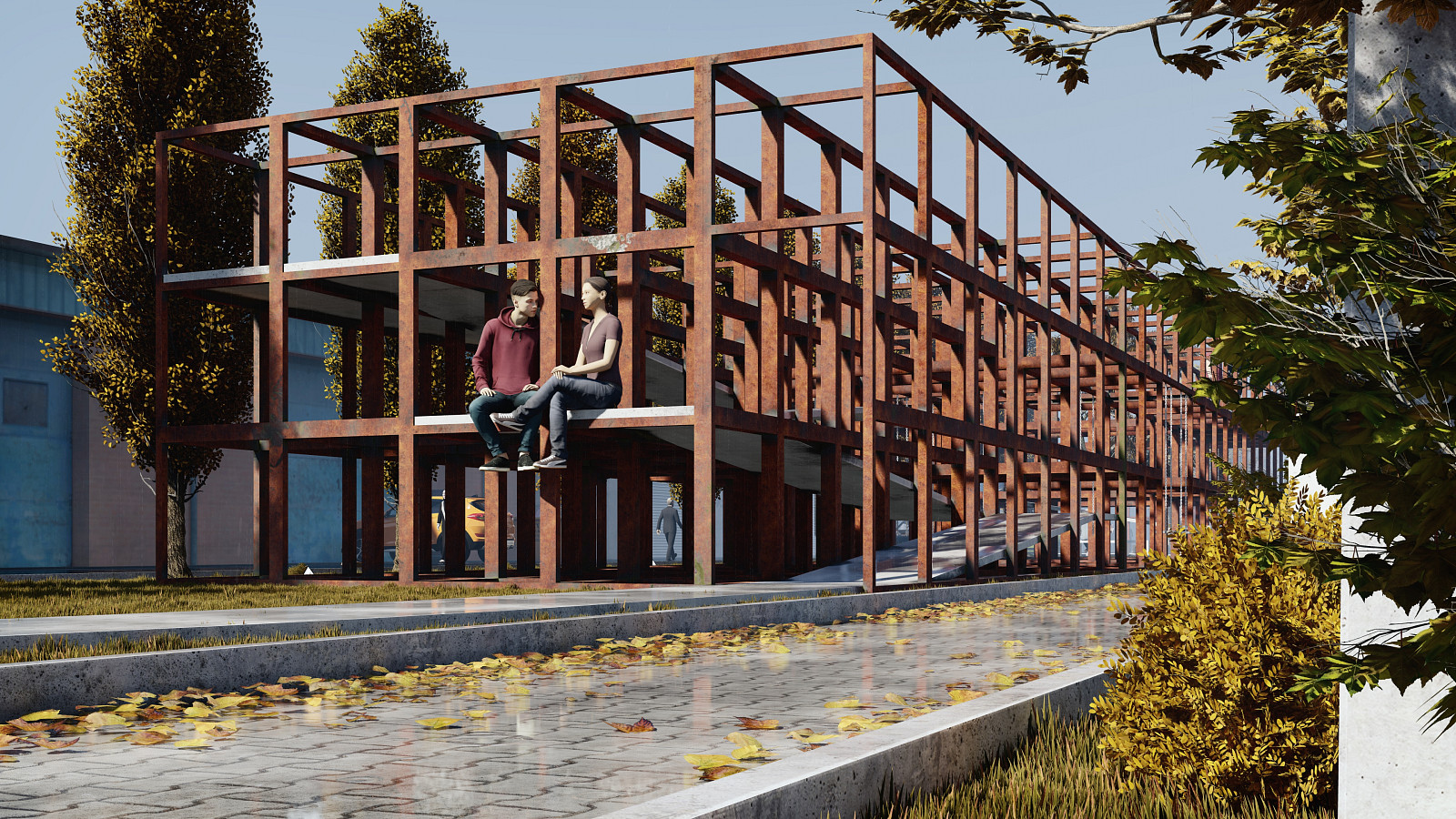
Here is a place for experiencing uncertainty; a site where the subject’s body is invited only to be immediately expelled, and where the observer realizes they are confronted with a kind of architecture that does not represent the external world, but instead serves as a mirror of architecture’s own possibilities. The project may be understood as a rupture in the functionalist logic of space: a place where function is no longer the ultimate goal but merely an accidental interaction.
Project description
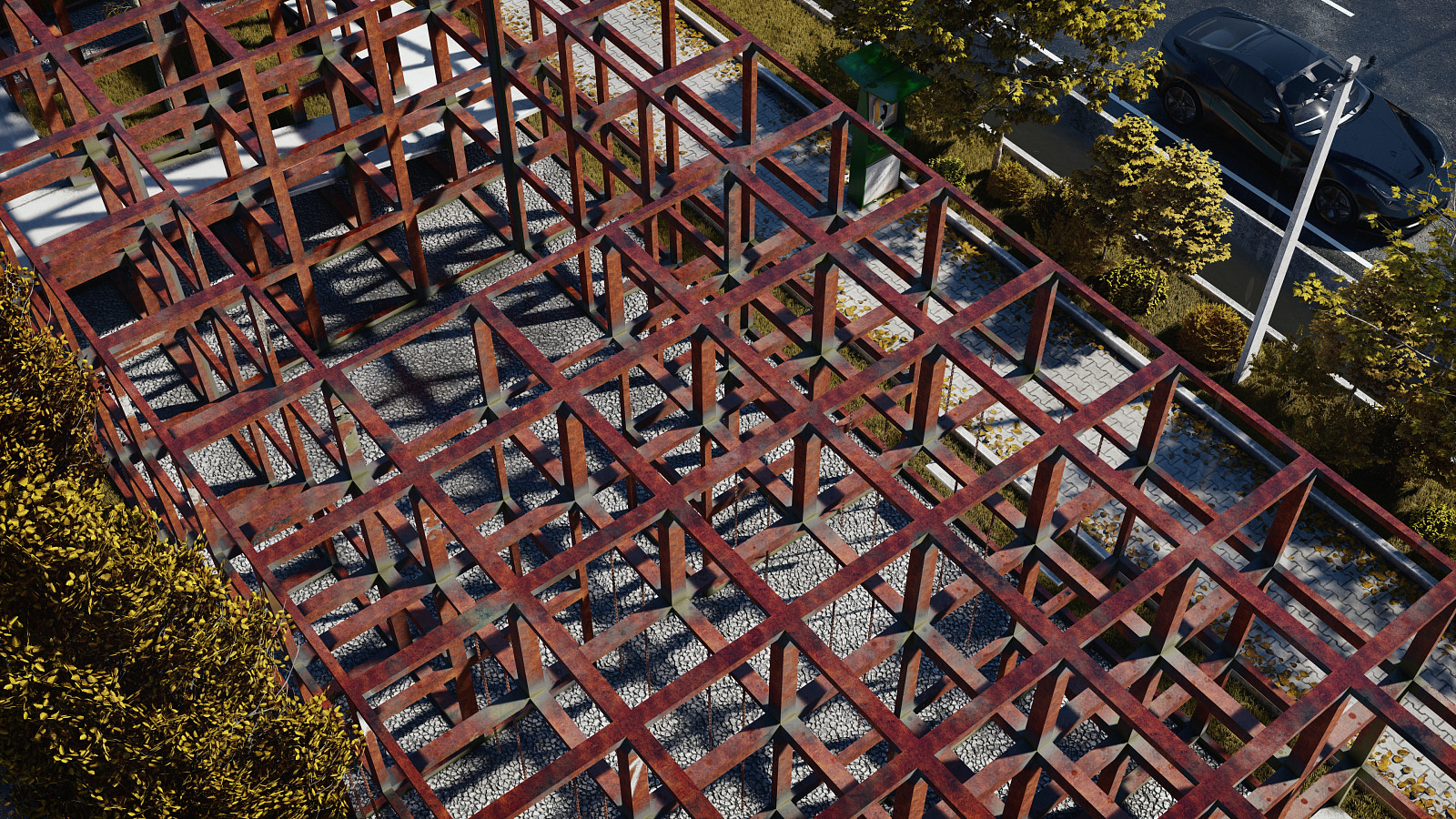
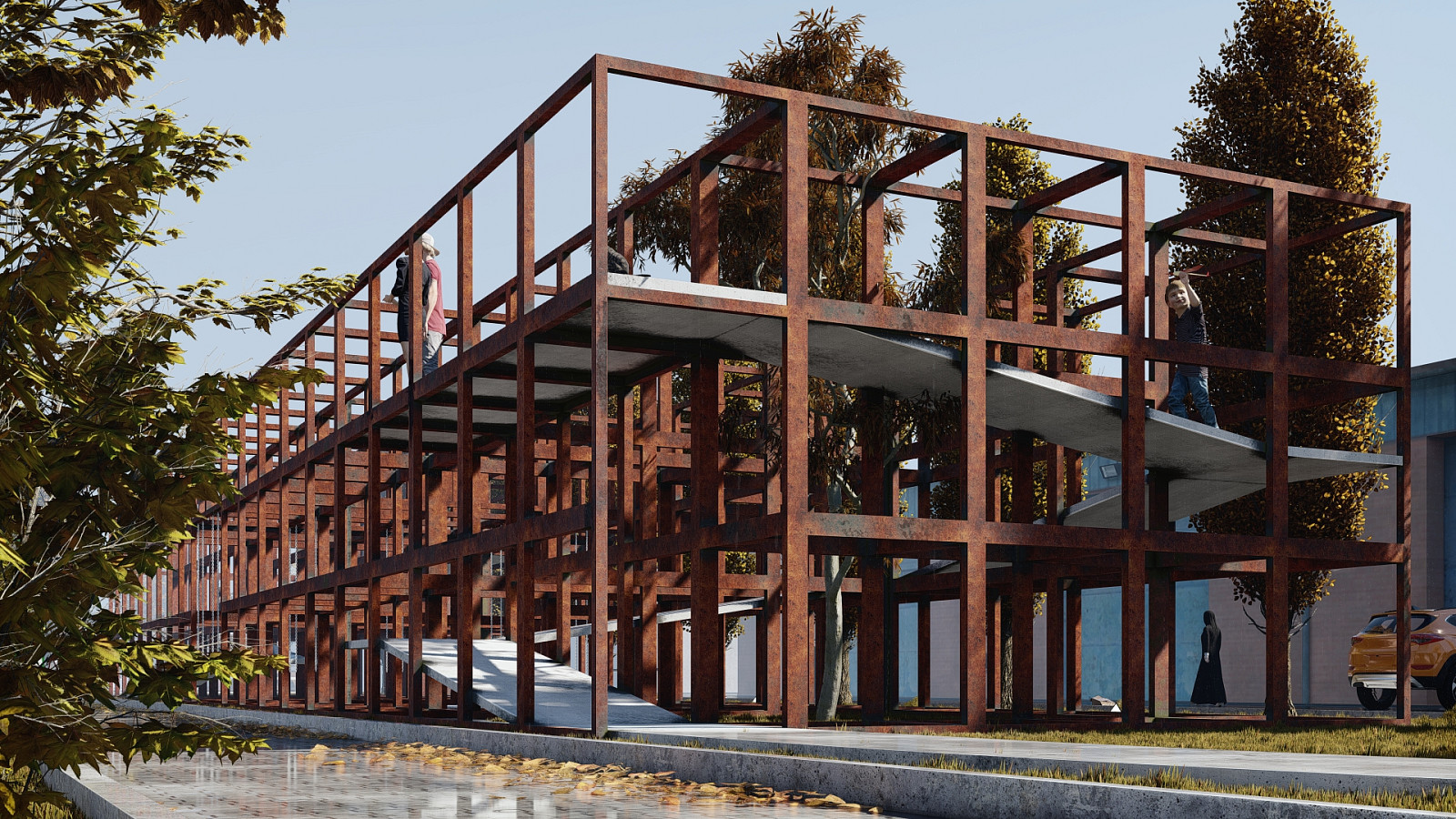
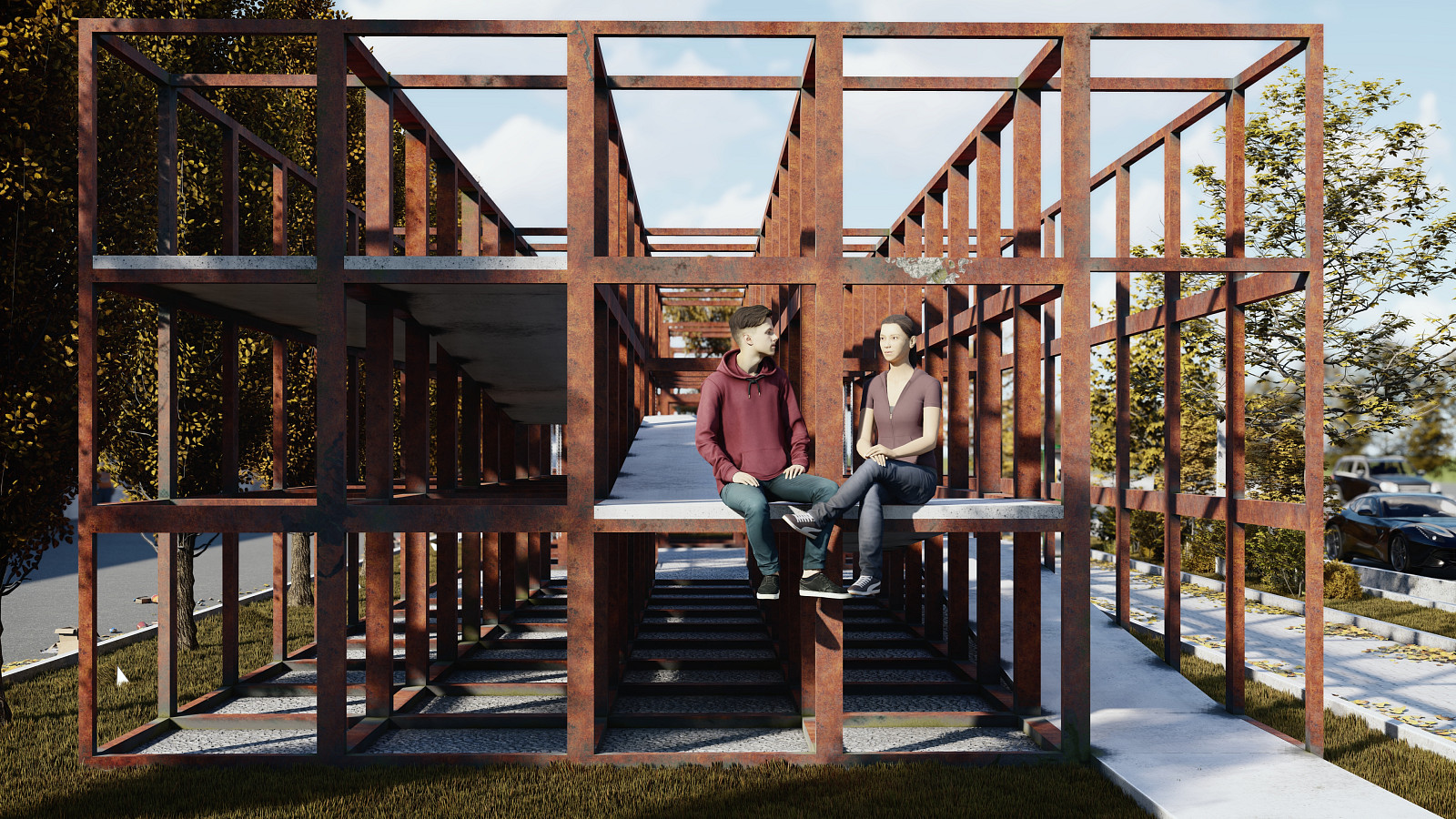
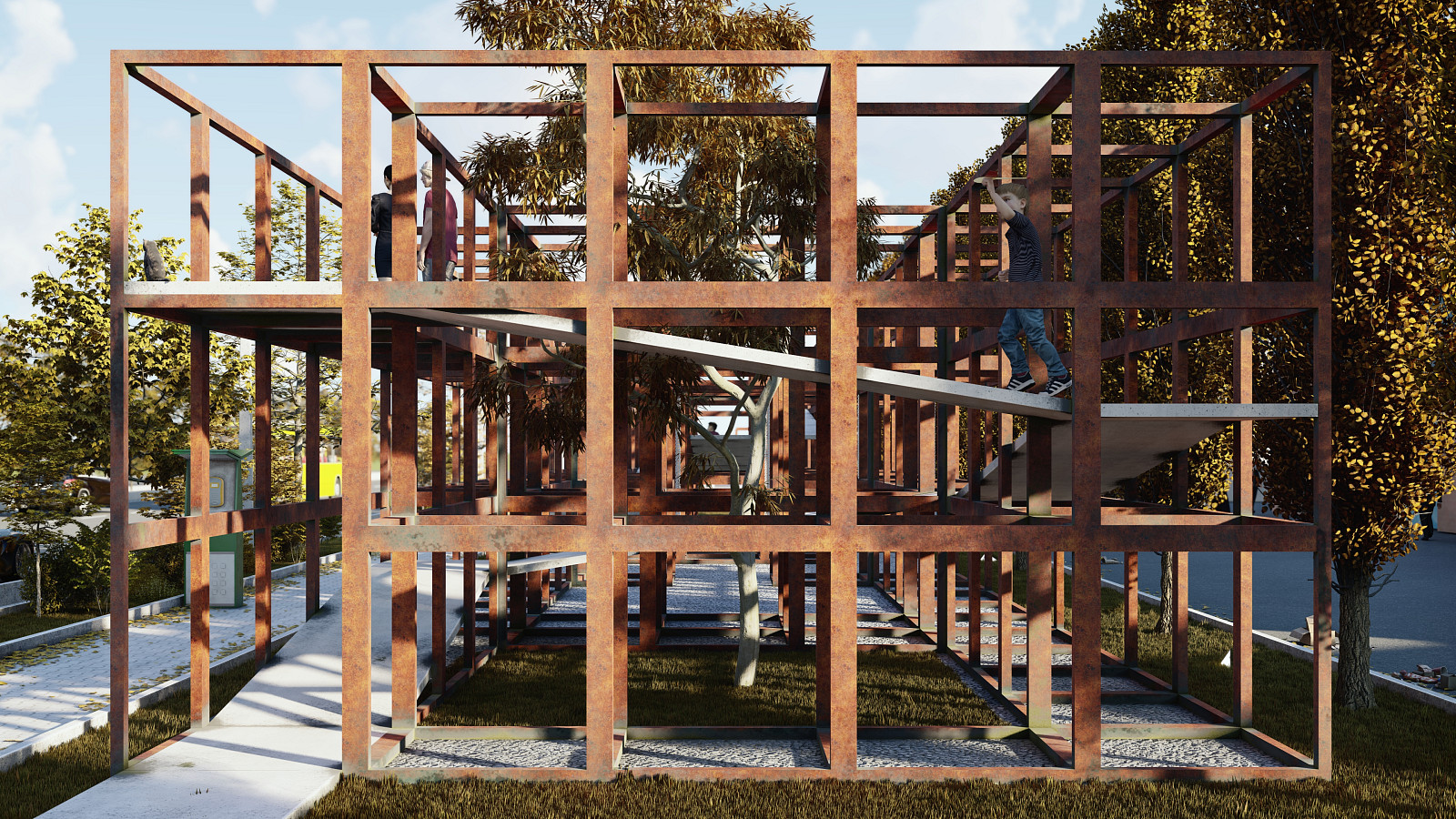
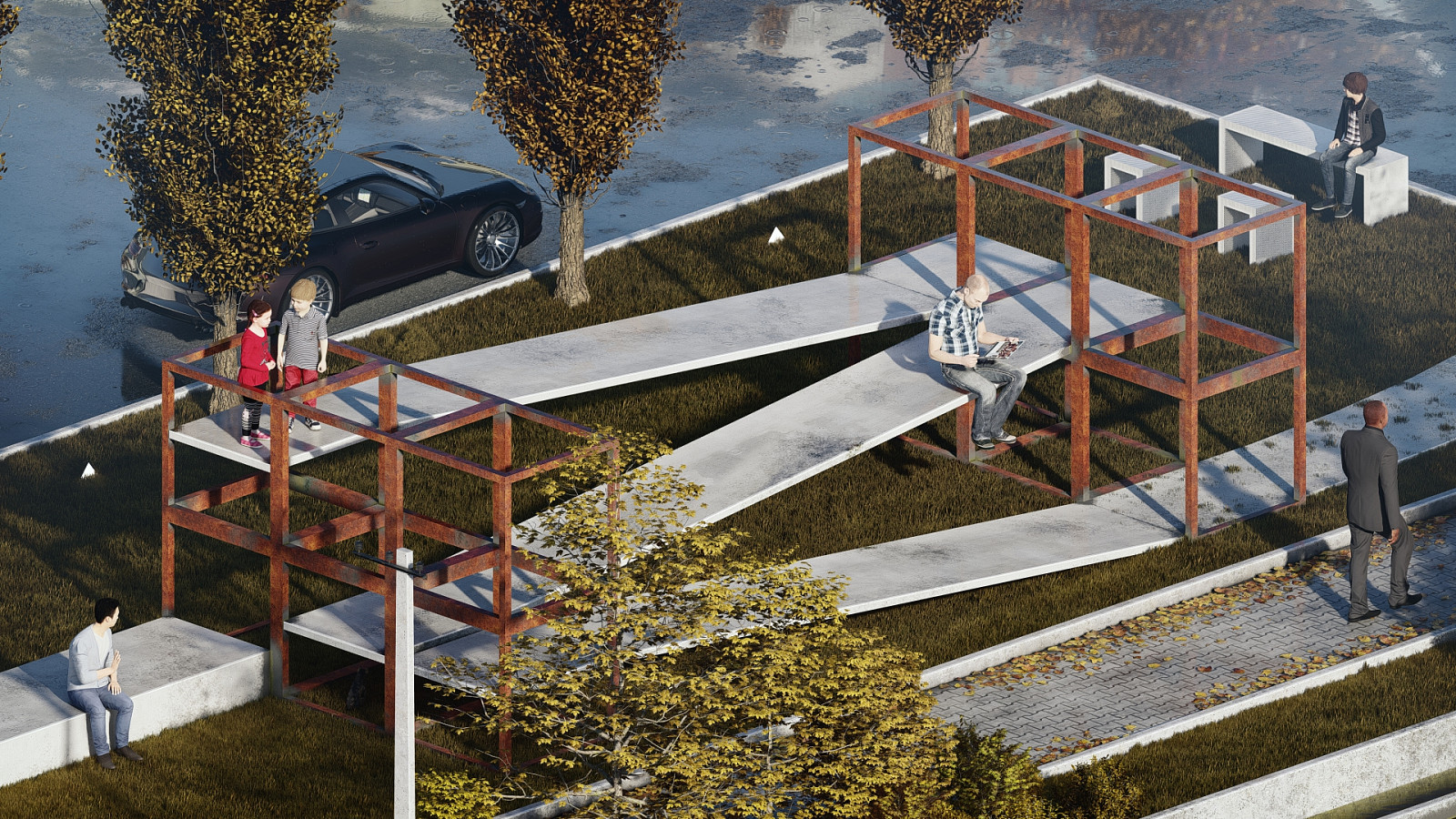
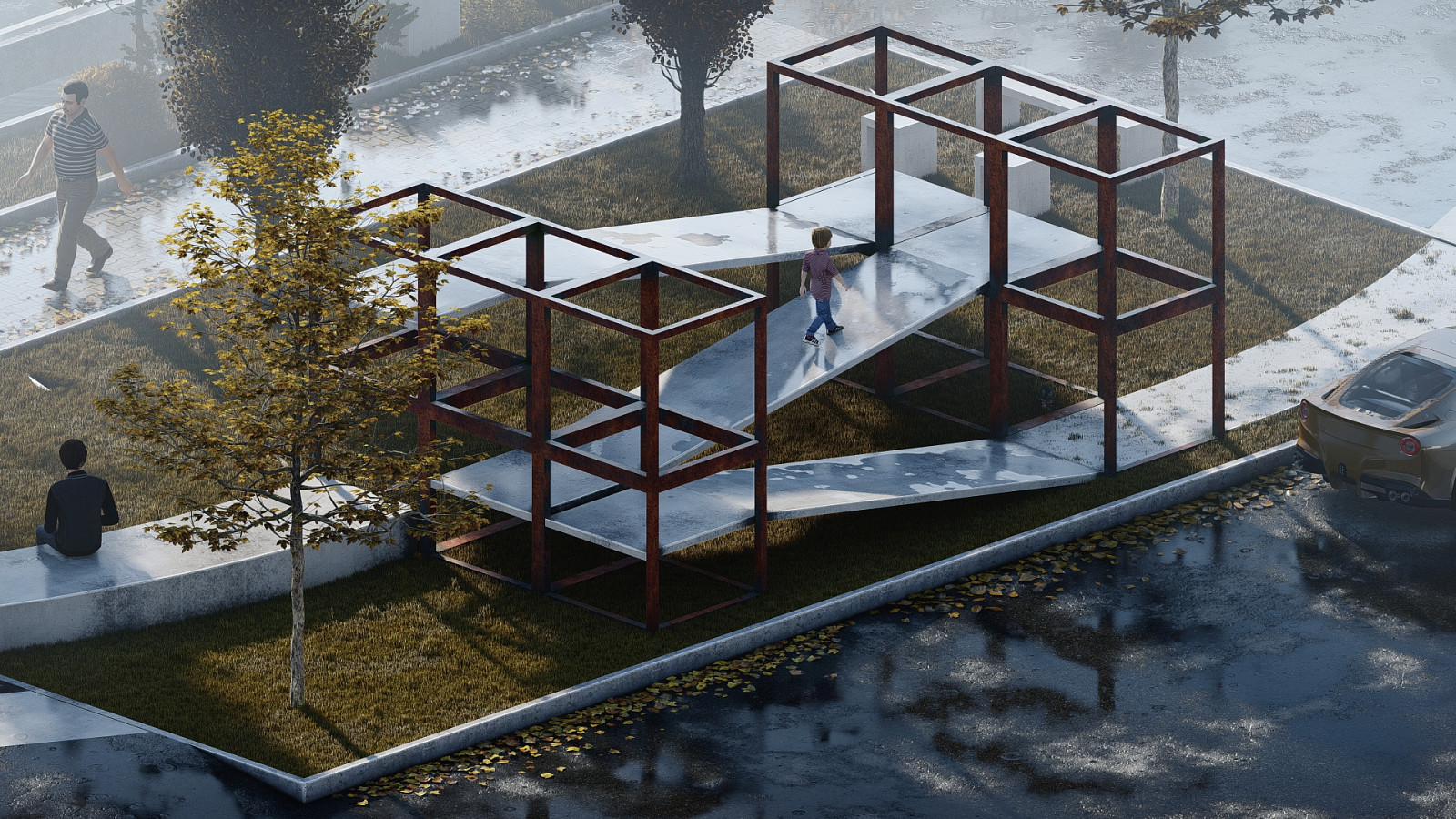
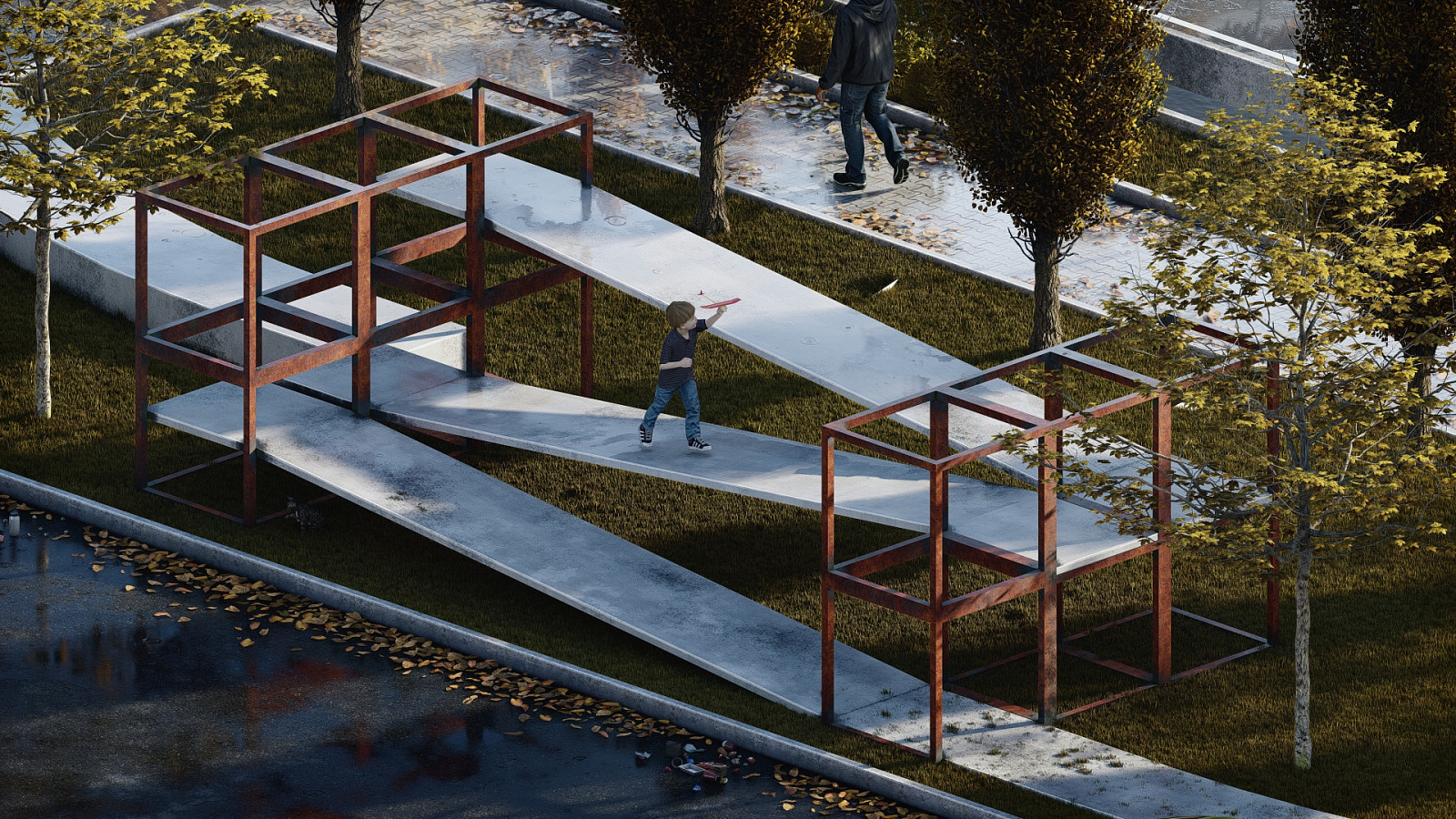
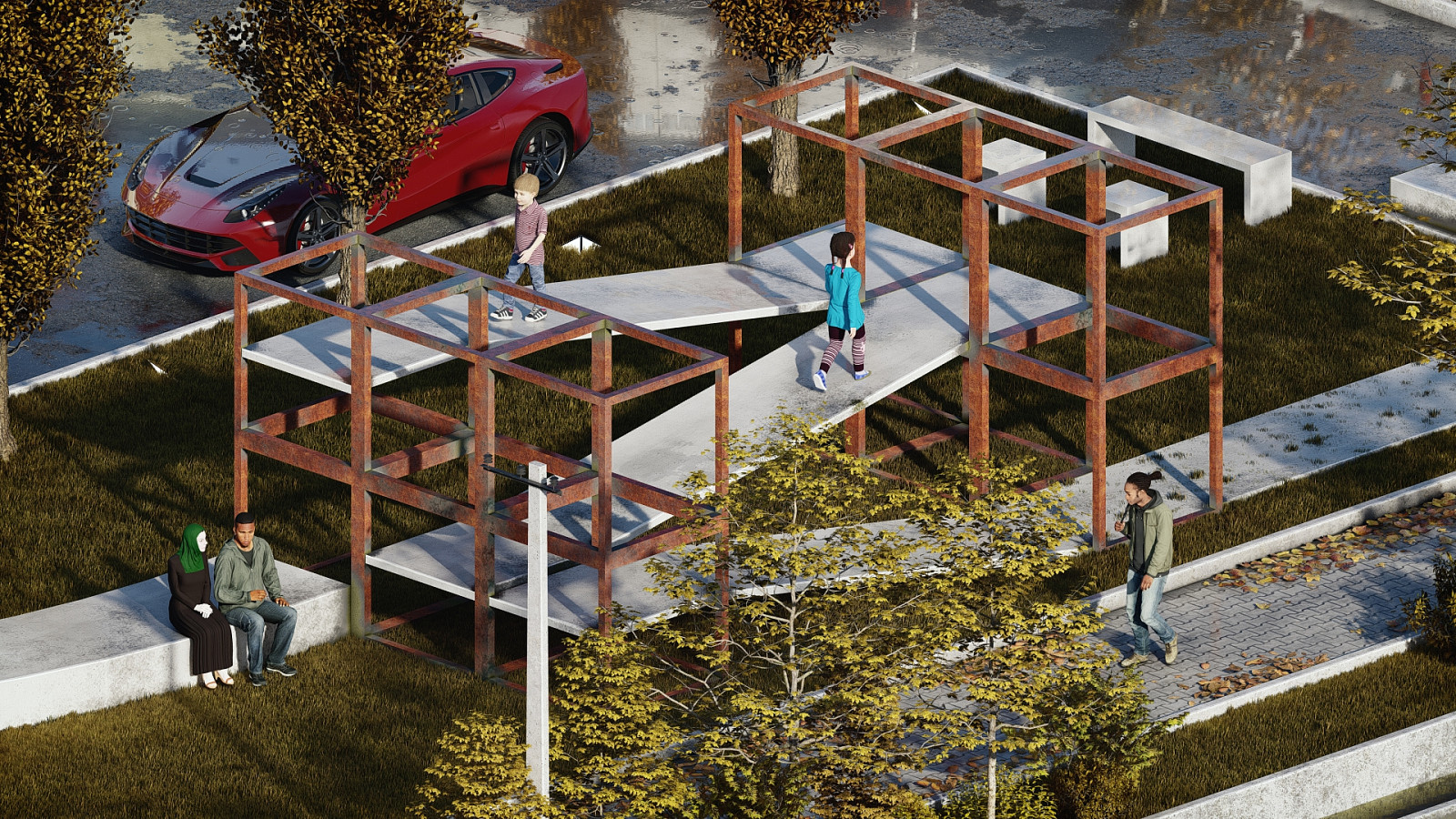
This is a self-referential architecture, extracting its possibilities not from outside, but from within its own form and spatial intersections. Thus, Rhizome 315 produces nothing beyond itself. Here, the overlapping frameworks are not merely containers or structures, but possess a structural language of their own—one that, contrary to its geometric and orderly appearance, is deployed to expose gaps and discontinuities rather than to stabilize meaning. Instead of representing something external, they render their own internal rules visible.
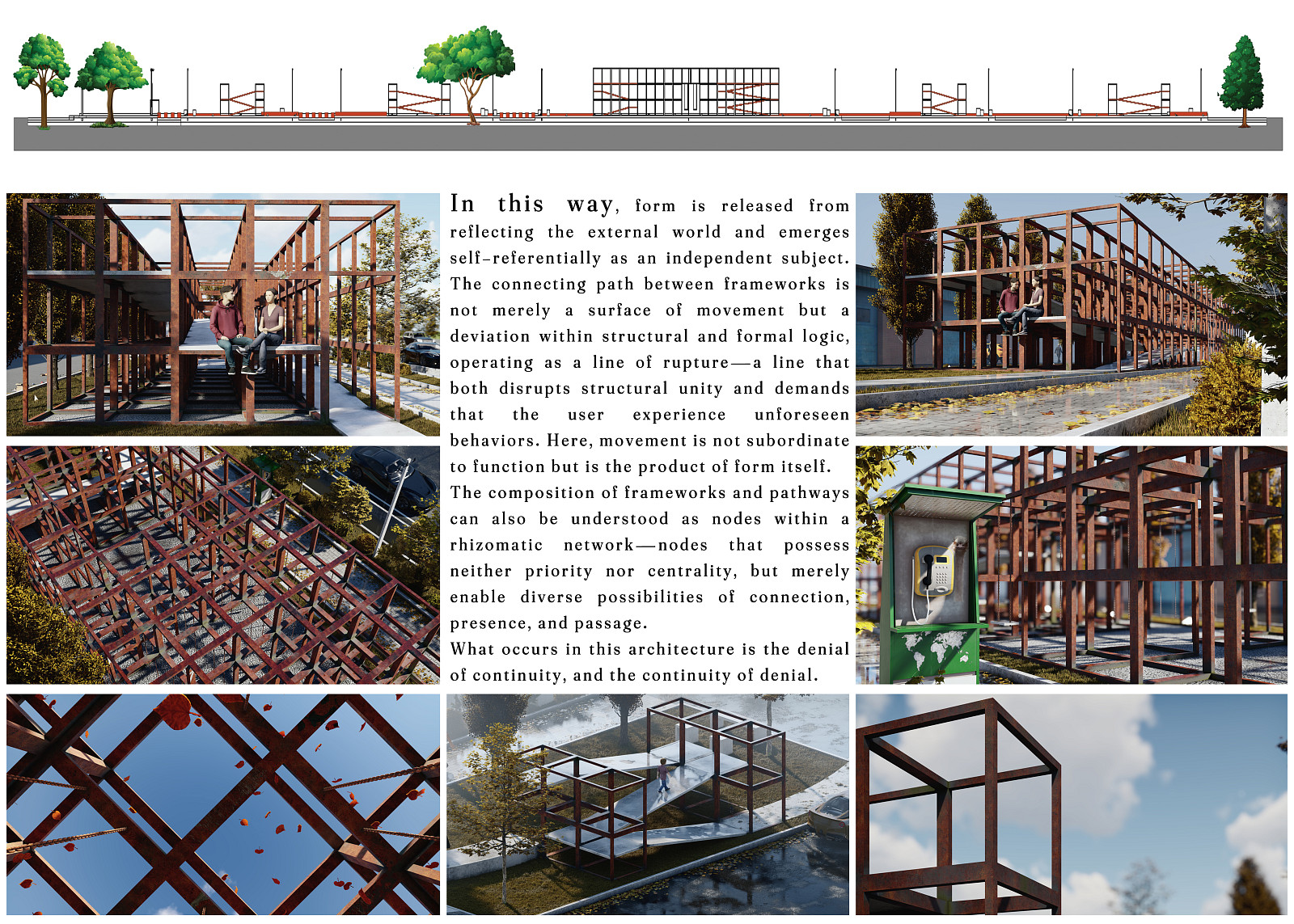
In this way, form is released from reflecting the external world and emerges self-referentially as an independent subject. The connecting path between frameworks is not merely a surface of movement but a deviation within structural and formal logic, operating as a line of rupture—a line that both disrupts structural unity and demands that the user experience unforeseen behaviors. Here, movement is not subordinate to function but is the product of form itself.
Technical information
In this way, form is released from reflecting the external world and emerges self-referentially as an independent subject. The connecting path between frameworks is not merely a surface of movement but a deviation within structural and formal logic, operating as a line of rupture—a line that both disrupts structural unity and demands that the user experience unforeseen behaviors. Here, movement is not subordinate to function but is the product of form itself. The composition of frameworks and pathways can also be understood as nodes within a rhizomatic network—nodes that possess neither priority nor centrality, but merely enable diverse possibilities of connection, presence, and passage.
What occurs in this architecture is the denial of continuity, and the continuity of denial.

Copyright © 2026 INSPIRELI | All rights reserved. Use of this website signifies your agreement to the Terms of Use, Privacy Policy, and use of cookies.
