Arsenal Memory Park


Project idea
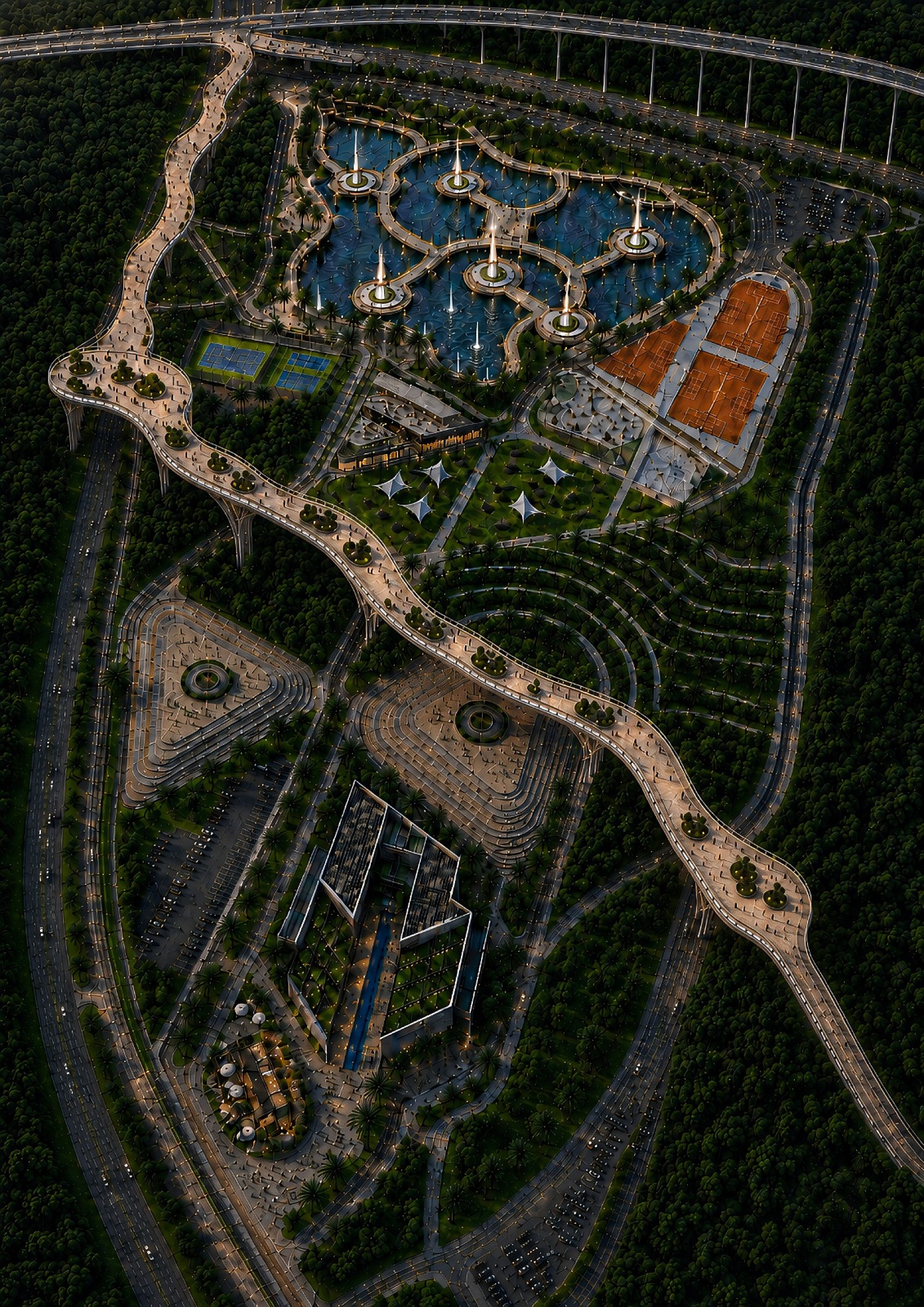
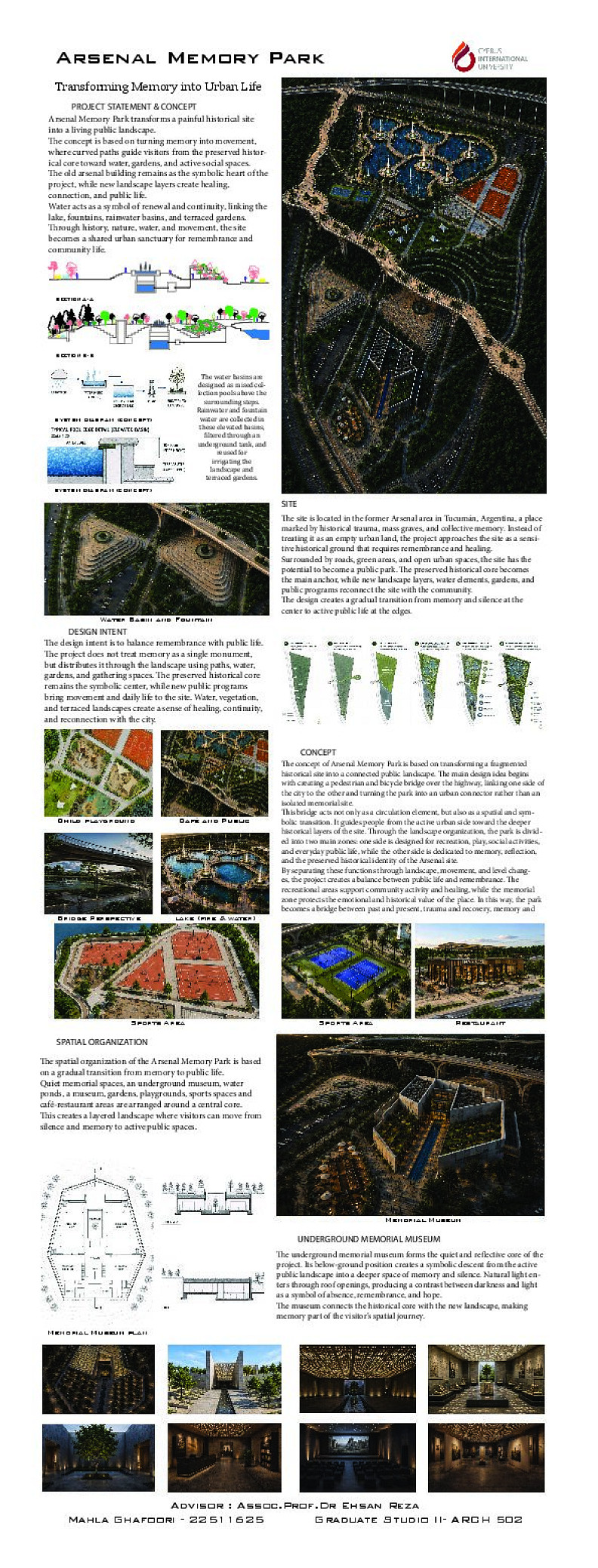
The idea of Arsenal Memory Park is to reconnect a fragmented historical landscape through memory, movement, and public life. The project responds to the highway barrier by introducing a pedestrian and bicycle bridge that connects the site to the surrounding urban fabric. This bridge becomes both a physical connection and a symbolic transition between two experiences: an active recreational landscape and a quiet memorial landscape.
Project description
Arsenal Memory Park is organized into two main spatial zones. One side of the park is designed for public recreation, including play areas, sports zones, picnic spaces, cafés, water features, and social activities. The other side is dedicated to memory and reflection, where preserved historical buildings, an underground memorial museum, contemplative paths, and quiet landscape areas protect the historical identity of the Arsenal site. Through circulation networks, water systems, terraced gardens, and level changes, the project creates a clear spatial separation while keeping the whole park connected as one continuous public landscape.
Technical information
The project uses a pedestrian and bicycle bridge as the main structural and circulation element. The landscape is organized through multi-level topography, terraced gardens, accessible paths, bicycle routes, pedestrian routes, and wheelchair-friendly circulation. Water collection basins and water features are integrated into the landscape to support irrigation and create reflective spaces. The underground memorial museum is designed below the landscape level, while preserved historical structures remain visible as key memory elements within the park.
Documentation

Copyright © 2026 INSPIRELI | All rights reserved. Use of this website signifies your agreement to the Terms of Use, Privacy Policy, and use of cookies.
