BRNO-INTERWOWEN


Project idea
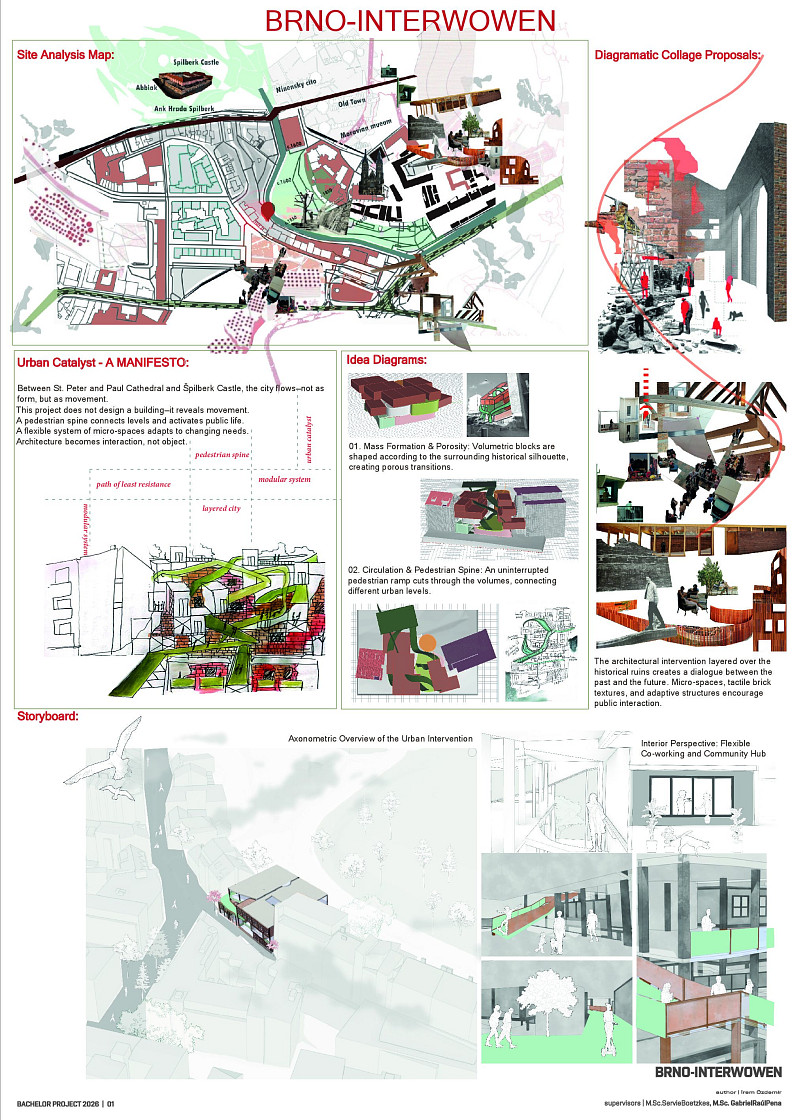
An urban catalyst project between St. Peter and Paul Cathedral and Špilberk Castle that treats the city as movement rather than form. A pedestrian spine connects levels and activates public life through a flexible system of micro-spaces that adapt to changing needs.
Project description
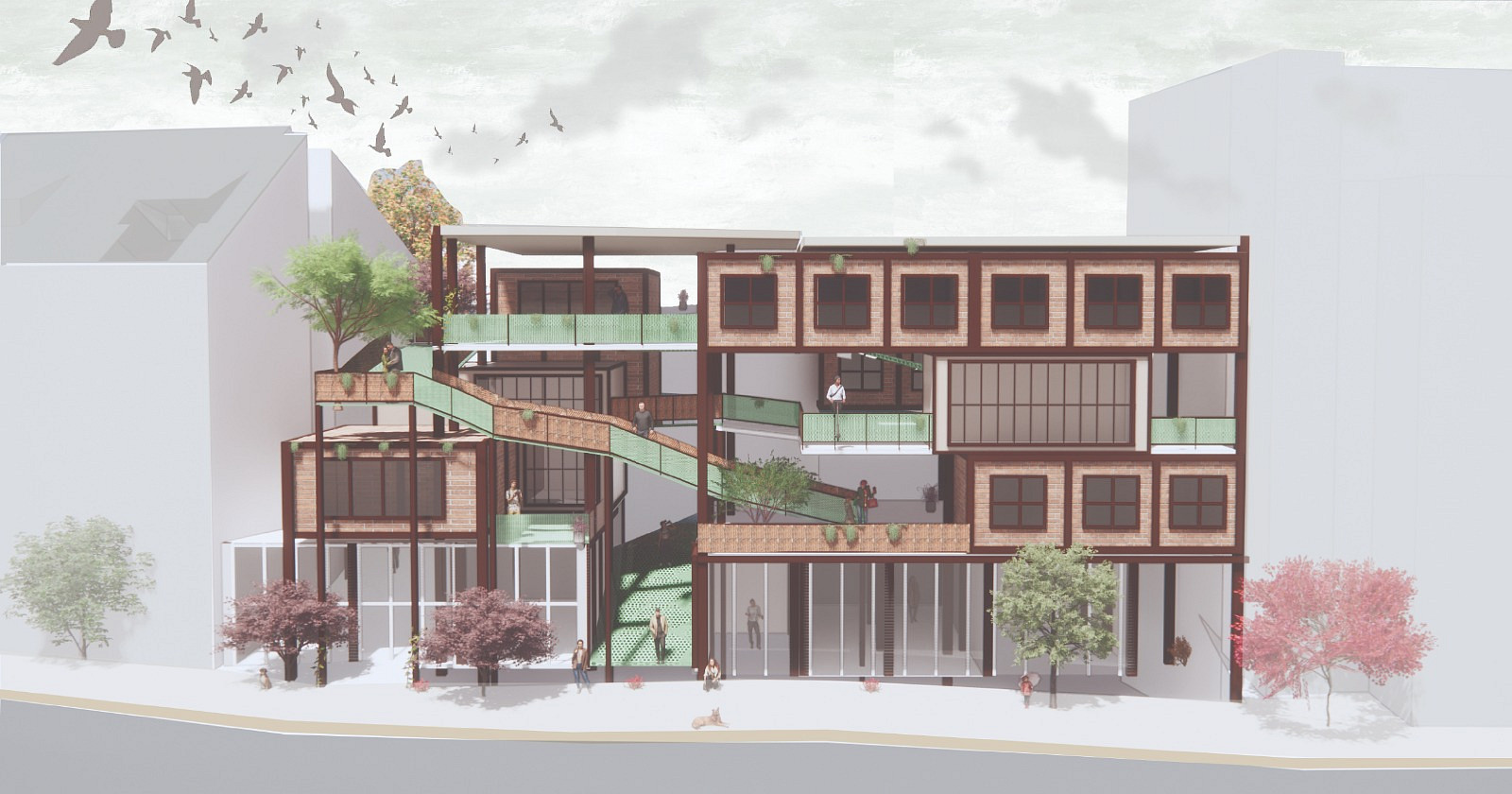
The project does not design a building but reveals movement. Between St. Peter and Paul Cathedral and Špilberk Castle, the city flows as movement. A pedestrian spine connects levels and activates public life. Volumetric blocks are shaped according to the surrounding historical silhouette, creating porous transitions. An uninterrupted pedestrian ramp cuts through the volumes, connecting different urban levels. The architectural intervention layered over historical ruins creates a dialogue between past and future. Micro-spaces, tactile brick textures, and adaptive structures encourage public interaction. The design incorporates a modular system, layered city concept, and path of least resistance principles.
Technical information
The project employs a modular system approach with mass formation and porosity strategies. Volumetric blocks respond to the historical silhouette. A continuous pedestrian ramp serves as circulation spine through the volumes. The design includes flexible co-working and community hub spaces. The intervention integrates with existing urban fabric through adaptive micro-spaces and brick material palette.
Documentation


Copyright © 2026 INSPIRELI | All rights reserved. Use of this website signifies your agreement to the Terms of Use, Privacy Policy, and use of cookies.