HAVEN TO HEAVEN_Architecture for Life After


Project idea
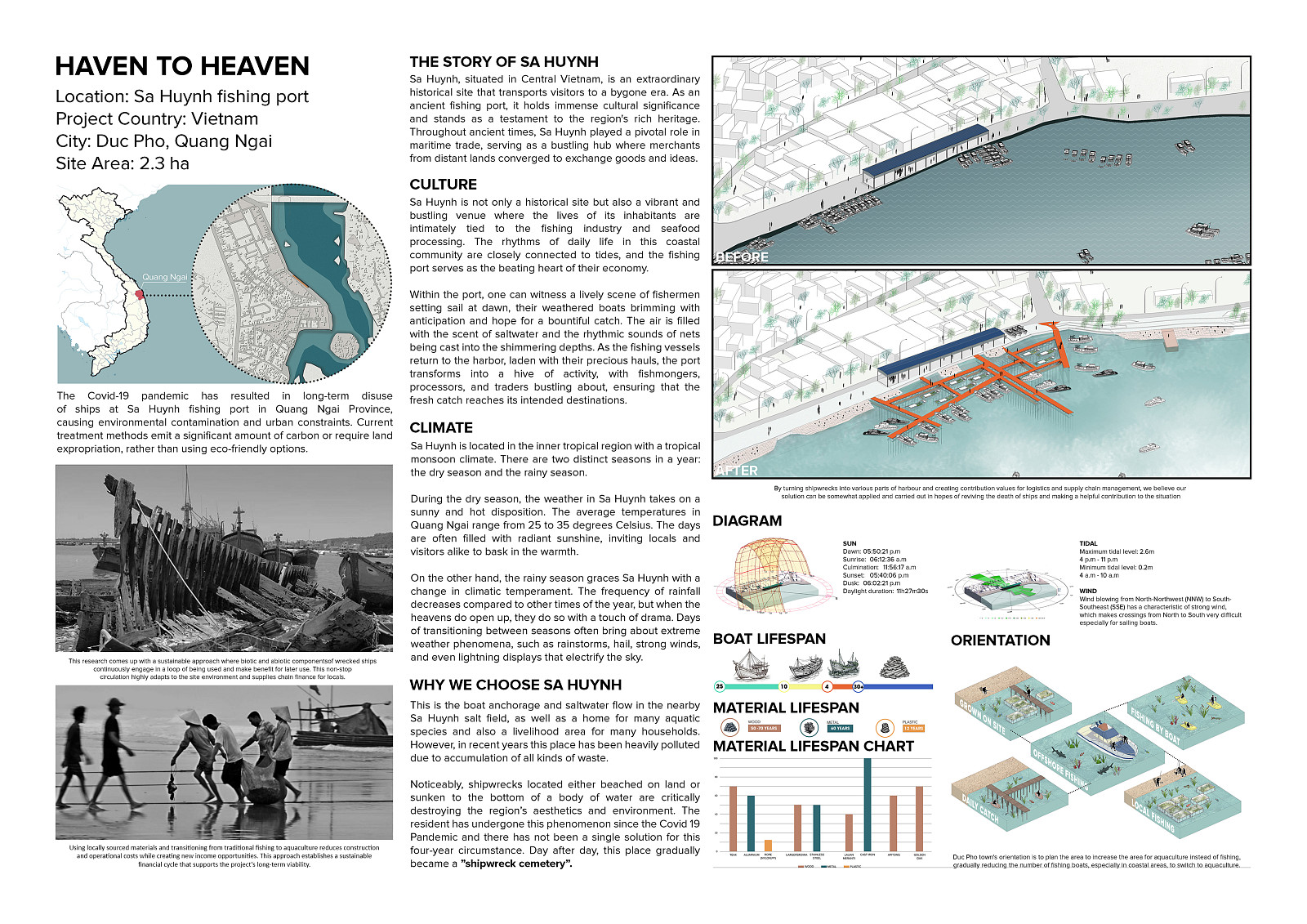
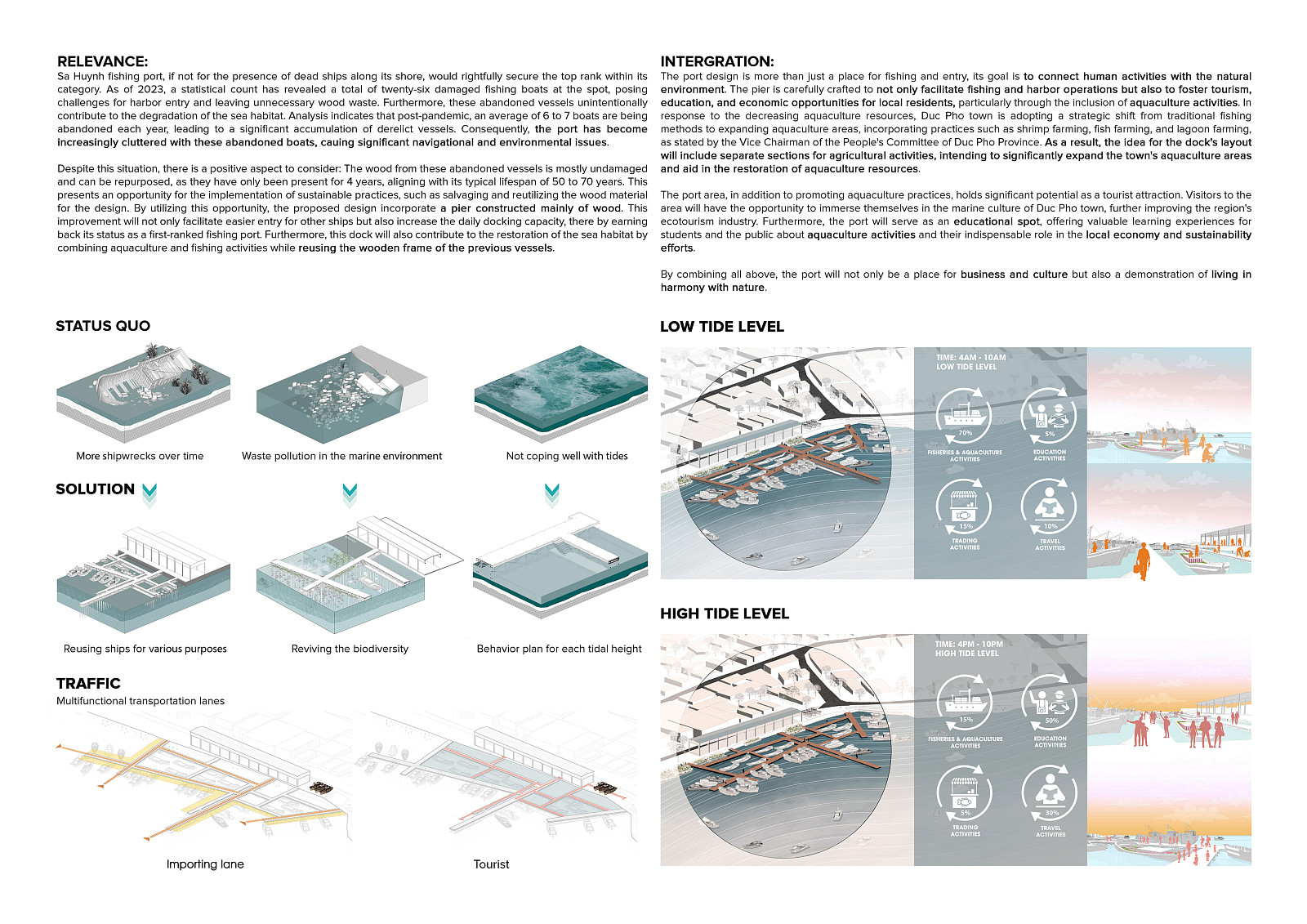
Sa Huynh fishing port, if not for the presence of dead ships along its shore, would rightfully secure the top rank within its category. As of 2023, a statistical count has revealed a total of twenty-six damaged fishing boats at the spot, posing challenges for harbor entry and leaving unnecessary wood waste. Furthermore, these abandoned vessels unintentionally contribute to the degradation of the sea habitat. Analysis indicates that post-pandemic, an average of 6 to 7 boats are being abandoned each year, leading to a significant accumulation of derelict vessels. Consequently, the port has become increasingly cluttered with these abandoned boats, causing significant navigational and environmental issues.
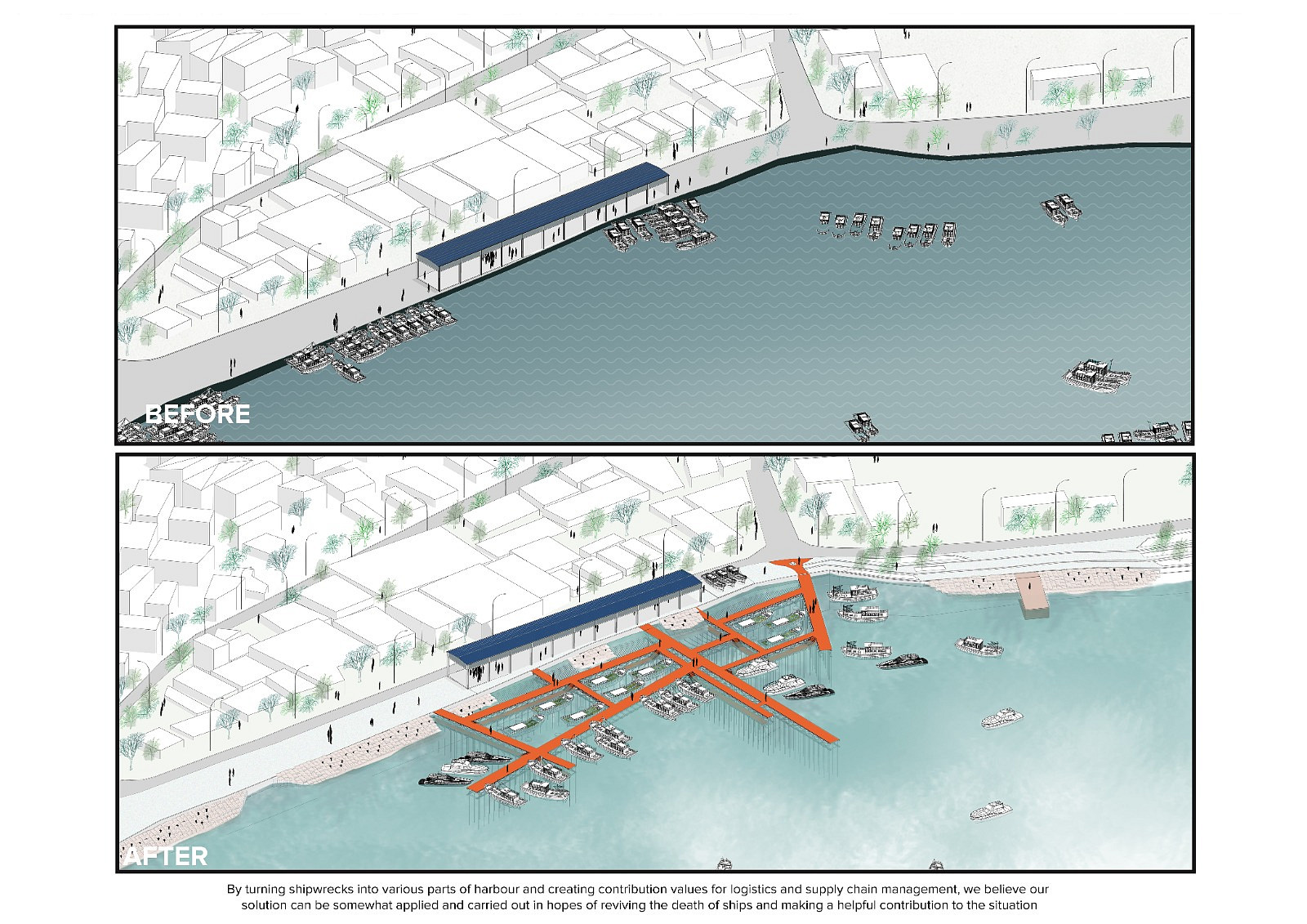
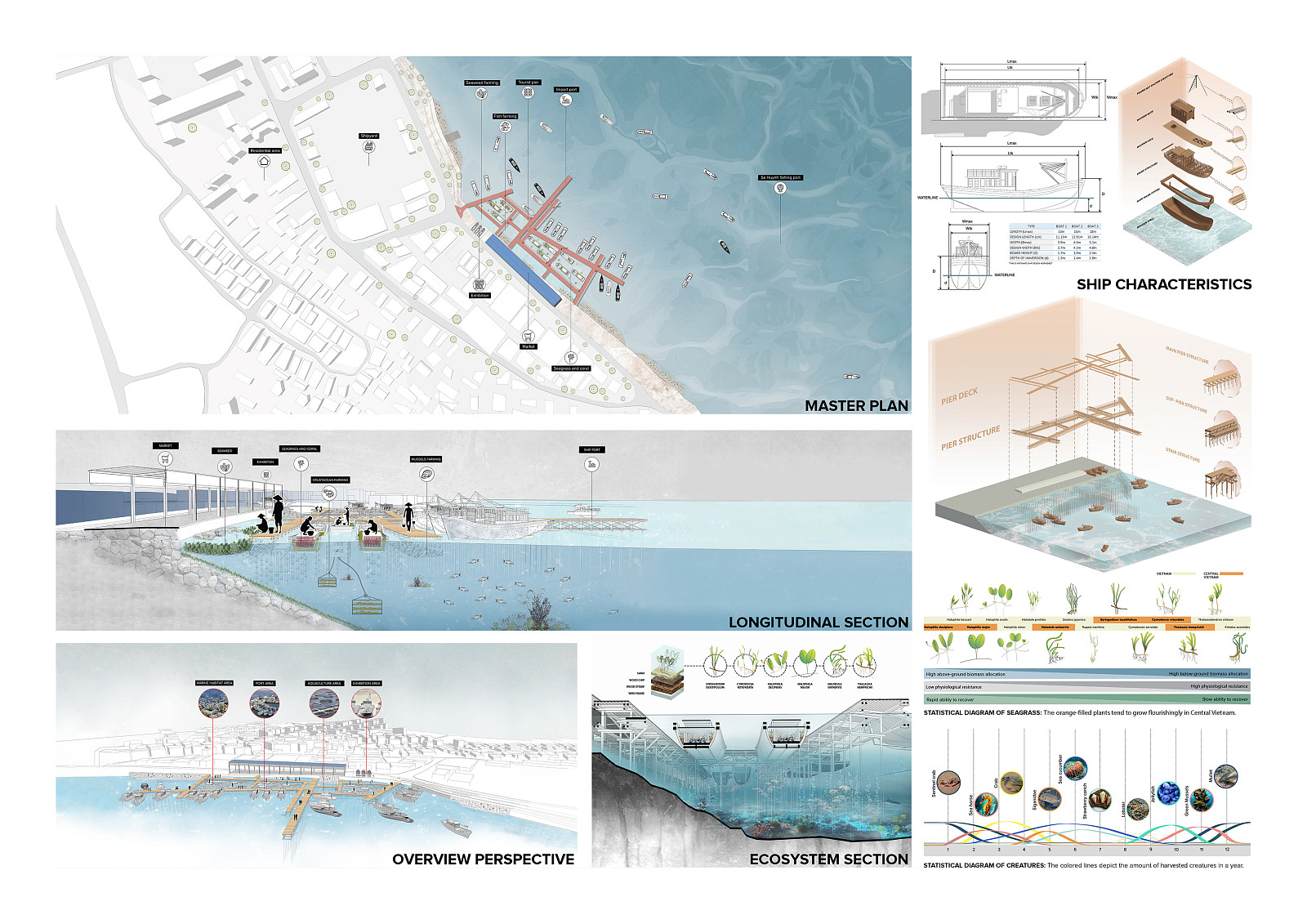
Despite this situation, there is a positive aspect to consider: The wood from these abandoned vessels is mostly undamaged and can be repurposed, as they have only been present for 4 years, aligning with its typical lifespan of 50 to 70 years. This presents an opportunity for the implementation of sustainable practices, such as salvaging and reutilizing the wood material for the design. By utilizing this opportunity, the proposed design incorporate a pier constructed mainly of wood. This improvement will not only facilitate easier entry for other ships but also increase the daily docking capacity, thereby earning back its status as a first-ranked fishing port. Furthermore, this dock will also contribute to the restoration of the sea habitat by combining aquaculture and fishing activities while reusing the wooden frame of the previous vessels.
Project description
The Covid-19 pandemic has caused ships at the Sa Huynh fishing port in Quang Ngai Province, Vietnam to remain unused, leading to environmental degradation and urban challenges. The proposal aims to systematically repurpose materials from decommissioned ships to mitigate environmental harm and bolster local communities. Through the utilisation of timber from vessels and the incorporation of aquaculture practices, the initiative not only addresses ecological deterioration but also fosters opportunities for tourism, education, and economic advancement. This approach seeks to establish a harmonious relationship between human activities and the natural environment, promoting sustainability and resilience in the face of environmental challenges.
Technical information
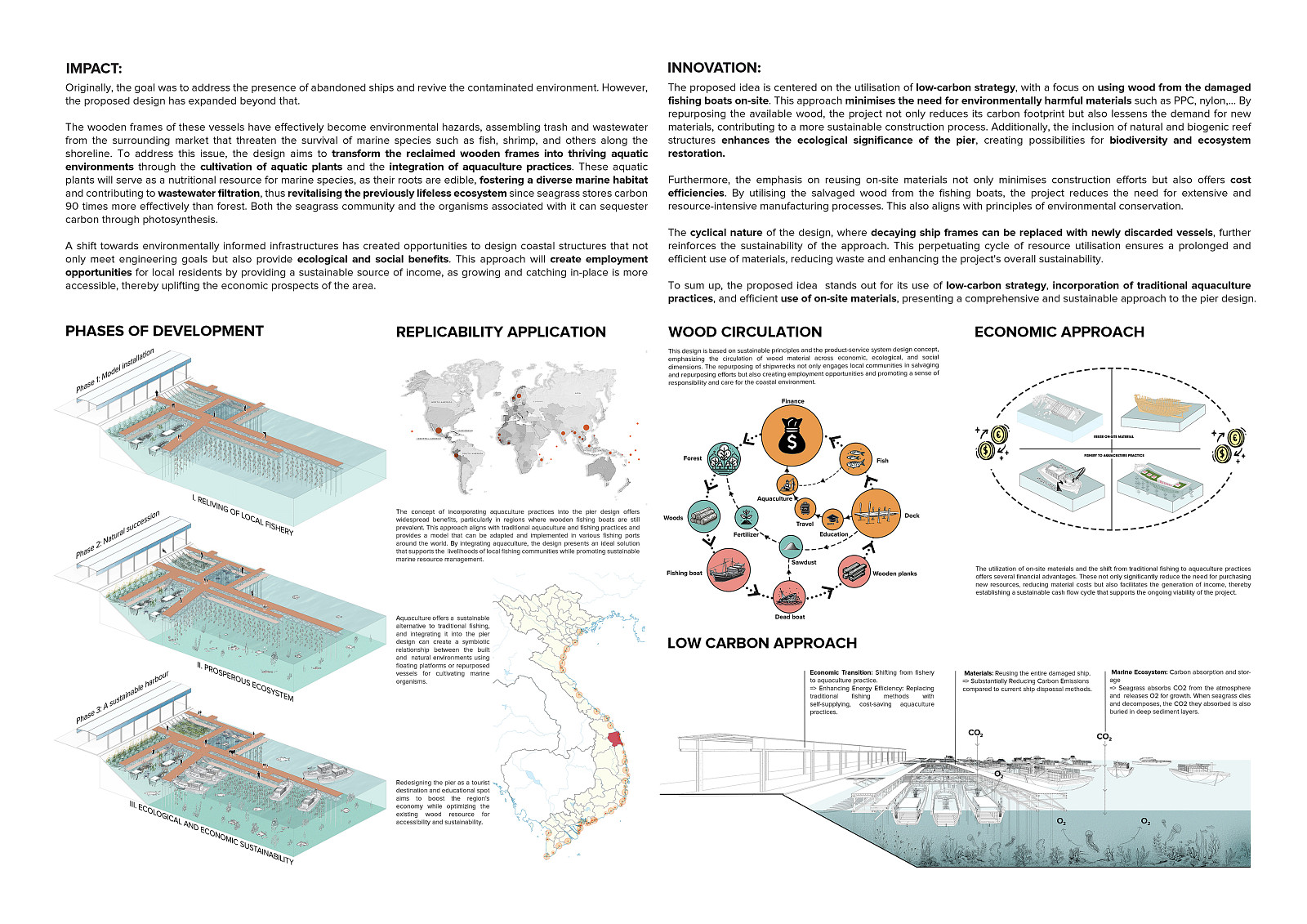
The proposed idea is centered on the utilisation of low-carbon strategy, with a focus on using wood from the damaged fishing boats on-site. This approach minimises the need for environmentally harmful materials such as PPC, nylon,... By repurposing the available wood, the project not only reduces its carbon footprint but also lessens the demand for new materials, contributing to a more sustainable construction process. Additionally, the inclusion of natural and biogenic reef structures enhances the ecological significance of the pier, creating possibilities for biodiversity and ecosystem restoration.
Furthermore, the emphasis on reusing on-site materials not only minimises construction efforts but also offers cost efficiencies. By utilising the salvaged wood from the fishing boats, the project reduces the need for extensive and resource-intensive manufacturing processes. This also aligns with principles of environmental conservation.
The cyclical nature of the design, where decaying ship frames can be replaced with newly discarded vessels, further reinforces the sustainability of the approach. This perpetuating cycle of resource utilisation ensures a prolonged and efficient use of materials, reducing waste and enhancing the project's overall sustainability.
To sum up, the proposed idea stands out for its use of low-carbon strategy, incorporation of traditional aquaculture practices, and efficient use of on-site materials, presenting a comprehensive and sustainable approach to the pier design.

Copyright © 2026 INSPIRELI | All rights reserved. Use of this website signifies your agreement to the Terms of Use, Privacy Policy, and use of cookies.