
SUBTERRANEAN CLIMATIC REFUGIA


Project idea
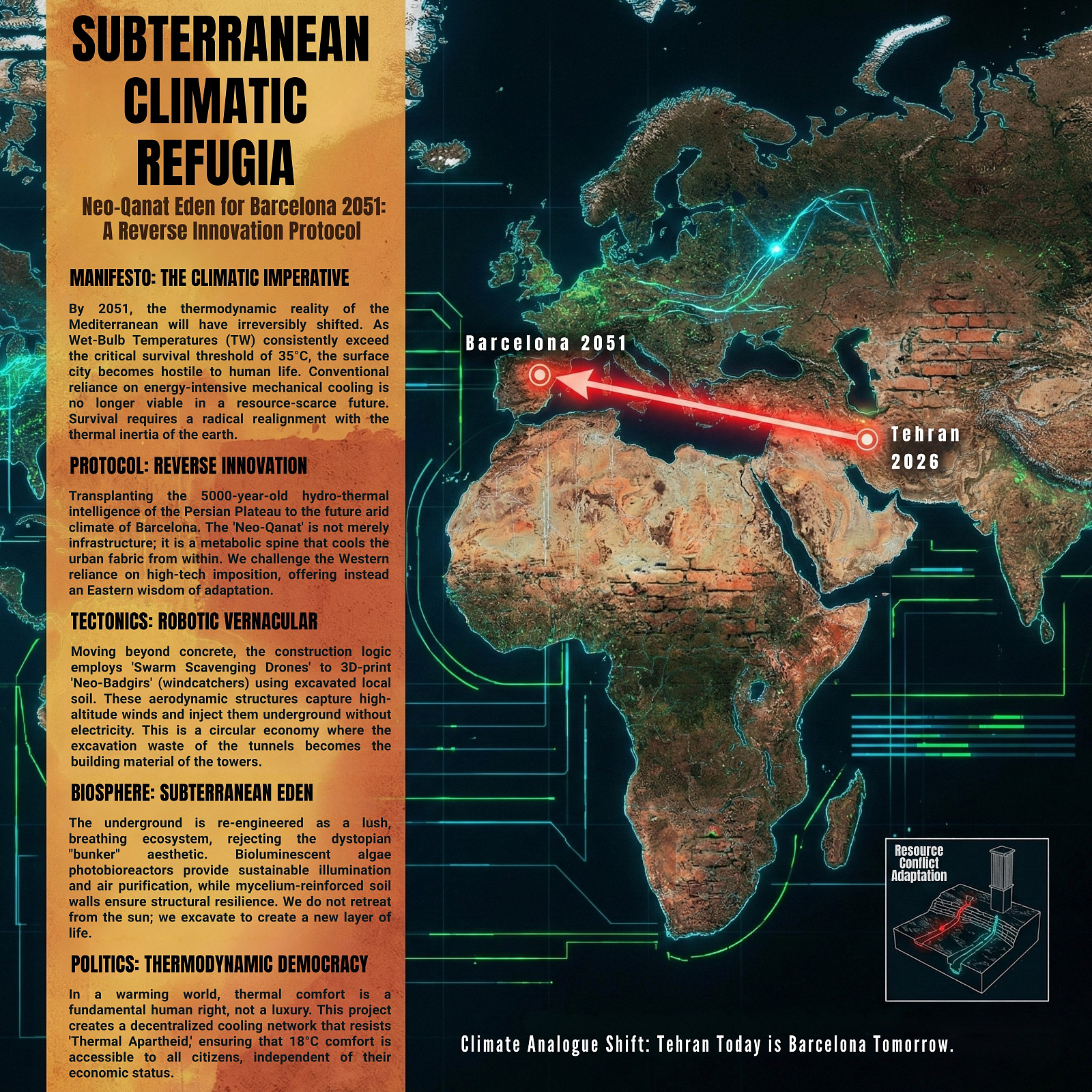
By 2051, the thermodynamic reality of the Mediterranean will have irreversibly shifted. As Wet-Bulb Temperatures (TW) consistently exceed the critical survival threshold of 35°C, the surface city becomes hostile to human life. Conventional reliance on energy-intensive mechanical cooling is no longer viable in a resource-scarce future. Survival requires a radical realignment with the thermal inertia of the earth. "Subterranean Climatic Refugia" challenges the Western reliance on high-tech imposition, offering instead an Eastern wisdom of adaptation. This manifesto establishes a "Reverse Innovation Protocol," transplanting the 5000-year-old hydro-thermal intelligence of the Persian Qanat and Badgir (windcatcher) to the future arid climate of Barcelona. In a warming world, thermal comfort—specifically access to a constant 18°C environment—is a fundamental human right, not a luxury. By creating a decentralized cooling network, this project actively resists "Thermal Apartheid," demonstrating that rather than the futile migration of climate refugees, it is architectural typologies that must migrate.
Project description
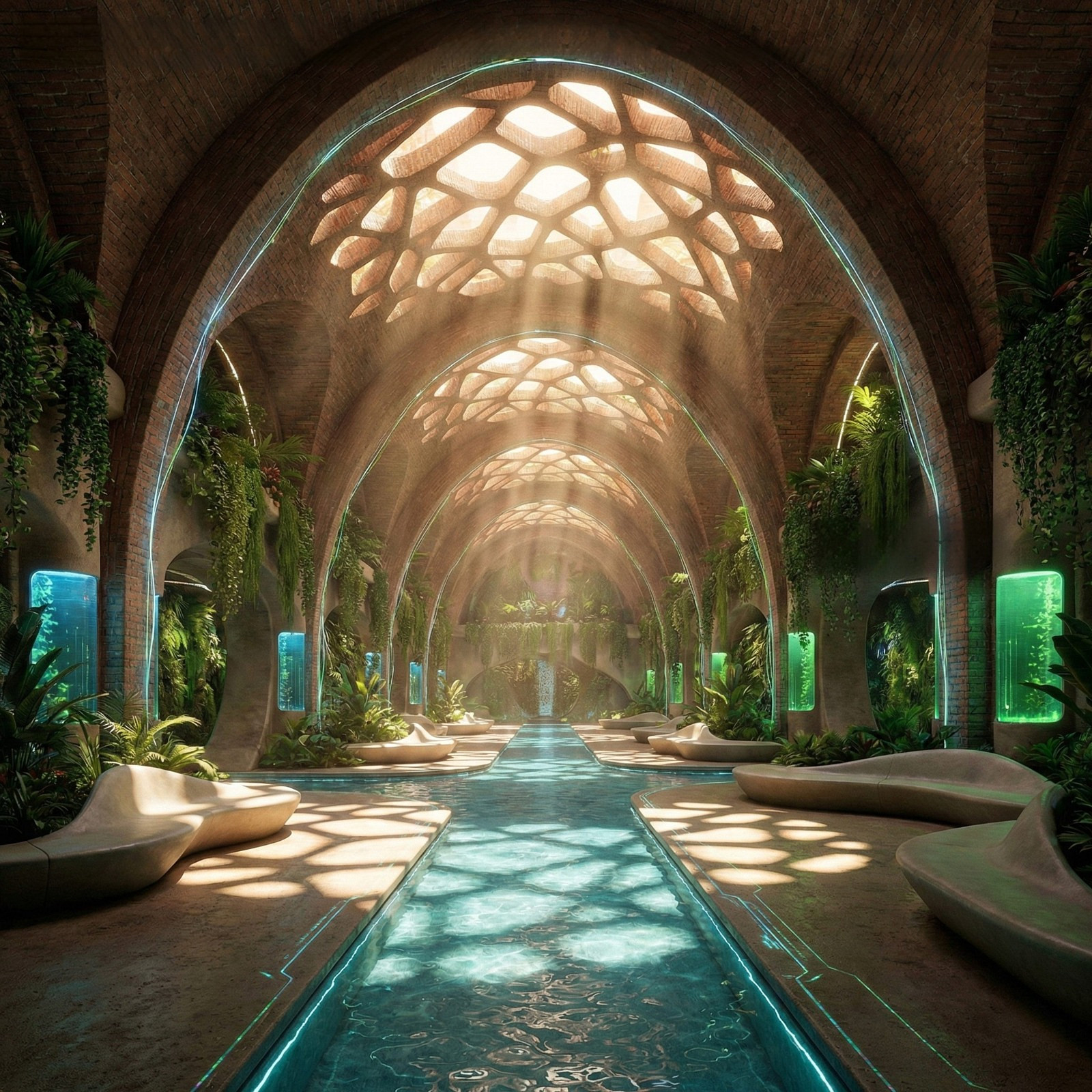
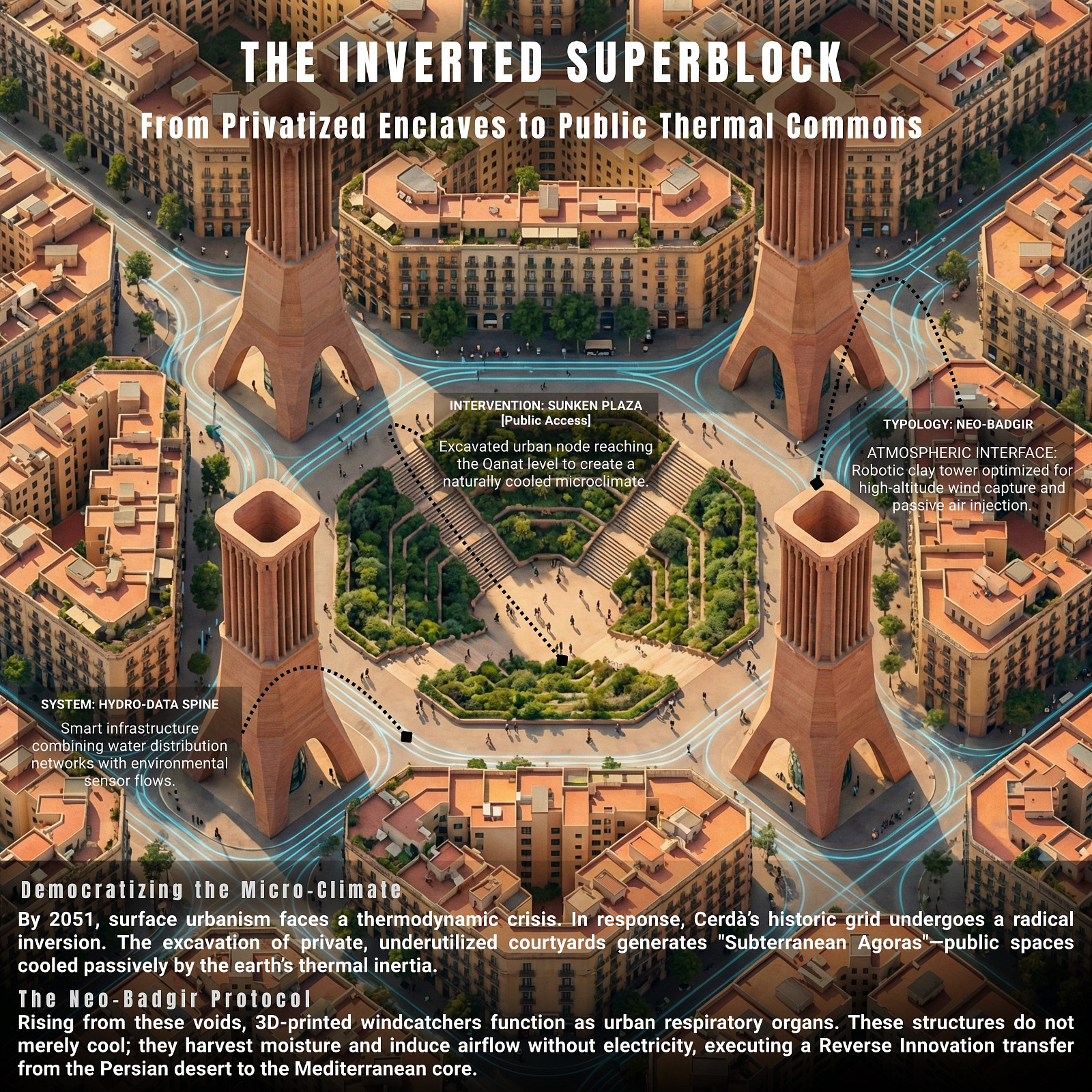
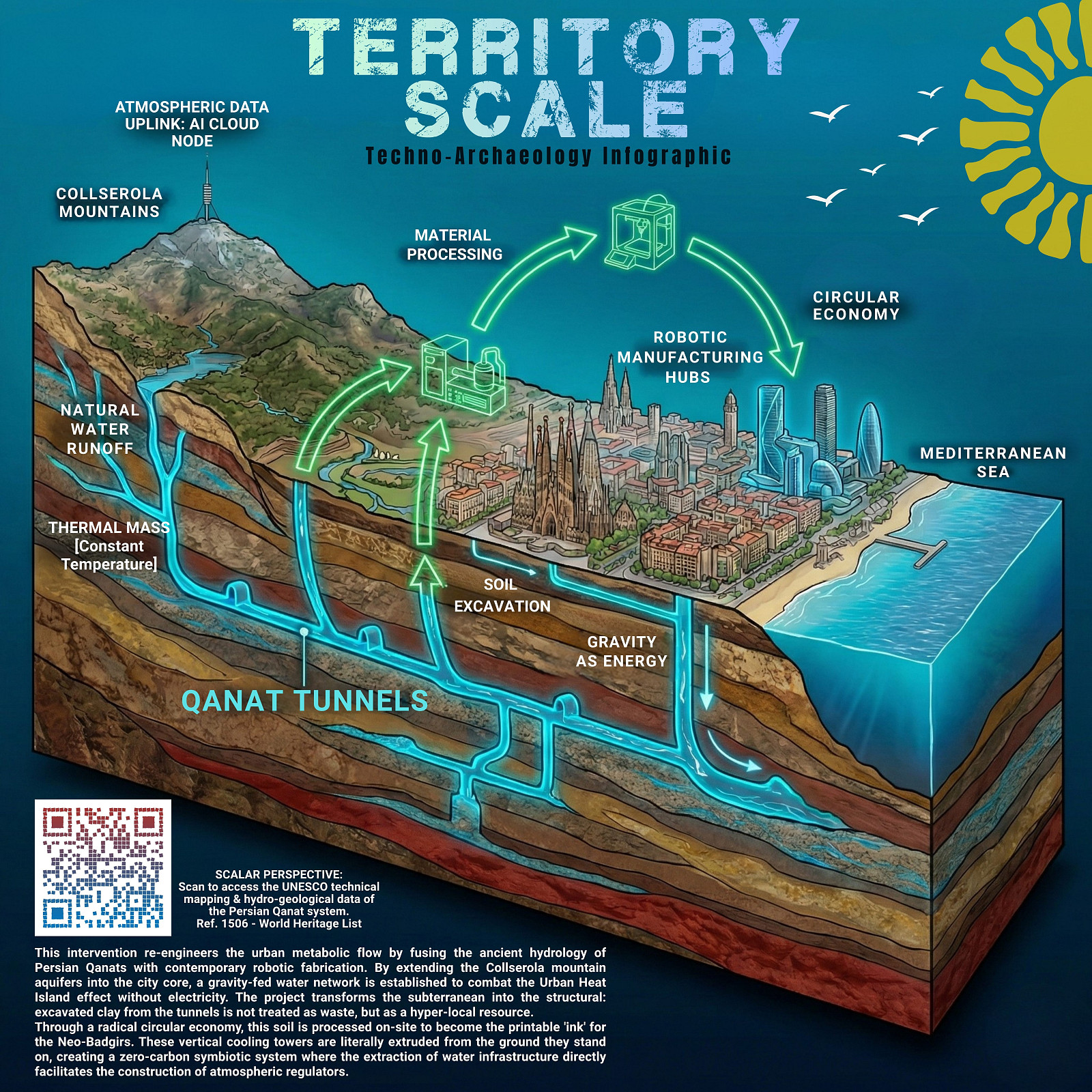
In response to the imminent thermodynamic crisis, this project proposes a radical inversion of Cerdà's historic grid in Barcelona. The excavation of private, underutilized courtyards generates "Subterranean Agoras"—public spaces cooled passively by the earth's thermal mass. Rising from these excavated voids, 3D-printed Neo-Badgirs function as urban respiratory organs, capturing high-altitude winds and injecting them into a modern Qanat network without electricity. Rejecting the dystopian "bunker" aesthetic, the subterranean realm is re-engineered as a lush, breathing ecosystem. Mycelium-reinforced soil walls ensure structural resilience, while integrated algae photobioreactors provide sustainable air purification and zero-energy illumination. Operating across a scalar continuum, the intervention functions as a unified organism: from symbiotic wearables at the human scale to a macro-hydrological network fed by the Collserola mountain aquifers.
Technical information
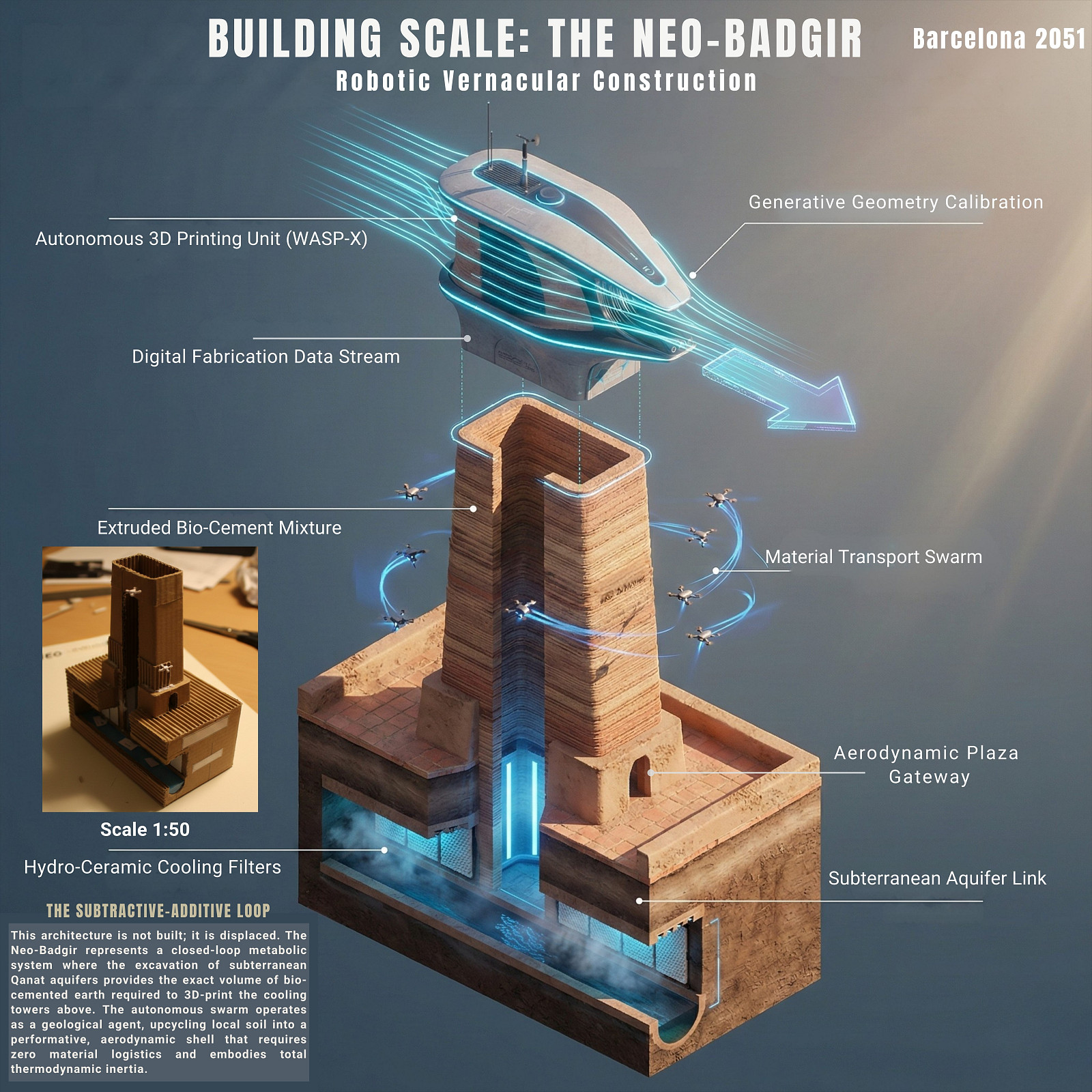
Circular Economy & Fabrication: The construction methodology employs a "Subtractive-Additive Loop". Autonomous swarm 3D-printing units (WASP-X) process excavated local soil from the Qanat tunnels into an extruded bio-cement mixture. By utilizing this excavation waste as the primary building material for the Neo-Badgirs, the project achieves a zero-carbon material logistics cycle.
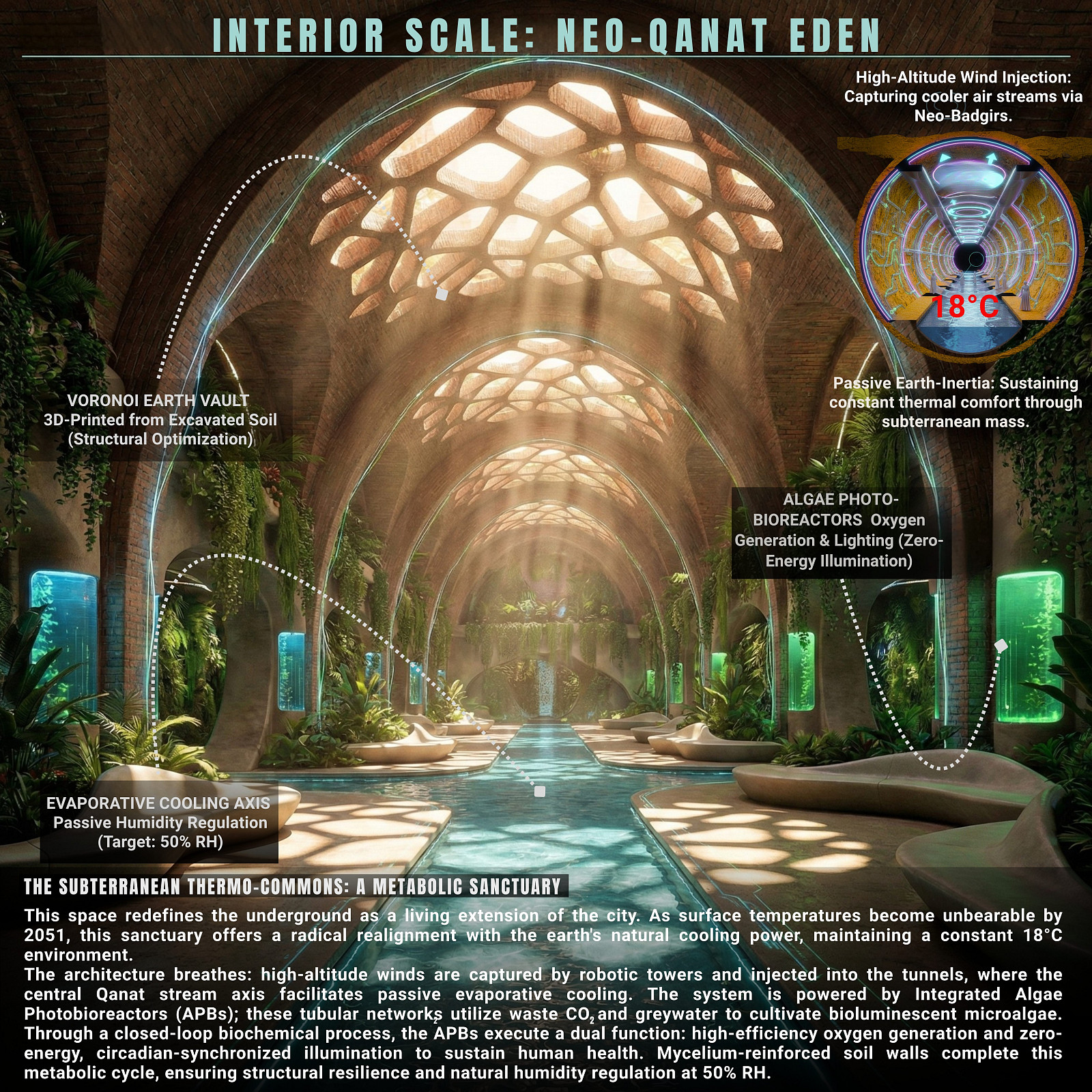
Thermoregulation System: A combination of high-altitude wind injection, hydro-ceramic cooling filters, and an evaporative cooling axis facilitates passive humidity regulation (targeting 50% RH) and sustains a constant thermal comfort of 18°C. The water distribution network operates entirely on a gravity-fed hydrodynamic logic.
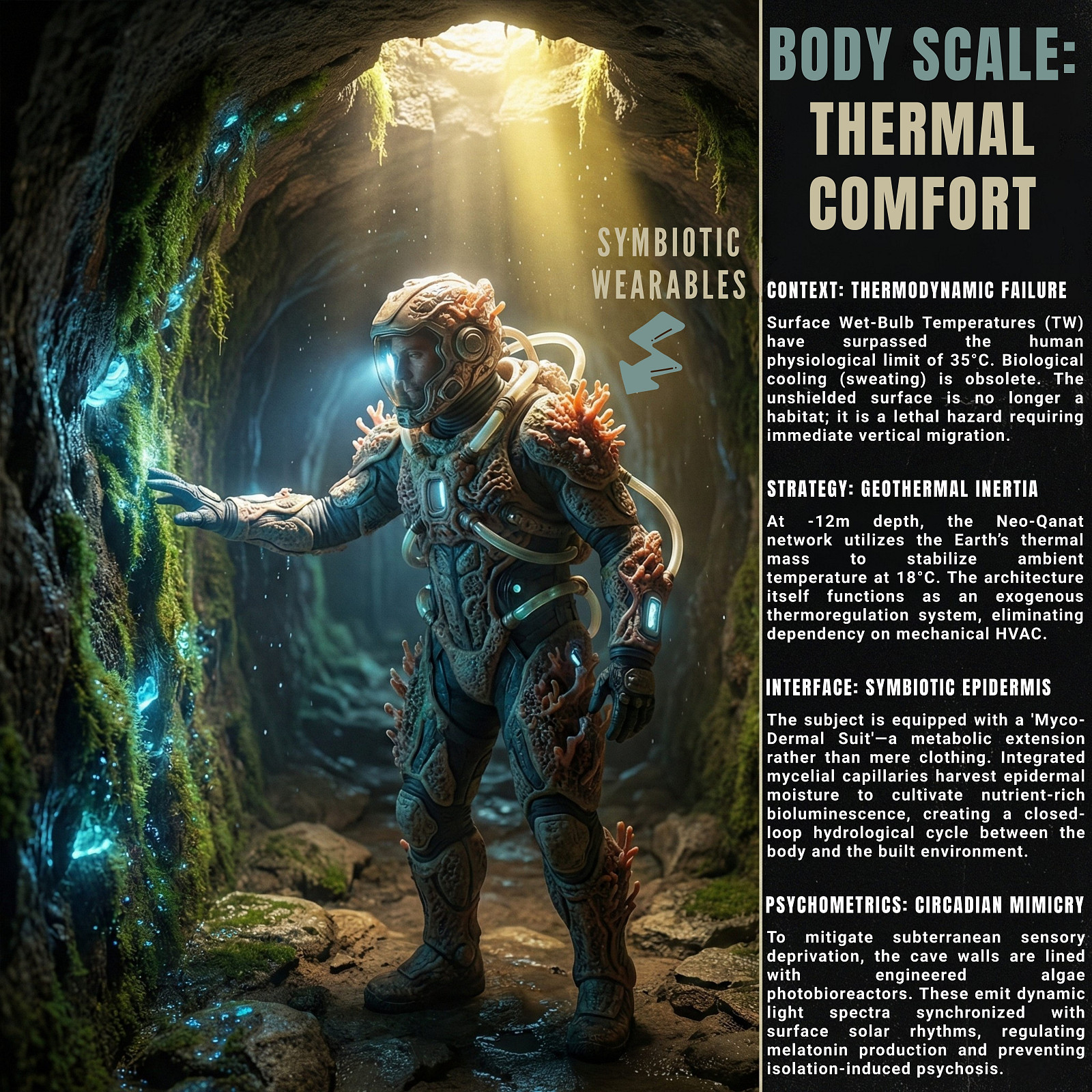
Zero-Energy Illumination: The metabolic sanctuary is illuminated without conventional electricity. Tubular networks of engineered algae photobioreactors utilize waste CO2 and greywater to cultivate bioluminescent microalgae. This closed-loop biochemical process provides high-efficiency oxygen generation and circadian-synchronized light spectra to regulate melatonin production and prevent isolation-induced psychosis.
Body-Scale Interface: Users are equipped with "Myco-Dermal Suits," designed as a metabolic extension of the built environment rather than mere clothing. Integrated mycelial capillaries harvest epidermal moisture to cultivate nutrient-rich bioluminescence, establishing a closed-loop hydrological cycle between human biological evaporation and the architecture.

Copyright © 2026 INSPIRELI | All rights reserved. Use of this website signifies your agreement to the Terms of Use, Privacy Policy, and use of cookies.