Healing Patch - An Approach Towards Carbon Negative Future


 Maruf Hossain
Project idea
Healing Patch: An Approach Towards Carbon Negativity explores how architecture can evolve beyond sustainability and become an active agent of environmental regeneration. The project responds to the growing challenges of climate change, carbon emissions, and rapid urbanization, particularly within the context of Dhaka, where conventional development patterns continue to consume resources, reduce ecological capacity, and intensify environmental stress.
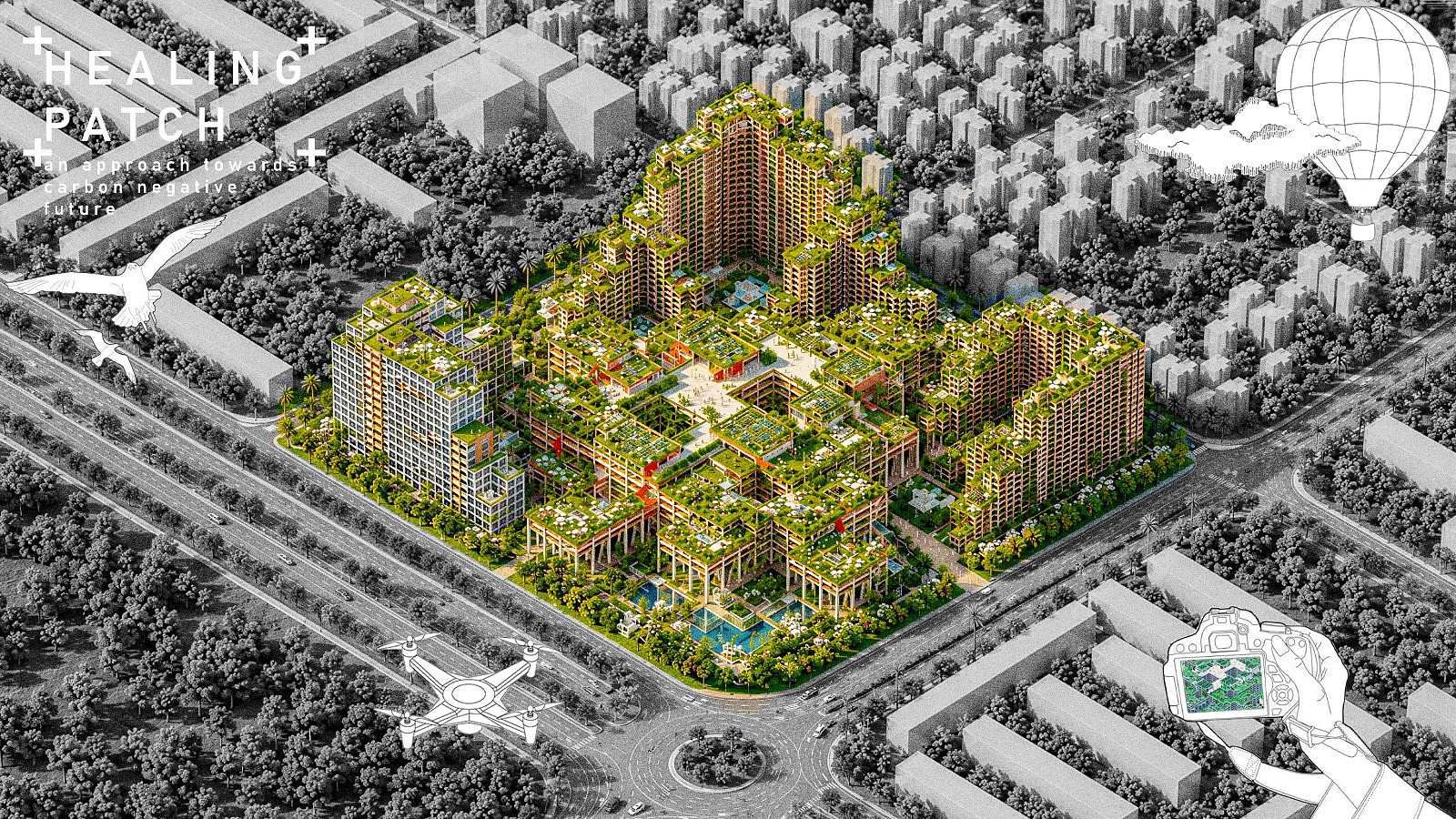
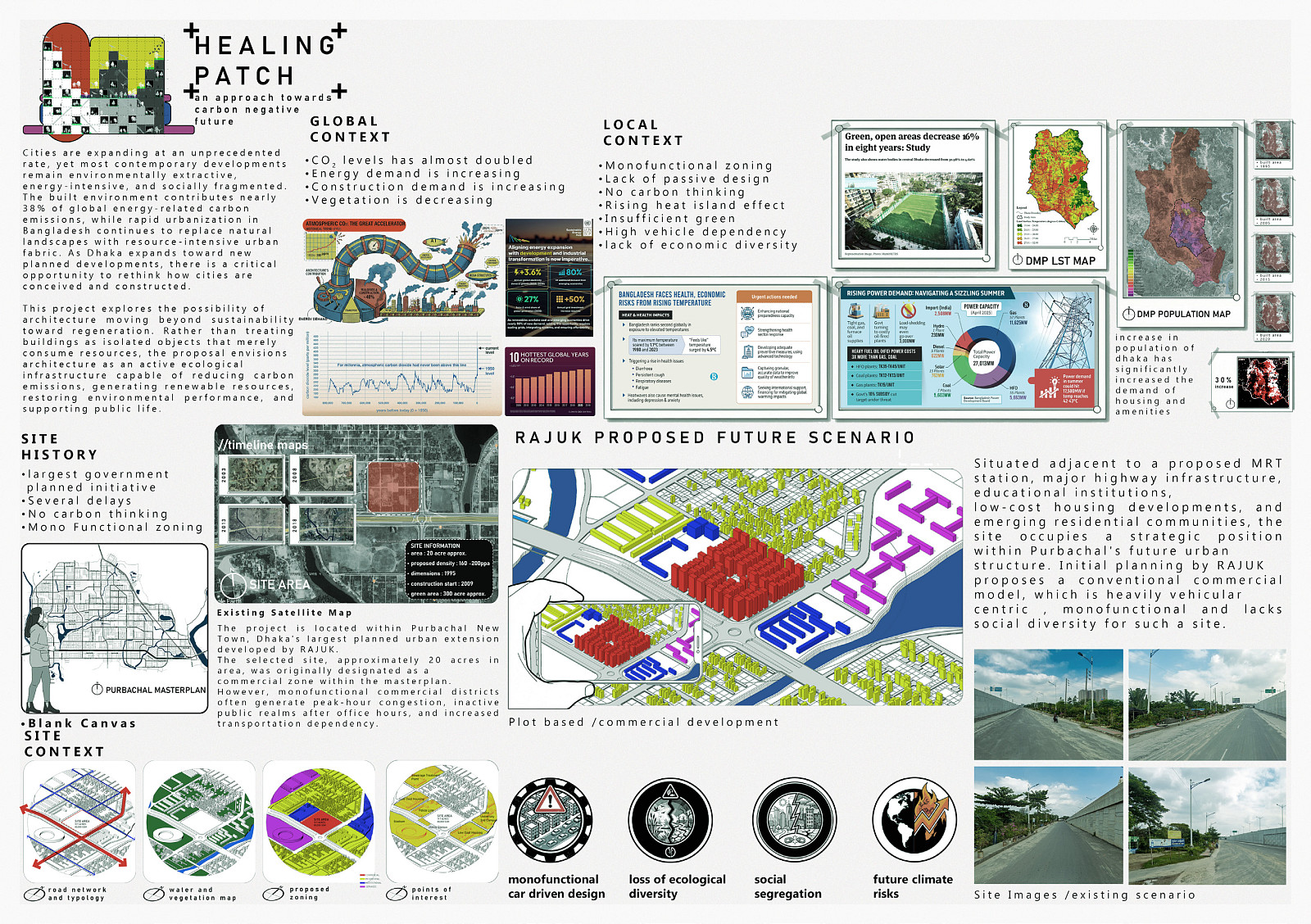
Located within Purbachal New Town, Dhaka's largest planned urban extension, the project reinterprets a conventionally zoned commercial site as a mixed-use regenerative superblock. Instead of treating buildings as isolated objects, the proposal conceives architecture as an integrated ecological infrastructure capable of generating renewable energy, harvesting water, sequestering carbon, restoring biodiversity, and supporting public life.
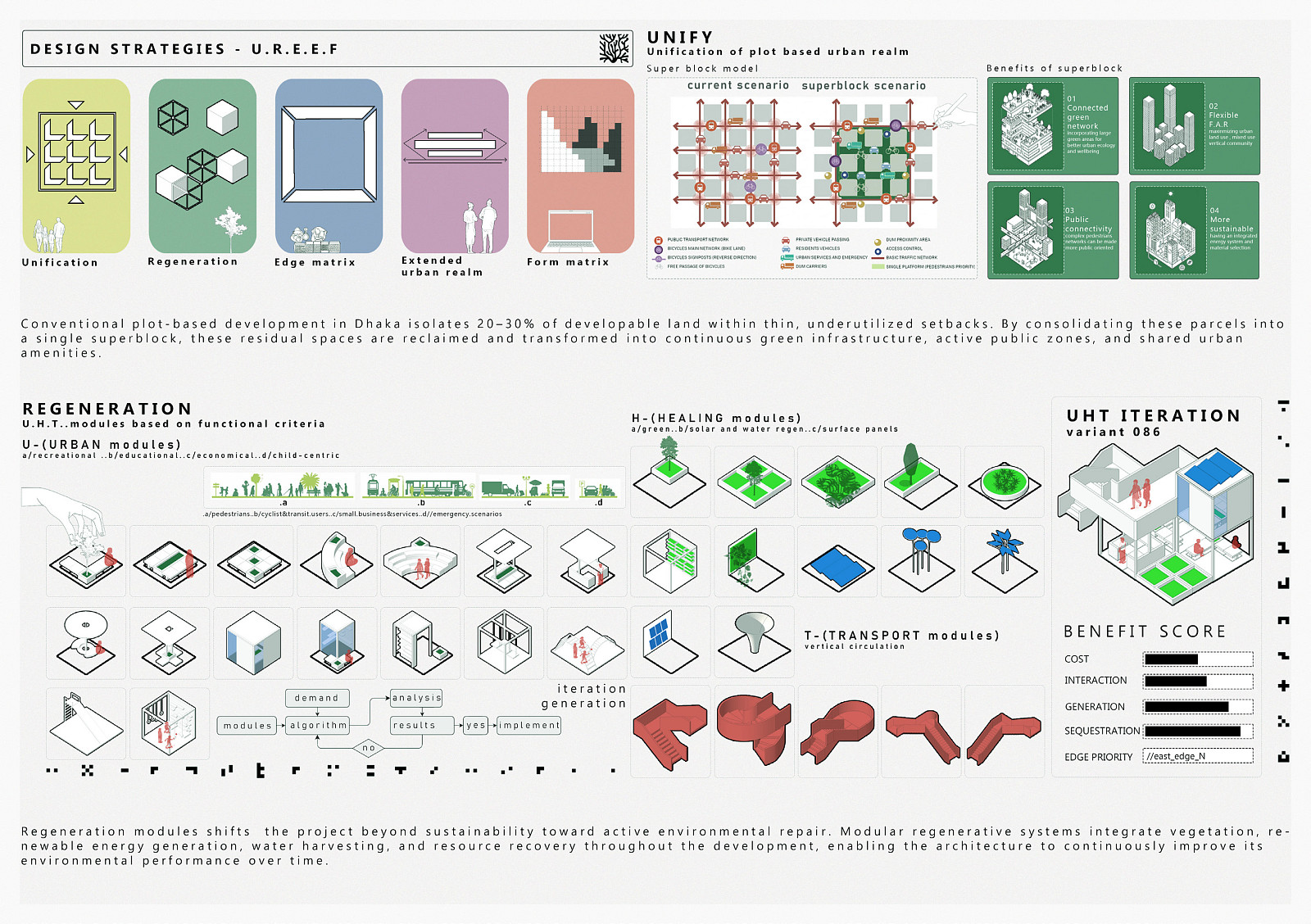
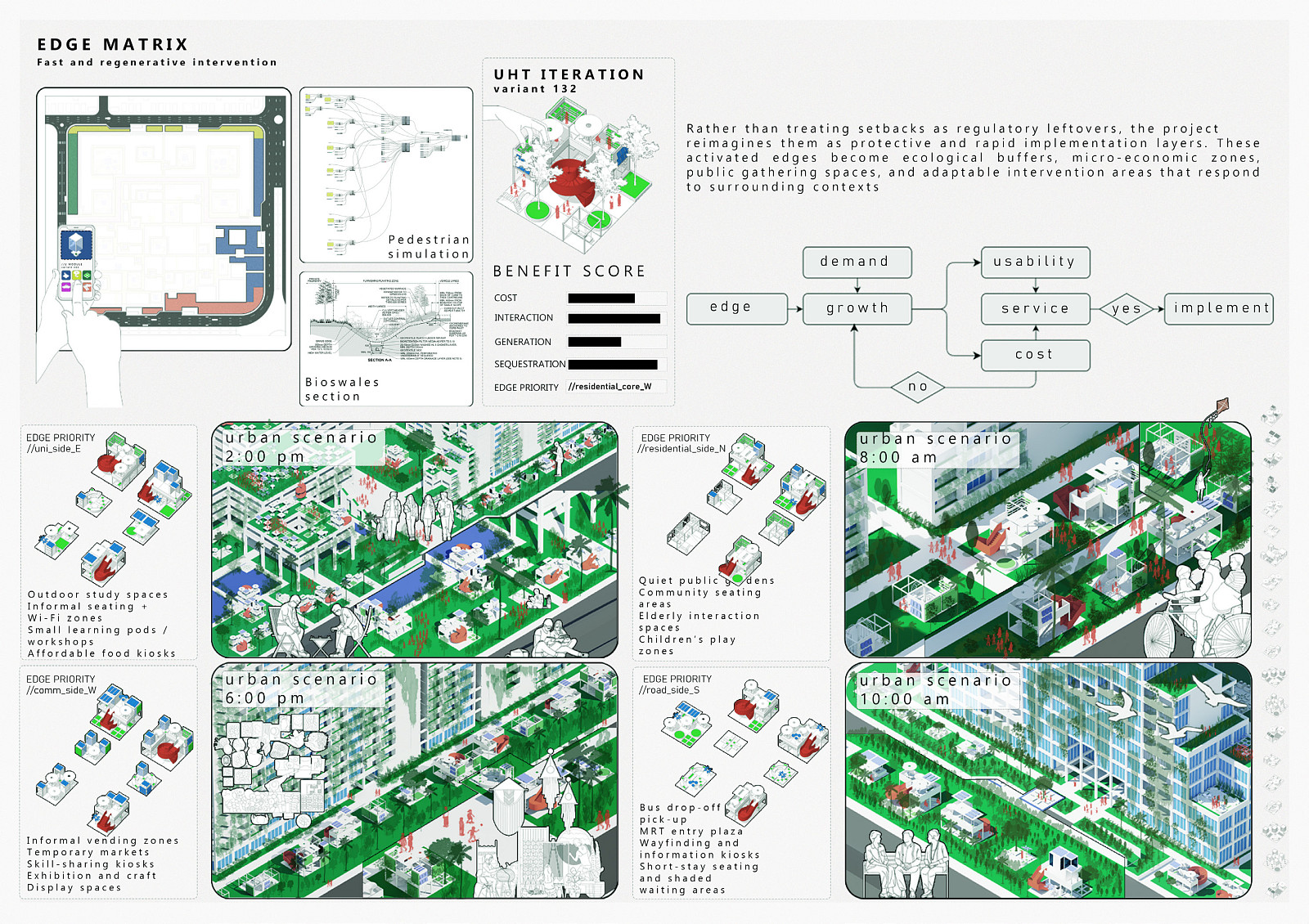
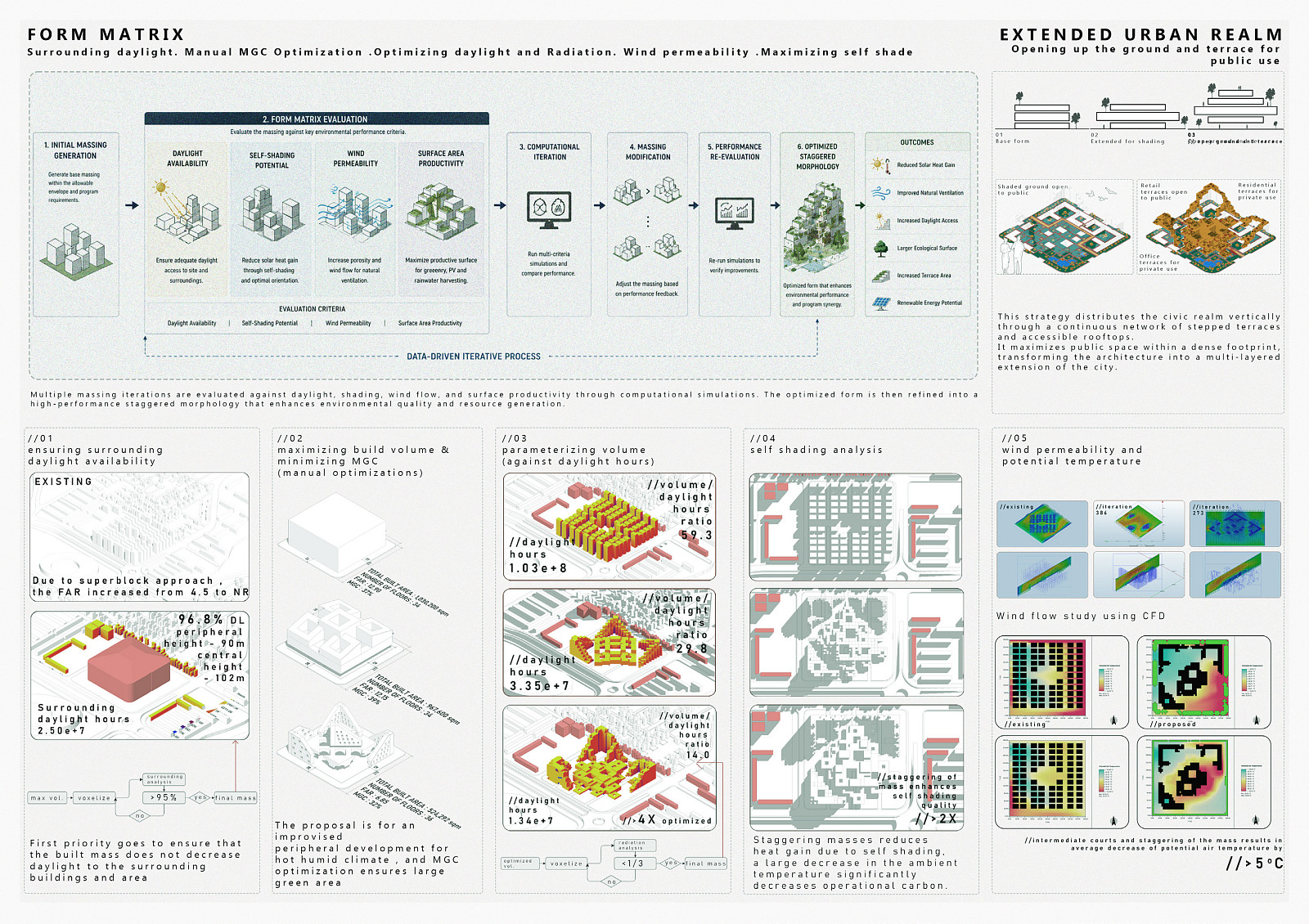
The design is driven by five strategies—Unify, Regeneration, Edge Matrix, Extended Urban Realm, and Form Matrix—which collectively transform fragmented plots into a cohesive urban ecosystem. Through computationally optimized massing, minimized ground coverage, extensive green integration, active setbacks, terrace solar parks, and adaptable Urban-Healing-Transport (UHT) modules, the project seeks to reduce both embodied and operational carbon while maximizing environmental performance.
The objective is to develop a scalable urban framework where density, ecology, public life, and economic productivity coexist. Rather than minimizing environmental damage, the project proposes a future model of development that actively contributes to ecological restoration and carbon reduction, demonstrating how architecture can become a regenerative infrastructure for rapidly urbanizing cities.
Project description
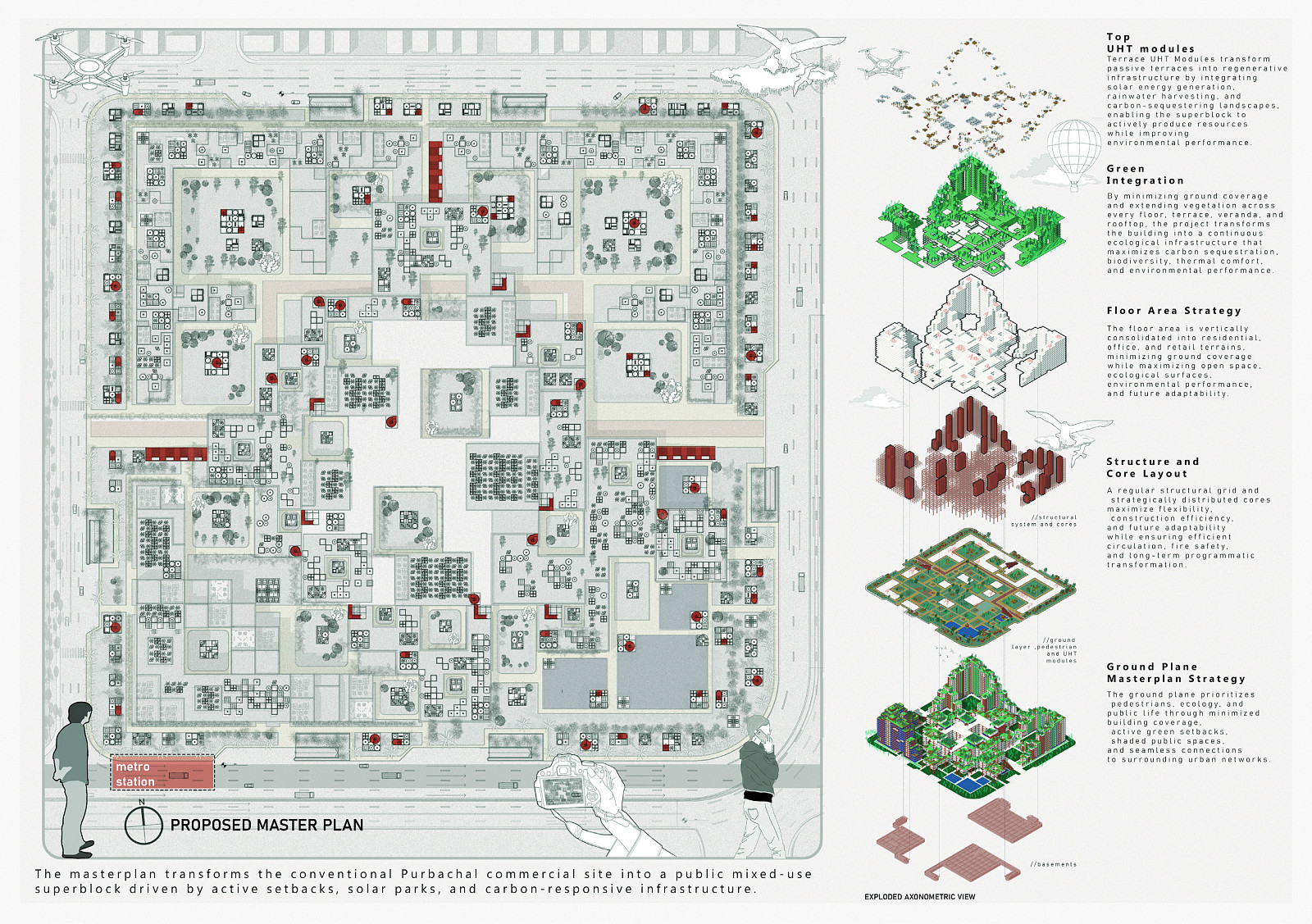
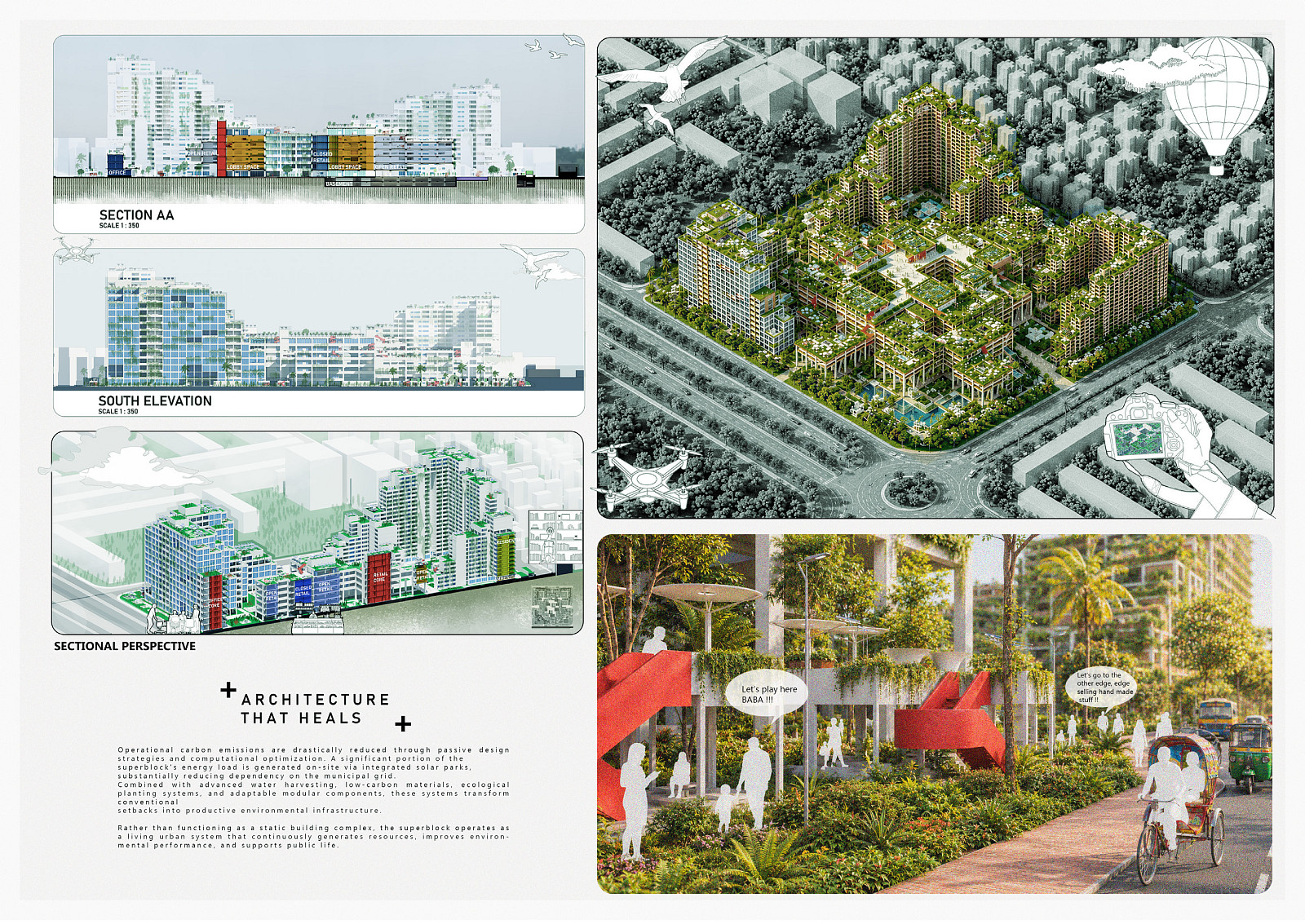
The project proposes a mixed-use regenerative superblock within Purbachal New Town, Dhaka, designed as a prototype for carbon-responsive urban development. Covering approximately 20 acres, the proposal consolidates fragmented commercial plots into a unified urban system integrating residential, office, retail, and public functions. The development prioritizes pedestrians through an open and shaded ground plane while restricting vehicular movement to the periphery and basement levels.
The architectural solution combines computationally optimized massing, low-carbon construction strategies, renewable energy generation, water harvesting, and extensive ecological integration. Building forms are optimized against daylight availability, self-shading potential, wind permeability, and productive surface area, resulting in a staggered morphology that maximizes environmental performance while preserving access to daylight and ventilation for surrounding developments.
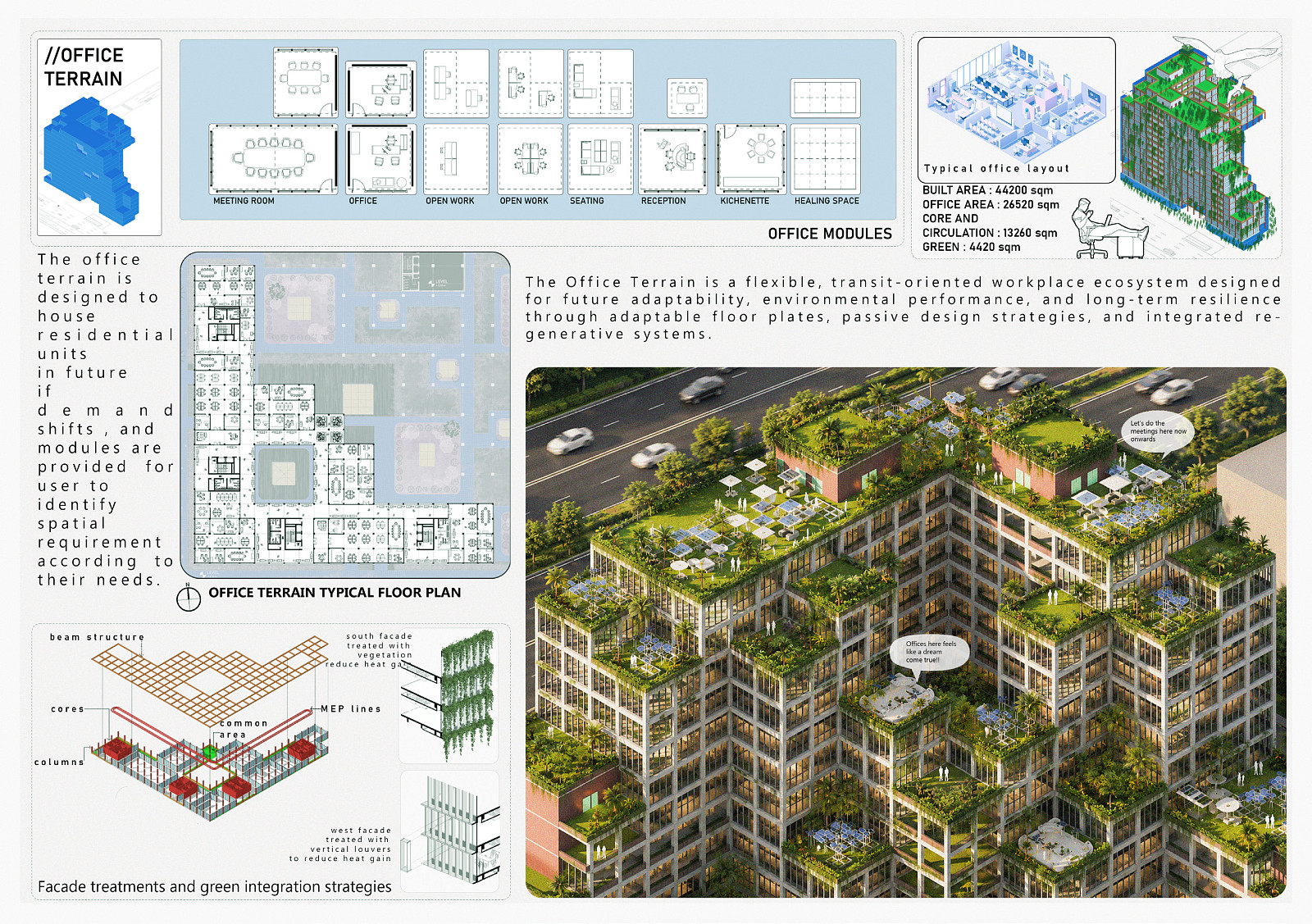
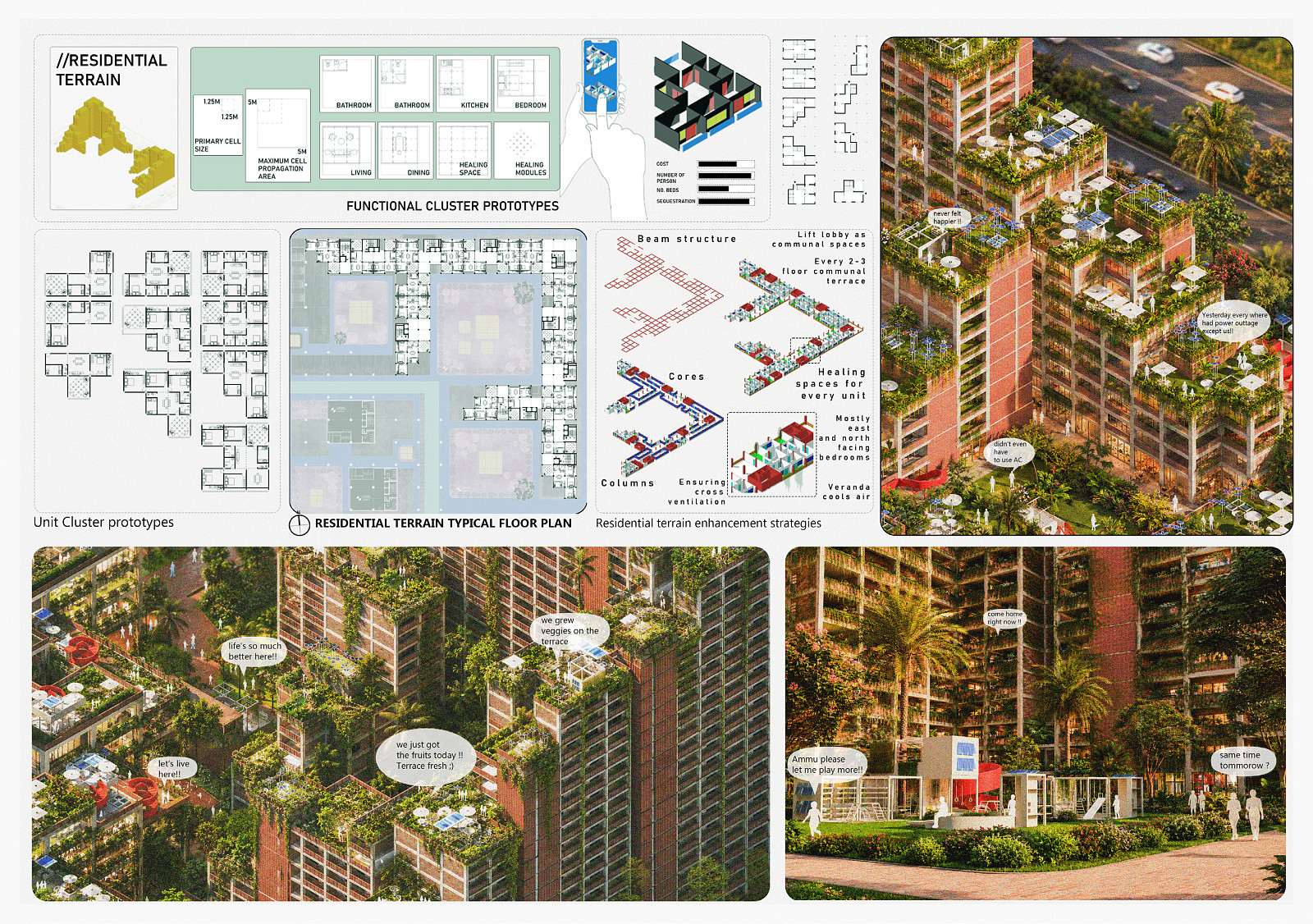
The project is organized into three interconnected terrains—Residential, Office, and Retail—each designed to respond to evolving social, economic, and environmental conditions. Green infrastructure is integrated across the ground plane, terraces, verandas, and rooftops, creating a continuous ecological network throughout the development. Active setbacks function as ecological buffers, public spaces, and micro-economic zones, transforming underutilized regulatory spaces into productive urban infrastructure.
Through terrace solar parks, water harvesting systems, regenerative UHT modules, carbon-sequestering landscapes, and adaptable spatial planning, the project reduces operational carbon emissions while generating renewable resources on-site. The proposal demonstrates how architecture can accommodate high urban density while simultaneously restoring environmental performance, enhancing public life, and establishing a scalable framework for future regenerative urban development in Bangladesh.
Technical information
The project is located within Purbachal New Town, Dhaka, on a 20-acre (80,940 m²) site originally designated as a commercial zone. The proposal introduces a mixed-use regenerative superblock comprising approximately 209,900 m² of built area, including 67,300 m² of residential space and 142,600 m² of office, retail, and commercial functions.
Building heights range from 20–30 stories, organized into three interconnected terrains: Residential, Office, and Retail. The massing is generated through computational optimization based on daylight availability, self-shading, wind permeability, and productive surface area. By limiting ground coverage to approximately 30–35%, the majority of the site remains available for public space, landscape infrastructure, and ecological restoration.
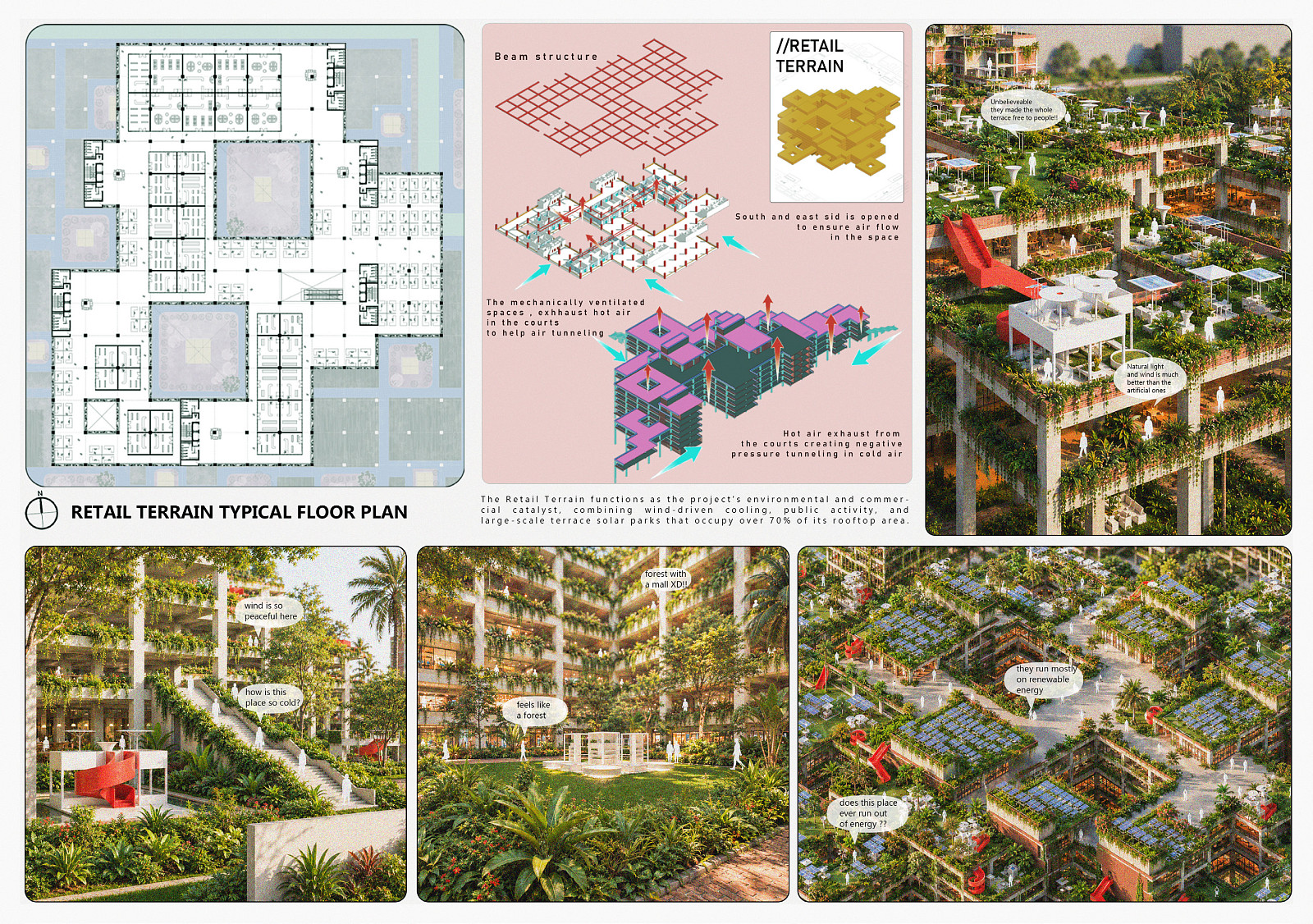
Environmental systems include terrace solar parks, rainwater harvesting, carbon-sequestering vegetation, and integrated UHT modules. More than 70% of the Retail Terrain roof area is dedicated to solar energy generation, while extensive green terraces and setbacks enhance biodiversity, thermal comfort, and stormwater management.
Through passive design strategies, low-carbon materials, renewable energy systems, and ecological integration, the project targets significant reductions in both embodied and operational carbon while establishing a scalable model for regenerative urban development.

Copyright © 2026 INSPIRELI | All rights reserved. Use of this website signifies your agreement to the Terms of Use, Privacy Policy, and use of cookies.