Crystal Limeworks


Project idea
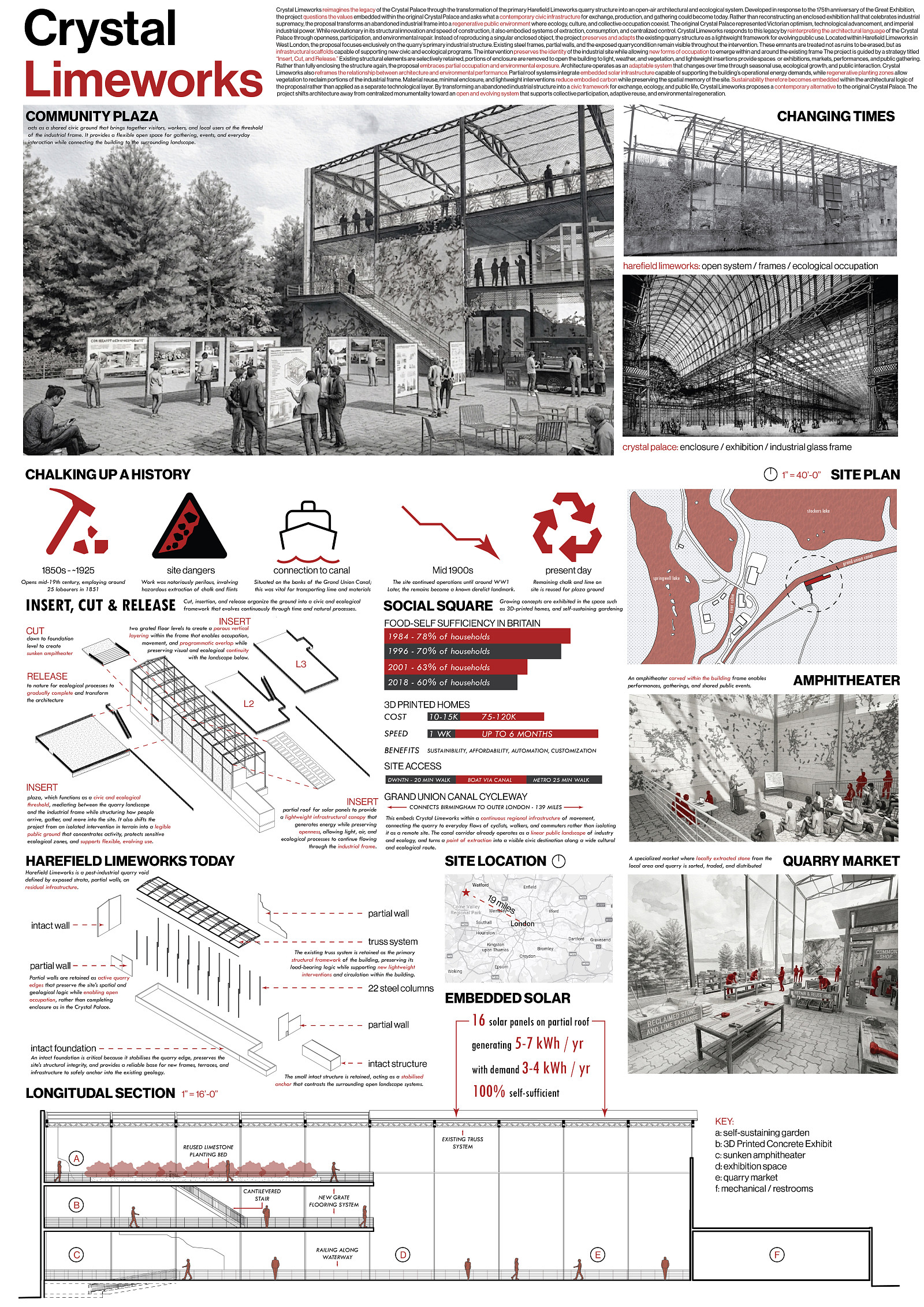
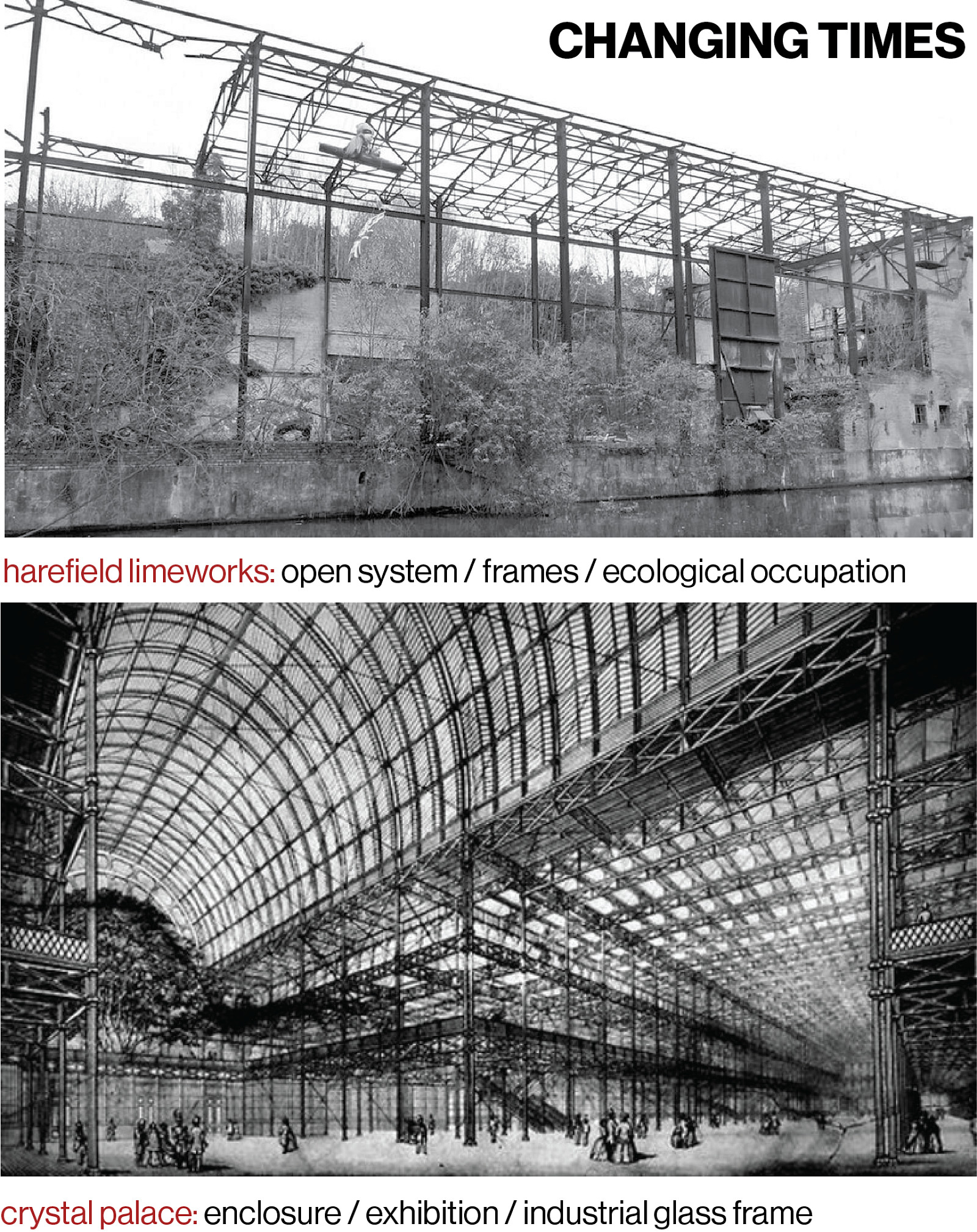
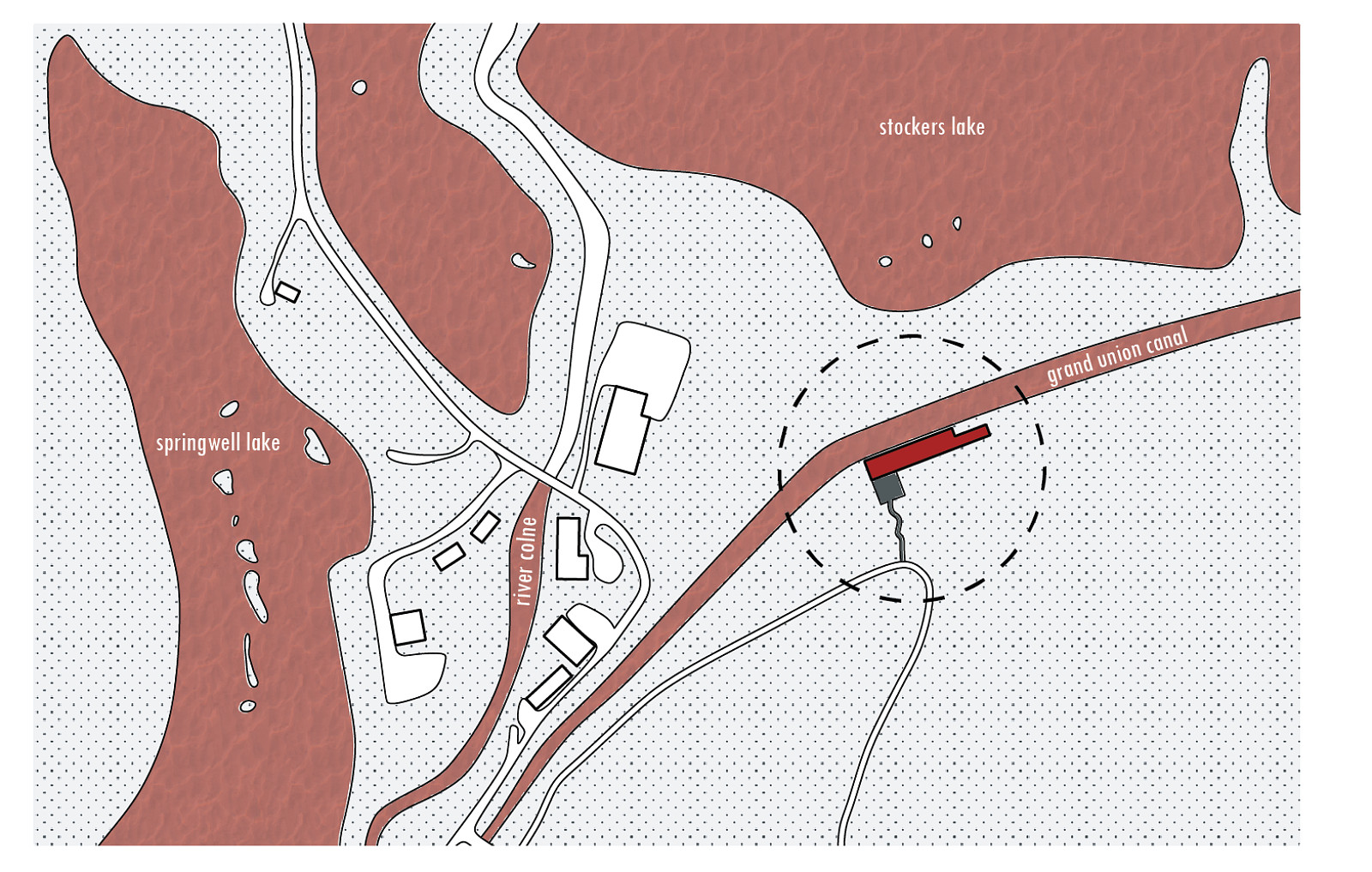
Crystal Limeworks is an adaptive-reuse and ecological regeneration project located at the former Harefield Limeworks site. Inspired by the historical legacy of the Crystal Palace and the industrial heritage of the quarry, the proposal transforms a disused industrial structure into a contemporary civic, educational, and environmental resource.
The project seeks to preserve the cultural memory of the site while introducing new public functions that support community engagement, environmental restoration, and local economic activity. Rather than reconstructing a closed architectural object, the intervention establishes an open and flexible framework that accommodates exhibitions, workshops, ecological research, urban agriculture, public gatherings, and educational programs.
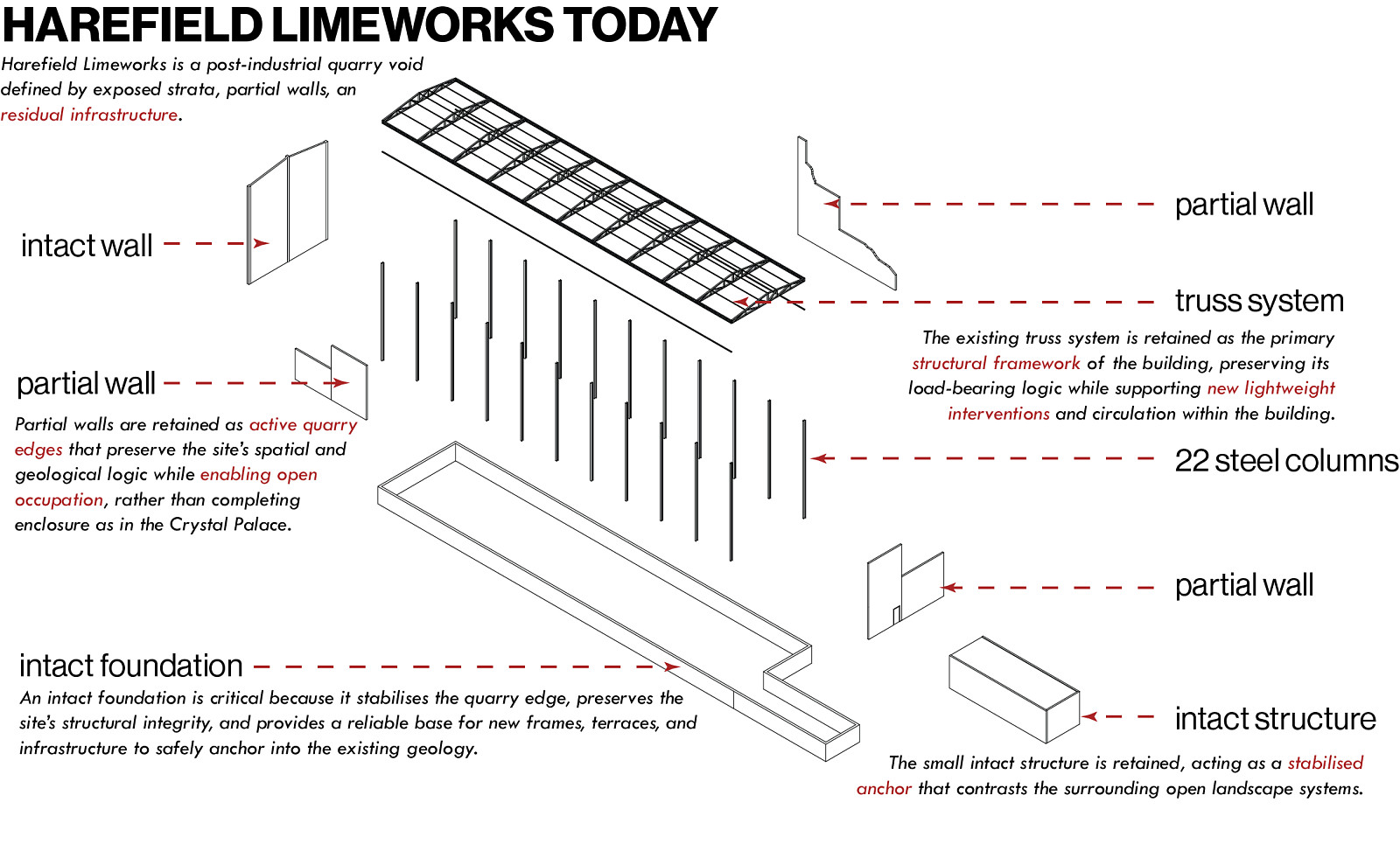
Through the careful retention of the existing steel structure and the integration of sustainable technologies, Crystal Limeworks demonstrates how industrial remnants can be reactivated as productive public infrastructure. The project aims to reconnect people with the landscape, promote environmental stewardship, and create a resilient community destination that celebrates both history and future innovation.
Project description
The scope of the project includes the rehabilitation and adaptation of the existing quarry-side industrial structure and its surrounding landscape. The intervention encompasses architectural, environmental, social, and infrastructural components designed to create a multifunctional public destination.
Key elements of the scope include:
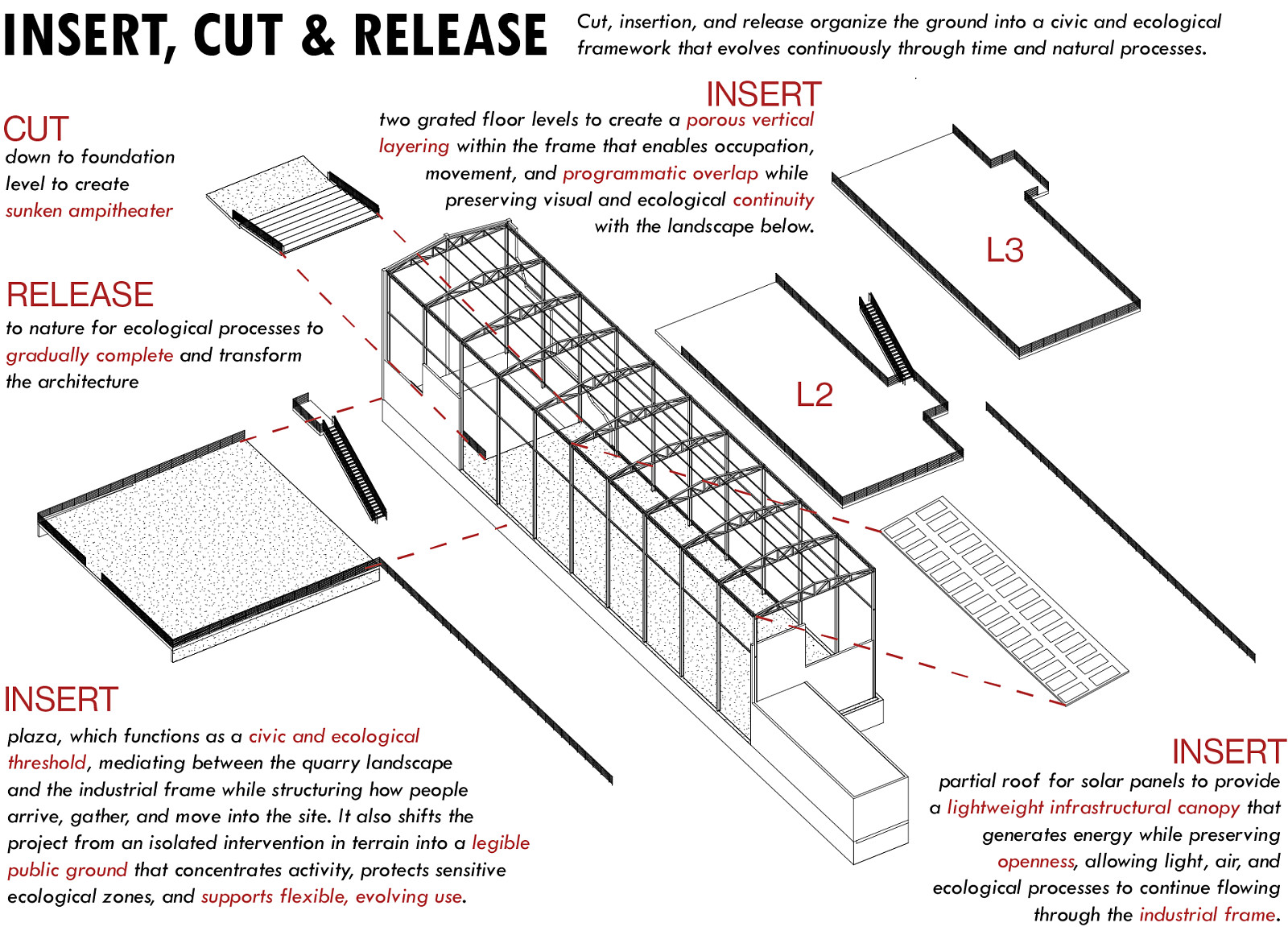
Preservation and stabilization of the existing steel framework and selected structural components.
Creation of exhibition and educational spaces dedicated to industrial heritage, ecological processes, and sustainable construction.
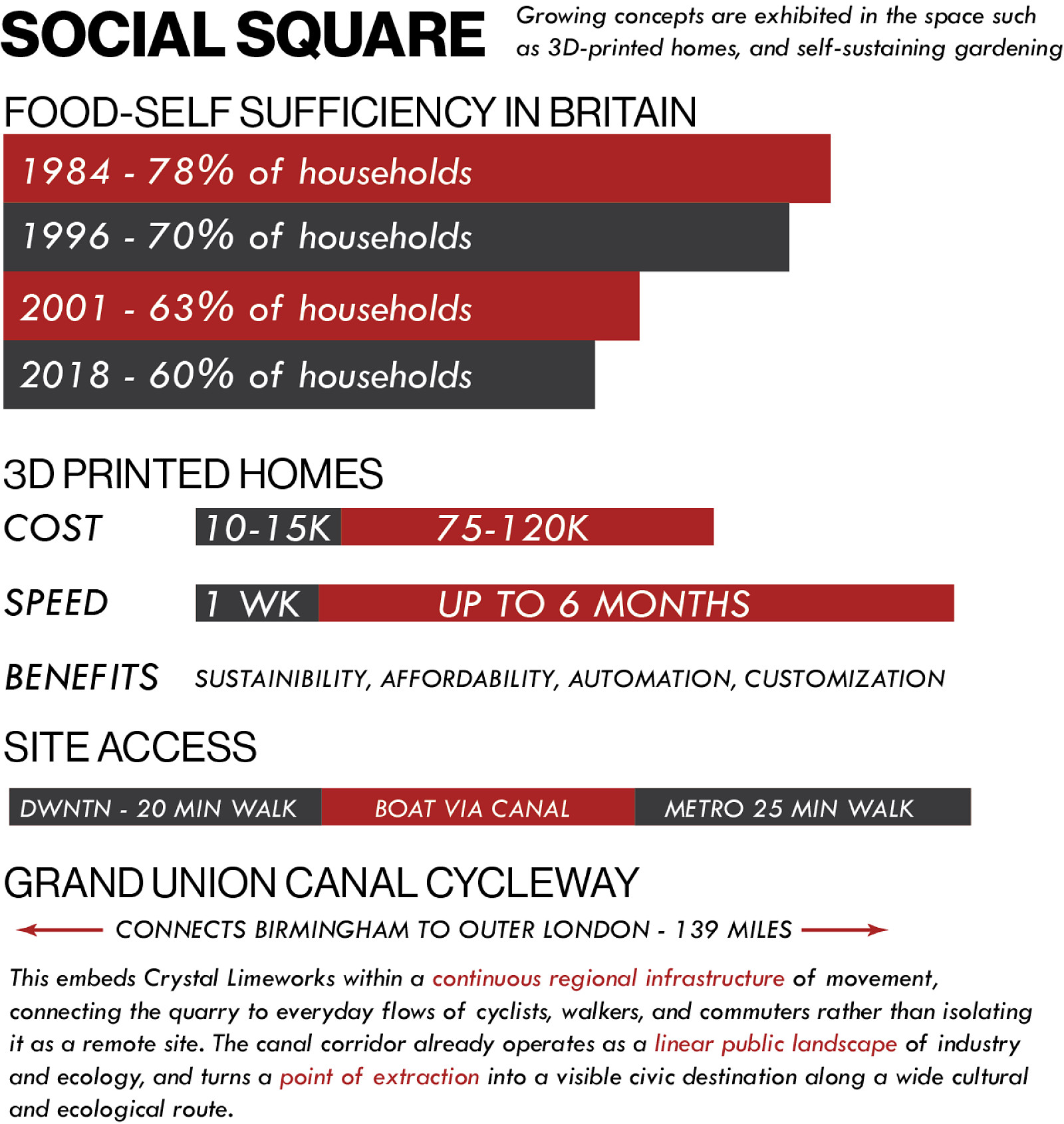
Development of a self-sustaining urban agriculture program, including food-production gardens and community growing spaces.
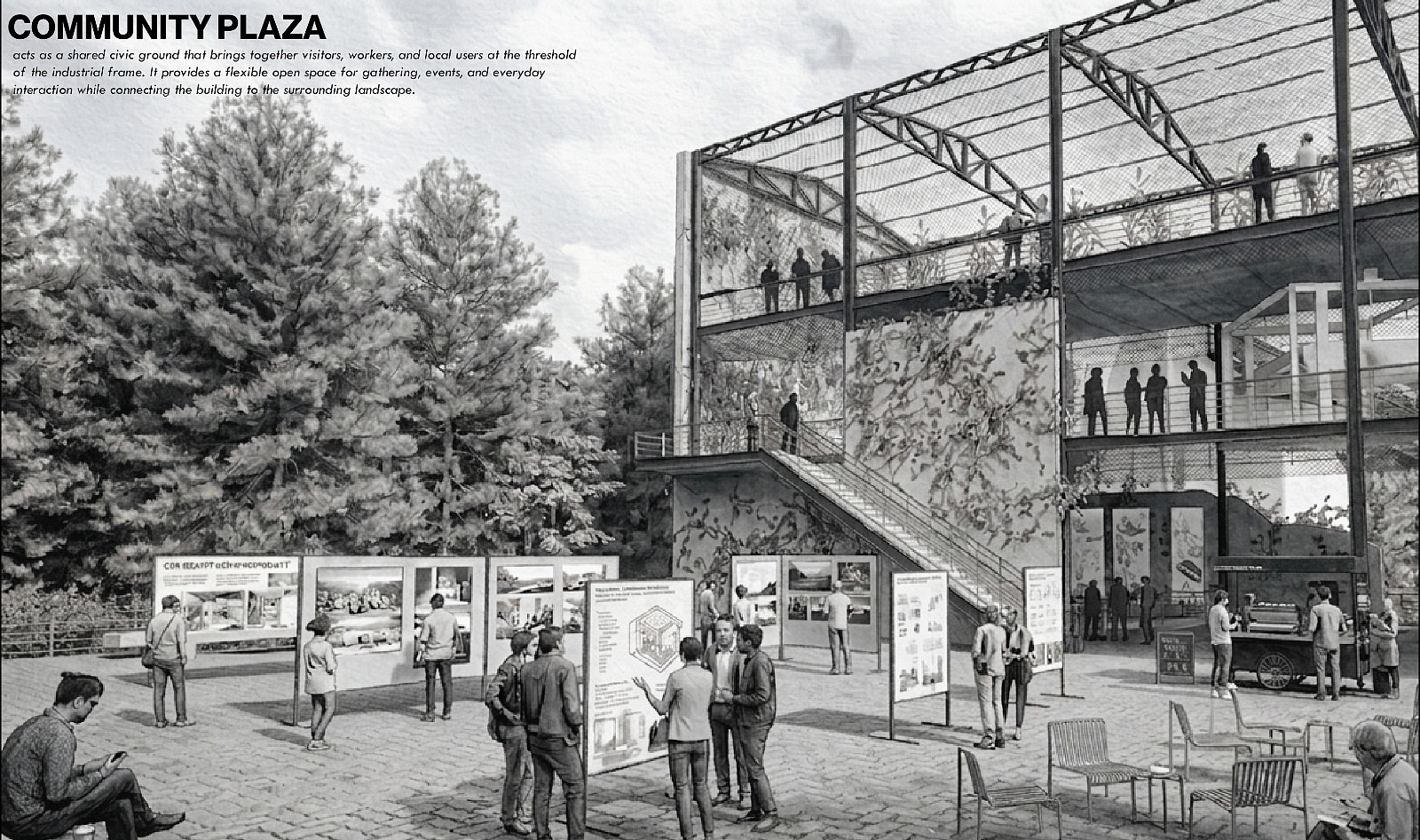
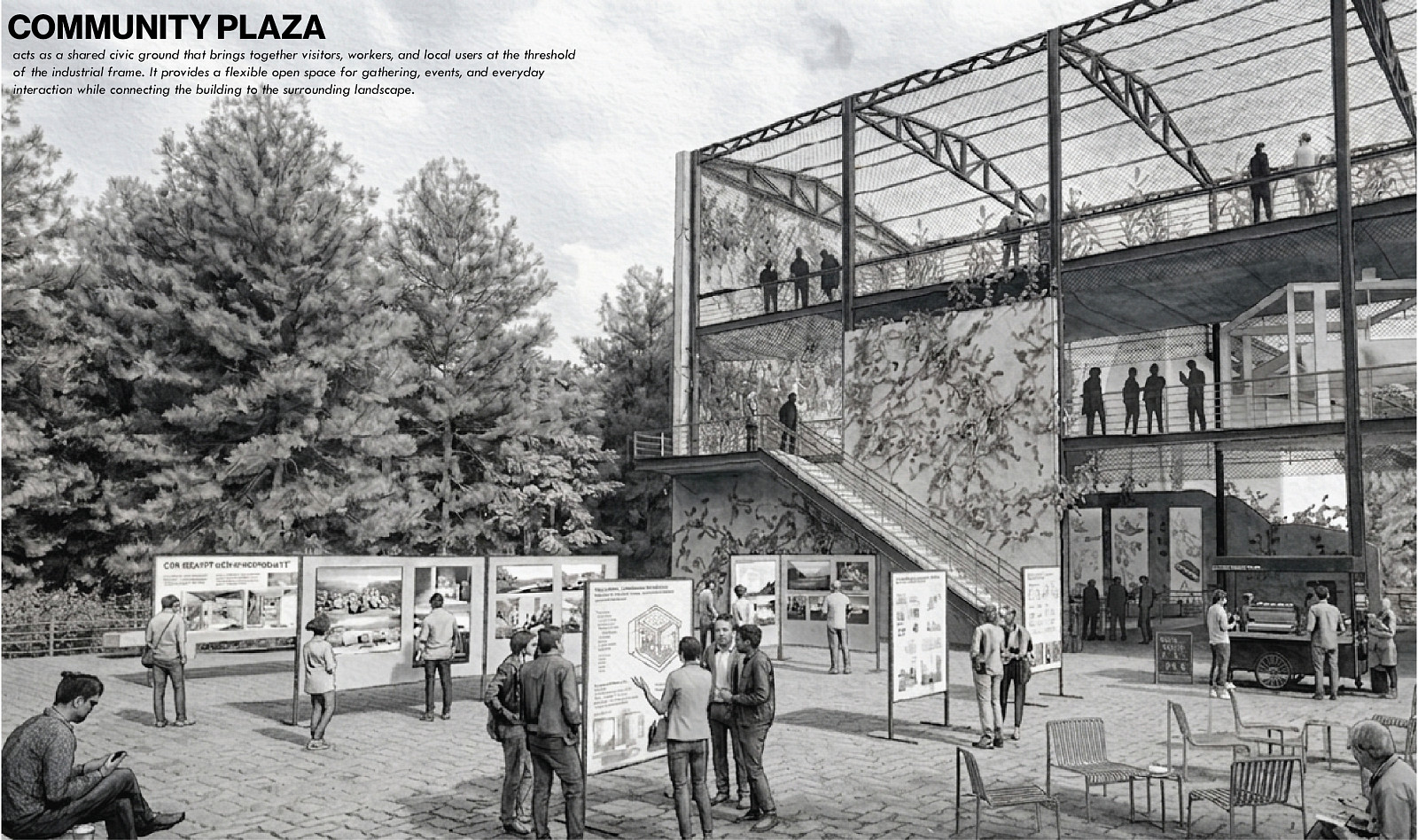
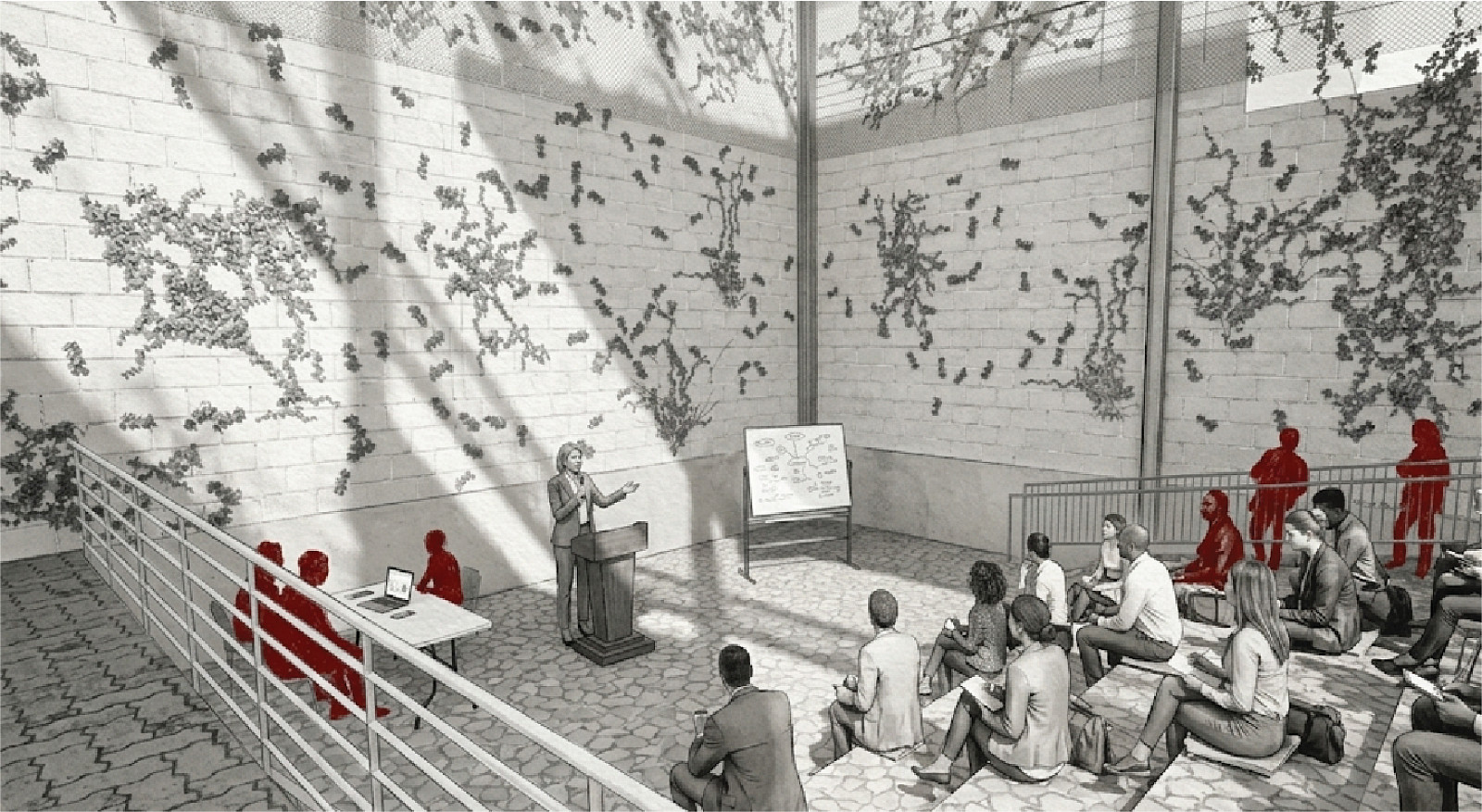
Construction of a sunken amphitheater for public events, performances, lectures, and community gatherings.
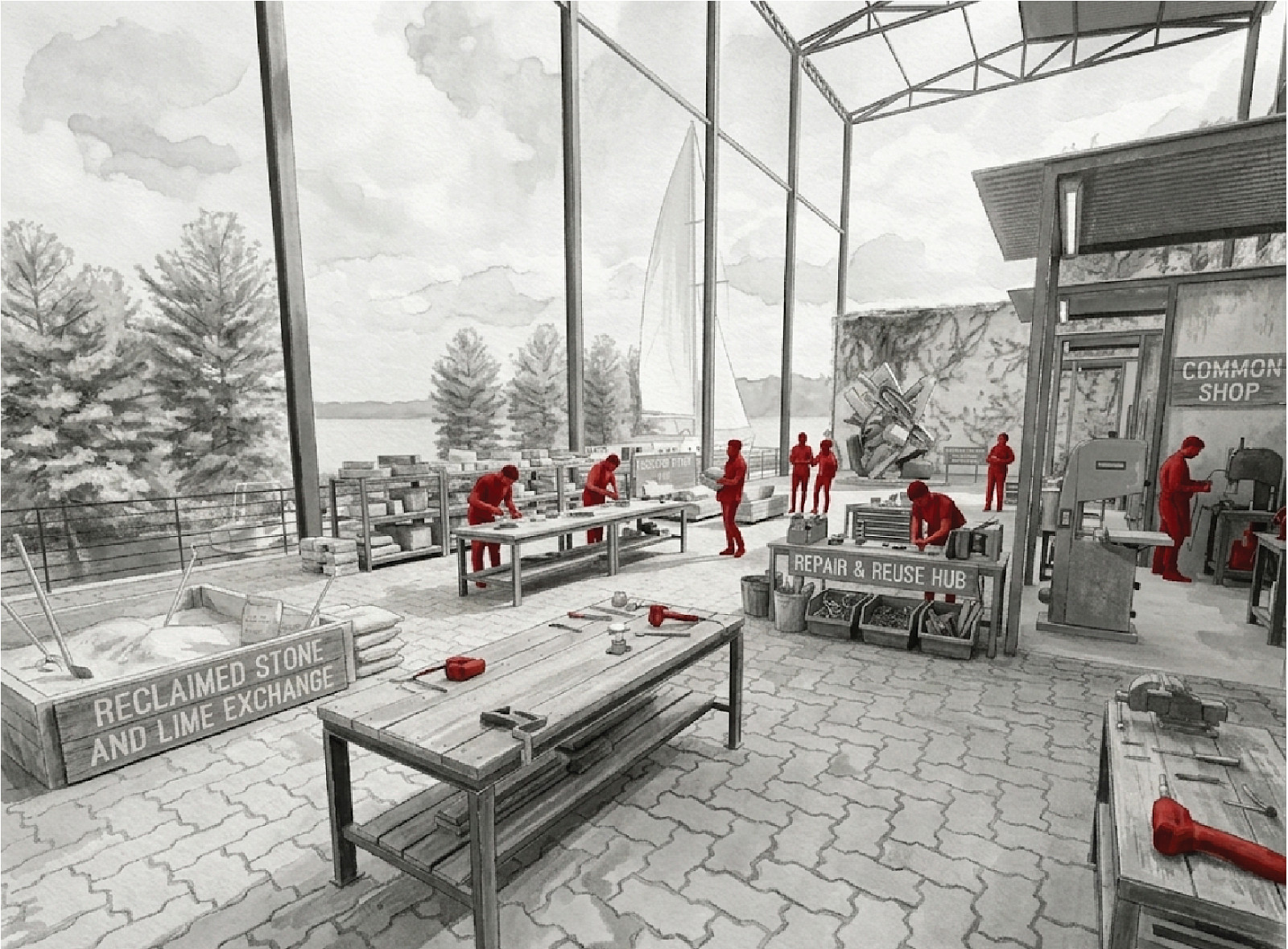
Establishment of a quarry market supporting local products, materials, and educational demonstrations.
Integration of pedestrian connections and access routes linked to the Grand Union Canal corridor.
Ecological restoration of the site through planting strategies, habitat creation, and landscape regeneration.
Installation of renewable energy systems to reduce operational energy demand and improve environmental performance.
The project delivers a long-term framework for cultural activity, environmental education, public participation, and sustainable site management.
Technical information
Project Name: Crystal Limeworks
Project Type: Adaptive Reuse, Cultural and Ecological Regeneration
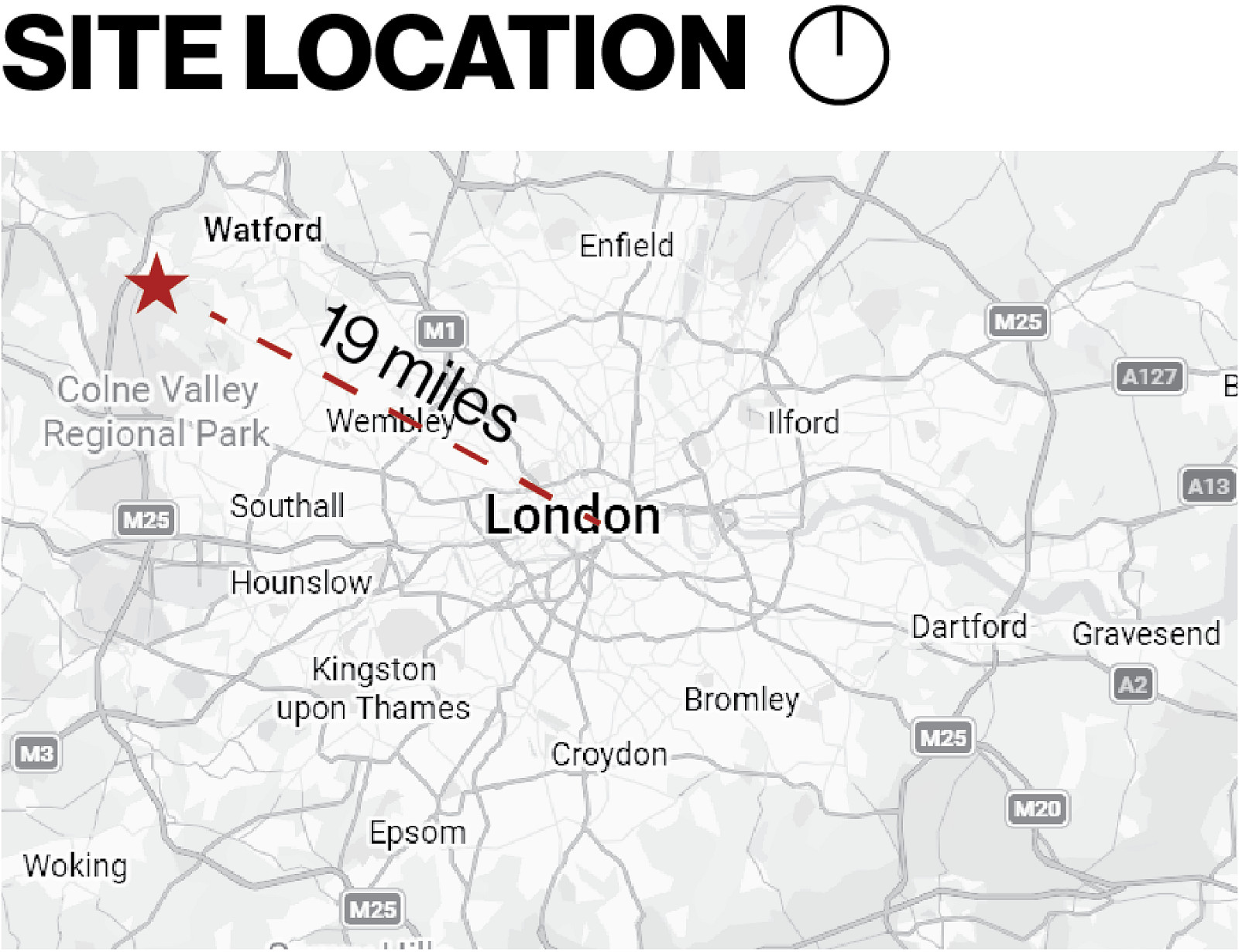
Location: Former Harefield Limeworks Quarry, United Kingdom
Primary Structure:
Retained industrial steel frame.
Existing structural elements preserved and reinforced where necessary.
Partial wall retention combined with open-frame construction.
Building Organization:
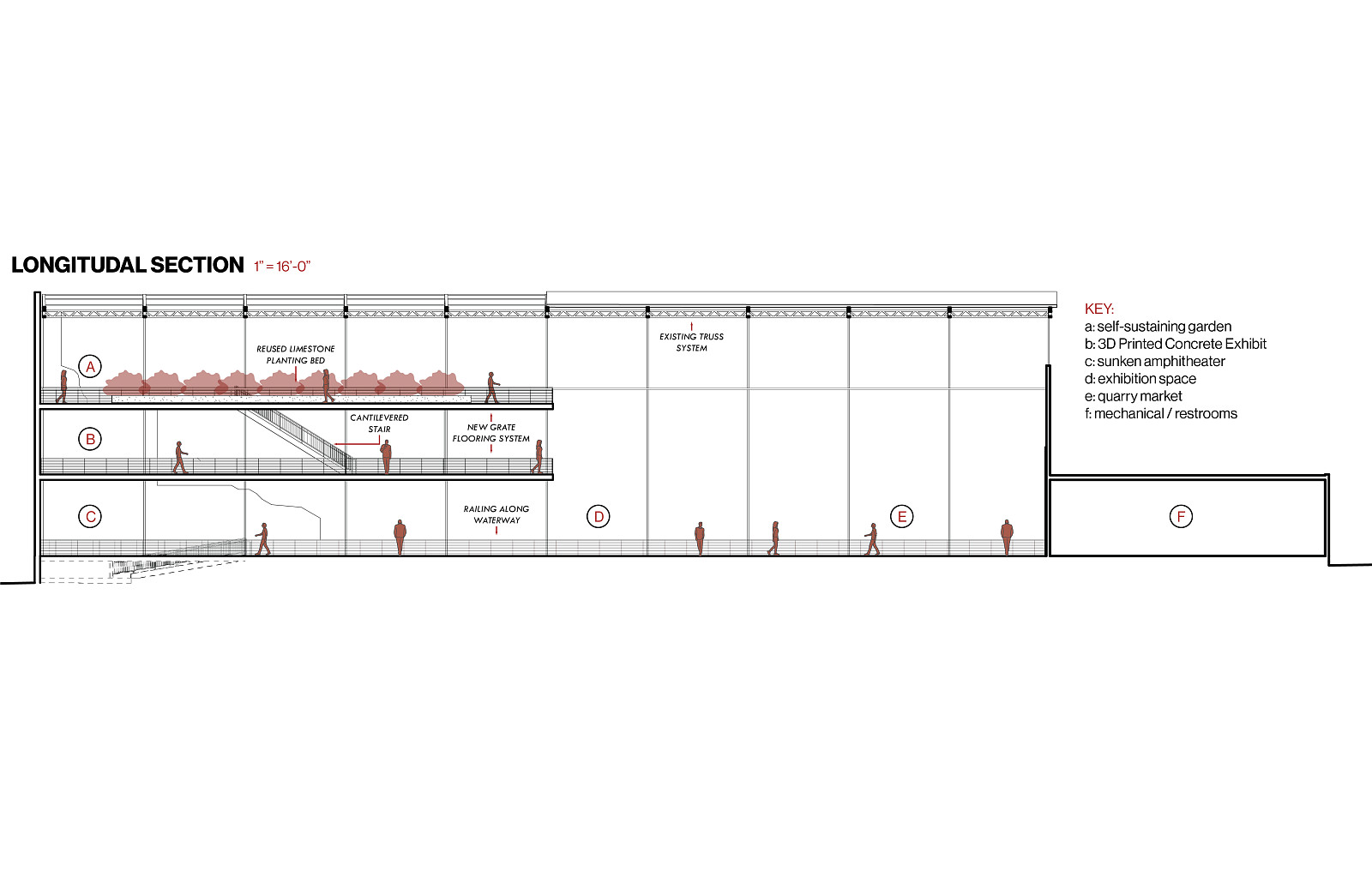
Ground level: public circulation, quarry access, market functions, and service spaces.
Intermediate level: exhibition galleries, educational facilities, and public viewing areas.
Upper level: ecological planting zones, community growing areas, and observation platforms.
Key Facilities:
Self-sustaining food garden.
3D-printed concrete exhibition area.
Exhibition and interpretation spaces.
Sunken amphitheater.
Quarry market.
Mechanical and sanitary facilities.
Energy Strategy:
Roof-mounted photovoltaic system.
Approximately 16 solar panels integrated into the structure.
Renewable energy generation intended to offset operational demand and support site self-sufficiency.
Landscape Strategy:
Reuse of quarry surfaces and industrial remnants.
Native and adaptive vegetation planting.
Habitat enhancement and biodiversity support.
Integration of public open space with ecological restoration measures.
Access and Connectivity:
Pedestrian-oriented circulation.
Connections to surrounding pathways and the Grand Union Canal corridor.
Accessible public routes throughout the site.
Construction Approach:
Minimum intervention philosophy.
Reuse of existing structural assets.
Modular and adaptable architectural components.
Sustainable material selection and low-carbon development principles.

Copyright © 2026 INSPIRELI | All rights reserved. Use of this website signifies your agreement to the Terms of Use, Privacy Policy, and use of cookies.
