DZR Pomocná ruka


Project idea
Pomocná ruka presents a symbiosis of housing with a psychotherapeutic facility. The design aims to create a quality interior environment that fulfills the needs of residents and contributes to their treatment, relaxation, and overall recovery.
Project description
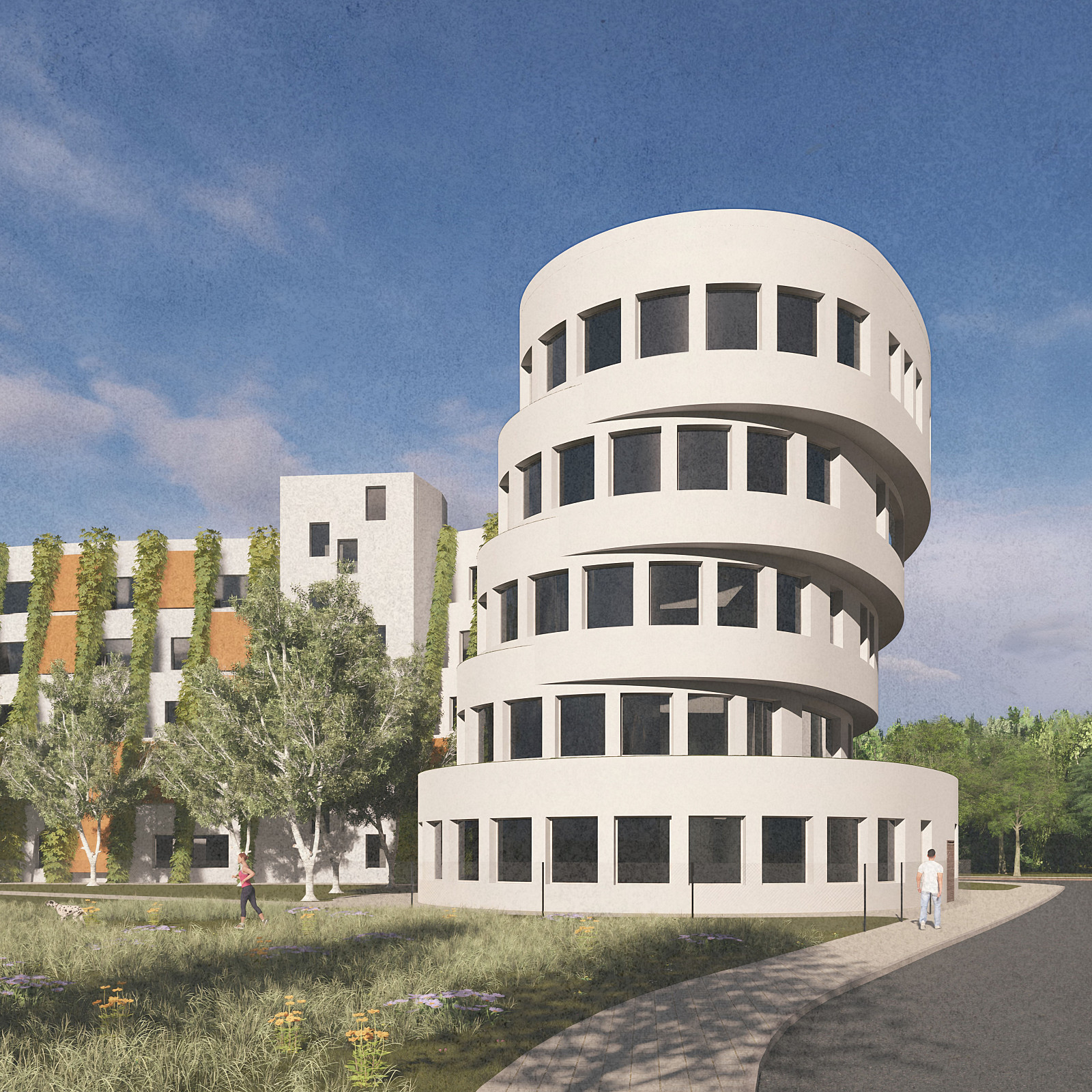
The project is a special-regime residential home located in Prague 5, situated at the intersection of Pekařská and Schwarzenberská streets. The building's curved, organic form was developed from the concept of a helping hand, creating an embracing gesture in the urban block. The design navigates the site by directly connecting to the street edges of Pekařská and continuing along Schwarzenberská, forming a distinctive rounded building that encloses a courtyard space. The curvilinear massing creates varied interior and exterior spatial experiences while responding to the existing urban structure.
Technical information
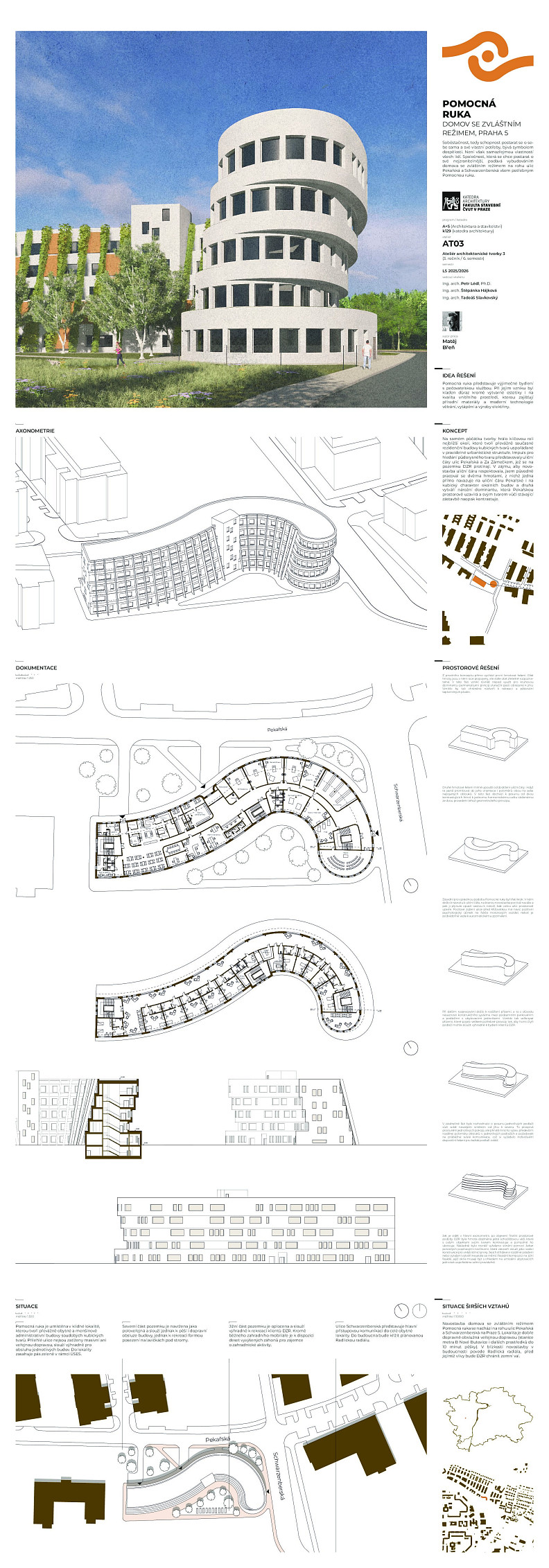
The project includes documentation showing floor plans, sections, and site plans. The building features a multi-story curved structure with ribbon windows and balconies wrapping around the facade. The site plan shows integration with the surrounding residential neighborhood, with the building organized around a central courtyard. The axonometric drawings illustrate the massing development through concept diagrams showing the evolution from a simple block to the final curved form.
Documentation

Copyright © 2026 INSPIRELI | All rights reserved. Use of this website signifies your agreement to the Terms of Use, Privacy Policy, and use of cookies.