Muzeum Bulovna


Project idea
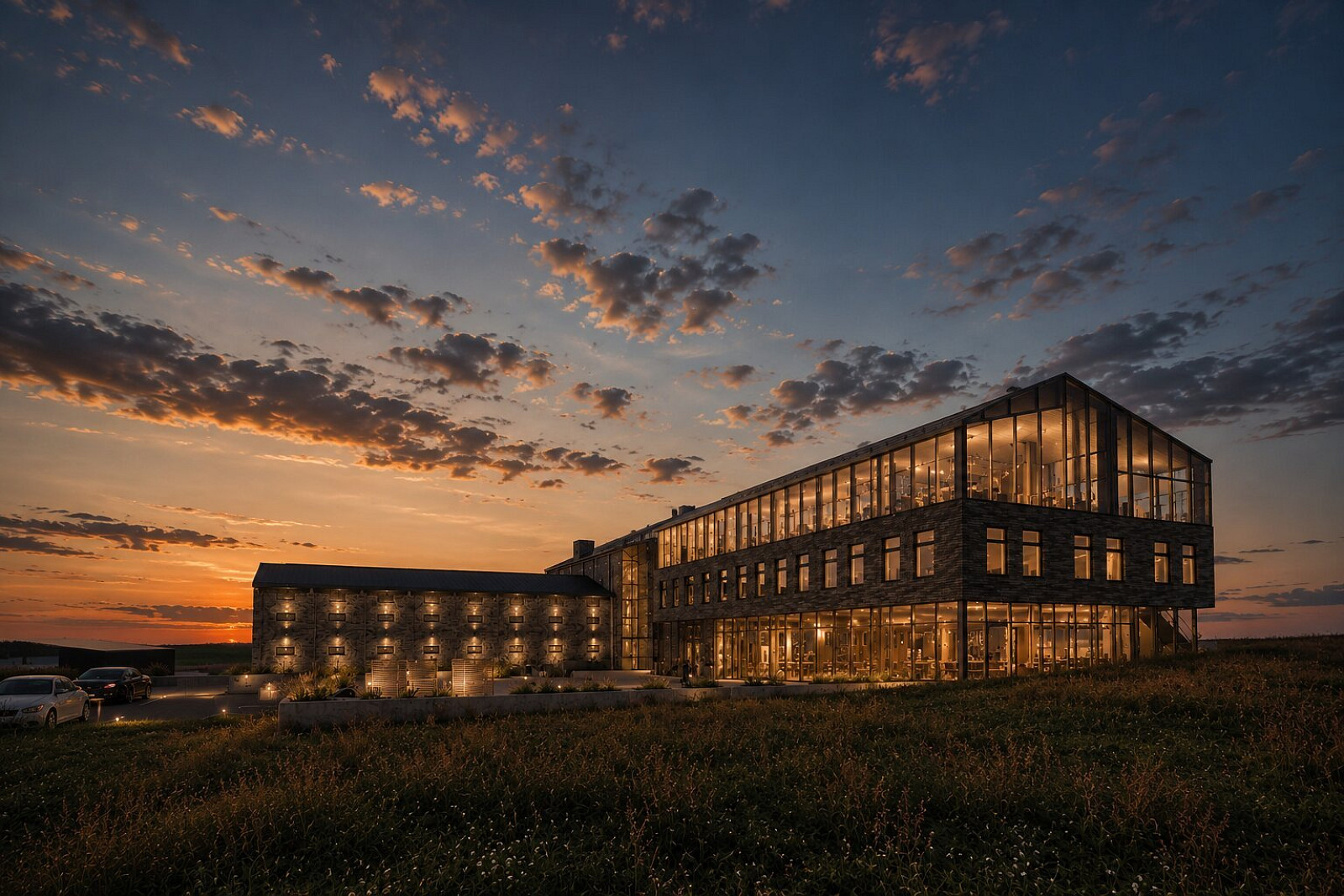
The design stems from the contrast between historical industrial architecture and modern architectural elements, creating a new cultural landmark that preserves the identity of the place while providing a contemporary museum experience.
Project description
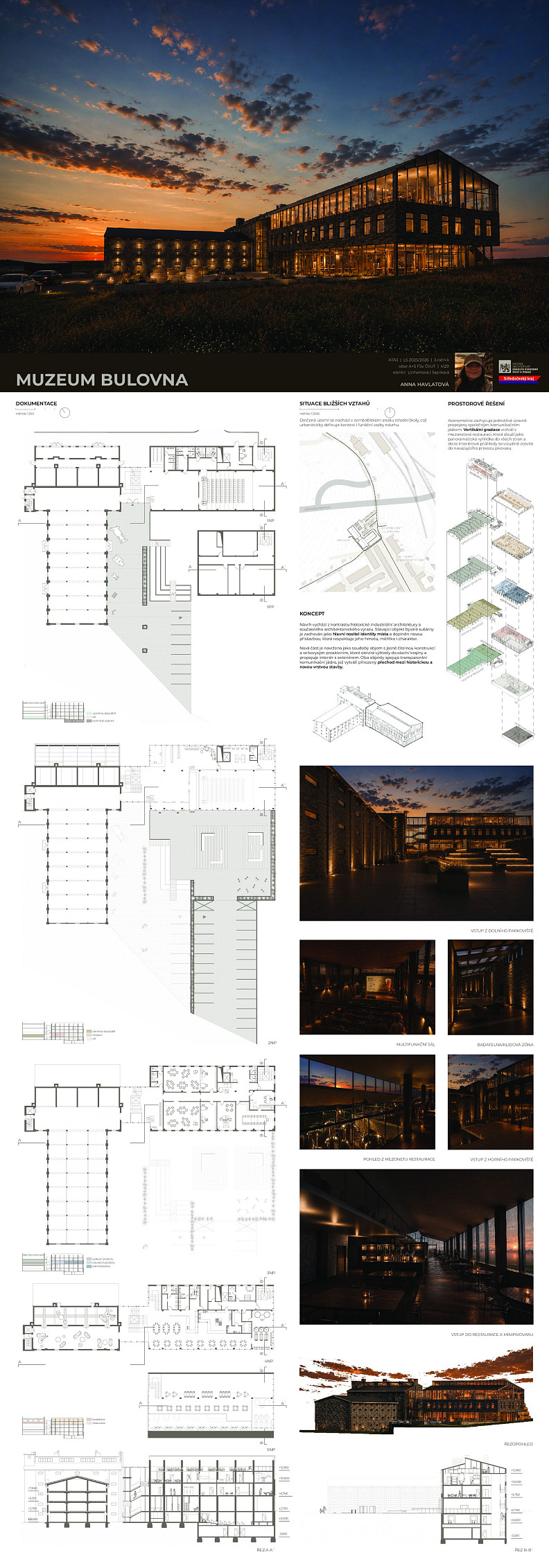
The project transforms the Bulovna industrial building into a museum, working with the contrast between the existing historical industrial architecture and new contemporary interventions. The concept proposes to preserve the building as a key element of the city's identity while adding new spatial qualities. The new parts are conceived as contemporary insertions within the existing structural framework, creating a transition between the historical and newly added layers. The design includes a multifunctional hall, restaurant, exhibition spaces, and a panoramic observation area. The spatial solution incorporates a vertical circulation core with panoramic views extending to the surrounding landscape.
Technical information
The documentation includes multiple floor plans at various levels, cross-sections (ŘEZ A-A, ŘEZ B-B), site plan showing urban relationships, and structural/spatial diagrams showing the layered programmatic organization. The building features an existing industrial structural grid that is maintained and supplemented with new construction elements.
Documentation

Copyright © 2026 INSPIRELI | All rights reserved. Use of this website signifies your agreement to the Terms of Use, Privacy Policy, and use of cookies.
