

Beyond Solidity: Reframing Formal Housing as a Verb of Assembly


Project idea
The project challenges the conventional approach to formal housing, where residential developments are often designed through top down decisions with limited involvement from the people who will ultimately live there. While such housing may satisfy physical standards, it frequently overlooks the everyday needs, social relationships, and lived experiences of residents.
The idea of this project is to move beyond housing as a physical product and explore housing as a collaborative process. Through direct engagement with residents, future occupants, and community members, the project investigates how participation can influence architectural decisions and create more inclusive, adaptable, and socially meaningful living environments. The goal is to demonstrate that housing can become more responsive, resilient, and community oriented when people actively contribute to shaping the spaces they inhabit.
Project description
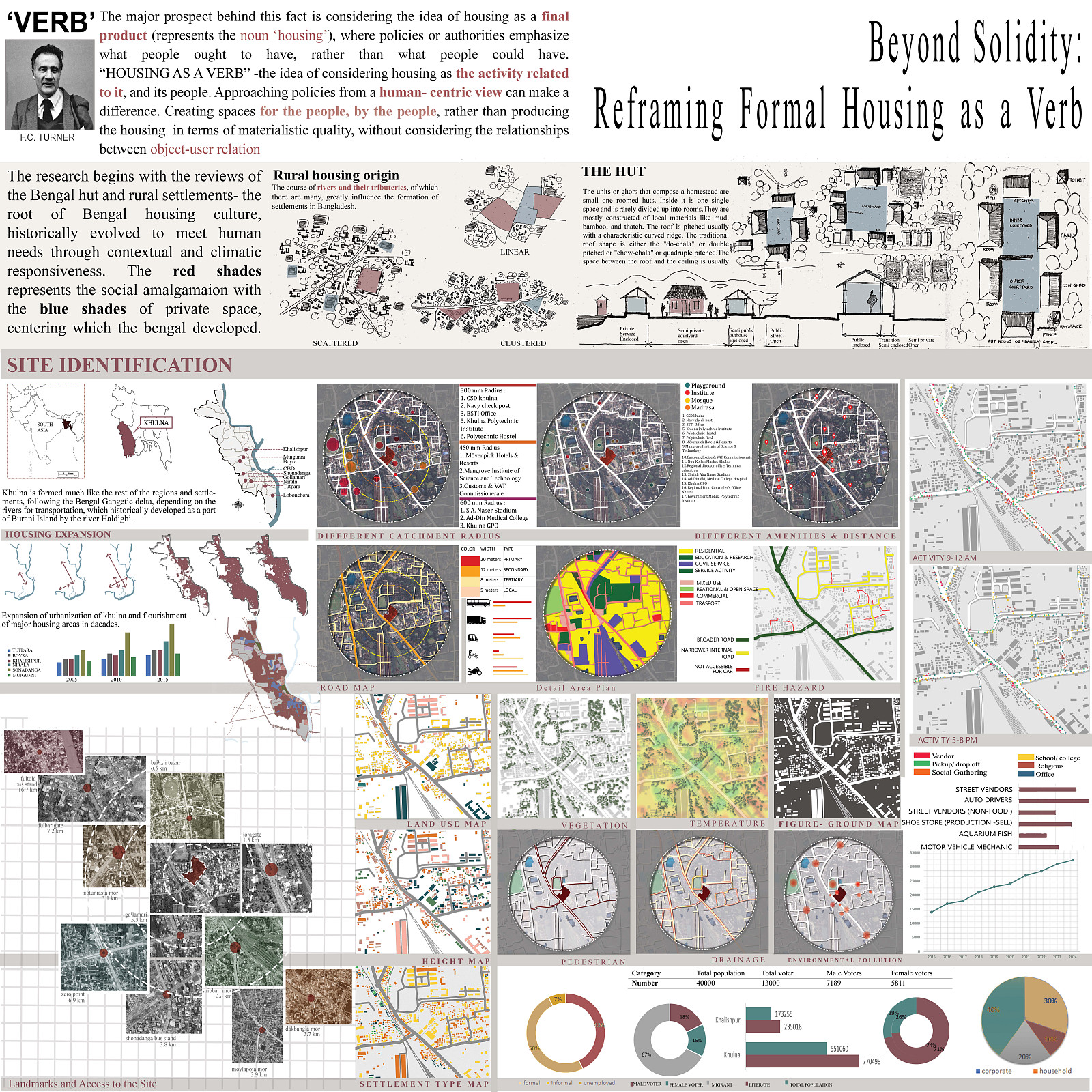
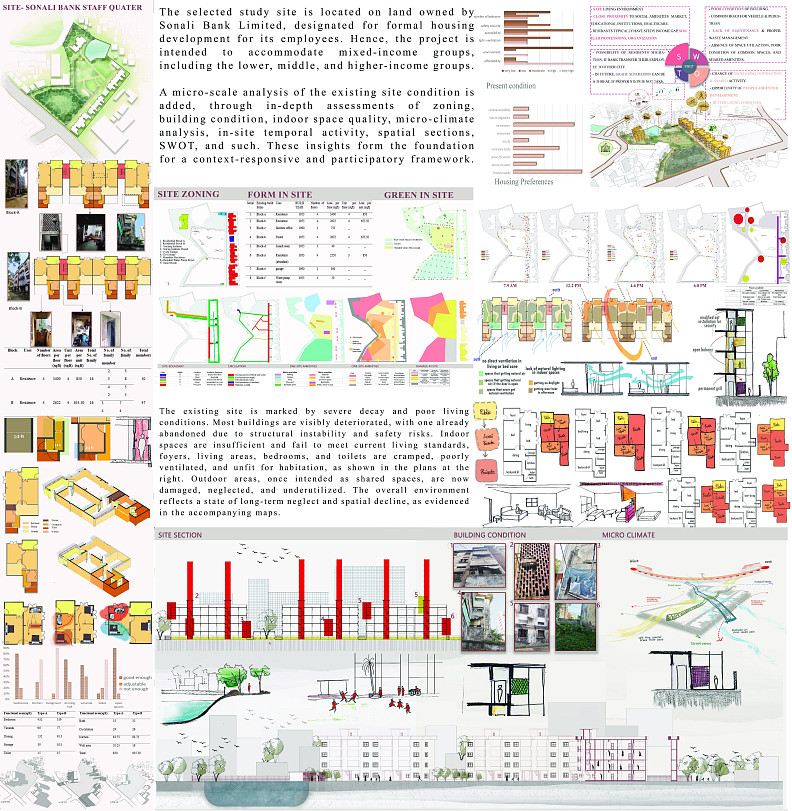
The project focuses on the redevelopment of a state provided housing compound in Khalishpur, Khulna, Bangladesh. The existing site contains deteriorated residential buildings, limited communal facilities, and insufficient capacity to meet growing housing demand.
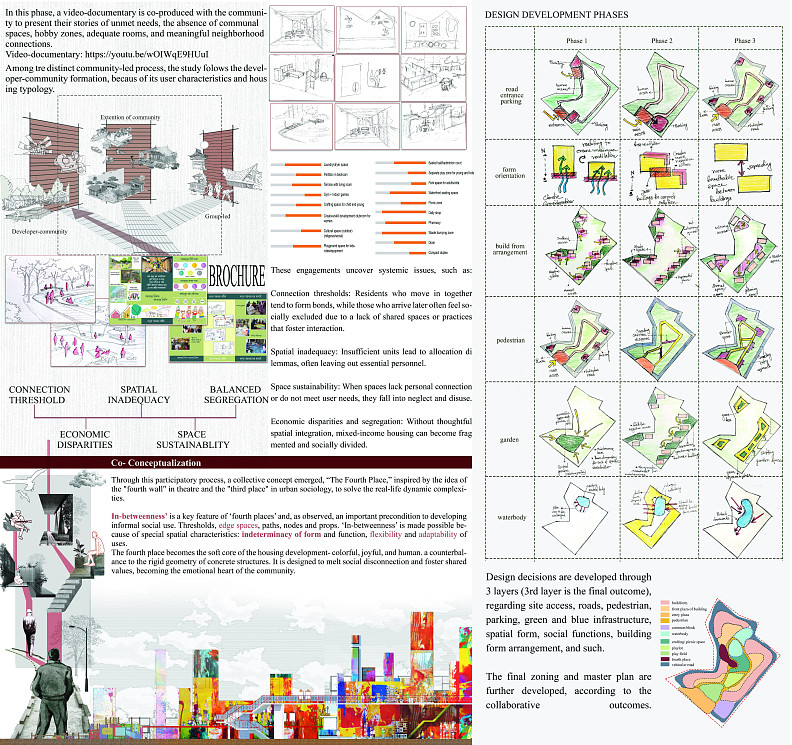
The design process was developed through a participatory framework involving residents, future occupants, family members, and local stakeholders. Workshops, storytelling sessions, group discussions, model making activities, and collaborative design exercises were conducted to understand community needs and aspirations.
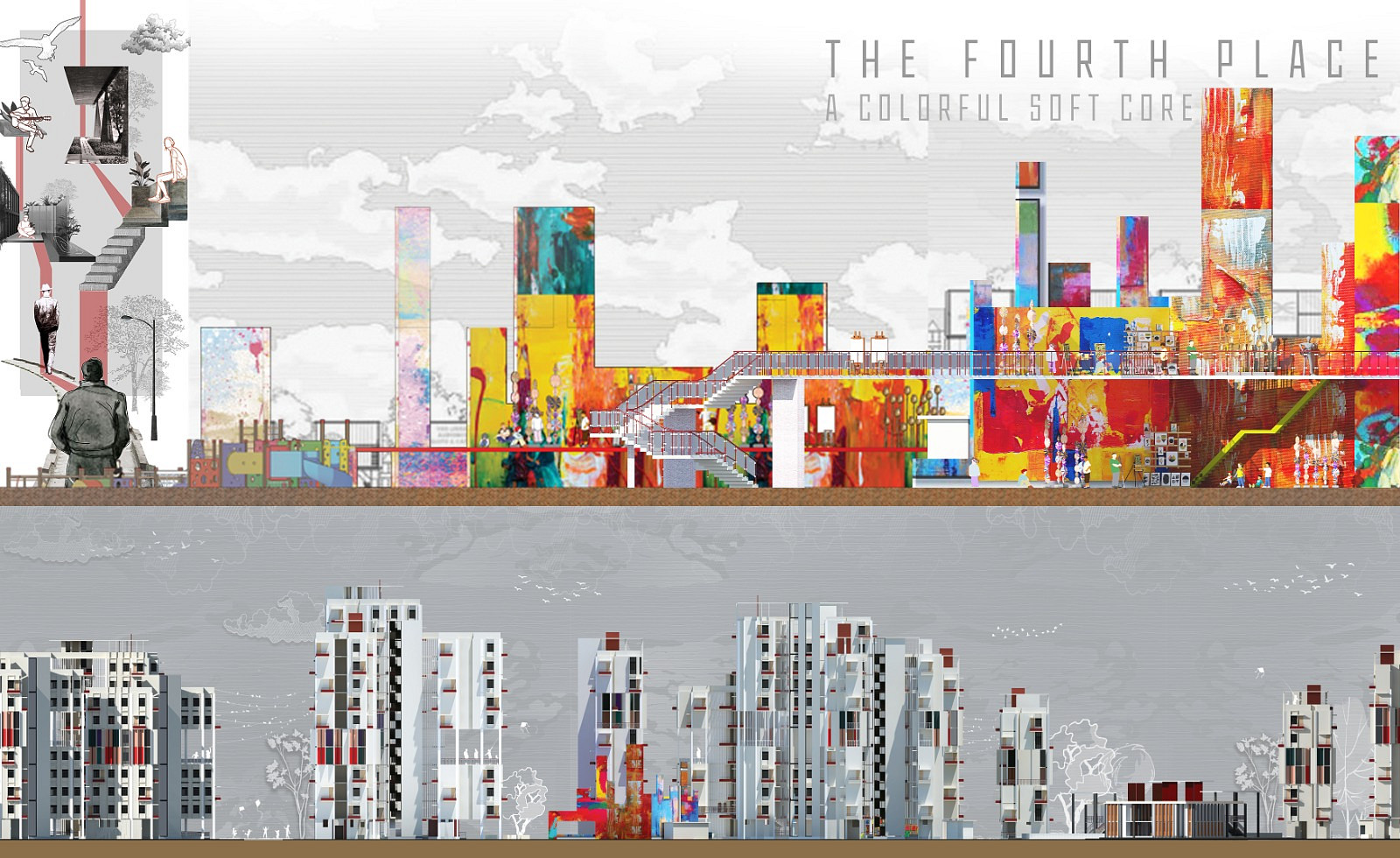
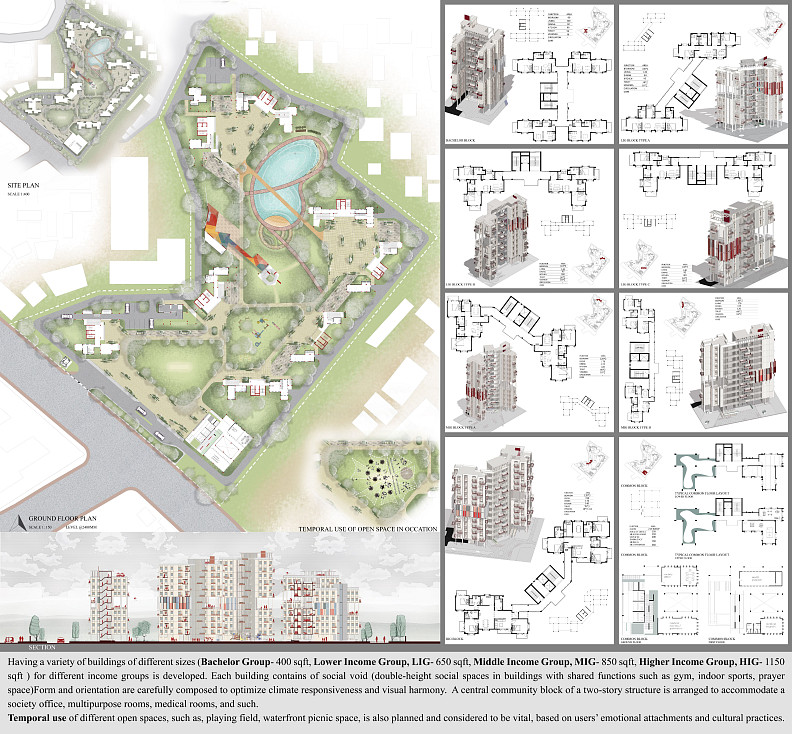
The proposal includes redesigned housing units, community spaces, pedestrian networks, landscape areas, social gathering spaces, recreational facilities, waterbody integration, and a flexible community space known as the Fourth Place. The final masterplan was shaped through continuous dialogue and collective decision making, ensuring that both physical and social needs were reflected in the design outcome.
Technical information
Project Type: Community Led Housing Design
Location: Khalishpur, Khulna, Bangladesh
Site Context:
Existing formal housing compound with aging residential blocks and insufficient accommodation capacity for current and future residents.
Design Methodology:
• Participatory design approach
• Community workshops and collaborative planning
• Storytelling and stakeholder interviews
• Model making and design charrettes
• Site observation and spatial analysis
• Iterative co creation and feedback integration
Key Design Components:
• Mixed income residential housing
• Adaptable housing unit configurations
• Community open spaces
• Pedestrian circulation network
• Social gathering and recreational spaces
• Community garden
• Waterbody restoration and integration
• Flexible Fourth Place for informal social interaction
Design Objectives:
• Strengthen community participation in housing design
• Improve spatial quality and livability
• Support social interaction and collective identity
• Accommodate diverse household structures
• Promote inclusive and sustainable community development
• Transform housing from a physical provision into a community driven living environment
Outcome:
A participatory housing framework and redevelopment proposal that integrates community knowledge into architectural decision making, creating a more inclusive, adaptable, and socially connected residential environment.
Documentation
Show PDF 1Show PDF 2Show PDF 3Show PDF 4Show PDF 5


Copyright © 2026 INSPIRELI | All rights reserved. Use of this website signifies your agreement to the Terms of Use, Privacy Policy, and use of cookies.