Bytový dom Bystrá

Project idea
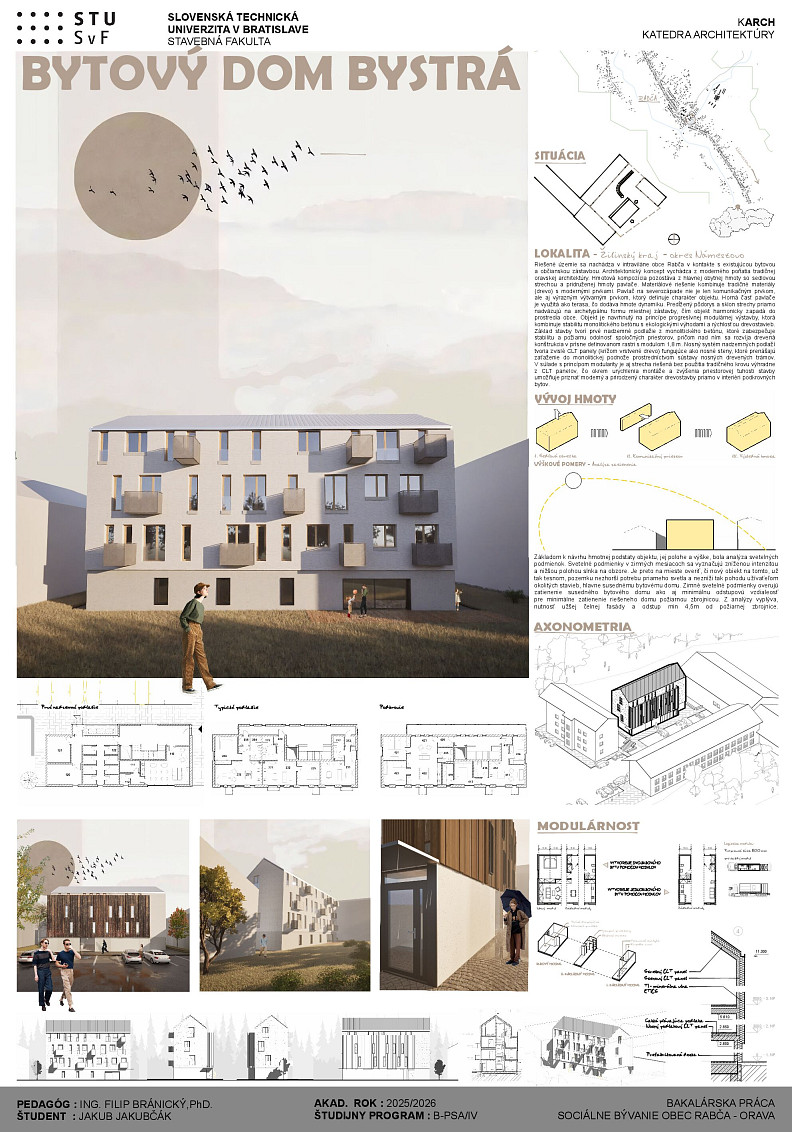
This Project focuses on the design of a rental apartment building in the Orava region, specifically in the village of Rabča. The main objective of the thesis is to create a social housing facility that sensitively responds to the historical and cultural context of Orava's vernacular architecture. The theoretical part analyzes the principles of traditional construction and the use of natural materials. The practical outcome is the architectural design of the "Bystrá" apartment building, which reinterprets these principles using progressive technologies, particularly the use of CLT panels and prefabrication. The design strictly applies the legislative limits of the State Housing Development Fund (ŠFRB), thereby demonstrating the project's economic and functional sustainability. The result is an energy-efficient building (energy class A0) equipped with a heat pump and a heat recovery system, which respects regional identity while providing high-quality housing for young families.
Project description
The topic of rental housing is currently widely discussed among both professionals and the general public. This situation is largely driven by the continuously increasing prices of real estate. At the same time, the development of digital technologies and remote work opportunities has led to a growing trend of people returning to rural areas. As a result, there is also an increasing demand for apartment housing in the countryside.
The Orava region of Slovakia, known for its rich building tradition and distinctive vernacular architecture, provides a unique foundation for exploring how contemporary architecture can be developed while maintaining respect for local heritage and traditional building practices. The aim of this bachelor’s thesis is to design a rental housing development in the centre of the village of Rabča, located in the northern part of the Orava region.
The thesis is based on the theory of applying, analysing, and reinterpreting the construction knowledge and principles of traditional master builders of the region. Particular attention is given to principles where functionality is closely connected with aesthetics, and where the use of timber and natural materials—which significantly influence the operational quality and sustainability of buildings—is considered a priority. These aspects also represent an important challenge in achieving the highest possible level of support from the State Housing Development Fund.
The proposed residential building, Bystrá, is therefore not only an architectural study but also an attempt to demonstrate the feasibility of sustainable and affordable housing through the use of progressive CLT (Cross-Laminated Timber) panels and renewable energy sources. The thesis is divided into an analytical section focused on the historical and territorial context, a legislative framework, and the final architectural and design proposal.
Technical information
Urban and Spatial Design
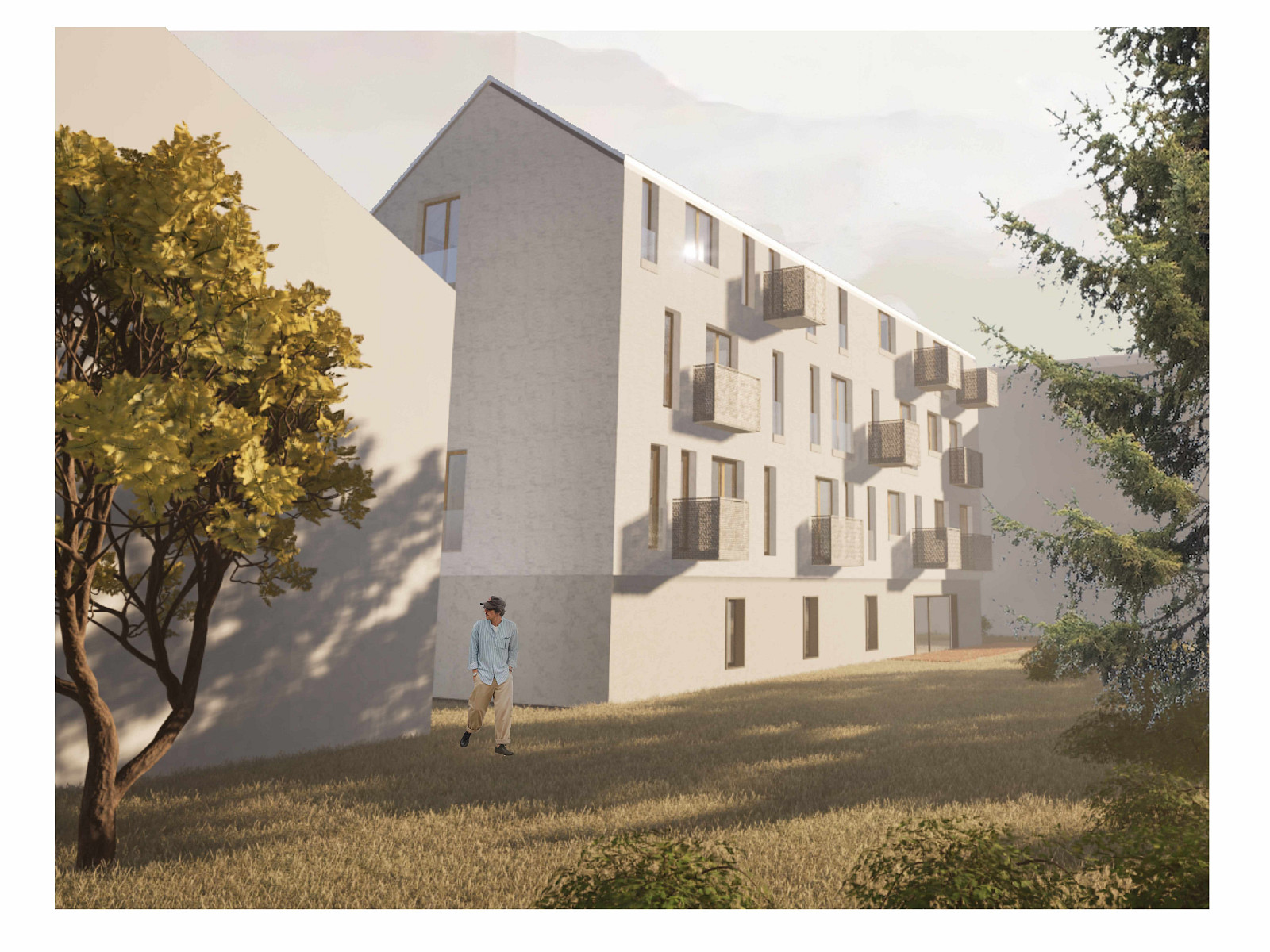
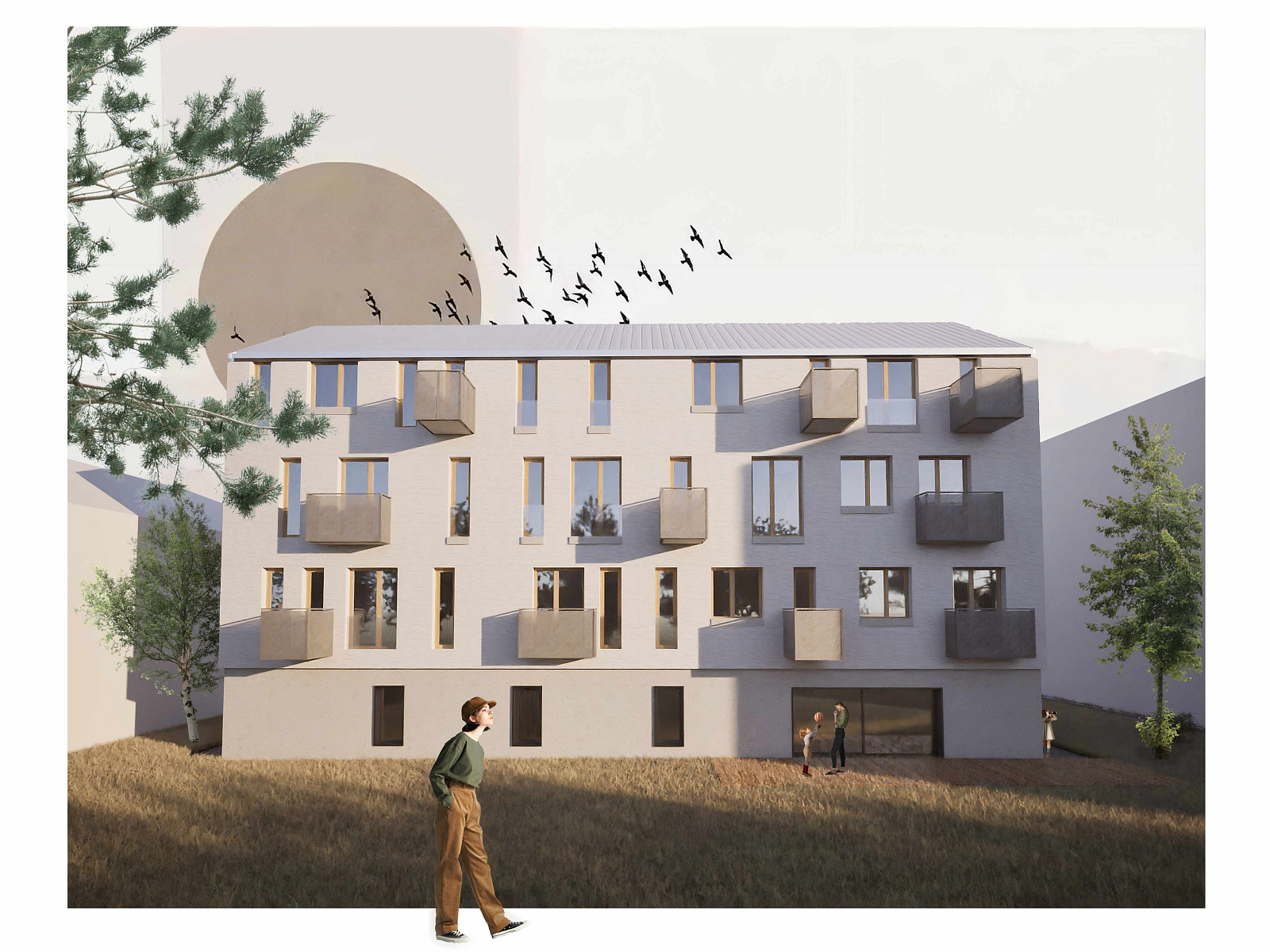
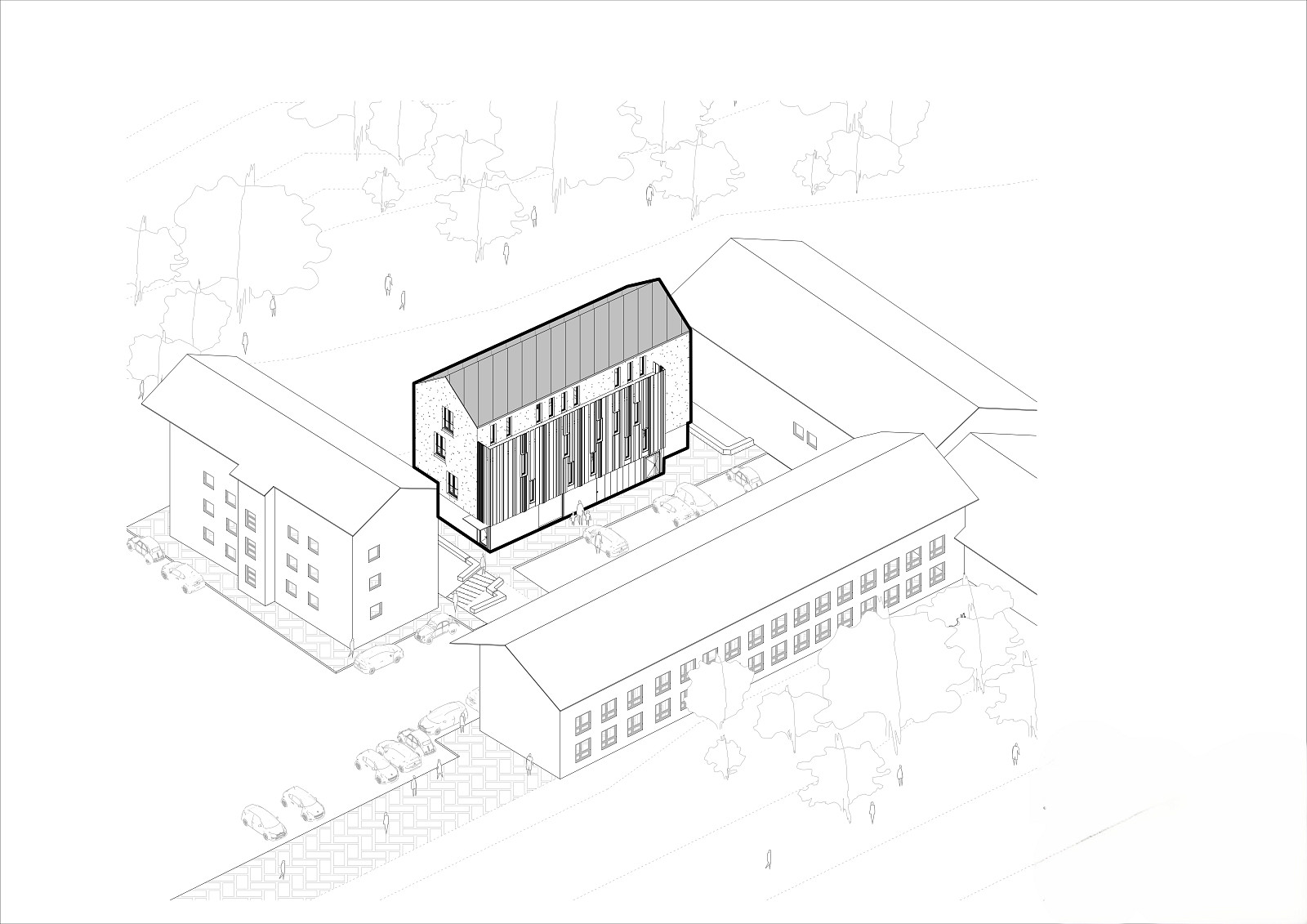
The proposal respects the surrounding development and responds to the daylight conditions of the site. The building is integrated into its context as a compact volume, with its longer façade oriented towards the southeast, allowing maximum utilization of direct sunlight for residential spaces. The building mass is positioned in a way that does not negatively affect the daylight conditions of the neighbouring apartment building. The height relationships and location of the building were verified through shadow analysis conducted for both winter and summer periods.
Architectural and Artistic Design
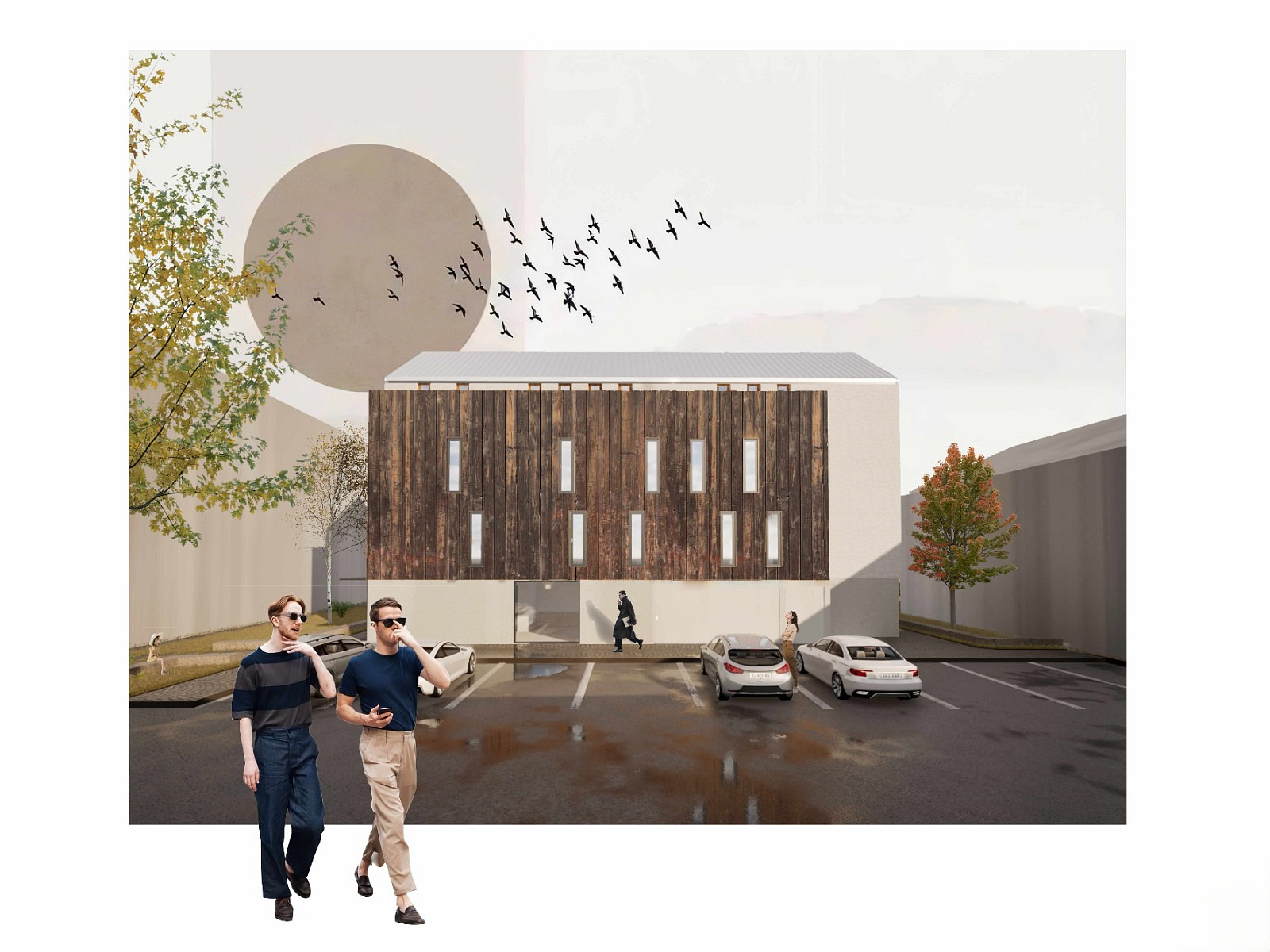
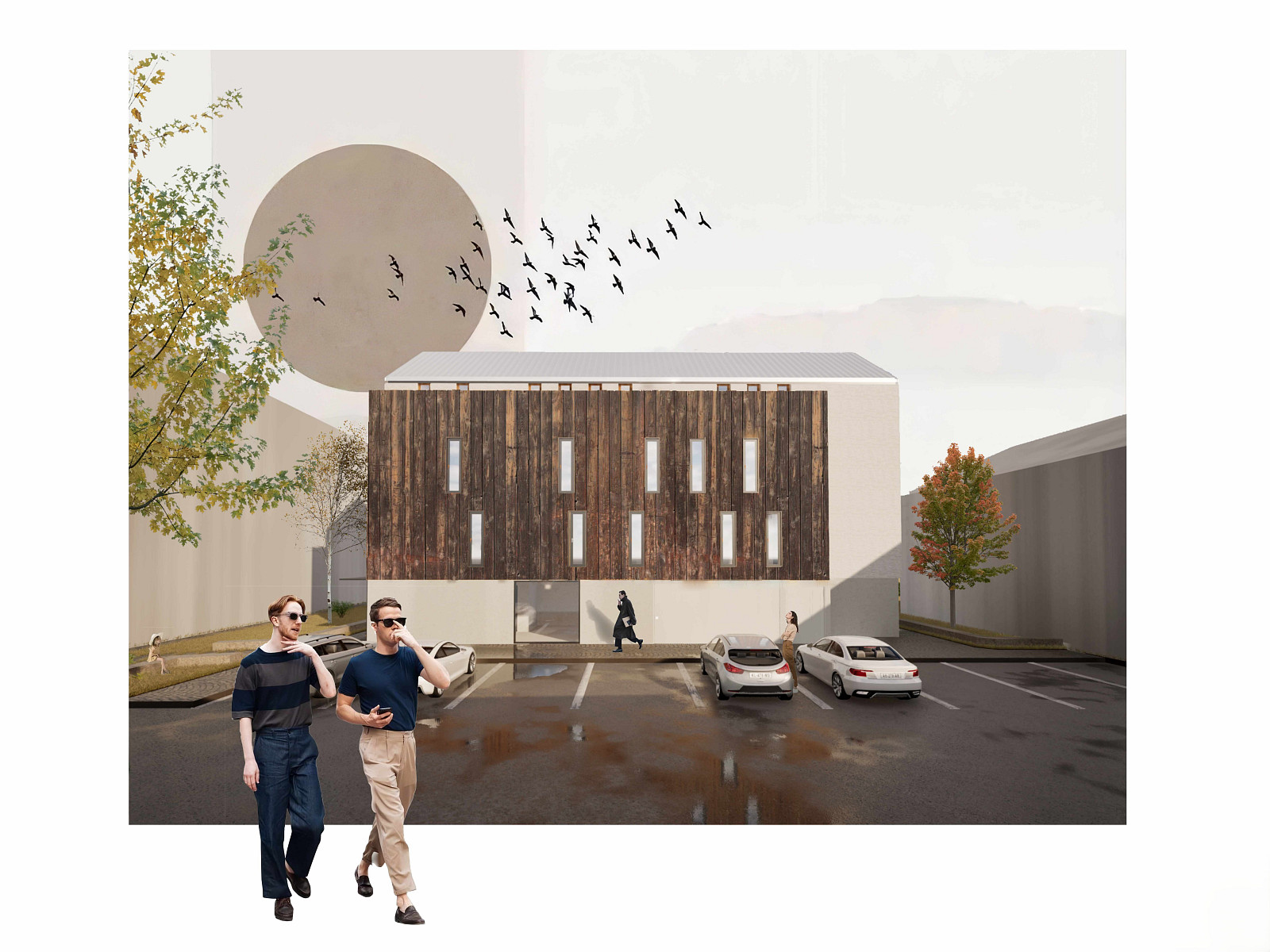
The architectural concept is based on a contemporary interpretation of traditional Orava architecture. The mass composition consists of a main residential volume with a pitched roof and an adjoining gallery-access volume. The material solution combines traditional materials, primarily timber, with contemporary architectural elements. The gallery on the northwest side serves not only as a circulation element but also as a distinctive architectural feature defining the character of the building. The upper part of the gallery is utilized as a terrace, adding dynamism to the overall massing. The elongated floor plan and roof pitch directly reference the archetypal form of local vernacular buildings, allowing the structure to harmoniously integrate into the village environment.
Functional Layout
The building is designed as a gallery-access apartment house with a clear functional organization.
Ground Floor (1st Above-Ground Floor):
The entrance level contains the foyer, communal and community spaces, and technical service facilities.
Typical Floors:
The upper floors accommodate one-bedroom, two-bedroom, and three-bedroom apartments accessed from an exterior gallery. All living spaces are oriented towards the sunny southeastern side.
Attic Floor:
The attic utilizes the space beneath the pitched roof to provide two above-standard apartments.
The layout minimizes unused circulation areas and maximizes usable floor space, while the gallery functions as both the circulation core and a transitional filter between public and private spaces. The floor plan follows a modular design approach and is composed of individual structural modules.
Structural Design
The building is designed according to the principles of progressive modular construction, combining the stability of monolithic concrete with the environmental benefits and construction efficiency of timber structures.
The foundation of the building consists of a monolithic reinforced concrete ground floor, providing structural stability and fire resistance for the communal spaces. Above this base, a timber structure is developed within a strictly defined structural grid with a module of 1.8 m.
The load-bearing system of the upper floors consists of vertical CLT (Cross-Laminated Timber) panels functioning as structural walls that transfer loads to the monolithic base through a system of timber beams. In accordance with the principle of modularity, the roof is designed entirely from CLT panels without the use of a traditional roof truss. This solution not only accelerates construction and increases the spatial rigidity of the building but also allows the modern and natural character of the timber structure to remain visible within the interiors of the attic apartments.
Documentation

Copyright © 2026 INSPIRELI | All rights reserved. Use of this website signifies your agreement to the Terms of Use, Privacy Policy, and use of cookies.