Sik-Fan 吃饭


Project idea
CÉNG (层) is a Malaysian Chinese Food Cultural Hub located at Jalan Changkat Bukit Bintang. The project aims to transform the street from a nightlife-oriented destination into a vibrant cultural and tourism hub that celebrates Malaysian Chinese heritage through food, community, and cultural experiences.
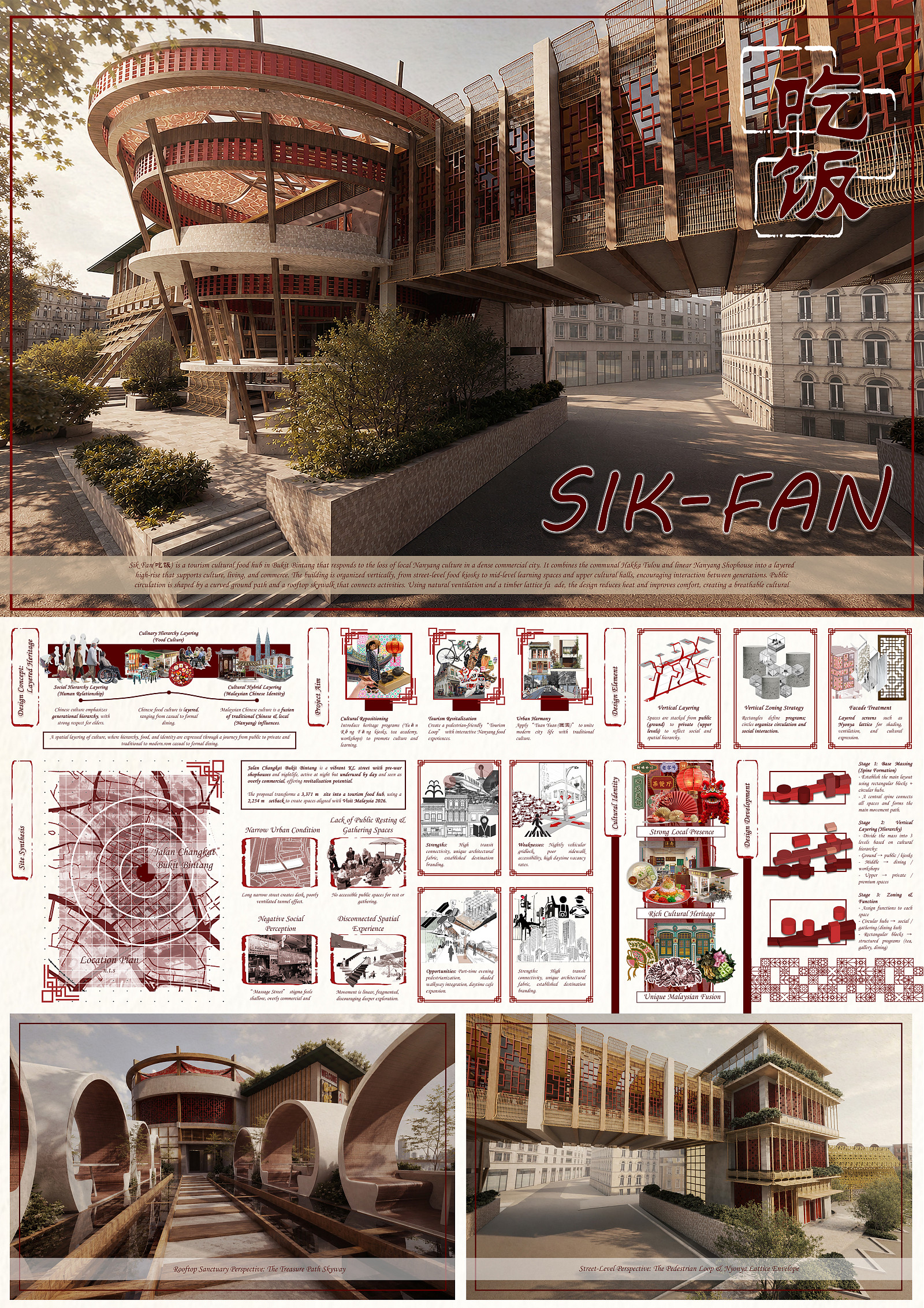
The design is guided by the concept of “Layering Culture,” which interprets the hierarchical nature of Chinese society, culinary traditions, and cultural evolution into architectural space. Through a series of layered experiences, the project creates a journey from public to private, informal to formal, and traditional to modern.
The development integrates food kiosks, dining spaces, tea and pastry academies, cultural galleries, workshops, and communal gathering areas to encourage learning, interaction, and cultural exchange. By combining traditional Chinese values with local Nanyang influences, the project creates a unique cultural identity that reflects the evolution of Malaysian Chinese heritage.
In response to the challenges of Jalan Changkat, including limited public space, lack of daytime activities, and negative social perception, CÉNG introduces a pedestrian-friendly environment that promotes social engagement, cultural appreciation, and urban revitalization. Ultimately, the project seeks to establish a meaningful destination where food, culture, and community come together to strengthen cultural identity and enrich the urban experience.
Project description
SIK-FAN (吃饭): Tourism Cultural Food Hub
Bukit Bintang is Kuala Lumpur’s primary commercial and entertainment district, but rapid urbanization has increasingly replaced local identity with generic high-rise developments and highly commercialized public spaces. As a result, the historic Nanyang Chinese community, traditional trades, and local food culture face gradual displacement. This project responds to this cultural erosion by creating a contemporary architectural intervention that reconnects people with heritage, community, and place.
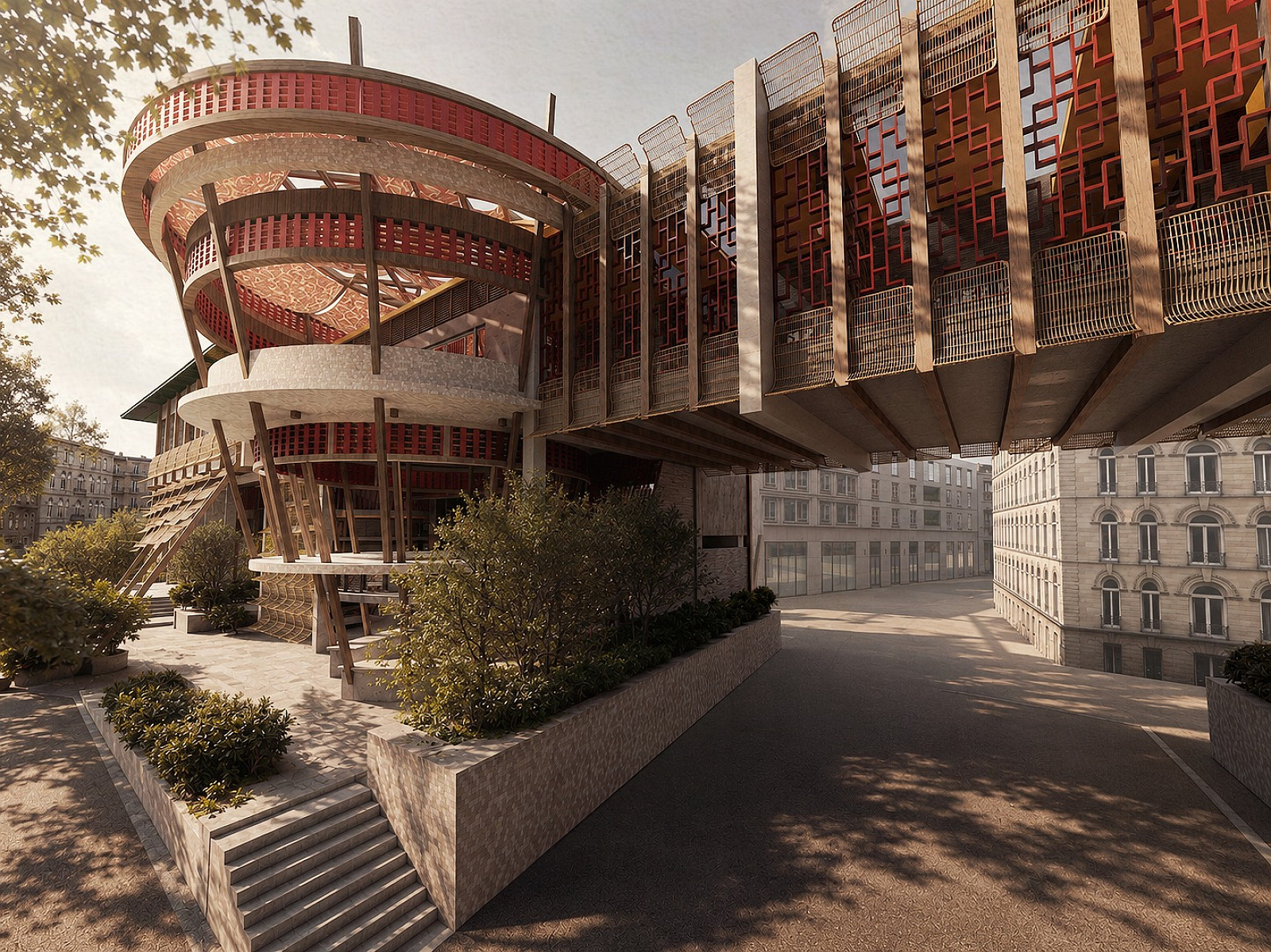
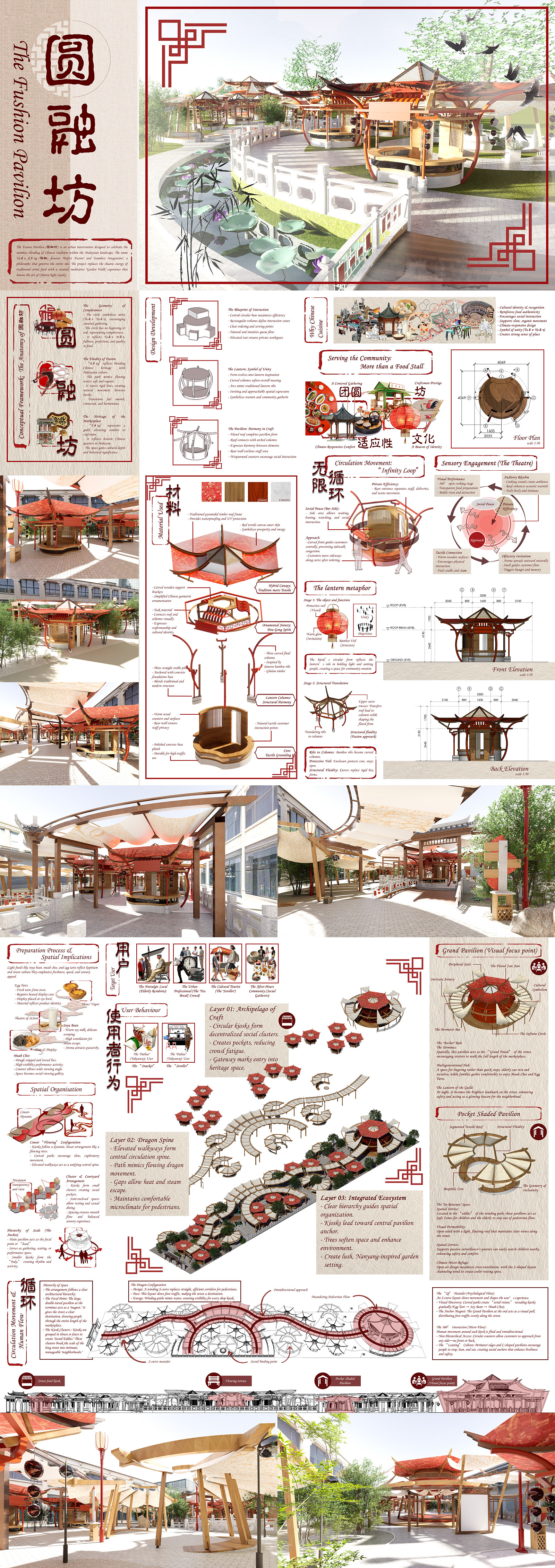
SIK-FAN (吃饭), meaning “to share a meal,” is conceived as a Tourism Cultural Food Hub on a narrow 210-metre-long urban site. Rather than preserving culture within a static museum, the project transforms heritage into an active and lived experience. The design combines two significant Chinese Malaysian typologies: the communal Hakka Tulou, known for its collective social spaces, and the climate-responsive Nanyang shophouse, recognized for its efficiency within dense urban environments. Together, they form a new vertical hybrid where dining, commerce, education, and cultural activities coexist.
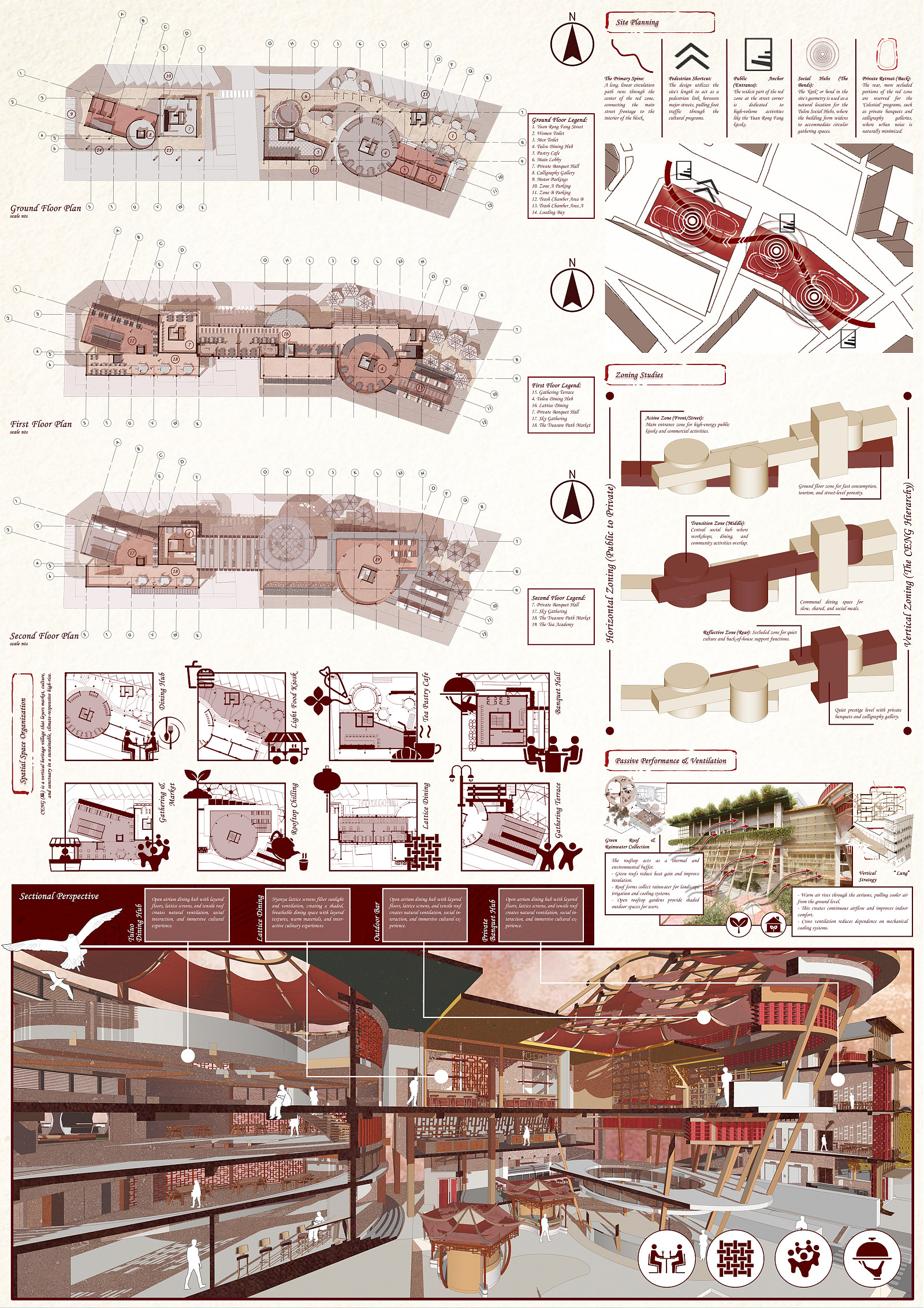
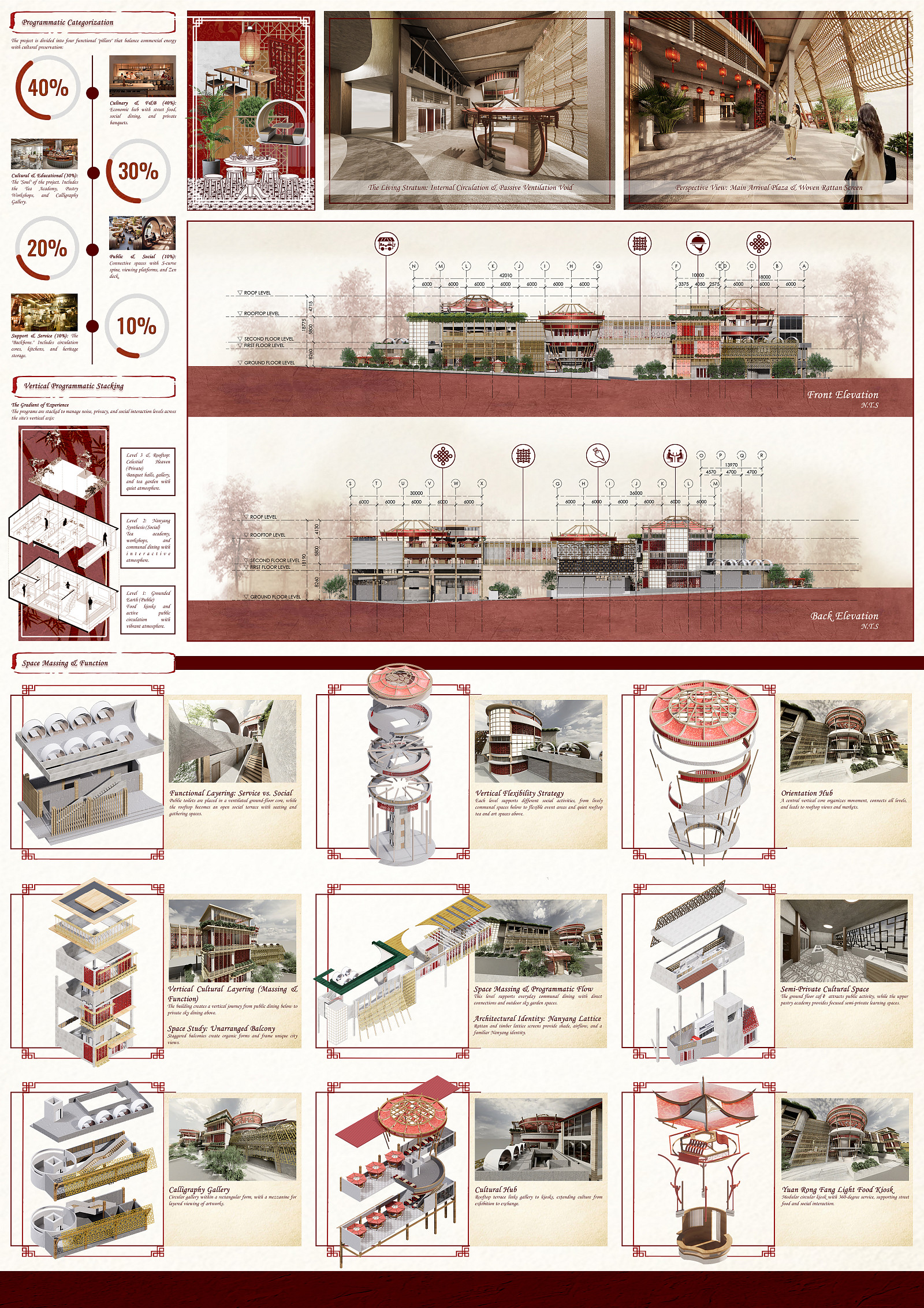
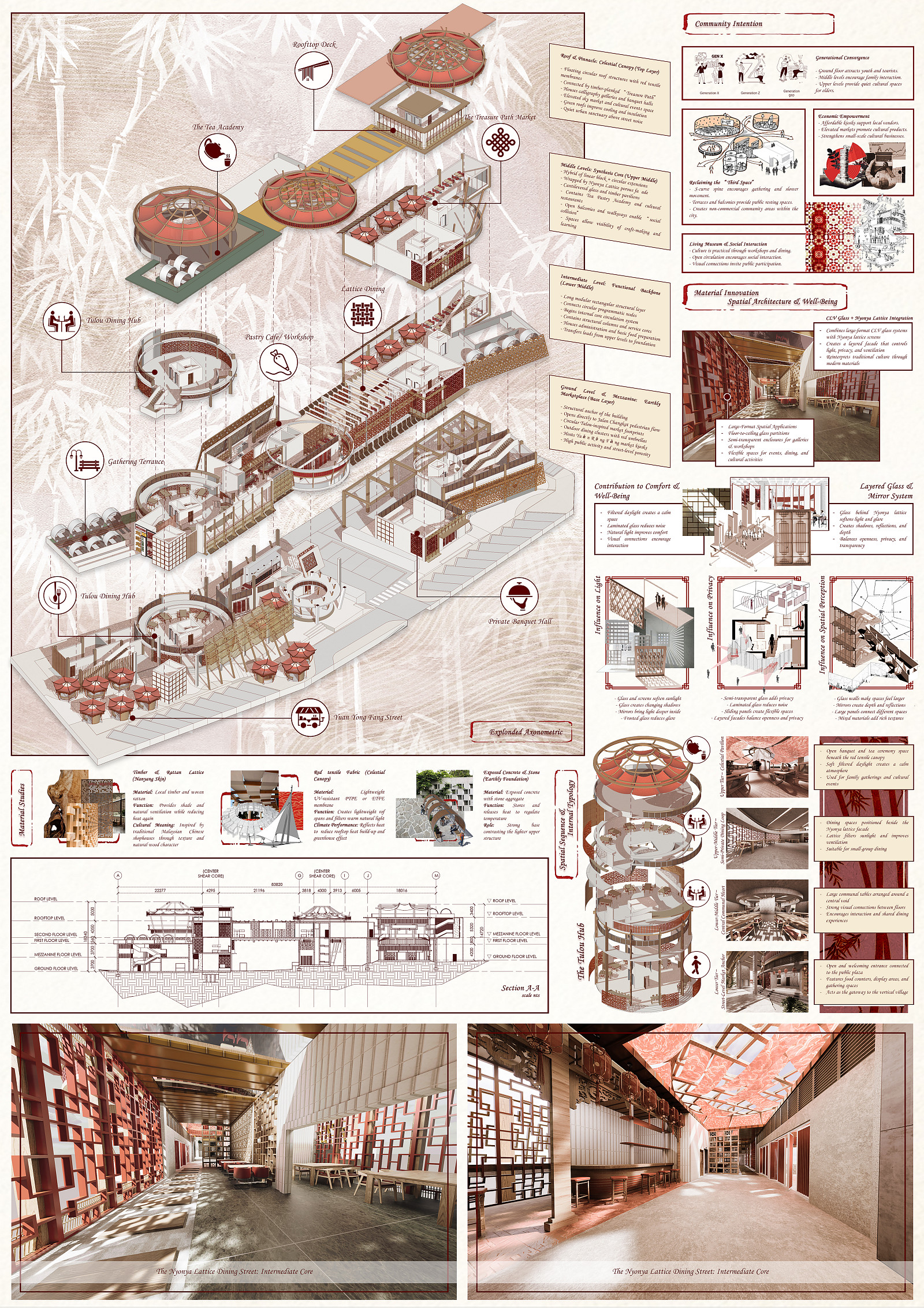
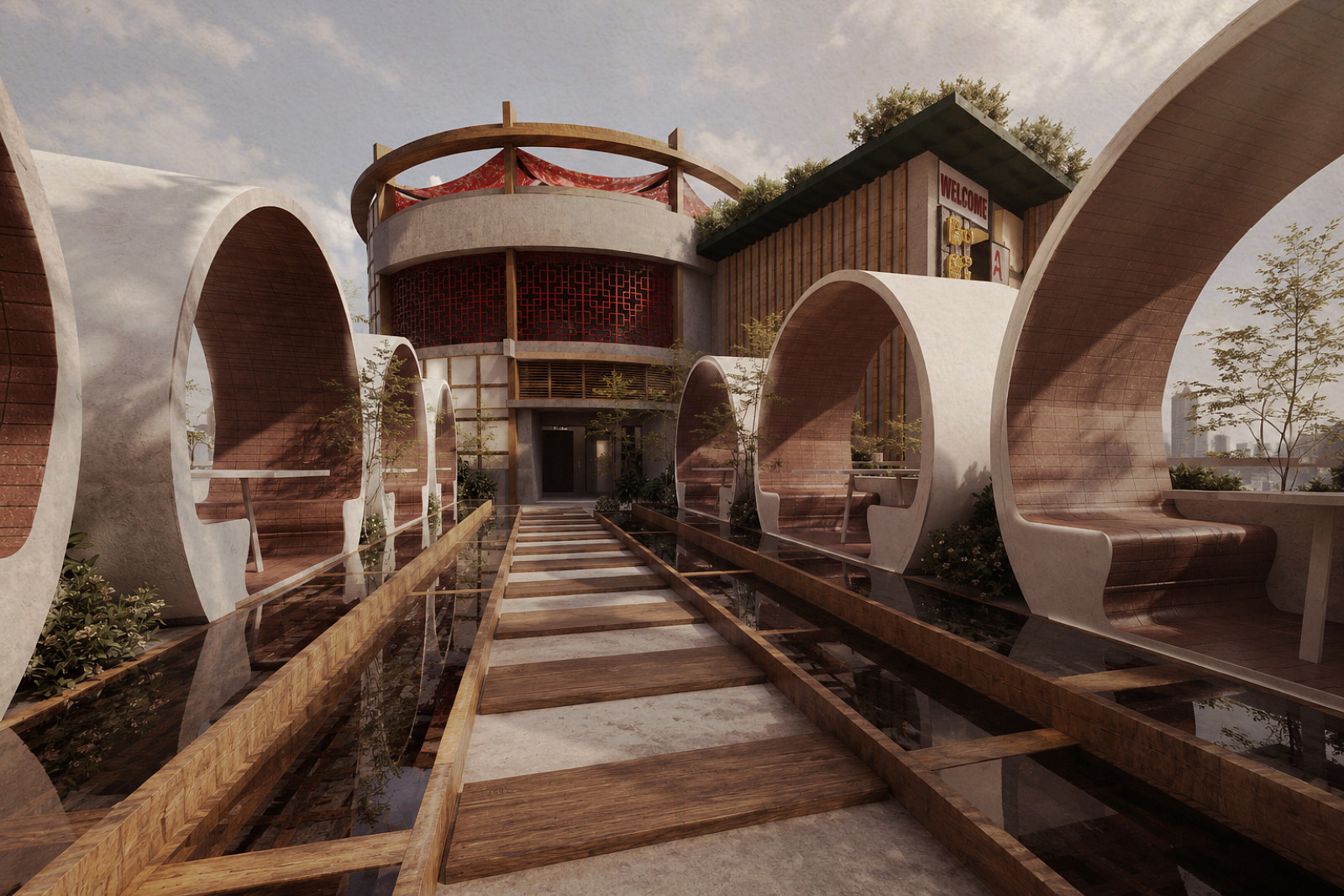
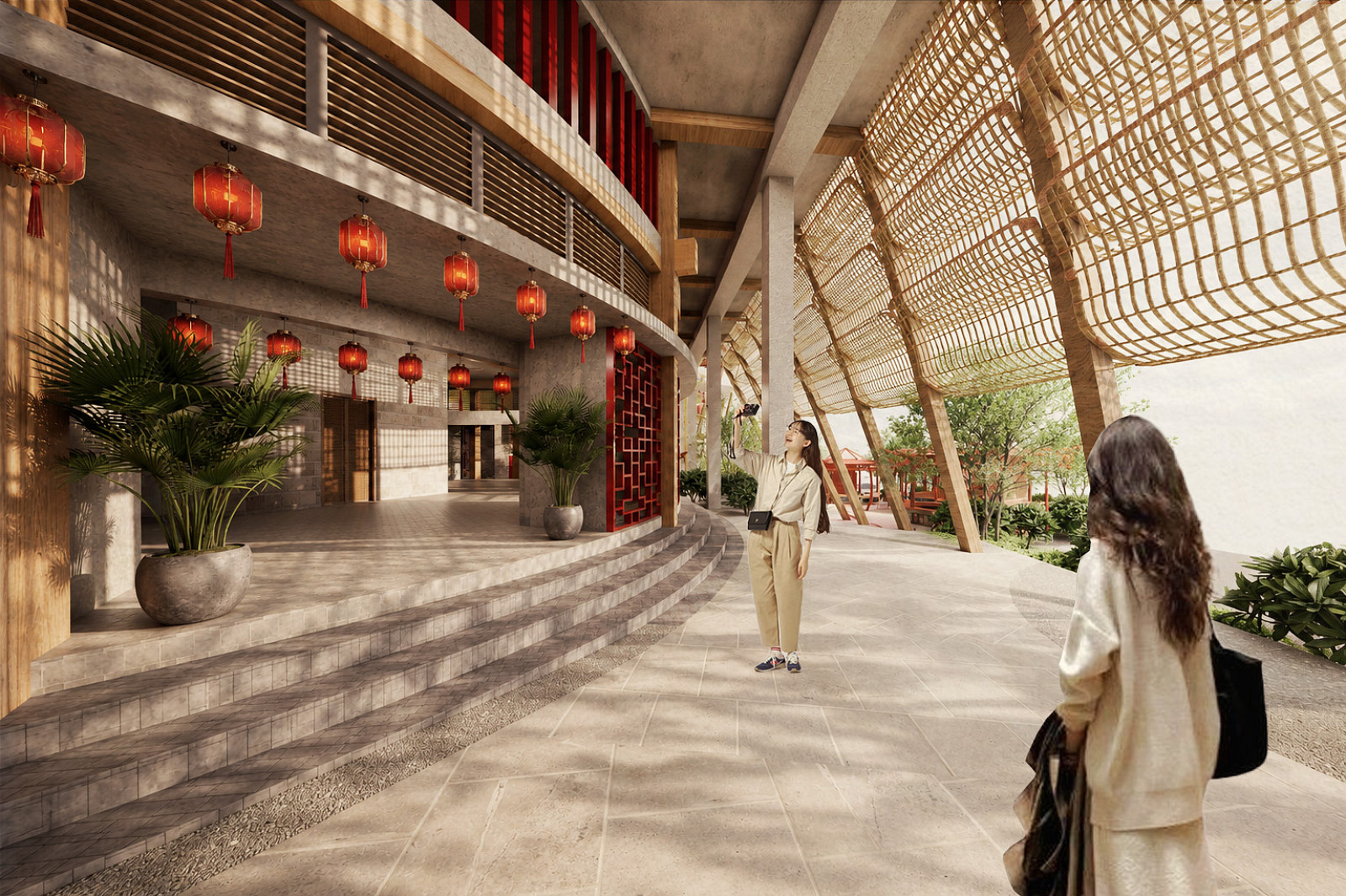
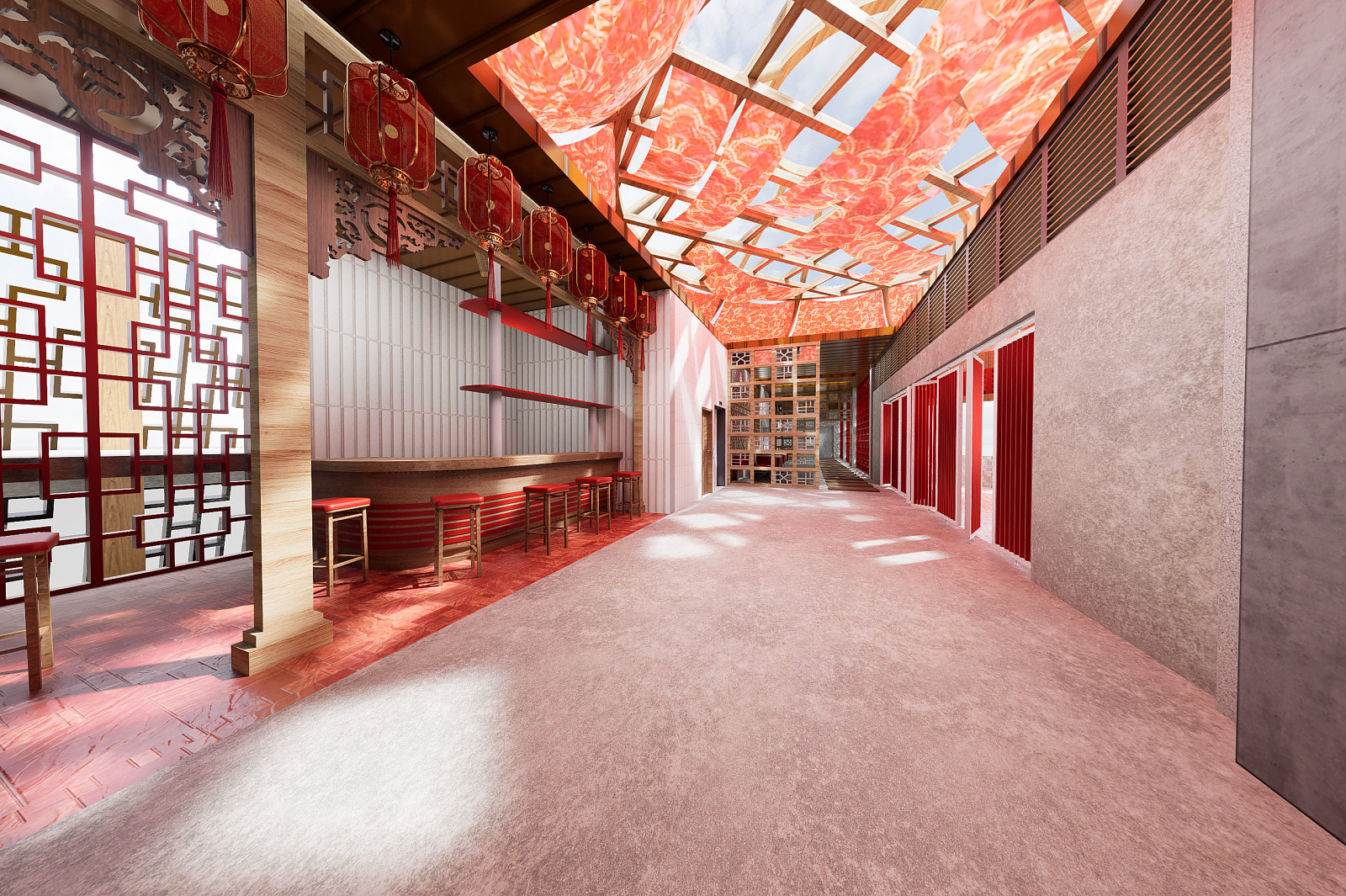
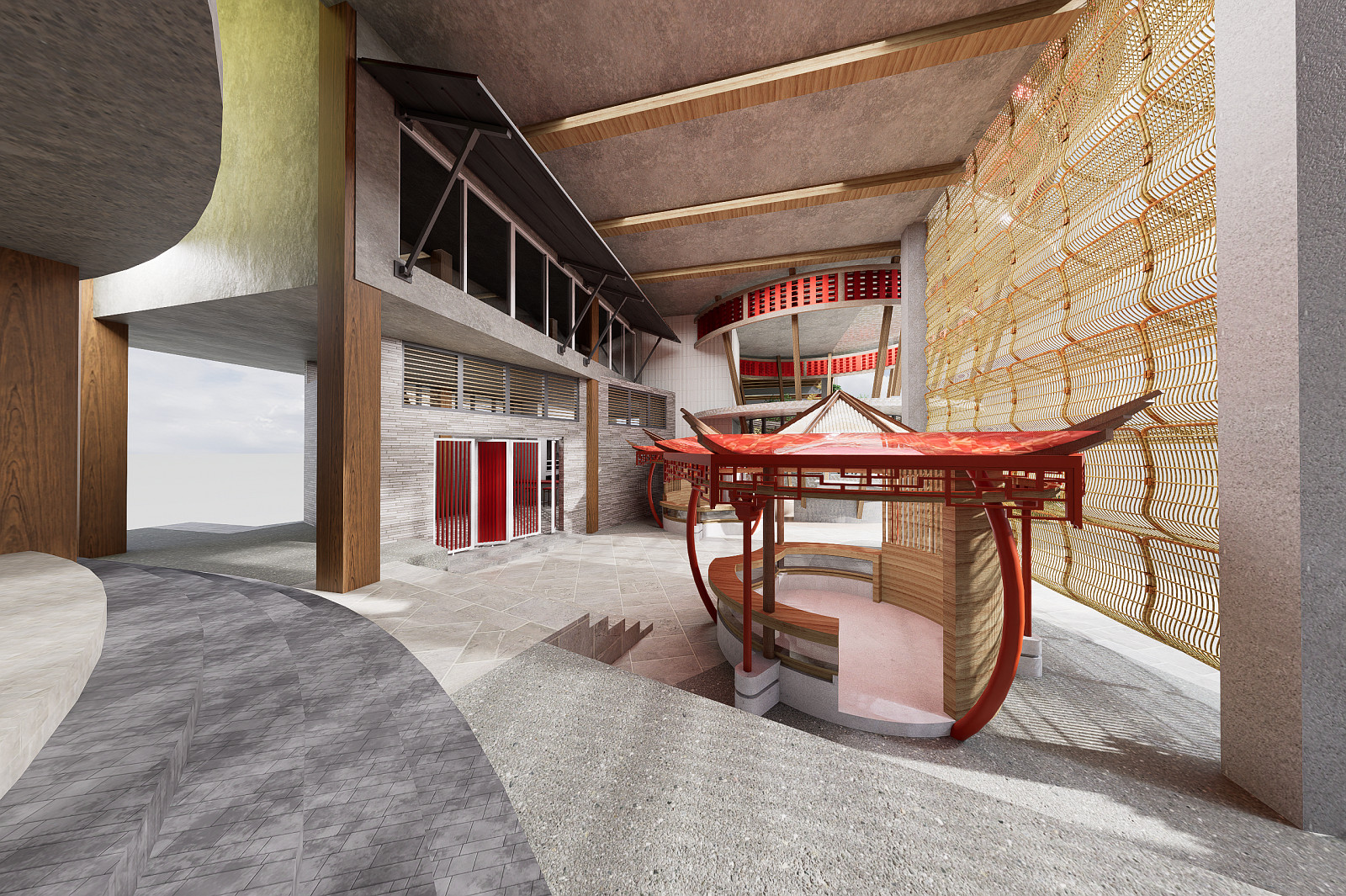
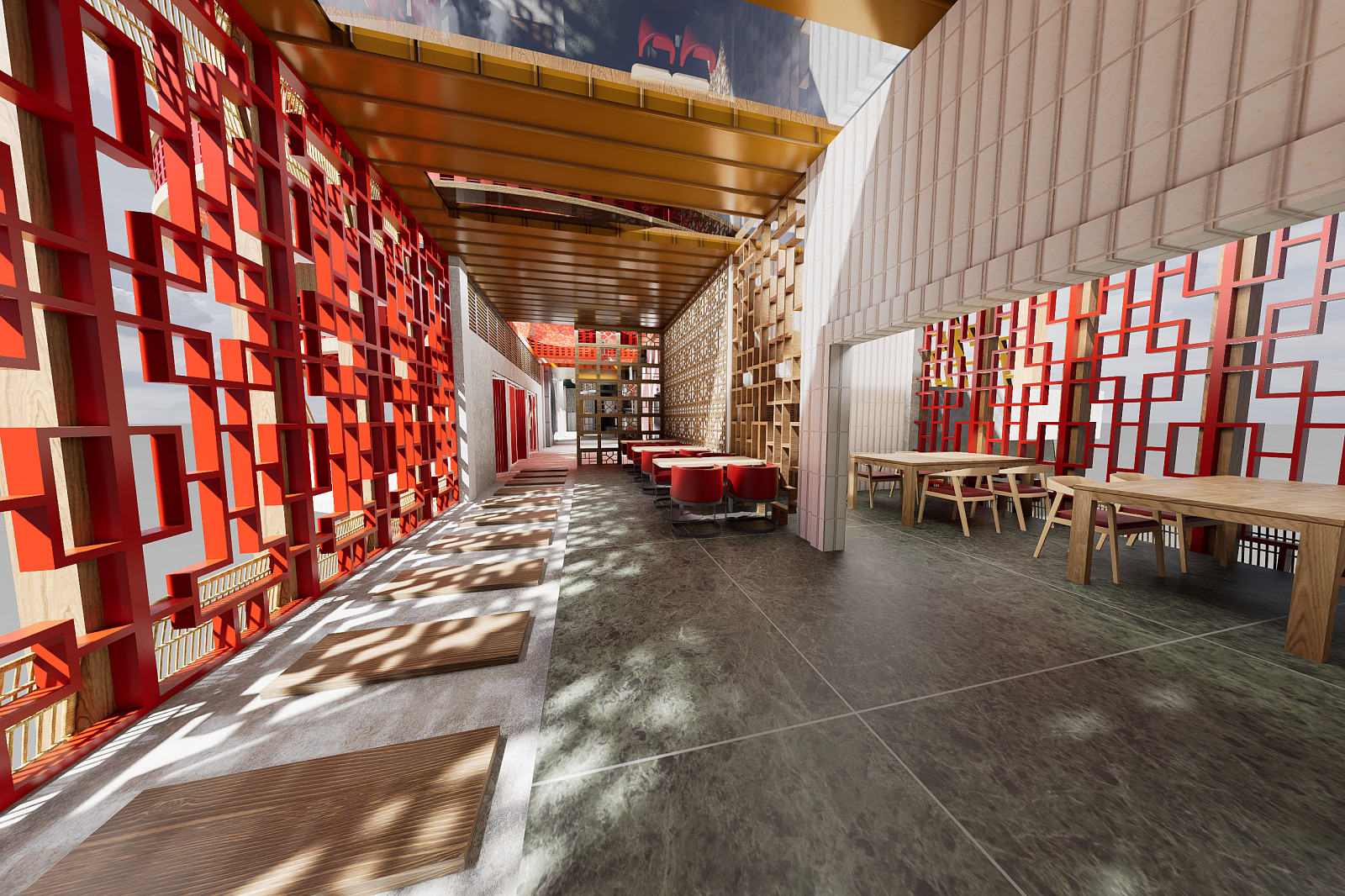
The building is organized into three spatial layers. The ground level serves as an open public marketplace connected by a winding S-Curve pedestrian spine, creating a vibrant social hub filled with food stalls and community activities. The first level forms the cultural heart of the project, accommodating artisan workshops, culinary academies, and communal dining spaces within a transparent “Living Museum” environment. Above, the second level provides a quieter sanctuary containing banquet halls, calligraphy galleries, meditation spaces, and elevated skywalk markets that celebrate cultural traditions and intergenerational connections.
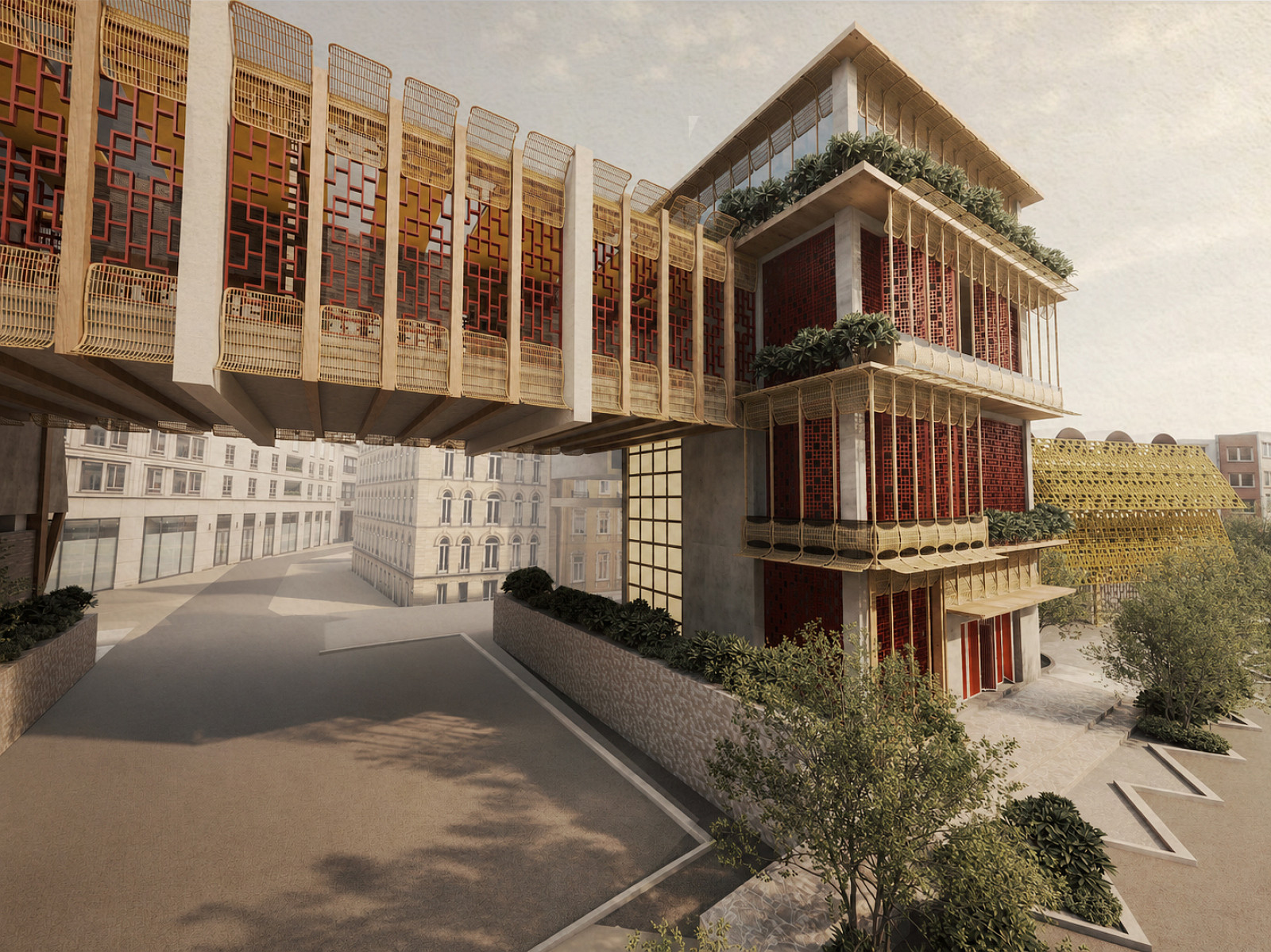
Environmental sustainability is integrated throughout the design. An adaptive Nyonya lattice façade combines timber, rattan, and high-performance glazing to reduce heat gain while filtering natural daylight. Central Tulou-inspired voids act as a vertical passive lung, promoting natural ventilation through the stack effect. The project also prioritizes locally sourced timber, rattan, and recycled brick to reduce embodied carbon and strengthen connections to local craftsmanship.
More than a building, SIK-FAN is a vision for cultural resilience in the modern city. By reinterpreting traditional Chinese Malaysian architecture into a contemporary vertical community, the project demonstrates how heritage, sustainability, and urban density can coexist, creating a vibrant place for gathering, learning, and belonging in the heart of Kuala Lumpur.
Technical information
The project CÉNG (层) is a mixed-use cultural food hub located at Jalan Changkat Bukit Bintang, designed as a vertical, layered architectural system responding to a dense tropical urban context. The building adopts a reinforced concrete structural frame combined with modular spatial grids to support flexible programmatic stacking, including food kiosks, dining spaces, cultural workshops, galleries, and rooftop public dining areas.
The architectural envelope integrates a dual-layer facade system consisting of CLV (Coated, Laminated, and Vitreous) glass assemblies and a Nyonya-inspired timber lattice screen. This system provides solar shading, thermal insulation, and controlled natural ventilation while maintaining visual permeability. Large-format glass panels and sliding systems are used to create adaptable interior partitions, allowing spaces to transition between open public interaction and enclosed private functions.
The building is organized through a vertical circulation core and distributed stair systems, ensuring efficient movement across multiple program layers. The design incorporates passive environmental strategies including cross-ventilation through central voids, stack-effect air movement via cylindrical atrium spaces, and rooftop green systems for thermal regulation and rainwater harvesting.
Sustainable material strategies prioritize locally sourced timber, rattan, recycled brick, and low-emission construction materials to reduce embodied carbon. Overall, the technical system supports a climate-responsive, flexible, and culturally integrated architecture, aligning structural performance with the conceptual framework of layered cultural experience.

Copyright © 2026 INSPIRELI | All rights reserved. Use of this website signifies your agreement to the Terms of Use, Privacy Policy, and use of cookies.