
SILENT TRACES (Visitor center)


 Ing. Kristína Hanesová
Project idea
Silent Traces is a project that seeks to preserve and reinterpret the unique cultural and architectural heritage of the abandoned village of Dereiçi. Rather than reconstructing the lost settlement, the proposal embraces its existing ruins as authentic witnesses of history and collective memory. The project is based on three fundamental principles: heritage protection, sensitive integration, and sustainable development.
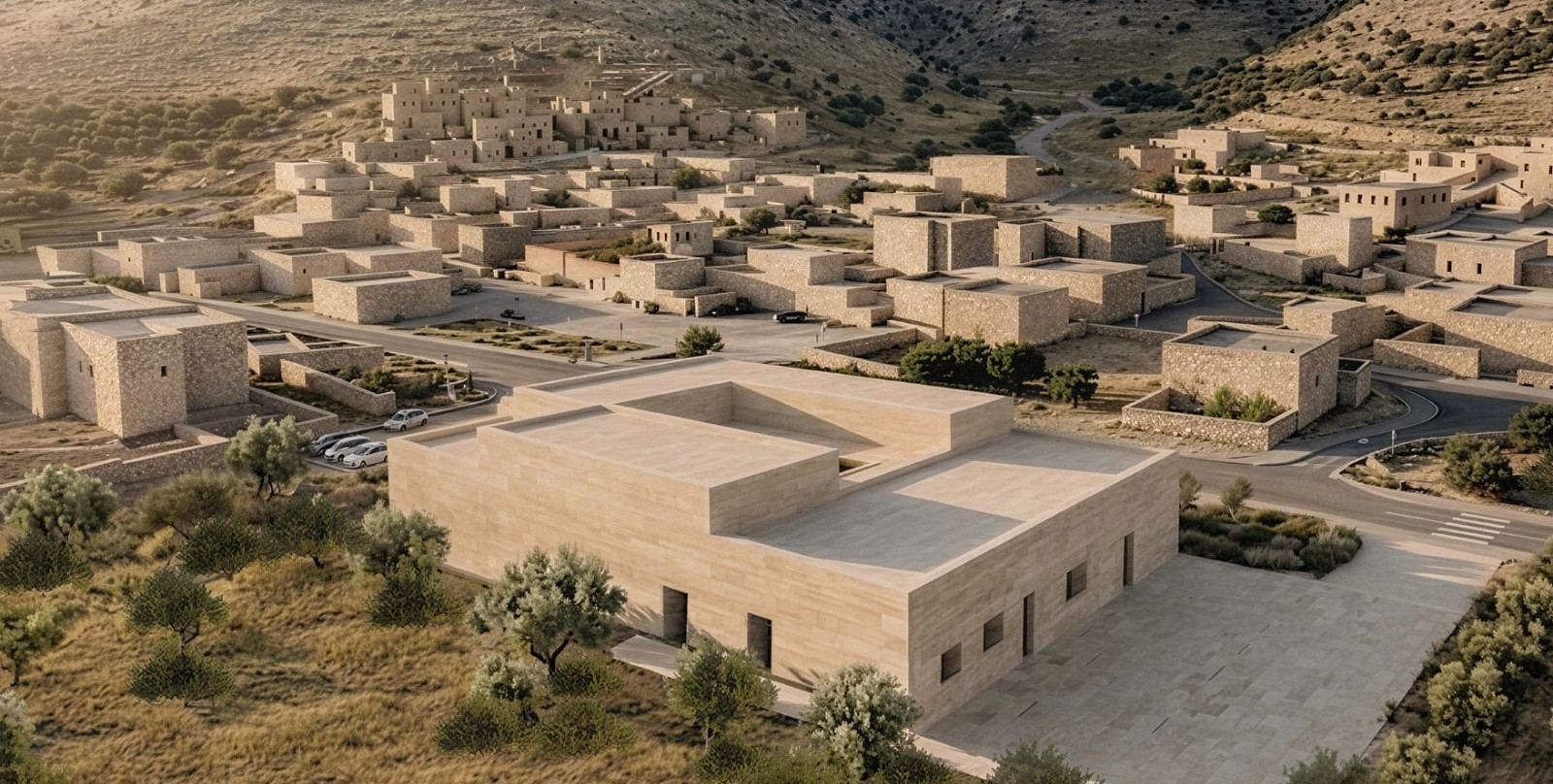
The visitor center is conceived as a contemporary intervention that respectfully coexists with the historic environment. Its architecture guides visitors through a sequence of spatial experiences based on perception, discovery, contemplation, and reflection. The proposal aims to reconnect people with the history of the village while creating a meaningful dialogue between the past and the present.
Project description
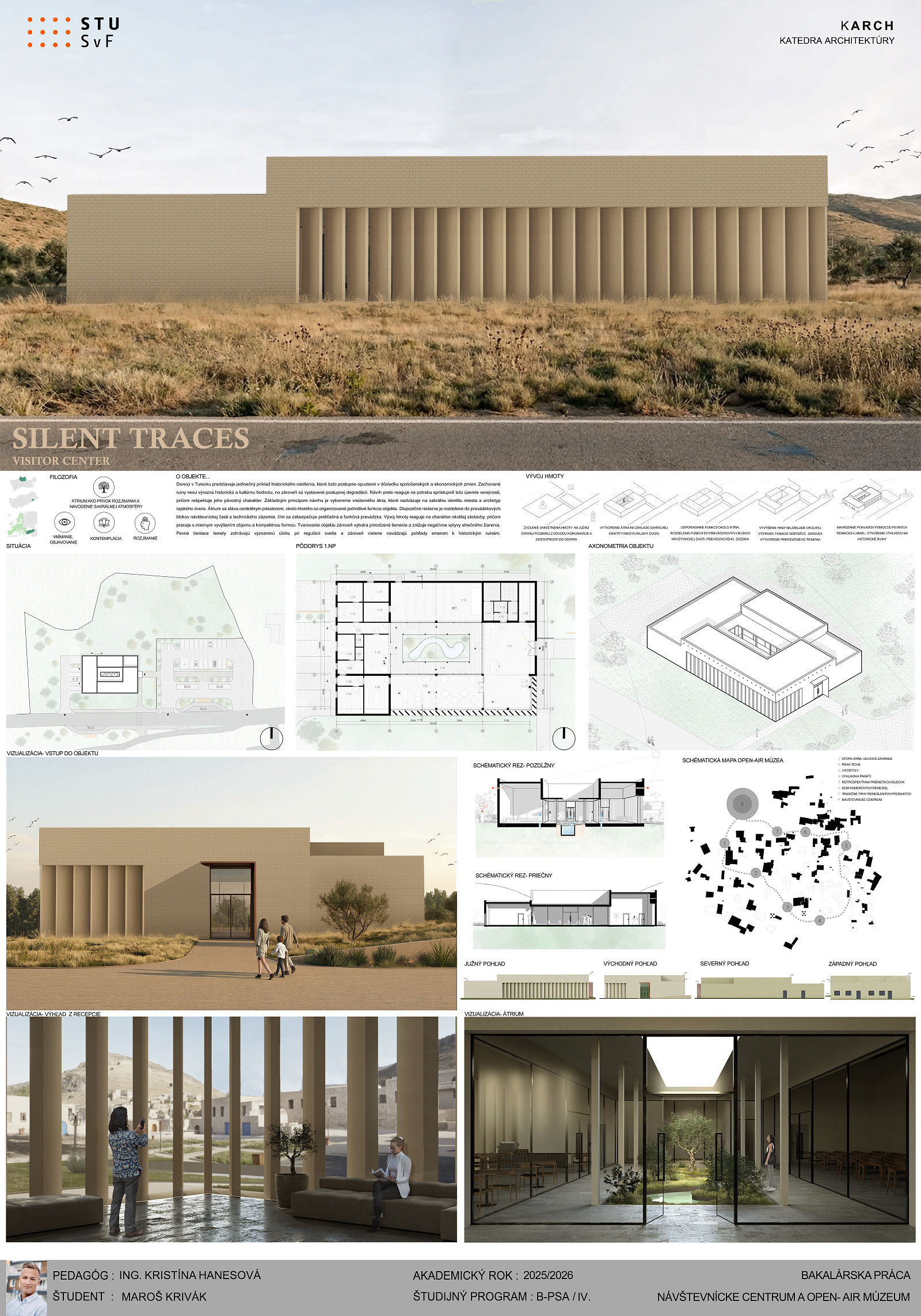
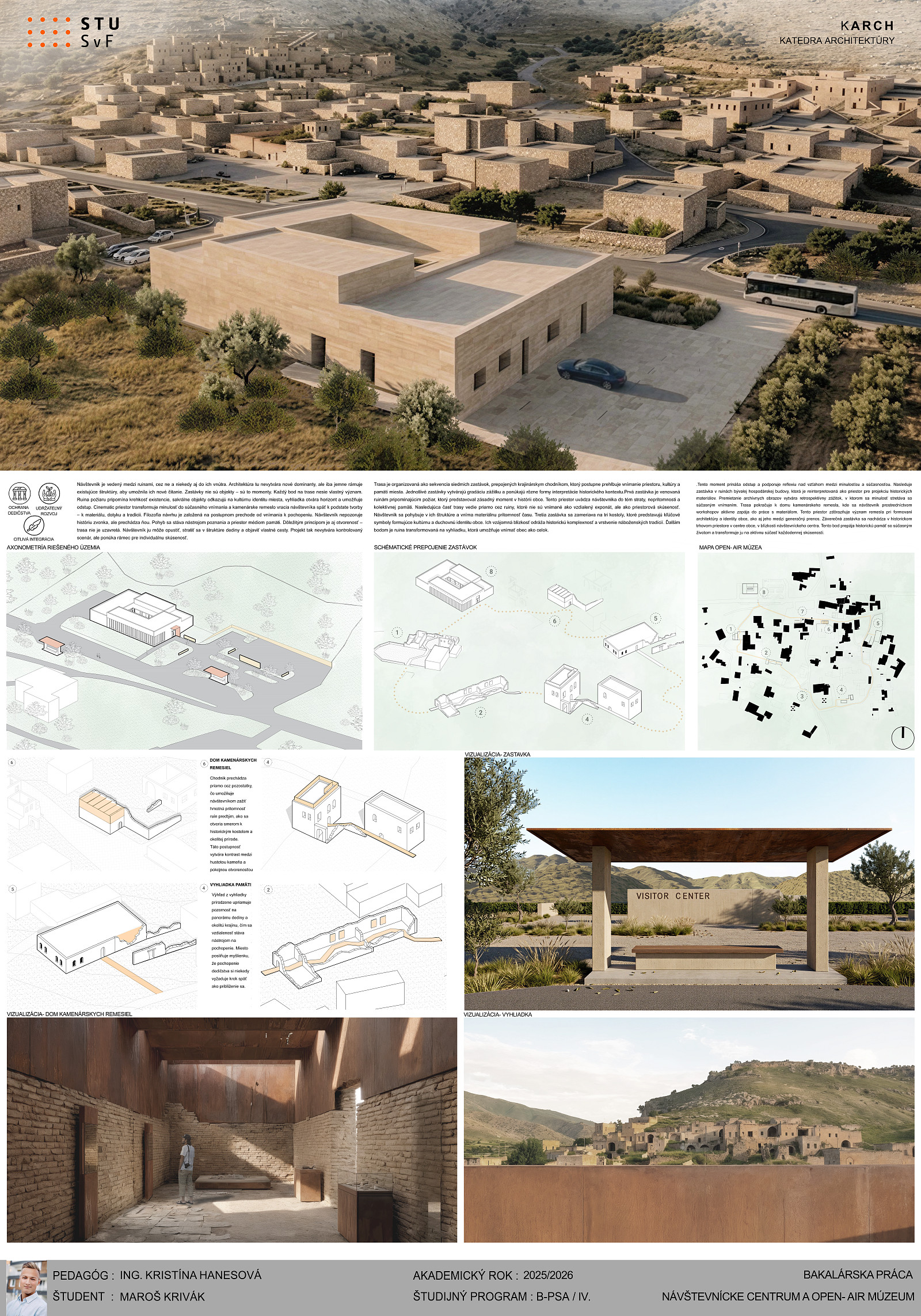
The project consists of a visitor center and an open-air museum route integrated into the historic structure of Dereiçi. The visitor center serves as the main information and interpretation point for visitors, providing exhibition spaces, visitor facilities, and areas for education and cultural activities.
The building is organized around a central courtyard inspired by the archetype of the paradise garden and the spiritual identity of the site. The courtyard becomes a place of calm and contemplation, while the surrounding spaces accommodate visitor and operational functions.
The open-air museum is designed as a continuous narrative route composed of seven thematic stations. These include memorial ruins, historic churches, viewpoints, an open-air cinematic space, a stonecraft workshop, and a historical marketplace. Together, these interventions create a spatial experience that allows visitors to engage directly with the village, its architecture, and its history.
Technical information
The building features a flat roof and incorporates passive environmental strategies. Thermal comfort is achieved through thick wall construction, fixed external shading louvers, a central courtyard with water features and vegetation, and an underground passive cooling system that supplies naturally cooled air into the interior. Rainwater is collected in underground storage tanks and reused for landscape irrigation.
The project emphasizes sustainability, energy efficiency, and the use of local materials while respecting the historical and environmental context of the site.
Documentation

Copyright © 2026 INSPIRELI | All rights reserved. Use of this website signifies your agreement to the Terms of Use, Privacy Policy, and use of cookies.