Beyond Space- National Museum of Natural history, Delhi-India


Project idea
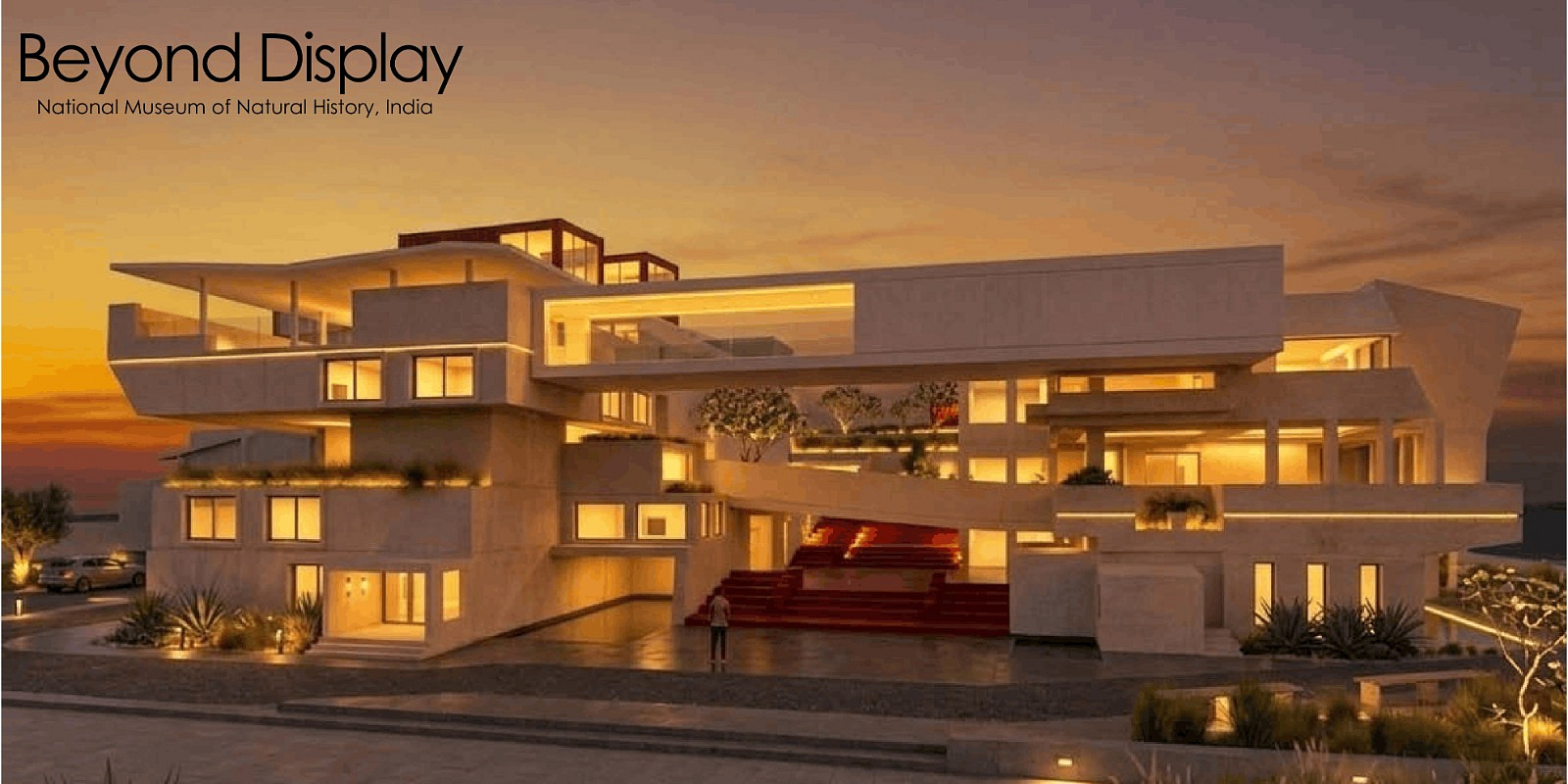
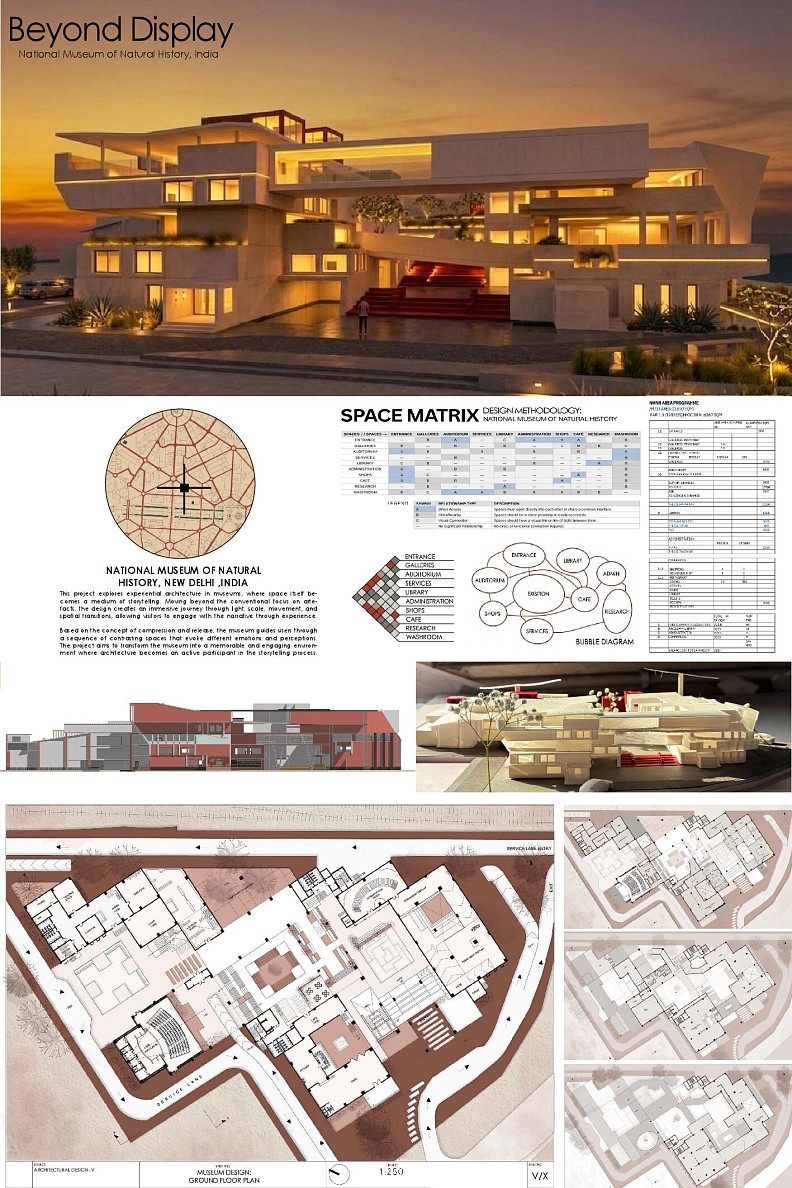
The project envisions a National Museum of Natural History as an immersive and experiential learning environment where architecture becomes a medium for storytelling. Rather than functioning as a conventional museum of static displays, the design creates a continuous journey that engages visitors through space, light, movement, and sensory experiences. Inspired by the need to strengthen public awareness of nature, biodiversity, and environmental conservation, the museum aims to transform learning into an interactive and memorable experience.
The architectural concept is based on a seamless circulation system that guides visitors through a narrative of natural history across multiple levels. Features such as sensory transition spaces, interconnected exhibition galleries, visual bridges, courtyards, and sustainable design elements encourage exploration, curiosity, and engagement. The project seeks to create a landmark cultural institution that not only preserves and exhibits knowledge of the natural world but also fosters environmental consciousness and a deeper connection between people and nature.
Project description
The National Museum of Natural History is designed as an experiential and educational institution that integrates exhibition, research, conservation, and public engagement. The project comprises five levels of permanent and temporary exhibition galleries connected through a continuous ramp system, creating a seamless narrative journey through the history of the natural world. The museum includes immersive exhibition spaces, a 500-seat auditorium, library and research facilities, educational and interactive learning zones, administrative offices, retail and dining spaces, and public gathering areas.
The design emphasizes sensory engagement through spatial transitions, varying volumes, visual connections, bridges, courtyards, and landscaped open spaces. The museum functions not only as a repository of natural history but also as a platform for environmental awareness, scientific learning, and community interaction. The architecture responds to its context by framing views towards Purana Qila while creating a memorable visitor experience that encourages exploration and discovery
Technical information
The museum is planned as a multi-level reinforced concrete and steel composite structure with large-span exhibition halls and interconnected bridges. A continuous ramp-based circulation system provides universal accessibility and connects all gallery levels in a closed-loop movement pattern. The building incorporates double-basement parking and service areas, dedicated loading and storage facilities, administrative and research zones, and public amenities.
The design integrates sustainable strategies including green walls, solar chimneys, building-integrated photovoltaic (BIPV) glazing, courtyards, water bodies for passive cooling, and optimized daylighting through controlled glazing systems. North-facing functions such as offices and library receive diffused natural light, while exhibition spaces utilize controlled daylight and artificial lighting systems to ensure appropriate display conditions. The building is designed to enhance energy efficiency, thermal comfort, and environmental performance while supporting the operational requirements of a contemporary museum.
Documentation
Created in:


Copyright © 2026 INSPIRELI | All rights reserved. Use of this website signifies your agreement to the Terms of Use, Privacy Policy, and use of cookies.
