city quarter, Trnava


Project idea
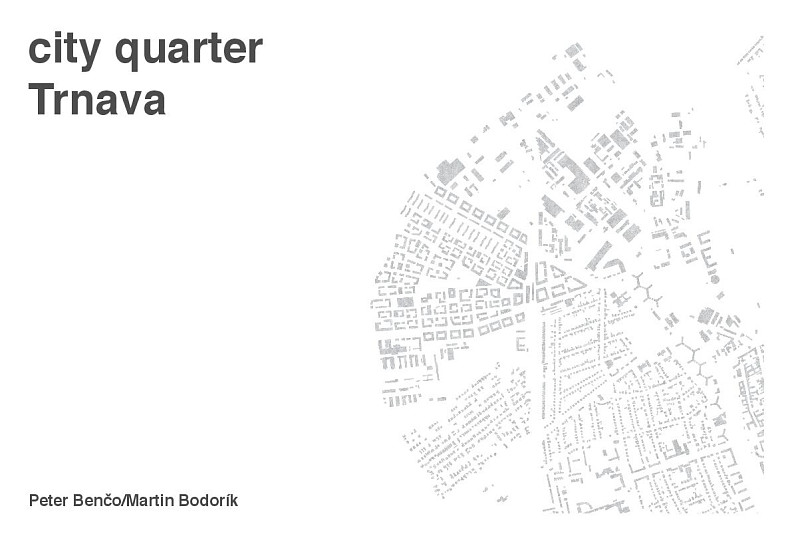
Context & Location: The project addresses a currently undeveloped perimeter area on the northeastern edge of Trnava, bordered by industrial zones, a railway line, and heavy traffic roads. The design aims to transform these existing infrastructural barriers into positive development elements.
The Core Idea: Moving away from standard suburban housing sprawl, the project introduces a highly sustainable, fully-fledged urban district. The core vision is based on Transit-Oriented Development (TOD), initiated by the strategic relocation of the existing railway station closer to the site.
Goals & Objectives: To establish a strong local identity with a lively city center, a central public square, and a distinct urban landmark.
To prioritize sustainable mobility, reducing dependence on cars by linking the entire area directly to local and regional rail and public transit networks.
To activate the problematic edges of the city and act as a catalyst for future high-quality development and systematic growth of the surrounding zones.
Project description
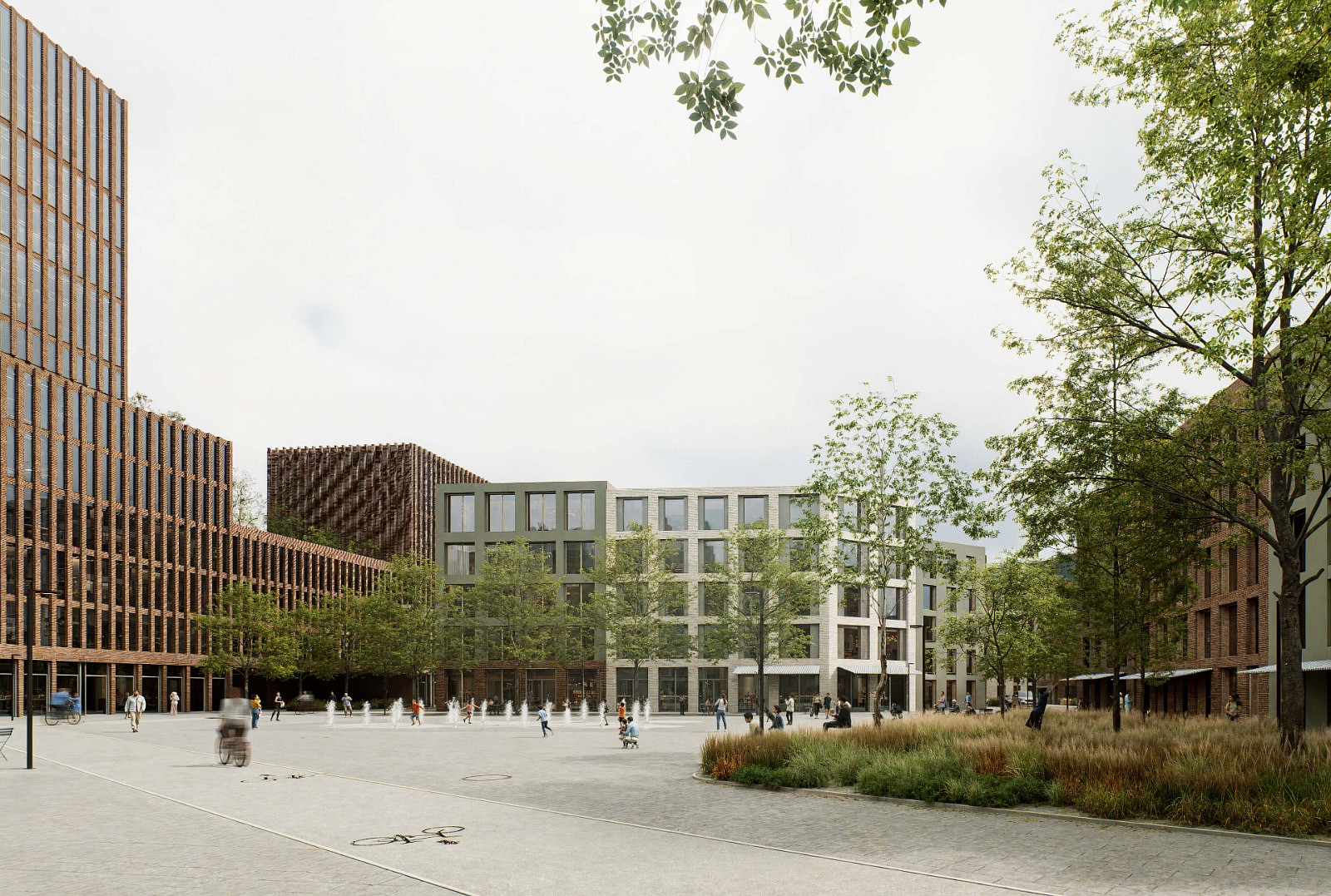
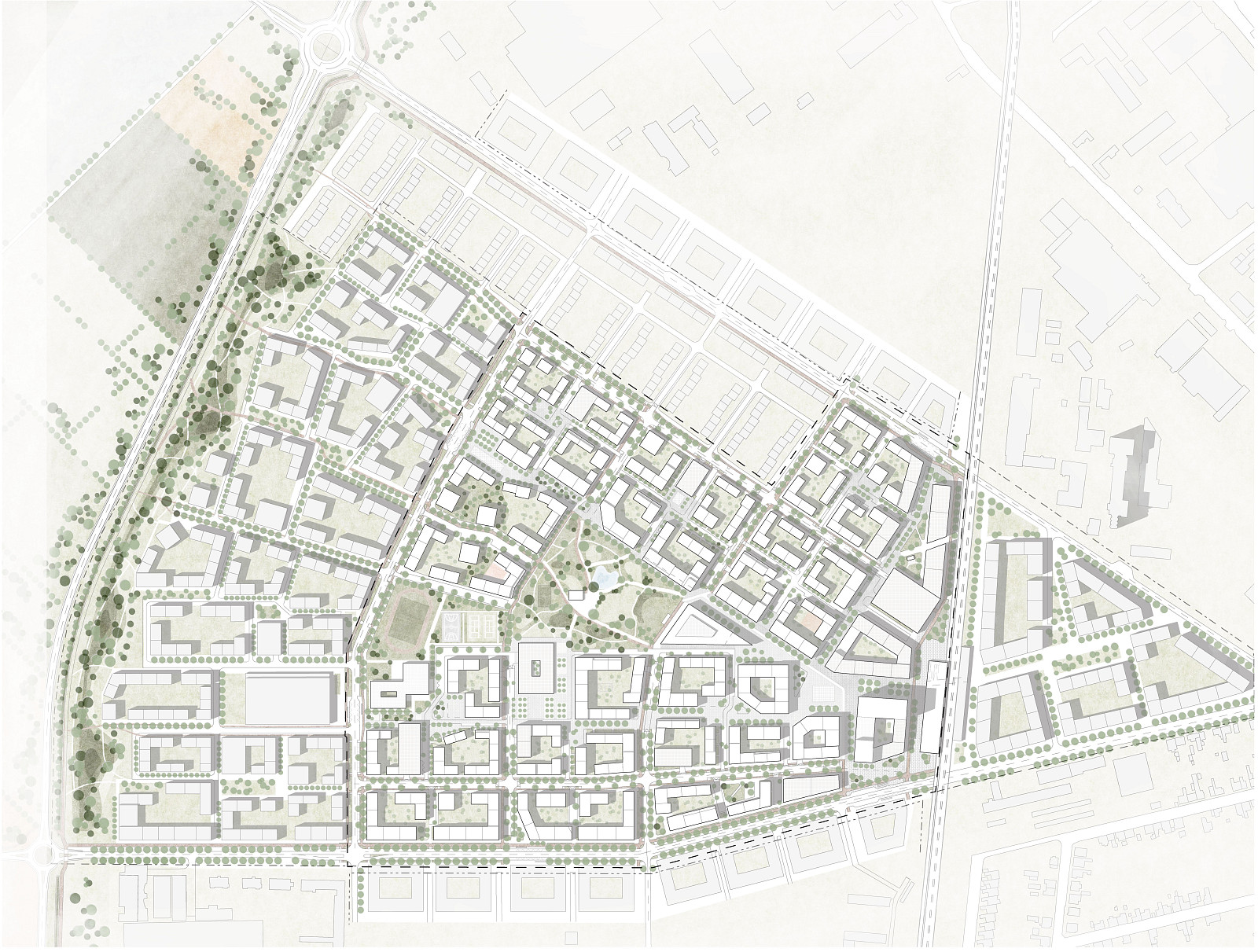
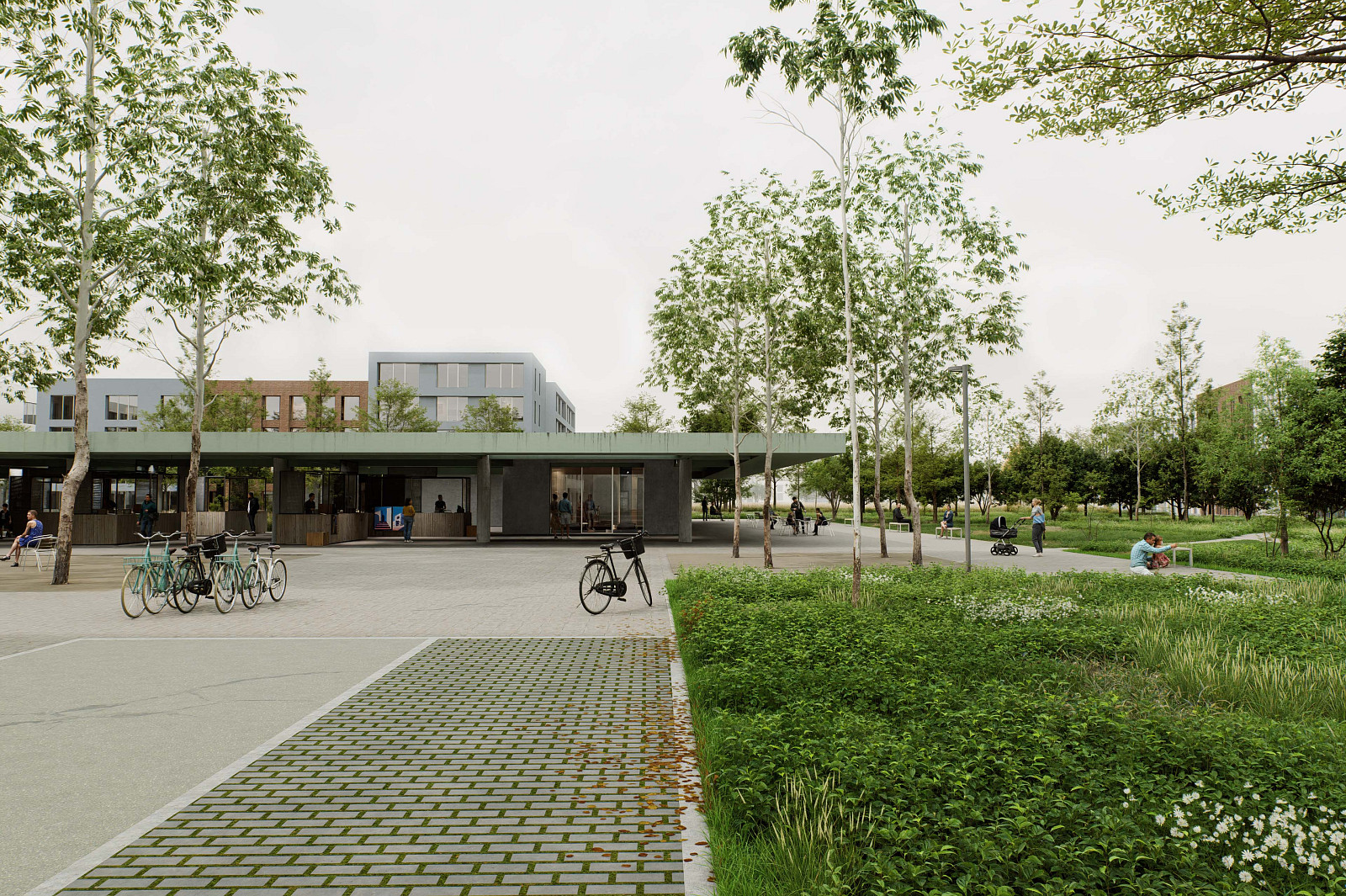
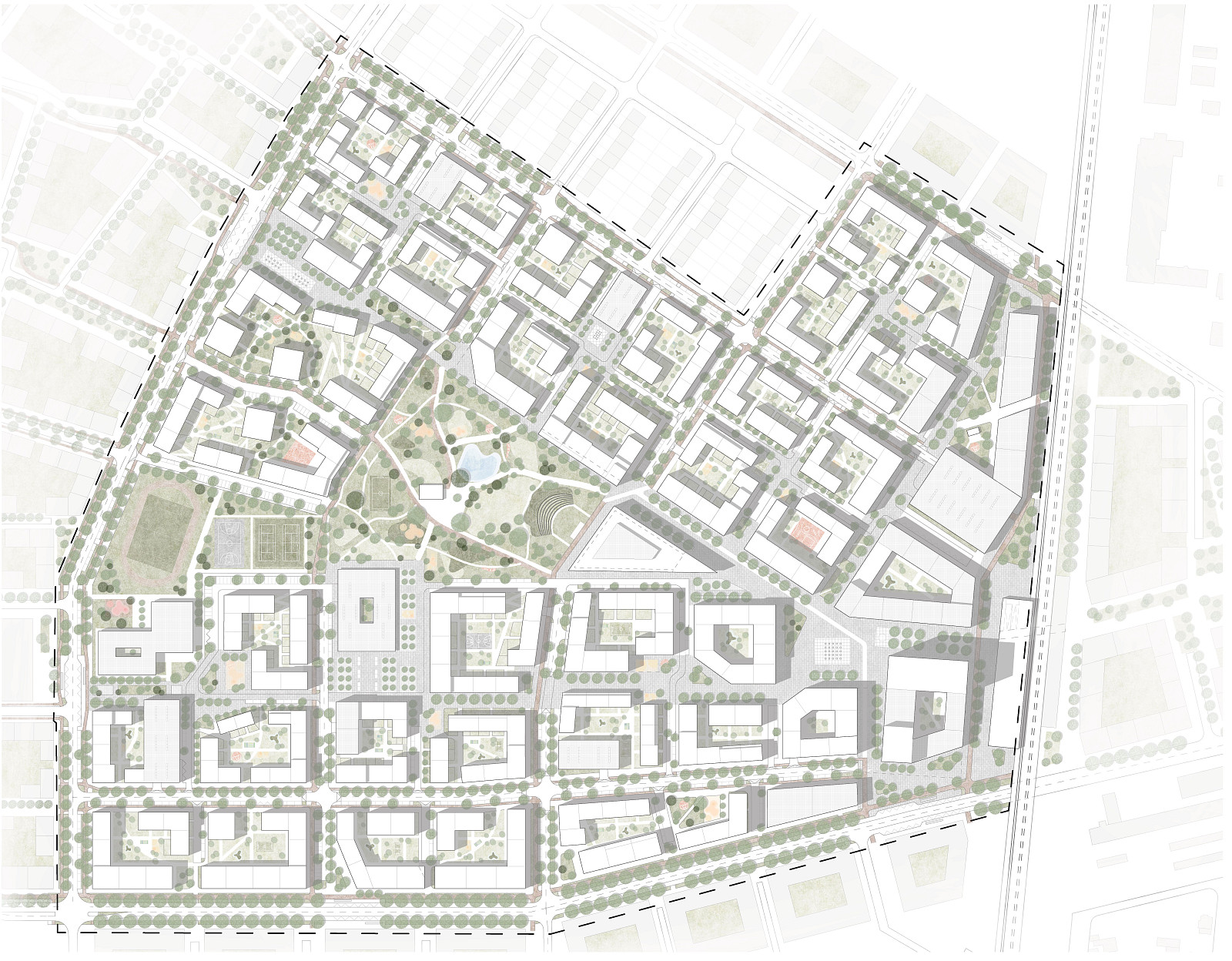
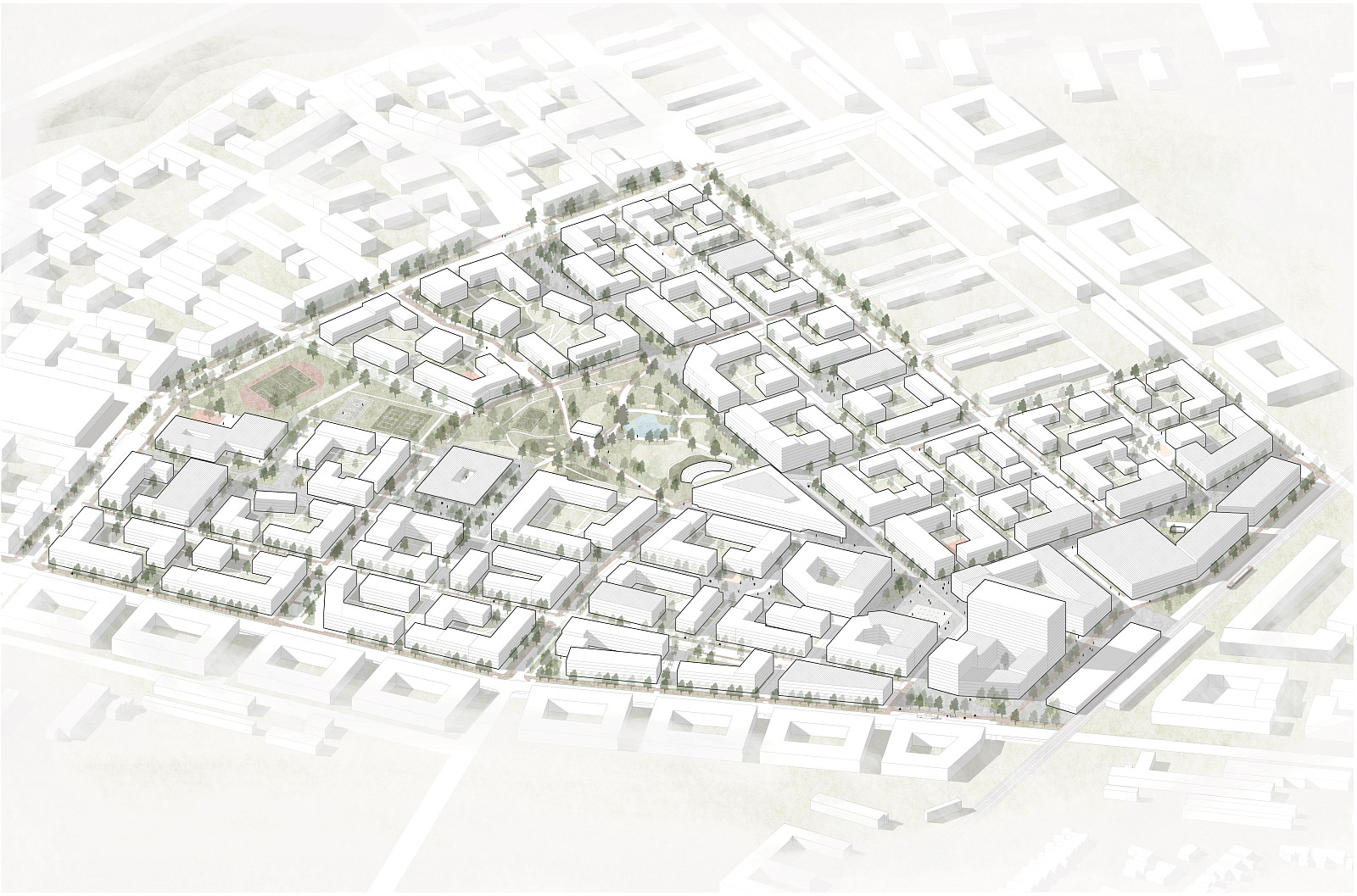
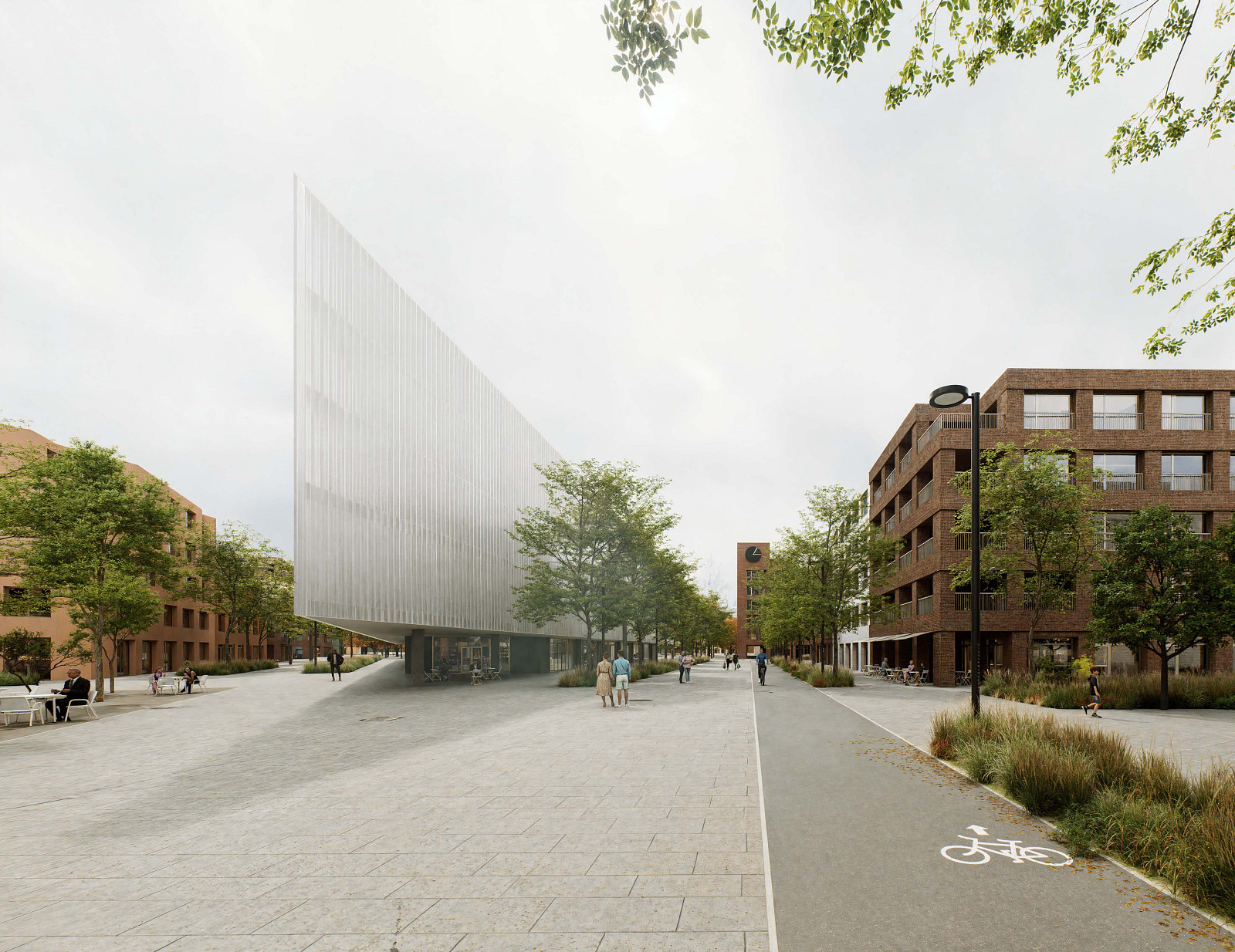
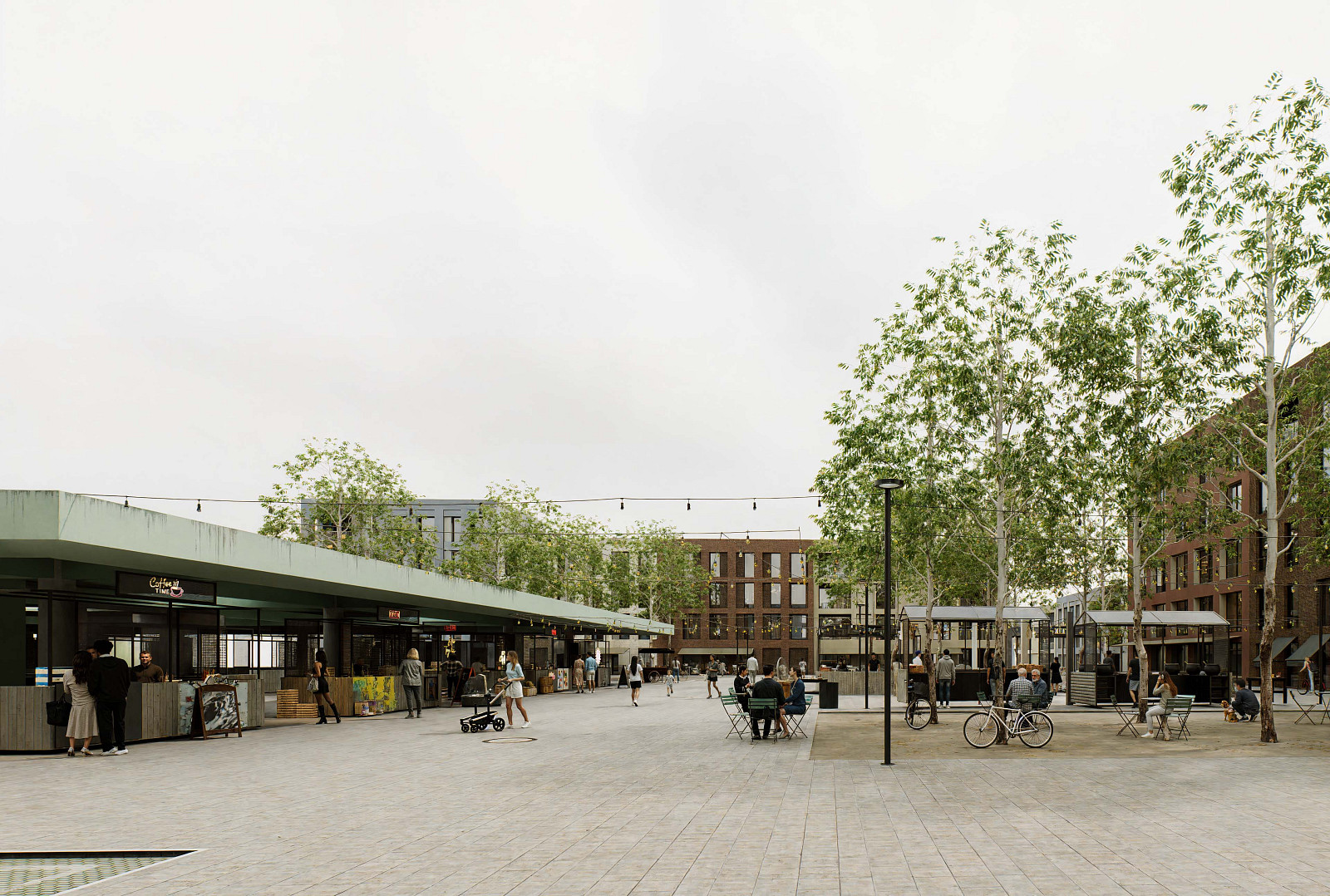
Central Spine & Public Spaces: The main urban axes intersect at a central square with a dominant landmark, creating a dynamic spatial experience with shifting views. These axes host major civic facilities, including a culture center with an amphitheater, a municipal market, and a primary school.
Central Green Infrastructure: A large central park forms the heart of the district, serving recreational, community, and ecological functions. It seamlessly connects to the public facilities and links into the broader city-wide green belt system.
Buffer Zones: A continuous protective green buffer is integrated along the western bypass to mitigate traffic noise and emissions while simultaneously offering recreational trails.
Technical information
Urban Layout (Superblocks): The built environment is structured into modular "superblocks" (each containing 4 individual urban blocks). Vehicular traffic is restricted to the perimeter roads, ensuring fully pedestrianized, traffic-calmed interior courtyards.
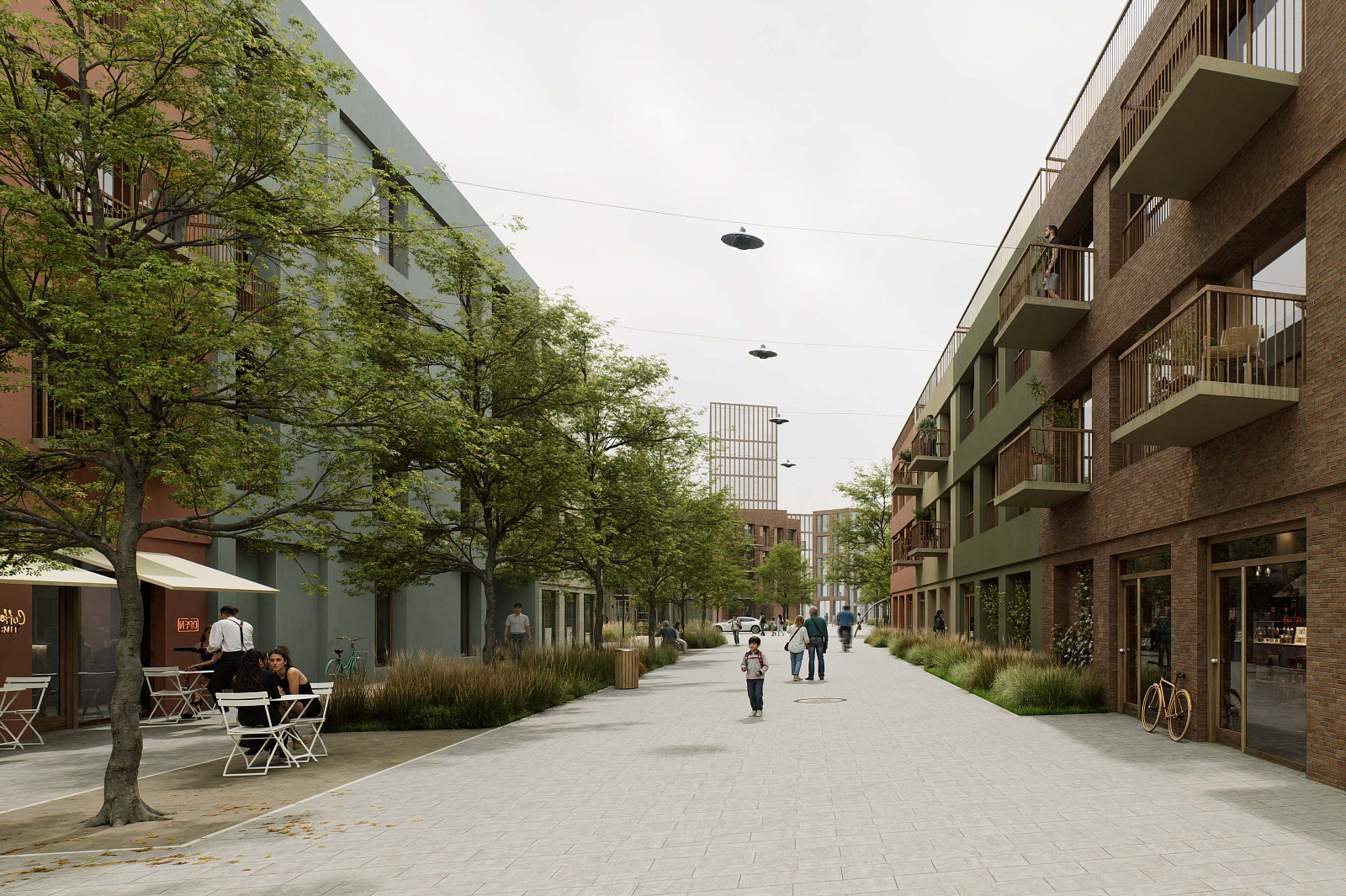
Block Typology: The blocks feature active, permeable ground floors to maximize public-private interaction. Variable setbacks and protruding facades are utilized to break the monotony of the streetscape.
Height Regulation & Massing: Perimeter Zones_Low-rise structures of approximately 3 stories are placed at the northern and eastern borders to sensitively transition into the neighboring 2-story terraced family housing.
District Center_Density and height gradually scale up to 5–6 stories towards the central landmark.
Infrastructural shield: Multi-story administrative buildings are placed along the railway line to act as an acoustic and visual shield.
Architectural Context: The spatial composition incorporates protected viewing corridors towards the nearby heritage industrial structure, the NUPOD mill.
Documentation
Created in:


Copyright © 2026 INSPIRELI | All rights reserved. Use of this website signifies your agreement to the Terms of Use, Privacy Policy, and use of cookies.