Hullabaloo


Project idea
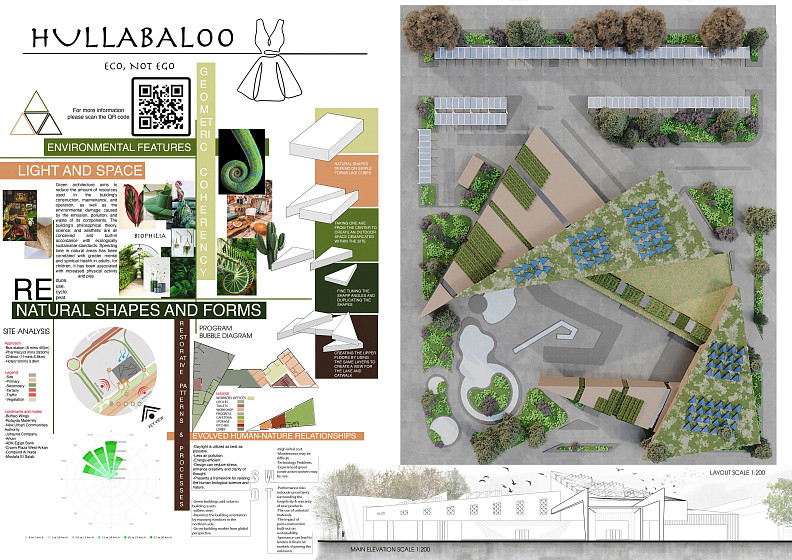
Hullabaloo is an interactive fashion and design hub created for individuals who are passionate about fashion and creative production. The project aims to bridge the gap between consumers and the design process by transforming fashion from a product to an experience. Rather than concealing the stages of production, the building allows visitors to observe, learn, and engage with the journey of creating garments, from concept development to fabrication and exhibition. Inspired by natural geometries and sustainable design principles, the project promotes creativity, education, and environmental awareness while fostering a community centered around fashion and innovation. A mixed-use Fashion Experience Center integrating retail, exhibition, education, production, and social spaces within a sustainable architectural environment.
Project description
The project is organized as an experiential journey through the world of fashion design. Visitors move through exhibition spaces, design studios, sewing and cutting workshops, display areas, and showrooms that reveal the different stages of garment creation. The ground floor functions as a public and interactive environment where users can observe and participate in the design and production process, transforming the act of learning into an immersive experience. The upper floor contains exhibition spaces, showrooms, VIP areas, and outdoor gathering spaces that celebrate finished works and emerging designers. The spatial organization encourages transparency, creativity, and interaction, allowing fashion enthusiasts, students, designers, and visitors to gain a deeper understanding of the fashion industry.
Technical information
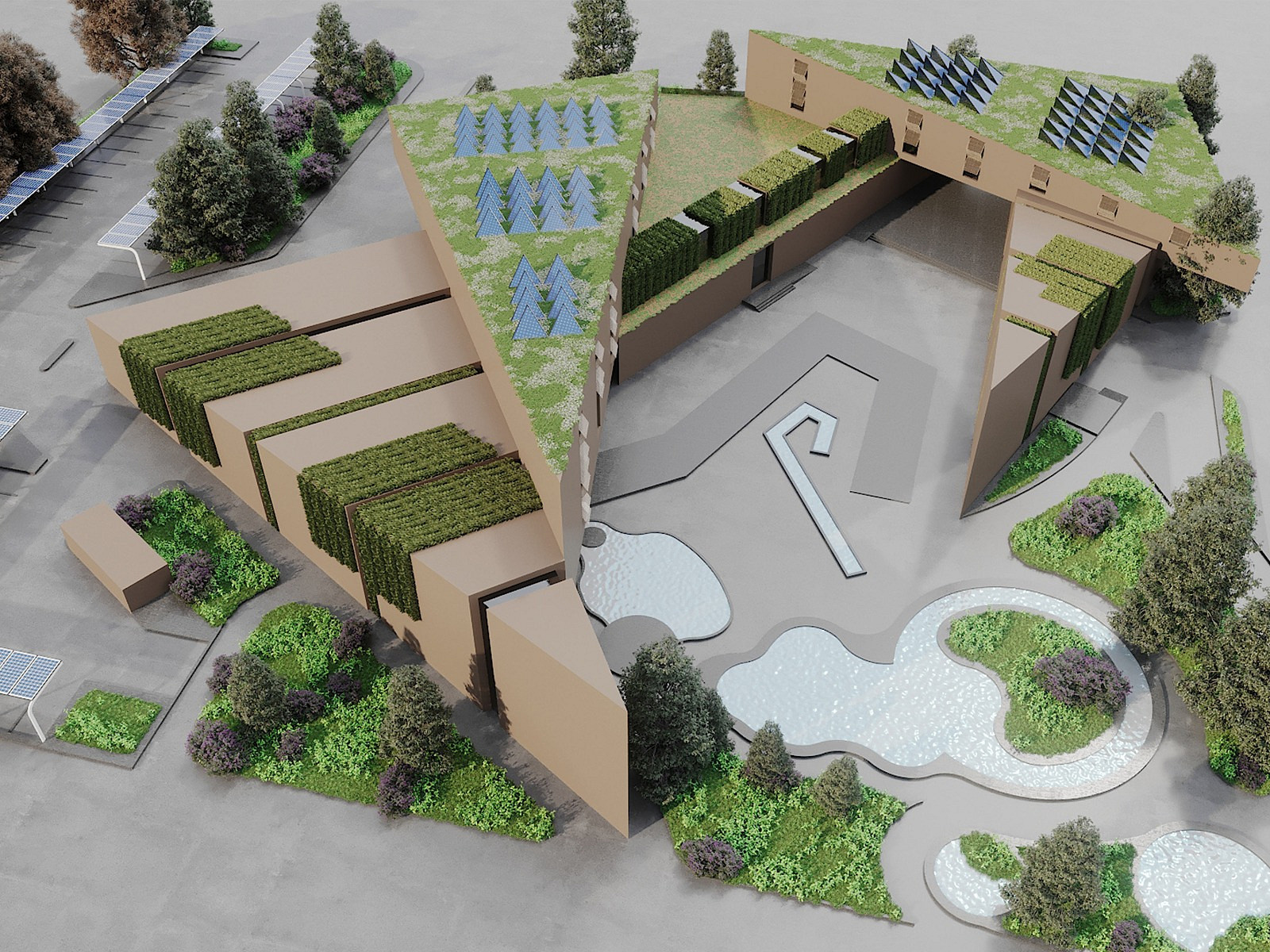
The project utilizes a reinforced concrete structural system designed around a series of interconnected triangular building masses. The building envelope incorporates insulated cavity walls that improve thermal performance and reduce heat transfer between interior and exterior environments. Extensive green roofs provide additional thermal insulation, reduce solar heat gain, and contribute to stormwater management. Photovoltaic panels integrated on the roof surfaces generate renewable energy to support building operations. Large landscaped areas, vegetated surfaces, and water features improve the site's microclimate and environmental performance. The design combines passive environmental strategies with renewable energy systems to reduce energy consumption and create a sustainable working and exhibition environment.
Documentation


Copyright © 2026 INSPIRELI | All rights reserved. Use of this website signifies your agreement to the Terms of Use, Privacy Policy, and use of cookies.