Brutal Regeneration Renovation


Project idea
BRUTAL REGENERATION RENOVATION
LINK_AGE MUSEUM
Reconstruction has historically emerged in response to rupture.
After periods of destruction, cities were required to rebuild not only their physical structures but also the systems, relationships, and everyday rhythms that sustained urban life. Architecture became a tool of recovery, providing frameworks through which society could restore itself.
This project begins with a simple question:
If reconstruction once responded to physical destruction, can regeneration today respond to social fragmentation?
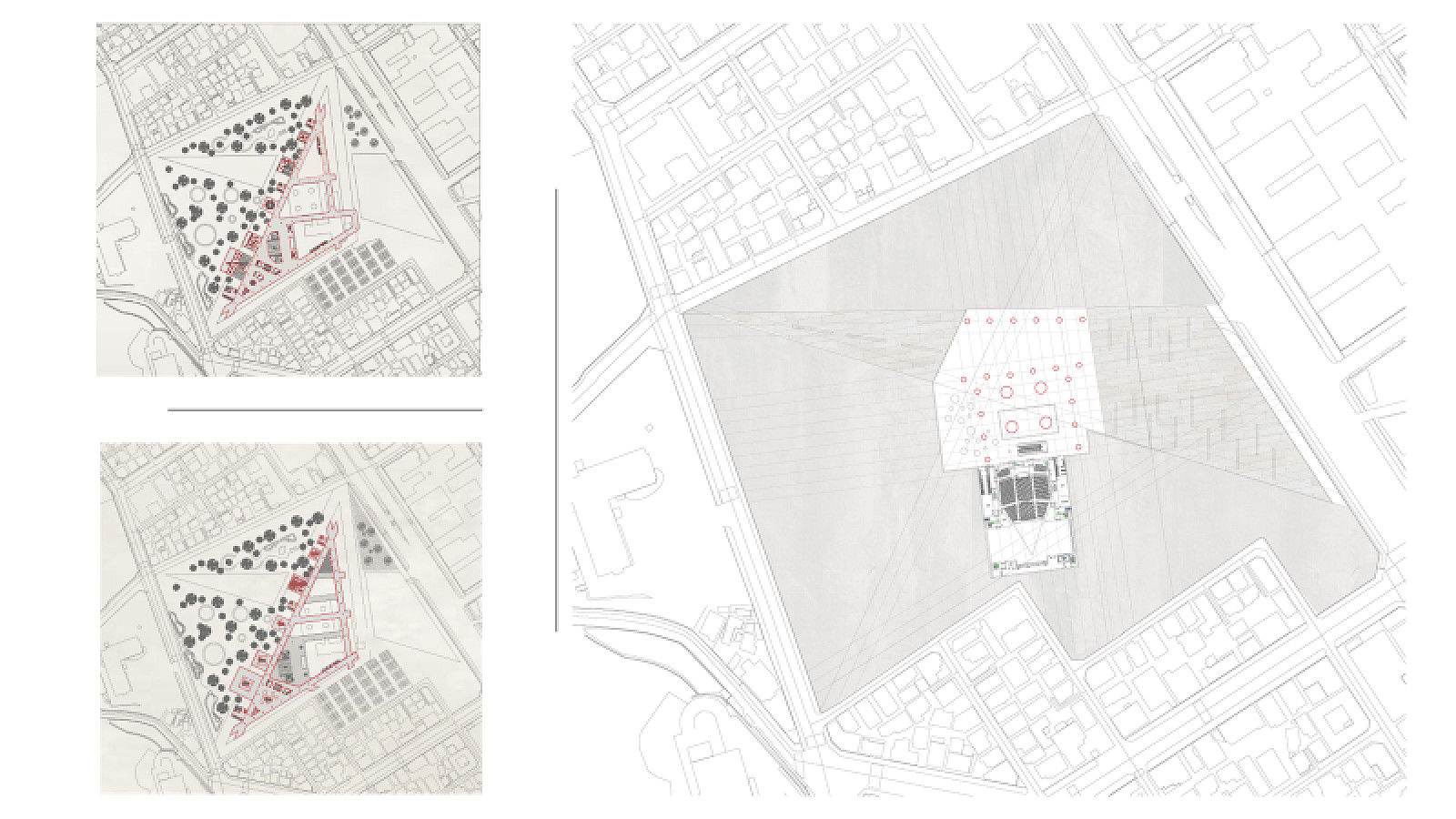
The former Animal and Plant Quarantine Agency in Anyang represents a condition shared by many contemporary cities. Although its physical structure remains, its original function has disappeared. What once served as a public institution now stands as a dormant fragment of the urban fabric.
Rather than erasing this condition, the project seeks to reinterpret it.
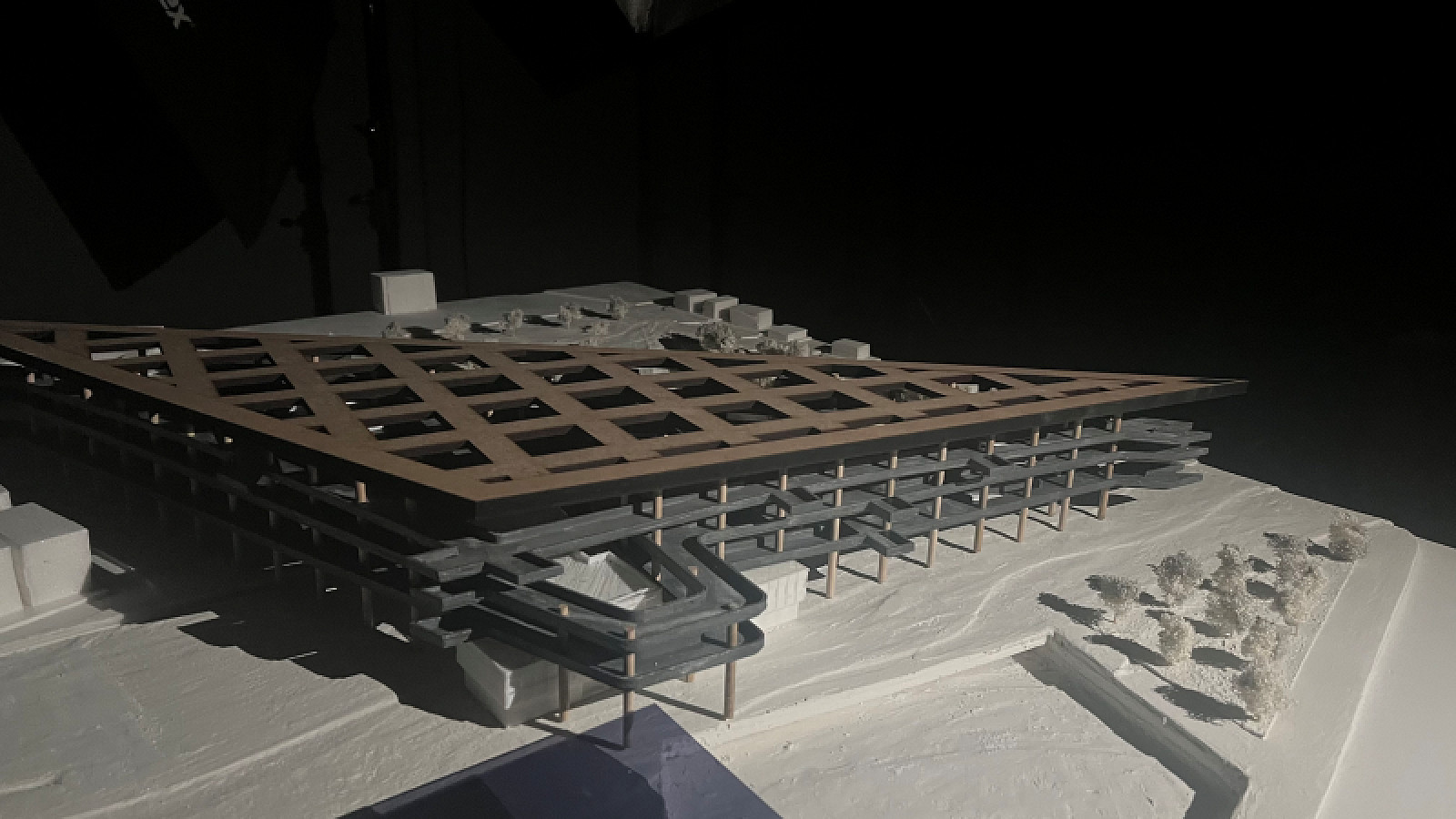
BRUTAL REGENERATION RENOVATION proposes a new model of urban regeneration that treats existing structures not as obsolete remnants but as foundations for future transformation. Inspired by the logic of reconstruction, the project preserves the architectural memory of the site while introducing new spatial layers that reconnect the city with its people.
At the center of this proposal is the LINK_AGE MUSEUM.
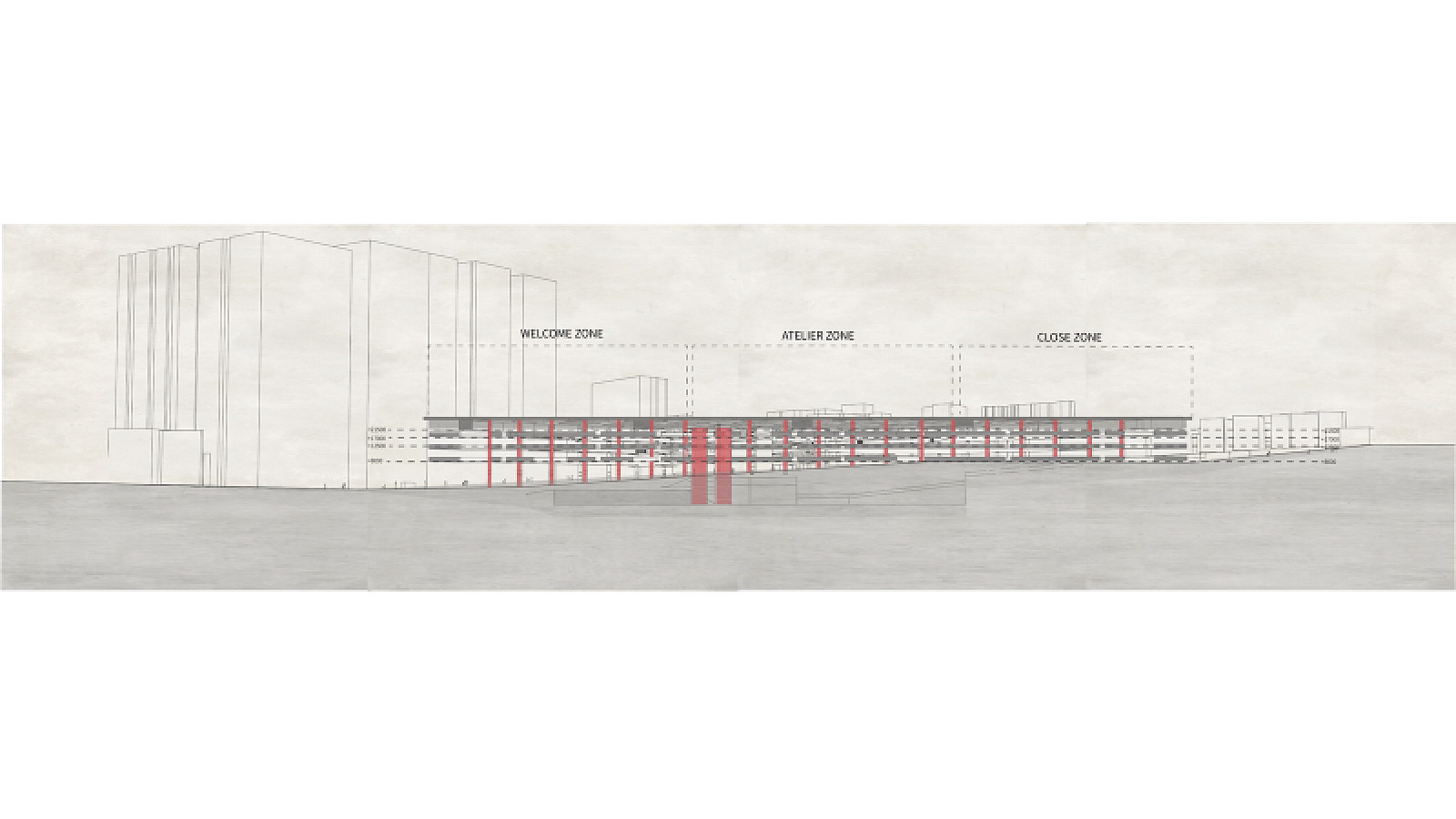
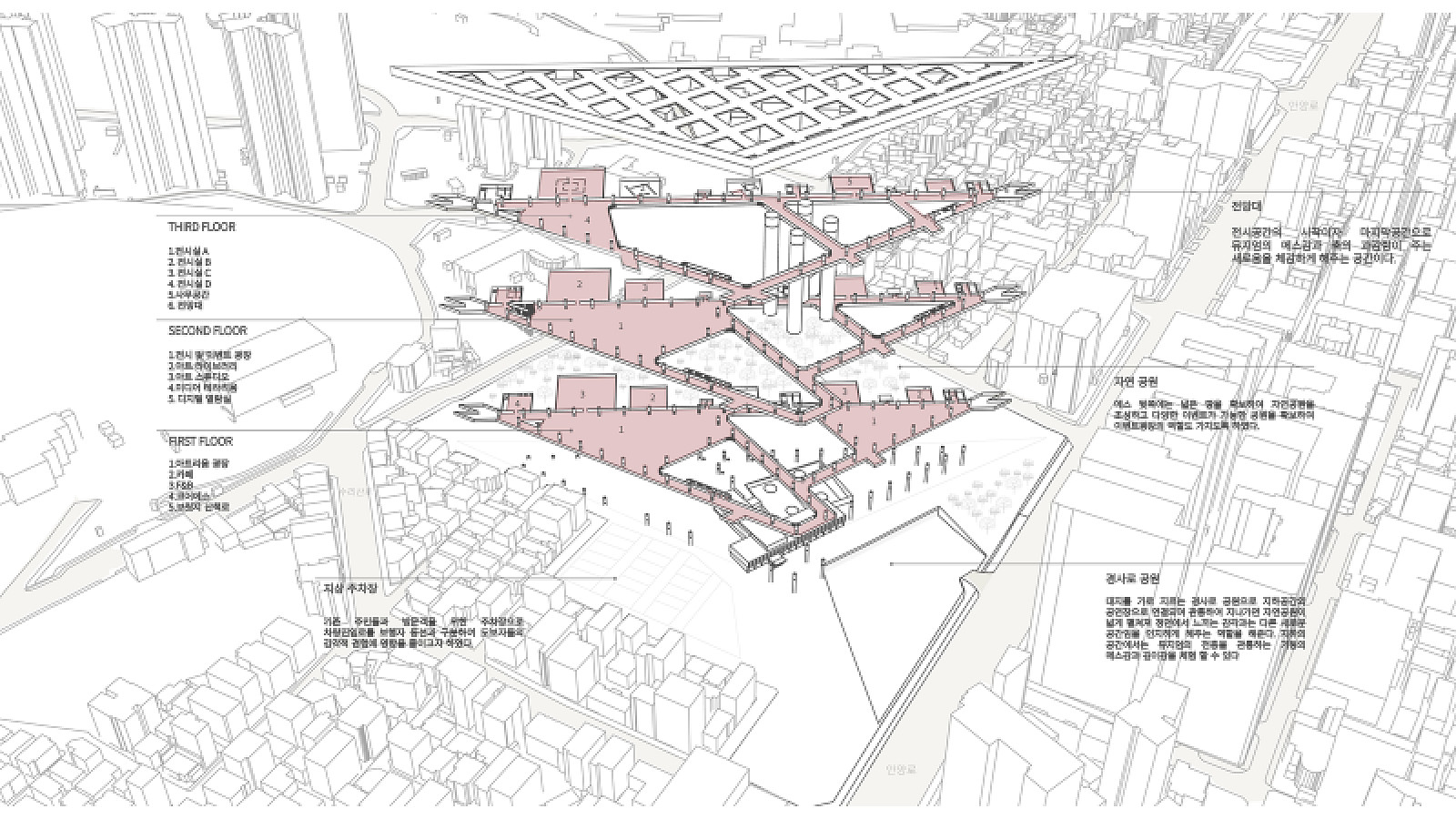
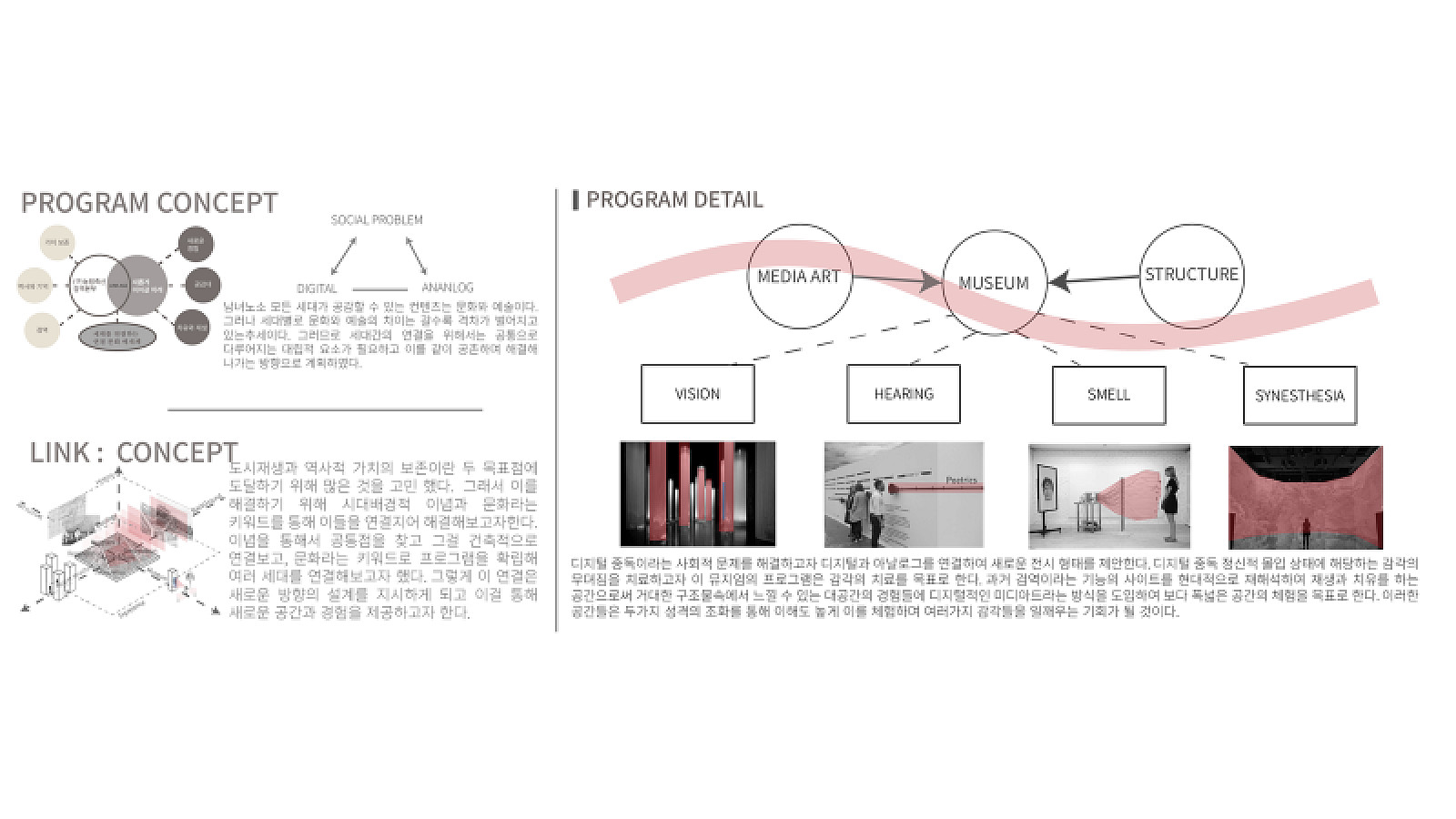
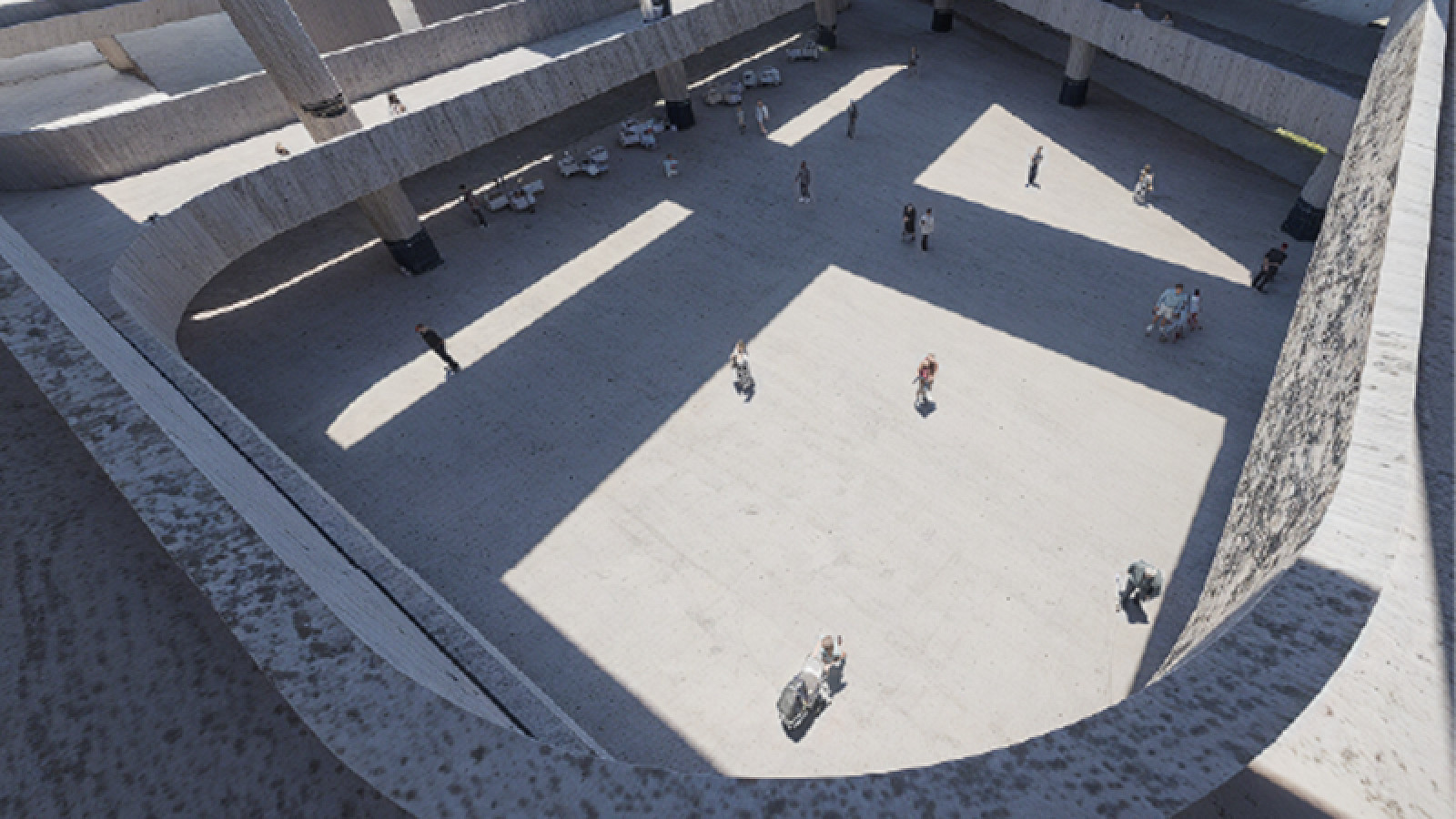
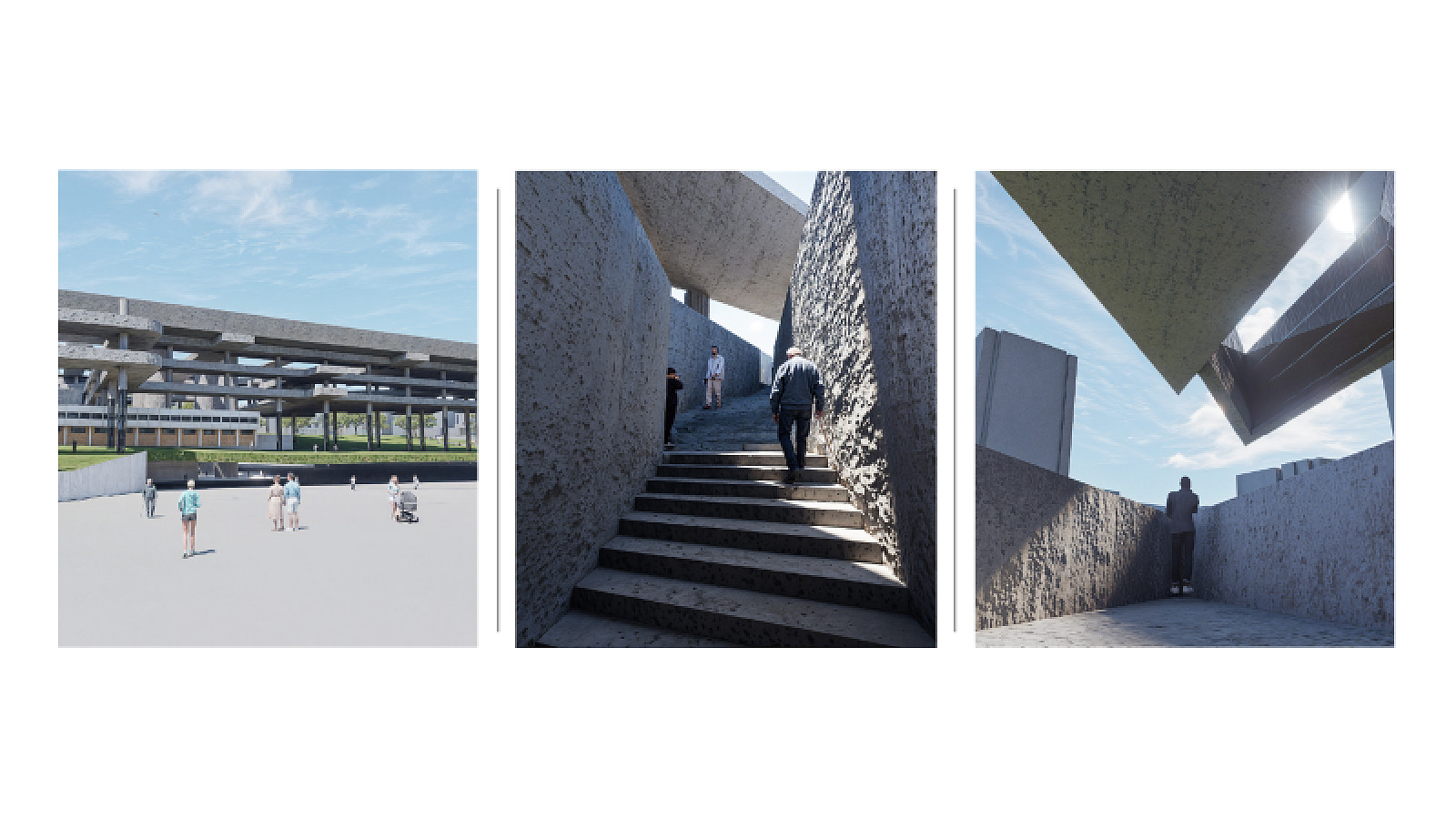
The museum is conceived not as a singular object but as a sequence of experiences. Visitors move through elevated corridors, open courtyards, massive structural frames, and sensory environments that encourage reflection and awareness. Through encounters with light, sound, materiality, scale, and movement, the project creates opportunities for sensory recovery within an increasingly overstimulated urban environment.
The objective of the project is not only to regenerate a building, but to regenerate relationships between architecture, memory, perception, and everyday life.
By transforming a former institutional complex into a cultural platform, LINK_AGE MUSEUM aims to reconnect past and future, structure and experience, city and citizen.
Ultimately, the project explores how architecture can become a framework for recovery once again—not through rebuilding what has been destroyed, but through reactivating what has been disconnected.
Project description
* BRUTAL REGENERATION RENOVATION
Reconstruction Reimagined as Regeneration
Reconstruction begins in times of rupture.
When war breaks out, cities do not only lose buildings.
They lose materials, systems, rhythms of life, and the ordinary flow of society itself.
In such moments, reconstruction is driven by urgency, function, and efficiency.
Architecture becomes less about expression and more about recovery.
The emergence of large structural frameworks, honest materials, and functional spatial systems can be understood as one response to a society attempting to rebuild itself after destruction.
This observation led to a different question.
If reconstruction in the past was about restoring what had been physically destroyed,
could regeneration today be understood as restoring what has been socially fractured?
The era has changed.
The causes of damage are different.
Yet the condition of the city may not be so unfamiliar.
Today, cities face another form of decline.
Public institutions lose their function.
Communities weaken.
Collective memory fades.
Spaces remain, but their social meaning disappears.
The challenge is no longer rebuilding what has collapsed,
but reactivating what has been disconnected.
In this sense, regeneration may be understood as a contemporary form of reconstruction.
Not the reconstruction of buildings,
but the reconstruction of relationships.
Not the reconstruction of infrastructure,
but the reconstruction of memory, experience, and everyday life.
The former Animal and Plant Quarantine Agency in Anyang embodies this condition.
Once a functional public institution supporting the city,
it now remains as a dormant structure waiting for a new role.
Rather than erasing this structure,
the project asks how it can become a framework for a new urban recovery.
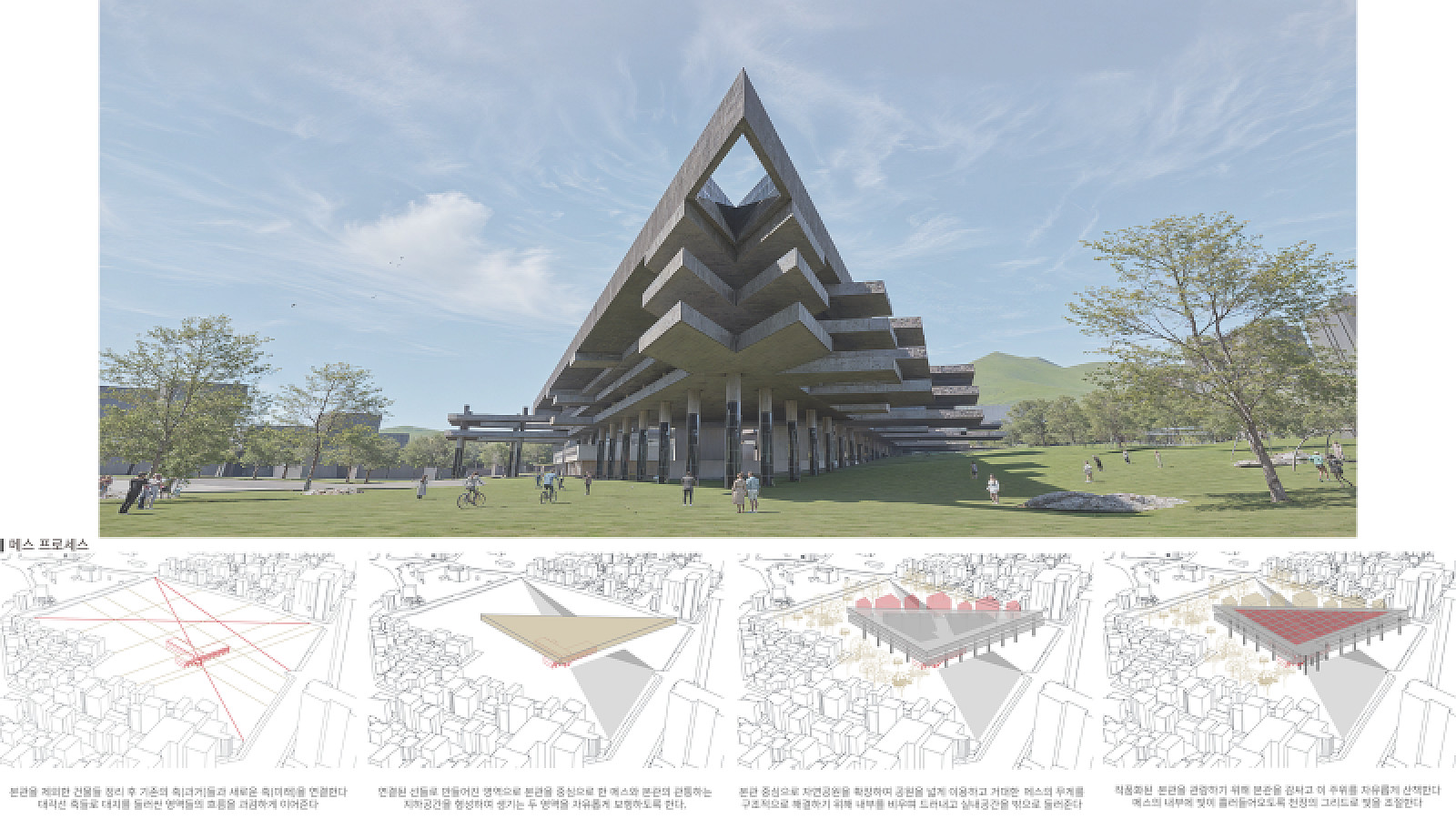
BRUTAL REGENERATION RENOVATION proposes a reinterpretation of reconstruction through regeneration.
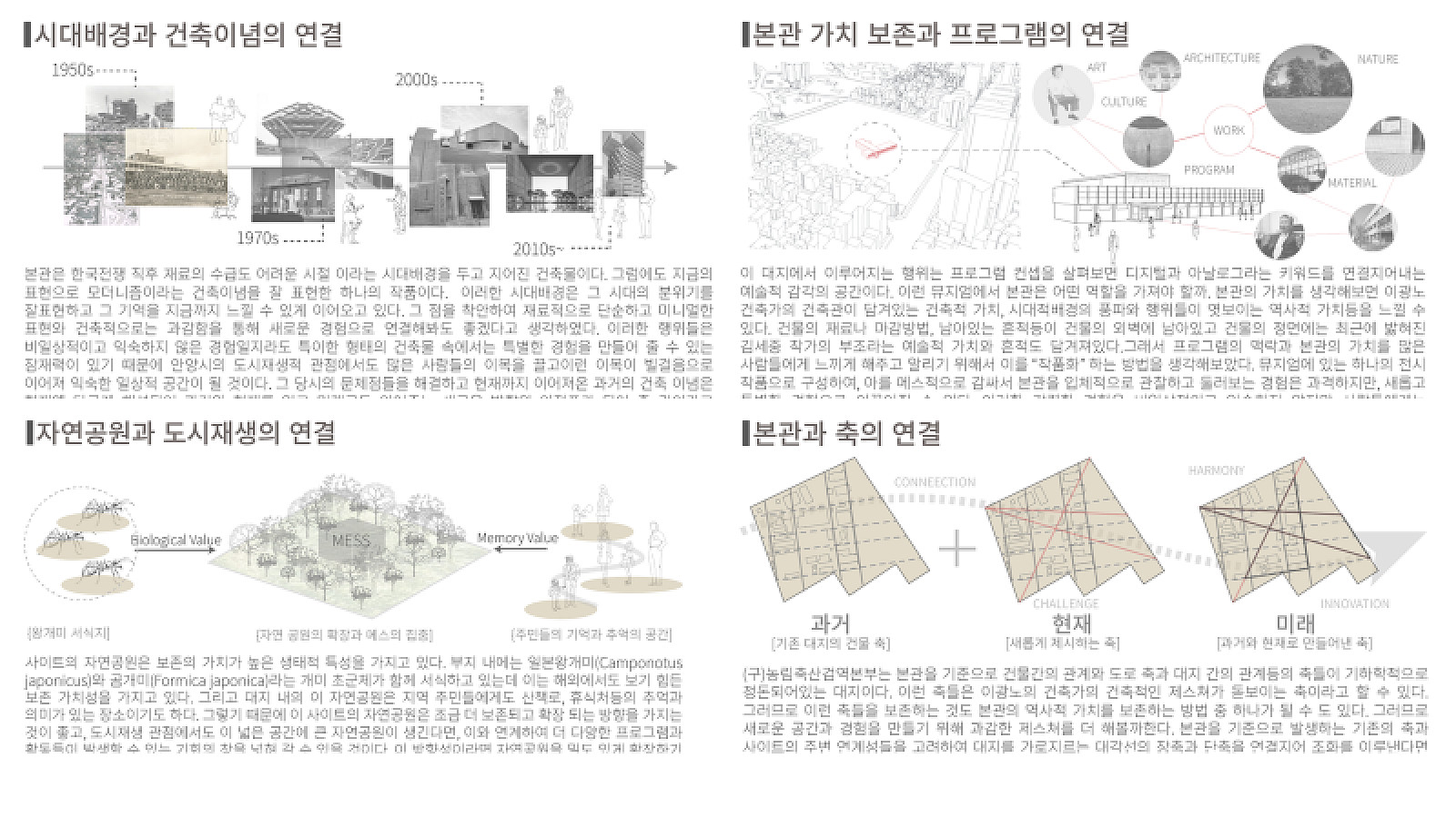
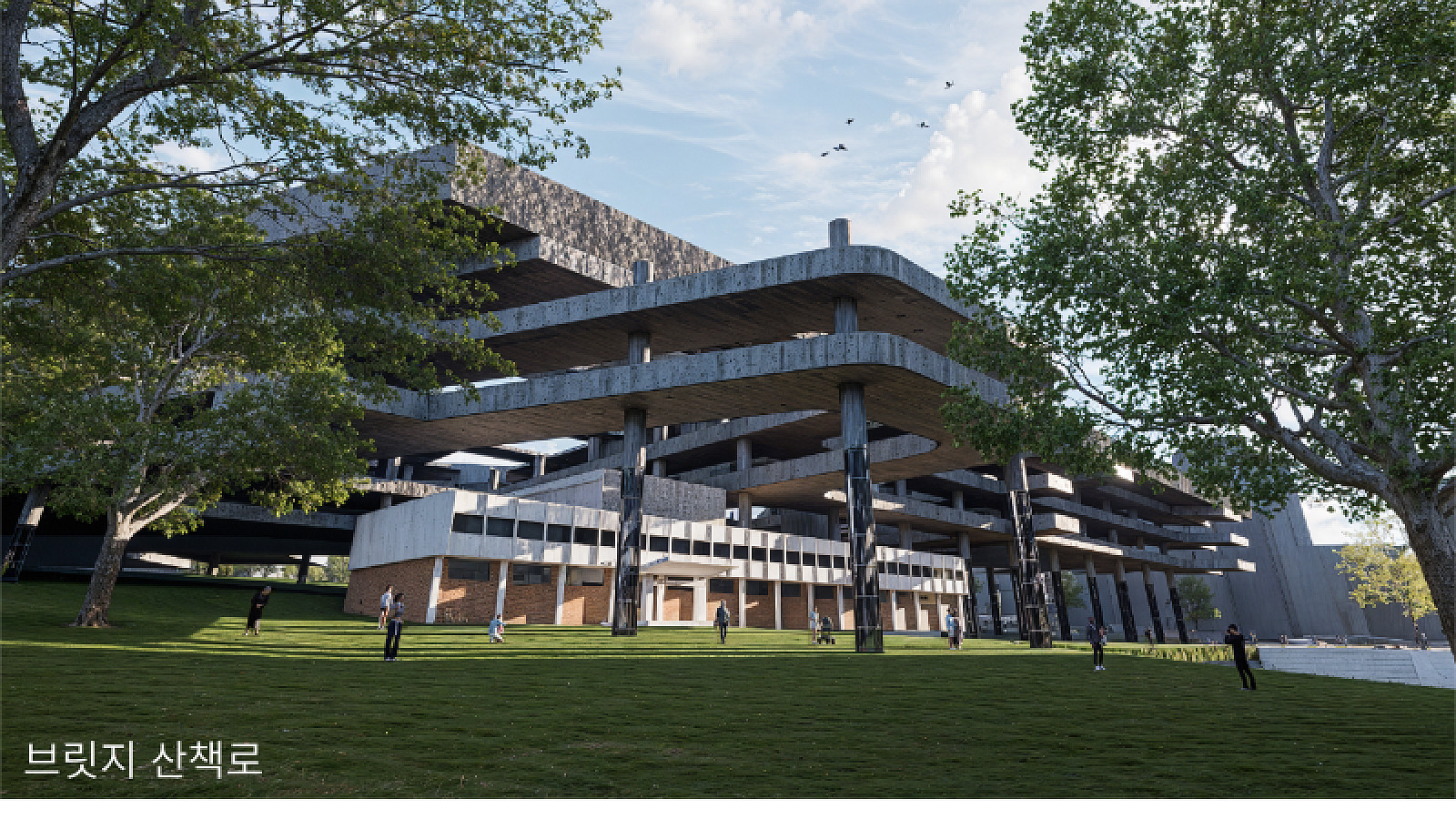
The existing structure is preserved as an architectural memory of the city.
New layers are inserted above and around it,
creating a sequence of spaces that reconnect past and future,
city and architecture,
everyday life and extraordinary experience.
At the center of the project is the LINK_AGE MUSEUM.
A museum not conceived as an object,
but as a spatial process.
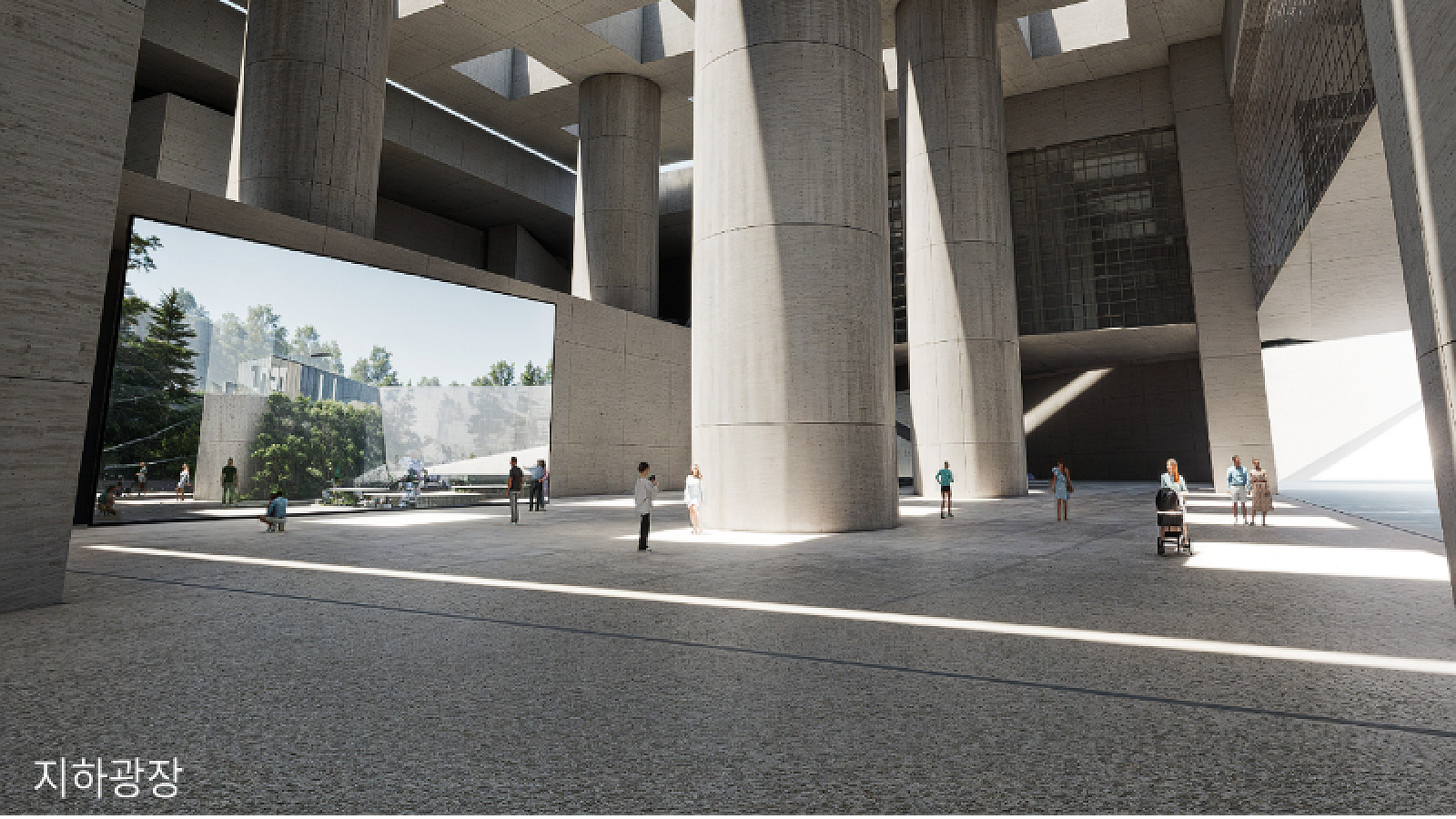
Visitors move through heavy structural frames,
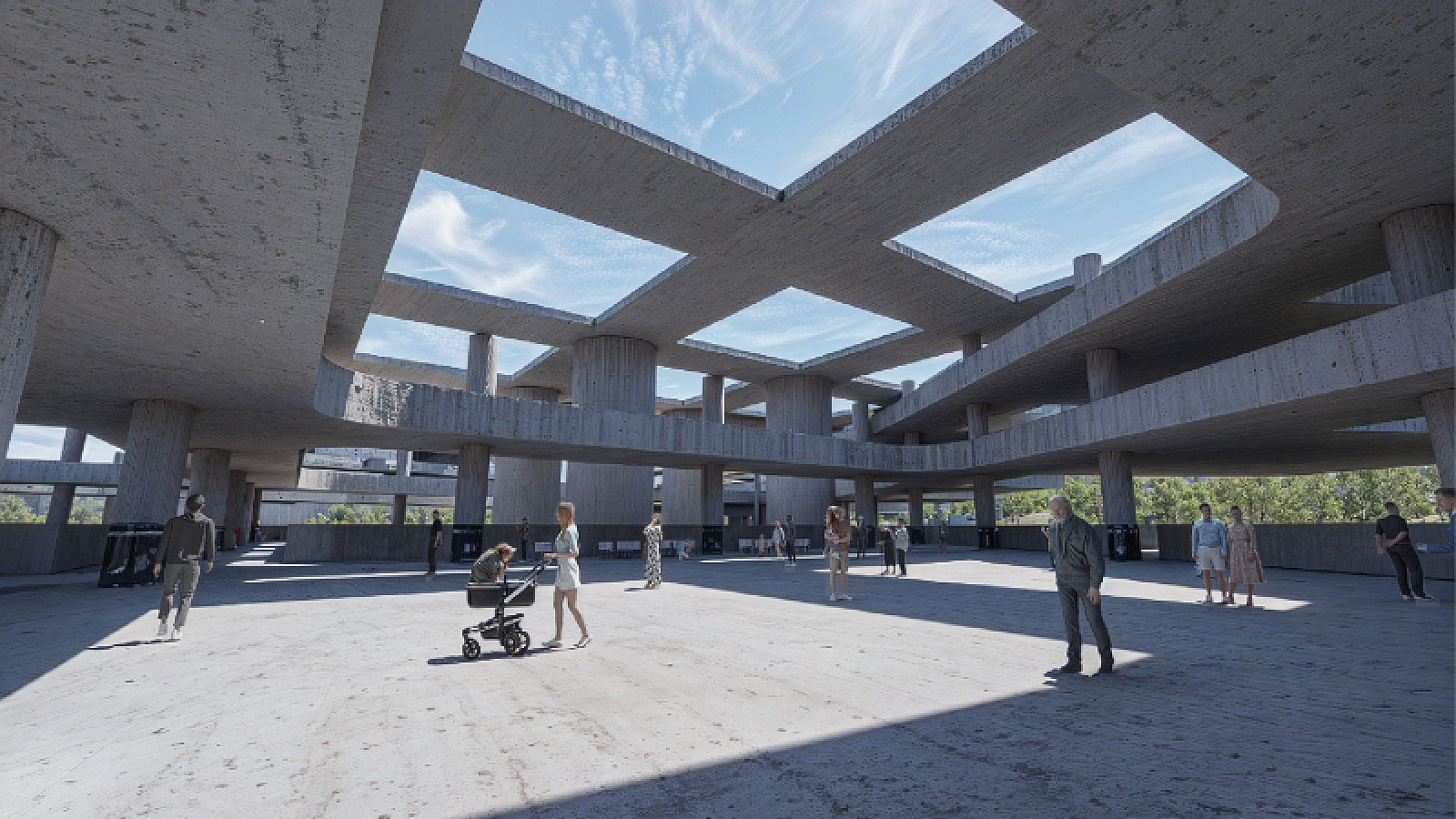
open courtyards,
elevated corridors,
and spaces of light, sound, material, and atmosphere.
Through this journey, the museum offers moments of sensory recovery.
The goal is not escape from reality.
It is to rediscover perception itself.
The extraordinary becomes a tool for reflection,
and recovered senses return to everyday life.
If reconstruction once rebuilt the city through structure,
LINK_AGE seeks to regenerate the city through experience.
This project is not an answer.
It is an attempt to explore whether the logic of reconstruction can be transformed into a new model of regeneration,
and whether architecture can once again participate in the recovery of the city.
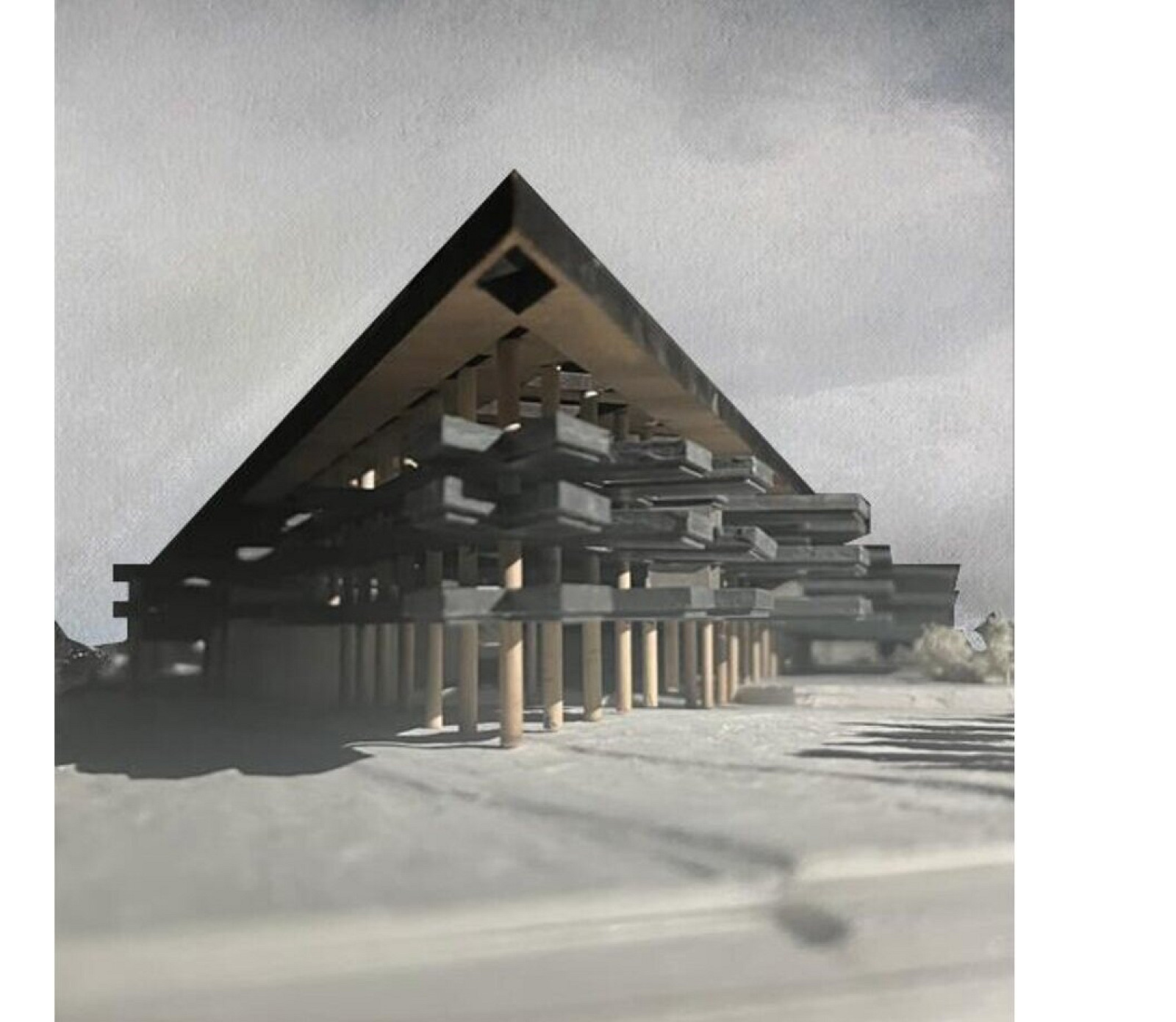
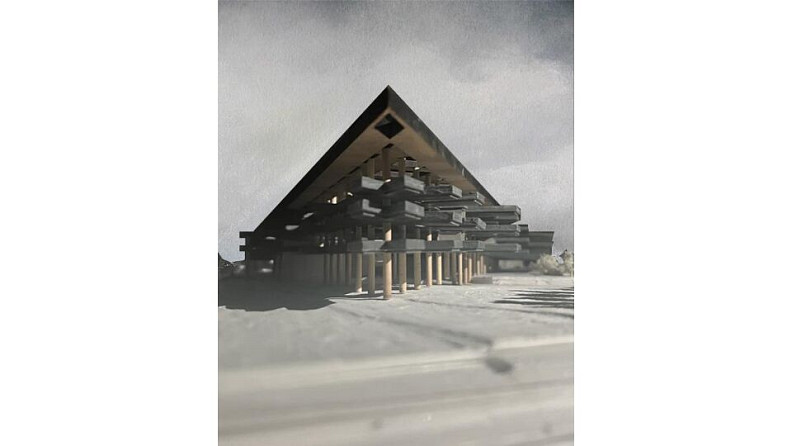
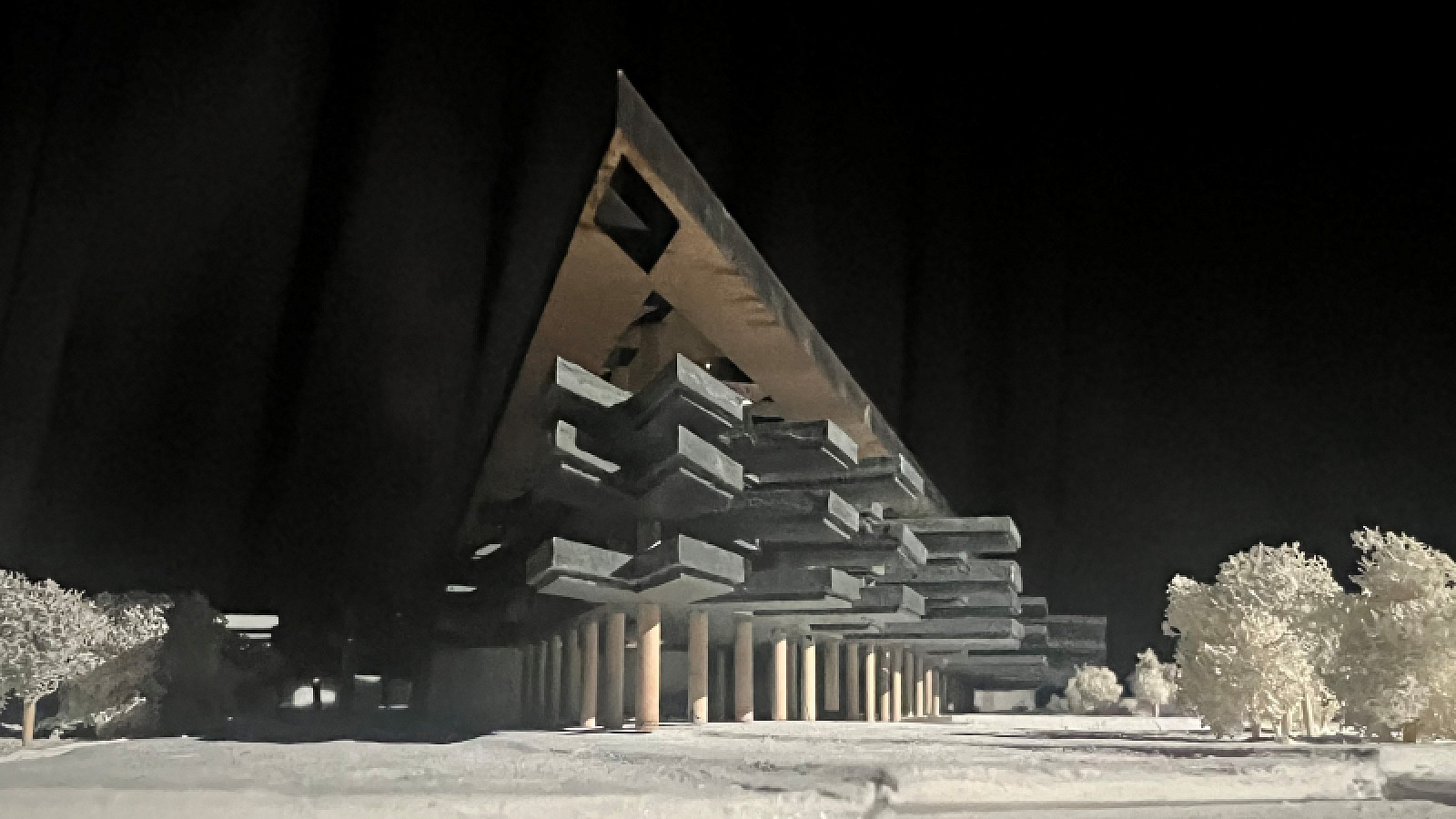
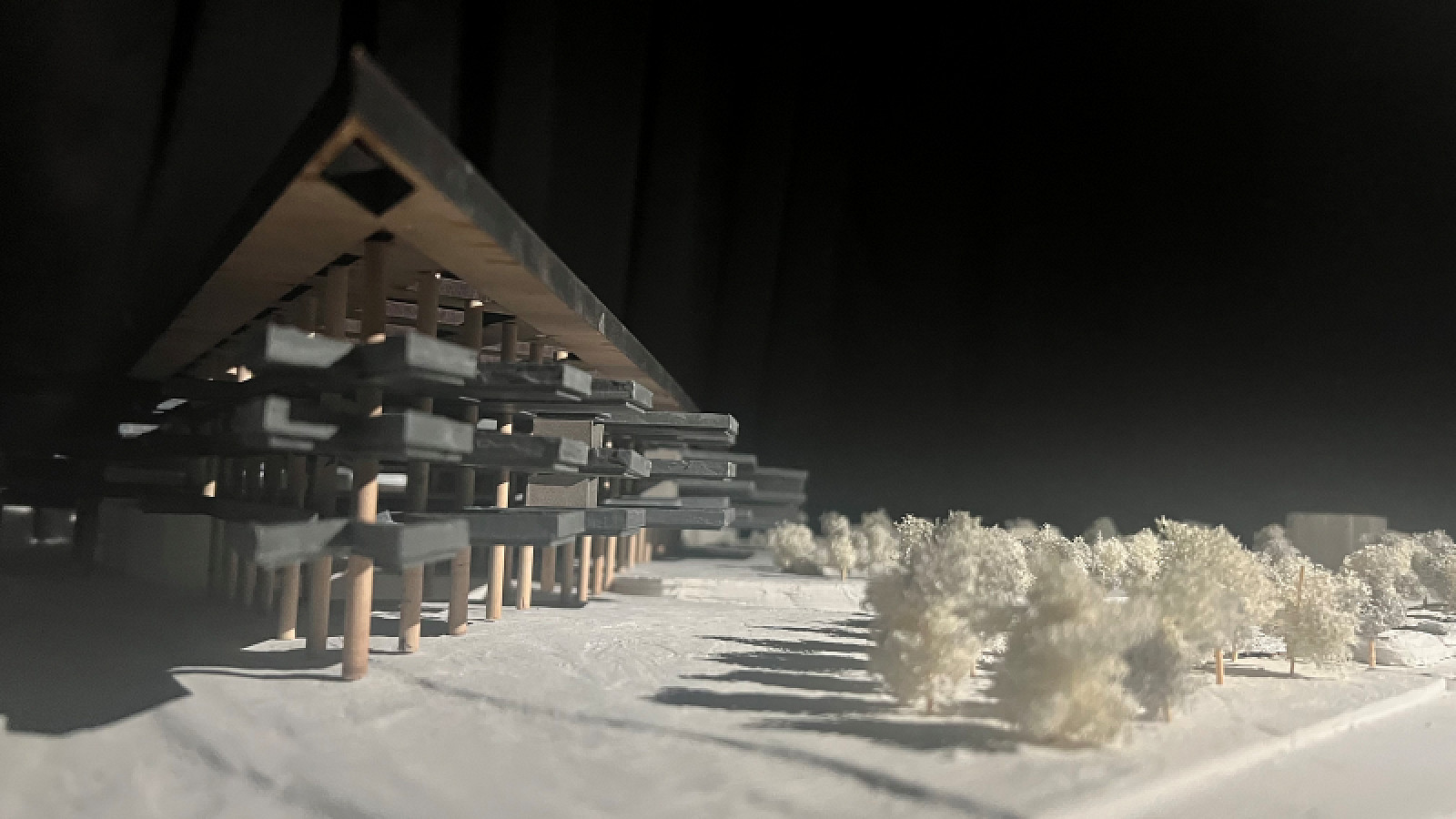
The image shows a dramatic architectural visualization of a large triangular/pyramidal timber structure raised on columns. The building features an intricate layered timber construction with interlocking horizontal and vertical elements creating a complex structural expression.
Technical information
PROJECT TITLE
BRUTAL REGENERATION RENOVATION
LINK_AGE MUSEUM
---
PROJECT TYPE
Adaptive Reuse / Urban Regeneration / Museum / Cultural Facility
---
LOCATION
Former Animal and Plant Quarantine Agency
Anyang-si, Gyeonggi-do, Republic of Korea
---
SITE AREA
Approx. 59,000 m²
---
BUILDING AREA
Approx. 13,500 m²
---
PROGRAM
Museum
Exhibition Hall
Media Art Gallery
Performance Hall
Workshop Studio
Archive
Library Lounge
Education Space
Cafe
Public Courtyard
Elevated Corridor
Outdoor Sculpture Garden
---
STRUCTURAL SYSTEM
Reinforced Concrete Structure
Large-span Cantilever System
Central Structural Cores
Exposed Structural Elements
---
MAIN MATERIALS
Exposed Concrete
Architectural Concrete Panels
Steel Structure
Glass
Weathering Steel
Natural Stone
---
LANDSCAPE STRATEGY
Preservation of Existing Green Areas
Public Open Space Network
Sunken Courtyard Garden
Sensory Healing Landscape
Linear Promenade
---
DESIGN CONCEPT
The project reinterprets the former public institution as a cultural catalyst for urban regeneration.
Inspired by the logic of post-war reconstruction, the proposal transforms an obsolete institutional complex into a museum that reconnects memory, structure, sensory experience, and everyday life.
The existing architecture is preserved as an urban memory, while new layers are inserted above and around it to create a sequence of spatial experiences that link past and future.
Documentation

Copyright © 2026 INSPIRELI | All rights reserved. Use of this website signifies your agreement to the Terms of Use, Privacy Policy, and use of cookies.