"Casa de la Cultura" - Weaving Realities


Project idea
Weaving Realities - Landscape Intervention for the House of Culture
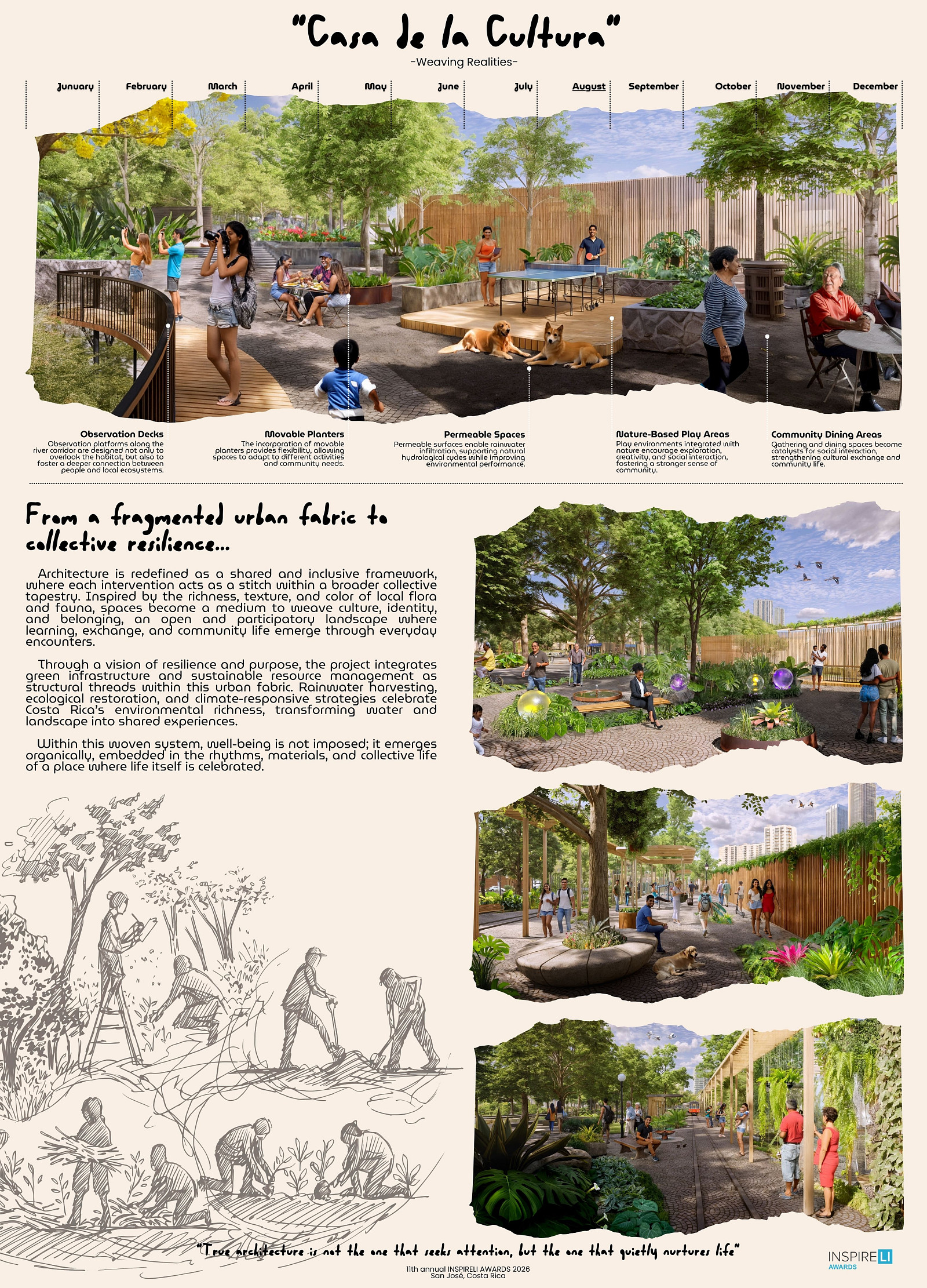
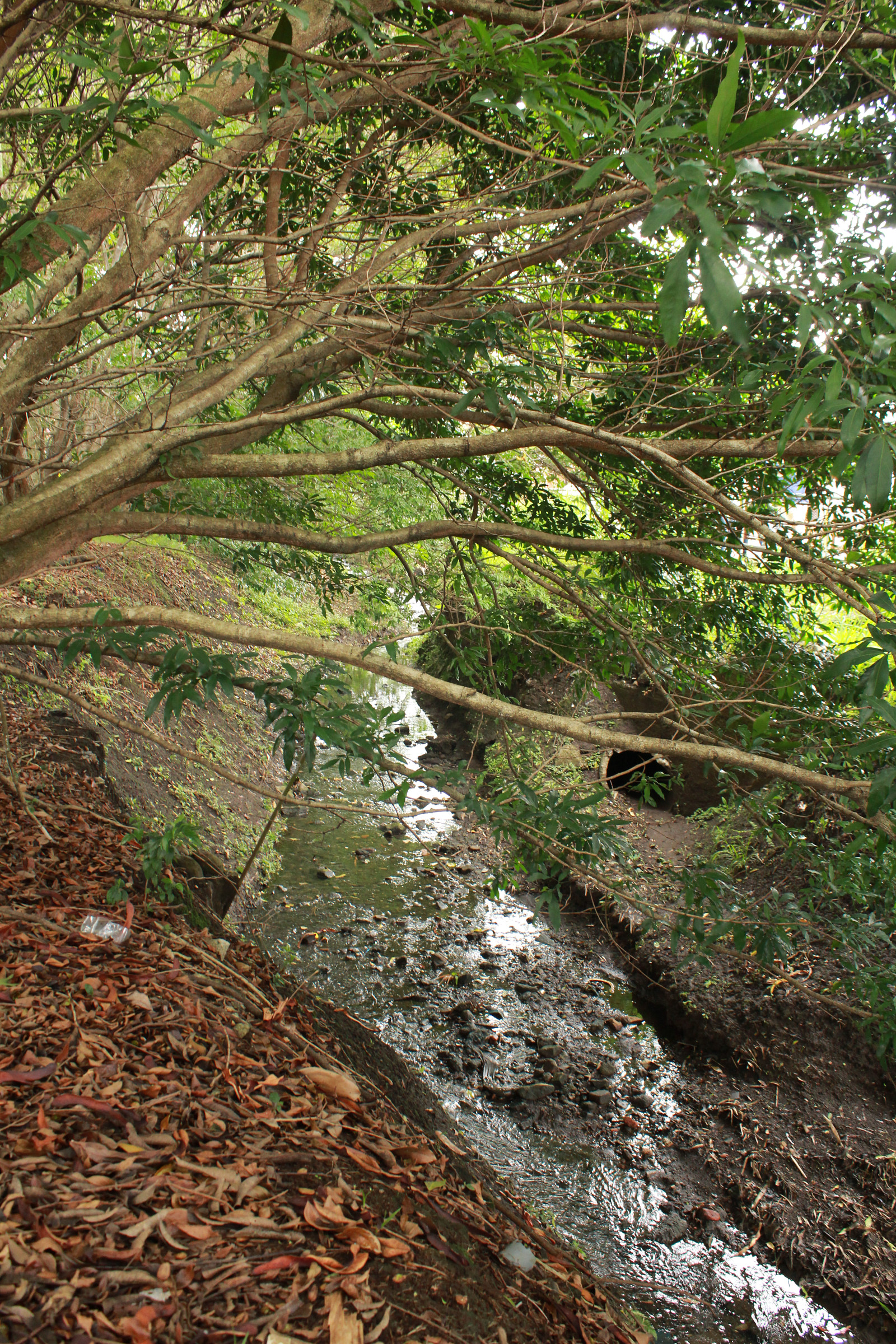
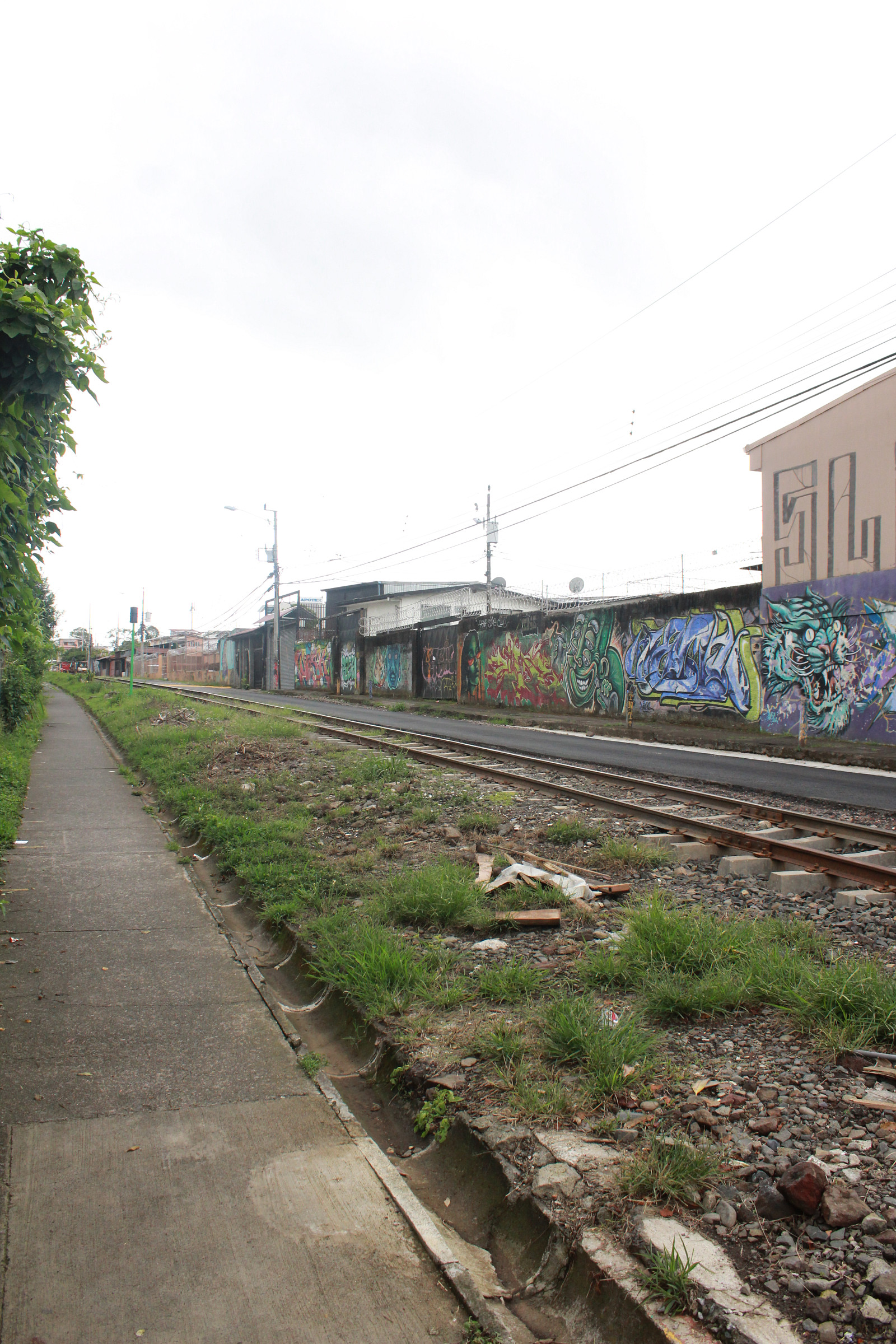
Weaving Realities is a landscape-led intervention for a House of Culture located in San Pedro de Montes de Oca, Costa Rica. The project explores how landscape architecture can become a catalyst for social inclusion, environmental restoration, and cultural identity.
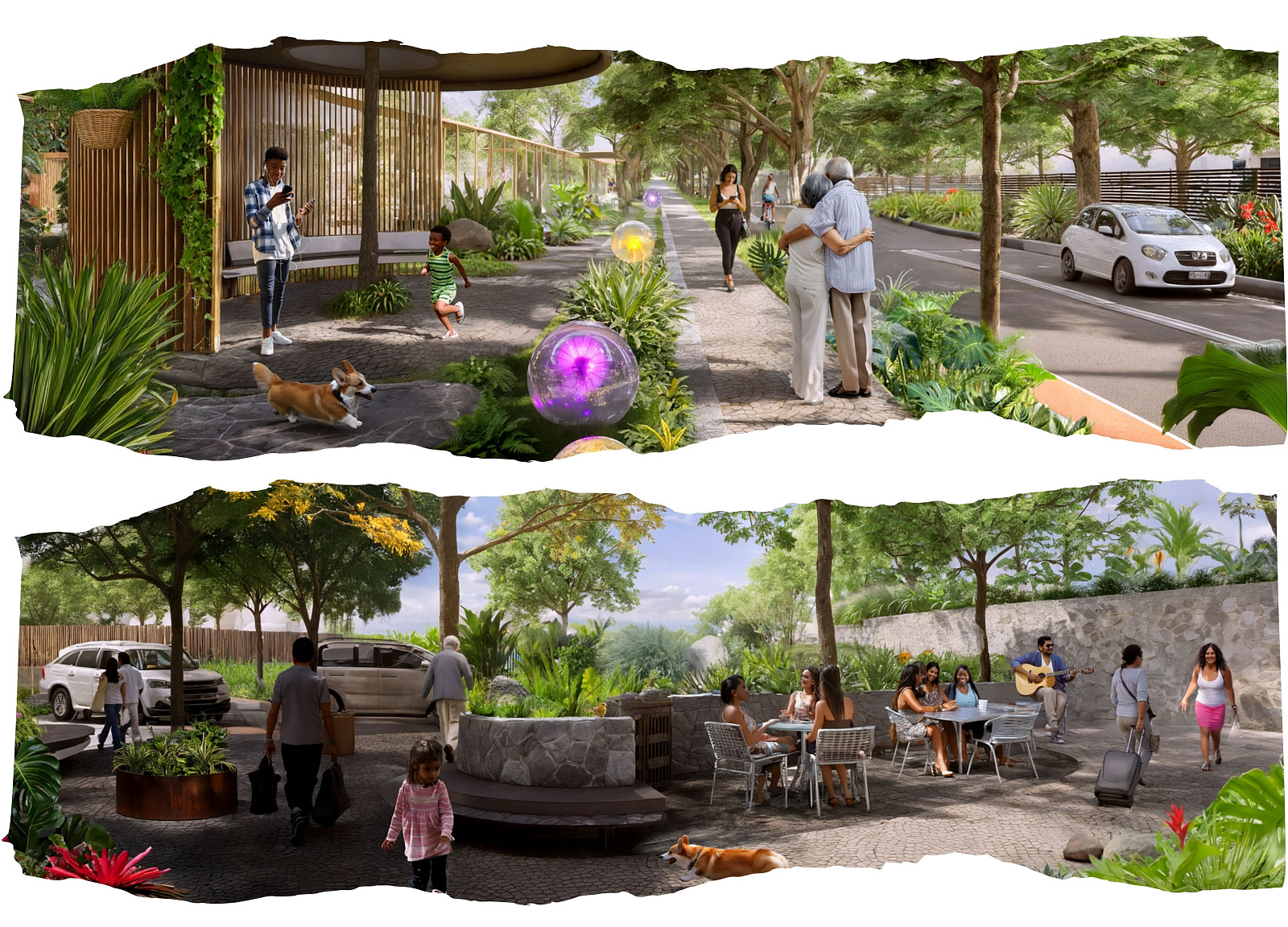
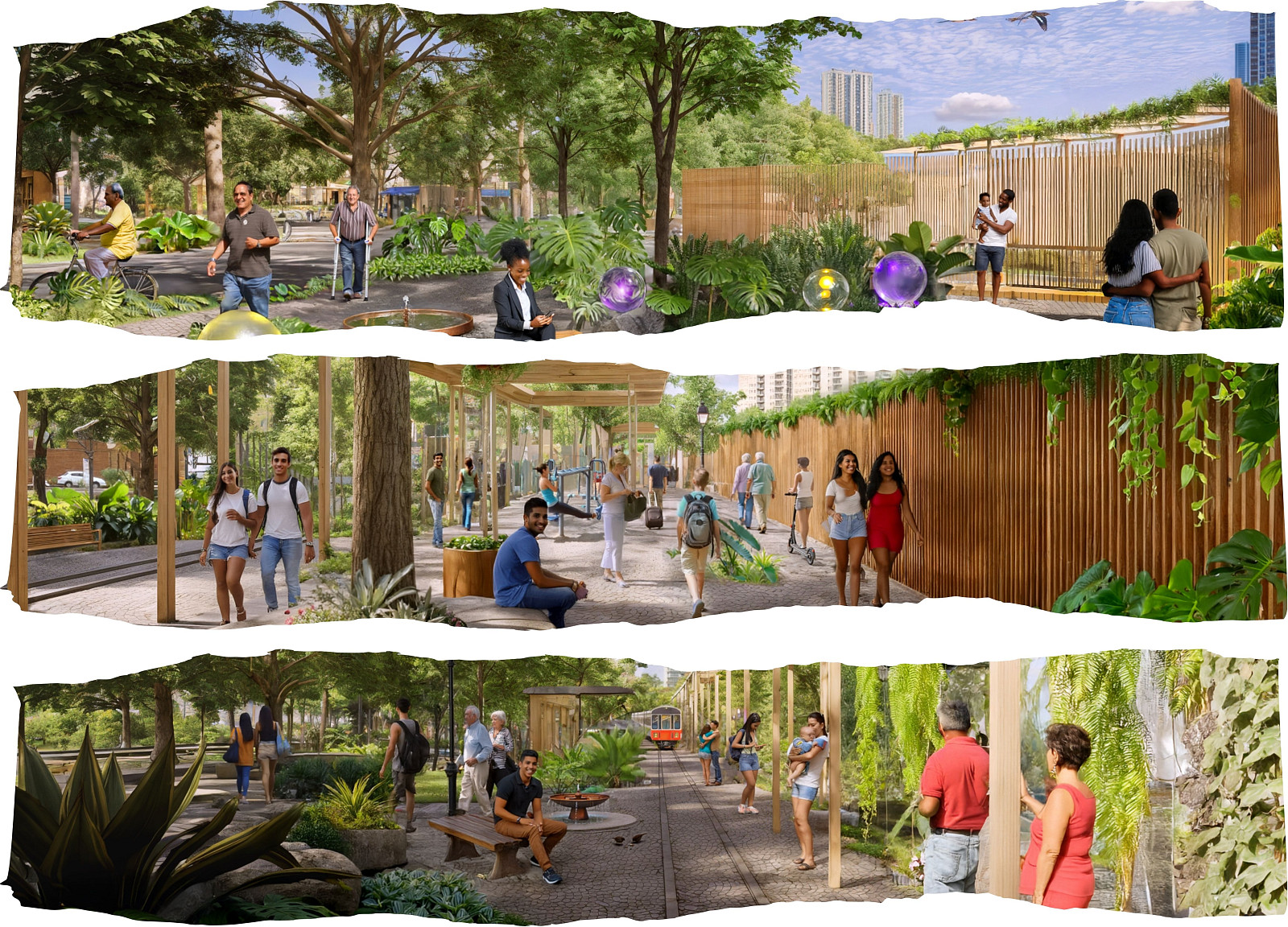
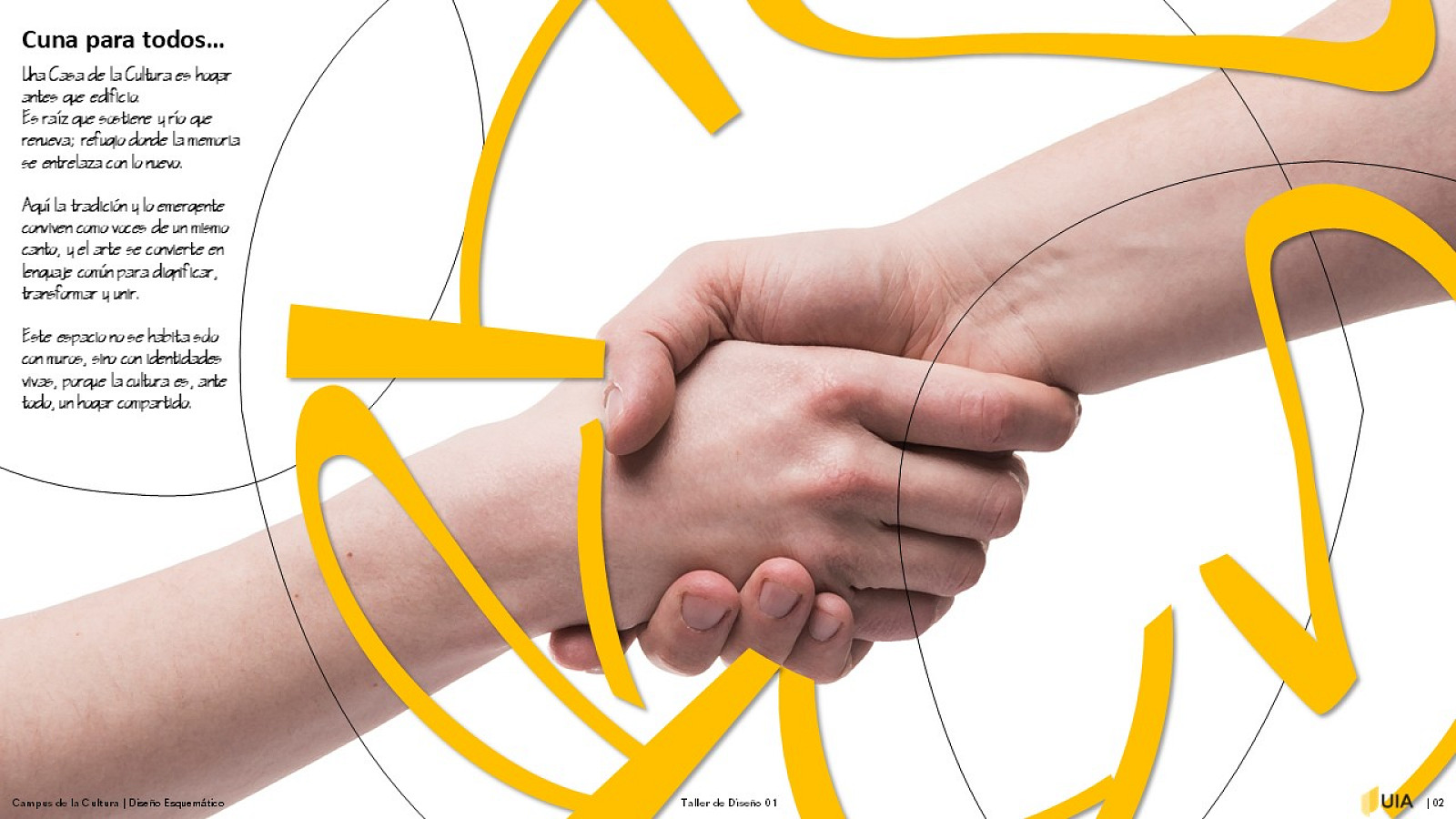
The proposal emerges from the understanding that public space should not merely accommodate activities but actively foster meaningful relationships between people, nature, and culture. Through a network of plazas, ecological corridors, educational landscapes, and community gathering spaces, the project transforms the site into an environment where learning, biodiversity, and collective well-being coexist.
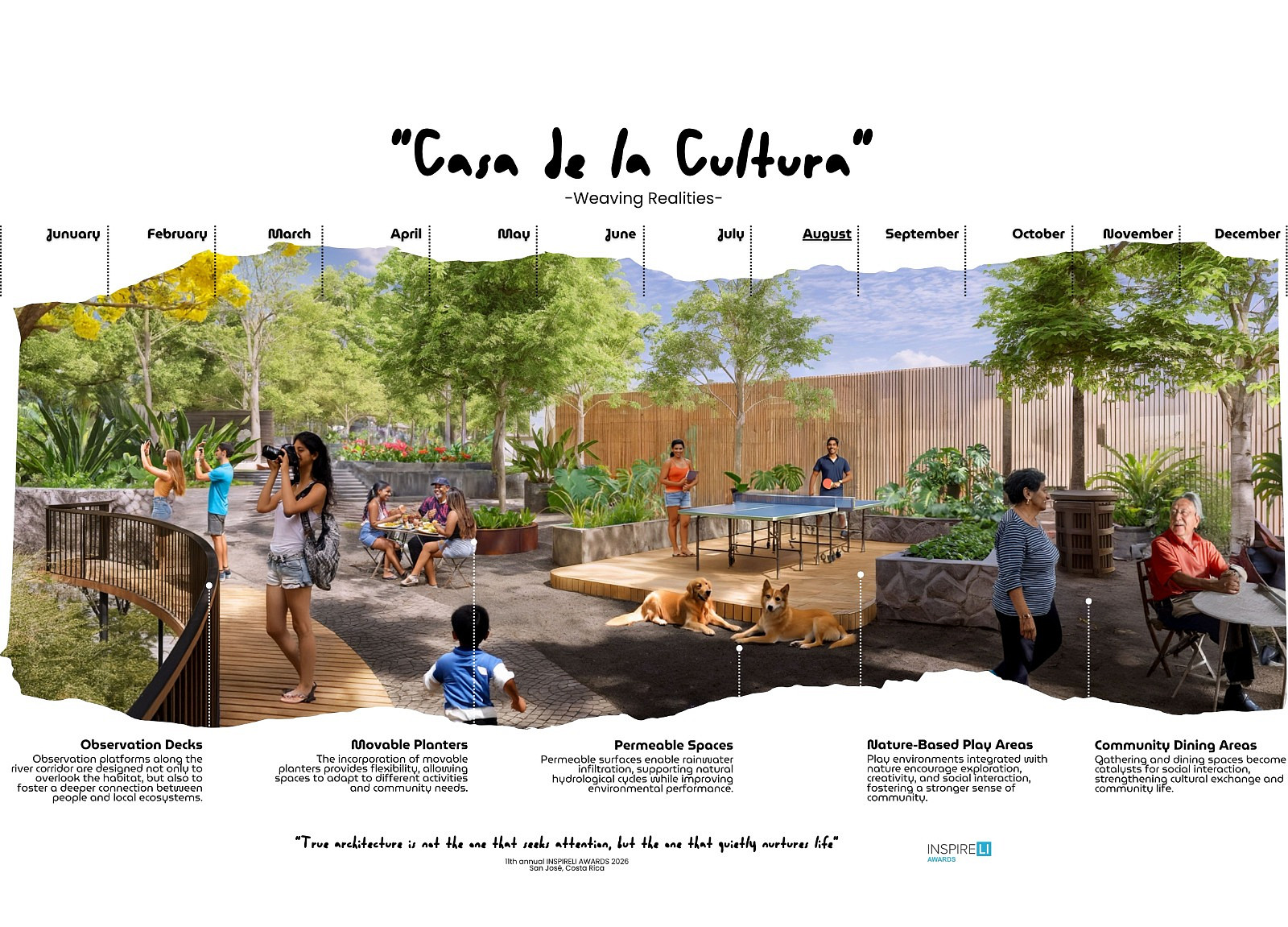
The central idea is to humanize the urban environment through landscape. Nature is not treated as a decorative element but as an active participant in shaping social experiences, improving environmental performance, and strengthening community resilience. Native vegetation, local materials, permeable surfaces, and nature-based play environments work together to create a place that is accessible, inclusive, and deeply connected to its context.
Ultimately, the project seeks to demonstrate that architecture and landscape can become instruments of care, spaces capable of restoring ecological systems, celebrating cultural heritage, and improving everyday life for present and future generations.
Project description
The project proposes the transformation of the House of Culture grounds into an integrated cultural and ecological campus that encourages interaction between citizens, educational institutions, and the natural environment.
Located within one of Costa Rica's most important university and research districts, the proposal responds to the growing fragmentation of contemporary urban life by creating a shared space where people of different ages, social backgrounds, cultures, and professions can coexist, interact, and learn from one another.
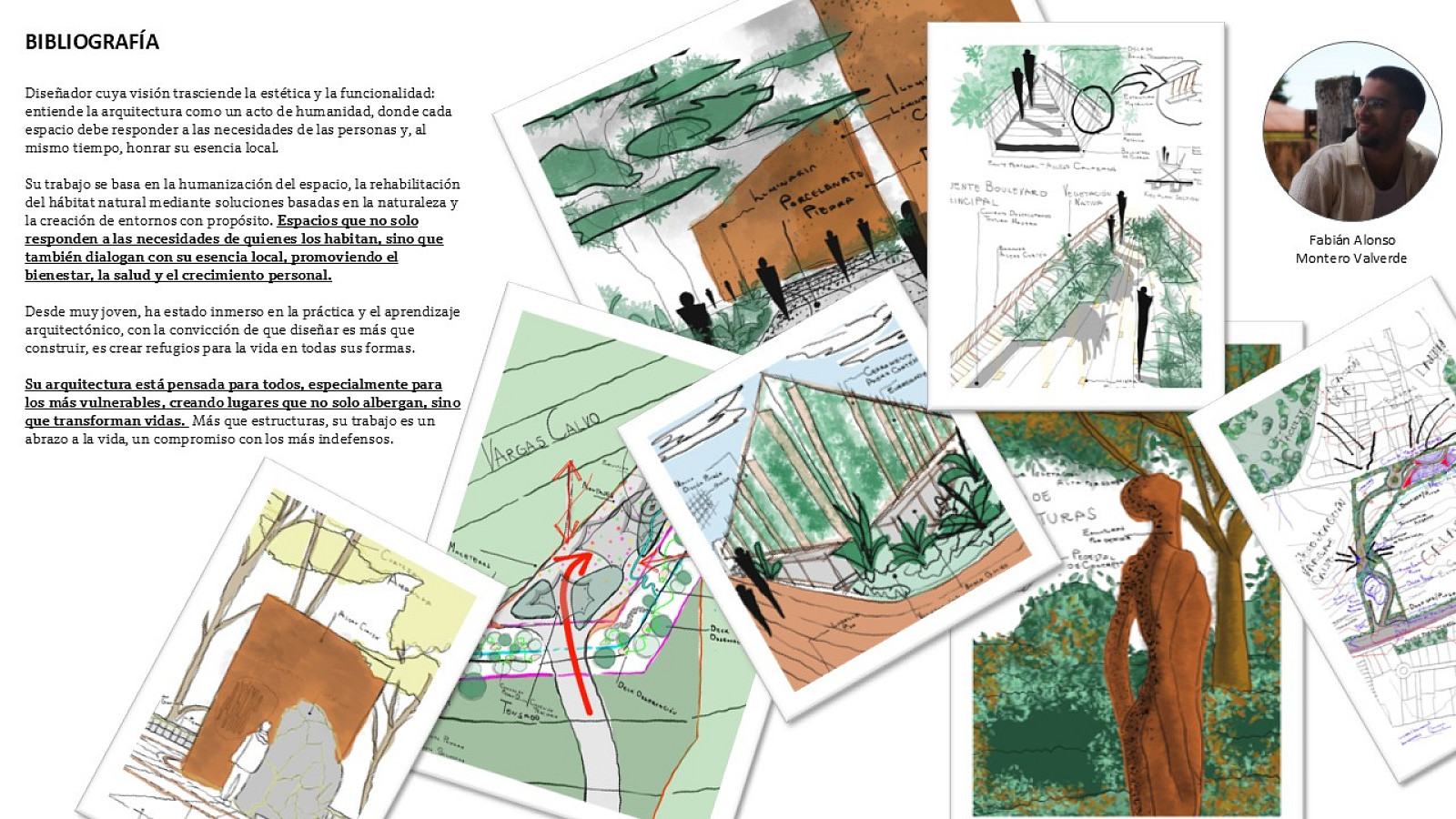
The master plan is organized around a series of interconnected public spaces, including a central plaza, entrance plazas, a linear park, observation decks, community gathering areas, nature-based play spaces, and educational landscapes. Together, these interventions create opportunities for encounters between students, researchers, families, older adults, children, artists, and visitors, fostering a stronger sense of belonging and collective identity.
Rather than segregating activities, the project seeks to balance culture, recreation, biodiversity, and community life within a unified landscape framework. Cultural programming, outdoor learning environments, ecological restoration, and recreational spaces coexist to encourage both social interaction and environmental stewardship.
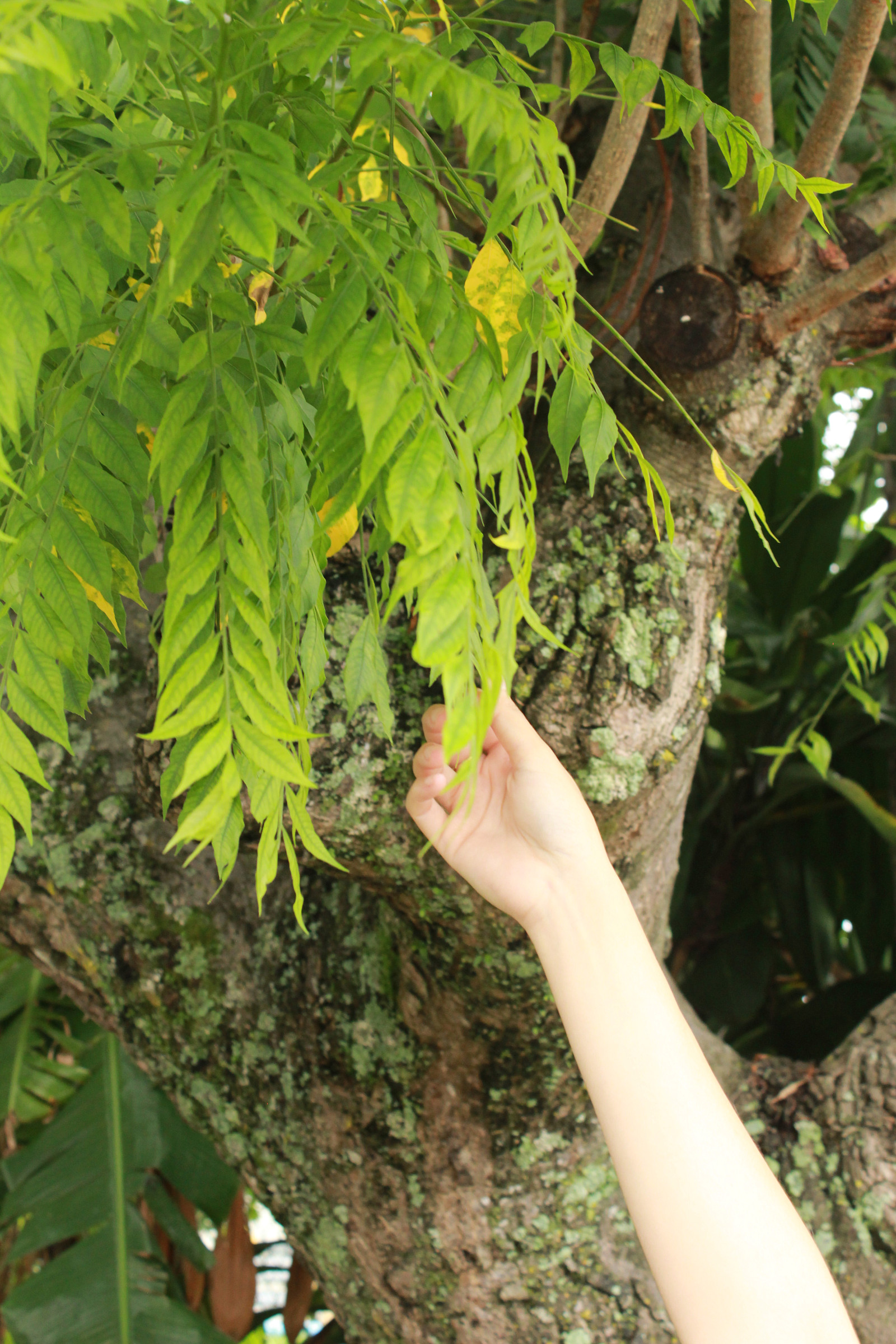
A pocket forest inspired by the Miyawaki method serves as a living ecological core, supporting habitat creation, environmental education, and long-term ecological restoration. Permeable surfaces, native vegetation, and sustainable water management strategies improve environmental performance while reinforcing natural ecological processes.
By integrating ecological infrastructure with public life, the proposal creates a resilient and inclusive environment where culture, knowledge, biodiversity, and community become inseparable elements of everyday urban experience.
Technical information
Project Type: Landscape Architecture / Urban Regeneration / Public Space Design
Location: San Pedro de Montes de Oca, San José, Costa Rica
SF: 168 168.6 ft2
Project Approach:
-Landscape-led urban intervention
-Ecological restoration and biodiversity enhancement
-Community-oriented public space design
-Nature-based solutions
-Cultural and educational integration
Environmental Strategies:
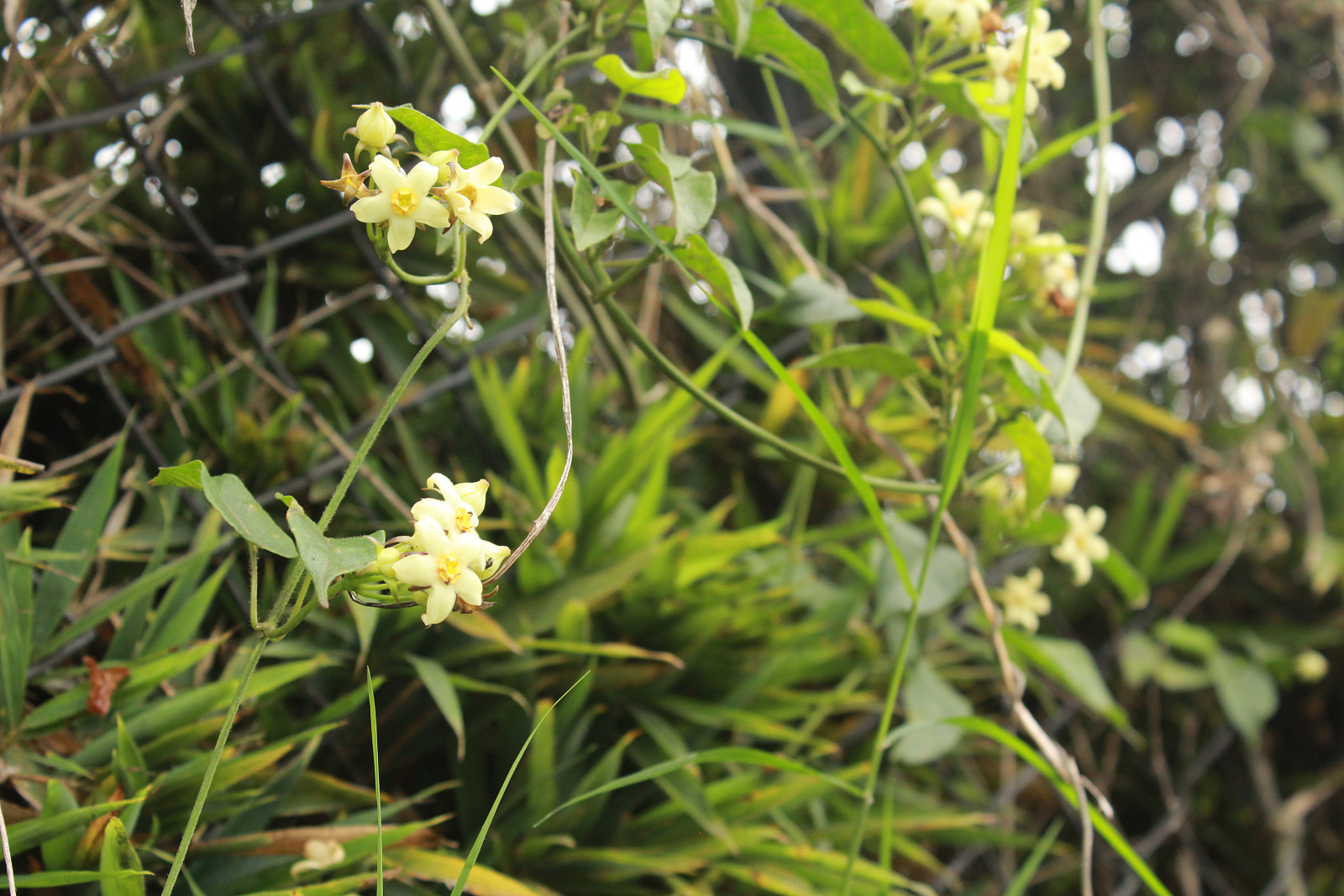
-Native vegetation palette
-Biodiversity corridors
-Rainwater infiltration and harvesting
-Reduction of impervious surfaces
-Urban heat island mitigation
-Habitat creation for local fauna
-Sustainable material selection
Design Objectives:
-Humanize public space through landscape
-Restore ecological processes within the urban environment
-Promote social inclusion and accessibility
-Strengthen cultural identity and environmental awareness
-Improve urban resilience and long-term sustainability
-Foster community well-being through nature-based design


Copyright © 2026 INSPIRELI | All rights reserved. Use of this website signifies your agreement to the Terms of Use, Privacy Policy, and use of cookies.
